






Explaining Ecuador to an Indian audience is both easier and more difficult than one might imagine. Easier, because there are things Indians understand instinctively. That geography shapes character. That food is never merely food. That family remains an invisible architecture around individual life and that ancient traditions need not disappear for a country to become modern.
What makes Ecuador difficult to explain is that the country often arrives in the international imagination through a few familiar images. When in reality, it is far more diverse than any postcard can suggest.
The four worlds of Ecuador
Perhaps the best way to begin is with our four natural regions: the Coast, the Andean Highlands, the Amazon and the Galápagos Islands. These are more than geographical divisions. Each has its own landscape, climate, cuisine, traditions and temperament.
The Pacific shapes the rhythms and flavours of the Coast; the Andes give the Highlands their dramatic geography and cultural diversity; the Amazon contains an extraordinary concentration of life and ancestral knowledge; and Galápagos presents a natural world found nowhere else on Earth.
But countries are ultimately understood through their people and stories, and literature is one of the places where Ecuador has told some of its most difficult truths. If I had to introduce a classical Ecuadorian writer to an Indian reader, I would choose Jorge Icaza.
His 1934 novel Huasipungo is not a comfortable book, nor was it intended to be. It exposed the exploitation of indigenous communities in the Ecuadorian Andes and forced society to confront realities it might have preferred to ignore. I value Icaza because he did not use literature to beautify Ecuador; he used it to question us. Indian readers may recognise that moral terrain even when the landscape is Andean rather than Indian.
Contemporary Ecuadorian literature speaks in another voice. Mónica Ojeda explores fear, adolescence, violence, desire, mythology and the darker territories of contemporary life with language that can be beautiful and disturbing at once. The distance between Icaza and Ojeda fascinates me: almost a century of Ecuadorian transformation separates them. Yet both disturb the reader’s comfort. Perhaps good literature should.
If literature reveals how a country thinks, food reveals how it remembers. Asking an Ecuadorian to identify our best dish is rather like asking an Indian to identify the definitive Indian curry: dangerous territory.
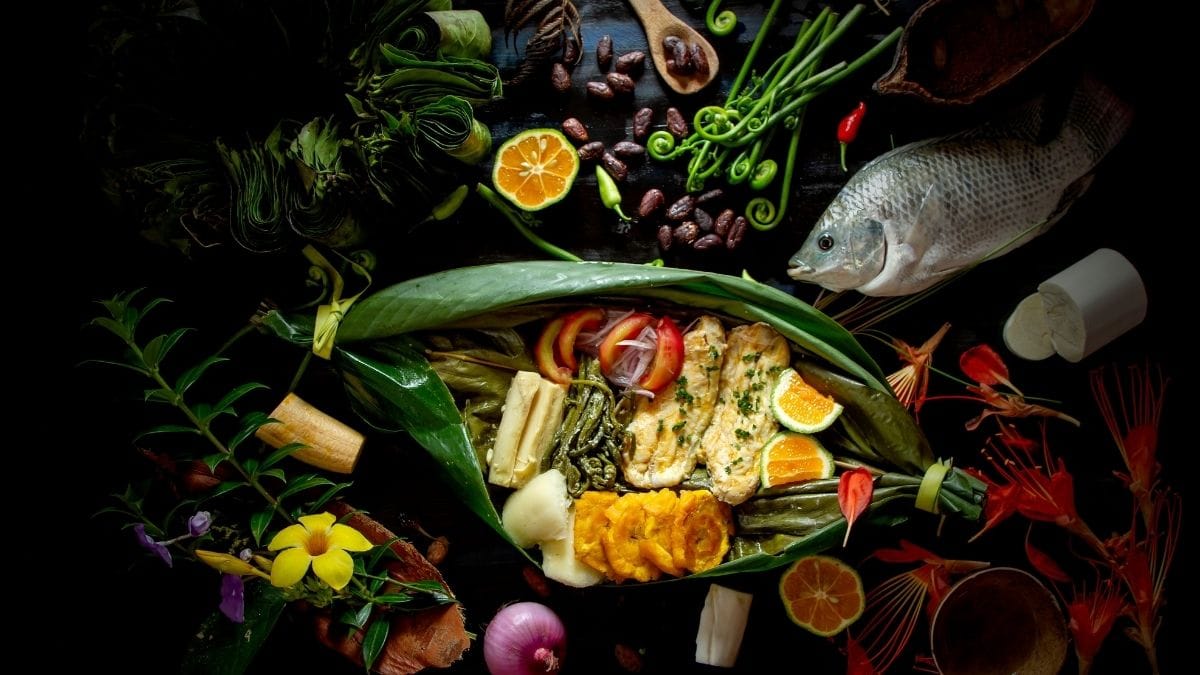
My choice would nevertheless be encebollado, one of the great expressions of our Pacific coast. Prepared with fish —traditionally tuna— cassava, tomato, spices, pickled red onion and lime, it belongs to fishermen and markets, families and Sunday mornings. Some of its finest versions are served in places with no culinary ambitions beyond making an excellent bowl.
Encebollado also enjoys another reputation—as a preferred Ecuadorian remedy after a long night of celebration. I make no scientific claims; I merely observe that generations of Ecuadorians have conducted extensive field research.
And no introduction to Ecuadorian food would be complete without cacao. Archaeological discoveries in the upper Amazon region of present-day Ecuador have revealed the use of cacao dating back more than five thousand years, providing remarkable evidence of its ancient origins in our territory. Today Ecuador’s fine aroma cacao is prized internationally, but behind every chocolate bar lies a much older relationship between our biodiversity and human culture.
I would encourage an Indian visitor not simply to taste Ecuadorian chocolate, but to visit a cacao plantation, open the fruit, and taste the white pulp surrounding the beans. It is one of those delightful travel experiences. Something universally familiar suddenly becomes unfamiliar again.
One destination that simply cannot be missed is the Galápagos Islands.
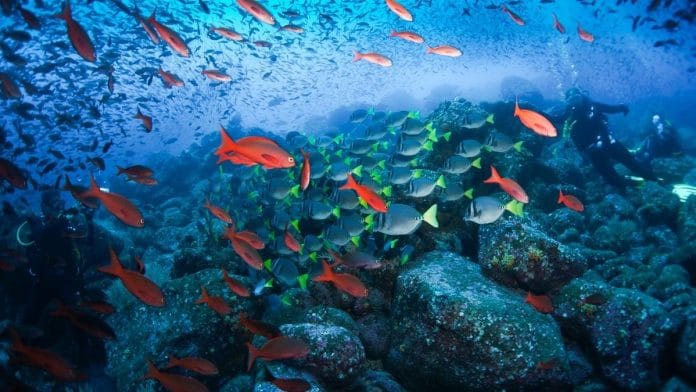
There are few places in the world quite like the Galápagos. Giant tortoises move slowly across volcanic landscapes, marine iguanas rest on black lava, and sea lions seem completely at home beside their human visitors. What makes the islands so special is not only the extraordinary wildlife, but how close one can feel to nature. The animals have little concern for our presence, and for once we are simply visitors in their world.
Galápagos has a way of changing your perspective. You arrive eager to see the animals and the landscapes, but you leave with something more—a renewed sense of wonder and respect for nature. It is an experience that stays with you long after the journey is over, and one that I believe Indian travellers would find both fascinating and deeply memorable.
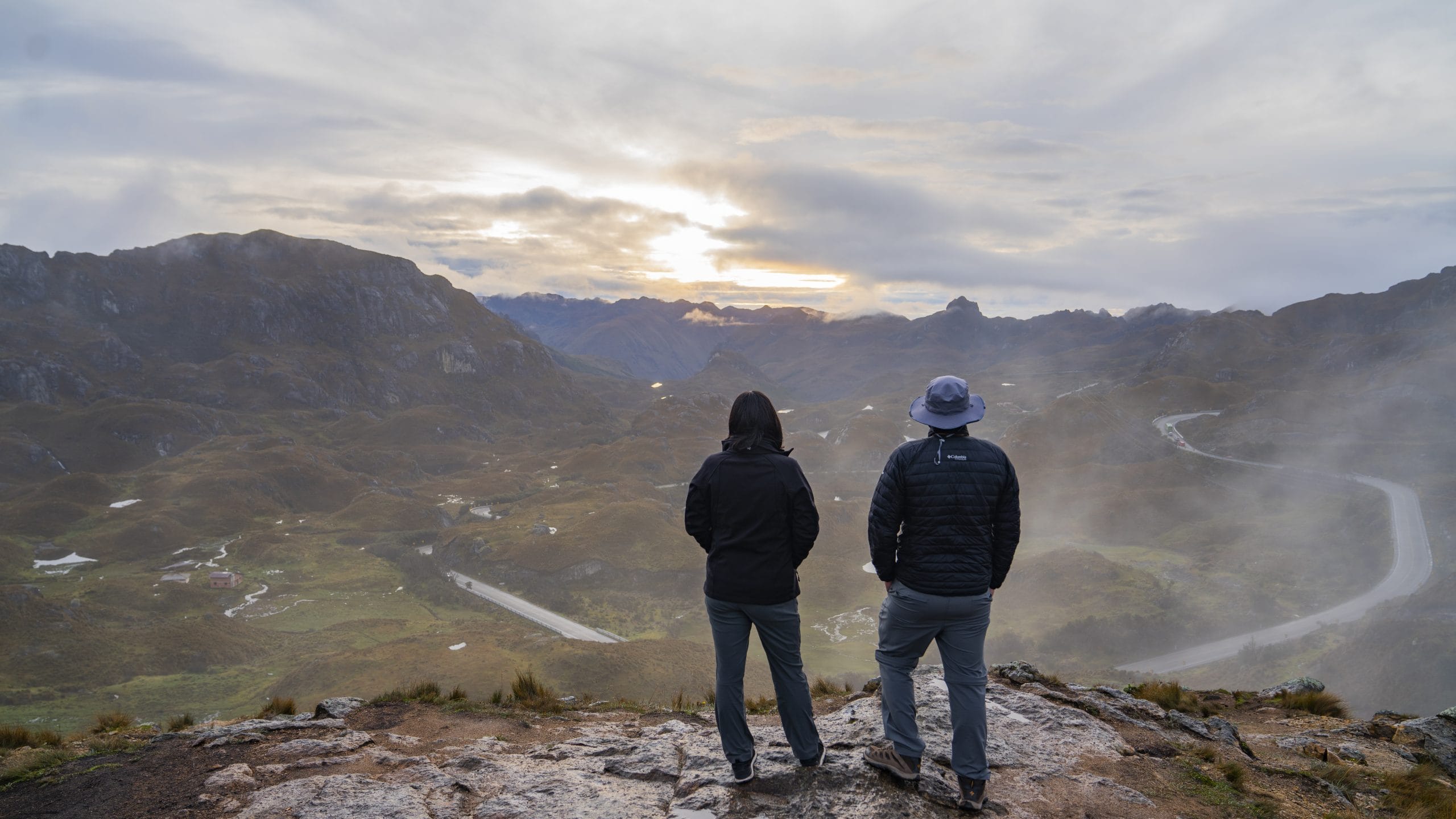
On the mainland, I would begin in the Andean Highlands, with Quito, our capital at 2,850 metres above sea level. Colonial churches, republican architecture and contemporary life unfold beneath the presence of volcanoes. Further south lies Cuenca, crossed by rivers and distinguished by an elegance and rhythm entirely its own.
Between and beyond these cities are indigenous communities, markets and landscapes where agriculture, textiles, crafts and traditions preserve histories much older than the Republic.
The Amazon offers an entirely different encounter. Rivers become roads, the forest determines the rhythm of life, and biodiversity assumes dimensions difficult to comprehend until one is physically surrounded by it. Indigenous communities preserve knowledge accumulated over generations, while the forest itself reminds us that extraordinary natural wealth carries an equally extraordinary responsibility to protect it.
Then there is the Coast, and here I would begin with Guayaquil, the Pearl of the Pacific. Ecuador’s great port and commercial centre is tropical, energetic and entrepreneurial, a city whose identity has always been connected to the Guayas River, the sea, commerce and the outside world.
Beyond Guayaquil, the Pacific reveals an Ecuador still insufficiently known to many international travellers. Our coastline has beautiful beaches, fishing villages and tropical landscapes. Los Frailes, in Manabí, is a particularly beautiful meeting of dry tropical forest and clear Pacific waters, while Santa Elena offers both peaceful beaches and lively seaside destinations.
The Ruta del Spondylus route connects much of this coastal world through beaches, archaeological sites, fishing communities and gastronomy. There are places for surfing and others where the greatest ambition of the afternoon should simply be to sit beside the Pacific and reconsider the necessity of having an agenda.
For Indian travellers familiar with Goa or Kerala, Ecuador’s coast offers another personality of the sea. It must also be tasted: ceviches, grilled fish, prawns, plantain and coconut carry the Pacific onto the table. Sometimes, Ecuador is best understood with salt in the air and sand under one’s feet.
Also read: Indians with their love for pink will really enjoy Vilnius Pink Soup Fest: Lithuanian Ambassador
Beyond famous destinations
If there is a musical genre that enters Ecuador’s emotional vocabulary, it is the pasillo. Through guitar, poetry, and voice, the pasillo became a vehicle for love, longing, absence and nostalgia. To understand its place in our culture, one should listen to Julio Jaramillo, whose voice became inseparable from Ecuadorian popular memory.
Here I find an unexpected bridge with India. Indian music and cinema understand perfectly well that longing can occupy an entire song, separation can become poetry, and memory can have a melody. An Indian listening to an Ecuadorian pasillo may not understand every Spanish word, but I suspect the emotion requires less translation.
Ultimately, Ecuador does not reveal itself entirely through famous places. What remains after a journey is often less easily photographed: a conversation that lasted longer than expected, a family table to which another chair was added, a song whose words one did not completely understand, the first taste of cacao fruit, or an afternoon beside the Pacific when nobody felt the need to look at the time.
My invitation to Indian travellers is therefore simple: experience our four worlds. Walk through the Andes, enter the Amazon, discover the Pacific Coast and allow Galápagos to renew your sense of wonder. Taste our food, listen to a pasillo and, above all, talk to our people.
Perhaps somewhere along that journey, Ecuador will stop being a destination and become an experience.
Fernando Xavier Bucheli Vargas is the Ambassador of Ecuador to India. He tweets @fbucheli. Views are personal.
This article is part of Diplomatic Cable, a special series in which ambassadors and high commissioners in New Delhi share their experiences of India and introduce readers to the people, culture and traditions of their home countries. Read all the articles here.
(Edited by Ratan Priya)