








I have many thoughts about the Tata Sierra EV and its mechanical performance. But let me first ask you: Would you solely buy a car for its audio system?
You see, the Tata Sierra has a 12-speaker JBL Black audio system. A speaker is even built into the central element of the dashboard. And the system supports Dolby Atmos. In fact, many mass market cars nowadays support the cinematic multi-track audio system from the British sound engineering firm. Mahindra, the Maruti-Suzuki Victoris and other premium SUVs from Tata Motors themselves, including the internal combustion engine variants of the Sierra, all boast of the immersive spatial audio technology.
The problem, however, is that while the Dolby Atmos does improve audio playback to an extent with post-processing, it works best with music or audio tracks recorded or remastered with the system in mind. In vehicles, until now, Dolby Atmos was pretty much a marketing slogan; it was there, but to experience it, you had to play the built-in demo tracks. And how many times can one even hear the sounds of the jungle video, as amazing as they are?
Until now.
The Sierra EV changes that because it also supports Apple Music Spatial Audio, which are songs either recorded or remastered with Dolby Atmos. When I found out about that at the launch, I was rather keen to try it out, and oh boy, was that an amazing experience.
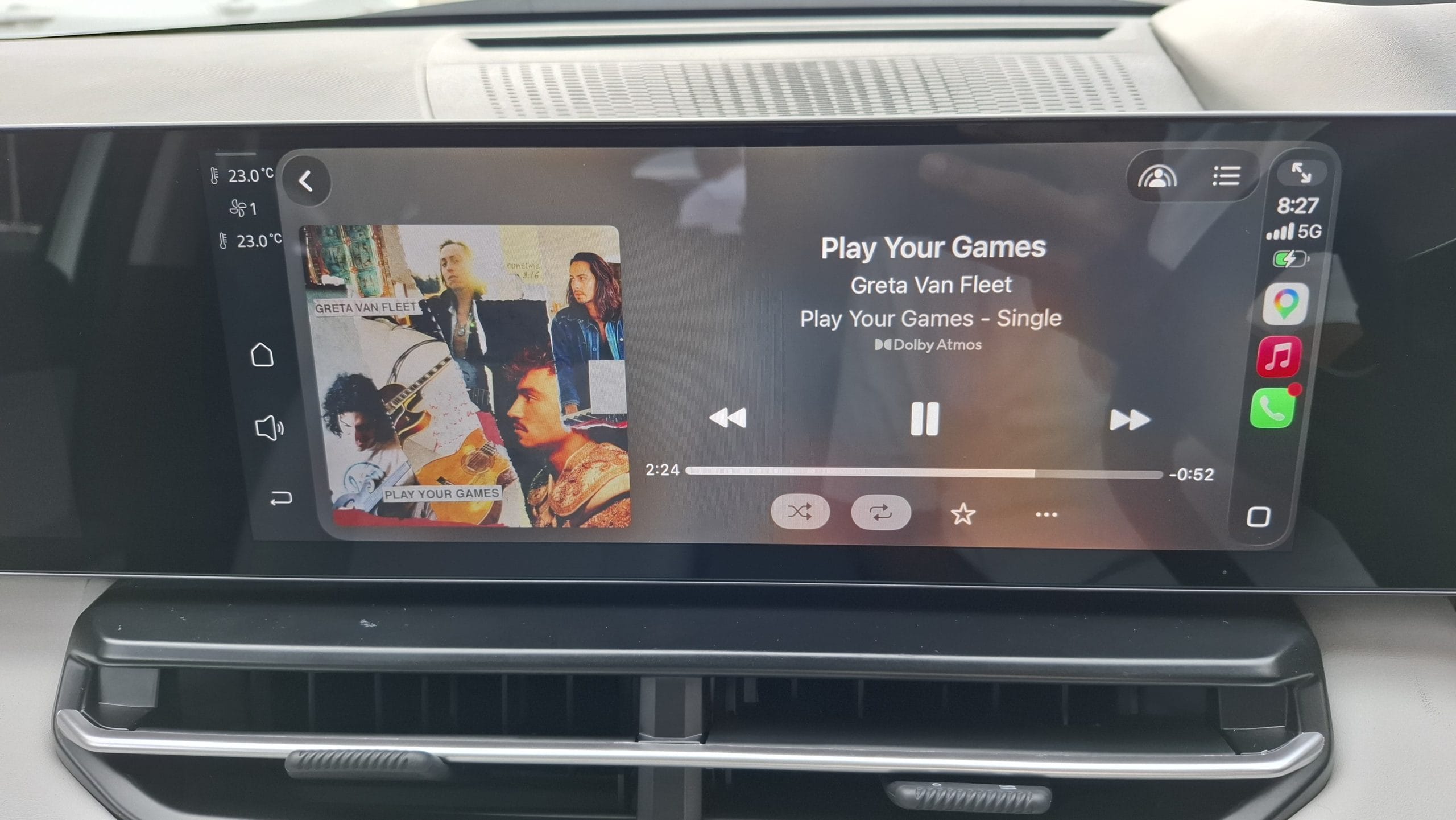
Music could be heard coming from every direction within the car. I even got to experience the songs I grew up with, such as Bryan Adams’ ‘Summer of ’69’ or Michael Jackson’s ‘Beat It,’ in a new manner. And to put the system through its paces, one should go through all sorts of music, so I played Beethoven’s ‘Symphony No. 5’. And then shifted over to Bollywood, and wow, newer music from movies like Dhurandhar that were remastered for Dolby Atmos felt as though I was nin the theatres all over again.
I drove aimlessly for hours just listening to the music. Superlative adjectives should ideally be used sparingly, but the audio experience when listening to Spatial Audio is simply outstanding. Short of the experience on some high-end luxury cars, when you consider this is a mass-market vehicle, it is even more surprising.
Now I have to add the caveats here: this only works with Apple Music through Apple CarPlay, and as the Dolby India folks have clarified, only Apple works with Dolby globally. So if you subscribe to Spotify or YouTube Music, sin suerte (no luck). Do keep in mind however, that when streaming these songs, which can be found on “Spatial Audio” playlists on Apple Music, you are using a higher bitrate and more data as a result. But when was the last time you checked your data consumption on your smartphone?
Also Read: Not your boring family SUV. Skoda Kodiaq RS balances practicality with agility
A slight snag
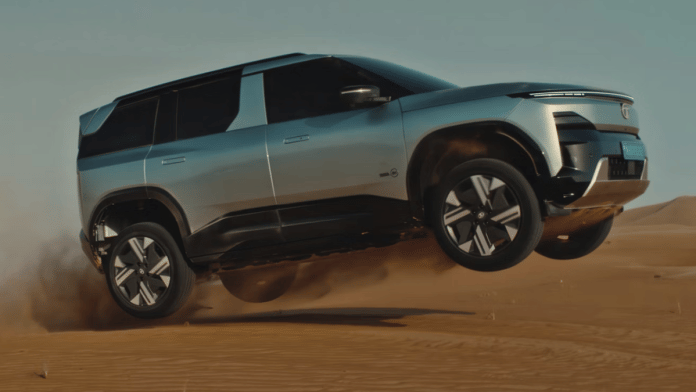
Yes, there are a lot of headline numbers about the Tata Sierra EV, especially the top-end QWD variant, which has, near as makes no difference, 350 horsepower and can, in “Boost” mode, go from a standing start to 100 kilometres per hour in under six seconds. It is the fastest Indian production car ever. And not only can it go fast, but it is also pretty sharp around the corners as well.
What was most impressive was the Sierra EV’s off-road capabilities. Thanks to the vehicle having two motors, one on each axle, you can take it almost anywhere. However, while I have done similar off-road tracks tens of times, it does feel a bit different on electrics, especially given that the power and torque on an EV are instantaneous, so you do need to reprogram yourself on how to work the throttle and brakes.
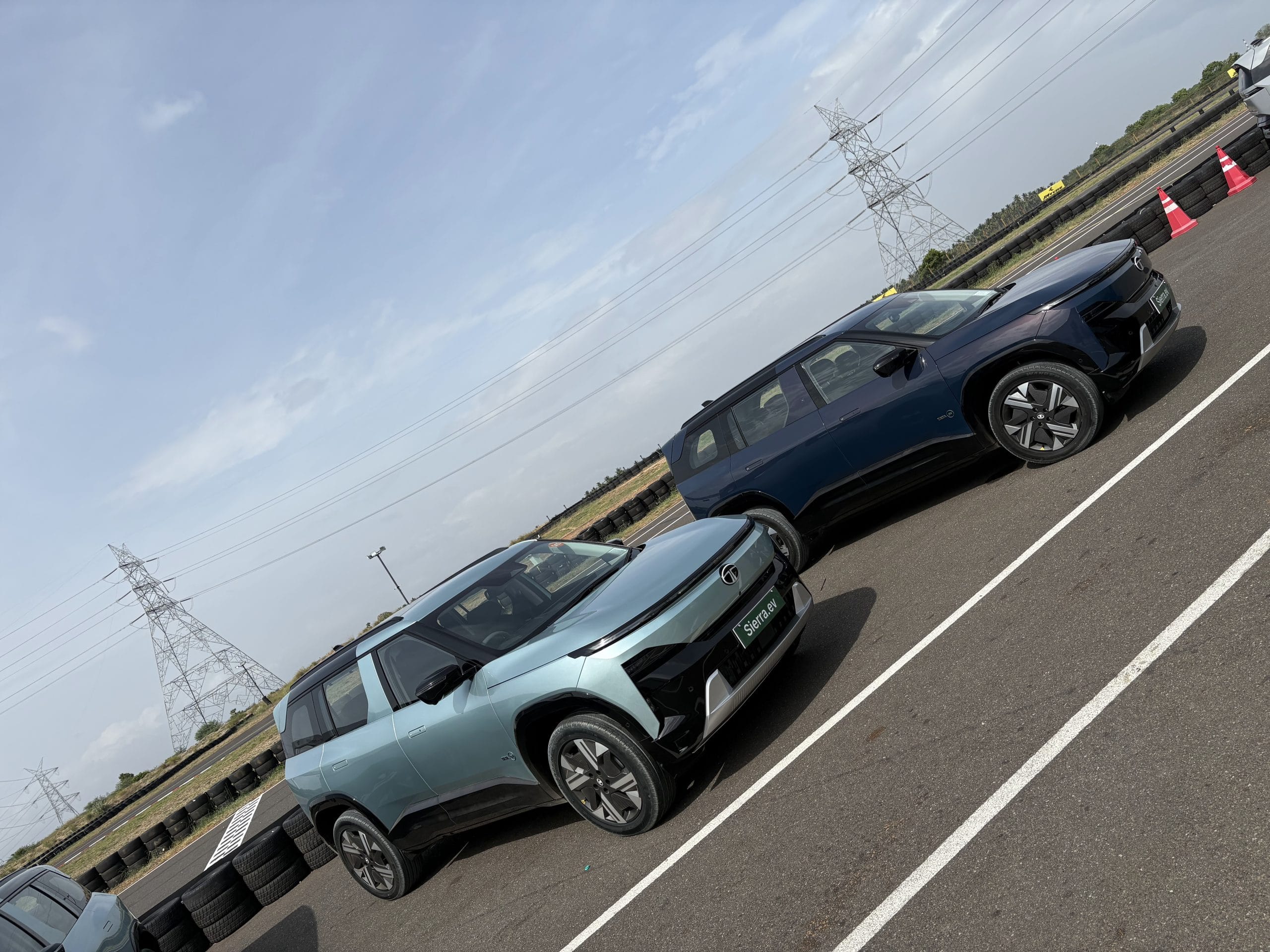
The Sierra EV QWD is only available on the top-end Empowered+ variant of the vehicle with a 75 kilowatt-hour battery, and while the vehicle can manage 600 kilometres of range if driven carefully, you can also easily manage in excess of 450 kilometres of range if you drive badly. All in all, a rather impressive package of Rs 26 lakh ex-showroom.

The music aside, I do think some aspects of the Sierra EV are slightly overkill. It could have done with a smaller battery pack, and the immense amount of power, straight up double that of the internal combustion turbo-petrol, has been slightly concerning. And honestly, I’m not sure how well Indian motorists can handle so much power, even though the front motor only engages occasionally. The rear-wheel drive Sierra EV also has a very impressive 240 horsepower, which is a fair bit, and more than enough in my book.
Prices for the base rear-wheel drive Sierra EV with the smaller 63 kilowatt-hour battery pack start at Rs 18.8 lakh. But I would go in for the higher Adventure and Empowered specifications of the vehicle with the Dolby Atmos sound system. Especially if you have an iPhone and subscribe to Apple Music. Because when you’re stuck on the Western Express Highway or on top of the Barapullah in New Delhi, all that power and torque won’t help, but the music certainly will.
Kushan Mitra is an automotive journalist based in New Delhi. He tweets @kushanmitra. Views are personal.
(Edited by Insha Jalil Waziri)