





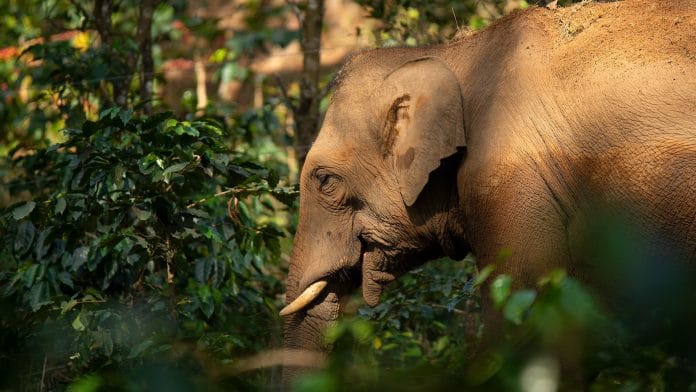


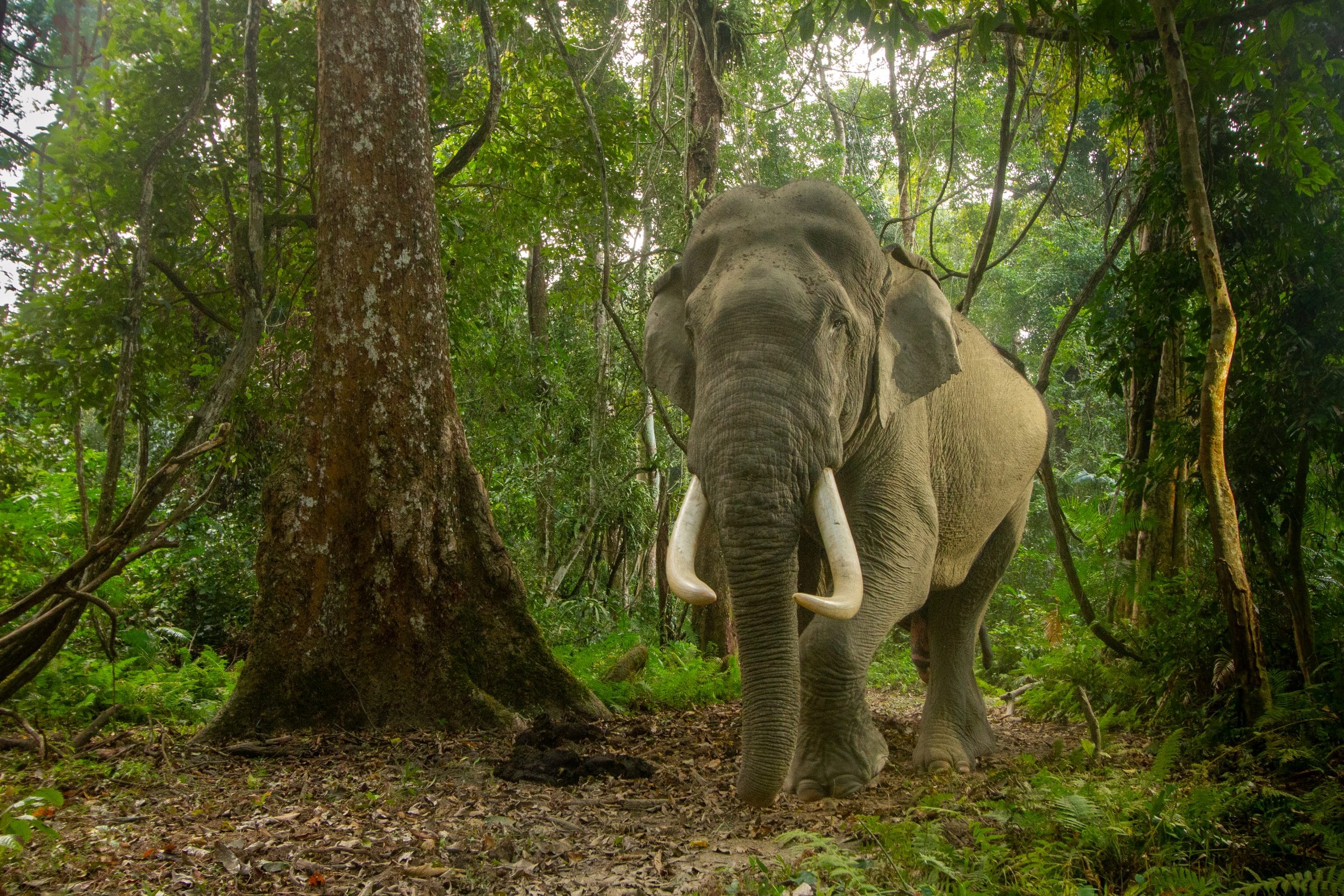
When wild elephants sense danger, they come together. Small family groups merge into larger herds that draw strength from collective vigilance, memory, and coordinated movement. In landscapes shared between people and elephants, where the future of Asian elephants is increasingly tied to human safety, rural livelihoods, and plantation economies, conservation too has had to learn the lesson of collective action.
This is especially true in the coffee-forest mosaics of Karnataka’s Western Ghats, where elephants do not move only through forests. They navigate a lived-in landscape of coffee estates, villages, roads, agricultural fields, forest fragments, monoculture plantations, streams, settlements, and administrative boundaries. In such landscapes, biodiversity conservation cannot succeed solely through ecological insights. When conservation priorities appear to conflict with the safety, livelihoods, and economic security of local communities, resistance is natural. Durable conservation therefore depends on the active participation of the very people whose lives, choices, and use of the landscape shape outcomes on the ground.
This creates a complex conservation challenge. Coffee and agriculture are the backbone of the local economy. Thousands of families, estate owners, workers, and small farmers depend on this landscape for income and livelihood security. At the same time, elephants moving through plantations and farmlands can damage crops, disrupt work, create fear, and in tragic cases, cause human deaths during sudden encounters. Each incident of this kind deepens public anger and increases pressure for immediate action, often in the form of the capture and removal of elephants.
But this conflict is not merely the result of one elephant entering one farm. It is a landscape-level issue driven by historical land-use change and habitat fragmentation.
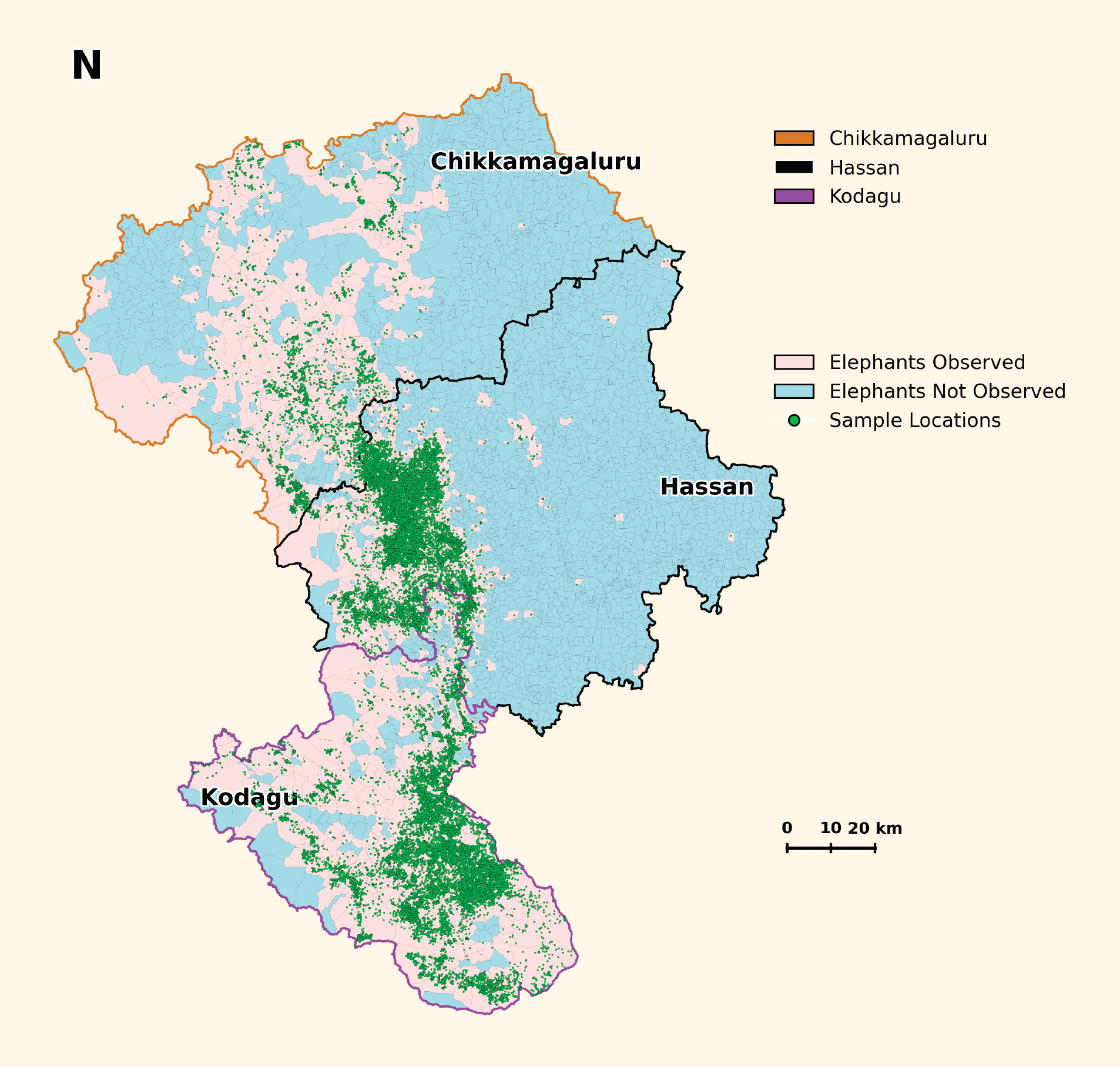
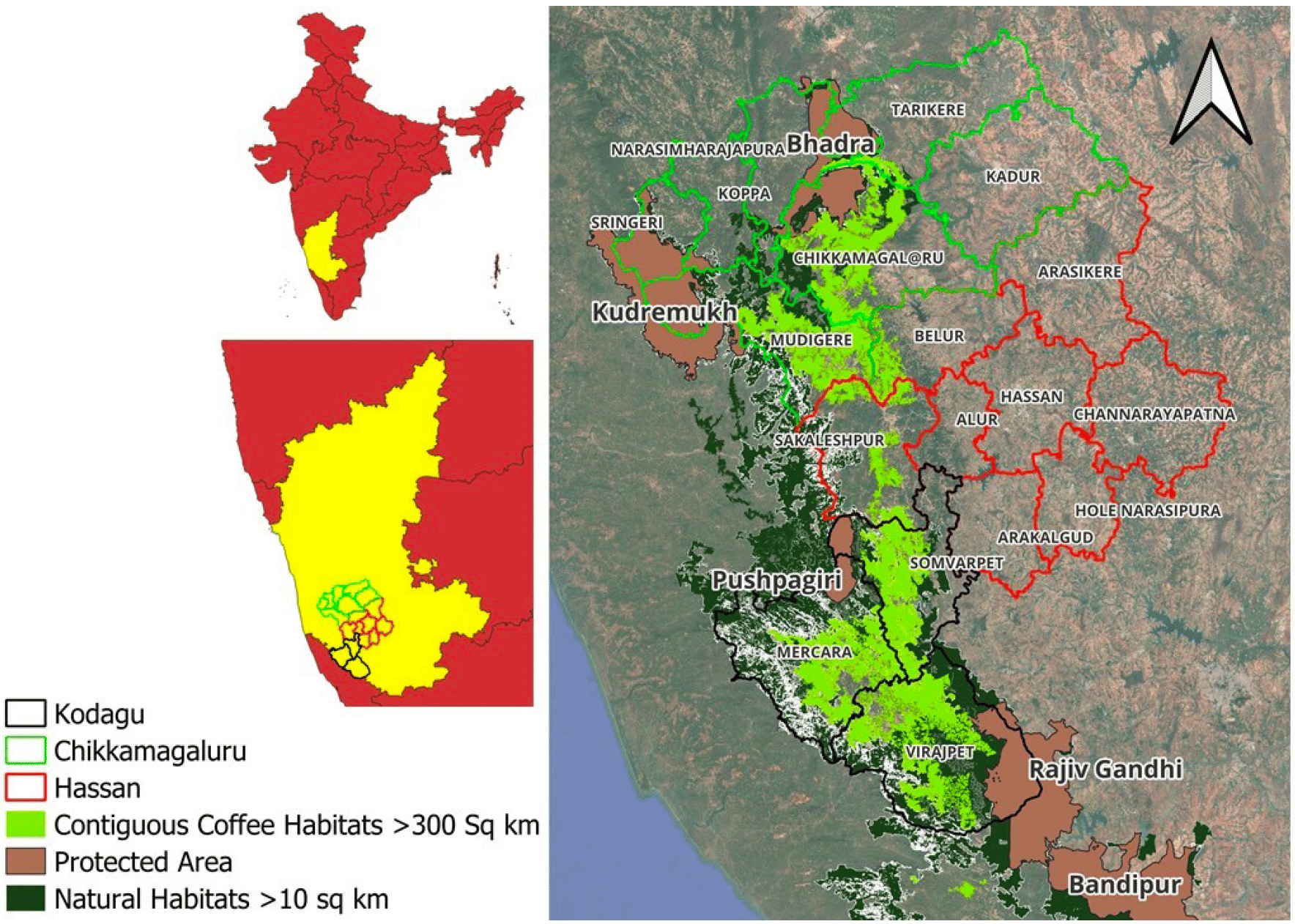
Elephants from Nagarahole National Park in Kodagu move through a diffused network of plantations and forest patches toward Bhadra Tiger Reserve in Chikkamagaluru, more than 100 kilometres away as the crow flies. Between these larger habitats lies Hassan, a district with limited natural forest cover and large stretches of Acacia and Eucalyptus plantations. Over the past four to five decades, the landscape has lost more than 40 per cent of its forest cover, yet elephants have persisted and moved across it, indicating that their presence is not a recent phenomenon but part of a long-standing ecological reality. In many places, coffee estates and private lands have become secondary elephant habitats and movement spaces, leading to the popular characterisation of these animals as “plantation elephants”. This has created a vast interface between people and elephants across three districts, where elephant-related human deaths and subsequent animal captures are disproportionately high. The challenge lies in balancing elephant movement and connectivity between habitats with the safety and livelihood security of local inhabitants.
Revisiting traditional conservation models
Traditional conservation approaches are not adequate for this complex landscape. Site-specific interventions, isolated barriers, reactive captures, or division-level responses have been insufficient in addressing a problem that cuts across multiple land uses, districts, forest divisions, plantations, roads, and protected areas. A trench or fence in one place may divert elephants into another. Capturing one animal may bring temporary relief but rarely addresses the conditions that produce repeated conflict. The challenges have ecological, social, economic, administrative, and political dimensions. Finding durable solutions requires a shift from managing incidents to managing the interface between people and elephants; from reacting to conflict to predicting risk; and from institutional silos to coordinated, evidence-based action.
It was in this context that the Karnataka Forest Department adopted a novel collaborative approach. In 2024, the department anchored a conservation coalition by signing a Memorandum of Understanding with the Nature Conservation Foundation-India, Humane World for Animals-India, A Rocha-India, and WWF-India. The purpose was not merely to bring organisations together on paper, but to create a shared platform for unified, evidence-based, and cross-sectoral conservation action in one of Karnataka’s most sensitive elephant landscapes.
Also read: Modi govt’s ambitious policies lack a key element—processes
The strength of this coalition lay in its design. It recognised that different partners brought different skills. The state forest department brought statutory authority, field presence, administrative reach, and responsibility for wildlife management. Conservation organisations brought long-term ecological research, social science methods, field-based conservation experience, technical expertise, science-based conservation models, and independent evidence generation. Local stakeholders brought place-based knowledge, lived experience, and legitimacy. The coalition’s role was to bring these capacities together and convert them into practical solutions.
A state-level steering committee was constituted to provide direction, review progress, and enable coordination. Importantly, the Karnataka government and NGO partners engaged as equal contributors to the conservation process, with space for constructive discussion, technical scrutiny, and course correction. At the district level, channels of communication were opened with coffee growers, farmers, local institutions, and district administrations. This helped reframe elephant conservation not merely as a wildlife management concern, but as a development and public safety issue requiring collective ownership.
The early results show positive impacts of collective action
Across Kodagu, Hassan, and Chikkamagaluru, areas where roads and settlements overlapped significantly with elephant movement were identified through joint surveys for prioritising street lighting. Critical highways intersecting elephant movement routes were mapped to inform infrastructure safeguards during road expansion and improvement. Local theatre artists were engaged to curate and perform street plays on human safety, precautionary behaviour, and responsible responses to elephant presence. These are not glamorous interventions, but they matter because many fatal encounters occur in everyday settings: while walking, working, commuting, or guarding crops. The scale of the investigations and recommendations was only possible due to a collective endeavour.
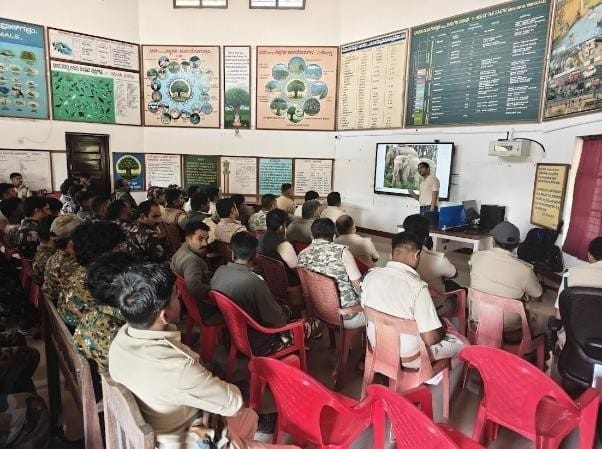
The coalition is also strengthening systems already created by the Karnataka Forest Department. Rapid Response Teams, Elephant Task Forces, and local information-sharing networks via SMS and WhatsApp are crucial to preventing human casualties. With support from partner organisations, these networks are being trained, improved, and scaled up. The aim is to ensure that when elephants are near settlements or estates, people receive timely information and field teams can respond in a coordinated manner.
Another major area of work is the assessment of barriers. Physical barriers such as trenches are often demanded as permanent solutions to conflict. But poorly planned barriers can create new problems. They may protect one village while diverting elephants into another. They may reduce crop damage but block elephants’ access to refuge areas. They may fragment movement and make elephant behaviour more unpredictable. The coalition has therefore assessed hundreds of kilometres of barriers to understand where they work, where they fail, and whether they shift conflict rather than reduce it. This marks an important shift. The question is no longer simply whether more barriers should be built, but where barriers are justified, which barriers are effective, and how they fit into the wider movement ecology of elephants and local safety.
A paradigm shift in conservation planning
The coalition’s central principle is that conservation decisions must be proactive, evidence-based, socially responsible, and holistic. Partner organisations have helped develop unified study designs and data collection systems. Thousands of elephant locations are being analysed to identify critical habitats, movement bottlenecks, seasonal patterns, crop-damage hotspots, and high-risk areas. Such data can help forest managers anticipate conflict rather than merely respond after damage has occurred.
Understanding the human dimension is equally important to find solutions. The coalition is using social surveys to understand the circumstances of human casualties. This can reveal whether deaths occur during crop guarding, walking in low light, estate work, road movement, crowding around elephants, or delayed response. Each pattern requires a curated solution. Street lighting, early warning, estate-level protocols, worker training, controlled crowd behaviour, and faster response systems can be designed only when the actual circumstances of risk are understood.
The coalition is also engaging with the coffee sector. This is essential because plantations are part of the landscape. Many coffee estates provide shade, tree cover, and space for elephants and other wildlife to move. But they are also workplaces. Coexistence cannot mean asking workers and growers to silently bear risk and costs of conservation. Solutions must include safety protocols, timely alerts, damage mitigation, fair compensation, and incentives for biodiversity-friendly plantation practices.
A technology-enabled elephant monitoring system is being rolled out across the three districts to provide real-time information on elephant presence. Such systems can help alert local residents, guide field teams, and improve coordination between forest divisions. But technology is only a tool and will not solve the conflict on its own. Its value lies in combining field knowledge, local trust, trained response teams, and reliable communication.
The larger goal of this coalition is to develop and institutionalise a landscape-level strategy and action plan for managing spaces shared by people and elephants. Although the coalition is still in its initial stages, its early impacts are already visible on the ground. Ground staff of the Forest Department are better equipped to handle elephant emergencies and are also able to coordinate across jurisdictions for efficient conflict management. Coffee planters are engaging with conservation agencies to find win-win solutions rather than only pushing for removal of elephants from coffee estates. The district administration is increasingly viewing human-elephant conflict as a development challenge and not a wildlife management challenges, thereby facilitating cross-sectoral convergence to ensure human safety.
Also read: Hyderabad’s Old City is still waiting for its metro line. Andhra Pradesh marching ahead
When conservation researchers, field practitioners, wildlife managers, district administrators, and local stakeholders work toward shared outcomes, the quality of decision-making improves. Protests demanding arbitrary elephant removal give way to consultations, workshops, and structured problem-solving. Communities that were earlier seen as “affected people” become partners in risk reduction. Coffee growers become stakeholders in landscape stewardship. Forest staff receive better evidence and stronger support. NGOs move from isolated projects to coordinated public-purpose action.
What is needed is a system that learns and adapts
The coalition helps shift the narrative from hostility to coexistence. This does not mean denying the seriousness of conflict. Human deaths, injuries, crop losses, and fear are real and must remain central to policy responses. But coexistence requires moving beyond a cycle of incident, anger, capture, compensation, and recurrence. It requires systems that reduce risk before tragedies occur. It requires safe passage for elephants and safe movement for people. It requires better land-use planning, infrastructure safeguards, effective communication, worker safety protocols, and scientific monitoring. Above all, it requires trust.
The true measure of the coalition’s success will not be the durability of any single intervention. It will be whether the lessons learned outlast the coalition itself. Data on elephant movement, crop damage patterns, casualty circumstances, barrier performance, and community attitudes are not merely inputs for project reports. They are the raw material for smarter policy. They can inform compensation frameworks, revise standard operating procedures for Forest Divisions, guide infrastructure safeguard norms, shape plantation-level safety protocols, and strengthen the legal and institutional architecture for human-wildlife coexistence.
In this sense, the coalition’s most enduring contribution may be institutional. If the evidence generated in Kodagu, Hassan, and Chikkamagaluru is systematically fed into state-level decision-making, the landscape can become a model for Karnataka and for other elephant landscapes across India. What works in one district can be adapted for another. What fails can be studied honestly and reformed. What communities accept can be scaled responsibly. What protects both people and elephants can become policy.
Toward shared futures for people and elephants
A successful coexistence model should not depend permanently on any one organisation or individual. It should leave behind knowledge, tools, systems, protocols, and relationships that the Forest Department, local communities, coffee sector, and district administration can sustain on their own.
The coffee-forest mosaics of Karnataka remind us that the future of elephant conservation will not be decided only inside forests, but in the spaces between them: plantations, roads, village meetings, district offices, estate settlements, early warning networks, and policy tables. In such landscapes, conservation cannot be imposed. It must be negotiated, understood, shared, and sustained.
The elephant’s instinct is to gather when the challenge is great. Karnataka’s conservation coalition draws from the same wisdom. Small steps taken together can have far greater impact than large steps taken in isolation. For people and elephants to share a landscape safely, coexistence must itself become a shared commitment.
Aritra Kshettry is the National Lead for Elephant Conservation at WWF-India.
Manoj Rajan is from the Indian Forest Service and is currently the Additional Principal Chief Conservator of Forests & Director of Project Elephant, Karnataka Forest Department.
Mavatur Ananda Kumar is a Scientist with the Nature Conservation Foundation with more than two decades of experience on managing human-elephant interactions in Tamil Nadu and Karnataka.
Sumanth Bindumadhav is the Director of Wildlife protection at Humane World for Animals/India and has been working on elephant conservation and snakebite mitigation in India for over 15 years.
Avinash Krishnan is the CEO of A Rocha India and a member of the IUCN SSC Asian Elephant Specialist Group with over 15 years of experience.
Views are personal.
(Edited by Prasanna Bachchhav)