




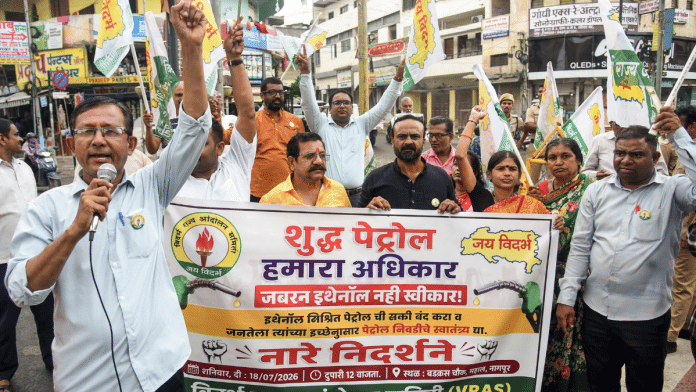

What works towards ensuring effective governance is not just the right policy, but also the pursuit and implementation of appropriate processes.
This is an old dictum that no government can afford to ignore while framing and implementing policies. Its relevance has become even more striking in the last few weeks, as the Narendra Modi government shows signs of ignoring this dictum’s intrinsic value and importance from a governance point of view. Two recent government policies highlight this failure in no uncertain terms.
The first such policy pertains to the government’s programme for increasing the share of ethanol in petrol. Over the last few years, the government has succeeded in ensuring that about 20 per cent of the most common variety of petrol sold through retail outlets consists of ethanol. This move has reduced the country’s dependence on imported crude oil and has also helped contain the cost of refining petrol, especially when international crude oil prices rose following the West Asian conflict. More importantly, the introduction of E20 petrol (which contains 20 per cent ethanol) has contributed to greater use of a cleaner fuel.
Despite the many advantages of E20 petrol, a problem arose during policy implementation. Stakeholders directly impacted by the rollout of the ethanol-in-petrol policy did not appear to be fully on board.
Petrol users had little choice, though they soon realised an obvious decline in the efficiency of ethanol-mixed petrol. Effectively, they were paying more for their fuel. They had to buy more petrol to secure the same mileage they would get from passenger cars using a similar volume of petrol without ethanol.
A few automobile users even complained of engine malfunctioning. There were also complaints about contamination of ethanol-mixed petrol, a charge the government vehemently denied, arguing that oil marketing companies had detected and dealt with only a very small number of contamination cases.
Automotive companies were aware of the implications of gradually increasing ethanol’s share in petrol, but they soon realised they needed a clear, phased rollout timetable to adjust the engines of the cars they planned to produce.
The obvious question is whether the automobile industry was taken on board before planning the schedule for introducing ethanol-based petrol nationwide. More importantly, the need for independent checking and certification of ethanol-mixed petrol was overlooked. If Brazil could set up an independent entity to regulate and check ethanol-mixed petrol, India, with ambitions to raise ethanol’s share in petrol over the coming years should have established such an institutional arrangement. Entrusting the responsibility of checking ethanol-based petrol to the same oil marketing companies that produce it created an avoidable conflict of interest. This was like implementing policy without taking care of the processes.
Also read: Three countries, no common enemy—why the Mecca defence pact is weaker than it looks
The second example of overlooking the need for proper processes before implementing policy is the well-intentioned and logical move to facilitate the levy of a merchant discount rate (MDR) on transactions via the Unified Payment Interface (UPI). There is intrinsically nothing wrong in empowering the UPI system to reintroduce MDR through a change in a key provision of Payment and Settlement Systems Act of 2007.
Substantial costs are incurred in maintaining and technologically updating an instant digital payment system. These costs cannot be allowed to be subsidised by the government or the financial system indefinitely. Therefore, what the government has done is par for the course.
On top of that, the government has now clarified that transactions between two individuals using UPI will remain free. An MDR can be levied only on merchant transactions, and this levy will depend on the merchant’s business turnover and perhaps also on the transaction value. These thresholds for determining the MDR levy will be decided by the UPI and Services Steering Committee, a body headed by the National Payments Corporation of India (NPCI), which operates digital payment systems like UPI.
There is another reason to welcome the move that should facilitate the return of MDR in the UPI system. In an attempt to expand digital payments and improve financial inclusion, the government reduced the MDR to zero on UPI and RuPay debit card transactions between a person and a merchant in January 2020. The government also began providing a subsidy (estimated at about Rs 2,000 crore last year) to help banks absorb that cost. This system is now being rolled back. Governments rarely withdraw a subsidy scheme once introduced. But it is reassuring that the government has now shown the courage to facilitate the reintroduction of MDR on persons-to-merchant transactions, though with threshold-based exemptions.
Yet, the government has not yet resolved a fundamental problem in using MDR in the UPI system. NPCI, promoted jointly by the Reserve Bank of India (RBI) and the Indian Banks Association, is owned collectively by a group of core promoter banks including a few leading public-sector and private-sector banks. Even though it is a not-for-profit company, the NPCI’s ownership structure creates an avoidable conflict of interest. Banks that own NPCI will directly benefit from the decision on the MDR levy, which a committee headed by NPCI will make.
Was it possible to avoid such a situation of potential conflict while making the legislative change? The problem, of course, arises from the way the government has approached regulation so far.
Once again the importance of following the process before implementing a major policy change was ignored. Such a failing can create avoidable hurdles in implementing policies at a time when the Modi government is planning major reforms in areas such as import tariffs and bilateral investment treaties. Incorporating feedback from stakeholders can help prevent operational problems when implementing a policy change. That process should not be ignored while undertaking a fresh round of reforms.
Ashok Bhattacharya is the Editorial Director, Business Standard. He tweets @AshokAkaybee. Views are personal.
What sort of protest is this? The objective of adding ethanol to petrol is to reduce import of petrol and hence save money. The government can do this: Allow both pure petrol and ethanol mixed petrol be available in all petrol pumps. Use economics to make the mixed petrol substantially cheaper than pure petrol. All such protests will vanish.