






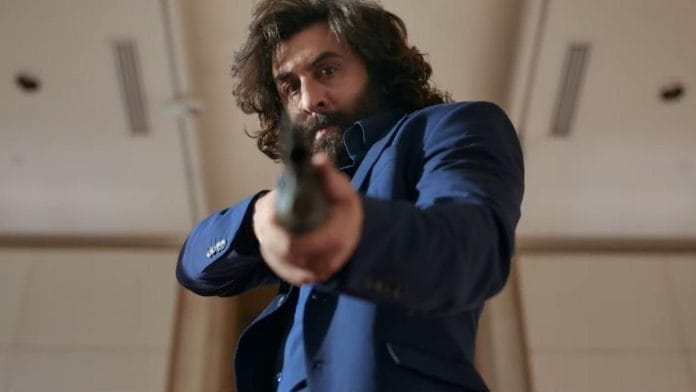

When did being a Bollywood hero become an exercise in throwing tantrums? A broken heart calls for alcohol, a disagreement with the father calls for rage, and a bruised ego apparently requires revenge. Somewhere along the way, our macho heroes have turned into manchildren, crying over every plot twist life throws at them, treating the slightest inconvenience like a personal war, and somehow expecting everyone around to pay for it.
Take Emraan Hashmi’s Awarapan 2 (2026). The film tries to reinvent him but fails to recreate the nostalgia of the original. Shivam finds an abandoned infant at the grave of his dead lover, Aaliyah, and names the girl after her. Years later, when the girl is trafficked to Bangkok, Shivam sets out to rescue her.
But where does this entire journey begin? At the grave of his love. Nineteen years have passed, yet the film still uses the memory of his dead lover to fuel his anger and grief. If the intention was to turn Shivam into a hero rescuing an orphan girl, why does his dead lover’s grave have to be the trigger that pushes him towards doing something good?
Throughout the film, he drinks, sings on the road, rides around and disturbs people. His grief becomes less a part of his character and more an excuse for his behaviour.
I am not comparing these films directly, but look at Amitabh Bachchan’s angry-young-man era, in films like Mard (1985), Deewaar (1975) and others. His characters were often fighting class differences and reflecting the frustrations of working-class Indians — ideas that could be read through a Marxist lens.
Yet, even while fighting the system, these men could joke around, respect people, maintain relationships and carry themselves with dignity. They could be angry without making their anger their entire personality. They did not drink endlessly, walk around with a patchy beard, neglect basic hygiene, or throw tantrums whenever life did not go their way.
That is the difference — Anger once had a cause, now it is the cause.
Plotlines these days are reducing male emotions to the same cycle of heartbreak, anger, addiction, going rogue and seeking revenge. A man can be hurt, angry or grieving without turning everyone around him into collateral damage.
We can, to some extent, understand that if a lover dies, the person left behind will grieve. But this is where Bollywood’s tantrum-driven male protagonist, Kabir Singh, comes in.
He abuses everyone around him, thinks he is a top-class surgeon, drinks, takes drugs, and even chases his house help for breaking his glasses — something he could easily replace from an e-commerce site or the nearest store.
And why does he behave like this? Because he is a topper who cannot marry his junior whom he tutored while she was injured. It is the same logic as a game of gully cricket: whoever owns the bat gets to bat first. Kabir Singh’s philosophy is — I am the topper, so my nuisance must be acceptable. And if it isn’t, I’ll carry on anyway.
At this rate, the day is not far when a so-called macho man in a film will cry because someone snatched his candy in childhood and, naturally, he will want it back. He will train himself in martial arts and hire a gang to take revenge on the person who stole his candy.
This sounds ridiculous. But increasingly, so does the logic of these heroes.
Take Ranbir Kapoor’s character in Animal (2023). His father does not give him the emotional validation he craves, so he responds with rage, violence, drinking, a machine gun and an increasingly extreme version of masculinity. The slightest emotional inconvenience becomes a reason to go rogue.
Now look at Wake Up Sid (2009). Sid was our slice-of-life superhero, a young man who wanted to be independent and eventually became a photojournalist. His father wanted him to score well, get a good job and build a conventional career. But Sid did not pick up a machine gun or go rogue because he was not getting the love and approval he wanted. He found his own way, discovered photography and eventually built an independent life.
These are two very different portrayals of a young man struggling with his father’s expectations. Wake Up Sid is about growing up and finding independence; Animal channels the same insecurity into rage, violence and domination.
Also read: Hijab is a choice. Why are we so uncomfortable when Muslim women freely choose it?
An emerging stereotype
These movies are beginning to feel like the fever dreams of teenage lovers who are ready to destroy the world, listen to Arijit Singh on loop because their high-school crush left them, and then head to the neighbourhood gym to turn their sorrows into muscle. In the pre-production phase, this emotional trajectory is almost turning into a logline — dad didn’t love, girlfriend left, the world disrespected me, and now I will destroy it.
Tantrum, tantrum and more tantrum. And why? Because his father behaves like a typical Indian father, and he wants to prove that he is worth something to a man who cannot emotionally validate him.
All these heroes on one side, Sunny Deol’s anger on the other. In Gadar: Ek Prem Katha (2001), his lover is in Pakistan, and yet his anger is directed at the system standing between them. He fights to get her back. What if the same situation happened to a new-age hero? He would probably decide that everyone is responsible for his suffering, turn himself into a warlord, and by the end, even the woman he loves would probably hate him.
To add to it, these heroes are so busy throwing tantrums that they have forgotten to deliver good dialogues. No one says things like, “Yeh dhai kilo ka haath jab padta hai, aadmi uthta nahi, uth jaata hai.” The anger used to come with dialogue, personality and presence. Now it mostly comes with a gym routine, a beard and a drinking problem.
The man-child problem is not limited to Bollywood. It has spread across pan-India cinema as well. Take the recent Toxic: The Fairy Tale for Grown-Ups (2026). The film gives us a bearded man surrounded by several complicated relationships who wants to rule Goa. And when he is not welcomed into the position he wants, he starts destroying everything around him.
The same thing happens in Pushpa (2021). He is involved in illegal business, but the film goes out of its way to justify him by showing that his illegal enterprise provides employment to villagers. KGF follows a similar template: the hero wants to become a larger-than-life criminal, and the narrative keeps finding ways to make that ambition look heroic.
Every hero cannot be a wannabe criminal, a warlord or an emotionally unstable man with a beard. Sometimes a man can simply be angry, fight for something bigger than his own ego, crack a joke, deliver a great dialogue and still remain a decent human being.
(Edited by Janaki Pande)