



Diwali is a dark occasion for owls, for they are caught, traded and sacrificed in many parts of India.
The Goddess Lakshmi, associated with wealth, and bringing wealth, is central to Diwali in most parts of India. In many images, you can see her, riding on an owl, entering some homes, perhaps not others. Praying to her, along with Ganesh ji, means asking for wealth and good fortune. Some people, blind to reason, try to force the powerful Goddess to stay in their homes for the entire year. They do this by sacrificing her vehicle, the owl, so she is stranded, almost holding her captive.
Personally, I find it absolutely unbelievable any divine being might shower a devotee with blessings after they try to kidnap them, and harm their beloved vaahan, or form of transport. It is much more humane and pious to safeguard owls as Lakshmi’s mode of transport, an attitude much more in keeping with the co-existence of humans and birds, as we see traditionally.
As you read this, owl trade is peaking. The World Wildlife Fund (WWF) suggests that of the 30 odd species of owls found in India, about half are entrapped in this nefarious, illegal mess. The most popular species are the Indian Eagle Owl, the Barn Owl, the Spotted Owlet. The Wildlife SOS adds to this list the Brown Fish Owl and Dusky Eagle Owl — both of whom, along with the Indian Eagle Owl, sport feather tufts — a specially desirable attribute for sacrifice.
You could say, owls from both the Strigidae and the Tytonidae families are threatened by this practice. An entire nexus of catchers, poachers, traders and clients turn hyper active during this festive season to buy an owl to sacrifice. What follows is no simple killing. The occult practices that encourage such a sacrifice mandate that the bird is first dismembered. Many of its parts are then used for complex rituals.
Although no definitive numbers exist, guestimates suggest thousands of owls are lost to such cruelty. If Diwali sacrifices see a peak, low grade poaching continues throughout the year. A WWF report, Imperilled Custodians of the Night, released in 2010, still relevant even today, points out that owls are used by some communities to remove spirits and act as delicacies for ancestors.
Also read: Air Marshal Dixit inherits an Air Force in demand, yet short of allies
Toxins, habitat loss, and sacrifice
Now think of the larger picture. Owls are already being crushed under multiple pressures. The toxins in the environment are found in their prey – rats – for example. This not only poisons the bird, but can harm their entire brood. The Better India reports on how scientists in Assam have tried greener rat control by eliminating pesticides and conserving owls — a win-win for both.
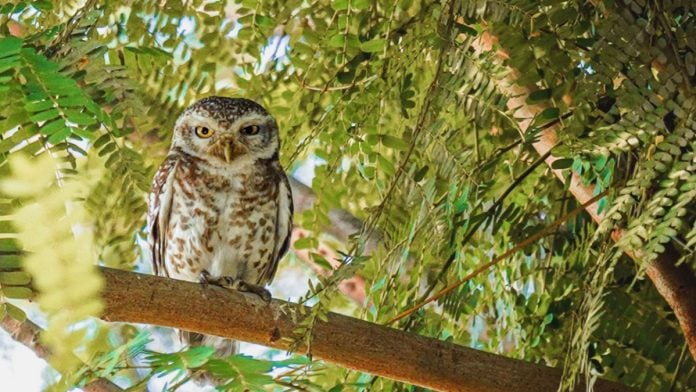
The continuing practice of owl sacrifice is particularly sad today, when the birds are also losing their habitat. Not all owls are adjusting to the loss of habitat with the same flexibility as the Spotted Owlet, a tiny brown owl with spots and a unibrow, commonly seen in our cities. You might have heard its shriek-like call.
If you have lived in a newly constructed building on the outskirts of the city, you may even have encountered Barn Owls, who live on perches on higher floors and swoop down on the lawns to catch rats. Often they are killed by terrified urban residents. You can recognize a barn owl by its plain white face — the look generated by what is a prominent facial disk.
Other owl species don’t have it as easy. They need creeks, old trees and darkness to flourish. Such spaces are vanishing as land use changes.
It is certainly possible to make it harder to catch them or to get away with such a crime — it is already illegal under the Wildlife Protection Act, 1972. As is the case for many other crimes, robust informer networks are vital, and so are influencers who advocate for enrichment without these forms of cruelty.
Most importantly, public opinion and sentiments can change. India has a history of deepening culture while rejecting superstition and poor practices. From child marriage, to Sati, to cruelty against animals, we have come a long way. Why not in the case of protecting our owls?
Bharati Chaturvedi is an avid birder. She is the founder of the environmental non-profit organisation, Chintan India. She tweets at @Bharati09. Views are personal.
(Edited by Janaki Pande)