




A couple of recent single-column stories in The New Indian Express caught my attention, piqued my interest. Tamil Nadu’s Minister for School Education A Rajmohan announced last week that private schools could now apply for certificates of registration — loosely called no-objection certificates — online. Also, that the widespread practice of asking for what may be euphemistically called ‘payments’ will cease.
As someone engaged in the broad governance of a small residential school in the Nilgiri hills, I have some personal experience of this issue. It has been a struggle to get a certificate of recognition, mandatory by state legislation, in the face of (euphemistically once again) ‘demands’, and despite the earnest efforts of someone kind and politically influential. I am not sure where the problem lay, but clearly it went beyond the local or bureaucratic level.
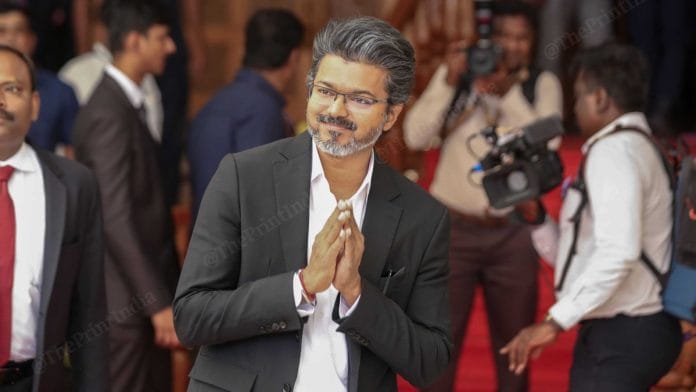
This is one of the many steps the new TVK government has taken to declare its intent to curb corruption. Other measures include those relating to tenders and processes in the electricity board, the notoriously crooked state liquor monopoly (TASMAC), and land registration department. During the Assembly election campaign, Joseph Vijay consistently framed corruption as an issue, promising a much cleaner administration if elected.
I suspect that this was one of the principal reasons he was voted to power. The promise of ending corruption is a powerful electoral plank, something an India frustrated with petty or cutting-edge corruption has witnessed time and again. For example, attributing Rajiv Gandhi’s record win in the 1984 Lok Sabha election solely to sympathy following his mother Indira Gandhi’s assassination is to ignore the role his image, as an uncorrupted outsider, played in the Congress victory. AAP’s incredible landslide in the 2015 Delhi Assembly polls and its convincing retention in 2020 owed considerably to perceptions of Arvind Kejriwal’s commitment to fight the systemic political rot.
Vijay’s biggest challenge
Electoral history also tells us that nothing soils quicker than political cleanliness, real or perceived. We saw Rajiv Gandhi’s ‘Mr Clean’ image shatter with the velocity of a howitzer shell (even if the Bofors trial in the Delhi High Court proved to be a damp judicial squib). And after 2022, corruption allegations against the AAP regime fractured and magnified Kejriwal’s weaknesses in his “sheesh mahal”.
Given this, Vijay’s biggest challenge could be to manage political expectations on the corruption front. Whether the initial flurry of anti-corruption moves will sustain remains to be seen. Not everyone in his government, to heavily understate the point, is lily-white. Shoring up political support with defectors from other parties only increases the risk of reverting to type, sinking back into the old groove.
Cynical they may be, but most observers of politics know that the system has a way of coopting and assimilating the best-intentioned. The harder they come (at corruption), the harder they fall.
Nevertheless, Vijay seems to have understood better than most that the issue of petty corruption touches a political chord. One of the principal reasons his electoral performance was badly underestimated was the failure of the media to recognise this.
The reason for this goes beyond blinkered political bias. We live in times where the commentariat, including Left and liberal, appears to have made an unjustified leap in reasoning. Having correctly identified that political corruption — the petty, cutting-edge kind — is pervasive, there has been a tendency to regard it as inescapable and therefore worthy of little attention.
I can see no other reason why there was hardly any reporting or comment on what has become a ubiquitous electoral phenomenon in Tamil Nadu. For many years now, elections have been marked by a business-like approach to bribery, with political parties using small-time functionaries to hand out cash to voters all over the state in small micro-managed neighbourhoods. These payouts are extensive, they are no secret, and they are extremely easy to establish. Ordinary folk in villages and small towns are more than willing to disclose how much they received from which party — all you need to do is ask.
Also read: Vijay is set to destroy the old, dominant Dravidianism of Tamil Nadu politics
The irony
What set the TVK apart is that it was the only political formation not to bribe voters – maybe it didn’t need to. I am not suggesting that this constitutes a sufficient reason to endorse it or any other party, far from it. But it was ironic that payouts – which arguably constitute a direct attempt to subvert democracy – received hardly any column inches or air time.
The attention paid to big-ticket corruption (the macro-level financial scandals that involve banking frauds, the corporate-state collusion, and the untrammelled exploitation of natural resources) is required and well justified. But it should not come at the cost of ignoring petty cutting-edge graft, which also affects the lives of ordinary citizens.
The latter, or garden variety of corruption, lacks a religion, caste, language or region. It is bereft of a creed, has no philosophy, and its machinery can and does flourish in perfectly bi-partisan contexts. Perhaps, it is its very non-ideological nature that has led to this jaded indifference among the chattering classes.
Mercifully, it still has a strong electoral echo with people who, despite being locked in a cycle of hope and despair, have not lost their optimism altogether. As for me, I hope the certificate of recognition for the school finally comes through.
Mukund Padmanabhan is a professor of philosophy at Krea University and former Editor of The Hindu. Views are personal.
(Edited by Aamaan Alam Khan)