






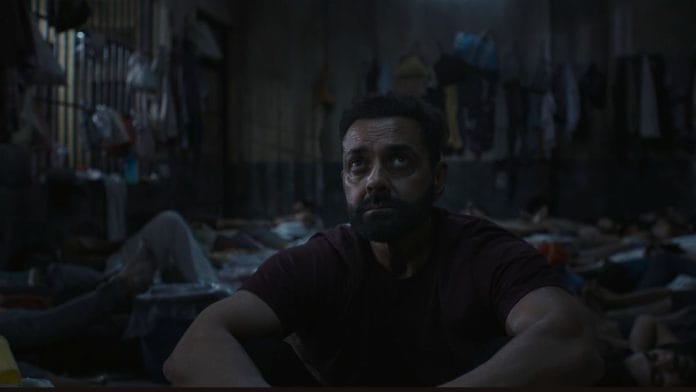


Anurag Kashyap’s Bandar is a safety lecture for men. Bobby Deol plays a struggling television actor in Mumbai who meets a woman through a dating app. They spend time together, have sex, and then the relationship begins to sour. She becomes increasingly possessive and obsessive. He grows uncomfortable. Eventually, he does what millions of people in the age of Tinder and Bumble do when a relationship becomes too complicated — he ghosts her, blocks her number, and moves on.
Then she files a rape case against him.
The rest of Bandar follows the destruction that ensues. Bobby Deol’s character, Samar, is arrested, jailed and swallowed by a legal system that seems indifferent to whether he is guilty or innocent. The film leaves little doubt about where its sympathies lie. This is not a story about a misunderstood woman or a murky consent dispute. It is a story about a man whose life is ruined by a woman the film portrays as manipulative, unstable and vindictive.
Now, women have spent generations being warned about men. Don’t trust strangers. Don’t go home with someone you barely know. Don’t be out with a man late, don’t drink with them. Don’t assume that a charming man is a safe man. Entire cultures have been built around teaching women how to identify danger before it is too late.
The interesting thing about Bandar is that it flips the direction of that warning. The film asks what happens when a man ignores the red flags.
The woman Samar becomes involved with is introduced as intensely emotional, impulsive and unpredictable. She becomes attached almost immediately. She does not respect boundaries. Every warning sign is visible. Yet he overlooks them because, like many people do, he assumes the situation is manageable with a simple click of a button.
It isn’t.
The male psychopath
Bandar starts resembling a gender-reversed version of stories women have been consuming for decades. Just flip the genders and the film suddenly sounds familiar. A woman meets someone new. The attention initially feels flattering. The possessiveness arrives later. The obsession follows. Then comes the punishment for trying to leave. Rape, threats, acid attacks. We have seen this before in innumerable movies, the news, and even around us.
See, Indian cinema has never lacked male psychopaths. There are stalkers, violent ex-lovers, rejected suitors and obsessive men in hundreds of films. Just see Anjaam (1994) or Darr (1993). Female characters, meanwhile, are more often positioned as victims navigating male danger.
Bandar turns that equation upside down. It’s like India’s Gone Girl (2014). There are consequences for your actions.
The movie, while pushing the narrative that men have it worse, depicts a woman who has tattoos, self-harms, has a violent and impulsive history and is a stalker. Only, her actions put the man in jail and if reversed, the woman will likely be in a shroud or casket or hospital.
The reality of violence, harassment and discrimination still falls overwhelmingly on women. What has changed, however, is the nature of vulnerability.
The rise of social media, dating apps and public call-outs has altered the landscape of modern relationships. Women now possess tools they were denied for generations. Screenshots can become evidence and Instagram stories can become testimony. A social media post can inflict consequences long before a courtroom delivers a verdict.
Most of the time, those tools have helped expose genuine abuse and hold powerful men accountable. But like every form of power, they have also created new anxieties.
Also Read: Maa Behen and the sleeveless blouse—a lazy symbol to stage a real conflict
No nuance
That is why Bandar feels very different from Section 375 (2019). The Akshaye Khanna film was interested in ambiguity. It recognised that power dynamics, consent and victimhood often overlap in messy ways. Even when it entertained the possibility of a false accusation, it never abandoned the larger conversation about gender and power.
The woman in Section 375 was not portrayed as evil or a ‘psychopath’. She was calm and composed and as much a victim herself unlike Sapna Pabbi’s character in Bandar.
Bandar presents a nightmare and commits to it completely without any of that nuance.
It’s like the movie is saying directly that men are in trouble now in this social media age and you have to protect yourselves.
Pay attention to who you invite into your life. Don’t ignore warning signs because they flatter your ego. Don’t assume intimacy guarantees trust. Don’t assume rejection is always harmless.
Women already know those lessons by heart. Bandar asks what happens when men have to learn them as well.
Views are personal.
And here comes Ms. Stela Dey again.
Pontificating and fulminating and crying herself hoarse over non-issues. Another instance of ‘pointless journalism’.
At times I resent these journalists at ThePrint – they seem to be earning a comfortable living doing pretty much nothing.
But am sure Ms. Karanjeet Kaur would highly approve of this.