




An Arunachal Pradesh Act, passed unanimously by its legislature 48 years ago, when it was still a Union Territory, has stirred the hornet’s nest.
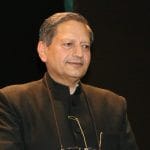
The Arunachal Pradesh Freedom of Religion Act, 1978 (Act No 4 of 1978)—one of India’s earliest state-level anti-conversion laws—was enacted during the tenure of the state’s first Chief Minister Prem Khandu Thungon to ‘protect the socio-cultural fabric and indigenous practices of local tribal communities from external religious influences’. However, although it remained on the statute book, the rules were never notified, thereby nullifying their practical implementation.
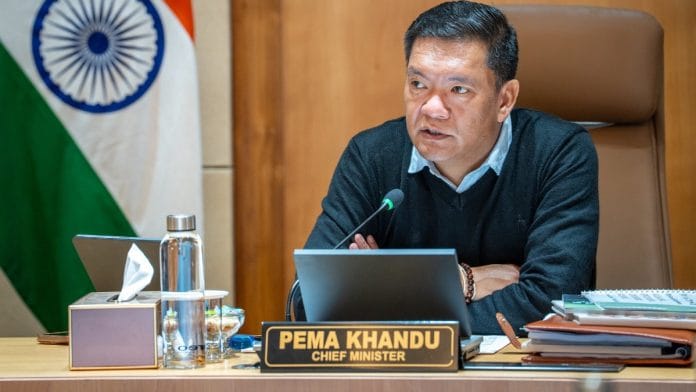
Meanwhile, in August 2017, the current CM Pema Khandu approved the establishment of a new Department of Indigenous Faith & Cultural Affairs (DIFCA). He said, “Creation of an independent department to look after preservation, protection and promotion of the state’s rich indigenous cultural heritage is a right step in the wake of a fast-changing world. We cannot let our indigenous culture just fade away like many in the world.”
The department was tasked with work relating to promotion of local languages, scripts and literature on indigenous folklores, folk tales, proverbs, chanting of priests; preservation and promotion of indigenous cultural heritage for overall prosperity and constant growth; maintenance of welfare schemes for indigenous priests and priesthood institutions; documentation of ritual systems of traditional marriages, birth, death and festivals and research on traditional medicinal plants and healing system; introduction of certificate courses on indigenous faiths and culture of the state; to preserve and promote indigenous games and sports by conducting tournaments and related activities.
This was welcomed by the Indigenous Faith and Cultural Society of Arunachal Pradesh (IFCSAP), the apex non-political socio-cultural organisation, founded in 1999, and dedicated to protecting, preserving, and promoting the ancestral spiritual traditions and cultural heritage of the indigenous tribes of Arunachal Pradesh. However, this did not abate the conversion momentum, for the state has witnessed a visible demographic transition, especially in Christianity.
IFCSAP pointed out that while the Christian population of the state was 0.79 per cent in 1971, it rose to 4.32 per cent in 1981, but by 2021, it had become the largest single denomination in the state with 30.6 per cent adherents. This was followed by Hinduism at 29 per cent, indigenous faiths—Doniyo Polo, Rangfrah, Ringya Jawmalu, Nani Intaye and Nyezi Ho—at 27 per cent and the different sects of Buddhism at about 12 per cent.
Distribution of faiths
Let us now discuss the district-wise distribution of faiths across the state, starting with the indigenous traditions, followed by Vaishnavism (Hinduism), Buddhism and Christianity.
Donyi-Polo (The Sun and Moon) is the most widespread and highly institutionalised indigenous faith. This is practised principally by the Tani group of tribes, which includes the Adi, Nyishi, Apatani, Galo, Tagin, and Mishing. The name literally translates to Donyi (Sun) and Polo (Moon). Rather than just physical celestial bodies, they represent the supreme, omnipresent polar forces of the universe—embodying truth, wisdom, cosmic balance, and harmony.
The faith centres on a supreme creator deity, often referred to as Sedi (by the Padam and Minyong) or Jimi (by the Galo), from whose body the entire universe and all natural elements were created. Formalised under the leadership of visionaries like Talom Rukbo in the late 20th century, Donyi-Polo moved from purely domestic rituals to a congregational system. Adherents now gather on Saturdays or Sundays in community prayer halls called Ganggings, and fly a distinct white flag with a red sun at its centre.
Rangfrah prevails in the southeastern districts of Changlang, Tirap, and Longding. It’s the traditional faith practised by the Tangsa, Tutsa, and Wancho tribes. Rangfrah is regarded as the Almighty Supreme God (the word Rang generally denotes the sky or the divine realm). Its places of worship are known as Rangnuwk Hum (God’s worship place), where community prayers, traditional chants, and spiritual discourses are held.
Amik Matai Ringya Jawmalu is the ancestral, indigenous faith system of the Miju and Digaru Mishmi sub-tribes, inhabiting the misty, mountainous northeastern pockets of the state (like the Lohit and Anjaw districts). Its Pantheon centres around Amik (the sun) and Matai (the creator), alongside a complex structure of benevolent and malevolent nature spirits that govern different elements—Buroo (the god of rivers), Shyuto (the god of mountains), and Teemik (the god of water springs).
Led by the Mishmi Indigenous Cultural and Faith Promotion Society (MICAFPS), the community has spent recent decades codifying their complex oral chants, birth and marriage rituals, and standardising the iconography of Amik Matai.
Nani Intaya is practised primarily by the Iddu Mishmi community (predominantly in the Dibang Valley). This traditional spiritual system centres around Nani Intaya, revered as the great ancestral mother and creator of mankind. The faith relies heavily on the Igu (the traditional shamans), who act as crucial intermediaries between the human world and the spirit realm, performing intricate healing rituals and leading major community festivals like Reh.
Practised by the Hruso (Aka) tribe in the West Kameng region, Nyezi-No literally translates to sky and earth. It is a profound nature-worshipping tradition that visualises the sky (Nyezi) and the earth (No) as the cosmic parents of creation, maintaining a worldview deeply focused on environmental equilibrium. It may be added that a section of this tribe has adopted several Vaishnavite practices, especially in the areas of Thrizino, Bhalukpong, Jamiri, and Buragaon within the West Kameng district.
The Vaishnavite influence is, however, most pronounced among the Noctes, a dominant tribe with a population of more than 1.16 lakh concentrated predominantly in the Patkai hills of the Tirap district, with smaller populations extending into neighbouring Longding and Changlang districts. The conversion of the Noctes is historically documented through their commercial and cultural exchanges with the plains of Assam, where they traded salt. Sometime between the late 17th and mid-18th century, the Nocte chief, Lotha Khonbao, travelled to the Bali Satra (near Naharkatiya) to meet the Vaishnava saint Ramadeva.
Lotha Khonbao, along with his followers, was formally initiated into the Mahapurushia Neo-Vaishnavite tradition (propagated by Srimanta Sankardeva). Upon initiation, the chief was given the name Narottam (“the best among men”). The prominent educational and spiritual hub Narottam Nagar in Tirap honours his legacy today.
The major conversion to Christianity has been witnessed in the Tani Group, wherein major tribes like the Nyishi are now estimated to be roughly 80 per cent to 90 per cent Christian (primarily Baptist). The Adi tribe also saw significant, though more divided, conversion rates. However, tribes with deeply institutionalised pre-existing world religions showed almost zero conversion.
The Buddhist tribes of the west and north (Monpa, Sherdukpen, Khampti) in Kameng and Twang, and the historically Vaishnavite-influenced tribes (Nocte and Aka) largely resisted Christian proselytisation.
Also read: There is only one path to peace in Manipur—weapons must be surrendered
Core issues of Arunachal Pradesh
In 2022, advocate Tambo Tamin filed a PIL in the Gauhati High Court, seeking rules for the Act’s implementation. On 1 October 2024, the Itanagar Bench of the Gauhati HC directed the Arunachal Pradesh government to finalise and notify the operational rules for the Arunachal Pradesh Freedom of Religion Act (APFRA), 1978, which had remained largely inactive for decades.
The Pema Khandu government appointed a High-Power Committee (HPC) under Justice (Retd) Brojendra Prasad Katakey. The members of the committee include two ministers, Kento Jini and Balo Raja, two bureaucrats, and heads of six organisations—Arunachal Christian Forum (ACF), Indigenous Faith and Cultural Society of Arunachal Pradesh (IFCSAP), Monpa Mimang Tsogpa, Tai Khamti Development Society, Arunachal Vikas Parishad, and the state unit of the Vishwa Hindu Parishad. Although ACF president Tarh Miri was included in the HPC, the organisation stated that the panel’s constitution undermines its demand for the scrapping of the APFRA.
On 8 June, the HPC submitted its report, and both IFCSAP and ACF have raised the ante. While ISCSAP has urged the state government to take timely steps toward notifying the rules under the APFRA, the ACF is seeking its withdrawal. The ACF contends that this is against the four core freedoms guaranteed under Article 25 like the freedom of conscience, the absolute inner freedom of an individual to shape their relationship with the divine or their own moral compass, the right to profess which implies the freedom to openly declare one’s religious faith and beliefs, the right to practice, including the right to perform rituals, ceremonies, worship, and outwardly express religious beliefs, and last but not the least, the right to propagate which allows adherents of any faith to transmit and share their religious beliefs with others.
On the other hand, IFCSAP said the issue of repealing the APFRA was never within the mandate of the HPC, which was constituted solely to examine matters related to the implementation of the Act and framing of its Rules. It is hoped that the government will expeditiously consider the committee’s recommendations and bring the Rules into force in accordance with legal and constitutional requirements. It also stated that it would continue to monitor the implementation process and, if necessary, pursue legal remedies to ensure compliance with the directions of the Guahati HC.
Even as the state is grappling with these issues, another issue—Muslims entering the state on account of the strict enforcement of CAA in Assam by CM Himanta Biswa Sarma—is also gaining ground, especially in subdivisions like Bhalukpong in West Kameng on the Sonitpur border (Assam) and Lekang circle in Arunachal in Tinsukia in Assam.
Also read: Ramachandra Guha is asking the wrong question about Rahul Gandhi
Pema Khandu walking on tight rope
Last month, an indigenous youth group, the Arunachal Pradesh Indigenous Youth Organisation (APIYO) President Taro Sonam Liyak stepped up the campaign against the “illegal migrant issue” to safeguard the demography of the indigenous community. The organisation called for a 24-hour shutdown in Arunachal Pradesh’s capital of Itanagar on 29 May, to “prevent illegal immigrants,” a label used to target Bangladeshi-speaking Muslims, from celebrating Eid.
“We have been asking the government to identify and deport alleged illegal Bangladeshi migrants. We have also been questioning the legality of mosques and madrasas in certain areas. The government’s inaction compelled us to call the shutdown,” Liyak had said.
In response, the Itanagar administration said that they had already shut down 11 illegal structures (mosques). It is learnt that a special task force has been set up for the strictest enforcement of the ILP to prevent any non-bona fide entry into the state, but one has to remember that the border is not only long, but also porous, as forests and riverine tracts criss-cross the two states.
Meanwhile, both the AICFO and the ACF are putting pressure on the CM to act and to refrain from action, respectively. Khandu is indeed walking a tight rope. One hopes that it does not snap.
Sanjeev Chopra is a Senior Fellow at the Centre for Contemporary Studies, Prime Ministers Museum and Library (PMML), New Delhi, where his Fellowship topic is Borders, Boundaries and Bluewaters of Bharat. Views are personal.
(Edited by Saptak Datta)