









As you read this, the city you live in is either flooded by overflowing rivers or drowning under its poor drainage and water harvesting systems. Every year, the monsoon arrives not only as a relief from the scorching summer heat but, increasingly, as a curse. Developing cities that lack adequate infrastructure, a sophisticated and efficient drainage system, and functioning water harvesting systems quickly transform into the proverbial ‘Venice of the East’, though without the romance.
And if you are fortunate enough not to be living in a flooded city, spare a thought for our rivers. Many of them now flow through broken and damaged ecosystems, their natural courses disrupted by development and the relentless expansion of human settlements. It is the reason thousands of villages are swept away each year. Just last year, Punjab was badly affected by the rain, and this year, floods in Assam have displaced thousands of people and have caused many casualties. The monsoon cycle has become erratic, with some parts of the country experiencing repeated floods, yet there is a 16 per cent rain deficit. More than half of India’s districts remain rain deficient.
While the central government is quiet on this issue, experts can’t help but question if this is a man-made disaster. In a 2023 paper, a review of a plethora of data from 2010 to 2020 was used to understand the nature of these repeated events and the underlying issue. The review concluded that anthropogenic (man-made) factors such as urbanisation, deforestation, absence of drainage, and choking of natural waterways outweigh the natural factors for floods in Assam.
When the monsoon was delayed, panic gripped cities and authorities. But when it starts to pour, people lose their land, lives, and livelihoods. Some roads become rivers, and others start to resemble the surface of the moon.
As an archaeologist, I do not see this simply as history repeating itself. I see it as our failure to learn from the past. I cannot emphasise the importance of water harvesting, storage, and management enough. We can, of course, continue to cite the sophisticated hydraulic systems of the Harappan Civilisation; it’s a familiar story to many Indians. But there is another ancient civilisation that championed water science not only to combat dry, arid climates in the past, but also offers a source of livelihood to thousands even today. This is the story of the hydrological infrastructure of Sri Lankan kings—a lesson for the modern world.
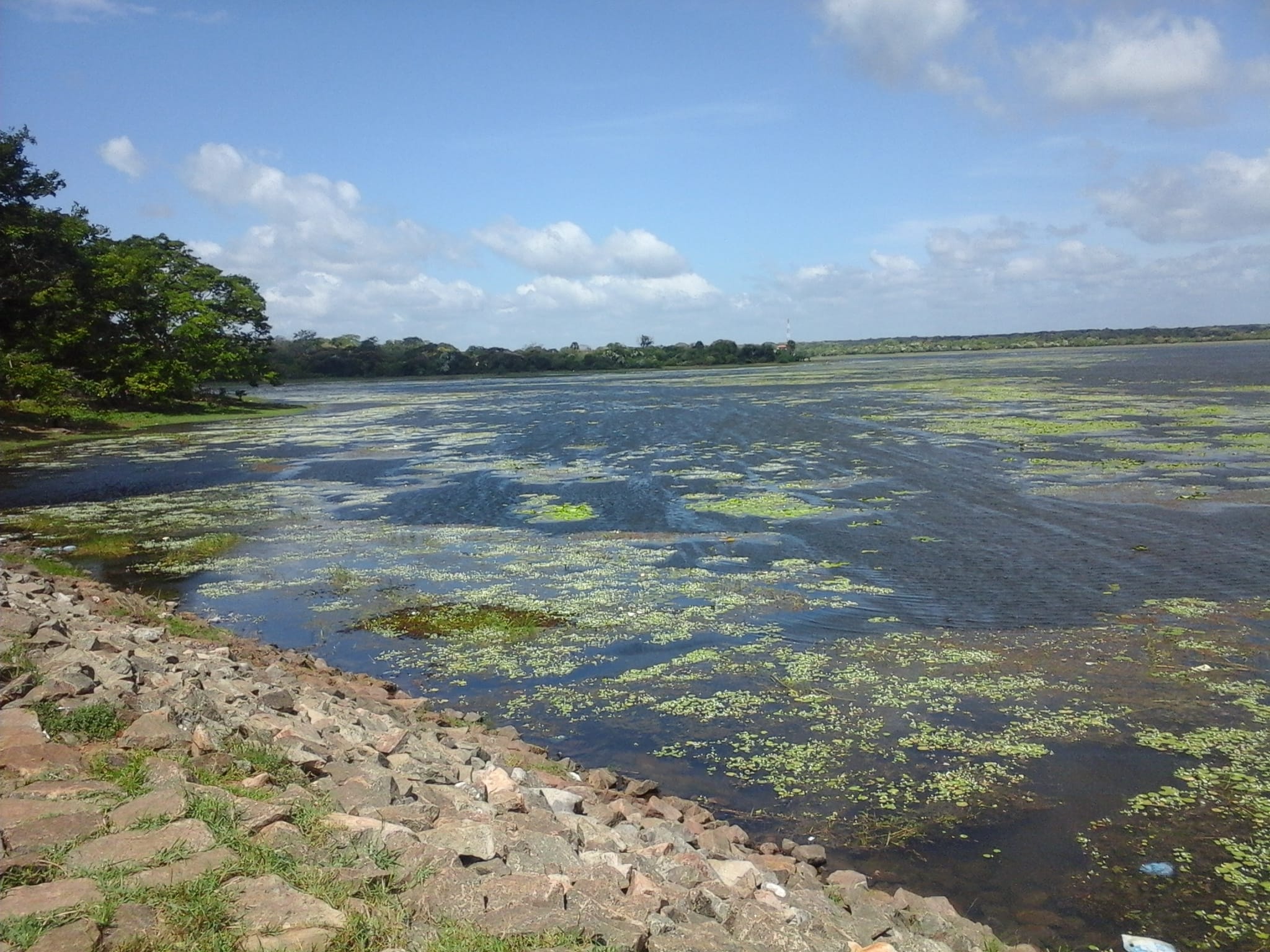
Anuradhapura and the making of a hydraulic civilisation
Known as one of the most sacred pilgrimage sites for Buddhists, the ancient city of Anuradhapura is a remarkable landscape where religion, kingship. and hydraulic science come together. Monumental stupas, monasteries, towering stone pillars, and ancient tanks are scattered across the sacred landscape of this ancient capital. The city’s religious significance was established in the third century BCE, when Sanghamitta, daughter of Mauryan emperor Asoka, brought a cutting from the Bodhi Tree to Anuradhapura. Planted at the Mahavihara, the Sri Maha Bodhi has become one of the most important centres of Buddhist pilgrimage on the island.
Yet, Anuradhapura is more than a sacred city. It served as the political capital of Sri Lanka for nearly 1400 years, from the fifth century BCE until it was abandoned as the principal royal centre following the Chola conquest at Anuradhapura in the 10th century CE. Anuradhapura was not simply a city built beside water; over centuries, it became one that engineered its landscape around water.
But Anuradhapura’s rise presented a fundamental challenge. Located in Sri Lanka’s dry zone, the region receives highly seasonal rainfall, creating a stark contrast between periods of abundance and prolonged periods of scarcity. Although the island benefits from two monsoon systems, the central zone receives considerably less rainfall. The challenge, therefore, was not simply the absence of water, but its uneven distribution across time and space.
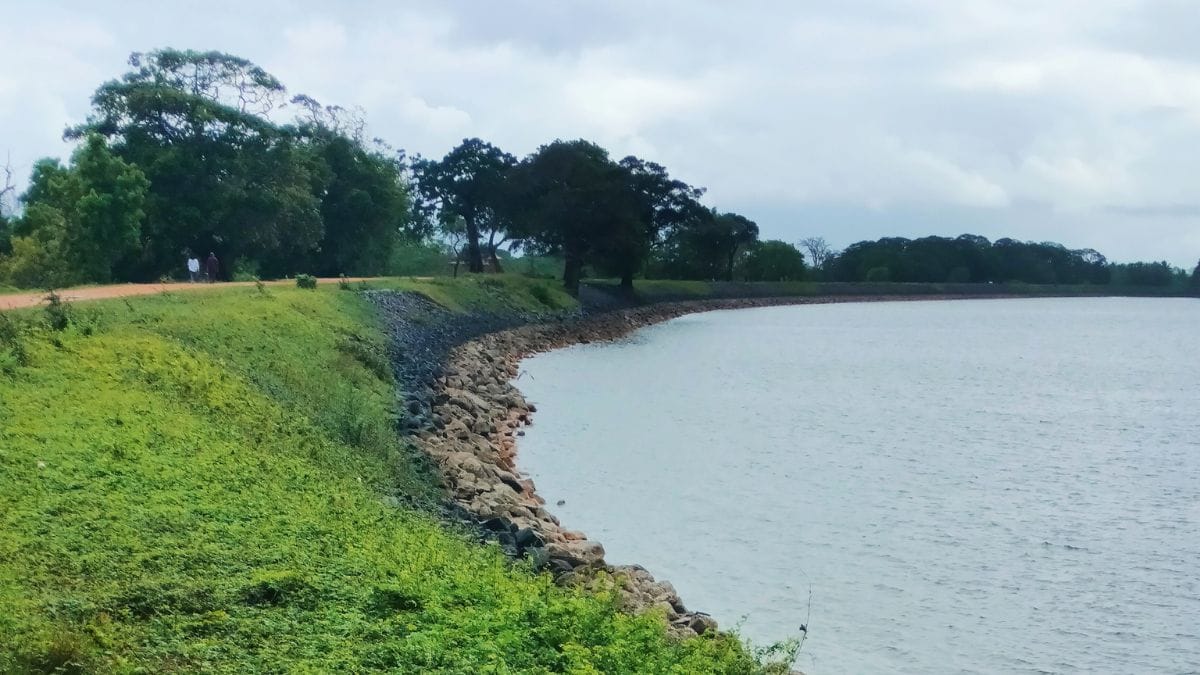
For a capital that depended on agriculture to sustain its population and its political and religious status, it was imperative to manage this seasonal variability. Therefore, an organised hydraulic system was developed. As the city grew into an important political and religious centre, successive rulers invested in an increasingly sophisticated hydraulic infrastructure that transformed the surrounding landscape.
The beginning of this transformation is traditionally associated with King Pandukabhaya, the first ruler of Anuradhapura in c 437 BCE. According to the Mahavamsa, Pandukabhaya constructed Abhaya Wewa (Wewa is translated to tank/reservoir), which was not just any other reservoir; it was the first identified artificial water storage system in Sri Lanka. With an impressive embankment stretching 5,910 feet and rising 22 feet high, it was designed to hold 1,580 acre-feet of water over a spread of 1,235 acres. Abhaya Wewa marked the dawn of Sri Lanka’s hydraulic civilisation.
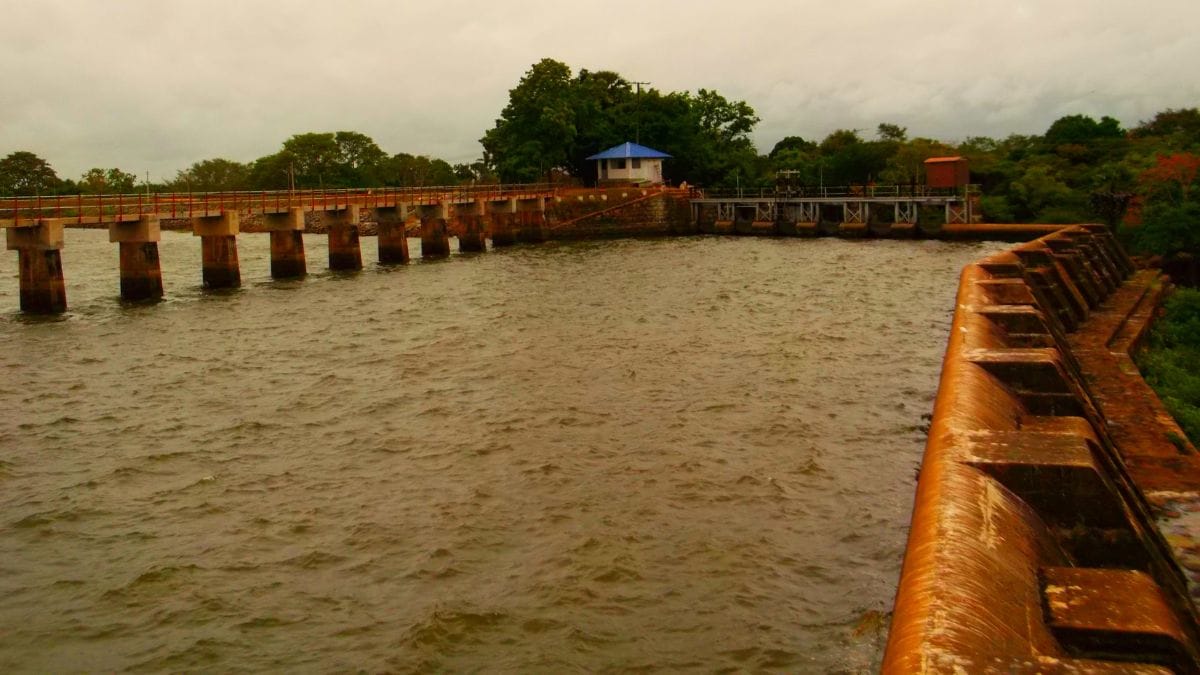
The development of the hydraulic landscape continued over several centuries under successive rulers including King Vasabha, King Mahasena, King Dhatusena, and in the later period, King Parakramabahu I. Each contributed to the expansion and refinement of Sri Lanka’s irrigation infrastructure, which lasted for over 2,000 years and ended with King Parakramabahu I, the 12th-century ruler of Polonnaruwa, who believed that not even a single drop of rainwater must flow into the ocean without being made useful to man. The Parakrama Samudra, an enormous reservoir system at Polonnaruwa, demonstrates how the hydraulic traditions that developed during the Anuradhapura period expanded into a nexus of 30,000 tanks recorded at present.
Also read: Sri Lanka’s Sigiriya wasn’t Ravan’s palace. Here’s the real history
Tank Cascade System
Unlike the ancient civilisations that blocked rivers to make dams, the engineers at Anuradhapura and subsequently across the entire island used a much more eco-friendly approach. They diverted and stored rainwater using canals, natural catchments, and cascading tanks. This system was sustainable, self-regulating, and in harmony with nature. The result was a complex island-wide network of water storage and distribution—a system that turned water into treasure.
The network consisted of tanks, feeder canals, spillways, ponds, catchments, and paddy fields, with the reservoirs utilising the captured rainwater before it reached the rivers or drainage system. This interconnected arrangement is known as the Tank Cascade System. It helped recharge groundwater, reduced flood risk, controlled soil erosion, trapped sediment, and maintained water availability in a naturally arid area. By distributing water across the landscape, it aided agriculture and livelihoods.
This was the hydraulic legacy of the Sri Lankan kings, cared for by the people and a sacred space passed down through generations. Irrigation was considered the royal duty, a mark of a righteous king. In many ways, the principles underlying the ancient system correspond with ideas that have become central to modern water management approaches.
This was not an easy feat, even if one argues that it took 2,000 years to achieve the engineering marvel. It is certainly not easy to regulate the movement of water, let alone store it and then release it through the sluice. The Lankan system is often described as an early example of pressure-regulating hydraulic engineering. It also includes spillways, contour canals, embankments, and stone revetments that allowed ancient engineers to control how much water was to be released and when. This was only possible through an understanding of topography, gravity, seasonal rainfall, and hydrology.
Also read: Sri Lanka’s Ibbankatuwa shows what India gets wrong about archaeology
Dholavira, Sri Lanka, and flooded cities
The earliest example of similar hydraulic engineering is seen at Dholavira in the third millennium BCE. Although not as extensive as in the case of Sri Lanka, and certainly not effective in terms of its continuity into the 21st century, Dholavira used the same principle of storing rainwater and harvesting it in periods of prolonged droughts. Environmental sustainability was the core of the hydraulic system at Dholavira. The series of reservoirs, filled with diverted excess rainwater to be used throughout the year, is not only for the government to boast about but to promote. In sharp contrast to the hydraulic system in Sri Lanka, which continues to function and is cared for by the community, Indians have forgotten our ancient wisdom of protecting water.
It is true that the reservoirs require continuous maintenance and recent irrigation landscapes have altered ecosystems. Over the past two centuries, neglect and degradation of the system upended this delicate balance, which has disrupted the water-human connection and balance. The Climate Resilient Integrated Water Management Project (CRIWMP), financed by the Green Climate Fund, are working in Sri Lanka to restore this system under Azusa Kubota, Representative of UNDP, Sri Lanka. It offers a blueprint for climate resilience.
Dholavira and Sri Lanka, separated by centuries and geography, demonstrate similar environmental intelligence. Both recognise survival and adaptability, but what sets Sri Lanka apart is its willingness to maintain what was built thousands of years ago. Indians, on the other hand, have abandoned our inheritance. We have also given up on the drainage system, something Indians mastered before any other civilisation. It is time to use history not only to wage wars, but to learn and implement in real time.
Disha Ahluwalia is an archaeologist and junior research fellow at the Indian Council Of Historical Research. She tweets @ahluwaliadisha. Views are personal.
(Edited by Prasanna Bachchhav)