





Sri Lanka welcomed about 2.3 million travellers in 2025. Indians accounted for around 23 per cent of the arrivals. While the coast remains Sri Lanka’s biggest tourist attraction, nearly one-third of Indian travellers also visit the ‘Cultural Triangle’, home to UNESCO World Heritage Sites including Anuradhapura, Dambulla, Sigiriya and Polonnaruwa. Yet, tucked away just beyond this celebrated circuit is a site that rarely finds mention in guidebooks.
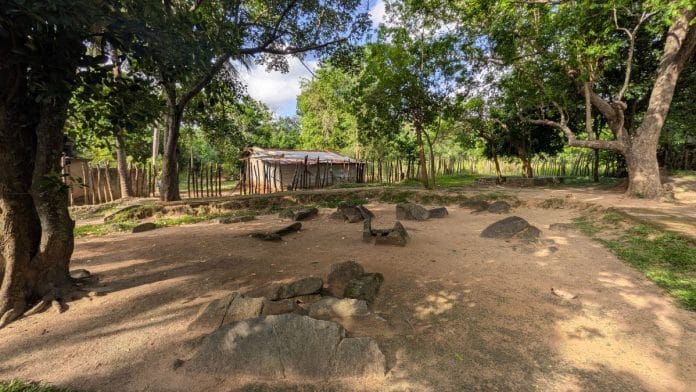
On a summer morning, while driving to Dambulla, a modest roadside signboard caught my eye. It was an unexpected detour that led to one of the island’s most significant protohistoric sites. Around three kilometres from Dambulla Cave Temples lies Ibbankatuwa, one of Sri Lanka’s largest and best-preserved protohistoric Megalithic burial sites. As an archaeologist, finding Ibbankatuwa in the middle of a cultural trail was exciting. The state of preservation and display impressed me, but it also underscored how little visibility Megalithic sites receive in the subcontinent, despite their remarkable archaeological significance.
Inevitably, I circled back to the most pressing question—do we need mega monument-like infrastructure to convert archaeological sites into tourist spots? Or can we take a much more simplistic path of preservation just as in the case of Ibbankatuwa.
Also read: Rajka Pottery reveals India’s ceramic heritage. It’s ethnoarchaeology in action
Ibbankatuwa Burial Complex
Sri Lanka’s archaeological antiquity goes back to the palaeolithic period (25,000 BP). It’s followed by the Mesolithic period characterised by hunting, gathering and fishing as main source of economy. Then comes the proto-historic period (c.1000-300 BCE), which marks the emergence of iron technology, black and red ware and megalithic burial architecture. This period was accompanied by agriculture, pastoralism and the rise of clan-based village systems.
Ibbankatuwa burial site belongs to the proto-historic period or the Early Iron Age in Sri Lanka, a transformative period marked by the spread of iron technology on the island.
The archaeological site, situated south of the Dambulla Oya reservoir in Sri Lanka’s Matale district, within the island’s dry zone, is the country’s largest and best-preserved protohistoric megalithic cemetery. These megaliths are present in the form of cist burials. Made of local granite stone, they house the remains of the dead—either as ashes, bone fragments, or partial skeletal remains—along with antiquities including beads, iron objects and most importantly black and red ware pottery.
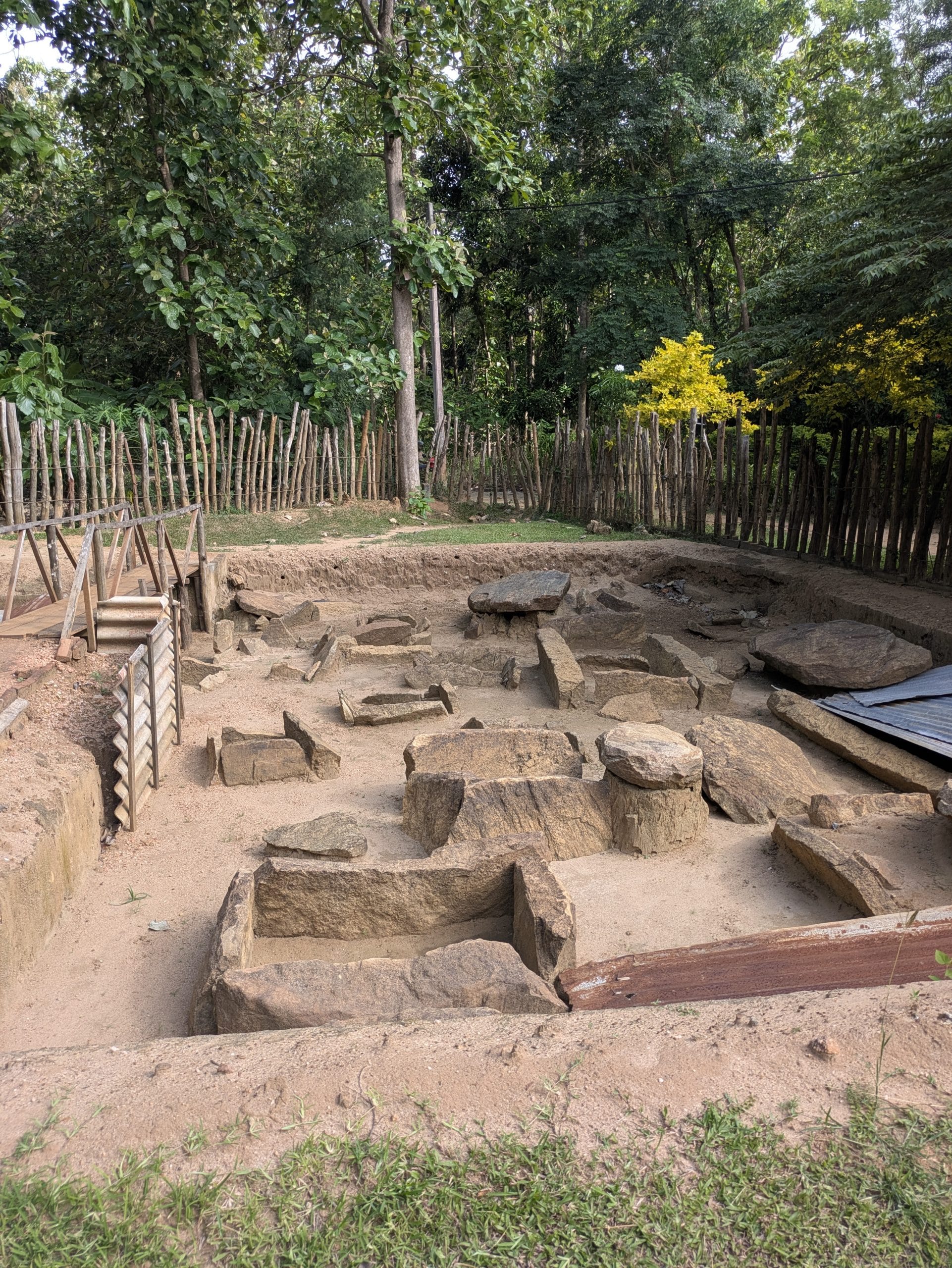
Cist burials are burial chambers made by placing four stone slabs vertically erect, creating either a square or rectangular chamber. Often these chambers are covered by cap-stones.
The site was first excavated in 1970 by archaeologist Raja De Silva, and again in 1982, when the Dambulla Cultural Triangle, between Kandy, Polonnaruwa and Anuradhapura, was established. The site was also excavated from 1988-1991. It was led by archaeologist Senake Bandaranayake in collaboration with a German archeology team from KAVA (Kommission für Allgemeine und Vergleichende Archäologie), Sri Lanka’s Central Cultural Fund and the Postgraduate Institute of Archaeology in Colombo. These archaeological investigations revealed twenty-one burial chambers along with a large number of beads made of carnelian, agate, onyx, which were imported from India, along with a plethora of pottery and iron objects.
Archaeologists believe that the site spans an area of one square kilometre and has over 42 clusters of cist tombs with an average of about ten tombs per cluster. Scientific dates from the site place it between c.750-500 BCE. The researchers also believe that the burial site is associated with the Iron Age settlement of Polwatta, which is in the vicinity.
In 2015 the site was reinvestigated west of the 21 chambers, which yielded an additional 47 burials: 26 cist burials and 21 urn burials. Subsequently in 2017, the site was conserved and opened for public viewing.
According to archaeologists these cist burials symbolise elite power and social status. They provide evidence of indigenous civilisation. As per archaeologist Sudharshan Seneviratne, South India and Sri Lanka shared a culture going all the way from the prehistoric into the megalithic period. There are similarities between the megalithic burials and shared material culture between the two regions.
The signature black and red ware pottery is associated with megaliths and the Iron Age in south India as well as in Sri Lanka. Moreover, the agate and carnelian beads, which were mined and manufactured in Gujarat, are indicators of a long-distance trade network that connects western India to peninsular India and eventually to the island of Sri Lanka.
But the megalithic structures in Sri Lanka are not the result of simple migratory waves from India. They represent a social structure built by mixing with indigenous population groups.
Across South Asia, megalithic traditions share striking similarities. Cist burials comparable to those at Ibbankatuwa are found at Hire Benkal in Karnataka, Porunthal, Kadumanal and Mallalhandiram in Tamil Nadu and Junapani and Mahurjhari in Maharashtra. While Hire Benkal has recently received greater attention following its inclusion in UNESCO’s Tentative List of World Heritage Sites, most of India’s megalithic landscape remains neglected, inaccessible, or virtually unknown to the public. In that respect, Ibbankatuwa offers an important lesson.
Also read: Jaipur’s havelis, bazaars are disappearing. Even UNESCO tag can’t protect heritage in India
Lack of vision
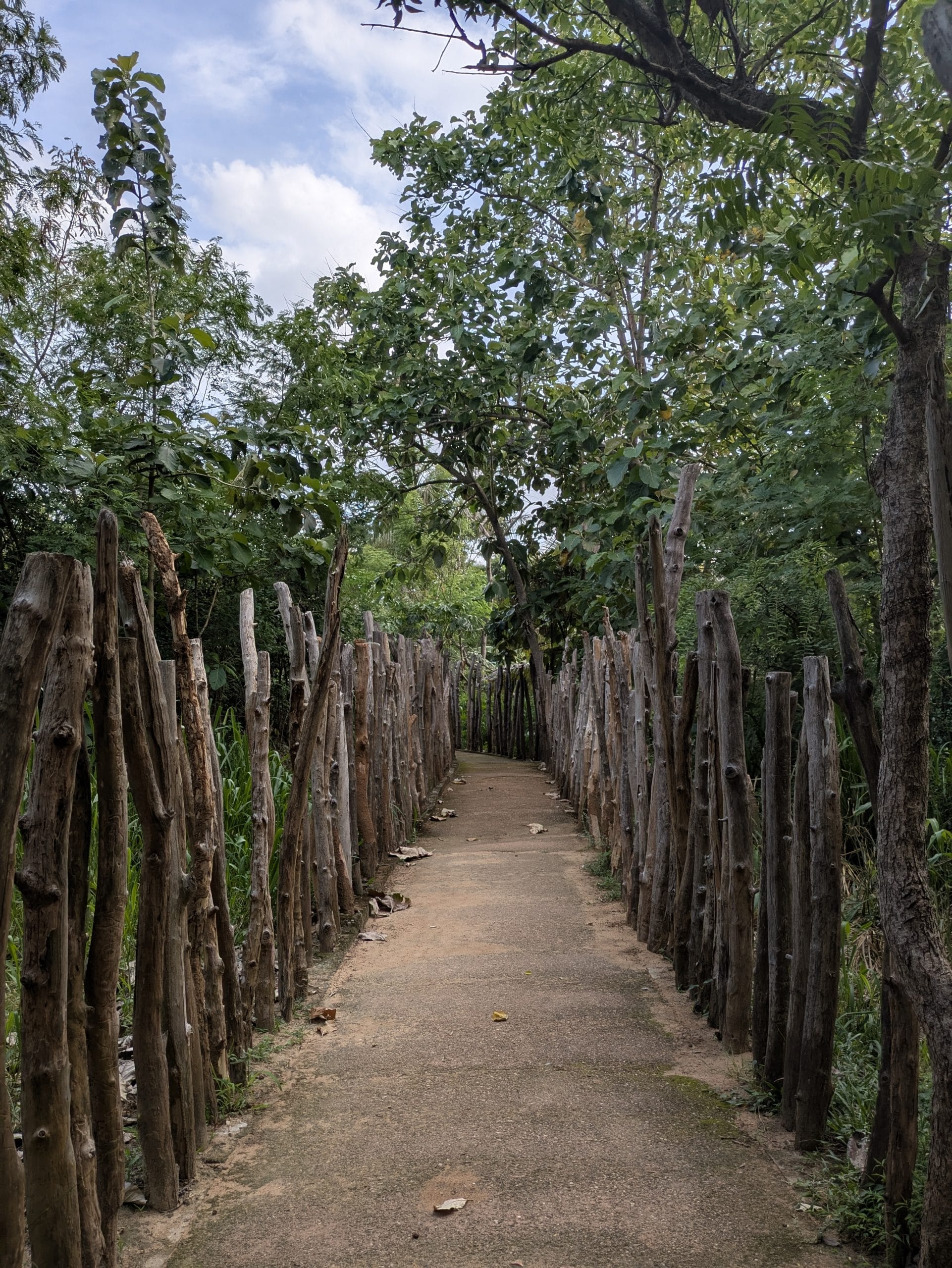
What struck me the most at Ibbankatuwa was not the scale of its infrastructure, but the restraint with which the site has been presented. The burials have been conserved and displayed in an understated manner, without monumental infrastructure. This reflects an understanding that archaeological sites cannot be separated from the landscape that shapes and preserves it.
Landscape is not merely a backdrop to archaeology; it is an integral part of its history. It plays a significant role in the site-formation process (a process of decay and preservation which converts a living monument into an archaeological site). At Ibbankatuwa, the terrain is preserved with remarkable sensitivity. The local people living around the site have become part of its continuing cultural landscape rather than being a hindrance.
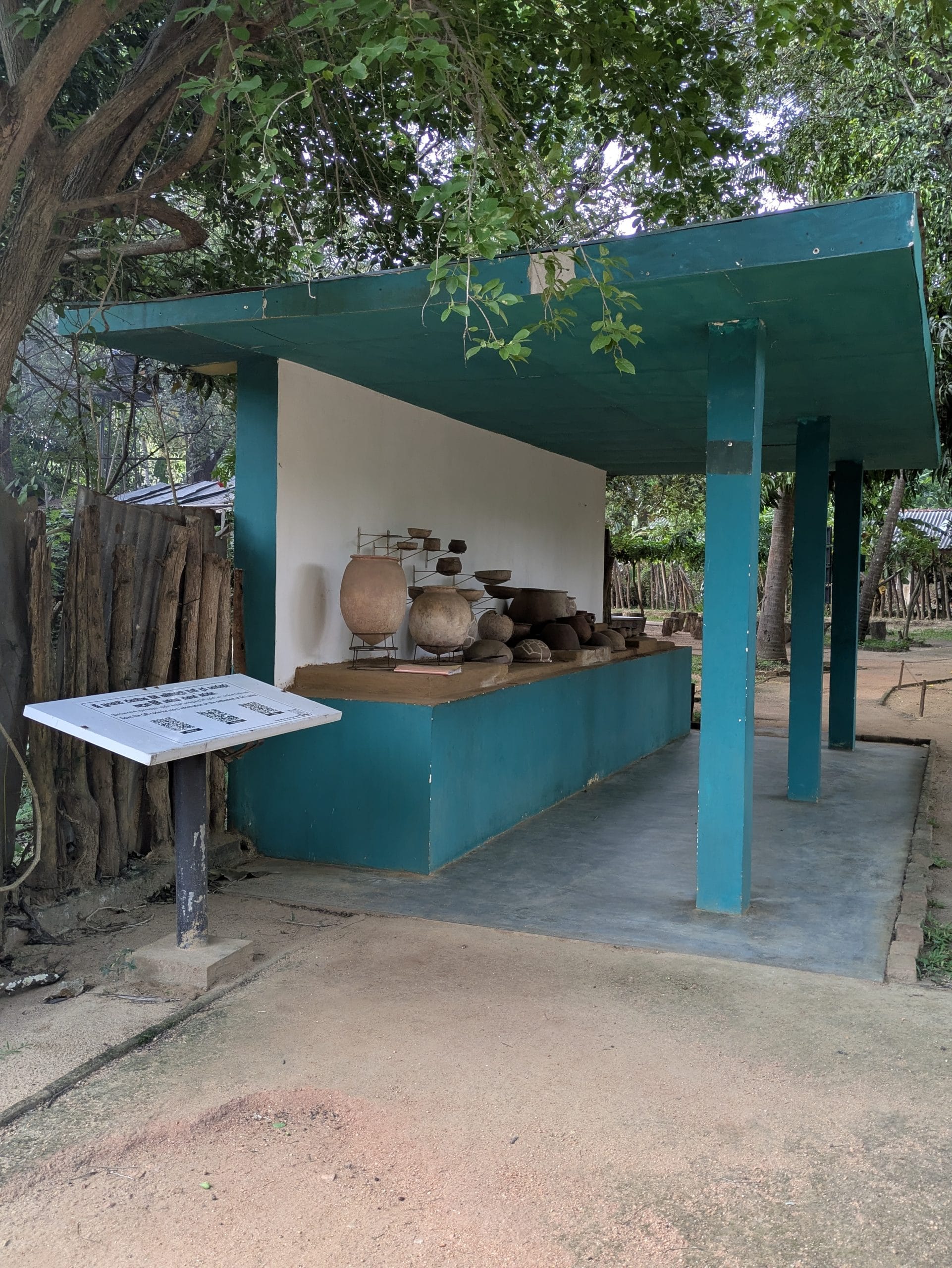
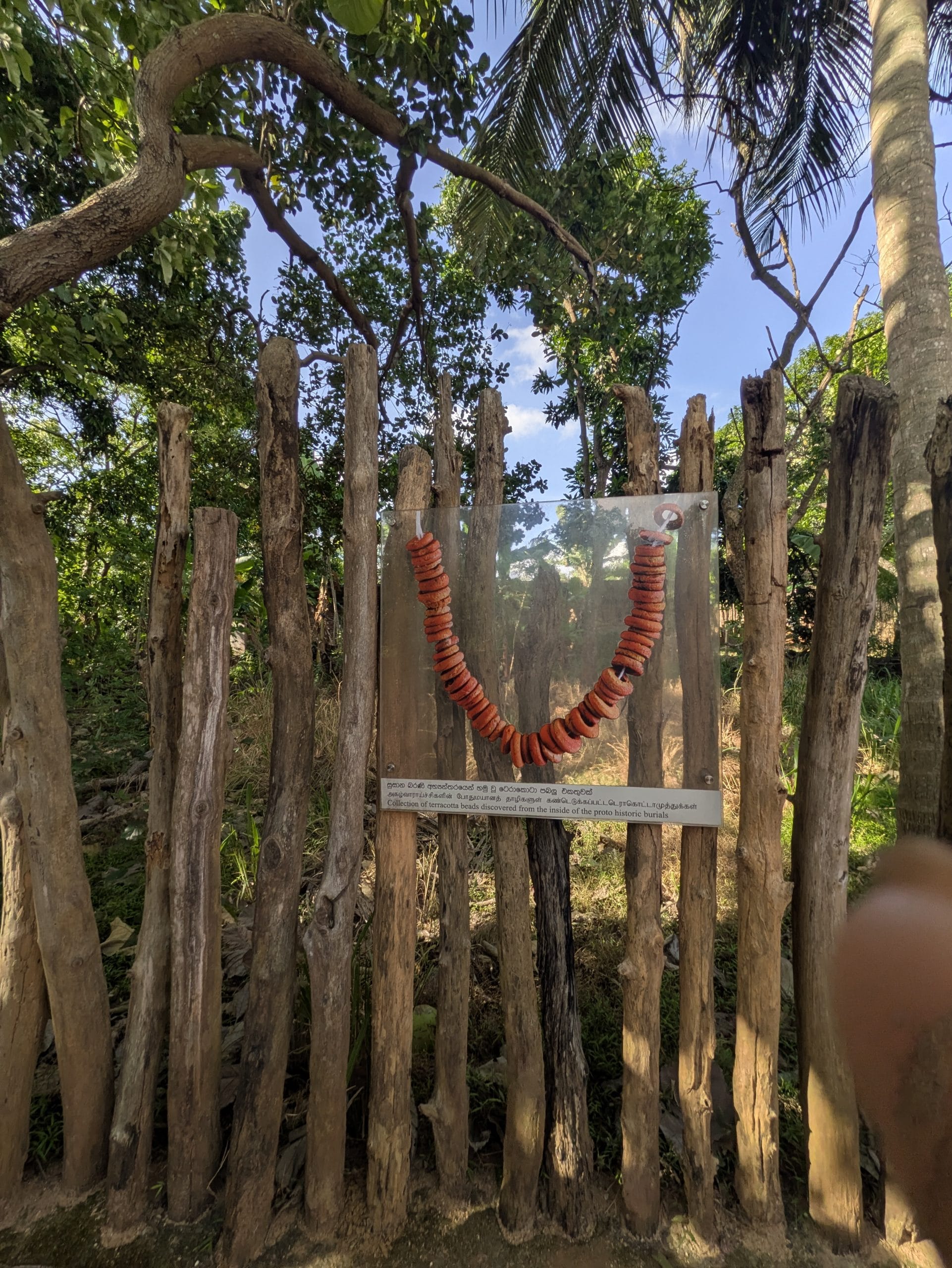
Instead of using heaving building materials, local and eco-friendly materials such as bamboo are used on the pathways. As one walks toward the site from the ticket counter, the bamboo railings have fibre or acrylic transparent panels with important antiquities printed on them. When the sunlight passes through these boards, it automatically lights up the panels, making it efficient and affordable. Each cluster has QR codes that directs the visitors to portals with additional information. However, the most impressive aspect was a shaded display area with replicas of pottery found at the site. This brings the visitors closer to the history of the site.
This experience left me asking an uncomfortable question, do archaeological sites really require monumental visitor centres and projects worth crores before they become accessible to the public? Maybe what we lack is not money or intent but vision.
Not so long ago, upon visiting the famous site of Arikamedu near the city of Puducherry, I was enraged and disappointed.
On the Arikamedu road, a single board greeted us at the site, which was found after walking through overgrown shrubs and trees. Goats were grazing around, with parts of the excavated site in the backdrop. Local people had never even heard of such a monument. We leave our monuments to die until a multi-crore project arrives to rescue them.
Disha Ahluwalia is an archaeologist and junior research fellow at the Indian Council Of Historical Research. She tweets @ahluwaliadisha. Views are personal.
(Edited by Theres Sudeep)