








Jaipur earned a UNESCO World Heritage City tag in 2019 for its unique grid layout and living traditions. Yet, barely six years on, concerns are mounting about the future of its heritage. Prospects of placing the city on UNESCO’s ‘Danger’ list have begun to surface.
In November 2025, the World Heritage Committee flagged a risk to Jaipur’s Outstanding Universal Value, asking the Rajasthan government to submit a detailed report by December 2026 on how it intends to safeguard the city’s depleting heritage.
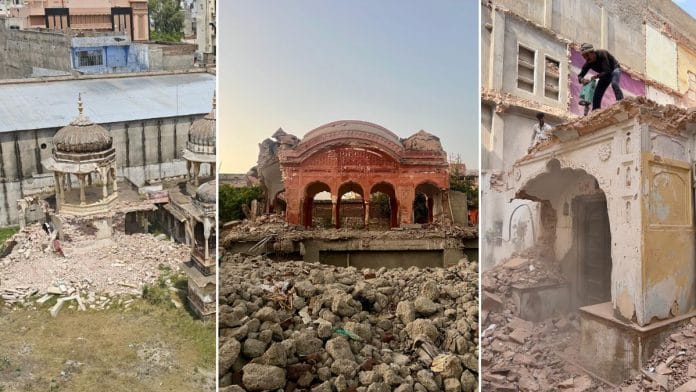
The concerns are rooted in rapid and irregular development, new construction projects, and expansion within and outside the walled city, which are altering Jaipur’s original grid design. Moreover, the number of historic structures in the city has decreased considerably. Over the years, around 400 historic havelis and many identified and unmonitored structures have been demolished—a process that continues even today.
This contradiction is not unique to Jaipur. Ahmedabad, India’s first World Heritage City, has faced scrutiny from UNESCO. The concerns include commercial development and housing pressures, gaps in the documentation, weak implementation of management plans, and limited technical capacity with the municipal heritage system.
While the scale and the nature of the crisis may differ, the core issue remains the same. Why is India not able to manage its heritage sites? Who is responsible for protecting them? Between states and the Centre and policies and publicity, is there a genuine commitment to conserve, or just the desire to claim the title?
When heritage becomes a liability
Founded in 1727 by Sawai Jai Singh II, Jaipur was built according to a grid plan inspired by European architectural style and the Vastu Shastra. The streets of the city had colonnaded markets that intersected with the central square, locally known as chaupars. This type of town-planning and style was a departure from traditional medieval architectural style and city plan. It was a well-thought-out grid-iron plan which aimed at making Jaipur an economic and cultural capital.
Historically, the 18th-century city is said to have housed chhattis karkhanas (36 industries) catering to crafts such as lapidary, lac jewellery, miniature paintings, and stone sculptures, with each designated a separate street. Besides public squares, the havelis and haveli temples formed important features of this medieval city.
These very elements formed the basis of Jaipur’s inscription as a UNESCO World Heritage Site. The nomination dossier recognised not just individual monuments, but all the medieval structures within the city walls, including the chaupars, chowkis, city wall, nine city gates, 11 bazaar facades, shop typology along the bazaar, havelis, and haveli temples.
On paper, much of Jaipur’s grid-iron planning still holds. For instance, the width of the roads, hierarchy of public spaces, alignment of bazaars, and the built form continue to reflect the city’s initial design. Many iconic structures such as Hawa Mahal retain their architectural value. However, the bazaars, chaupars, and havelis are undergoing visible and structural changes.
Prior to Jaipur’s UNESCO nomination and inscription, limitations were noted by the stakeholders. Population stress and unauthorised constructions were already flagged as issues, not to forget the underground metro line near the eastern axis of Jaipur. But the stakeholders, including the Rajasthan government, assured that the management plan would cater to these issues. Yet, prolonged and systematic neglect has caused long-term damage to the city’s heritage integrity.
According to a 2025 report by India Today, 122 structures within Jaipur’s heritage zone are marked as unsafe. This number is part of the 4,276 buildings identified across Rajasthan. The 122 heritage structures marked as unsafe are rather lower in the scale of heritage value, but they are part of the historic and heritage fabric of the city. The report presents equally concerning numbers from Rajasthan’s other historic cities. Jodhpur has demolished around 322 such buildings, followed by Bikaner, with 150.
The havelis of Jaipur, an integral part of the city’s historic value, are under threat. Most of them remain undocumented and unmonitored, which has led to a rapid decrease in their numbers—from 1,200 recorded in 1992 to 800 in 2026. Locals, especially heritage sympathisers, are alarmed by the ruthless razing of these structures. Encroachments and unregulated construction in the protected area could jeopardise the city’s heritage integrity.
While initiatives such as the Special Area Heritage Plan (SAHP) and infrastructure projects are underway, UNESCO has stressed the need for clear timelines, stronger implementations, and measurable progress.
Also read: Mohenjo-daro city is not older than Egyptian cities. Here’s what the recent dig really shows
‘Character assassination of a city’
In his 1984 book Raj-Darbar Aur Ranivas, Jaipur-based writer Nandkishore Pareek devoted a chapter to what he called the “character assassination of a city”, which talks about the plight of Jaipur losing its heritage and identity. Written decades ago, the book warned that the government’s whims and fancies and monetary considerations, no less accentuated by official apathy, were distorting the city’s personality. Pareek described how the graceful features of Jaipur’s uniform facades were being eroded bit by bit. He argued that preserving the city’s pristine pink glow and harmonious architectural details was crucial not merely for tourism but to safeguard a rare example of a meticulously planned Indian city.
More than three decades later, Pareek’s warnings feel prophetic. The pressures he identified have only intensified, despite global recognition.
For resident and conservation architect Chandini Chowdhary, the UNESCO warning is overdue. Rather than an alarm, she added, it is a formal reminder that the integrity of Jaipur’s heritage value is under pressure, causing deterioration of both its built fabric and lived quality. Beyond unregulated development, a fragmented governance structure and lack of sustained political and administrative prioritisation are responsible for this lapse.
In its 2025 review, UNESCO acknowledged the Rajasthan government and Jaipur Municipal Corporation’s steps to document and draft the SAHP intended to guide conservation and development. However, the efforts were incomplete and uneven. The World Heritage Centre and the Advisory Board raised concerns about delays in finalising and implementing the heritage plan, gaps in documentation, and a lack of accountability. The key issue seems to be the weak enforcement of the management plan. Moreover, the Heritage Cell, responsible for conservation oversight in Jaipur, continues to face staffing and capacity shortages. At the same time, several ongoing development projects and redevelopment works are moving ahead without a timely heritage impact assessment.
The matter worsens when locals who reside within the walls of the heritage property are left high and dry. Residents are asked to maintain and conserve the structure with absolutely no financial aid, and are now looking for monetary gains in the current real estate boom. It is here that the state party had a significant role to play, but has evidently failed to do so.
Also read: Indian Forest Service has to change. Begin by calling it Indian Environment Service
‘Missing’ heritage sites
In 2024, the Delhi Development Authority demolished Akhunji Masjid, a 13th-century mosque in Mehrauli, built during the reign of Razia Sultan. Roughly half a kilometre from Qutub Minar, a UNESCO World Heritage Site, the authority claimed the Masjid was built on illegal land. Ironically, the explanation was asked days after the living heritage mosque, madrassa, and graves were demolished. It was cited that the monument was never under the radar of the Archaeological Survey of India (ASI) as it didn’t meet the criteria for national importance. If ASI was unable to protect this and other smaller, less appealing heritage buildings, what was the state department of archaeology doing?
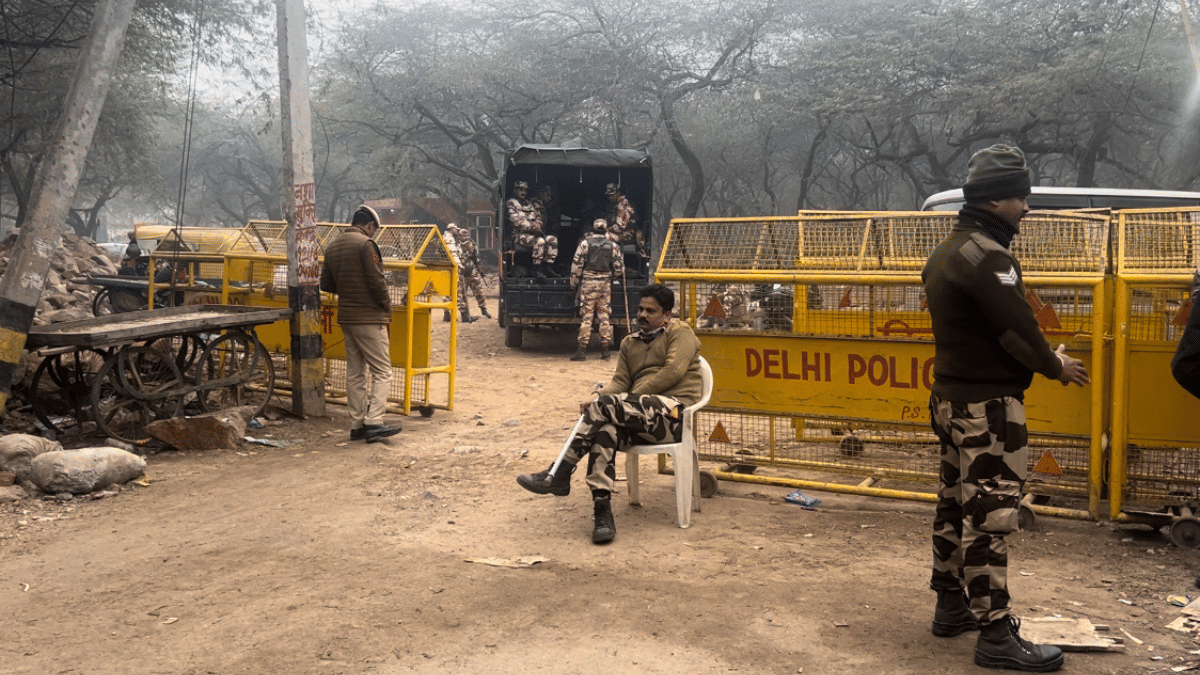
This is not an isolated event. Every day, many notified and unnotified heritage properties are demolished. As per the 2022 Parliamentary Standing Committee on Transport, Tourism, and Culture Report, over 18 such properties were labelled as ‘missing’ or ‘untraced’ monuments. Many monuments are on the verge of being denotified, thus stripping the protection provided under the AMASAR Act 1958.
In the end, labels and protection guidelines offer little assurance. In India, whether a site is a UNESCO World Heritage City or an unlisted structure, its survival depends less on policy and more on empathetic stewardship. Legal protection is procedural, and international tags are merely symbolic—invoked more in celebration than in practice.
Jaipur reflects this disconnect most visibly. When the city, marketed as a heritage destination, continues to draw millions of tourists each year on the promise of its history, architecture, craft, and traditions, why does its historical value continue to erode? The consequence of this systematic neglect may extend beyond the city’s reputation. It may weaken Jaipur’s tourism industry in the near future.
Disha Ahluwalia is an archaeologist and junior research fellow at the Indian Council of Historical Research. She tweets @ahluwaliadisha. Views are personal
(Edited by Prasanna Bachchhav)