




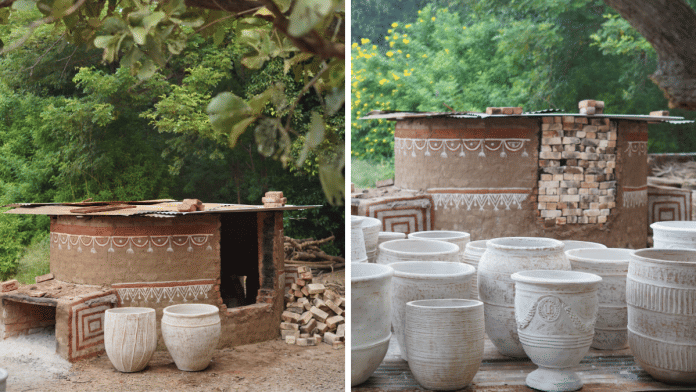

To be an archaeologist is to see traces of the past in the ordinary and the everyday. Archaeology is not confined to what lies buried beneath the ground, it is also embedded in the mundane living traditions, practices and artistic expressions. Craft traditions in particular reveal a remarkable capacity to endure, not by remaining unchanged, but by adapting to new social and economic realities while preserving generations of skill and technical knowledge. These living practices are more than cultural heritage; they are invaluable for understanding the past.
One such encounter unfolded at a contemporary craft enterprise in Ahmedabad, where the making of pottery became an unexpected lesson in ethnoarchaeology. The workshop does more than produce terracotta vessels, it reveals how ancient techniques continue to thrive through adaptation. It is also a story of migration, of craft travelling across regions from Tamil Nadu to Gujarat, of artisans finding new opportunities far from their place of origin, and of traditional skills being sustained through the vision and commitment of those determined to keep both craft and its practitioners alive.
This is the story of Rajka Pottery, an initiative that gave Ayyanar artisans the space, patronage and creative freedom to practise their traditional craft in a new setting. In doing so, it has become a 21st-century example of how continuity and change can co-exist, and where pottery traditions are not simply preserved, but continually reimagined for a new market and a new generation.
Archaeology of potters hands
Pottery is known as the alphabet of archaeology. Its indestructible and indispensable nature makes it an invaluable piece of evidence and historiography, which helps archaeologists reconstruct the past. From technological changes in pottery making throughout history to socio-economic changes, a simple shard of a terracotta vessel can reveal as many answers as it poses questions.
The Indian subcontinent has one of the world’s longest and most diverse ceramic traditions, stretching back to the Neolithic period around c.7000-6000 BCE. At sites such as Mehrgarh in present-day Pakistan and Lahuradewa in Uttar Pradesh, the earliest pottery was handmade rather than wheel-thrown.
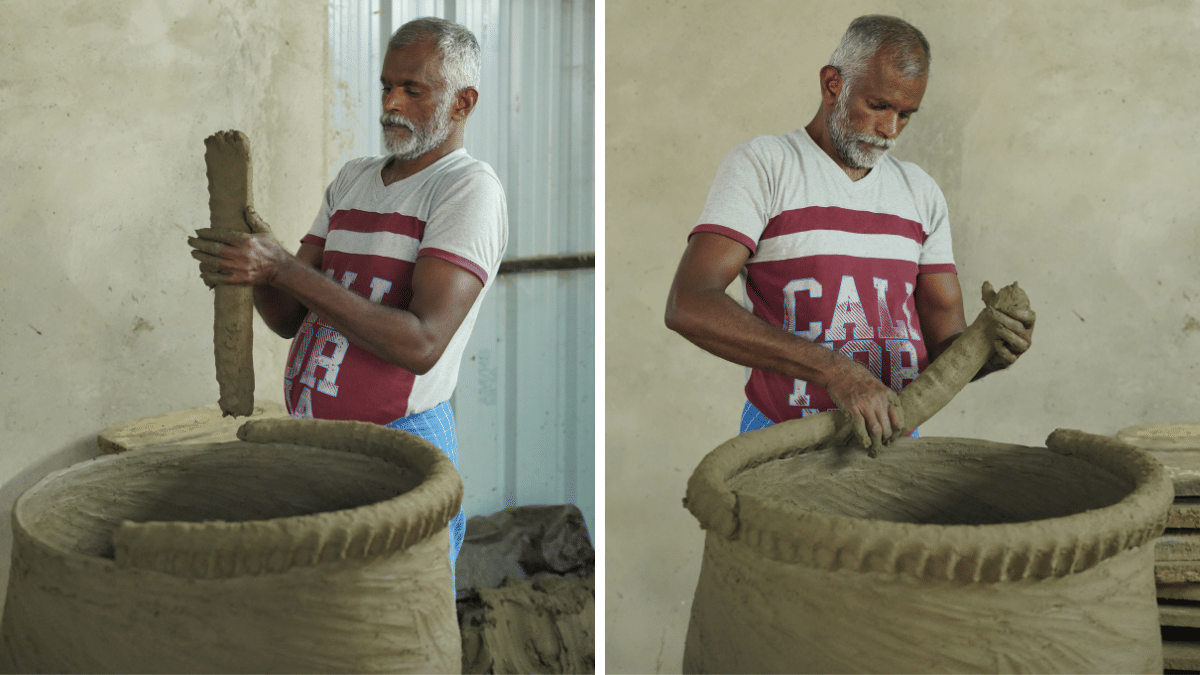
Large vessels were built patiently by coiling ropes of clay or by using slab-building techniques. As time progressed, wheel-made pottery gradually became the dominant form of production. These methods demanded extraordinary skill, where the artisan’s hand served as the tool.
Yet, handmade or slab-based pottery never disappeared entirely. These traditions survived in select communities, particularly among terracotta artisans of Tamil Nadu, who continue to make large vessels and animal figurines using the ancient technique of coiling. Today, these traditions are increasingly rare, especially in urban India, where ceramic is often associated with porcelain or “chinni mitti (China clay)” rather than terracotta, the humble baked clay that formed the foundation of the subcontinent’s ceramic history for millennia.
Also Read: Don’t reduce Harappan Civilisation to Indus vs Saraswati. No city grew in isolation
What is Rajka Pottery?
In the early 1980’s, textile designer Rajshree Sarabhai, co-founder of Rajka Designs, met V Sambandham, a master artisan from Tamil Nadu who travelled to Ahmedabad with a terracotta Ayyanar deity. His expertise lay not in making pots, but in creating the monumental horses, elephants, guardian figures, and deities that have long been part of the Ayyanar tradition. Around the same time, Sarabhai had developed a growing interest in ceramics after visiting an exhibition of Chinese pottery. When she saw the large-bellied Ayyanar deity, she immediately recognised that the traditional hand-coiling technique used to create these monumental sculptures could also be adapted to make large terracotta pots.
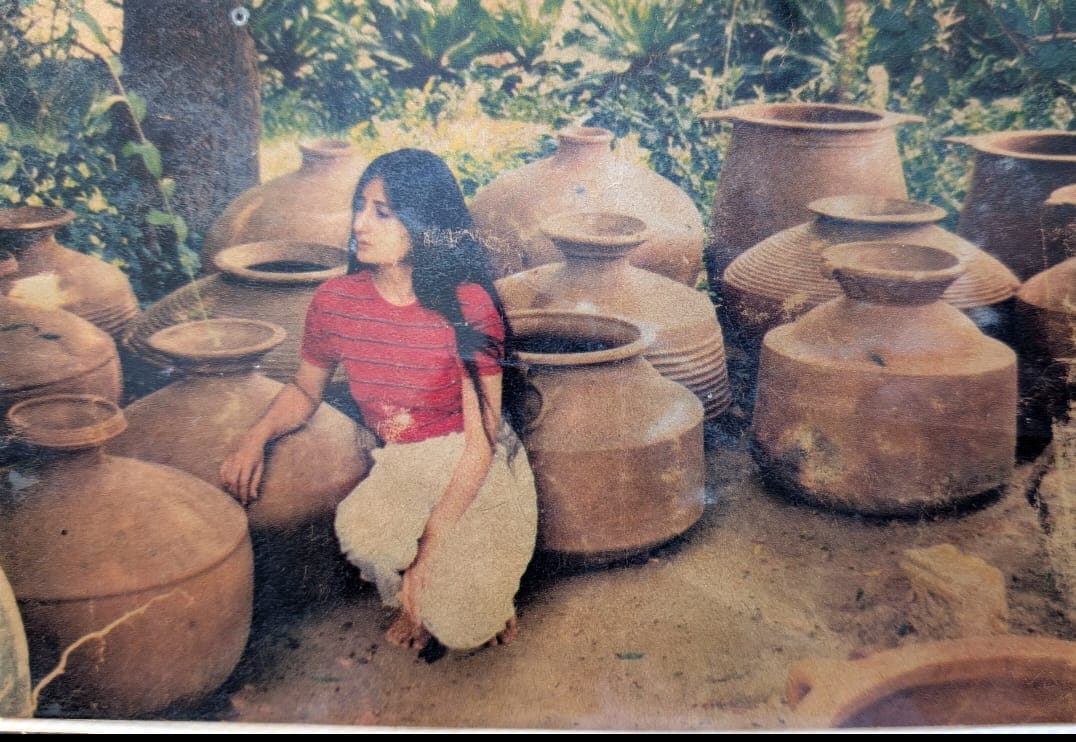
Inspired by this possibility, she invited Sambandham to establish a small terracotta studio at her family home in Ahmedabad. At the time, he had never made pots before; his expertise lay entirely in creating traditional sculptures. Together, they began experimenting with new forms, adapting an ancient sculptural tradition into functional pottery.
Their first collection consisted of hand-built terracotta pots ranging from one to five feet in height, many inspired by traditional Indian metal vessels, particularly those from Gujarat. This became Rajka Pottery’s first collection and marked the beginning of a journey that continues to celebrate traditional craftsmanship while creating contemporary objects rooted in India’s living ceramic traditions.
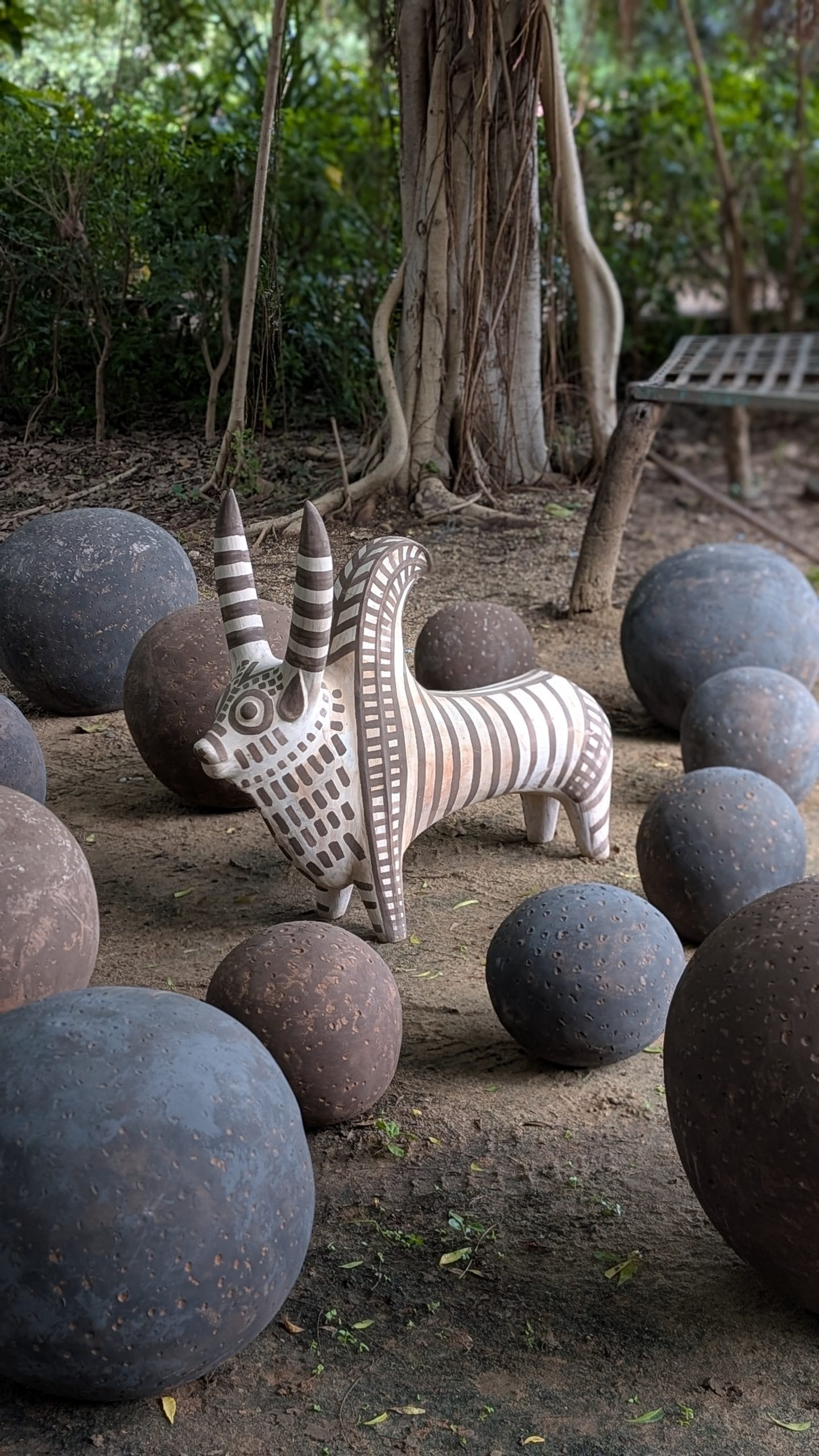
More than four decades later, this philosophy continues. Under the stewardship of Samvit Sarabhai, Rajka Pottery remains committed to preserving India’s handmade terracotta tradition while reinterpreting its ancient forms for contemporary life. Current collections draw inspiration from the painted pottery and Zebu bull figurines of the Indus Valley Civilisation, as well as archaeological ceramics from other parts of India and the world, bringing these timeless forms into a contemporary context.
Also Read: This Harappan city holds the solution to India’s water crisis
Why Rajka Pottery matters?
Unlike conventional wheel-thrown traditions widely associated with South Asian pottery, Rajka Pottery employs hand-building techniques, particularly coiling, as well as drawing on technological practices, such as the use of terracotta dabbar and wooden paddle for shaping, linked to potter communities from South India. This presents a unique case of the mobility and persistence of ceramic cultures beyond their original regional context. The absence of the potter’s wheel foregrounds the role of embodied skill and manual dexterity, emphasising pottery-making as a deeply learned and transmitted practice. It also breaks the stereotype that “real pottery” only happens on the wheel. These techniques, however, are sustained within a contemporary, design-oriented production system, reflecting both continuity of tradition and a willingness to adapt to the changing economic and market conditions.
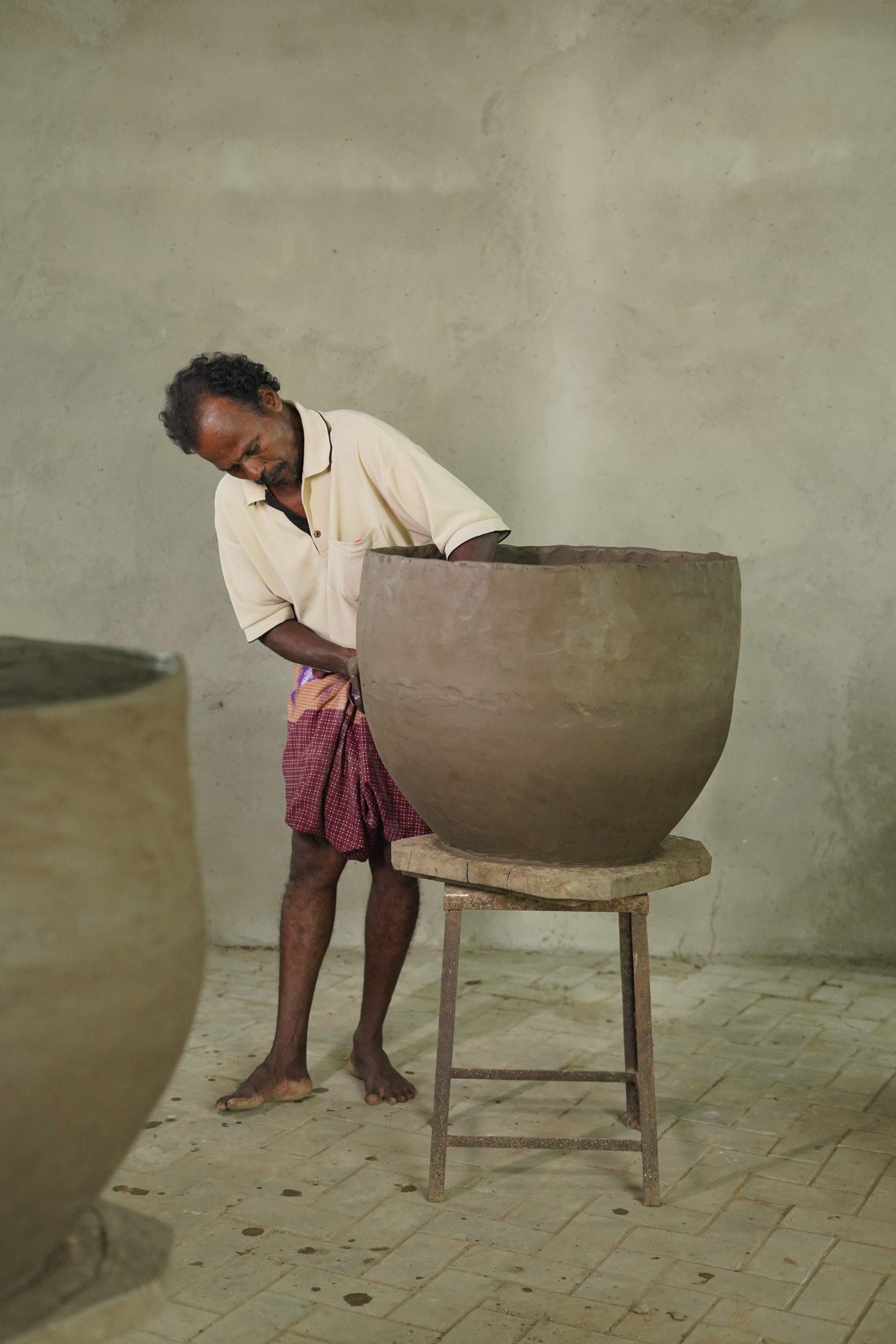
The Rajka case challenges static and regionally bound interpretations of ceramic traditions by demonstrating that technological practices are dynamic, transferable, and continually re-contextualised. The persistence of coiling techniques highlights the resilience of non-wheel traditions, which remain underrepresented in archaeological interpretations of South Asian ceramics. By situating Rajka Design within broader discussions of material culture and craft production, one can reflect that the continuity in pottery traditions is an active process shaped by mobility, innovation, and cultural negotiation. It underscores the value of ethnoarchaeology in understanding ceramics as living practices that bridge the past and the present.
For an archaeologist, the most remarkable aspect of Rajka Pottery is not simply that the pottery is handmade, but how it is made. The coils of clay placed atop of each other, shaped by the potter’s hands, further perfected by the dabber or paddle—tools used even by ancient potters—is to witness a technology that predates the wheel and echoes some of the earliest ceramic traditions of the subcontinent.
It reminds us that traditions do not survive by remaining frozen in time; they endure because each generation finds new ways to mould them, much like the clay itself.
Disha Ahluwalia is an archaeologist and junior research fellow at the Indian Council Of Historical Research. She tweets @ahluwaliadisha. Views are personal.
(Edited by Insha Jalil Waziri)