



New Delhi: “How can UAPA be slapped for burning a police station… this is an issue of public order”—a three-judge bench of the Supreme Court made the oral observation Friday while dismissing the Uttarakhand government’s appeal against the high court order to grant bail to Abdul Malik, prime accused in the 2024 Haldwani violence case.
Led by Chief Justice Surya Kant and comprising Justices Joymala Bagchi and V. Mohana, the bench advised the state to put its energy in convicting Malik, instead of opposing his release on bail.
“Even if a mob goes and throws petrol bombs at a police station, how is UAPA attracted?” Justice Bagchi asked orally. The bench did not mention any of its verbal remarks in the written order and simply dismissed the state’s appeal.
The Unlawful Activities (Prevention) Act is India’s primary anti-terrorism law.
On 16 April this year, the Uttarakhand High Court granted bail to Malik, while noting in its order that the police lacked substantive proof for conspiracy claims and that the accused was not present at the site during the clashes.
The HC gave him bail in three cases registered against him in connection with the violence. Malik was arrested from Delhi on 23 February, 2024.
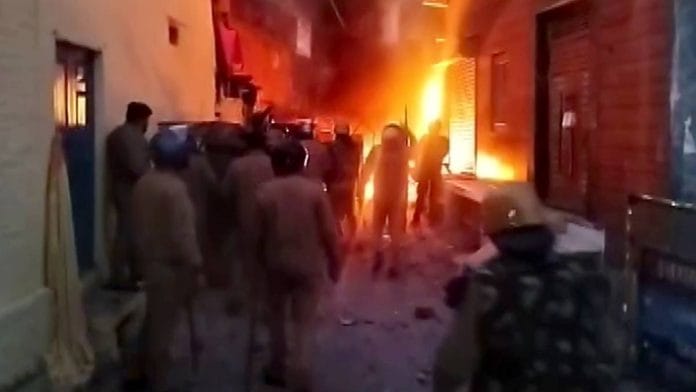
Clashes between protestors and police had taken place in Haldwani over the demolition of a mosque and madrasa, and led to the death of five persons.
While the police arrested 89 people, including women, it accused Malik of being the main conspirator. The chargesheet in the case was filed after 90 days, but within the extended time period to close the probe, which was allowed by the trial court. However, the HC regretted the sluggish pace of the investigation and gave default bail to 50 accused.
At the outset, the state argued the case involved the burning of a police station and organised violence.
But the CJI-led SC bench questioned the applicability of UAPA in the case, wondering how the alleged acts satisfied the requirements under the special law.
It told senior advocate Gaurav Bhatia, appearing for the Uttarakhand government, that protecting police stations and prosecuting offenders was ultimately the state’s responsibility.
“We have serious doubt about addition of UAPA, that is why we are not inclined to entertain the state’s SLP (appeal),” remarked Justice Bagchi.
The Uttarakhand government, however, argued that Malik was the main accused and was granted bail through a non-reasoned and cryptic order. The incident was far more serious than an ordinary case of assault and involved an organised attack on a police station, it stated.
This prompted the bench to say: “Liberty does not depend on inaccuracy of a court. It depends on the prosecution case.”
In the backdrop of the facts of the case, the bench felt that a speaking order from the HC was not required. It drew a distinction between issues affecting public order and those affecting national security.
“It is sufficient if application of mind is indicated. He has been in custody for two years. Even if bail is granted for wrong reason, we should not interfere,” CJI Kant said, responding to Bhatia’s concern over a non-speaking order.
The judges felt that personal liberty cannot be made dependent upon “delays” and inertia in judicial proceedings.
Bhatia continued with his submission. In his attempt to convince the judges, he said bail to Malik would have a demoralising effect on the police force.
“If demoralising of police is your concern, you should have obtained conviction in two years. You abysmally failed,” the bench said, adding the state cannot compensate its inability to conclude the trial within a definite timeline by pursuing a challenge to the bail order.
The bench took note of the slow pace of the trial during which only one witness out of 105 was questioned.
(Edited by Nida Fatima Siddiqui)