



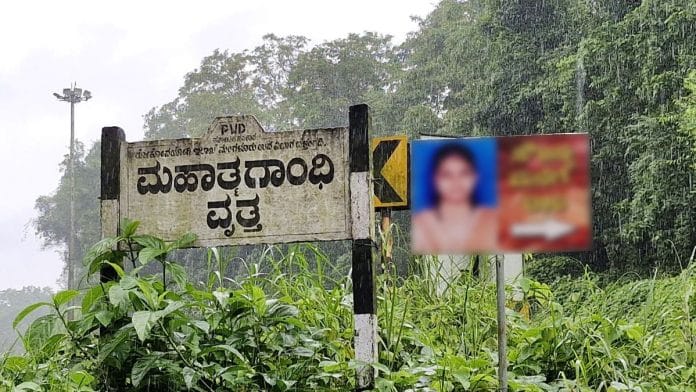
New Delhi: The Supreme Court has ordered a de novo, or fresh, investigation into the 2012 rape and murder of a 17-year-old girl in Karnataka’s Dharmasthala, holding that the manner in which the case was investigated caused injustice to the victim and that the availability of evidence cannot be assessed only through what was or was not collected in the initial “golden hour”.
A bench of Justice Sanjeev Sachdeva and Justice Sanjay Kumar set aside the Karnataka High Court’s 30 August 2024 order dismissing a plea for reinvestigation, and directed the state government to constitute a Special Investigation Team (SIT) headed by a senior police officer.
The court specifically ordered that no officer who had been part of the earlier investigation by the Belthangady Police, the Karnataka CID or the CBI should be included in the new team. It also directed that the fresh investigation be completed within three months.
The Kusumavati Gowda v. Government of Karnataka ruling also draws an important constitutional line: a fair trial cannot be separated from a fair investigation. The court relied on earlier Supreme Court judgments to hold that where an investigation has not been conducted objectively, constitutional courts can order a fresh probe in exceptional circumstances to prevent a miscarriage of justice.
But the judgment stops short of identifying who committed the crime. In fact, the Supreme Court explicitly said that nothing in its order should be treated as even a prima facie opinion about the role of any individual, including the three persons (Dheeraj Jain, Mallik Jain and Uday Jain) whom the victim’s family had suspected.
A case that refused to end with an acquittal
The case began on 9 October 2012, when the girl, a second-year Pre-University student at Sri Dharmasthala Manjunatheshwara College, left home for college. She returned by bus in the afternoon and got down near Mannasanka at about 4.15 pm. She was last seen by her uncle and aunt as she walked towards home.
By 7 pm, she had not returned. Her mother alerted her father, and the family began searching for her. A missing complaint was lodged at the Belthangady Police Station. The following day, her body was found in thick bushes near Mannasanka. Her left hand was tied to a tree with part of her college uniform. The post-mortem recorded multiple injuries, a strangulation mark and evidence of penetrative sexual assault.
What followed was a prolonged investigation involving three agencies.
Santhosh Rao was apprehended on 11 October 2012 and handed over to the police. He was subsequently projected as the perpetrator and arrested by the Belthangady Police. The investigation was later transferred to the state CID and, amid public protests and allegations that the real perpetrators were being shielded, to the CBI.
Both the CID and the CBI ultimately pursued the case against Rao. The CBI also examined three persons named by the victim’s family as suspects, but ultimately gave them a clean chit.
The prosecution case eventually collapsed at trial.
On 16 June 2023, the Sessions Court acquitted Rao of the charges of rape, murder and destruction of evidence. It held that there was no evidence connecting him to the crime and that the circumstances relied upon by the prosecution remained unproved. The trial court also directed the acquittal committee to initiate action against erring officials.
For the family, however, the acquittal did not answer the more fundamental question: if Rao had not committed the crime, who had?
The victim’s father approached the Karnataka High Court seeking a fresh investigation. The high court acknowledged that the acquittal meant the identity of the perpetrator remained unresolved, but it declined to order reinvestigation, reasoning that the crucial “golden hour” for collecting medical and forensic evidence had passed and that it was doubtful whether useful evidence remained.
By the time the matter reached the Supreme Court, the victim’s father had died. Her mother then took over the legal battle.
That detail gives the case a quieter human dimension. The Supreme Court record describes the family as a large one — the victim’s father was an agriculturist and Class II PWD contractor, living with his wife, five children and aged parents. His second daughter was 17 when she was killed. Years after her death, and after the first accused had been acquitted, her mother continued the litigation seeking another investigation.
Also Read: ‘Nithari cannibal’ to acquitted in all cases—how the case against Surendra Koli fell apart
The evidence not followed
The Supreme Court’s intervention rests not simply on the fact that the original prosecution failed, but on what the record revealed about the investigation.
One of the most striking pieces of evidence concerned the weather and the scene where the body was found. Witnesses said there had been heavy rain on the day the girl disappeared. Yet her school bag and the books inside it were found dry. The Sessions Court reasoned that if the body and bag had remained exposed at the site through the rain, the books and bag would not have remained dry. This raised the possibility that the crime had occurred elsewhere and that the body and belongings were subsequently brought to the location.
The Sessions Court also noted that the victim’s umbrella, slippers and inner garments were not recovered. Surveillance camera footage from a nearby hospital was not secured, despite cameras being installed there. Mobile tower-dump information collected during the initial investigation was not passed on to the succeeding officer. A chit found at the scene was not sent for handwriting examination. The place where the body was recovered was not videographed and the post-mortem was not videographed either.
Then came the problem with the vaginal swab. The forensic expert told the trial court that the sample had not been properly stored. Fungus had developed in it, making DNA analysis impossible. The Sessions Court observed that in a case where the victim was dead and could not testify, properly preserved medical evidence could have been crucial in identifying the assailant.
The prosecution’s scientific case against Rao was also weak. The DNA report did not connect him to the crime. Six hair samples were found in one of the seized items, but one belonged to a different male. No seminal stains were found on Rao’s clothes, and the victim’s nail samples did not contain his blood or skin particles.
The Sessions Court further recorded medical evidence concerning Rao’s phimosis and the absence of injuries to his private parts. It found that the prosecution had failed to establish a chain of circumstances connecting him with the rape and murder.
‘Time cannot erase duty to investigate’
The high court’s “golden hour” reasoning became a central issue before the Supreme Court. The Supreme Court noted that the State had, during the appeal, been able to locate eight potential witnesses within three weeks after being directed to provide them protection. That, the court said, raised questions about why three investigative agencies had failed to examine such leads when they were available earlier.
More importantly, the court found that forensic evidence had not entirely disappeared. The DNA expert had testified that hairs belonging to persons other than Rao were found on the victim’s top. If suspected persons could be identified, their blood samples could still be obtained and compared with the preserved material. The Supreme Court therefore held that the high court was wrong to conclude that reinvestigation would serve no useful purpose.
The ruling then moved beyond the facts of this particular case. Relying on Neetu Kumar Nagaich v State of Rajasthan, Pooja Pal v Union of India, Dharam Pal v State of Haryana and other precedents, the court reiterated that constitutional courts have the power, in exceptional circumstances, to order a fresh or de novo investigation.
The principle is rooted in Article 21. A fair investigation, the court said, is as much a constitutional requirement as a fair trial. An investigation must be fair, transparent and judicious, and courts can intervene where non-interference would result in failure of justice.
The court also invoked the developing concept of victimology — the idea that criminal proceedings cannot view the victim as an outsider to the criminal justice process.
Its strongest observation came in the assessment of the investigation itself: the manner in which the agencies gathered and evaluated evidence in the case, the court said, “shocks the very conscience of the court”.
Yet the Supreme Court carefully separated criticism of the investigation from a finding of guilt against anyone else. It said the possibility of manipulation by the real culprit could not be ruled out, but left that question entirely to the new investigation.
There is also an important safeguard for Rao. Since he has already been tried and acquitted, the Supreme Court held that Article 20(2) of the Constitution and Section 300 CrPC protect him from being tried or prosecuted again. He cannot be subjected to the fresh investigation or prosecution.
The judgment therefore does not declare a culprit. It reopens the search for one, with a direction to the state government to begin afresh and find the truth.
Aditya Edara is a TPSJ alum, currently interning with ThePrint.
(Edited by Nardeep Singh Dahiya)
Also Read: SC issues directions for mitigating, aggravating factors to be followed in death penalty cases