



New Delhi: Recognising that a voter’s choice is often compromised by “external factors” like ill-gotten money, the Supreme Court on Monday mandated new procedural safeguards for the seizure and prosecution of electoral offences.
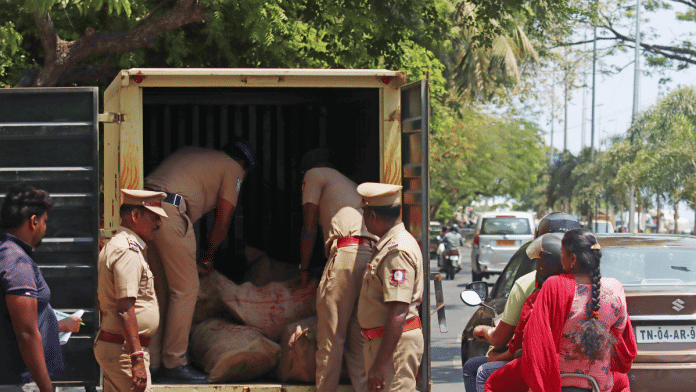
Leading the set of mandates, the top court directed that whenever cash or assets are seized, the authority must report the event to the competent court or magistrate within 24 hours. This report must include written reasons disclosing a prima facie link between the seized assets and a suspected electoral offence, the court said.
To prevent the “under investigation” tag from hanging endlessly over individuals, the court ordered investigating officers to complete investigations within one year from the date of the First Information Report.
If this timeline is exceeded, reasons must be recorded and communicated directly to the Election Commission.
Justices Sanjay Karol and N.K. Singh emphasised that numerous cases are not pursued effectively because the prosecution of electoral crimes is left entirely to the state machinery. The court further ordered the creation of designated special courts in every district to handle these cases on a fast-track basis, aiming to conclude trials within one year of filing a chargesheet.
To ensure transparency for the public, investigators are now required to submit quarterly status reports on such investigations to the Election Commission through a nodal officer.
Addressing the “problematic reality” where governments often unilaterally withdraw cases against political leaders or supporters once they come to power, the court stripped states of this unchecked power.
For ensuring that “law-breakers do not become law-makers”, the bench made it mandatory to obtain a high court approval before withdrawing any criminal case against a candidate from a particular election cycle. The court emphasised that a constitutional democracy expects a high degree of moral rectitude and uprightness from its representatives, and a mere change in political dispensation cannot let them off the hook.
A separate, related case is also pending before the Chief Justice of India’s court—Ashwini Kumar Upadhyay v. Union of India of 2016 relating to the expeditious trial of criminal cases against MPs/MLAs.
Also Read: Tardy progress in criminal cases against MPs, MLAs despite SC orders; amicus flags concern
Origins: The Bellary bypoll
These sweeping reforms stem from a specific legal battle involving the Karnataka government and respondent Prathik Parasrampuria. The case dates back to the 2014 Lok Sabha byelections for the Bellary constituency, where a flying squad raided the respondent’s residence and business complex. The raid, prompted by an anonymous tip regarding counterfeit currency intended for voter bribery, resulted in the seizure of Rs 20,48,355 in cash, a laptop, a pen drive, and several cheque books.
An FIR was subsequently registered under Sections 171E and 188 of the erstwhile Indian Penal Code, which deal with punishment for electoral bribery and disobedience to a public servant’s lawful order, respectively. However, the Karnataka High Court quashed the FIR in 2015, citing a lack of specific averments regarding whom the accused intended to bribe.
The Karnataka government then appealed this quashing, leading the Supreme Court to look beyond the individual case and address the systemic failure in prosecuting electoral crimes.
Democracy, free elections & statistics
Authoring the judgment, Justice Sanjay Karol noted that democracy and free and fair elections are “inseparable twins” joined by an “inseverable umbilical cord”. The court highlighted that the “little man”—the voter—possesses overwhelming importance, and their right to vote freely is at the heart of representative government. When black money influences this choice, it is no longer the people’s choice but someone else’s choice being “thrust upon them”, he said.
The judgment cited various historical reports, including those from the 1990 Goswami Committee and 1993 Vohra Committee, which warned that the role of money power was leading to the “rapid criminalisation of politics”. The court observed that even 70 years after Independence, a transparent method for funding political parties remains elusive.
The court reviewed voluminous data from the Election Commission regarding recent enforcement actions.
During the 2024 general elections, a staggering 387,430 FIRs were filed. While the conviction rate showed improvement at 42.9 percent, the court remained concerned about the high volume of pending trials from previous cycles. For instance, Assembly elections between 2019 and 2025 saw 201,894 FIRs, with over 79,000 cases still pending trial.
The court concluded by setting a deadline of 18 November 2026 for the Election Commission and state governments to file compliance reports regarding these new directives.
(Edited by Nardeep Singh Dahiya)