



New Delhi: The al-Qaeda in the Indian Subcontinent, or AQIS, is evolving from a diffused and fragmented group into “a regional terrorist entity,” United Nations sanctions monitors warned in a report released to the Security Council Wednesday.
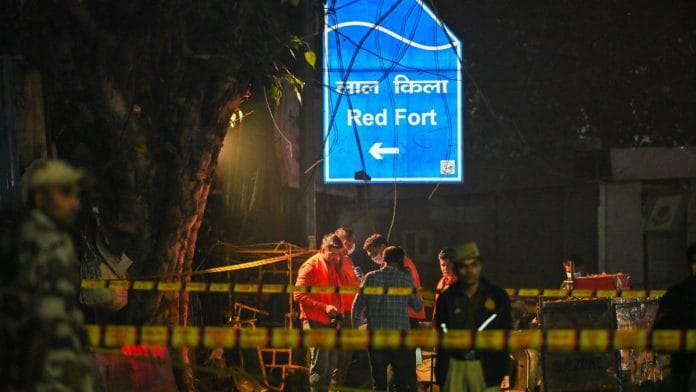
The Red Fort blast in November 2025, the report states, was a key part of a mounting body of evidence which reveals that AQIS has “established logistics and financial networks, working in decentralised small, scattered cells instead of large units”.
The report by the United Nations Security Council’s 1267 Committee, responsible for monitoring the activities of the Islamic State and other Islamist terror groups, says AQIS also operates under the banner of the Ittehad-ul-Mujahideen in Pakistan. It shows that, just weeks short of the 25th anniversary of the 9/11 attacks, al-Qaeda remains active in many parts of the world, and continues to constitute a threat to the stability of nation-states.
Large numbers of attacks in recent months have been attributed to the Ittehad-ul-Mujahideen, including a May 9 suicide-bombing at a security post in Khyber-Pakhtunkhwa’s Bannu town, which claimed at least 21 lives.
Founded by the Sambhal-born jihadist Sana-ul-Haq, a veteran of the Kashmir-focussed Harkat-ul-Mujahideen and a prolific writer of Islamist pulp-fiction, AQIS once operated what were reported to be the largest terror training camps ever detected in Afghanistan.
The elimination of its top leadership, however, hit the group hard, forcing its remnants to retreat south into the Afghanistan-Pakistan borderlands.
Led by an individual the 1267 Committee report identifies by the names Kalimullah and Waqas, the Ittehad-ul-Mujahideen is said to be made up of elements of three pre-existing groups operating in Pakistan: Hafiz Gul Bahadur Group, Harakat Inqilab-e-Islami Pakistan, and Lashkar-e-Islam. Gul Bahadur is among the most feared leaders of the Tehreek-e-Taliban, which has staged hundreds of attacks against both civilian and military targets in Pakistan.
The outfit conducted at least 90 terrorist attacks in July 2025 alone, analyst Rahim Nassar reported, sometimes using relatively new technologies like drones.
According to the sanctions watchdog, much of AQIS’ leadership lives in Kabul, and has been issued Tazkiras, or national identity cards, by the Islamic Emirate of Afghanistan. Among other things, one member state told the 1276 Committee, the AQIS now runs a large training camp at Barg-e Matal in Afghanistan’s Nuristan, devoted to training of Xinjiang-origin jihadists who were earlier serving in Syria.
Also Read: Terror module behind Red Fort blast took shape in 2022 under codename ‘Op Heavenly Hind’, says NIA
Wider revival
The 1267 Committee report has underlined the continuing consequences of the poorly-organised United States withdrawal from Afghanistan, which include the easy availability of state-of-the-art military technology.
“Five years after the Taliban takeover, the availability of large quantities of advanced weapons and other military equipment continued to enable the de facto authorities to transfer such weapons to TTP and other groups,” it records.
According to some member states, “the proliferation of advanced weapon systems, including night vision goggles, had improved listed entities’ fighting capabilities and their lethality to security forces”.
Both the Islamic State and al-Qaeda have also continued to show interest in developing chemical and biological weapons, the 1267 Committee has recorded, “but so far have failed to overcome the associated technical challenges”.
Even though instructions on how to develop such weapons are easily available, the sophisticated manufacturing process requires expertise and infrastructure that jihadist groups do not appear to have obtained.
The 1267 Committee, though, noted that India had, in December 2025, arrested a Hyderabad-based doctor on charges of having sought to create Ricin for the Islamic State. Syed Ahmed Mohiuddin was held in November, 2025, and prosecutors have claimed that castor oil recovered from his car was intended for use in the bioweapon plot.
Even though the jihadist movement’s top leadership suffered from operational constraints and degradation, the 1267 Committee report noted that regional affiliates had succeeded in expanding their operations, especially in Africa.
There was a marked upsurge of kidnappings by the Nigerian jihadist group Boko Haram, which used ransom revenues to fund its operations. Al-Shabaab, another affiliate active in Somalia, financed its operations by extracting protection-money from traders in areas under its control.
(Edited by Amrtansh Arora)
Also Read: Amid India’s bid to fix onus for Pahalgam, Pakistan made vice-chair of UNSC counter-terrorism panel