



New Delhi: Being a content creator comes with the risk of being extorted for money in the guise of copyright law violation, a plea before the Delhi High Court pointed out Tuesday.
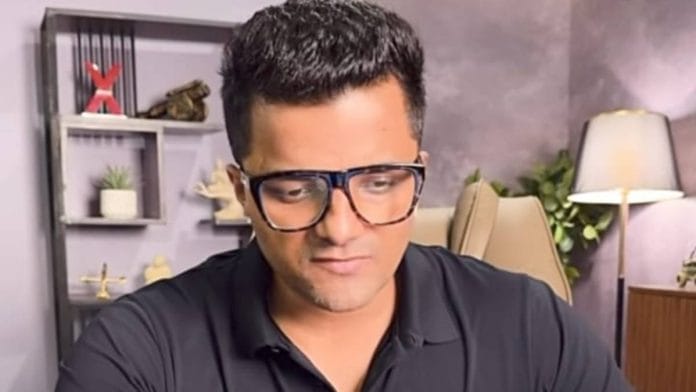
Filed by content creator Nitin Joshi, the plea sought the setting up of a Special Investigation Team (SIT) to probe the alleged extortion racket, along with restoration of suspended Instagram pages or profiles of similarly situated creators. Finally, the petition also sought a mechanism for human review of copyright violation complaints instead of an automated system to tackle alleged violations, as in Instagram.
A two-judge bench of Justices V. Kameswar Rao and Manmeet Pritam Singh Arora hearing the plea has sought responses on the matter from the Ministry of Electronics and Information Technology, the Delhi government, Ministry of Home Affairs and Meta.
The case will be heard next on 21 September.
Basically, the petition raised the issue of the emergence of a sophisticated, organised and rapidly proliferating form of cybercrime and digital extortion that threatens India’s digital ecosystem.
As part of the alleged racket, fraudsters file false copyright complaints against content creators, triggering automated account suspensions without meaningful human review. They then demand money from the affected creators to withdraw the complaints or help restore the accounts. Creators, whose livelihoods often depend on their social media profiles, are pressured into paying to regain access to their accounts.
The plea states that the organised criminal activity is causing widespread financial loss, compromising digital security, destroying the livelihoods of thousands of law-abiding citizens, and inflicting a substantial economic dent on the economy via ransoms and extortion.
Pointing out that a content creator’s social media account is not just a profile but their whole livelihood, business and identity, advocate Gurmukh Singh Arora, who represented the petitioners, told ThePrint that the PIL is about how organised criminals are weaponising copyright laws.
“Our objective is not merely to protect creators but to expose and dismantle this organised cybercrime network and ensure that technology is never misused as an instrument of extortion against law-abiding citizens,” he said.
Unless immediate judicial intervention is undertaken, the unchecked proliferation of this organised criminal racket is likely to expose millions of citizens to continuing cyber extortion, financial exploitation and irreparable reputational harm, the plea adds.
Also Read: Inside the influencer industry—relevance, relatability and revenue
The alleged extortion racket
The plea says that a coordinated modus operandi is being adopted by anonymous criminals, bot-operated accounts, fraudulent entities and organised crime syndicates that are operating within and outside the country.
These entities exploit the copyright enforcement mechanism of social media platforms, particularly Instagram, as an instrument of organised cyber extortion, digital blackmail and cyber fraud.
By initiating fabricated copyright infringement complaints, such entities trigger automated enforcement systems that disable or permanently suspend legitimate user accounts, without any judicial determination or independent verification of copyright ownership, meaningful human review, or compliance with the principles of natural justice, it states.
The plea adds that taking advantage of the panic and helplessness created by such suspensions, the perpetrators start demanding lakhs of rupees for withdrawing the false copyright complaints. The victims are then left with very little choice but to succumb to these “unlawful demands and get extorted” in order to safeguard their business, reputation, livelihood and other interests.
Larger issue
Underlining that the issue does not just confine to an individual grievance against a social media intermediary, the plea says it exposes “a serious regulatory vacuum” where the technological infrastructure of intermediary platforms, particularly Instagram, is being exploited.
In the absence of mandatory human oversight, transparent decision-making and an efficacious grievance redressal mechanism, the copyright reporting framework has become vulnerable to systematic abuse, posing a threat to the country’s digital economy, cyber security, online commerce and the rights guaranteed under Articles 14, 19 and 21 of the Constitution, which deal with the right to equality, freedom of speech and life, respectively.
The present mechanism imposes drastic consequences on legitimate users solely on the basis of one-sided allegations, without prior notice or a meaningful opportunity to be heard, which violates the principle of audi alteram partem (Latin for hear the other side). The current enforcement mechanism, which is automated, suffers from arbitrariness and is a tool to extort the hard-earned money of individuals, the petition alleges.
“Arbitrary disabling of such accounts results in the immediate loss of years of painstaking effort, followers, clientele, commercial goodwill, intellectual property, advertising revenue, contractual opportunities and future business prospects,” according to the petition.
Joshi, the petitioner, also published a video exposing and making people aware of the modus operandi of the racket and invited similarly affected creators to come forward and take appropriate legal action before the competent authorities. Shockingly, within a short period of the publication of the video, the plea states, Joshi’s own content was removed after a copyright complaint was filed through the same modus operandi against him. This is what made him approach the court.
Although Joshi had also approached the IT ministry, law ministry and the police, seeking immediate investigation and intervention in the matter in July, no effective institutional response had emerged to curb the systematic misuse of the copyright reporting mechanism or dismantle the extortion network, the plea says.
“The offence continues unabated, with fresh victims being targeted and extorted every minute, every day,” it adds.
(Edited by Nida Fatima Siddiqui)
Also Read: ChatGPT can write like us, copy our smiles. Indian copyright law must catch up