



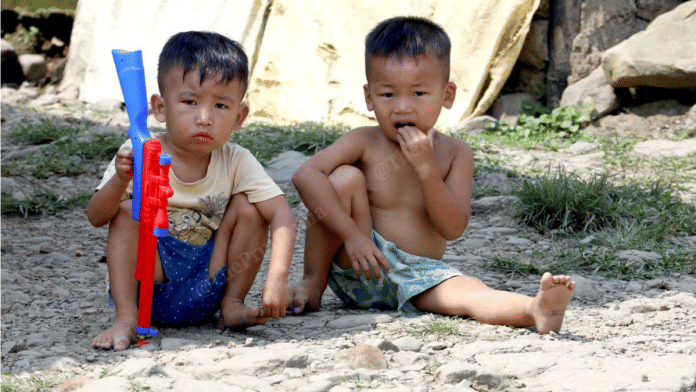
Kangpokpi/Senapati/Imphal: As one enters Kangpokpi, a Kuki majority district located some 45 kilometres north of Capital Imphal, white noticeboards appear every few kilometres, outside small hamlets dotting the highway on both sides.
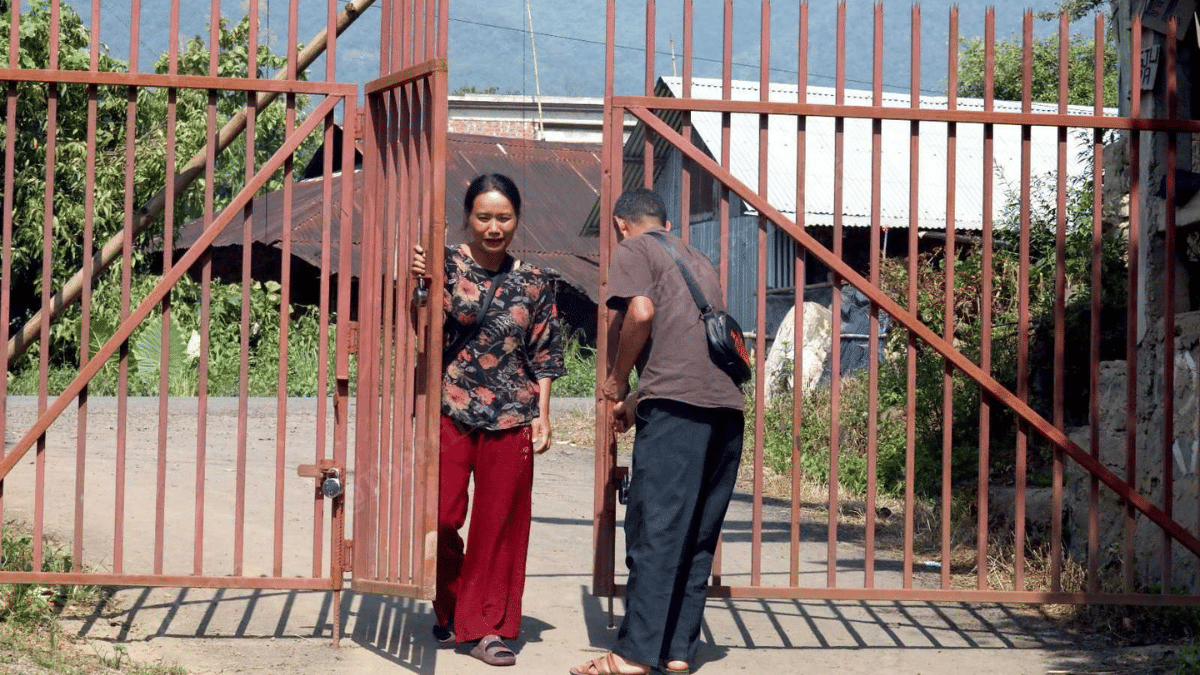
“Outsiders not allowed to enter the village between 6 am and 6 pm,” the board reads, signed by the respective village authority. Just a few metres from the board for Yaikongpao village, a big iron gate blocks the entrance to the village. A young man is manning it. He allows any person or vehicle to enter only after verifying the identity.
The young man is not from Manipur Police or the central security forces, which have a huge presence across the state. He is part of the village volunteer team roped in to secure Yaikongpao, a Thangal Naga village in Kangpokpi district. There are nine Naga villages in and around the area.
Though the tribal Kukis are in majority in Kangpokpi, the district has close to two dozen settlements along National Highway-2 (connecting Imphal to Kohima) and Imphal-Tamenlong Road (IT Road), inhabited by different Naga tribes such as the Thangals, Mao, Paumai and the Liangmai.
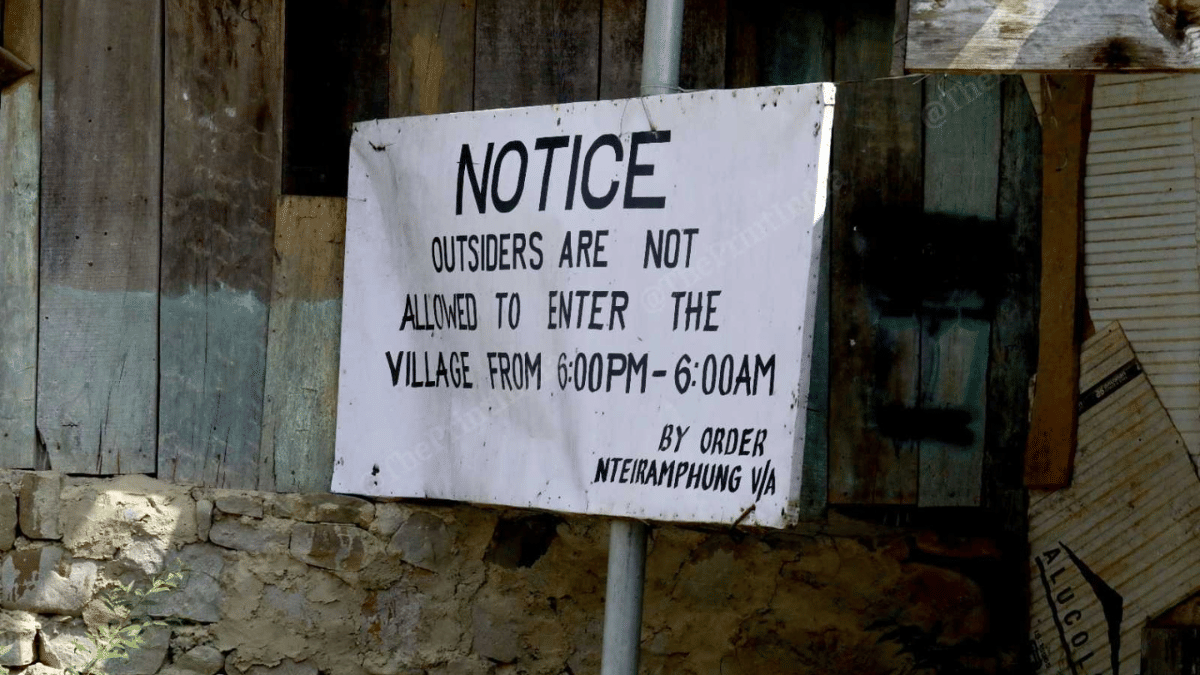
Almost all the Naga villages today have noticeboards displayed outside, secured by iron gates. In February this year, the ethnic conflict that started in May 2023 between the tribal Kuki-Zo and the non-tribal Meitei communities shifted, with the Kukis and Nagas pitted against each other. The Nagas had remained neutral till then.
Both Nagas and Kukis are tribal Christians and inhabit the hills of Manipur. Nagas are in majority in Ukhrul, Senapati and Tamenglong; while the Kukis dominate Churachandpur, Kangpokpi and Moreh. The remaining hill districts including Kamjong, Tengnoupal have a mixed Kuki and Naga population. Since February, close to 50 Naga and Kukis have been killed in violence involving the two communities.
Such notices and gates were quite common in Imphal in the aftermath of the May 2023 ethnic clashes that broke out between non-tribal Meiteis and tribal Kukis, two of the three dominant communities in Manipur. At the peak of the violence, to protect their houses from the mob, in localities that had mixed Kuki and Meitei population, the latter had pasted notices on their gates saying, “This property belongs to the Meiteis.”
Since then the conflict has shifted to Kukis and Nagas but things on the ground have remained more or less the same. Village volunteers from both communities continue to guard villages in their respective localities, free movement is restricted and frequent economic blockades called by one or the other community continue to upend life.
Fear and anxiety
On the ground on both sides, there is fear and anxiety about the future, and anger over why violence is continuing despite such a huge security presence in the state.
“There is a sense of fear as we are in a sensitive area. We have small Naga hamlets here surrounded by Kuki villages. We are worried about the safety of our women and children. In the mornings, when the men are out for work, the village gates are closed and no outsider is allowed to enter. In the evening, when we return from work, we join the village volunteers,” said M. Khangba, a 42-year-old cultivator from Yaikongpao village.
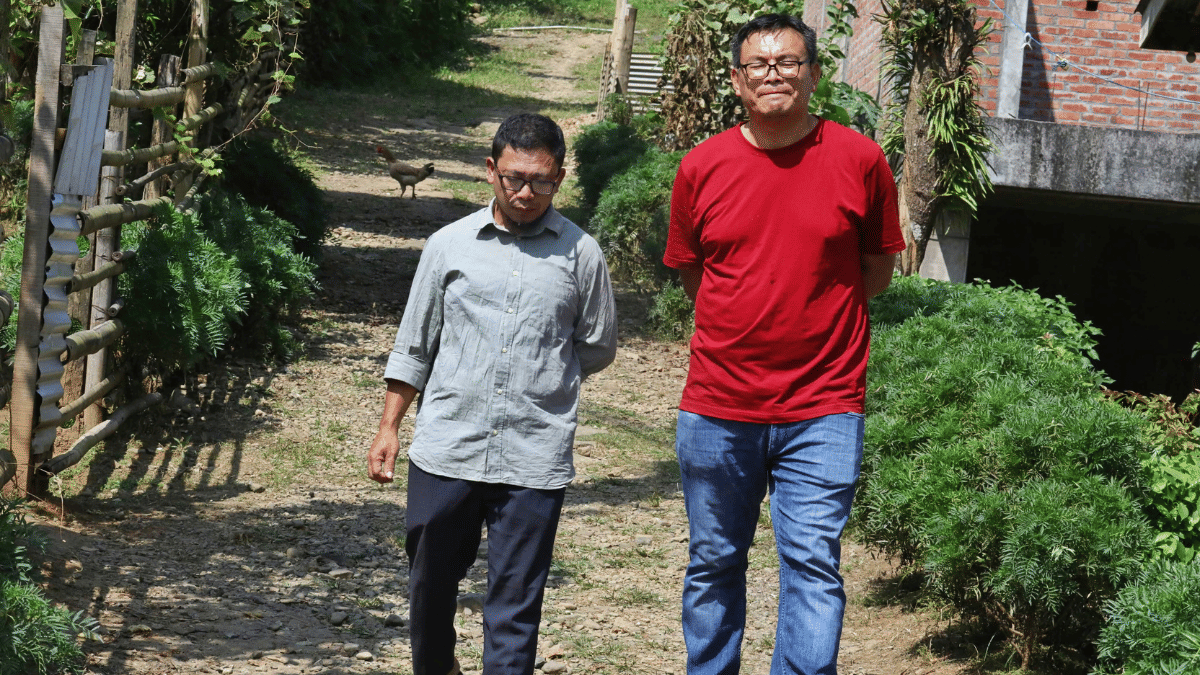
Khangba added that as of now the nine villages in the area are calm compared to the IT Road, which has Liangmai Naga settlements that have borne the sharpest brunt of the violence so far in Kangpokpi.
“Though the flare-up has been more in certain pockets where Tangkhul and Liangmai tribes are settled in districts including Kangpokpi, Kamjong and Ukhrul, we are worried. We don’t know what is going to happen tomorrow…,” Adakho Mao, who belongs to the Mao tribe and lives in Kangpokpi’s Daili village, said.
Khangba said the violence against Nagas has affected all of them. “We are emotionally attached to all our tribesmen… We move collectively, we have a common history,” he said. Khangba heads the Thangal Union, representing all Thangal Nagas in Kangpokpi.
Mao told ThePrint that earlier they could travel freely on National Highway-2 to reach Senapati. “Nobody wants to take a chance now. The movement of civilians has been affected.”
If the Nagas in Kuki majority districts are living in fear, the situation is not much different for Kukis living in Naga majority districts such as Ukhrul, Senapati, Tamenglong or in districts that have mixed Naga and Kuki population such as Kamjong and Tengnoupal. The situation is tense in such districts, where the two communities are interspersed.
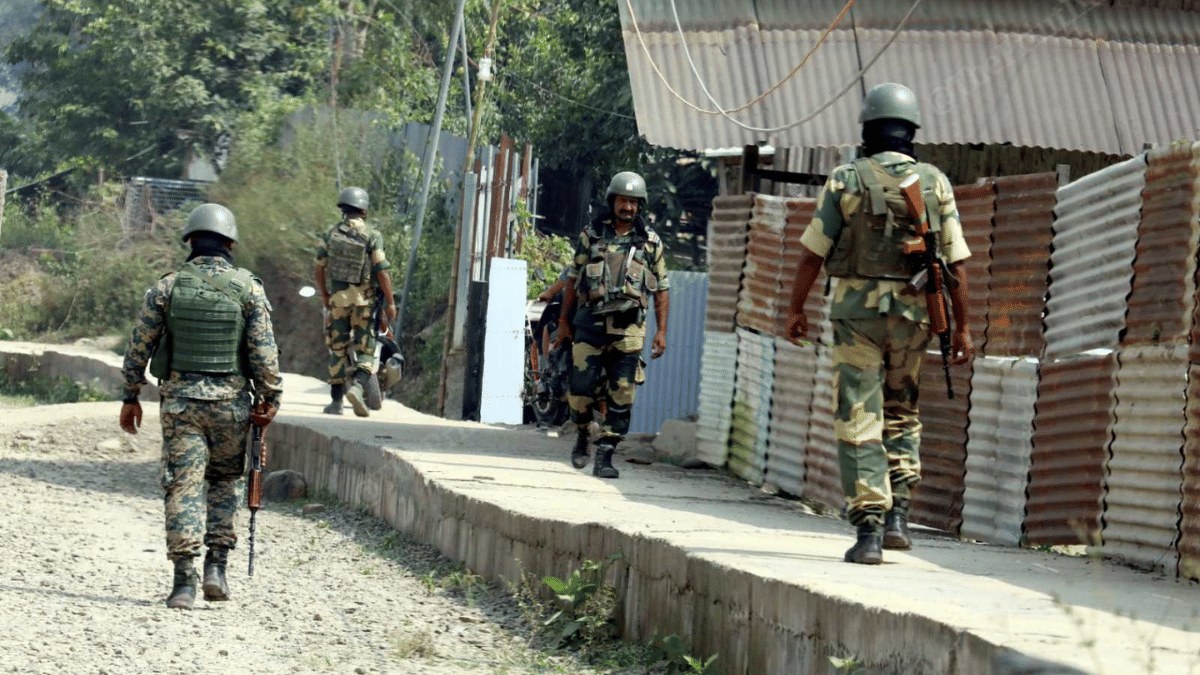
Last Friday, a 42-year-old Kuki woman was shot dead in Chassad village in Kamjong after an exchange of fire between security forces and suspected armed men. In retaliation, Kuki villagers torched some houses in an adjoining Tangkhul Naga village. The other side retaliated by killing a 22-year-old man in Chassad. The situation soon flared up and spread to two Naga villages in adjoining Kangpokpi district, where six Naga civilians were killed by suspected Kuki armed groups.
A senior police officer in Kangpokpi district told ThePrint that any small trigger flares up quickly because, in the hills, the Nagas and Kukis live close to each other. “Any misstep and you would end up killing innocent civilians on either side,” the officer, who did not want to be named, said.
There are Naga villages like Taphou in Senapati sitting just metres from a Kuki village on the other side of the border. These are the areas where small skirmishes between the communities happen frequently, escalating into exchange of fire and torching of each other’s houses.
Underground groups are involved on both sides, multiple officials in the security establishment said. “We have inputs of involvement of NSCN(IM) cadres on the Naga side and Kuki underground armed groups like the Kuki National Organisation-Burma KNO (B) on the Kuki side. They slip in and out from the other side of the border,” one of the security officials said.
The National Socialist Council of Nagaland (Isak Muivah) MN(IM) is one of the largest Naga groups which has been involved in peace talks with the Government of India for more than two decades now. Despite the Framework Agreement 2015, the talks have not made much headway.
Territory at the root of conflict?
According to authorities—both in the government and security establishment—ownership over land in the hills is one of the main triggers for the conflict between the Kukis and Nagas.
“It’s one of the biggest bones of contention between the two communities. While the Kukis claim that the land in the hills belong to them, the Nagas maintain that their ancestors were the original owners of the land. And the Kukis came later and settled here,” a senior government official, who did not want to be named, told ThePrint. “There has never been a proper survey carried out,” he added.
In an interview with ThePrint last month, Losii Dikho, one of the two deputy chief ministers in the Manipur government, said both the communities have a history of conflict. “The last conflict between the two communities that erupted in the early 90s lasted for five years. The problem is land. And illegal immigrants,” he said.
An officer in the security establishment reiterated the point. “The Kukis are scattered all over the hills. They set up their village wherever they want. The Nagas have disputed this. The problem is that the demands of the Kukis and Nagas are mutually exclusive. There is no common ground of agreement.”
Intertwined history
Some 16 kilometres from Yaikongpao in Kangpokpi is Bethsaida, a Kuki dominated village where Chongpu Kipgen, the village head, lives with his wife Tingneichong, a former lecturer in the Department of History, G. P. Women’s College, Imphal.
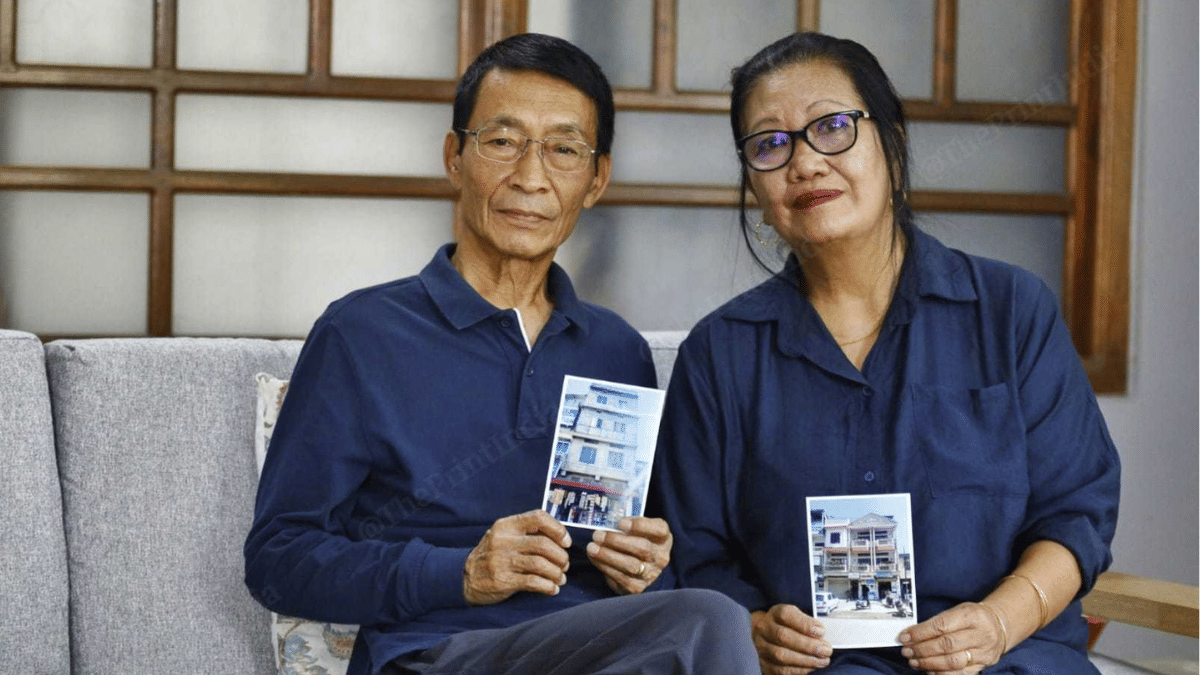
The Kipgen family fled their home in Imphal’s Old Lambulane area on 4 May 2023 after a violent mob attacked the locality. They came to Kangpokpi, where they have an ancestral house. Kipgen’s daughter-in-law was so traumatised by the incident, she was on medication for anxiety for months afterwards.
“Things were getting back to normal but again a new conflict has started. It is senseless. Both of us follow the same religion (Christianity). Many of us have familial bonding with the Nagas,” Kipgen said.
He should know. His grandmother was a Tanghkhul Naga. Tangkhuls are the largest Naga tribe in Manipur. “My grandfather lived in Tamenglong, a Naga majority district. He met my grandmother there and married her. My father was born there,” he said.
His wife, Tingneichong has Naga relatives. “My sister-in-law is a Tangkhul. The conflict has not stopped us from talking to each other. We talk often,” she said.
There are many like the Kipgens who have familial links with Nagas and do not understand the reason for the conflict. “This is a deliberate attempt to divide and rule by vested interests,” Kipgen said.
According to him, the only solution to the crisis is dialogue among the communities. “And honestly speaking, that is not happening. Unless and until some ground for communication is established and dialogue starts, tension will continue,” Kipgen said.
His wife agreed. “There is no other way. All communities will have to learn to live together, leaving aside their differences. That is the only solution. You can bring the violence under control but unless there is trust between the three communities, things won’t go back to normal,” she said.
‘Elections can be a double edged sword’
Elections to Manipur Assembly are due early next year but none of the three communities are enthused about it. They say unless the ground situation improves, it will be pointless to have elections.
“Elections have to be free. There have been elections in the past where underground groups used to pressure people to vote for candidates backed by them. Under the prevailing situation, I am not very hopeful if this time things will be different,” Kipgen said.
Those displaced from their homes in the aftermath of the May 2023 conflict and living in relief camps across the valley and hills are livid when asked about elections.
“I am a first-time voter, but tell me what are the choices before me? A government in power, which has dumped us here and forgotten that we exist for over three years now. An Opposition, which has not come here once to hear us. They give us Rs 80 per day per person to meet our expenses… It’s so frustrating here,” said Sennu Khogsai, a 23-year-old Kuki, living in a relief camp with her parents, in Phaijang in Kangpokpi.
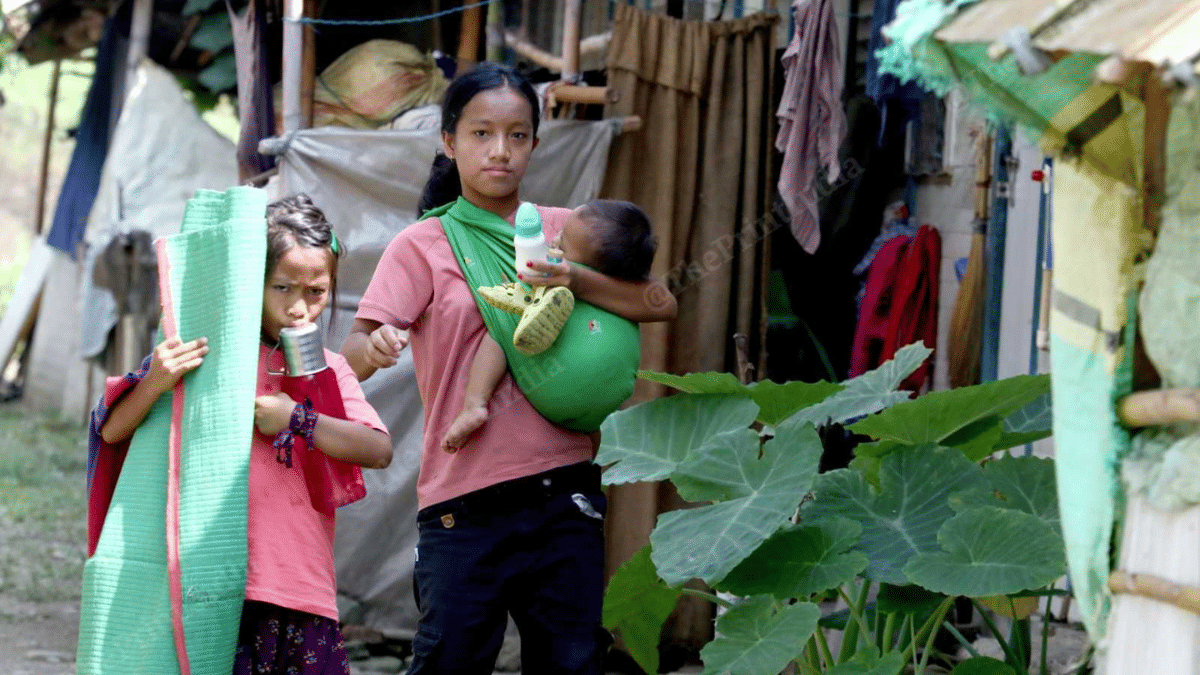
Khongsai, who lived in Kangchiup, a hill village in Imphal West district before being brought to the relief camp when violence broke out in May 2023, is currently taking an online course for her banking exams. “There is nothing to do here. I want to get out of Manipur.”
Across the state, both in the valley and the hill districts, this sentiment is reflected.
Api Pamai, secretary of Taphou Liangmei village in Senapati wants the government to first restore normalcy. “Currently, we cannot even travel to Imphal without a security convoy. Our children cannot go to the adjoining district to study. You want to have an election amidst this? If the situation does not improve, it will be difficult for political parties to even campaign,” he said.
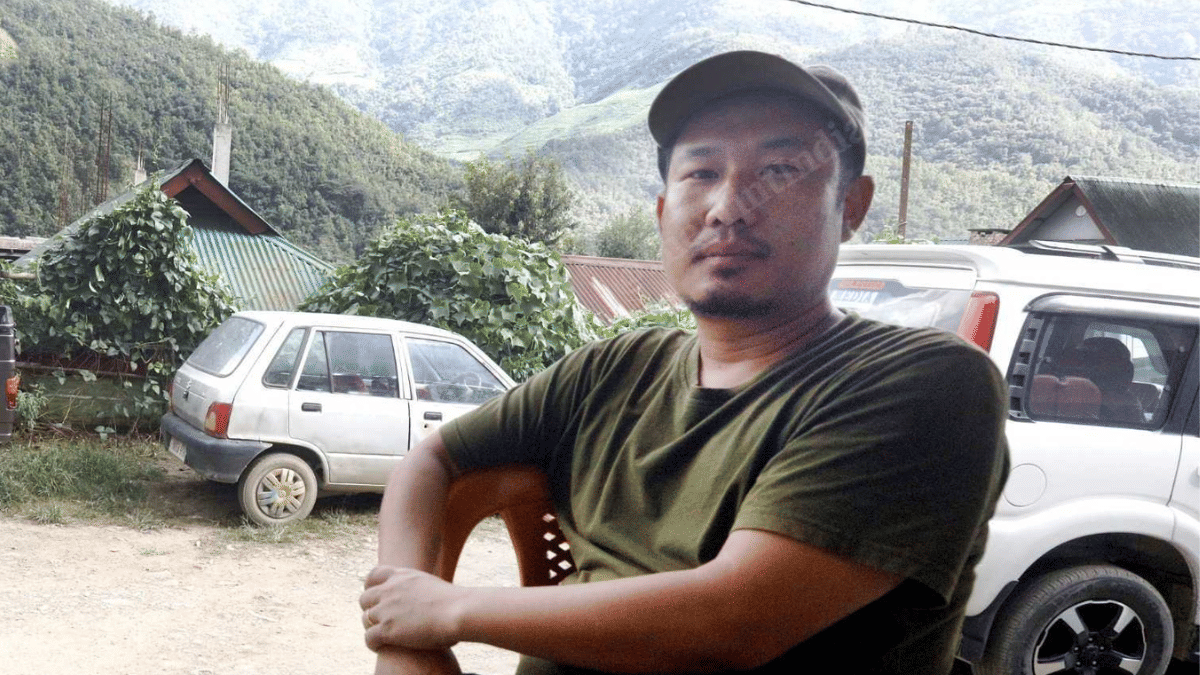
In Manipur’s hills, the iron gates are keeping strangers out, but fear, grief and uncertainty continue to haunt the villages. Underneath the barricades and the animosity run intertwined family histories and a shared religion. As violence erodes trust, the challenge is to restore order and rebuild connections between neighbours, so there can be meaningful dialogue and normalcy before the elections.
(Edited by Viny Mishra)