



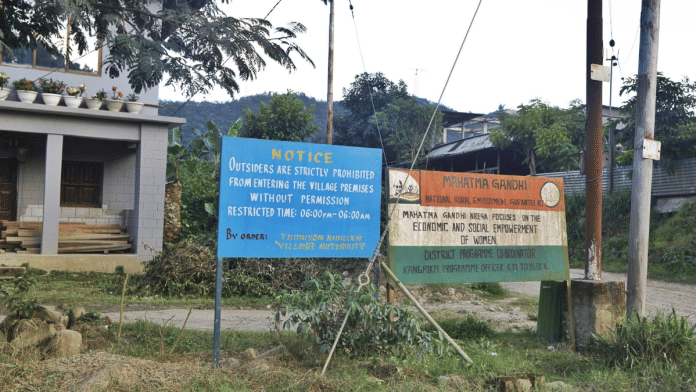
Imphal/Kangpokpi/Senapati: Gonmei Meithuanlungpou, vice-principal at Mount Everest college in Senapati, a Naga majority district in Manipur hills, had never thought he will ever be at his wit’s end doing one of the most basic administrative work required of him– to ensure that no class goes without a teacher.
But the over three-year-old ethnic conflict that broke out in Manipur in May 2023, first, between the non-tribal Meiteis and tribal Kuki-Zo people and then, after a brief spell of relative calm, between the Kukis and Nagas, both tribal, has put his juggling skills to test.
“Look at the complexity. In the summer of 2023, soon after the clashes started between the Meiteis and Kukis, all the Meitei faculty fled. So did the students. We tried to stop them but they were reluctant….they said they did not feel safe,” Gonmei said.
Of the 150-plus faculty at the government aided college, affiliated to Manipur University, close to half were Meiteis.“We didn’t have a choice but to replace the Meitei faculty with Kukis and Nagas,” the vice-principal said. “We can’t have classrooms without a teacher.”
Things were kind of settling down when tension flared up again in February, this time it was between the Kukis and Nagas. “Now, we are replacing the Kuki faculty, about 20 of them, who left Senapati after the violence escalated, with the Nagas. Can you imagine? This does not make any sense. How can any college or for that matter any educational institution function like this?” he asked.
Even the Kuki-Zo students, who were due to appear for their exams, left. “We had to request Manipur University to give permission to the Kuki students to sit in exams from wherever they are,” Gonmei said.
There are close to 1,000 students in the undergraduate and post graduate sections of the college and a sizeable chunk of them were Kukis.
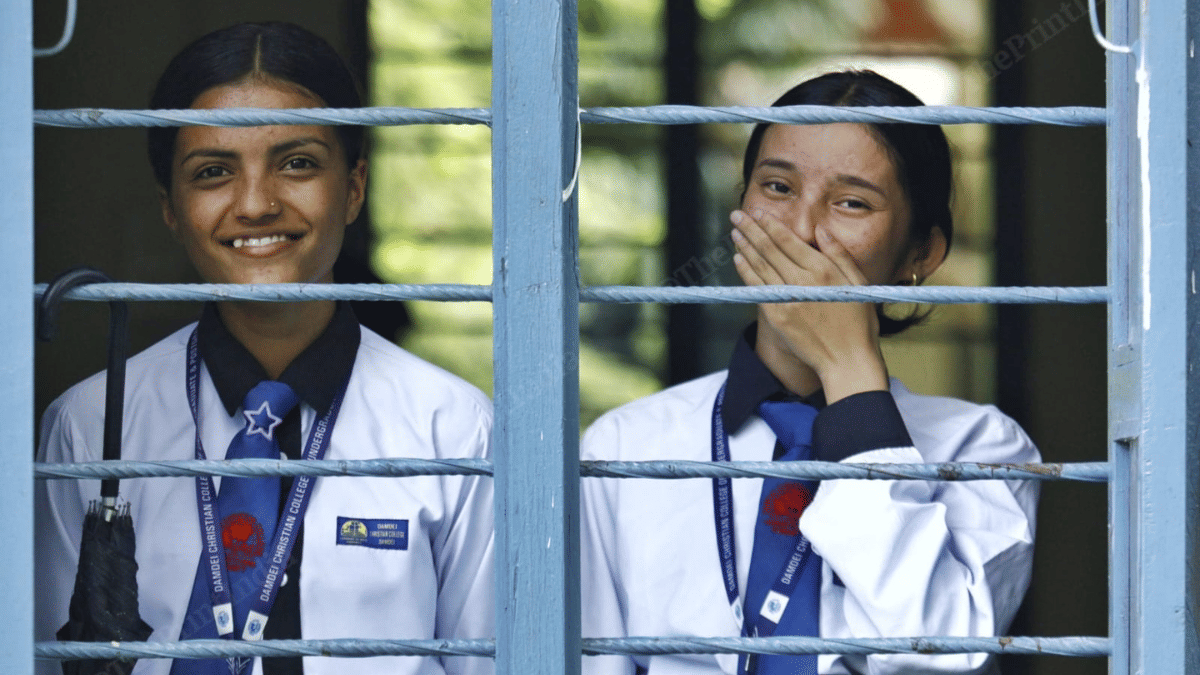
If the Kukis have left Senapati’s Mount Everest college, the reverse has happened at the Damdei Christian College, a private college in the Kuki majority Kangpokpi district.
“A majority of our 50-55 faculty were Meteis. Today, we are left with just 25 of them. This has hit us hard,” Parmoi Haokip, vice-principal at the college, told ThePrint.
Haokip said that the Meiteis are strong in sciences. “We (Kukis) lack there. Meiteis are known for their love for sciences. After the Meitei faculty left, we replaced them with Pangals (Muslims) and Nepali teachers. But they lack specialisation,” she said.
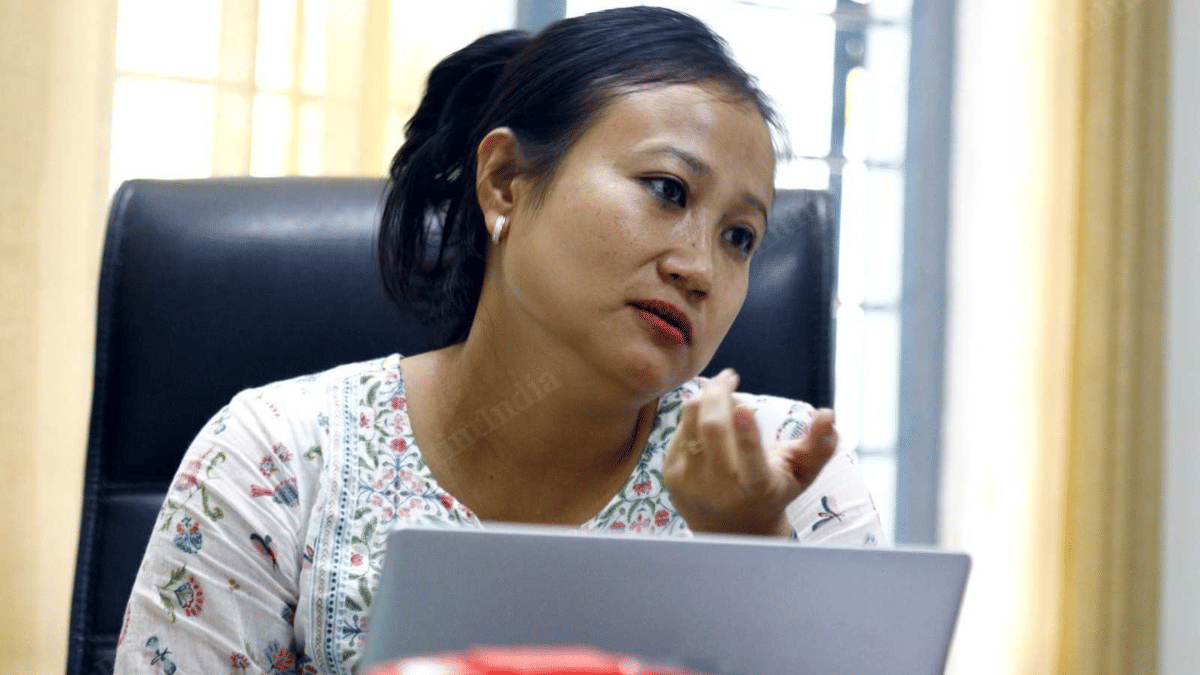
Earlier, Haokip said, the college used to also invite some subject experts from Manipur University in Imphal as guest lecturers. “But now they can’t come. If they send, it is a non-Meitei but not specialized subject expert. This is affecting students in their studies.”
Broken governance
The three-and-a-half-year-old conflict has not just segregated people but educational institutions, health services, administration and governance on ethnic lines as well.
Several officers—both in the civil and police administration—that ThePrint spoke to in Imphal, Kangpokpi and Senapati said off-the-record that the divide between the communities runs so deep that it has segregated even officers.
“We informally talk among each other about how in Manipur, you have officers from three cadres—the Meitei cadre for the valley, Kuki cadre and the Naga cadre for the hills,” a senior IAS officer posted in Imphal said.
“In the Imphal secretariat, where the civil administration sits, you will find mostly Meitei officials and staff and some Nagas. You go to Churachandpur (a Kuki dominated hill district) and you will only find Kuki officers today. Both the Meiteis and Nagas have left. Similarly, Naga majority districts will have Naga and maybe some Meitei officers.”
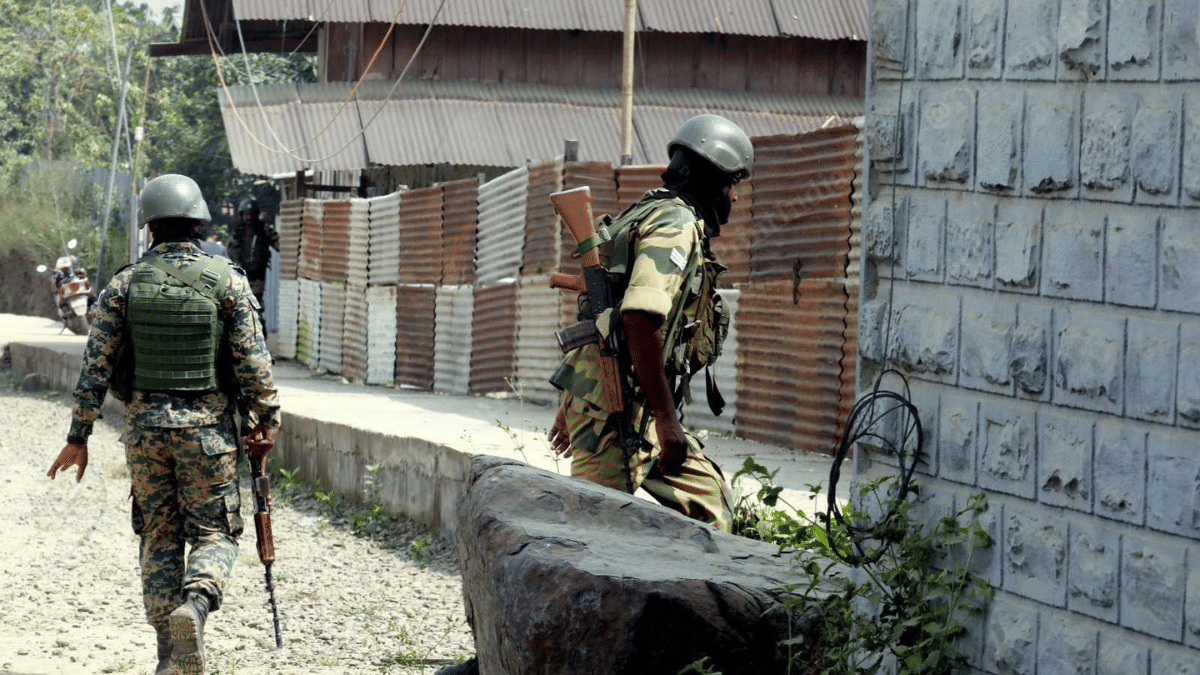
During the first phase of violence, the Meiteis who are mainly Hindus fled to the Valley, where the non-tribals live. The Kukis, mostly Christians, went back to the tribal-inhabited hills. The tribal Nagas had remained neutral.
But things changed early this year, when the conflict shifted to the hill districts, between the Kukis and Nagas. This has added a new layer of complexity with the Kukis leaving the Naga majority districts like Senapati, Ukhrul and Tameglong. The Nagas have also moved out of Kuki dominated districts like Churachandpur and Kangpokpi.
“Now, another segregation has happened,” a senior police officer in Senapati said, adding that this is a concerning aspect of the conflict.
“You should not contaminate administration and governance with ethnicity. It is a big mistake on the part of the state government to allow such separation of security, bureaucracy, education, etc.”
The wooden board in the office of the additional superintendent of police (ASP) in Kangpokpi district, which displays the names of officers posted in the office, is a stark reflection of the divide.
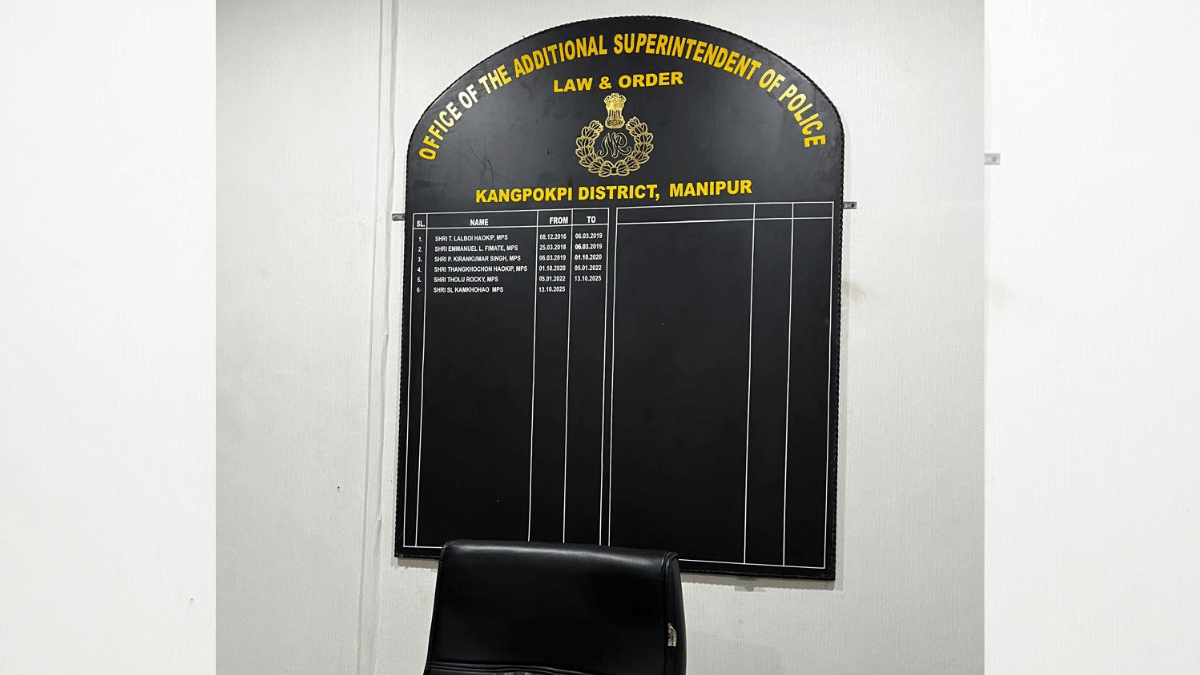
The board shows how the ASP’s office had P. Kirankumar Singh, a Meitei, posted between March 2019 and October 2020, two-and-a-half years before the Kuki-Meitei clashes started. He was replaced by a Kuki officer for about two months after which a Naga officer, Tholu Rocky, was posted for close to three years. Since October 2025, a Kuki officer, S.L.Kamkhohao, has been in the office.
Not long ago, the Senapati police station’s Officer-in-Charge was N, Kipgen, a Kuki. “Now it’s not possible. In Churachandpur, there was one Meitei sub-inspector, but with districts getting divided on ethnic lines, it has become difficult. Though there is no hard feeling in the forces, people are reluctant to go to a district where another community is in majority,” an IPS officer posted in Imphal explained.
ThePrint spoke to several IAS officers posted across the hills and plains, who gave an insight on how segregation has affected governance.
“There are some small government departments, which for all practical purposes, have become defunct as there are no officers after the officer in charge, who was a Meitei returned to Imphal after the Kuki-Meitei conflict started. We have not been able to find a replacement,” a deputy commissioner in one of the hill districts said.
He added that many of the Kuki and Naga officers, who have returned to their homes in the hills, are practically without work as there are no vacant posts. “… somebody is already working there,” the DC said, adding that some officers do work from home. “It’s a challenge for us too to keep the officials occupied. After all, they are drawing salaries from the government.”
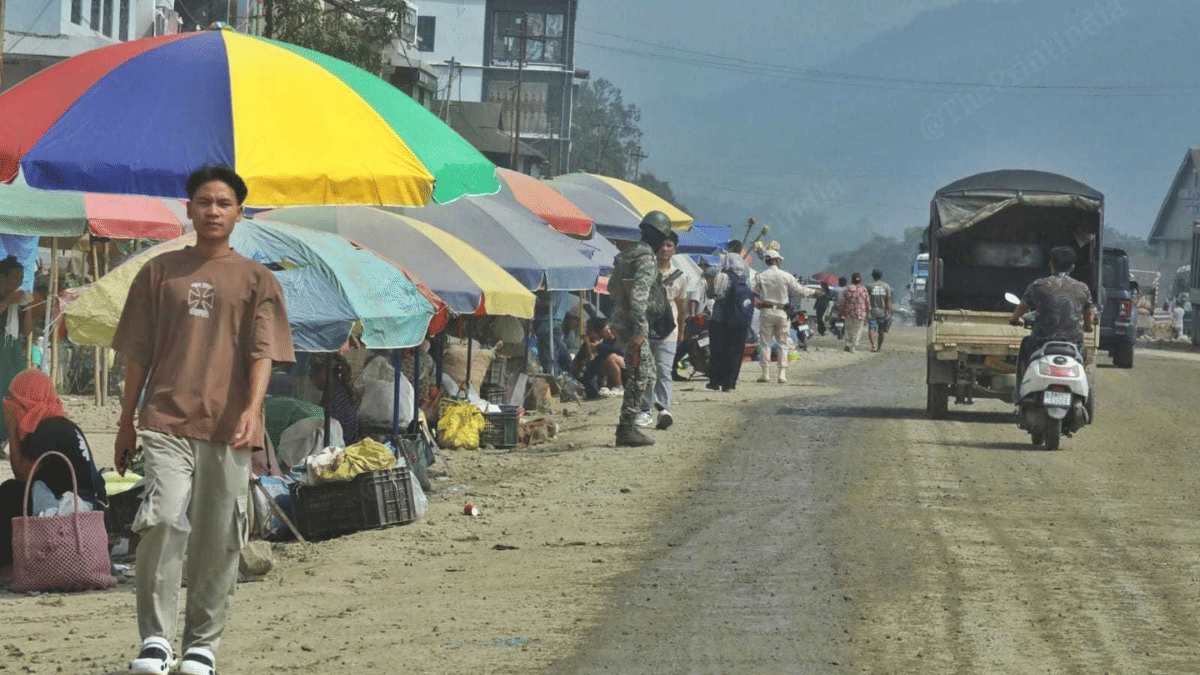
A senior IAS officer posted in Imphal said the conflict has touched every government department in the state. “Take for instance the primary health centres (PHCs). Many of them have been badly hit. The Kukis posted in PHCs in Naga majority districts like Ukhrul and Senapati are no longer there. The Meiteis are also reluctant to go as they have to cross Kuki dominated Kangpokpi district to reach a PHC in Senapati. Beyond a point, we can’t do much,” the officer said.
It’s not that the government is not doing anything to break the ice between communities and ensure free movement of people on the highways.
Police convoys now escort passengers who are travelling to Imphal or the hill districts. “Though few, Kukis are travelling with police escort to Imphal airport. This was unthinkable till about a year back. Similarly, the Meiteis are travelling through Kangpokpi and Senapati enroute to Dimapur railway station,” the Imphal-based IAS officer said.
Some integration has started in the police though at a very small scale, a senior IPS officer said. “We recently posted some Meitei police staff to Ukhrul and Senapati. But yes, the numbers are very small. There is distrust between the three communities. More concrete measures are needed to break the ice,” the officer, who did not want to be named, said.
(Edited by Tony Rai)