







Just two weeks before voters in India’s eastern state of West Bengal were due to go to the polls, about 9 million names were removed from the registered roll, causing an uproar among opposition groups.
The Election Commission stripped approximately 12% of voters from the list to weed out fake voters and illegal migrants. Opposition groups, however, allege that Prime Minister Narendra Modi’s party is using the exercise to target mainly poor and Muslim voters, and tilt the election outcome in its favor.
A similar revision was carried out before elections in Bihar state last year, which Modi’s Bharatiya Janata Party won with its regional ally.
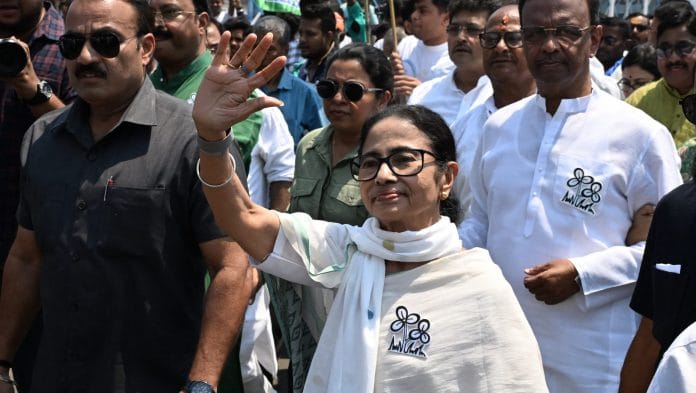
The voter roll changes, known as the Special Intensive Revision, has become a major political flashpoint in the state elections and has overshadowed traditional campaign issues such as jobs, inflation and welfare in the state. Chief Minister Mamata Banerjee, who has ruled West Bengal for 15 years, has gone as far as asking the Supreme Court to intervene to halt the exercise.
West Bengal will vote in two phases starting Thursday, with election results due on May 4, alongside the outcome of other key state polls this month.
Ashutosh Biswas, 42, had been a regular voter in Ranaghat, a small town in West Bengal near the Bangladesh border for years, but was shocked to find his name missing this year. Although he left home two decades ago to earn a living doing odd jobs like brick-laying and plumbing in the capital city, New Delhi, he’s always made his way home to vote.
Biswas and his family are part of the exodus of thousands of migrant workers returning home to West Bengal this week, fearing they will lose their access to welfare schemes and basic services without the right to vote.
Many worry that their citizenship status will also be at risk. The BJP has repeatedly cited a rise in voter numbers in areas near the Bangladesh border as evidence of illegal immigration, and the need to weed them out of the voters roll.
Modi is making an all-out push to win West Bengal and make gains in the opposition-controlled Tamil Nadu — which votes on Thursday — to expand the BJP beyond its traditional strongholds in northern and western India. West Bengal accounts for about 8% of seats in the lower house of the parliament, making the eastern state the third-largest contingent.
A victory for the BJP would cement the party’s national reach, while a loss would leave Banerjee on track for a fourth consecutive term as chief minister, strengthening one of the few regional leaders capable of rallying opposition forces against Modi.
For the BJP, a win in the state would be “an issue of prestige,” said Mujibur Rehman, a political science professor who teaches at Jamia Millia Islamia, a university in New Delhi. “For the BJP winning West Bengal is about finishing a pending agenda — complete dominance in the eastern part of the country, after which only southern India remains.”
Banerjee’s Trinamool Congress has made Bengali identity a key campaign theme, portraying Modi’s party as an outsider and warning of threats to the state’s distinct culture and its fondness for fish. Some BJP candidates have gone as far as campaigning door-to-door with fish in their hands to counter fears the party would impose vegetarianism. The concern stems from the BJP’s association with Hindu nationalist groups, some of whom have supported a ban on sale of meat products.
Both parties have also promised cash handouts to woo women voters. The Trinamool Congress is promising between 18,000 rupees ($192) to 20,000 rupees a year to women and a similar amount to unemployed youth, while the BJP has pledged to nearly double the amount if voted to power.
Adding to the charged campaign atmosphere, Modi has stepped up attacks on the opposition after it blocked his plan last week to expand the size of the parliament by more than 50% and reserve at least a third of seats for women. Analysts say the bills were meant to appeal to West Bengal’s more than 31 million female voters, though concerns over the voter roll revision remain dominant.
“Voting is a social exercise in West Bengal, exclusion have led to a sense of insecurity among people which may translate as a backlash against the BJP,” said Zaad Mahmood, a professor of politics at the Presidency University in Kolkata.
–With assistance from Debjit Chakraborty.
Disclaimer: This report is auto generated from the Bloomberg news service. ThePrint holds no responsibility for its content.