



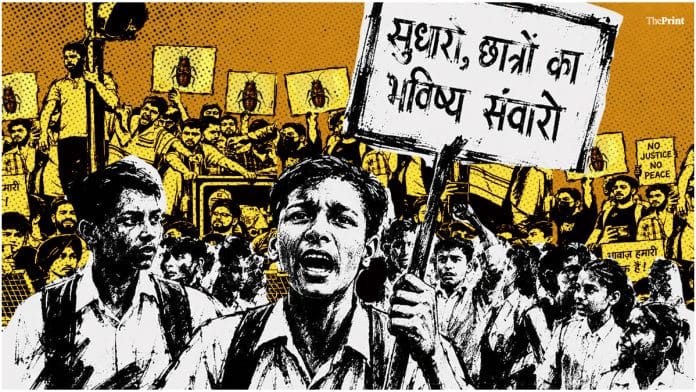
Lucknow: “Call the DM (District Magistrate).” Call the CM (Chief Minister).” “Hamaari maange poori karo (Fulfil our demands).” These were the slogans raised by children who staged a sit-in, blocking traffic at the Dubagga-Kanpur Bypass in Lucknow on Monday morning. It was raining heavily at the time, but the children walked nearly 2.5 km from their school in Para to reach the spot.
They described their protest as a ‘Gen Alpha movement’, taking their name from the term used to describe those born between 2010 and the mid-2020s. This is the fifth such incident reported in Uttar Pradesh in the past 20 days.
The children’s protests have ranged from demands for better educational facilities and basic amenities to concerns over drugs in their neighbourhoods and poor roads affecting access to schools.
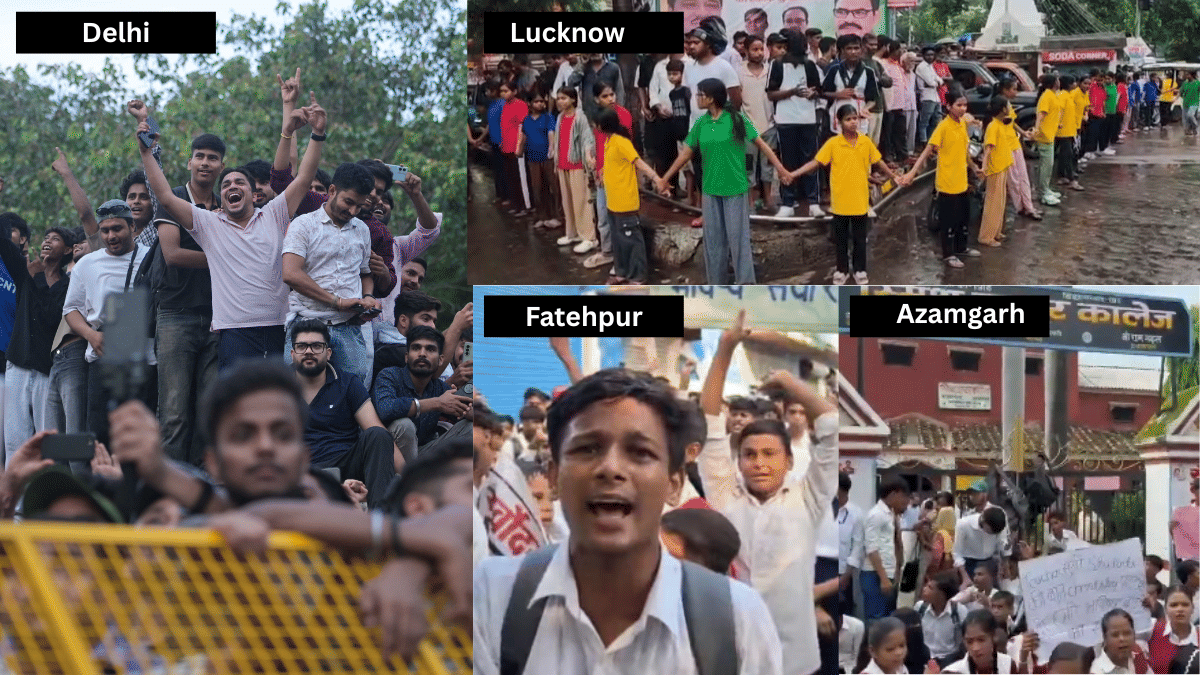
In Lucknow, despite heavy rain, the girls of Jai Prakash Narayan Sarvodaya Vidayalaya, a residential school run by Uttar Pradesh government, walked nearly 2.5 kilometres to reach Dubagga Bypass and staged a protest before marching towards Balaganj intersection. They sat down a circle in the middle of the road at the intersection, bringing traffic to a standstill.
The students alleged that the school has a severe shortage of teachers, including in subjects such as physics and chemistry, affecting preparations for board examinations. They also complained about poor-quality food, inadequate medical treatment when students fall ill and other basic problems.
Anamika, a Class 10 student, told ThePrint, “There is a severe shortage of teachers in the school. In the science stream, there is no teacher other than the chemistry teacher. When we raised the issue, the school management reprimanded us. Even during the protest, the students were treated rudely.”
Police and administrative officials reached the spot and tried to pacify the students. They assured them that their demands would be conveyed to the government. The students later tried to march towards the chief minister’s residence but were stopped at Balaganj and sent back.
Around 10 am, they ended the protest following assurances from officials, allowing traffic to resume.
ThePrint has learnt that the Monday protest came just days after students from the same Sarvodaya school had staged another demonstration in the Para area over similar complaints. Uttar Pradesh Social Welfare Minister Asim Arun and department director Anurag Yadav, who were travelling to Kannauj, had reached the spot and spoken to the students. They assured them that the problems would be addressed.
Their apparent failure to resolve the issues, however, prompted the girl students to protest again.
ThePrint tried to reach the school management for their version but they are yet to respond.
Meanwhile, students staged a sit-in protest for nearly two hours at Smith Inter College in Azamgarh Tuesday over a shortage of teachers. A large number of students protested on the school premises, demanding the appointment of regular teachers for physics, chemistry, and mathematics.
The protesting students alleged that the school has not had regular chemistry and physics teachers for nearly 26 years, adding that the shortage of teachers is affecting their studies and leaving their future uncertain.
Also Read: Modi’s I-Day outreach to Gen Z & Gen Alpha: Free online coaching for competitive exams, talent hunt
I-day protest
A day earlier, in Meerut’s Sardhana, another group of Gen Alpha children, accompanied by few local women, reached the police station to demand action against the alleged illegal sale of narcotic substances in the Khewan locality of Meerut.
The 12- and 13-year-old children alleged that illegal liquor, ganja, sulfa and other intoxicants were being sold in the area. Carrying posters with messages such as ‘Save Our Future’ and ‘Stop Drug Abuse’, the children told police that the growing drug presence around them was threatening their future.
Residents said complaints had previously been made about the alleged drug trade but had not resulted in effective action. The women demanded a crackdown on those involved and strict action against those responsible. The police assured them that the complaint would be taken seriously and the matter investigated.
The children’s concerns, residents said, were not limited to narcotics. They were also worried about the broader environment in which they were growing up and the potential impact of open drug sales on children and young people.
Another striking image emerged from Hamirpur on 14 August, when children from Classes 1 to 12, accompanied by their parents, reached the district collectorate carrying the tricolour. Some of the children were seen with tears in their eyes as they sought the administration’s intervention over the condition of a village road.
The children told officials that they too wanted to study and build a future for themselves, but the poor condition of the road had become a major obstacle to reaching school.
On 13 August, students at the Jawahar Navodaya Vidyalaya in Kannauj district staged a Gen Alpha protest over the quality of food being served at the school. Students of Classes 10, 11 and 12 boycotted the meals served at the school.
As part of their protest, the Gen Alpha students locked themselves inside their hostel rooms. The students alleged that poor-quality food was being served in the mess.
The students said they had complained several times, but no action had been taken. The students stopped taking food from the mess from the evening of Wednesday, 12 August.
Inspired by Gen Z
The recent protests are part of a pattern that began emerging in Uttar Pradesh from July 28. In Fatehpur, school students took to the streets over basic facilities and succeeded in putting pressure on the administration to address their demands.
The protest was led by Class 12 student Ankur Sonkar and three of his classmates, who had attended the Jantar Mantar movement against the National Eligibility cum Entrance Test (Undergraduate) paper leak. Inspired by that experience, the group decided to organise a similar demonstration in their own school over long-pending issues.
According to Uttar Pradesh-based educationist and retired professor A.K. Tiwari, these incidents point to a significant shift in the way young students are articulating their grievances. Rather than confining their complaints to classrooms, school authorities or parents, children are increasingly taking their grievances into public spaces onto roads, to police stations and outside government offices.
“For the administration, these protests carry a different significance. These are children raising issues directly linked to education, safety, health and their future.
“The sight of schoolchildren blocking roads, carrying the national flag or walking to police stations may be unusual, but the message emerging from these Gen Alpha protests is consistent: they want authorities to address problems that adults have failed to resolve despite repeated complaints. Government should listen to them before it becomes big,” Prof. Tiwari said.
(Edited by Nardeep Singh Dahiya)
Also Read: From UP to Bihar to Rajasthan—Gen Alpha is protesting against poor school infrastructure
What about Generation Gamma? Are they sleeping? Or are they agitating too?
Also, what about Generation Delta? They seem to be silent so far.
I think Generation Beta will soon join Alpha in their protests.