



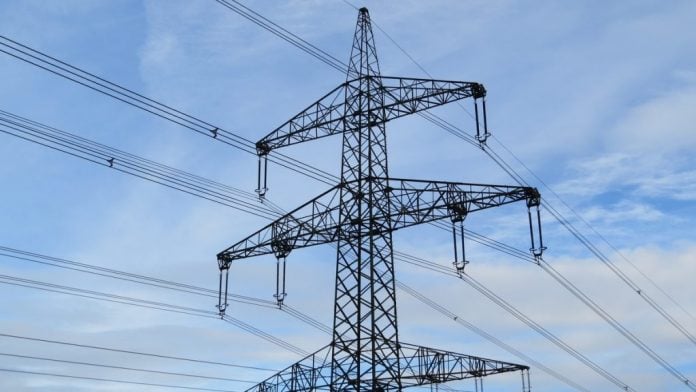
Chandigarh: Electricity employees in Haryana called off their strike late Friday evening after a meeting with the state government, which assured them that there would be no privatisation. The two sides will meet again on 3 November to discuss the workers’ remaining demands.
The talks were led by state Energy Minister Anil Vij, but Chief Minister Nayab Singh Saini joined the meeting as well.
About 40,000 electricity employees and engineers in Haryana had started a three-day strike Thursday to protest against an order of the Haryana Electricity Regulatory Commission (HERC) granting Eleven Power Private Limited a 25-year parallel distribution licence for Gurugram and Nuh.
The order allowed residents to choose between the state-owned Dakshin Haryana Bijli Vitran Nigam Limited (DHBVNL) and the private supplier, and the employees were protesting against the decision’s possible impact on their jobs and the privatisation of an essential service like electricity.
After the meeting, All Haryana Power Workers’ Union leader Devender Hooda said, “The chief minister told us that the government has written to the Haryana Electricity Regulatory Commission (HERC), recommending the cancellation of the private company’s licence.”
In light of the strike, power disruptions left thousands grappling with multi-hour outages. Gurugram, Faridabad and Nuh were among the worst-hit districts, with an estimated 10 lakh consumers affected. Gurugram alone received over 3,000 complaints within 12 hours.
Water supply was also hit in several Gurugram localities because pumps could not run without power, and Faridabad’s NIT-2 residents said their taps went dry after a 13-hour outage.
The trouble was not limited to the south of Haryana.
Rakesh Chhabra, president of the Rai Industry Association in Sonipat district, alleged that striking employees had disrupted power feeders during the strike, cutting off supply to the industrial area of Sonipat, one of the biggest industrial districts of the state.
Chhabra said units with big gensets kept running on diesel but those largely dependent on grid power nearly shut.
Tough 2 days for residents and businesses
With no employee on duty to fix faults during the strike, power outages left lakhs of residents in a fix. In Gurugram, industrial units in Sectors 37, Kadipur and Basai reported that work stopped. Deepak Maini, chairman of the Progressive Federation of Trade and Industry, said machinery and production came to a standstill and deliveries stood affected.
Speaking to ThePrint, Kiran Khanna, a Gurugram-based communication strategist, had described how the local Sadar Bazar market went completely dark Thursday evening. “The situation was very bad in the old city,” she said.
Residents of NIT-2 in Faridabad blocked a road after an outage of around 13 hours, saying their water supply had also run out.
On Friday, residents of Bhim Garh Kheri in Gurugram sat on the Daulatabad flyover in protest. They said power supply had been off since about 11 pm Wednesday, and that nobody at the electricity offices was picking up calls.
In Kurukshetra, around 90 per cent of the city was reportedly without power by Thursday evening, and hostel students at Kurukshetra University were left struggling for drinking water, food and a place to charge their phones.
In Rewari, traders said business stopped once inverters ran out. In Charkhi Dadri, nearly half the city was hit and villages affected as well, as field staff were not available to repair faults.
In several districts, deputy commissioners issued orders deputing officials from other departments, such as the Haryana Shehri Vikas Pradhikaran (urban development department), to fix electricity faults in emergencies.
Why the employees struck
The Haryana Electricity Regulatory Commission (HERC)—an independent, quasi-judicial body operating under central legislation, the Electricity Act, 2003—granted Eleven Power Private Limited the parallel distribution licence for Gurugram and Nuh earlier this month.
Following this, in a notice dated 19 October—signed by four union general secretaries led by Ravinder Ghanghas of the Haryana Power Engineers Association—power employees accused the government of ignoring an earlier notice they had sent on 15 October. They said the HERC order went against public interest and regulations were brushed aside in its passage. They also claimed that profit-making, high-revenue areas were being handed to private hands to weaken state-owned distribution companies.
The unions called for the parallel licence to be cancelled, and the privatisation process stopped. They also want the government to act on a charter of demands agreed to in August when another strike was threatened.
What Vij said
Energy Minister Anil Vij initially addressed the situation with a hardline. On Thursday, he called the strike unwarranted. Talking to ThePrint before the strike began, Vij said the government opposed the licence and had challenged the HERC order before the Appellate Tribunal for Electricity (APTEL), seeking a stay. He asked employees to leave the path of strike and join the government in the legal fight, and offered to let them assist the state’s counsel or hire their own lawyer. He also said the HERC was an autonomous body under central law.
However, on Friday, his tone changed. In a post on X he wrote, in Hindi: “An appeal to the employees of Haryana who have gone on strike: end the strike and come on duty. We are ready to talk on all options. This includes action under Section 108 of the Electricity Act 2003.”
Section 108 of the Electricity Act, 2003, gives a state government a way to guide its electricity regulator. Under sub-section (1), the state commission is to be guided by written directions from the state government on matters of policy involving public interest. Sub-section (2) says that if there is a question whether a direction is a matter of public-interest policy, the state government’s decision is final.
Speaking at the BJP’s state headquarters in Panchkula, Vij said he had spoken to Chief Minister Nayab Singh Saini. He said the employees had demanded Thursday that the government use Section 108 to set aside the order, and that the government could do so. “I’m confident that the strike will end in just a few hours,” he had told mediapersons before the meeting began.
This is an updated version of the report
(Edited by Sunanda Ranjan)