








This is the final part of a three-part series. You can read parts 1 and 2 here.
New Delhi: It was just another evening for the two migrant brothers who, lacking higher education, had toiled in factories to build their two-storey house in Amritsar’s Mohkampura colony, along with a life considered decent by the standards of aspirational migrant workers.
Their children were either married or studying, and they seemed to have everything going for them. The relationship between the two brothers and among their families was also nearly perfect, recalls Shiv Nath Bharti, the younger brother.
Then, the menace of online gaming entered their lives. On the intervening night of 20-21 May last year, Babita Devi, the elder brother’s wife, heard loud screams. It was coming from the room of her daughter, Nisha (21), who was killed that night.
In her statement to the Amritsar police, Babita describes what she saw on reaching her daughter’s room. Sanjeev, Shiv Nath Bharti’s younger son, allegedly stabbed Nisha repeatedly with a knife. She claims he had gloves on his hands.
After a probe, the Punjab Police said that Sanjeev was addicted to online games and betting. He was allegedly attempting to steal money and valuables from his older cousin’s room. When she attempted to stop him, Sanjeev allegedly stabbed her several times. She died from her injuries.
Sanju’s father contests Babita Devi’s version of the events but does not deny the Punjab Police finding that his son was addicted to online games.

This is the last report in ThePrint’s three-part series on online betting. The first report was a deepdive into the industry while the second looked at a series of suicides over online betting addiction.
Part 3 traces how the growing penetration of online betting, especially among the youth, is tearing families apart. Mounting debts and limited options to recover losses have driven addicts to commit serious crimes against acquaintances, friends, cousins, and even their own parents.
Also Read: 4 dead children, Haryana’s ‘killer mom’, a confession, and many questions
Brutality and a series of deceptions
Ravinder (19) was deeply entrenched in the world of online gaming. His father, who worked as a mason in the Serilingampally area of Hyderabad, could not maintain a constant vigil on his routine activities. Over the course of four months, between March and June last year, Ravinder had put around Rs three lakh in bets.
In the previous stories in the series, ThePrint explained how betting losses and efforts to recover them trigger an unending crisis.
Ravinder’s case was no different. Having lost a lot of money and having borrowed from his friends and family, Ravinder was caught in a web. Then, he saw a glimmer of hope.
“His father had brought home Rs six lakh to give it to his relatives—after mortgaging his land in the village,” a Telangana Police officer privy to the case told ThePrint.
In the stash of cash, Ravinder saw a lifeline that would let him clear his debt of Rs three lakh, in one go.
“He took away Rs three lakh from the stash, without informing his father, and deceived him when confronted. There was a heated exchange between the duo because of Ravinder’s act, and ultimately Ravinder promised that his friend would return the money,” the officer said.
Ravinder started conspiring against his own father. On 1 July last year, he called his father to a secluded place in Gachibowli, assuring him that his friend wanted to return the money. In the guise of lightening up the situation, Ravinder convinced his father to play a game, “Close Your Eyes”.
Unaware of the plot his son had in mind, Ravinder’s father, Hanumanthu, agreed to be blindfolded, with a cloth Ravinder had brought.
Ravinder allegedly pulled out a concealed knife after the initial few minutes of their exchange and slit his father’s throat.
Ravinder did not stop at just this. Instead, he attempted another deception so he did not have to go to jail. “He called his uncle and relatives and informed them that his father had killed himself,” the officer said.
However, his versions were inconsistent, and his uncle grew suspicious. He approached the Cyberabad Police. After sustained questioning, Ravinder allegedly confessed to his crime.
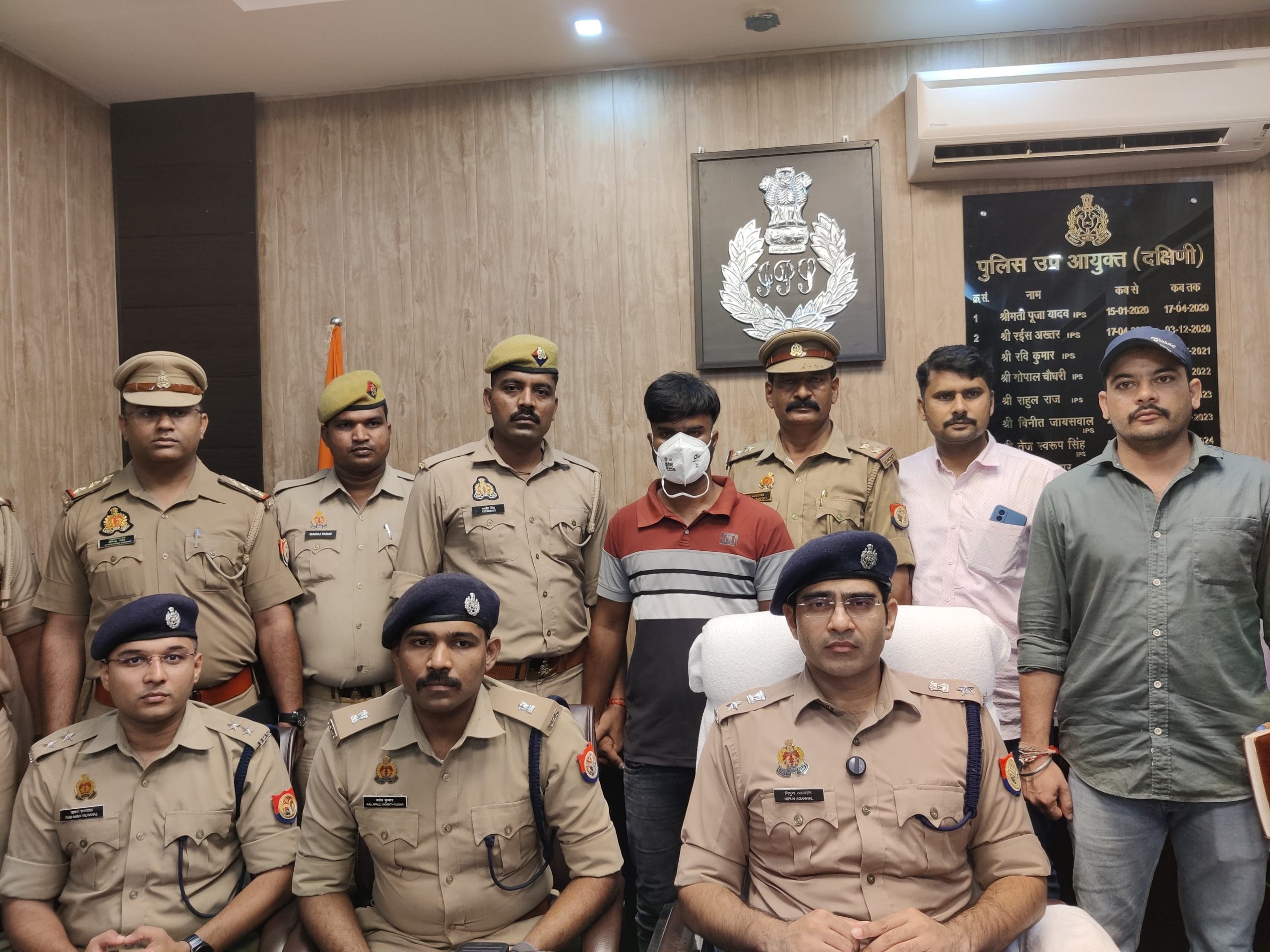
Three months later, far away in Uttar Pradesh’s Lucknow, Nikhil Yadav killed his mother, Renu Yadav, under similar circumstances. He deceived the Lucknow Police and his own family members for three days before his “no remorse” attitude betrayed him.
The postmortem report of his mother, Renu Yadav, revealed the extent of his brutality. She died after her son allegedly inflicted seven injuries on her.
The postmortem report confirmed that she suffered lacerated and deep wounds on different parts of her head. Coma due to head injuries was the final cause of her death.
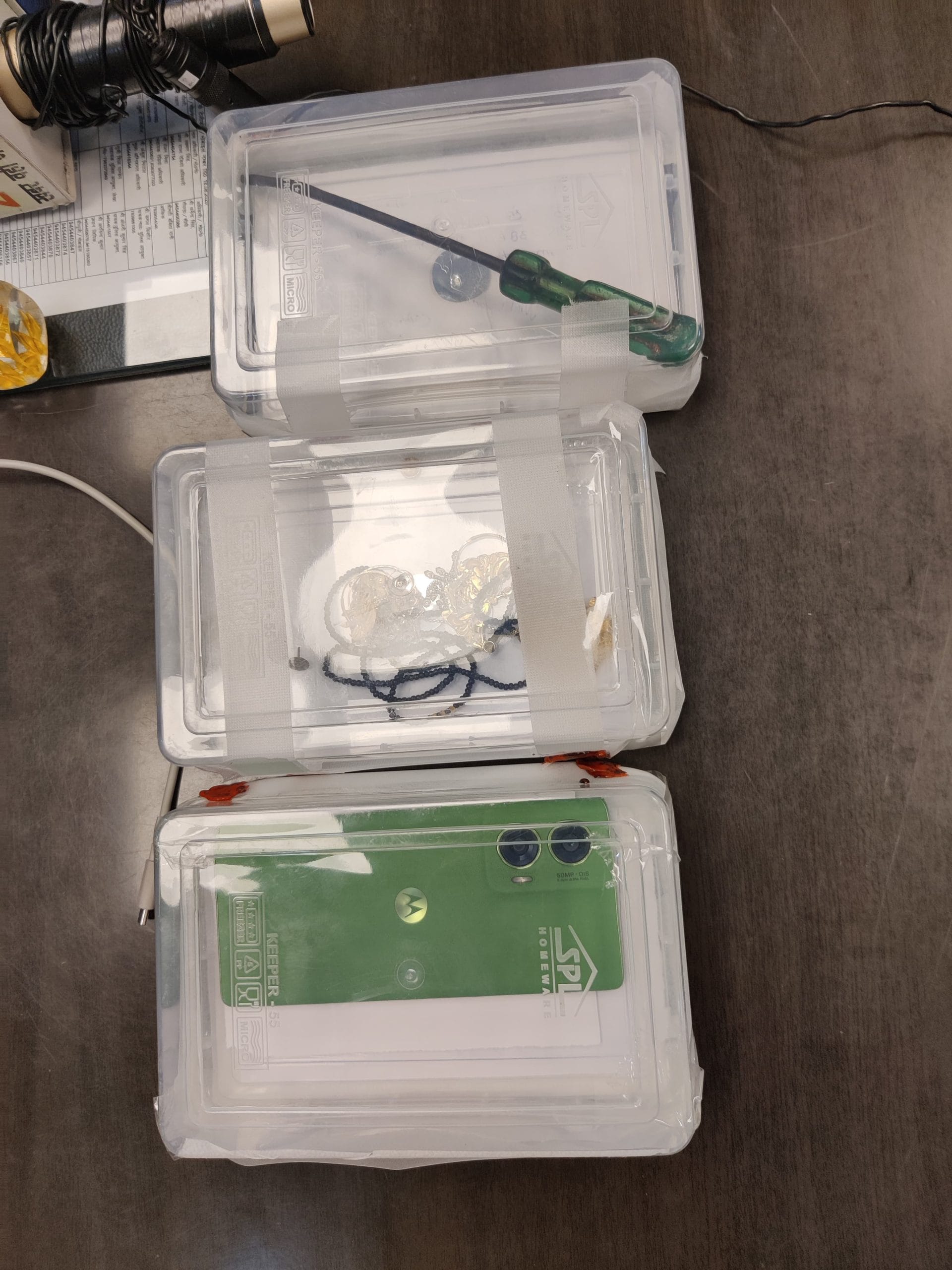
A police probe revealed that Renu Yadav was killed after being repeatedly assaulted. Her son allegedly used a screwdriver first and then assaulted her with a gas cylinder.
However, the CCTV footage from the street outside their house in Lucknow showed Nikhil as well-groomed, leaving the house on his bike as usual. He left his house shortly after calling his father to claim that someone had attacked his mother, leaving her grievously injured.
Following a probe, the Lucknow Police said that Nikhil was a Bachelor of Arts student at Lucknow’s K.K.V. Degree College. They said that he was a habitual user of betting platforms and had mortgaged his mother’s jewellery to repay his debts on the platforms.
During his interrogation, Nikhil revealed that his mother frequently visited the room from which he had been trying to steal jewellery on the day of the murder. Before that, she had slept in the same room, ensuring he could not steal during the night.
Clinical psychologist Rajat Mitra, who studies the pattern of savagery that these addictions bring to people, said, “The thing with addiction, and in this case, online betting, is that it makes the whole concept of violation relative,” he told ThePrint. He argued that individuals gripped by addiction detach themselves from any semblance of morality and conventional wisdom.
“A crime doesn’t look like a crime. It becomes egocentric. The magical thinking increases very fast. When someone is in debt, they feel they can make up for the loss. But there is a loss of touch,” he further said.
Aspirations cut short
There is an eerie similarity between the case in Amritsar last year and the one in Delhi’s Kailash Hills earlier this March.
The suspect in this year’s case—Rahul Meena—killed the daughter of an IRS officer, a 22-year-old IIT Delhi graduate who was aspiring for the Union Public Service Commission. Rahul previously worked at the IRS officer’s house, but was fired for alleged misappropriation of bills just one and a half months ago.
The Delhi Police said Meena had borrowed multiple loans from domestic workers in the neighbourhood. The IRS officer had asked him to leave work and his house upon receiving complaints from the people who had lent Rahul money.
Already sunk in debt due to his addiction to online games, Rahul’s grudge against the IRS officer and his family led to the murder on 22 April.
Police said that the victim’s parents were at the gym when Rahul reached the IRS officer’s house. He knew their whereabouts, and he knew the entry was through a passkey.
He spotted the victim studying and allegedly asked her to give him money.
“When the woman refused and asked him to leave, he hit her with a sharp object; we suspect it was a lamp. She fell down. While she was unconscious, but alive, he allegedly sexually assaulted her. Then, he dragged her down to the floor below to access the safe locker. He used her blood-stained fingers to open the biometric lock. But it did not work. Then, he used screwdrivers and other tools to break open the lock,” a Delhi Police official told ThePrint.
The rape was allegedly the second in as many days by Rahul, prompting a Delhi Police official to point to his “perverted” mind.
Rahul fled with around Rs 2-2.5 lakh cash. He boarded a cab to Palam Railway Station. His “plan was to take the money, board the passenger train to Alwar, give the money to his family, to pay back the debt, and leave Alwar completely,” according to police.
But by the time Rahul reached Palam, the train had already left. Now, he needed a new plan.
He booked a hotel online in Dwarka and hid there for some time, hoping to catch the next passenger train to Alwar. However, by evening, the Delhi Police caught hold of him.
A police officer told ThePrint that Rahul, as a young boy, had dreams back when he was in Class 12. Three years ago, while scrolling through Facebook, he came across advertisements for online betting and was convinced to try.
“Rahul had been playing a teen patti card game and ludo. He started placing bets with smaller amounts of money. When he lost the money, his focus was on recovering the money. Hence, he placed more bets. It was like a vicious cycle. It never ended. He kept borrowing money, kept losing. Until then, he had a debt of around Rs five-seven lakh, which he could not repay, and people began asking him to pay it back,” the officer said.
Another officer said that Rahul, at the time, felt he had no other option than to gamble back the money. He earned Rs 20,000 from the IRS officer’s house, but that was not enough.
“He kept gambling, assuming he would be able to gain some more, and finally return it to the people he owed. He sold off phones and other household items to get money. And, when nothing seemed to work out, his last resort was to rob the IRS officer’s house,” said the officer quoted above.
Rahul’s father is a farmer in Alwar. Previously, he worked as a sweeper at a government office. “Meena was hired through reference. GST officials from Alwar recommended that the IRS officer employ Meena. There was no servant verification done,” said the officer.
The IRS officer’s family now lives with a regret: had the verification been completed, they might have been alerted.
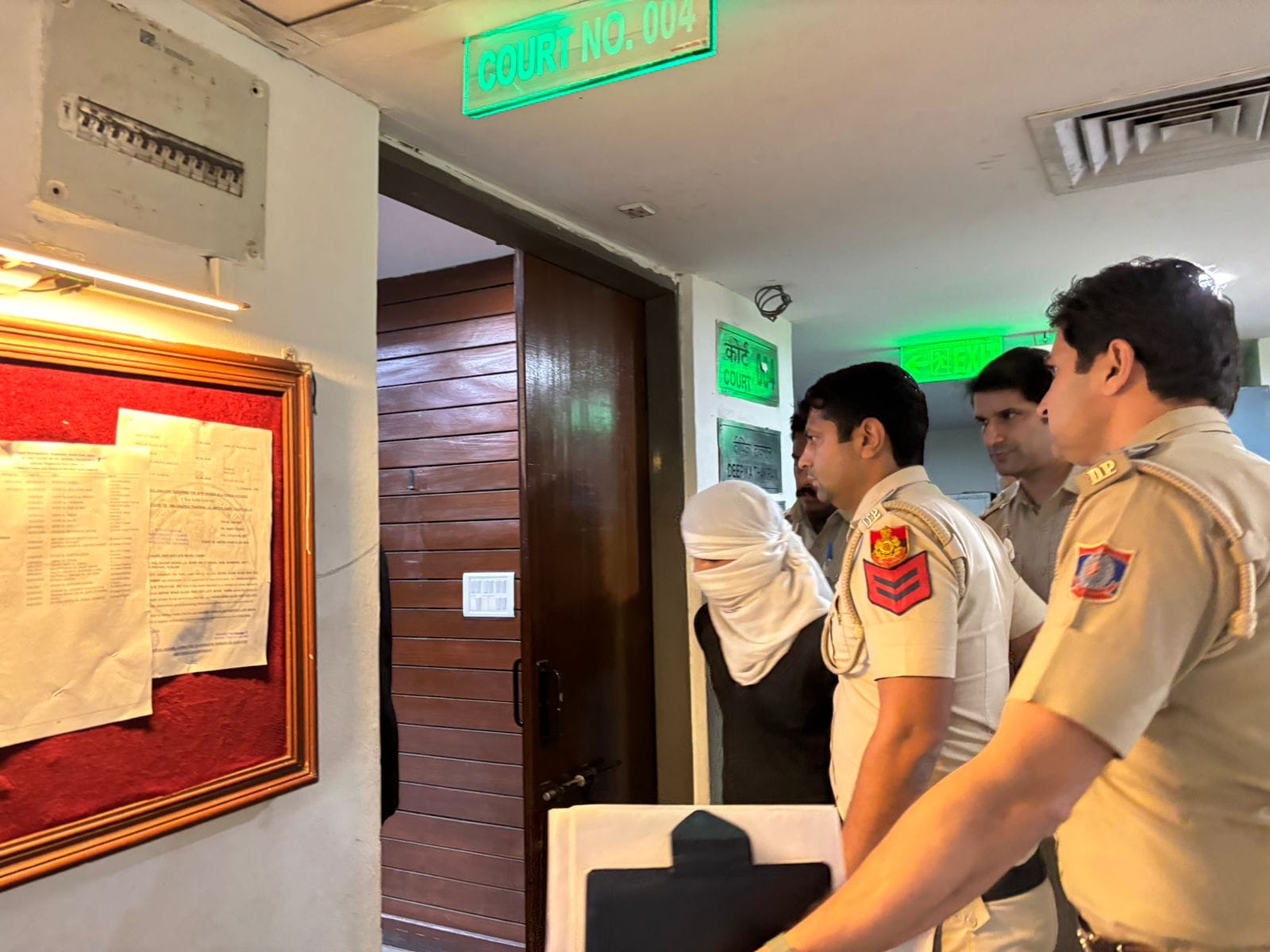
A day after his arrest, his face covered in a white cloth, Rahul entered the Saket District Court’s courtroom under heavy police security. His eyes on the floor, and voice feeble, he told the court, “Galati hui hai mujhse, apraadh hua hai. Pashchatap hai (I made a mistake, committed a crime. I feel remorse).”
“I entered the house (looking) for money,” he told the court, which remanded him to four days’ police custody for further investigation.
Sanjeev’s cousin Nisha similarly suffered a gruesome death. A final year student of the Bachelor of Computer Applications at Amritsar’s Sant Singh Sukha Singh (SSSS) College of Commerce for Women, she had a long career ahead of her.
Until the fateful night when Sanjeev allegedly stabbed her to death, she was a guiding light to her younger cousin, a second-year BCA student at a different institute in Amritsar.
In its probe, the Punjab Police found that Sanjeev was a habitual player on the online gaming platform 4Rabet and lost more than Rs five lakh over a few months leading up to the incident. While Mitra talks about how people turned to crime, he also talks about cases where people took their own lives.
Mitra emphasised that the weight of debt becomes increasingly unmanageable for individuals under the grip of addiction, triggering a sense of hopelessness and prompting radical steps by them.
“Under debt, they become ambivalent. It is not that they are depressed. They feel a sense of hopelessness. The people know they cannot retrieve the losses. And in that moment, for them, it is the loss of options,” he further said.
Sanjeev’s father, Shiv Nath Bharti, expresses his limitations in recognising his son’s obsession with online games and what he could have done to prevent it.
“The mobile phones come with ready-made games, and there are also advertisements running every time you open an application. We work in factories and are not available round the clock to monitor our children’s behavioural changes,” Bharti told ThePrint.
He, however, contests his sister-in-law’s complaints and the Punjab Police’s findings that his son committed the crime. He does not contest the impact of betting on his son’s life, conceding that Sanjeev had once mortgaged his bike for some Rs 60,000.
“I got to know about this very late, but never did I realise that he would face such allegations,” Bharti told. “My son is in jail and facing several years’ jail term. My family is broken and beyond repair.”
(Edited by Madhurita Goswami)