





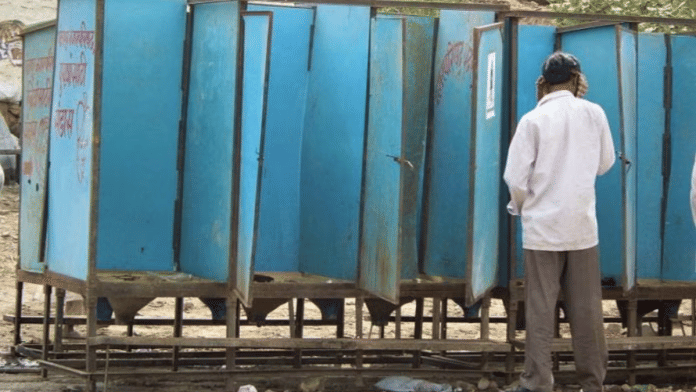


Bengaluru: India’s IT capital has fewer than 1,000 public toilets, or about one for every 30,000 residents, according to a report by the Bangalore Political Action Committee (B.PAC) released on Wednesday.
The ‘Bengaluru Public Toilet Audit Report 2026’ exposes the fault lines in the public sanitation infrastructure of a city that aspires to be counted among the major global hubs. “The report highlights that while Bengaluru has grown into a global city with a population exceeding 1.4 crore, public sanitation infrastructure has failed to keep pace,” said the report.
“With only 800–900 public toilets across the city (479 officially listed under GBA), Bengaluru has approximately one public toilet for every 25,000–30,000 citizens, far below the city’s growing needs,” it added.
B.PAC is a non-partisan citizens’ advocacy group that helps liaise with the government and improve the quality of public infrastructure in the city.
Biocon Executive chairperson Kiran Mazumdar-Shaw is the president of B.PAC, which also counts Aarin Capital chairperson T.V. Mohandas Pai and former IAS officer K. Jairaj among its leaders.
In Bengaluru, sights of men relieving themselves in public spaces are common, often due to a lack of public toilets or the poor conditions of those available.
The audit checked 142 public toilets on various parameters.
It found that of these, 26 percent were completely non-functional, 58 percent had a persistent foul odour and 94 percent were inaccessible for persons with disabilities.
Further emphasising the challenges facing Bengaluru’s public sanitation infrastructure, the report found that water was available in only around 40 percent of functional toilets. None had any soap, dispensers or dustbins, and only 15 percent of the caretakers were women.
“The report concludes that Bengaluru’s sanitation challenge is no longer merely about constructing toilets—it is about ensuring that existing facilities remain functional, safe, inclusive and well-maintained,” the report added.
The group recommended “immediate and systemic reforms” to improve public sanitation across Bengaluru, launching a 30-day emergency repair campaign to fix all non-functional public toilets and creating a cell to manage public toilets under existing municipal authorities.
Raghavendra H.S., Program Coordinator at B.PAC, said that the GBA has to construct more than 1,000 additional modern, user-friendly, inclusive, and well-maintained public toilets.
“Public toilets are not a luxury, they are indispensable civic infrastructure that protects public health, ensures women’s safety, upholds human dignity, and defines the quality of urban life. If Bengaluru truly aspires to be a global city, it cannot afford to overlook these fundamental civic necessities,” Revathi Ashok, CEO of B.PAC, said in a statement.
(Edited by Sugita Katyal)
Also Read: Karnataka will need Rs 20,000 crore in next 2-3 yrs to decongest its highways & major district roads