






New Delhi: Around 10 pm on 25 January 1998, it was dark and bitterly cold in Jammu and Kashmir. For four Kashmiri Pandit families in the Wandhama village of Ganderbal district, it was about to get darker, colder—and deadly.
While most Muslim men from the village were away for prayers on the night of Shab-e-Qadar, considered the holiest day in the month of Ramadan, around 20 gunmen showed up at the doors of the Kashmiri Pandit families living in their ancestral houses in Wandhama.
They were dressed in Army camouflage, and encountered no resistance from the villagers. They asked for tea, and waited—not for the families to prepare the warm drink but to establish communication with their accomplices covering the four houses.
Once their coordination was complete, they unleashed fire on unprotected and unsuspecting families. Some were shot dead from point blank range with AK-47 rifles, some pulled up from their houses and bullets pumped into their bodies—the kind of targeted savagery and brutality not seen against the community since the 1990 killings that sparked a mass exodus of Kashmiri Pandits.
By the time the mayhem ended, the four families were wiped out. Twenty-three people had been killed, according to police records. The deceased included nine women and four children. A 14-year-old boy hid in the darkness, and lived to tell the tale.
But he was so traumatised that when army personnel came to his house, he refused to come out. “He just saw people in the army uniform killing his family members with brutality and was so afraid,” recalls Sanjay Tickoo, an outspoken Kashmiri Pandit civil rights activist.
The teenager stepped out only after Jammu and Kashmir Police came the next morning in the khaki uniform, the activist recalled.
The 23 Kashmiri Pandits killed were the members of families that chose to stay in the Valley despite the first wave of targeted killings in 1990. The incidents of 25 January 1998 sparked the second round of exodus of Kashmir Pandits from the Valley.
Also read: ‘The home exists’— Kashmir Valley officials meet Pandits in Jammu for first time in 35 yrs
The witness
Media reports from the time indicate that it was the teenager, now in government service on compensatory grounds, who told the police that some of the gunmen were wearing Army camouflage.
The Jammu and Kashmir Police later killed Hizbul Mujahideen operative Hamid Bhatt, alias Hamid Gada, who was found to be behind the gruesome killings.
Based on the statements made by the teenage witness and other testimonies from the families who survived the attack, the Jammu and Kashmir Police registered an FIR at the Ganderbal Police station. A probe was taken up, but there was no details on its findings.
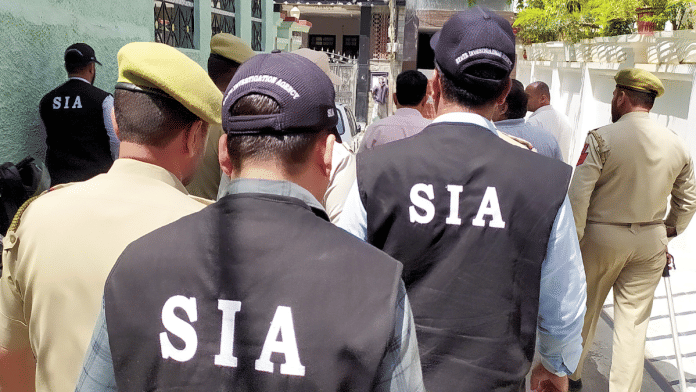
Now, the Jammu and Kashmir’s State Investigation Agency (SIA) has reopened this case—alongside the 1990 chilling murder of Sarla Bhatt and poet Sarwananad Koul Premi.
The SIA has already filed a chargesheet in the Sarla Bhatt case, while searches are being conducted in connection with the probe in the Premi’s murder case.
The fateful night
According to reports from the time, the gunmen behind the Wandhama killings desecrated temples and houses of Kashmiri Pandits in the village after executing the 23 people.
The then Kashmir Divisional Commissioner S L Bhat, who was among the first to respond to the massacre, described it as the “worst incident” he had witnessed. He later said “foreign mercenaries” were behind the killings.
Facing criticism from the local leaders over inadequate security arrangements, the Indian Army said days later that the group of attackers were identified and it consisted of 10 to 12 foreigners, supported by some local militants.
The locals, a defence ministry spokesman at the time had said, were known to have links with certain political leaders of the area, and it was this that gave them the confidence to carry out the act.
The attack was later attributed to Hizbul operative Hamid Bhatt alias Hamid Gada, who was gunned down in an encounter in 2000. According to reports at the time, Gada, son of the caretaker of the famous Kheer Bhawani temple, was influenced by Jamaat-e-Islami’s brand of Islam, and he had risen to the top rungs of the Hizbul Mujahideen in the Valley.
The apprehensions
Sanjay Tickoo is not very optimistic about the reopening of the probe though.
“The state government way back in 2013-14 went on record before the State Human Rights Commission (SHRC) to say that 20 out of 21 perpetrators were later killed in encounters,” he told ThePrint Tuesday.
“The government informed the SHRC that only one of them remained absconding during the course of the investigation. We sought details of the encounters and accused who were eliminated in the encounters to confirm if the perpetrators were actually eliminated. We did not get any response,” Tickoo further said.
Even that development took place 14 years back, he said. “What will come out of this (reopening of the case)?”
According to Tickoo, he told then prime minister I K Gujral that the “onus and responsibility of the massacre was entirely on the state government run by Farooq Abdullah”.
“There were posters that had come up on the walls of the temple at the village issuing threats similar to what was issued by the militants to KPs in 1990 before they were killed. The posters had a chilling message: leave or you will be killed.
“There was a camp of the Army’s RR just a few kilometres away which was closed and shifted from the area. There was clear communication between the perpetrators among each other and the eyewitness had confirmed that they were ensuring with each other that the KP families were taken control of before opening fire and carrying out the onslaught,” he claimed.
(Edited by Ajeet Tiwari)
Also read: Why Kashmiri Pandits may never return to the Valley