





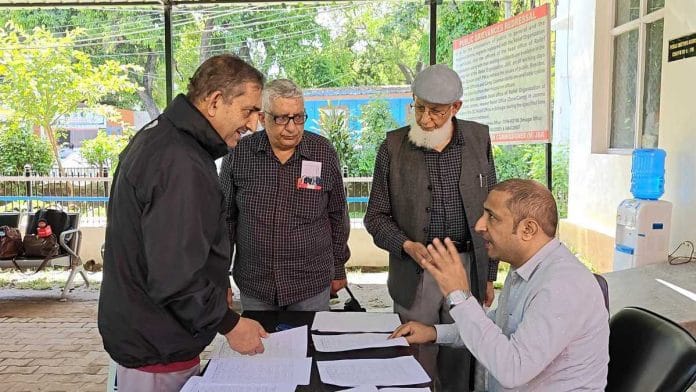

Jammu: At the Relief Commissioner’s office in Jammu, the 55-year-old man rose quickly when a clerk called out, “Sunil Sadhoo from Bandipora.” He had been waiting for six hours. And over three decades. He clutched a pale, crumpled land deed, frayed thin at the edges after being carried from one office to another in Jammu & Kashmir for the last 35 years.
“These papers are the only evidence left that I once lived in Kashmir. They are worn-out and tired, just like my fight to get my land back,” he said, looking at the documents fondly.
For Sadhoo and the other Kashmiri Pandits gathered in the heat, the Friday afternoon in April was different. This time, the administration had come to them.
For the first time in 35 years of displacement, additional district commissioners (ADCs) from their home districts in the Valley had arrived in Jammu to hear grievances directly. It reawakened a fragile hope: the possibility of finally reclaiming their homes and land. The last such wave of hope came in 2021, when the Narendra Modi government launched a grievance portal, only for many complaints to run into dead ends.
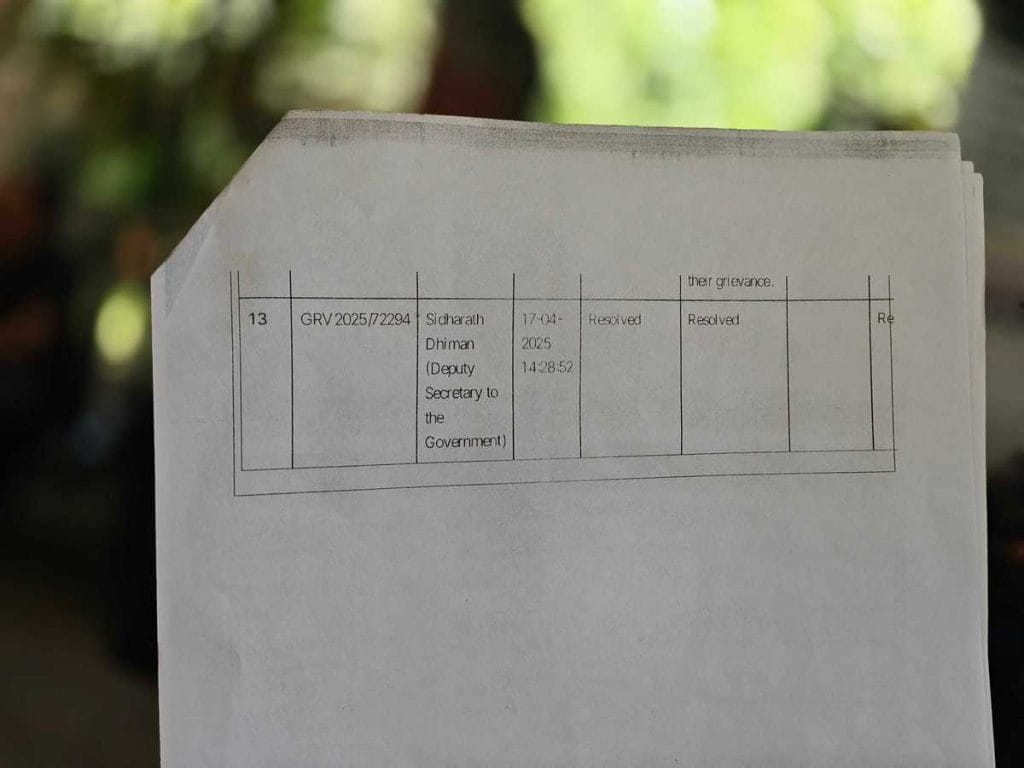
On 28 March, Chief Minister Omar Abdullah told the assembly that the portal had received 10,173 applications so far, of which 9,713 had been “disposed of”, 7,829 approved, and just 24 were pending. But for many of the Pandits and Sikhs who fled the Valley overnight in 1990, this ‘success story’ narrative doesn’t align with their experiences. Most of the 30-odd people in the Relief Commissioner’s office, including Sadhoo, showed screenshots of their complaints on the portal marked as resolved, and alleged their cases had not actually been settled.
When Sadhoo and his family fled Bandipora in 1990, they left behind five kanals of land. Part of it is now occupied by the Army—“no rent for 13 years”—but the other part stings more.
“It is encroached by a Kashmiri Muslim,” he said. “The one who was once my farm labourer.”
The new “regular outreach camps” were announced in a 5 March public notice. It followed a 15 January decision by the J&K government to form an Oversight Steering Committee to monitor complaints of encroachment on Kashmiri Pandit properties, “analyse the quality of disposal of complaints”, and track the progress of investigations by the police. The district-wise schedule of hearings began on 1 April with Srinagar and then on to other districts such as Pulwama, Budgam, and Ganderbal.
We cannot resolve the complaints overnight. While 80 per cent are already resolved, the question now is about the satisfaction level. That’s why we have introduced a new button [in the portal] where they can raise complaints if they are not satisfied with the resolution
-Arvind Karwani, Relief and Rehabilitation Commissioner
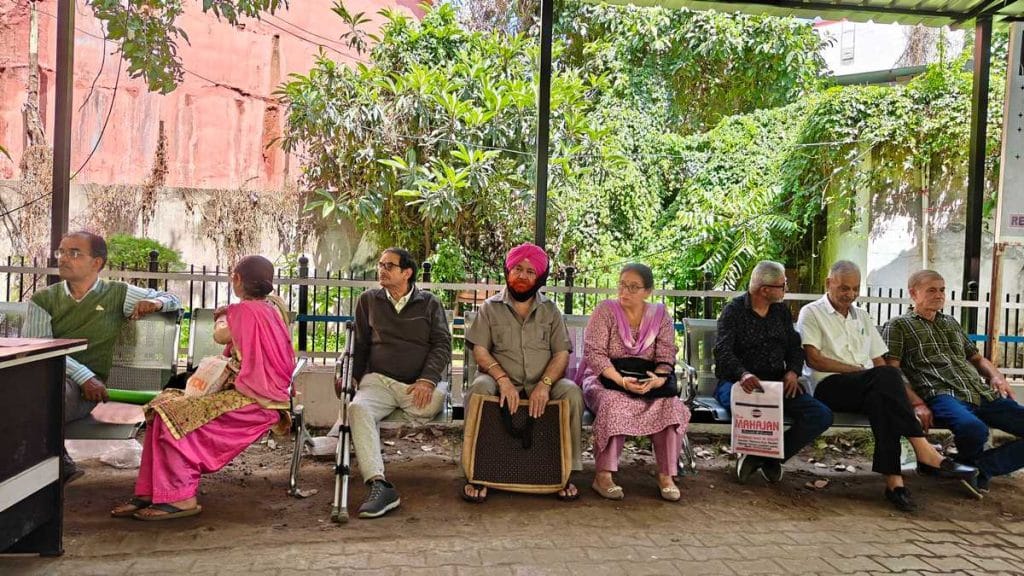
On 10 April, it was Bandipora district’s turn. The claimants crowded the courtyard, holding papers close to their chests. “When is my number coming? I have been waiting for six hours in this heat,” one man shouted, while a lone clerk sifted through files. A total of 47,466 migrant families are presently registered with the office of the Relief and Rehabilitation Commissioner in Jammu.
Once again, patience and resignation have given way to urgency with this new chance to be heard. Their dream of getting back their land and orchards is not one they can abandon despite decades of disappointment—from the 1997 Migrant Property Act that left their homes in the hands of official custodians, to the Rs 1,600 crore rehabilitation package of 2009, to the 2021 grievance portal.
“Even today, we haven’t even been accorded the status of internally displaced persons, as if we left out of our own volition. Thousands of Kashmiri Pandits died with longing in their hearts to go back to their homes and live and die there. They didn’t want to die anywhere else,” said author and filmmaker Siddhartha Gigoo, whose work includes the short film The Last Day about the Kashmiri Pandits’ exile.
“In 2019, the Government of India announced setting up of a committee to survey and reopen around 50,000 temples that were closed in Kashmir ever since the armed insurgency erupted in 1990. What about tens of thousands of Kashmiri Pandit houses?”
Also Read: Kashmiri Pandits are reviving old hometown temples. ‘It’s how we will return’
‘No home at that address’
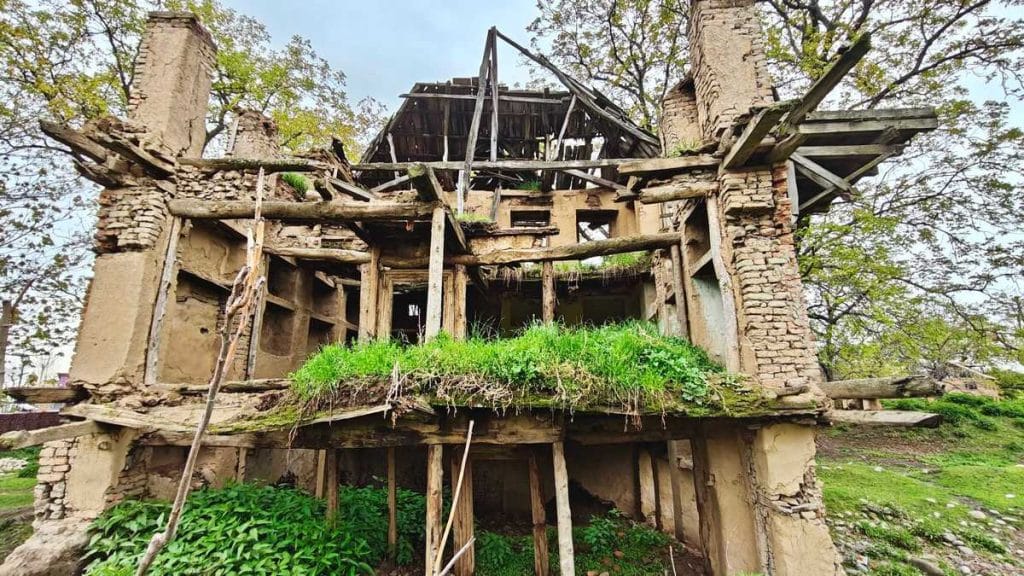
Two weeks before the outreach camps kicked off, Kashmiri Pandit activist Rohit Kachroo posted a faded photo of a wooden house beside the Jhelum River.
“The place I took my first steps, spoke my first words. Gone since the 1990 Genocide. A Muslim family lives there illegally. I have tried for 2.5 years, submitted all papers to the Govt but every time, local officials say ‘No home at that address’,” he wrote.
In his thread, Kachroo—convenor of the organisation I4K to “reclaim” Kashmir—detailed how a “land grab” had taken place through fake documents and how the grievance redressal portal had erroneously flagged the house as non-existent. He warned others not to post original documents online: “If the wrong people gain access, what stops misuse? I was told for years my ‘Home doesn’t Exist’.”
This is my home in Kashmir right on the banks of River Jhelum. The place I took my first steps, spoke my first words. Gone since the 1990 Genocide. A Muslim family lives there illegally. I have tried for 2.5 years, submitted all papers to the Govt but every time, local officials… pic.twitter.com/tKQkndBAK9
— Kashmiri Hindu (@RohitInExile) March 18, 2026
Kachroo’s original post got over a million views and 15,000 retweets. Within days, the DM’s office in Srinagar was in touch and the status on the portal flipped from “No home exists” to “Yes, the home exists.”
The reversal was the most dramatic public test of the Kashmir Migrants Immovable Properties Grievance Redressal System.
Launched with much fanfare under Lieutenant Governor Manoj Sinha in September 2021, it was meant to simplify the process of land reclamation. Under this system, revenue authorities were required to address portal applications in a timely manner—district magistrates would complete field verifications and update property registers within 15 days, followed by a compliance report to the divisional commissioner.
[The day I left Kashmir] I got walnut wood from my garden to build a new house. In the last 35 years, I went to several offices, met the LG, filled several forms. Now I found out that this new form has come so I thought I should fill it in
-Kashi Nath Pandita, 97
However, it was essentially a digital black hole, with no way to contest findings.
Relief and Rehabilitation Commissioner Arvind Karwani acknowledged that a “common grievance” was that complainants had no way to contest a rejection of their claim.
Only after the Kachroo case did the government add a feature to reopen cases marked as closed.
“The grievance was that the complainant was not getting the opportunity to be heard before the final decision by the Commissioner. We brought that improvement in the portal,” Karwani said.
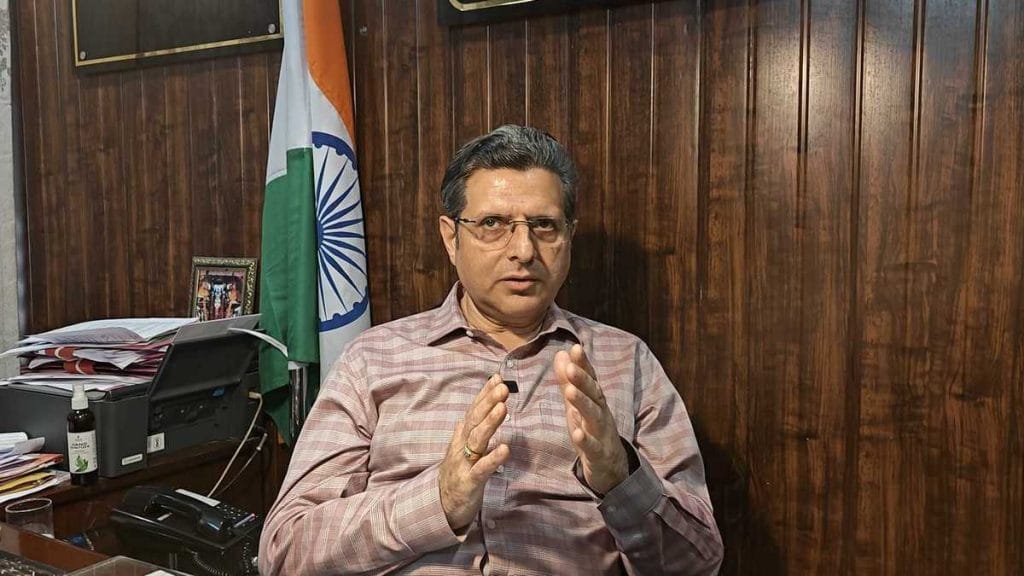
Most of the approximately 11,000 complaints received on the portal had been addressed, according to him.
“We cannot resolve the complaints overnight. While 80 per cent are already resolved, the question now is about the satisfaction level. That’s why we have introduced a new button where they can raise complaints if they are not satisfied with the resolution,” he said.
Last month, CM Abdullah said that land measuring 3,729 kanals and 4 marlas belonging to Kashmiri migrants had been “retrieved and restored” in the Valley. Since November 2024, he added, 844 kanals and 4 marlas have been retrieved; 1 kanal is about 505 square metres and a marla is 25 square metres.
The largest share came from Shopian (283 kanals), followed by Baramulla (225), Ganderbal (146), Kulgam (73), and Pulwama (63). In Srinagar, just 3 kanals have been recovered. Abdullah also said it was the government’s responsibility to safeguard Kashmiri Pandit properties until the “necessary conditions” for their return were created.
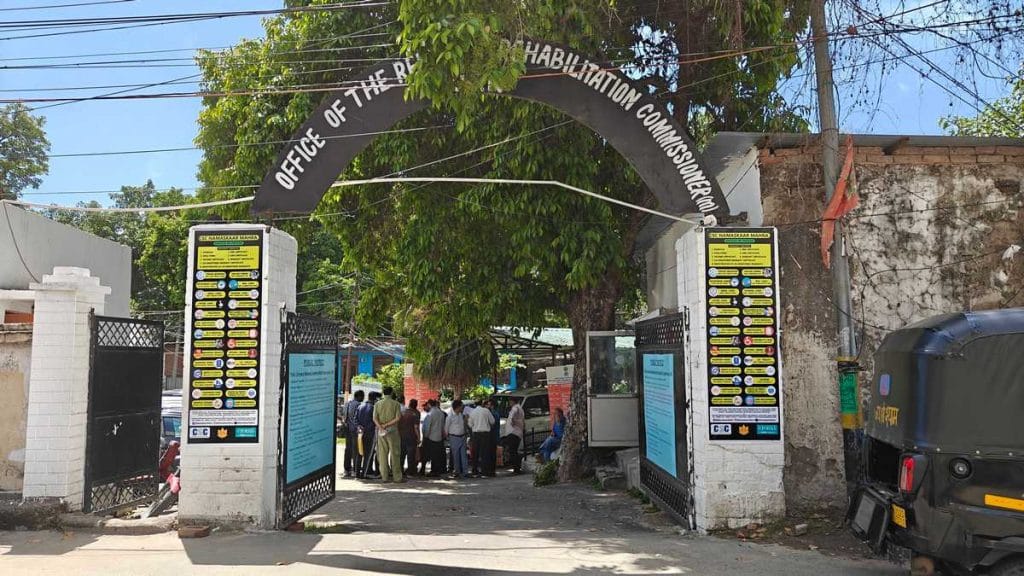
The obstacles to retrieving land, though, are considerable. Some families lost their documents in the exodus. “In those cases, we trace their old documents and old jamabandi and take it from there,” said Karwani. Others are up against encroachers who have lived on the land for decades, making eviction legally and practically difficult.
Where eviction is impossible, sale is an option, but the question of price is contentious. In many cases, the current residents offer to pay only at 1990s property rates — the point at which they took over — a figure Kashmiri Pandits reject as unjust given decades of appreciation.
Sadhoo, for one, does not want to sell his land and the authorities are finding it difficult to evict the “illegal” occupier.
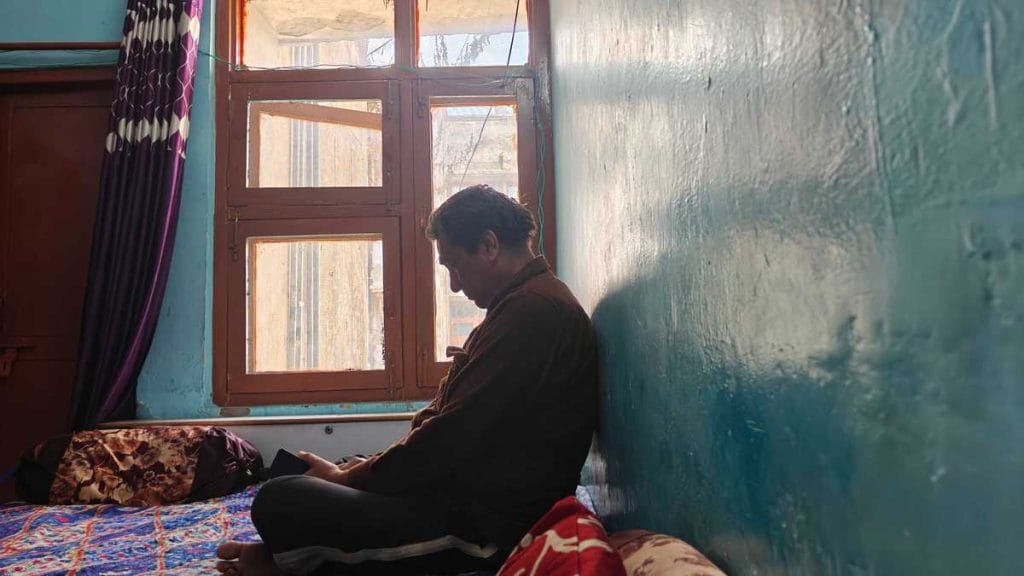
Such thorny snarls after triumphantly announced ‘fixes’ have become part of the KP story.
Earlier this month, a response to RTI filed by activist Sanjay Sapru, a Congress leader, revealed that only three Kashmiri Pandit families have returned under a flagship Rs 1,600 crore rehabilitation package launched by the Manmohan Singh government in 2009. The houses and reserved jobs that were promised largely did not materialise.
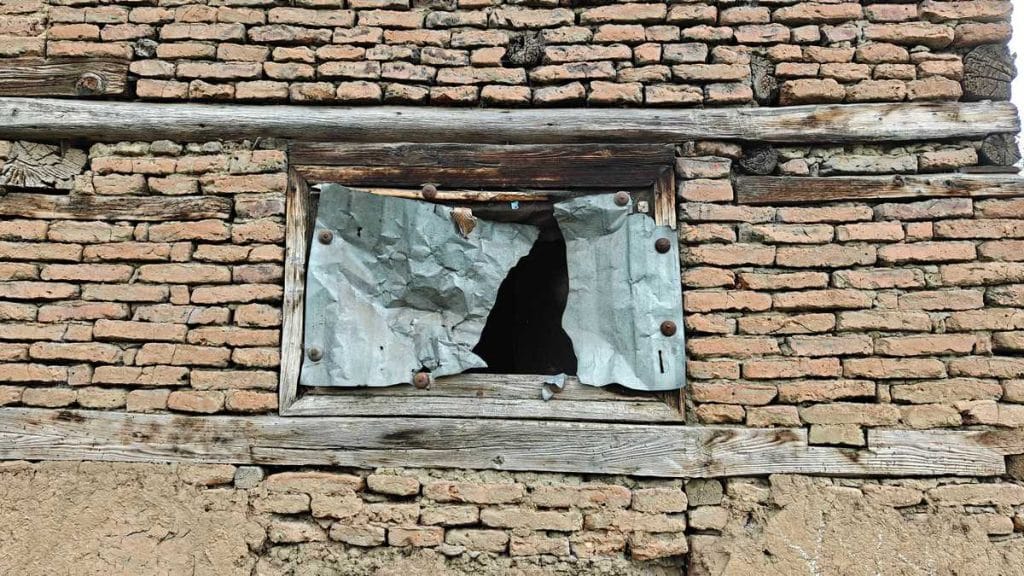
Instead, the scheme produced new fortified migrant camps, four-storey buildings secured by iron gates and BSF, which over time became monuments to how completely return had failed. The issue of return has also turned lethal.
In May 2022, terrorists entered a government office in Budgam and shot dead Rahul Bhat, a Kashmiri Pandit revenue official. The police said he was targeted because his role gave him access to disputed land records. A month earlier, another Pandit, Bal Krishan Bhat, was killed in his medical shop in Kulgam. The PM package employees in Kashmir went on strike for over 300 days. They claimed they “surrendered” only because the government had stopped their salaries.
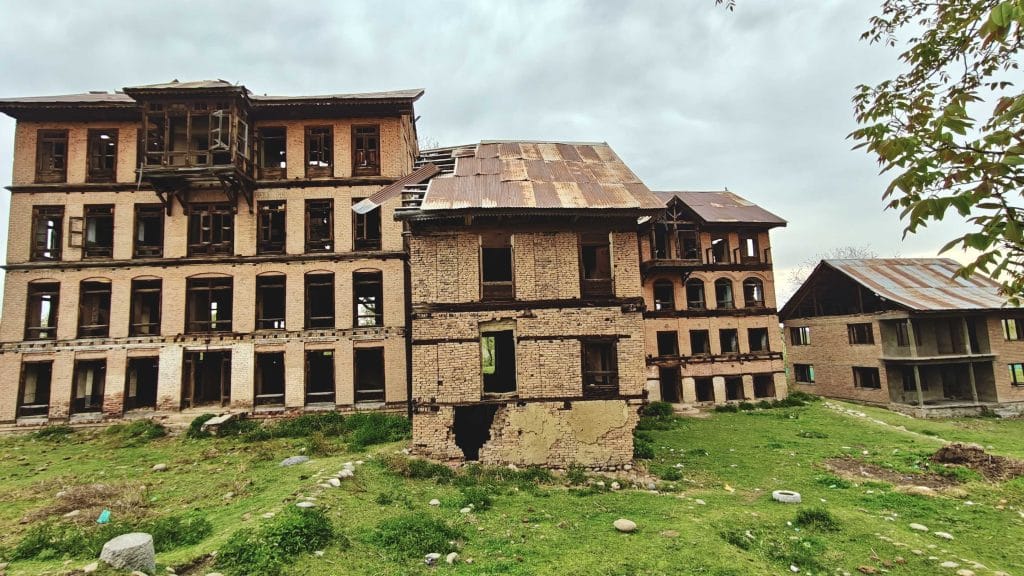
Promises and threats
It was only in 2012 that Sadhoo finally made the trip back to Bandipora to see what had become of his family’s land. It no longer resembled what he had left behind.
Sixteen marlas had been absorbed into an Army camp, while three kanals were in the hands of a former farm hand who’d harvest walnuts for Sadhoo’s family.
“The first thing I did was ask the Army what had happened to my land,” Sadhoo said. “They told me they had been paying rent, and that I should ask the administration.” At the administration office, the answer came in the form of a cheque: 12 years of rent at a rate of Rs 5,000 per annum. Since then, no more money has come.
“I have been waiting for the rent for the last 14 years. Every time I meet the administration, they tell me that they are looking into it,” said Sadhoo.
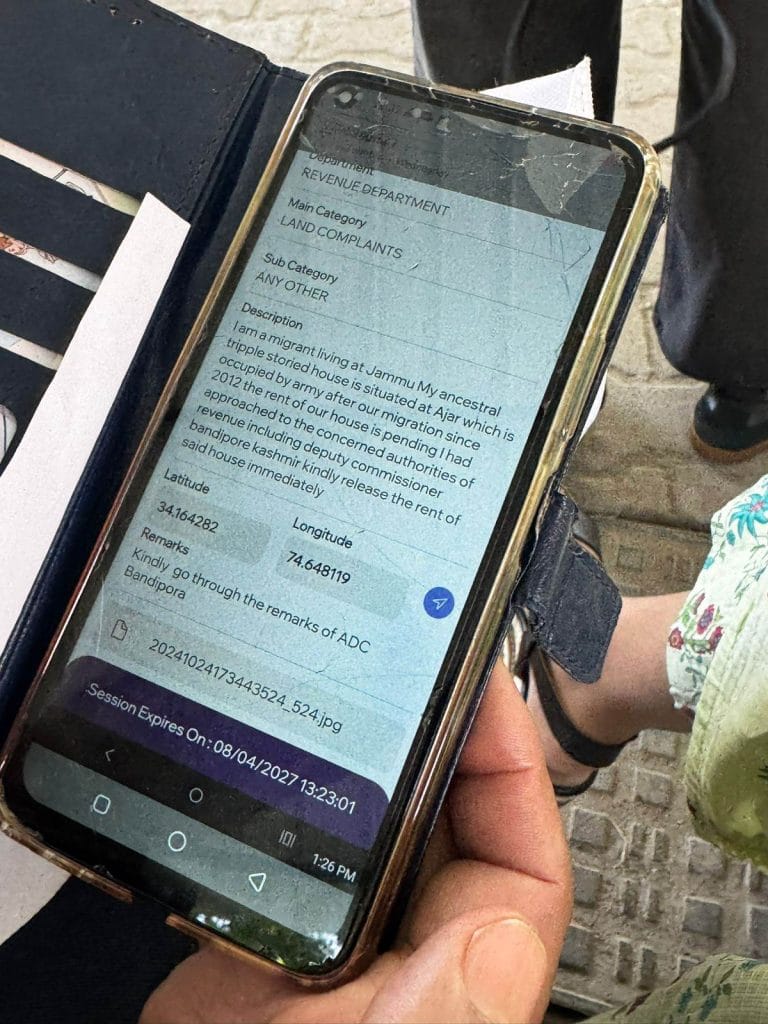
He registered his complaint on the portal. It reads: “My ancestral triple storied house is situated at Ajar which was occupied by the army after our migration. Since 2012, the rent of our house is pending. I had approached the concerned authorities of revenue including the deputy commissioner of Bandipora in Kashmir. Kindly release the rent of the said house immediately.”
He said the only response was that the government was working on the rent issue, but the money never came. A separate complaint for the three kanals of agricultural land occupied by his former farm labourer has not been resolved either.
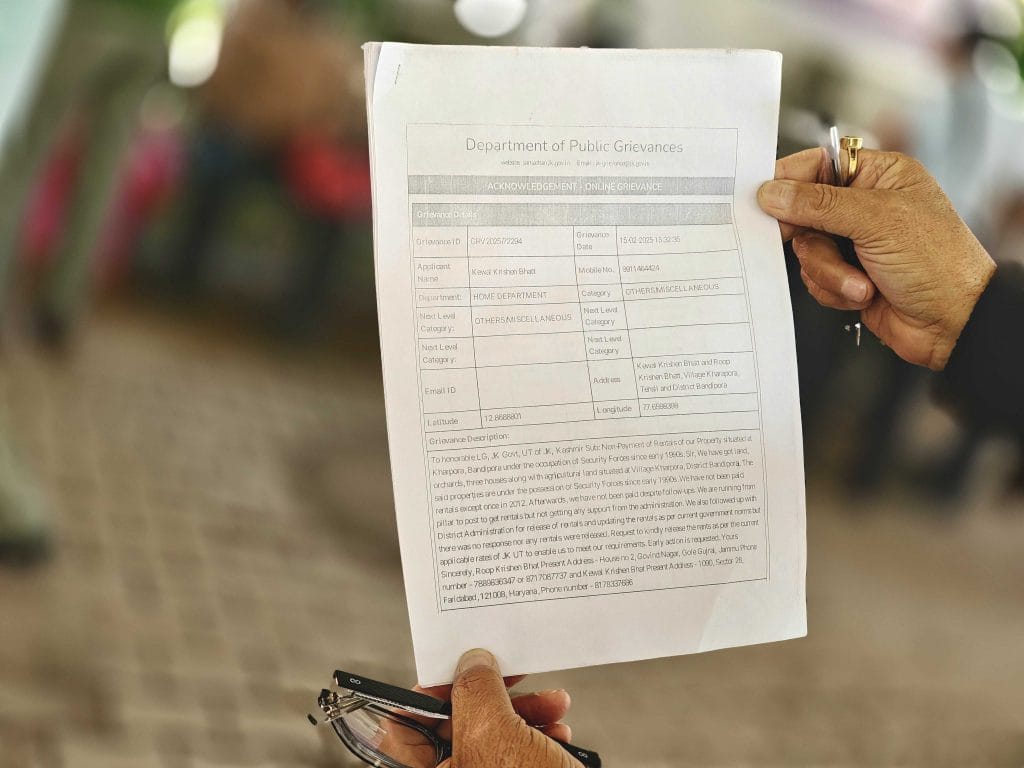
Hundreds of buildings in Kashmir have been occupied by the military and paramilitary forces, including several that belong to Kashmiri Pandits who left the Valley. The administration provided these properties for rent but in some cases payment has been stuck for years.
For Sadhoo, this is the lesser of his worries.
“At least it is recognised by the administration that a part of my land is taken up by the security forces. But my 3 kanals are illegally occupied,” he said.
When Sadhoo began pursuing his claim for this remaining land, the former farm hand started calling.
“He tells me to leave the land in his name and to forget about it. He won’t give it back,” Sadhoo said. “He calls me from different numbers and threatens me.”
Back in 1990, Sadhoo’s family were not living on the farm but at rented accommodation in Srinagar’s Rainawari. After a neighbour was brutally beaten, they crammed into a truck at 2 am and headed for Jammu, where they stayed at the sprawling courtyard of Geeta Bhawan, which had turned into a sea of blankets and makeshift shelters. After that, Sadhoo lived at another camp in Purkhu for three years before shifting to government quarters.
Anticipation, again
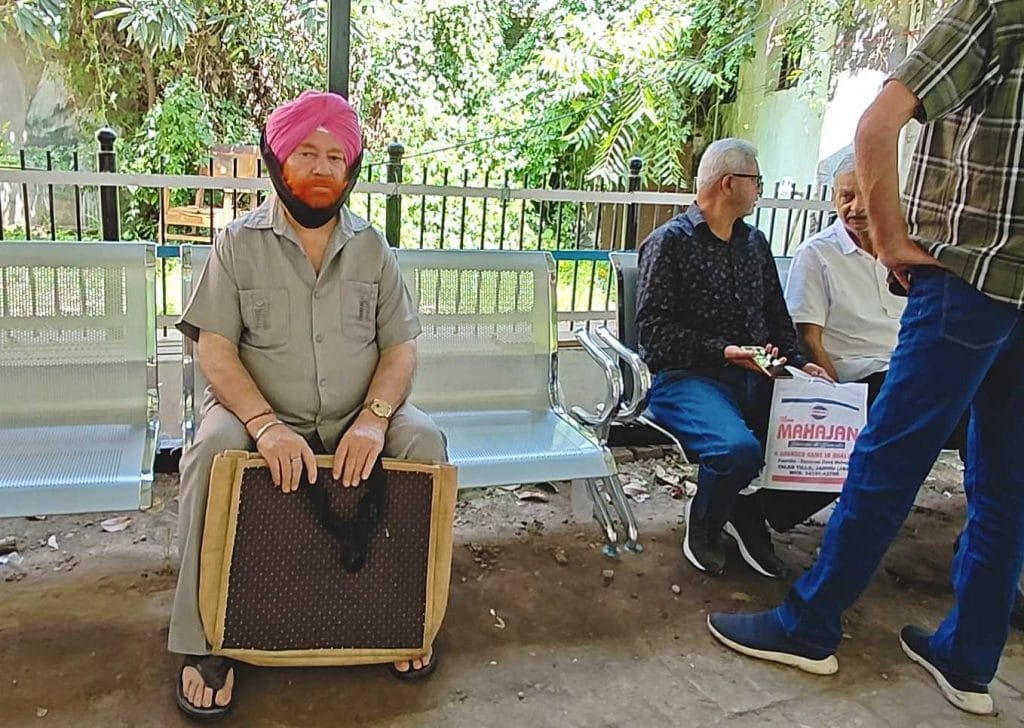
Among the Pandits at the office is a lone Sikh, SN Bali. Dressed in a grey half-sleeve coat and trousers, he becomes the centre of attention when he pulls out a worn sheet of paper from his folder.
Written in Urdu, it’s a letter he had received in the 1990s.
He clears his throat and begins to read: “Bismillah-ir-Rahman-ir-Rahim. We have come to know that you are giving tabeez to young Muslims and converting them. This is the first and final warning to you.”
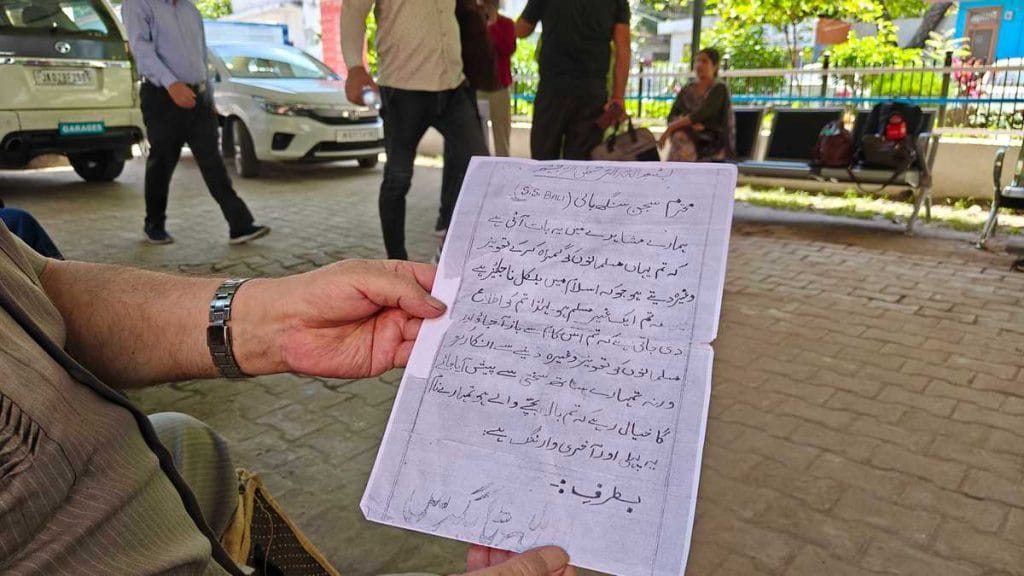
Bali stops, outrage writ large on his face.
“I didn’t do anything like that,” he said, looking up as if the accusers were still in front of him. “I was a peer. People who were troubled would come to me, and I would give them something for relief.”
He folds the letter and puts it back in the file. He says it’s the reason he left. He has not set foot in the Valley once in the decades since. Now, he is finally here to see if Kashmir has a place for him. Like the others, Bali too filed a complaint on the portal , but claimed the response was unsatisfactory. In his case too, the file was closed as “resolved”.
Outside the commissioner’s door, the clerk maintaining the list is besieged by claimants, each arguing why their turn should come sooner.
“I have diabetes. I haven’t eaten anything since morning,” a man said, leaning in. A woman added, her voice rising, “I feel like I will faint. Please let me go in first.”
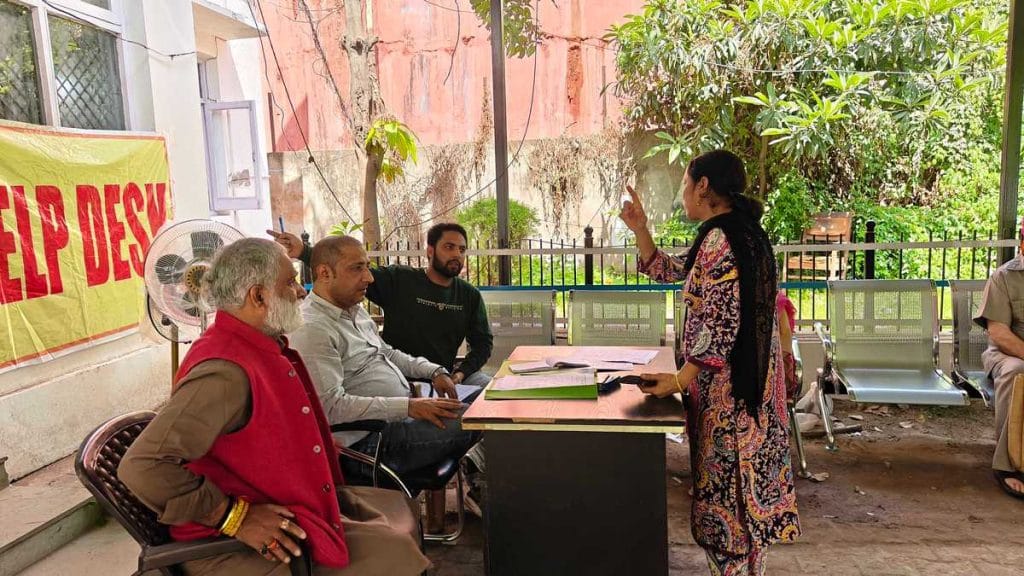
When Sadhoo’s name is called, all eyes are on him as he checks his documents and disappears behind the door. As soon as he emerges, he is surrounded by the other Pandits waiting for their turn.
“What did they say?” one asked.
“They said this time I won’t be disappointed. I will get my land back,” said Sadhoo with a wry smile.
From the back of the line, a man shouted: “Yeh pagal banate hai, kuch nahi hoga”— they’ll drive you crazy, nothing will happen.
‘Now, people have to believe govt’
One by one, the claimants are called into a room behind a two-toned wooden door. Inside, ADC Bandipora Zaffar Hussain Shawl is flanked by Relief Commissioner Karwani and a team of officials. As they enter, most of the Kashmiri Pandits offer a polite “aadab” as a greeting.
A large screen displaying the grievance portal dominates the room. One of the team members asks for names and survey numbers, then types them in. With a click, the land records appear.
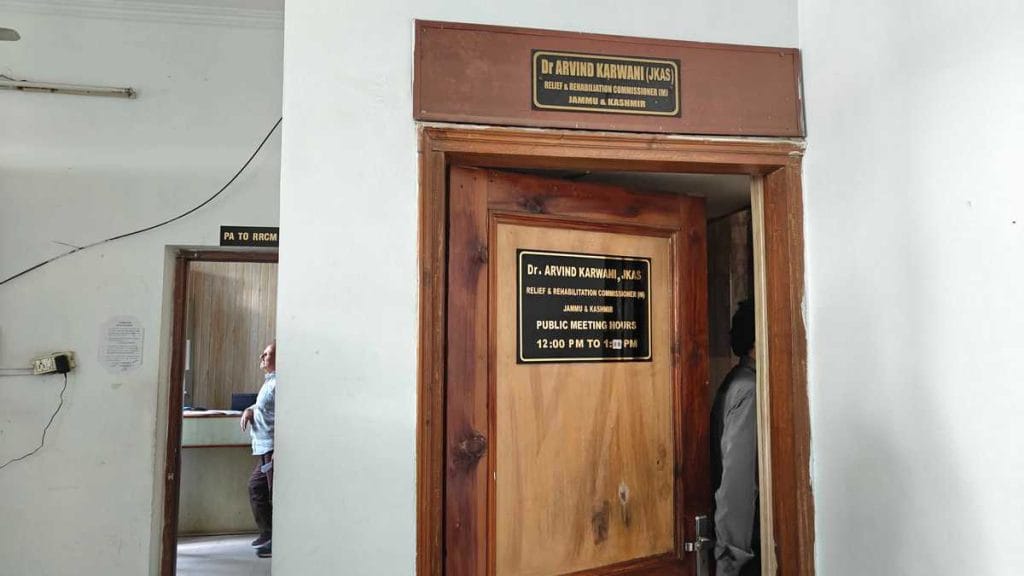
The applicants told ThePrint that the complaint is read out and assurances are made. Some claimants switch to Kashmiri to strike a more personal note with the official, who has come from the Valley.
Each session lasts 20-30 minutes, depending on the complexities of the case. The Pandits leave with profuse thank yous, heads slightly bowed, hands folded. A few words of reassurance from the officials filter out: “Ma barivye parvaye. Ayes karav kenh” — Don’t worry. We will do something.
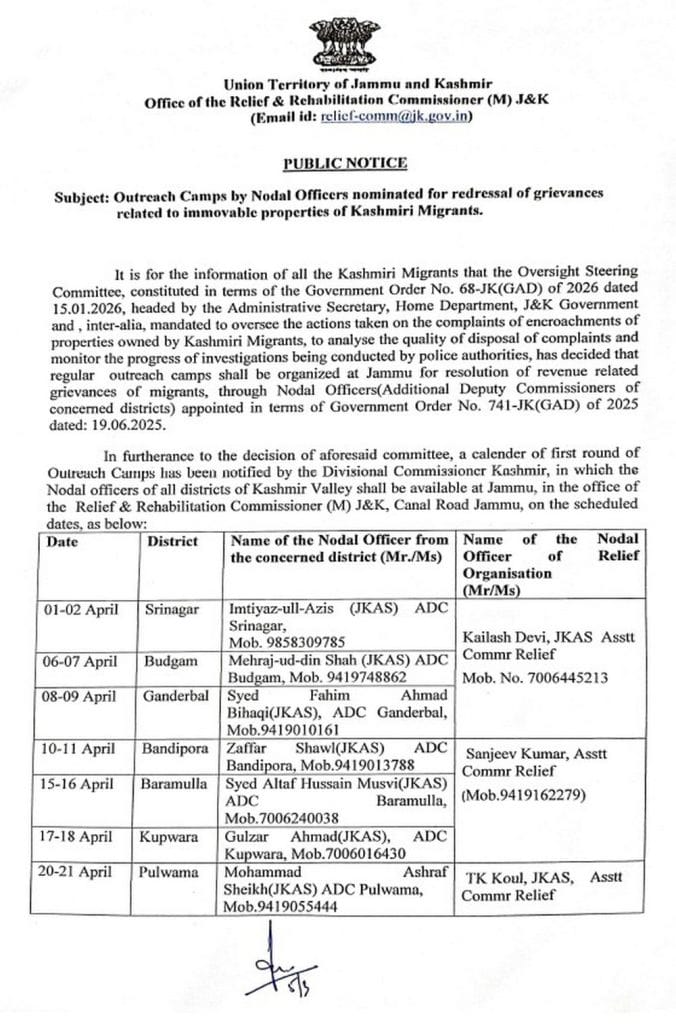
“When the complainant enters the room, we keep the grievance portal open so that we can see their online grievances also. We are trying to give a patient hearing to the complainant and address their issues,” said Karwani.
This outreach, according to him, will increase confidence in the administration.
“This is happening for the first time. And it has generated hope amongst the migrant families. Now, people have to believe the government,” he added.
Also Read: Erased from Kashmir’s grief—Muslims killed as ‘informers’ lie buried, forgotten for 3 decades
Growing home
In the park of the migrant quarters at Buta Nagar camp in Jammu, a young Chinar tree is sprouting its first leaves. Nearby are grapevines and roses. All the seeds were brought from Kashmir, unsuitable for Jammu’s climate but coaxed to grow. Residents spend hours tending to this garden.
“We’ve maintained this park ourselves, with our own money, so that we can feel at home. We’ve made it in a way that it rivals the parks back in Kashmir,” said resident Hridya Nath Talashi.
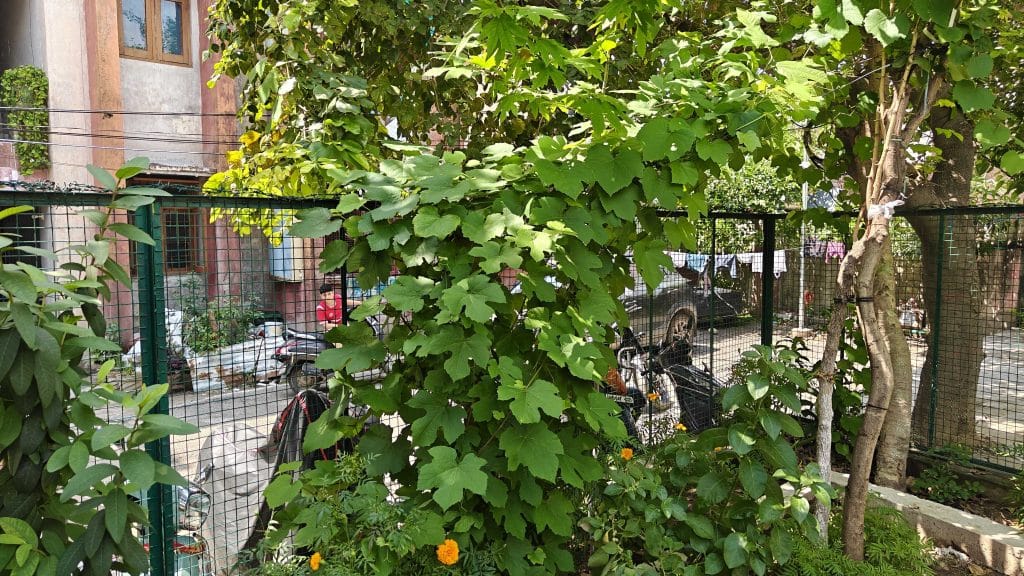
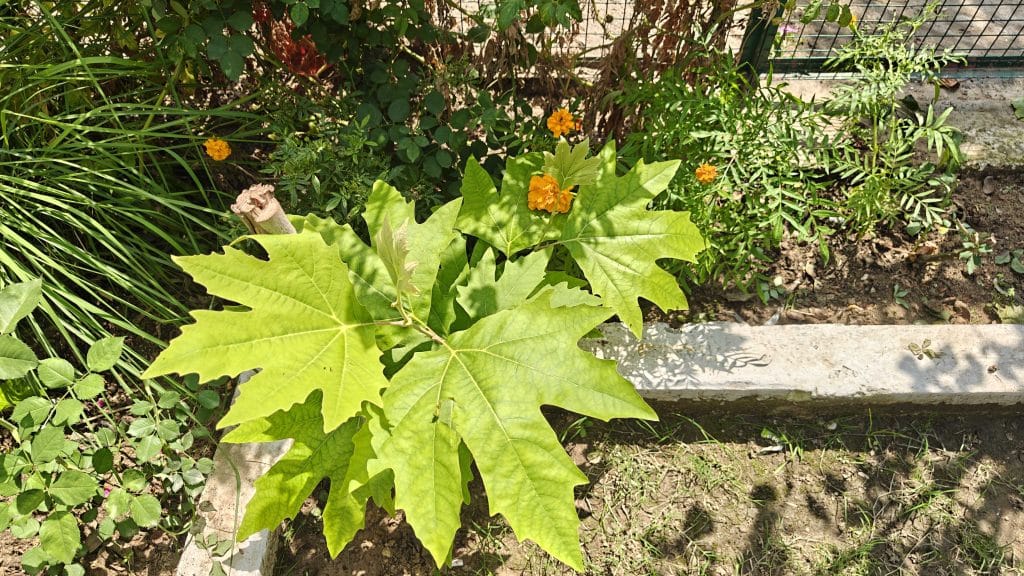
This April morning, the garden is where the camp’s residents have gathered to discuss the outreach camps. Talashi checks his phone for the district schedule.
“Pulwama’s date is April 21,” he said.
But in these quarters, the present is always a thin veil over the past. A passing mention of the Valley is enough for the trauma of 1990 to surface.
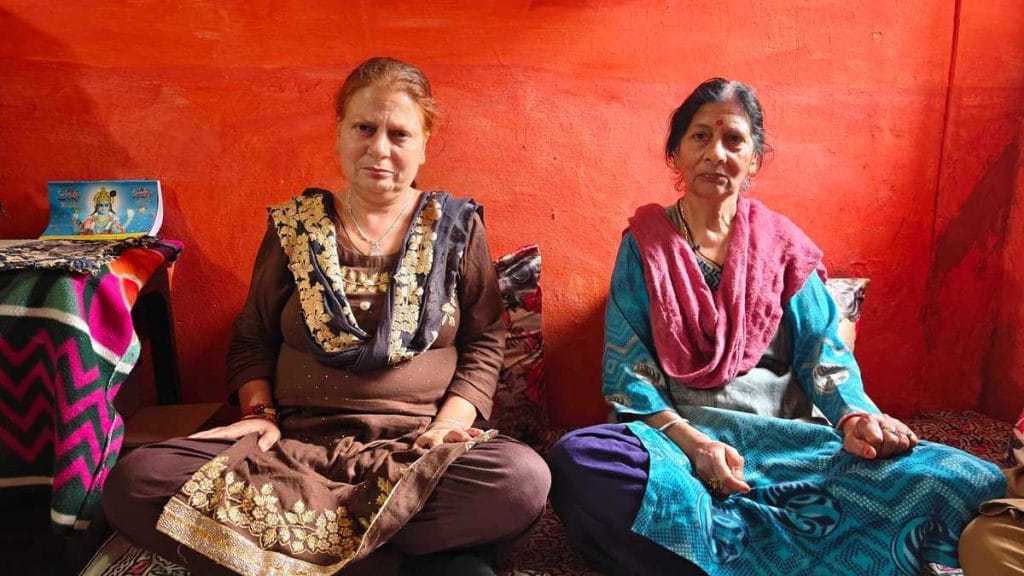
Rajita Kumari Pandita was only 12 when she left with her family. It was, she said, the same night her maternal uncle was killed by terrorists.
“His hands and feet were cut. That’s how we received the body. The same night, after we cremated him, we left in a taxi for Srinagar. From there, along with relatives, we came to Jammu.”
In the camps, she would wake in the night crying, overtaken by fear. A doctor later diagnosed her with depression.
“I began singing bhajans, praying several times a day searching for peace,” she said. “I never thought of marrying. Now I take care of my elderly parents.”
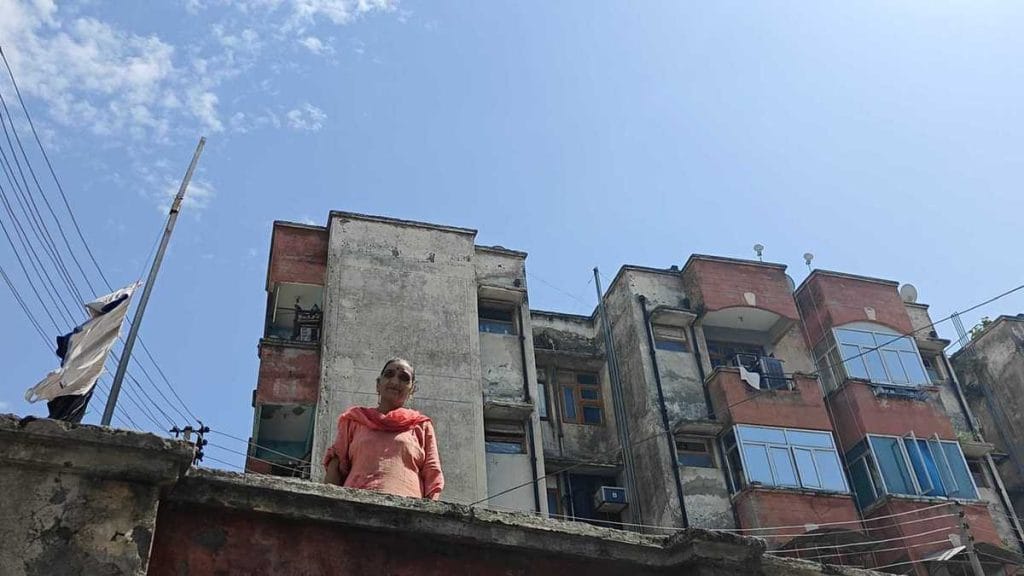
She says she wants to return but the memory haunts her so she doesn’t have the courage.
But 97-year-old Kashi Nath Pandita, who was a professor in Baramulla (from which Bandipora was carved in 2007), hasn’t given up. He joins the crowd at the Relief Commissioner’s office.
Hands trembling, he asks the clerk for a form.
“I am from Baramulla. I want to fill the form for my land and wood logs,” he said.
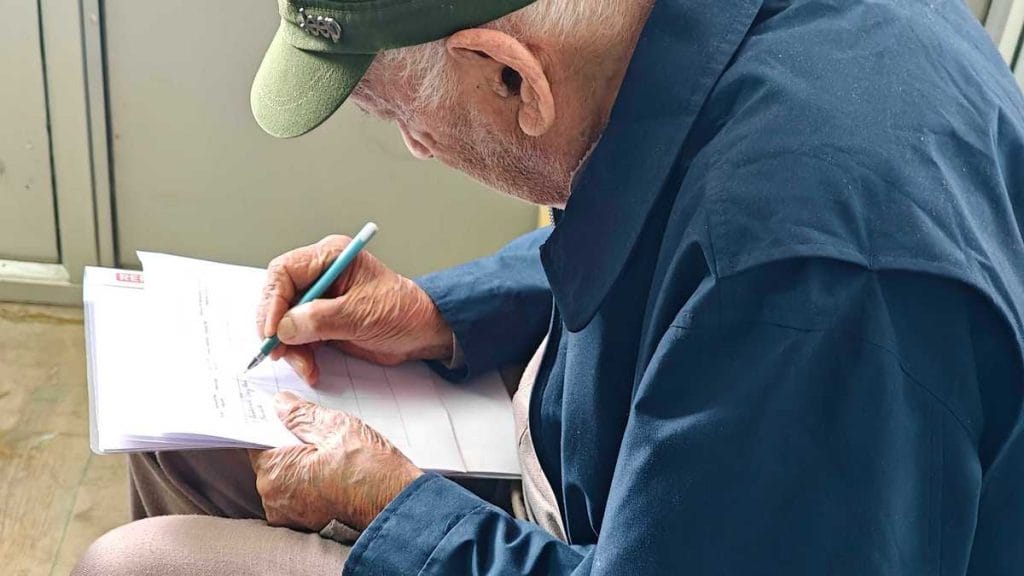
His daughter-in-law holds his arm as he takes halting steps to a chair and lowers himself slowly.
“That morning I got walnut wood from my garden to build a new house. In the last 35 years, I went to several offices, met the LG, filled several forms. Now I found out that this new form has come so I thought I should fill it in,” he said.
A tear trickles down his face as he struggles to hold the pen.
“Even in utter hopelessness, I have come with some hope. I thought let me fill the form once more… maybe I will get an answer this time.”
(Edited by Asavari Singh)