


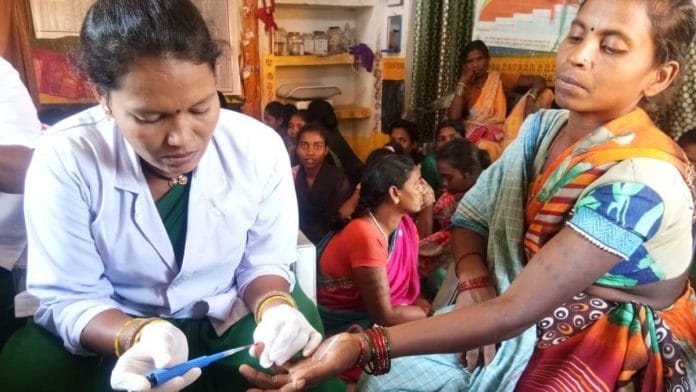
New Delhi: The burden of anaemia in India is lower than that reported in previous national surveys, with severe cases accounting for less than 2 percent of most population groups, a new survey by the Indian Council of Medical Research-National Institute of Nutrition (ICMR-NIN) has found. The bad news is that anaemia continues to affect more than half of women of reproductive age and nearly half of adolescent girls, pointing to a substantial public health burden despite decades of government efforts to tackle it.
Anaemia is a condition in which the level of haemoglobin, a protein in red blood cells that carries oxygen around the body, is lower than normal. It can cause fatigue, weakness, dizziness and breathlessness, and affect people’s health and ability to carry out daily activities
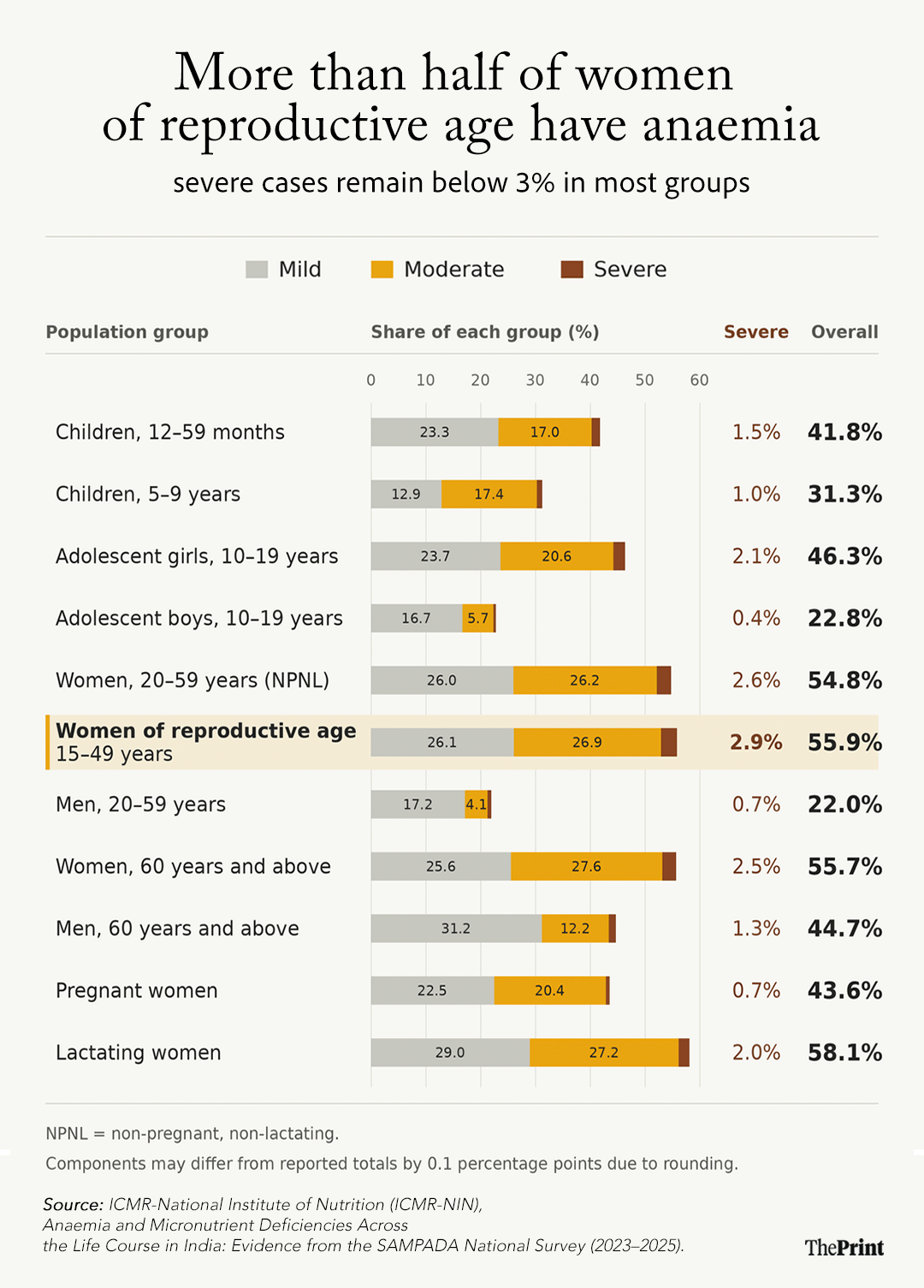
Conducted between 2023 and 2025, the survey found anaemia in 55.9 percent of women of reproductive age, 46.3 percent of adolescent girls aged 10–19 years and 41.8 percent of children aged 12–59 months. Among pregnant women, 43.6 per cent were anaemic, while the figure was 58.1 percent among lactating women. The prevalence was lower among adolescent boys, at 22.8 percent, and men aged 20–59 years, at 22 percent.
Called the Survey for Assessment of Markers of Population Health, Activity, Diet and Anthropometry (SAMPADA), the exercise covered more than 2 lakh people across over 81,000 households in 183 districts and 35 states and Union Territories. Researchers analysed more than 1.7 lakh blood samples to estimate haemoglobin levels.
Released on Monday, the findings come against the backdrop of India’s decades-long effort to reduce anaemia through iron and folic acid supplementation, screening and treatment under programmes such as Anaemia Mukt Bharat. They also provide fresh national estimates, as the recently released NFHS-6 fact sheets did not include figures on anaemia. The government had said that a separate ICMR survey would provide these figures.
Also Read: Recycled plastic likely to find its way into food packaging. FSSAI proposes new draft safety rules
Variations across states
The survey has also found considerable variations in anaemia across states. State-wise estimates show that among women aged 15–49, West Bengal recorded the highest prevalence among states at 72.4 percent, followed by Assam (71.9 percent), Chhattisgarh (71.5 percent), Punjab (70.5 percent) and Tripura (70 percent). Gujarat reported 66.2 percent, above the national average of 55.9 per cent. The Andaman and Nicobar Islands recorded the highest estimate overall, at 81.2 percent.
Among non-pregnant and non-lactating women aged 20–59, Tripura had the highest prevalence among states at 73.3 per cent, followed by Assam (72.8 per cent), West Bengal (70.7 per cent) and Punjab (70.1 per cent). Gujarat’s estimate was 63.8 per cent. The Andaman and Nicobar Islands again recorded the highest overall figure, at 80 per cent.
Among women aged 60 and above, Andhra Pradesh reported the highest prevalence among states at 81.7 per cent, followed by Chhattisgarh (81.5 per cent), West Bengal (80.6 per cent) and Tripura (79.6 per cent). Gujarat’s estimate was 53.1 per cent. Kerala had the lowest estimates among states in the first two groups, while Uttarakhand recorded the lowest prevalence among older women, at 31.6 per cent.
How the ICMR-NIN survey is different
The figures of the ICMR-NIN survey released Monday are a sharp contrast from the findings of the NFHS-5 survey conducted in the 2019-21 period.
The NFHS-5 survey found anaemia in 57 per cent of women aged 15–49 years, 59.1 per cent of adolescent girls aged 15–19 years and 67.1 per cent of children aged 6–59 months. It also reported that 52.2 per cent of pregnant women were anaemic.
The difference is on account of the different methodology used by the two surveys to collect blood and measure haemoglobin. In NFHS-5, a health worker collected a small drop of blood from a person’s fingertip using a finger prick. This is known as capillary blood sampling, and haemoglobin is measured using a portable, point-of-care device during field visits.
The ICMR-NIN survey, in contrast, used venous blood samples, collecting blood directly from a vein in the arm. The samples were tested using automated analysers in field laboratories, with haemoglobin measured within four to six hours of collection. ICMR describes this as the gold-standard method, saying it offers greater accuracy and reproducibility than the point-of-care devices used in previous national surveys.
Apart from the difference in testing methods, the age groups covered by the two surveys also vary for children and adolescent girls. The difference among women of reproductive age is relatively small, with the estimate falling from 57 per cent in NFHS-5 to 55.9 per cent in SAMPADA.
The lower estimates, therefore, cannot by themselves establish the extent of any decline in anaemia. Differences in survey design and measurement methods could account for some of the variation.
Severe anaemia uncommon, moderate cases persist
Severe anaemia affected less than 2 percent of people in most age groups, the ICMR survey found. About half of anaemic women, including pregnant and lactating women, adolescent girls and children, had mild anaemia. Among adolescent boys, adult men and older adults with anaemia, around three-fourths had mild cases.
The distribution of mild and moderate anemia also matters. Among pregnant and lactating women, the proportions of mild and moderate cases were nearly equal, according to the survey. This shows that while severe cases were relatively uncommon, a substantial proportion of affected women had moderate anaemia.
The findings also show that anaemia extends beyond pregnancy and adolescence. More than half of women of reproductive age and lactating women were affected, underlining the scale of the problem across different stages of women’s lives.
Iron deficiency accounts for part of burden
The survey examined micronutrient deficiencies to assess possible causes of anaemia. It found that iron deficiency accounted for about half of anaemia cases among women, adolescent girls and children. Iron deficiency was found in 34.1 per cent of women of reproductive age and 36.3 per cent of adolescent girls.
This indicates that iron deficiency, although a major contributor, is not the only explanation for anaemia. Infections, inherited blood disorders, also known as haemoglobinopathies, and chronic inflammation can contribute to the condition.
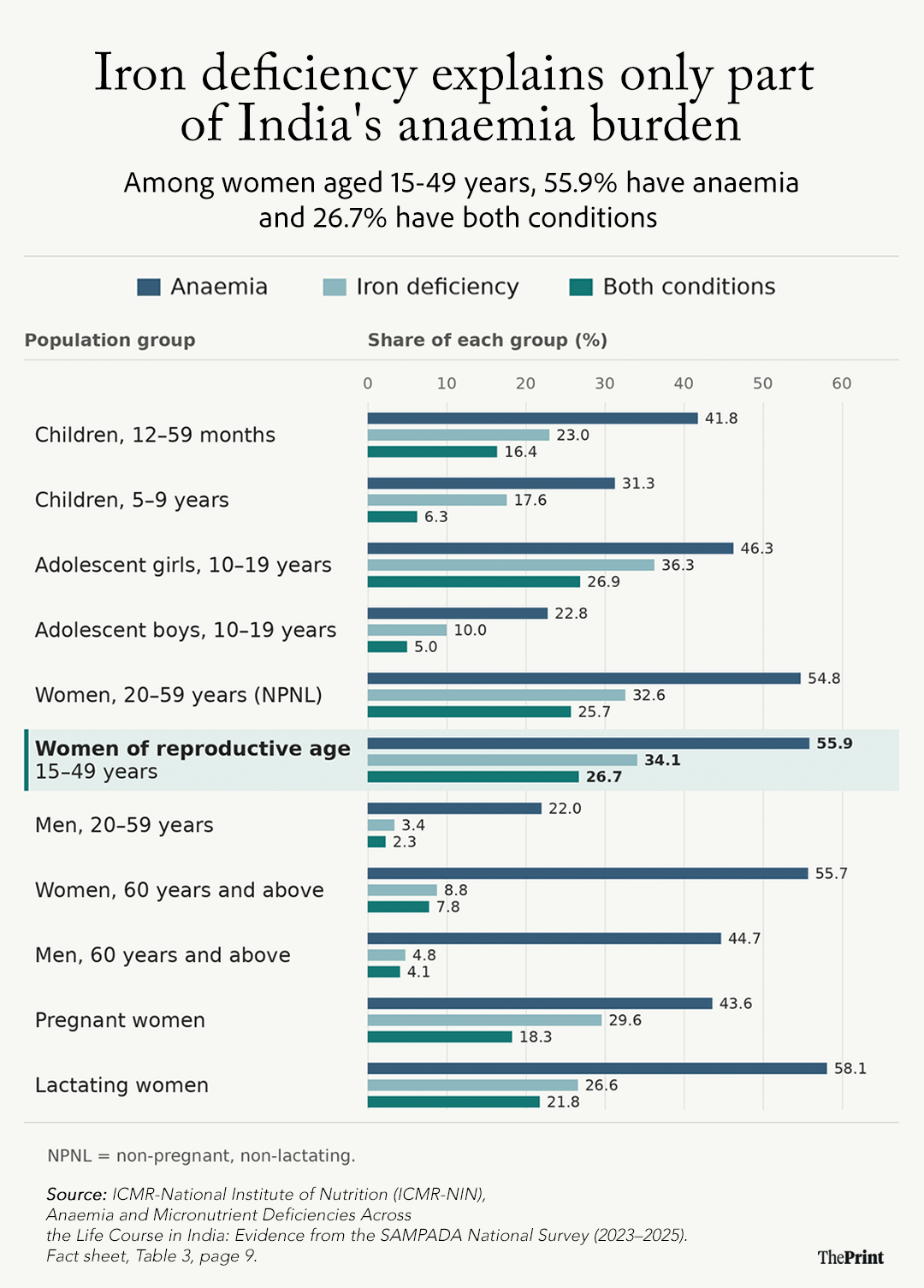
Vitamin B12 deficiency was common across several population groups, including women of reproductive age and pregnant women. However, its prevalence, like that of folate deficiency, was similar among anaemic and non-anaemic individuals.
This suggests that the two deficiencies make a limited contribution to anaemia at the population level, according to ICMR.
The findings also raise questions about the reach and effectiveness of existing anaemia-control interventions. India has run iron and folic acid supplementation programmes for years, but the continued high prevalence suggests that screening, treatment and follow-up need to account for the different causes of anaemia and the needs of specific population groups.
(Edited by Nardeep Singh Dahiya)