


Chandel, Manipur: An 8-kilometre journey, a Rs 50 jeep ride from Chakpikarong to Sugnu to buy a Rs 50 plastic bottle of country-made liquor—this was the routine followed for decades by many residents of a quiet village of the Anal tribe in Manipur’s Chakpikarong area of Chandel district.
But a lot has changed since last week. Sixteen villagers died after drinking the liquor, and the others fear the liquor is poisoned.
While there have been reports of people falling ill in other districts of Manipur too after drinking the spurious liquor, including Imphal and Kakching, Chandel recorded that most deaths—16 of the 17 in the state.
The government continues its crackdown on vendors and suppliers to ensure a complete ban on the sale of country-made liquor.
Manipur Chief Minister Yumnam Khemchand Singh Monday met representatives of various Anal tribal civil society organisations to discuss the suspected spurious liquor tragedy. The representatives submitted a memorandum seeking immediate intervention by the state government, the Chief Minister’s Office CMO said.
What has unfolded in Chakpikarong is more than a suspected spurious liquor tragedy. It has exposed a shadowy network of country-made liquor moving across district boundaries, the breakdown of older supply routes following the 2023 ethnic violence, and the absence of effective regulation in a state where prohibition has long shaped drinking habits.
Six people have been arrested so far, while several others have been detained in connection with the spurious liquor deaths. As police began mapping the supply chain, they zeroed in on Andro village, from where suppliers bought the liquor and sold it in the Sugnu area.
Families are now demanding answers about who made the spurious liquor, who sold it and why it reached their villages unchecked.
Died in the middle of the night
Nungpan is a quiet, green village. Only a few houses dot the neighbourhood, and most residents are from the Anal tribe.
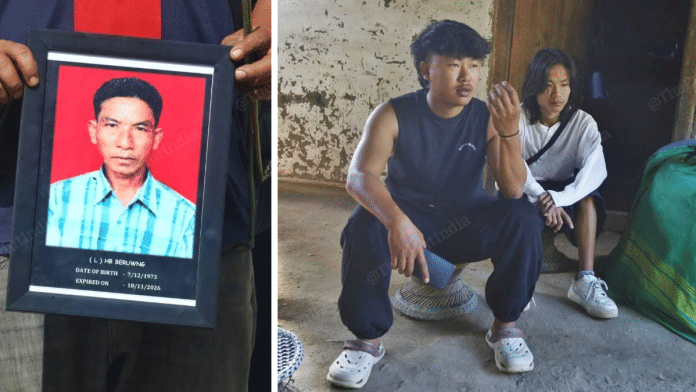
B. Beruwng, born in 1973, had lived a comfortable life here with his three brothers, their wives, and his dogs, cats and chickens. He would work on his farm all day, and in the evening, take a jeep to Sugnu, buy three bottles of liquor, drink one and carry the others back home.
Beruwng followed the same routine on 17 November. After returning from Sugnu in the evening, he went to sleep alone in his room. And then everything changed.
“We were all sleeping, when he heard him scream. He said his stomach was exploding, we assumed he was having stomach pain, so we gave him water. He couldn’t breathe, or see, but as it was late at night, we couldn’t take him to the hospital,” Beruwng’s brother, Joseph Anal, told ThePrint.
“My brother was a simple man. He wanted his liquor at night. Here in our village, most people are from Anal tribe, and generally do not consume liquor,” he said. Which is why, people bought their liquor from basements and homes in Sugnu.
The next morning, on 18 November, when the family went into Beruwng’s room, he was dead. “My brother didn’t even get to speak his last words, or explain what happened,” Joseph said.
Soon, news of the spurious liquor tragedy spread across the village, and more people reported similar symptoms. “There were people complaining of their stomach almost exploding, vomiting blood, not being able to see, their bodies were burning. That is when we were able to understand what had happened,” Joseph told ThePrint.
Joseph says people in his village have stopped drinking. “People are scared. What if all liquor bottles have that poison?”
A decades-old culture comes to a pause
Kishun Hrangbung, 40, from the Naga community, cultivated plants for a living in Nungpan village in Manipur. He too drank liquor in Sugnu before returning home. He started vomiting when he reached home and struggled through the night.
In the morning, he was taken to the Community Health Centre Chakpikarong, but he died within 30 minutes, his brother said.
As the family mourns Kishun’s death, their anger is palpable. “We demand answers,” they say. “Kishun, and so many other men who have died in our village, made a mistake by consuming alcohol. But, the government has to take strong action against the perpetrators. Who was responsible for making this spurious liquor? Who was responsible for selling it, and then distributing it to our people? Who will take responsibility?”
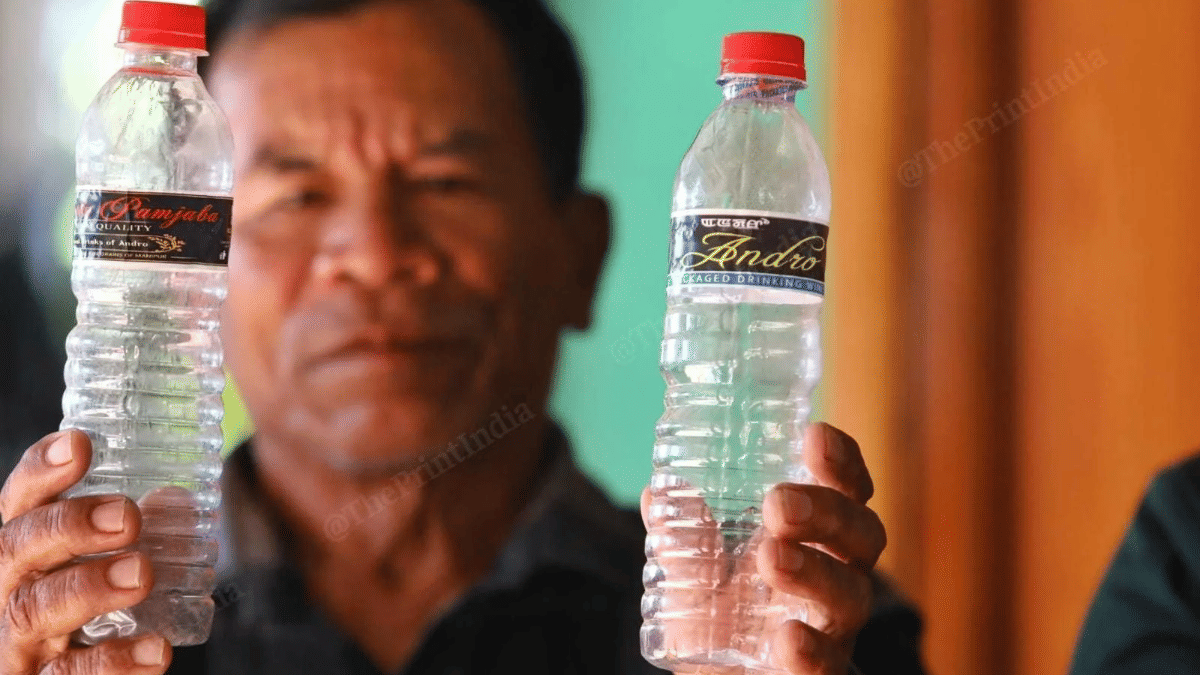
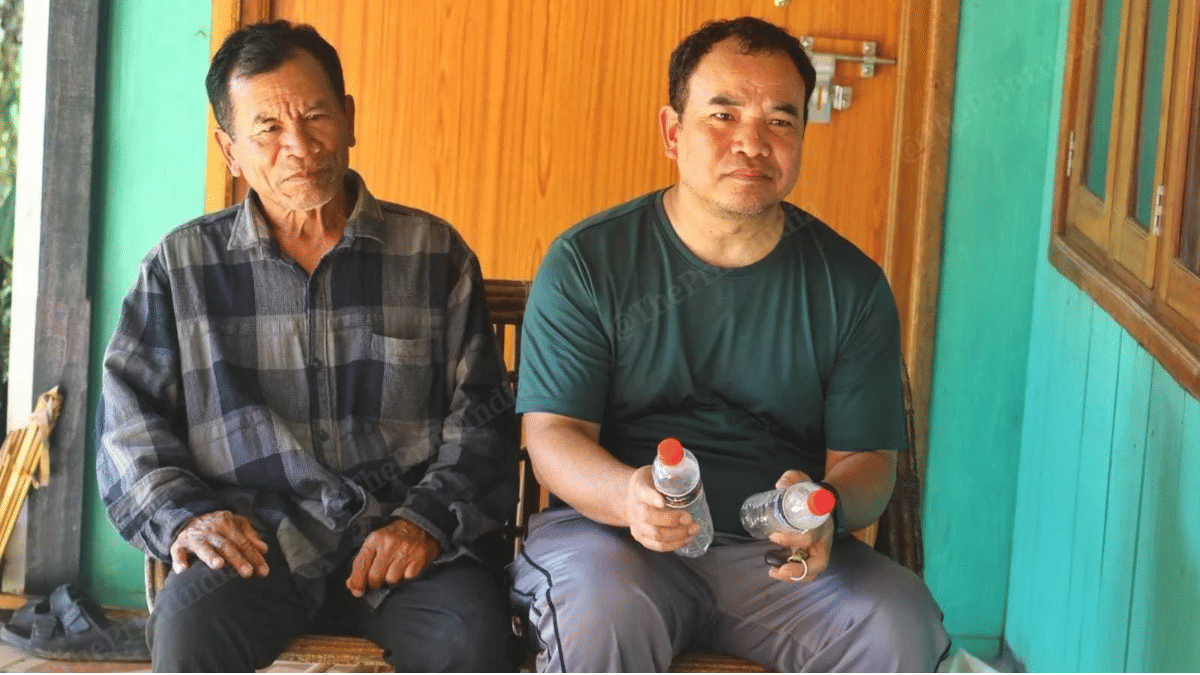
His uncle has kept the two bottles Kishun brought from Sugnu. “I don’t know what to do with these two bottles that killed him. Am I to throw them away? Will the police need it? It haunts us every single day… knowing it was a bottle of alcohol that killed him,” Hrangbung Bebising, Kishun’s uncle told ThePrint.
The first bottle, made of plastic and resembling a regular water bottle, bears the name ‘Andro’, with ‘packaged drinking wine’ written below it. The second says ‘Nagola Pamjaba’, with ‘premium quality’ written below the logo. The bottle claims the contents are ‘brewed from the finest rice grains of Manipur’.
Bebising understands that there are no licenced liquor shops in the area, but he has a question: “Why is liquor being sold with no licence then? Shouldn’t the government do something about it? You can’t ban liquor, but can you not enforce stronger regulations?”
Nungpan is a Christian village with its own strict rules. Residents say the sale of liquor is prohibited. So, anyone who wants to drink has to go to Sugnu to procure it.
The ethnic violence also changed the way liquor was supplied to the village. Bebising explains that earlier, members of the Zou community in Sugnu used to make alcohol. They would share the liquor they made and even allow people to sit in their homes and drink. Public transport was available back then, and buses also plied on the route. A few Meiteis made liquor as well.
“After 2023, the Zou community had to flee the area to Churachandpur. Now, people have to get the smuggled liquor from Sungu. They go on two-wheelers, or four-wheelers,” he said.
Rice and sugar as compensation for deaths
Almost everyone in Manipur’s Chakpikarong is a farmer. They work on their own plots of land during the day, as do their children.
P. Moruwng, 57, did the same. A resident of Toupokpi village, he had three sons, who had also begun working with him. His wife had died 15 years ago.
“He, too, began experiencing similar symptoms after he returned from Sugnu on Friday evening. His stomach was burning, and was vomiting blood, so we told him that we’ll take him to the Community Health Centre. Since it’s a village, it takes time to find a vehicle; when we finally did find a vehicle after 20 minutes, we went to his room, and asked him to stand. He couldn’t. Papa was no more,” his son, Sumpi Moning Anal told ThePrint.
In Toupokpi village, most children do not go to college. They attend government schools but often drop out later. The violence that broke out in Manipur in 2023 made it even more difficult for students to travel to different parts of the state.
Moruwng sons are 25, 23 and 13 years old. They are not sure what will happen next. But they say the local government helped them with compensation.
“We were given daal, rice, and sugar as compensation. We were told if we require more, we can request. I don’t know about jobs… what job will I get? What am I supposed to do after my papa’s death?”
(Edited by Viny Mishra)