





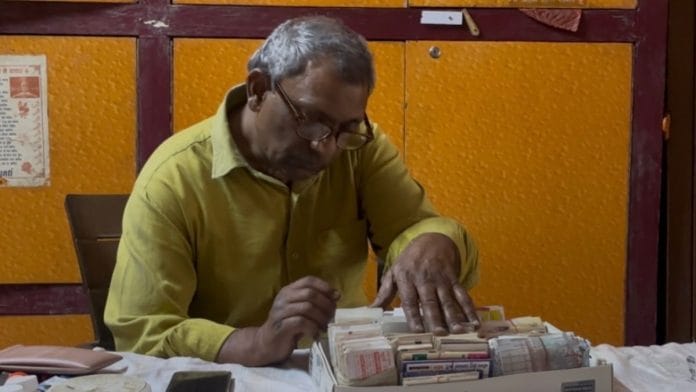

New Delhi: An application for a disability certificate has been pending for months. Nand Kishore Mittal squints at his phone screen, scrolling until he spots where it has stalled. He takes off his reading glasses, puts the phone to his ear and reassures the anxious caller.
The application has been submitted, but it hasn’t cleared verification.
He begins mapping the next steps — back to the hospital for verification, follow up with the certification section, then assessment by specialist doctors before the case goes to the medical board.
If one step stalls, the process stops.
On the call, Mittal breaks it down — whom to meet, where to go, and what to check so the application moves again.
For many of them, Mittal has become that missing link — the last mile between policy and people.
Most of the calls he takes today circle back to one thing: navigating disability certification and the UDID system. It is a gap that the government’s Unique Disability ID (UDID) project, rolled out in 2016, was meant to close — creating a single, verifiable identity for persons with disabilities and streamlining access to benefits across states.
But a decade on, for many, the process of getting that identity remains anything but simple.
Even as the UDID card has been made mandatory since September 2024 to access disability related schemes, the burden of proving disability continues to fall on individuals — requiring them to navigate multiple layers of verification, documentation, and medical assessment, often with little guidance.
The biggest problem is awareness. Even today, 90 per cent of people don’t know about the online disability certificate, and around 60 per cent don’t know about the UDID card at all
– Nand Kishore Mittal
Mittal’s story sits at the centre of this gap, between a system designed to enable access, and the lived reality of those trying to prove they belong within it. For him, that gap is not abstract. He has lived it.
His own UDID card took four years to come through.
Where the system is meant to step in
Mittal now spends his days trying to bridge the gap. From his home in Delhi’s Badarpur, the work unfolds in a way that is both methodical and deeply personal.
Wooden cupboards line the room, stuffed with years’ worth of paperwork — pamphlets from government offices, photocopied forms, booklets, handwritten notes, and stacks of visiting cards. Each pile has a logic of its own, sorted by scheme, by state, by purpose. Mittal bursts into a proud laughter as he showcases the resources he has collected over the years.
In the middle of a call, Mittal barely pauses. He pulls out a folder from behind, flips through it, and lands on exactly what he needs — a phone number, a document list, an alternative route. A workaround.
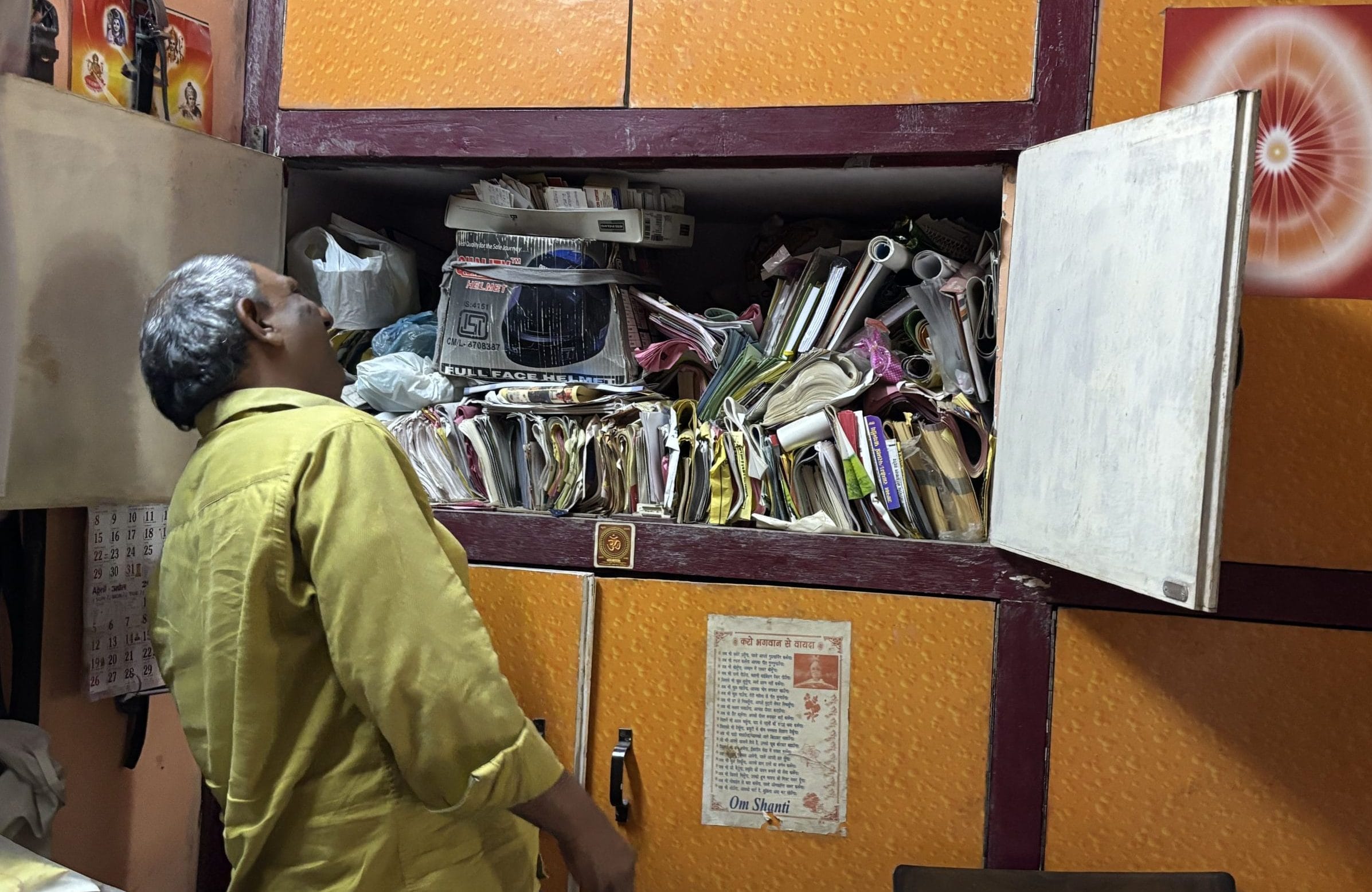
“I keep everything ready,” he said. “You never know what someone will ask.”
Most days, the 61–year–old is stationed with his phone in hand, fielding call after call — NGOs, activists, social workers, and strangers from across the country. Some want to share information, most are looking for help. He tells people to call after 6:30 pm, but the calls come through the day anyway.
“Everyone has a different problem,” he said. “When someone calls in distress, you can’t ignore it.”
People call him unsure of where to begin, what documents to gather or why their application has been stuck for months. Many arrive midway through the process, having already been turned away once or twice, trying to understand what went wrong.
That’s why his phone never stops ringing. People call him in utter panic and frustration. He has virtually turned into a human information kiosk fielding all kinds of queries from people with disabilities in Delhi-NCR.
The delay in his own UDID, he said, had less to do with eligibility and more with the system catching up with itself. His original disability certificate dated back to 1983, issued in a time when records were manual, without photographs, without digital trails. When the process moved online, that document became difficult to verify. His application moved between district social welfare, hospital medical board, and back through departmental verification, each step dependent on the last.
“It would go to the department, then to the hospital for validation, then back again,” he recalled. “At every stage, it would just lie there for days.”
What Mittal went through is now a process he often finds himself explaining to others. At the heart of it is a sequence which, on paper, appears straightforward. Applicants must first register on the government’s Swavalamban portal, upload identity documents and medical details, and then appear before a designated government hospital. There, a medical board — often comprising multiple specialists — assesses the disability and issues a certificate. The UDID card is generated after this verification, linking the individual to a centralised database. Apart from enumeration of people with disabilities, the ID is essential to access other important schemes such as the Scheme of Assistance of Persons with Disabilities for Purchase/Fitting of Aids/Appliances (ADIP).
But each step, Mittal said, is a potential bottleneck. The biggest, however, is still step zero.
“The biggest problem is awareness,” he said. “Even today, 90 per cent of people don’t know about the online disability certificate, and around 60 per cent don’t know about the UDID card at all.”
Why should we keep proving ourselves? Saari agni pariksha viklang hi dein?
– Akeel Ahmad Ushmani, a resident of Uttar Pradesh’s Bulandshahr district with a 60 per cent locomotor disability
Among those who do apply, confusion is common. Many assume the UDID card itself is the disability certificate.
For those with older, manually issued documents, like Mittal once had, the process can take even longer. While applications today can take anywhere between one to six months if done correctly, delays remain common when documentation is incomplete or poorly understood.
For many, the system demands not just proof of disability, but persistence — time, follow-ups, and the ability to navigate a process that is still uneven in practice.
The last mile
When Nand Kishore Mittal picks up yet another call for the day, his wife scoffs under her breath, “he cares more about society than his own home.” He smiles, unfazed, and continues talking, pausing every few minutes to rub his left calf and ankle.
Affected by polio early in life, his left leg remains weak and disabled, a quiet but constant presence in everything he does. It is not something he announces. It shows up instead in the way he moves, the way he pauses, the way he sits through long hours of calls.
A year into his retirement from the MCD, Mittal said he has found what he calls the purpose of his life. Government schemes exist, he insists, but they rarely reach those they are meant for. Somewhere between paperwork, awareness, and access, people fall through the cracks.
What began as personal record-keeping has, over time, turned into something larger. Mittal has built what he calls a “chain” — a network of more than 350 NGOs across the country. Some work on disability, others on healthcare, pensions, documentation, or shelter for women. Depending on the problem, he connects people to the right organisation, often within minutes.
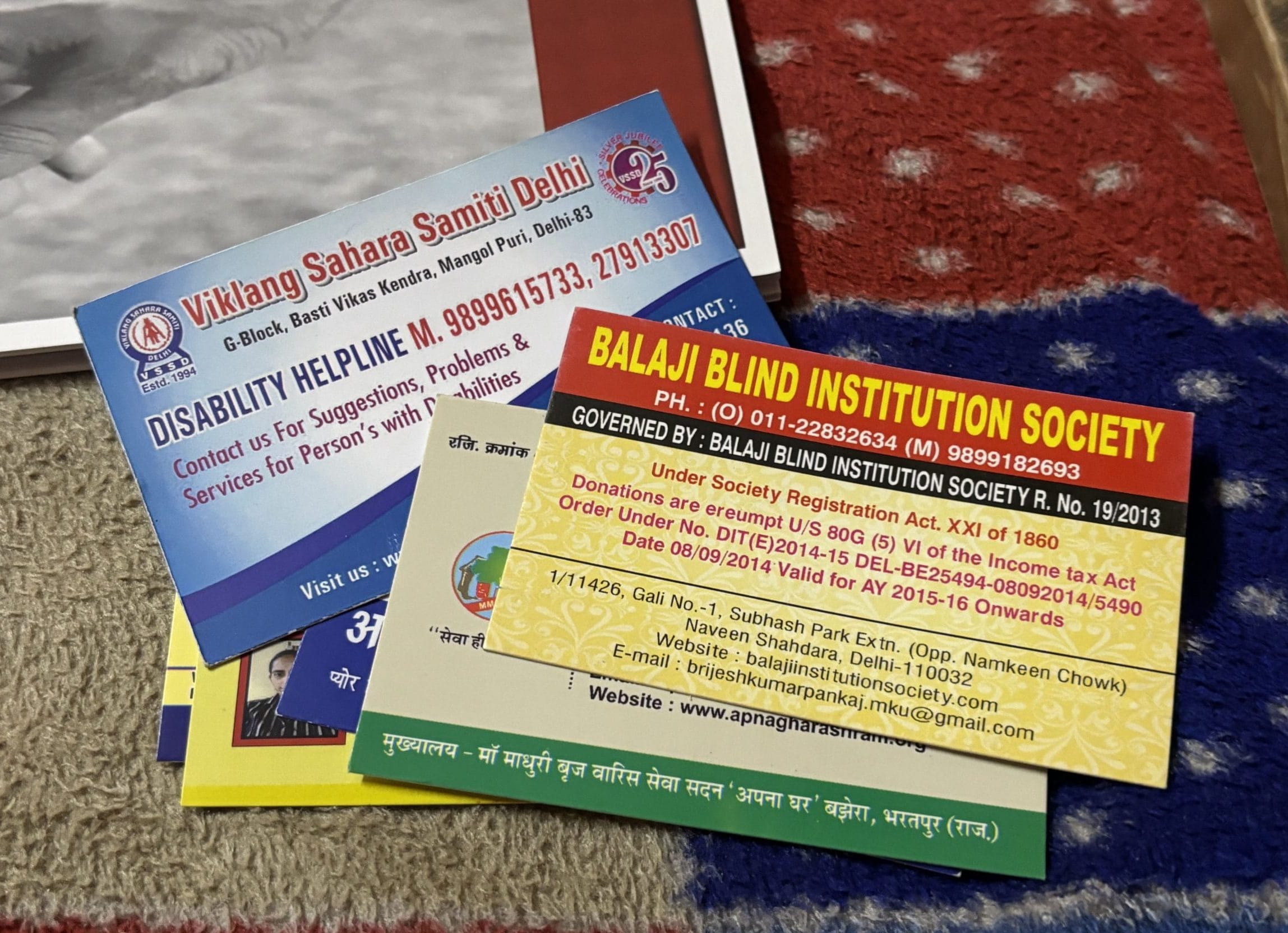
Through this network, he estimates his reach has extended to “three to four lakh people”.
His work cuts across issues — helping widows access pensions, guiding families through ration cards, connecting women leaving abusive homes to shelters. But disability, he said, remains closest to him.
“Since childhood, I have faced many difficulties because of my disability,” Mittal said. “That is why I felt I should give something back, so others don’t have to face the same problems.”
“I got my job only because of reservations and quotas. I fought every appraisal to get my dues. I have fought for my right and now I will take what I have learned and fight for others.”
Even now, especially after a road accident last year, his nerves do not allow him to travel long distances very often, confining much of his social service to the reach of his phone.
Lived experience and stigma
On the street, during his years of fieldwork in MCD’s health department, Mittal would often stop and speak to those he thought might need help — sometimes drawing confused or even hostile reactions.
He recalled approaching a woman in a wheelchair and referring to her as ‘divyang’. She was offended.
“She told me, ‘How can you call me disabled?’” he said. “People think disability only means when limbs are missing.”
For Mittal, this hesitation is telling. “If people don’t accept it, how will they get the support meant for them?” he asked.
The discomfort around the label itself is not incidental. Over the years, the language around disability has shifted — from “handicapped” to “differently abled” to “persons with disabilities”, and “divyang”. Each term has arrived with the promise of dignity, but the search for the right word remains unsettled.
For many, these labels can feel imposed — well-meaning, but often paternalistic, smoothing over the lived realities they attempt to describe. The debate, activists say, is not just about terminology, but about who gets to define disability, and how. For Mittal, these moments are not deterrents. If anything, they underline the gap he sees every day — not just in access to schemes, but in how disability itself is understood.
Disparities within states
What Mittal encounters in individual cases reflects a larger pattern within the system itself. For Nipun Malhotra, disability rights activist and co-founder of the Nipman Foundation, the problem is not the idea behind UDID — but its uneven implementation.
“At a conceptual level, having a centralised disability card is a good idea,” Malhotra said. “The challenge is that states have not implemented it uniformly.”
Because disability remains largely a state subject, the UDID system ends up being heavily dependent on local administration. “The experience of getting a UDID card is very state and district specific,” Malhotra said. “In some places, the process is smooth. In others, people have to visit district hospitals four or five times just to secure an appointment.”
In many cases, delays stretch far beyond what the system promises. “There are people who have applied and not received their UDID cards for two to three years,” he said, pointing to gaps such as a shortage of doctors, lack of awareness among hospital staff, and administrative bottlenecks.
The result, he suggests, is an uneven system where access can depend on geography. “Some states, particularly in the south, are doing a much better job. Others are lagging behind. There isn’t a standardised level of implementation yet.”
At the same time, concerns over misuse, especially following high-profile cases involving fake disability certificates, have prompted some states to initiate re-verification drives. While Malhotra acknowledges the need to maintain the integrity of the system, he cautions against overcorrection.
“Because of a few fraudulent cases, there is a risk that genuine beneficiaries get caught in the net and face additional hurdles,” he said.
Even beyond certification, the promise of a single, universally accepted ID remains incomplete.
“Different institutions still have their own verification processes,” Malhotra said. “For instance, railways continue to use a separate system. So while many ministries have started recognising UDID, it is not yet fully universal.”
He suggests that the way forward is to identify and replicate what is already working. “There are states that have implemented the system well,” he said, including southern states like Tamil Nadu and Karnataka. “Their best practices should be highlighted so that others can learn from them.”
Until then, the gap between policy and practice remains stark.
Basic challenges overshadow the motive
Even when the card is issued, the problems don’t always end there. For Akeel Ahmad Ushmani, a resident of Uttar Pradesh’s Bulandshahr district with a 60 per cent locomotor disability due to polio, the card still fails at the most basic level of recognition.
In Uttar Pradesh, persons with disabilities are entitled to free travel on state-run buses. But despite doing everything accordingly and carrying a UDID, Ushmani said he is routinely asked for additional documents.
“I show my UDID, but they still ask for Aadhaar or other papers,” he said. “I have seen others end up paying. They just say, ‘yeh nahi chalega’.”
The lack of awareness among frontline staff, he added, defeats the very purpose of a single, universal card. “If people don’t recognise it, what is the use of having one ID?”
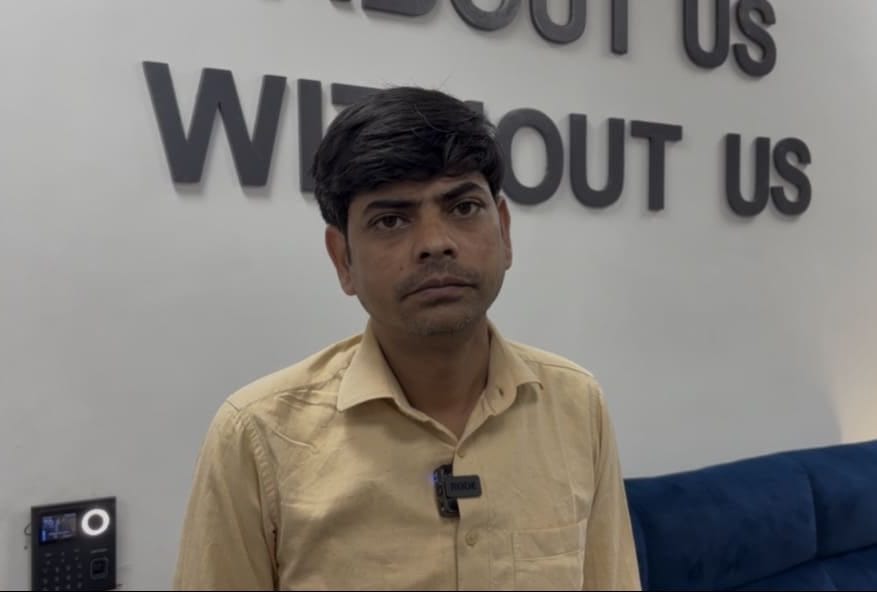
Having worked with people with disabilities for over a decade and now associated with the National Centre for Promotion of Employment for Disabled People (NCPEDP), Ushmani describes the UDID as a great initiative that still has not been fully realised. “There are benefits linked to it, and the government has made it mandatory to avail schemes,” he said. “But it needs to be implemented in mission mode.”
On paper, the process is simple: applicants register online, are assigned a date for assessment by a medical board, and can track updates digitally.
“There are no major procedural challenges as such,” he said, “but there is very little awareness within the community about how to navigate the system.”
He also pointed to a gap in coordination between the Centre and the states. “Disability is a state subject, but UDID is a central scheme. Unless both work together, implementation will remain uneven,” he said, suggesting that large-scale awareness campaigns similar to Beti Bachao Beti Padhao are needed.
“Why should we keep proving ourselves? Saari agni pariksha viklang hi dein? (Why must persons with disabilities alone go through every trial by fire?)” Ushmani asked. “Once my UDID is made and verified, why am I being sent again for medical checks?”
He argued that fraud is a failure of the system, not of individuals. “It affects dignity. People start questioning whether you are really disabled. This is not just an inconvenience — it violates fundamental rights.”
Through his work with NCPEDP, Ushmani said he regularly encounters cases where people struggle to access basic entitlements.
“People call asking when their pension will come, when they will get promotions. These are survival issues,” he said. “Disability jurisprudence in India is still evolving.”
The Rights of Persons with Disabilities (RPwD) Act, 2016 mandates four per cent reservations in government jobs for people with disabilities, but according to Ushmani, this is rarely fulfilled.
At its core, he added, the challenge is both structural and social. “Disability is one such minority that anyone can become a part of, yet there is still stigma in identifying as disabled,” he said. “Awareness is low — not just among persons with disabilities, but also among families and within the bureaucracy.”
Also read: The success story of Chandigarh Police Department. How it bagged 136 awards
Certificates under scanner
Much of this burden, activists argue, stems from deeper flaws in how disability itself is assessed and verified. Dr Satendra Singh, a doctor at Delhi’s GTB Hospital and a disability rights activist who founded Doctors with Disabilities: Agents of Change, a body of health professionals with disabilities for social justice, said that nearly a decade after its rollout, the UDID has fallen short of its promise to simplify life for persons with disabilities.
What is most worrying, he said, is that in the wake of cases of fake disability certificates, the burden of proof has unfairly been shifted onto persons with disabilities.
In Maharashtra and Rajasthan, government employees are being subjected to reevaluation of their UDID, without which they risk losing their jobs.
“What is happening is a misinterpretation of a central government advisory. It is both unethical and illegal,” he said, linking this crackdown to the fallout of the Pooja Khedkar case.
Structural barriers in accessing the UDID system are glaringly visible in rural areas, where about 70 per cent of persons with disabilities live.
Limited internet access, lack of alternative pathways create exclusion. Even when people reach government platforms, navigating them is a challenge, with most sites not operating their accessibility settings.
The requirement of appearing before medical boards — available only in government hospitals on fixed days, often forces people to travel long distances.
The process itself takes a toll, especially on those with intellectual disabilities, for whom hospital environments can be overwhelming. Assessments often require multiple specialists — from paediatricians to neurologists to psychologists.
Singh cited the example of RML Hospital in Delhi, where a notice outside the clinical psychologist’s room states that assessments for dyslexia cannot be conducted there.
“This is a central government hospital in the capital of India. Imagine the situation in the rest of the country,” he said.
Another issue Singh flagged was biometric requirements.
“The problem is that somebody may have missing hands, or be leprosy-cured without fingertips, making biometrics difficult. Acid attack survivors may not be able to open their eyes for retinal scans. Similarly, in cases of intellectual disabilities, capturing such data itself becomes a challenge,” he explained.
These are nuances, he said, that the system has not fully accounted for.
“Many a times, because of negative experiences — the way people are treated or ridiculed — those who begin the process don’t follow through,” Singh said. The system, he argued, often reflects an able-bodied bias, with limited empathy built into its design. The process of assessment is now undertaken through sophisticated tests and technology, which remains largely limited to metropolitan areas.
“Most people who complete the process do so for education or employment benefits. Those who are even slightly better off often don’t attempt it because of these barriers,” he said.
Mittal’s own life shows what that support can do. Reservations helped him secure a government job, giving him financial independence and stability.
“I got my job only because of disability quote,” he said. “I fought for my rights at every stage.”
Now, that experience shapes the way he works—less as someone inside the system, and more as someone helping others find their way through it.
His phone rings again. He reaches for it, almost instinctively, and answers. A father wants to know how his son can apply for college under the PwD quota — what documents he needs, whether a UDID card is required. Mittal listens, then lays it out: get the disability certificate in order, apply for the UDID, keep all documents ready before admissions begin.
“Start now,” he said. “These things take time.”
It is the kind of call he takes every day — listening, then responding calmly and methodically, as he has done hundreds of times before.
Mittal cannot change the system. But he knows how to navigate it. And for many, that is where the process finally begins.
(Edited by Aamaan Alam Khan)