



Parvati Valley: For most visitors, Parvati Valley is a place of cafes, trekking trails, pine forests and the famed hashish of villages like Malana. To Dhale Suman and Chappe Ram Negi, it is a landscape of emergency calls and sleepless searches. For years, the two rescuers have combed its forests, cliffs and icy rivers for missing trekkers.
“We didn’t want this. A guest comes to our valley; for us, it’s like a guest entering our home. They shouldn’t disappear. They should have safe tourism, proper facilities and someone keeping track of them. There should be checkpoints on every trekking route and a registration system so authorities know who has gone where, and with whom,” Suman said.
Parvati Valley has long been known for trekkers who disappear on its trails, many of them foreign tourists hiking alone. It’s been called India’s ‘Bermuda Triangle’ and ‘Death Valley’. Over the years, police, local rescuers, porters, families and even helicopters have joined search operations, but many of those who went missing were never found. Among the best-known cases are those of Australian traveller Odette Victoria Houghton, Polish trekker Bruno Muschalik and American hiker Justin Alexander Shetler.
A 2026 Tribune report said that 19 foreign nationals had gone missing in Kullu district since 1991, most of them in Parvati Valley. Police data also showed that 1,078 people were reported missing in Parvati Valley between 2003 and 2023, but only 498 were traced.
Many trekkers underestimate the mountains because the routes have become popular on social media
-Dhale Suman, trekking guide and rescuer
Every trekking season brings phone calls from frantic families and days spent searching for people who walked into the mountains and did not return. Suman and Negi have rescued stranded hikers, recovered bodies from ravines and rivers and spent weeks looking for people who vanished without leaving behind a single clue.
Their stories are different, but they meet at the same place: an idyllic valley made increasingly fragile by unmanaged tourism, weak safety systems and an administration that often reacts only after tragedy strikes.
Also Read: Parvati Valley built a music, rave and drug economy. Now it doesn’t know where it’s headed
Tracing the last steps
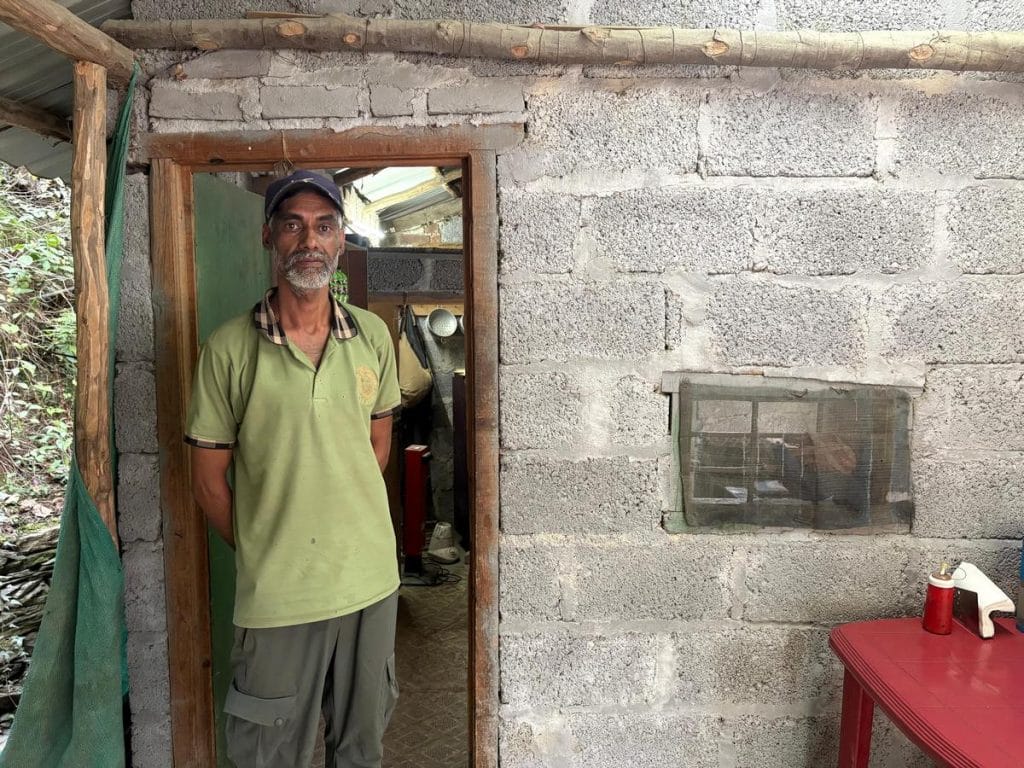
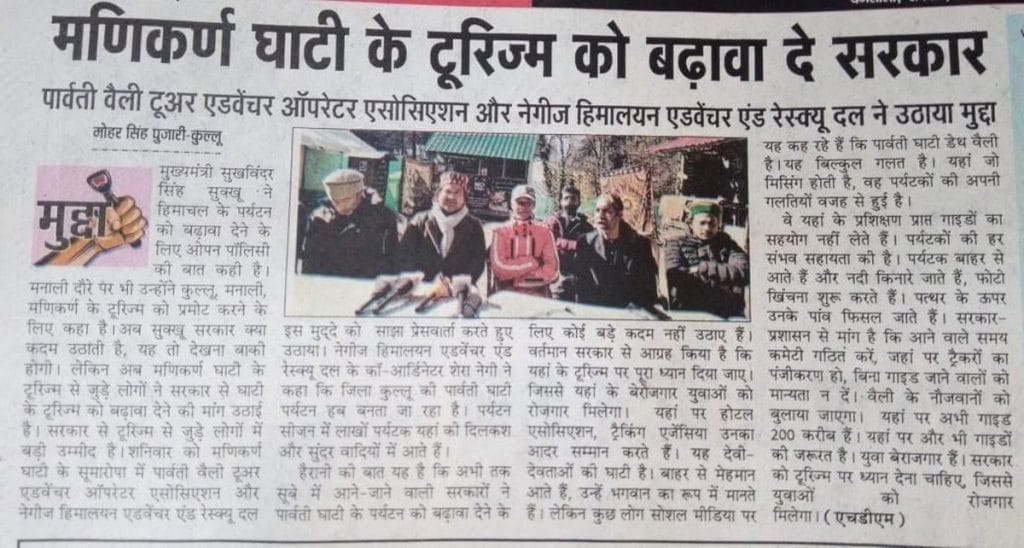
With his lean frame, weather-beaten face and strands of grey hair, 42-year-old Dhale Suman points to an older friend and laughs that he is the one who has aged faster. He knew these hills first as a trekker and guide. Then came the other work: searching for missing people, recovering bodies and training others. He had been doing it long before he founded the Parvati Valley Adventure Tour Operators Association in 2021 and became its president.
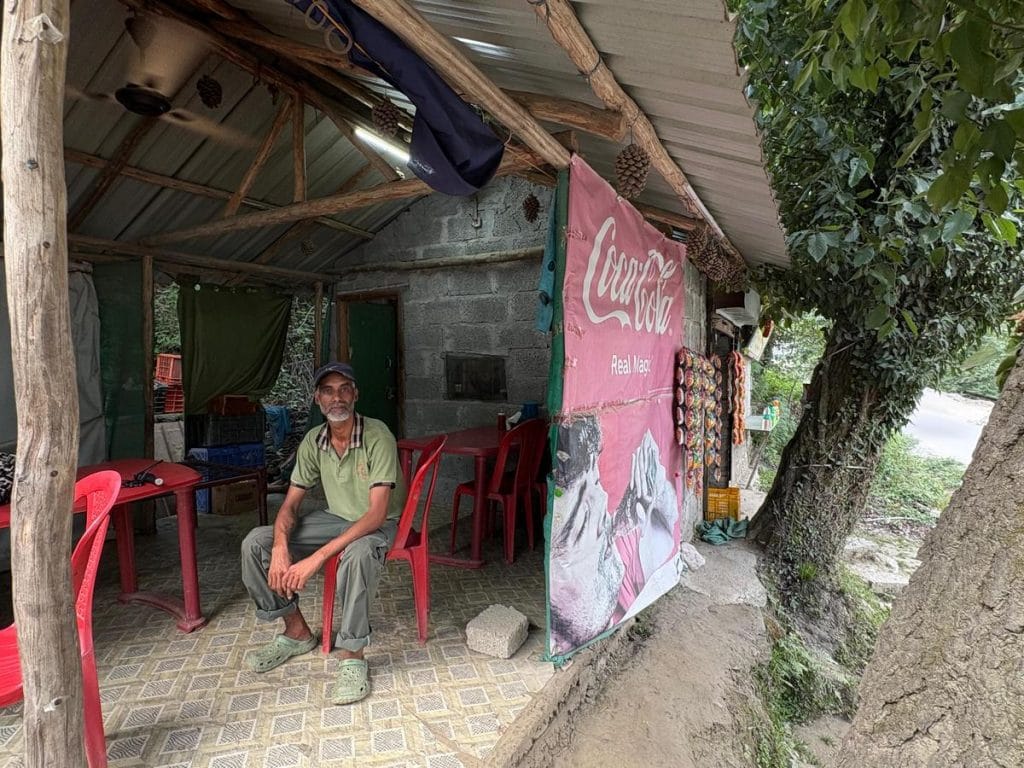
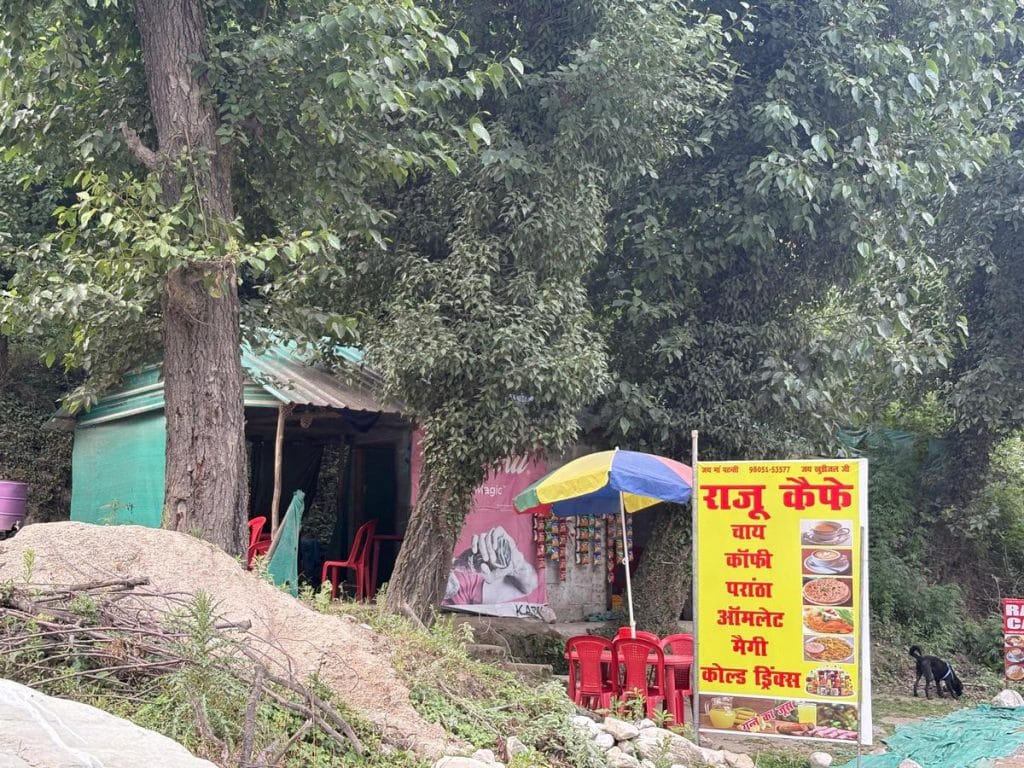
Much of Suman’s day passes around Raju Cafe, the small roadside eatery he owns in Barshaini, the last motorable village before the trails branch off towards Kheerganga and Pulga. Trekkers stop here for tea before beginning the climb. Local people drift in and out through the day. Between his work as the sarpanch of Sharani, rescue calls from the trails and trips with his pregnant wife to Jari, 20-25 km away, for regular medical check-ups, the cafe has become a kind of base camp.
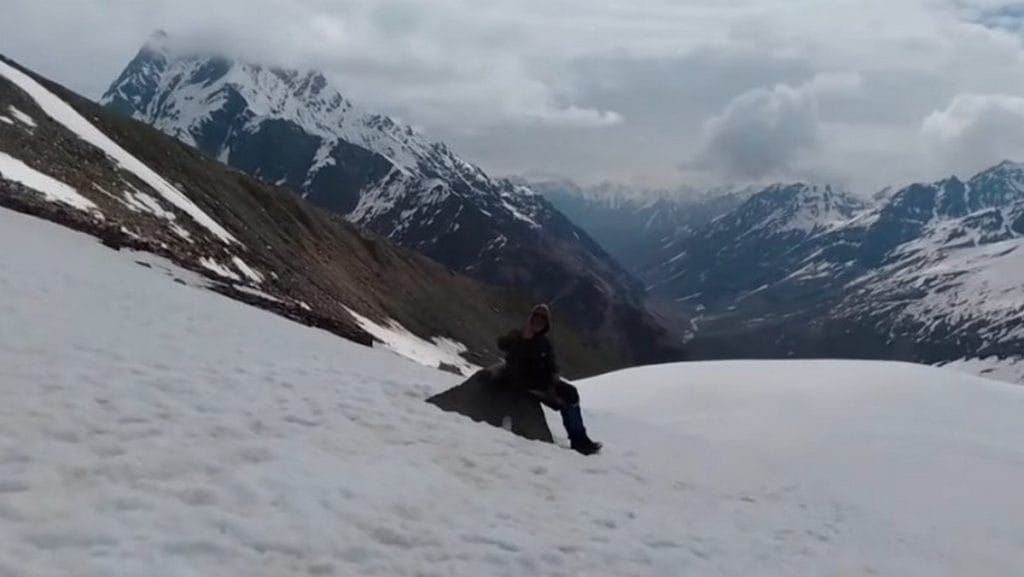
The trails leading out from Barshaini are among the busiest in Himachal Pradesh, drawing thousands of trekkers every year to Kheerganga, Mantalai, Malana and Pin Parvati Pass. None of them is failsafe. Pin Parvati Pass, which crosses above 5,000 metres through boulder fields, river crossings, glaciers and snow slopes, is widely regarded as one of the toughest treks in the Indian Himalayas. But even Kheerganga, one of the more accessible routes, sees frequent disappearances.
The narrow mountain paths above deep valleys and through thick forest are treacherous. Weather can change within hours, from clear skies to rain or snow. A wrong step, loose rock or sudden landslide can prove fatal. Poor mobile connectivity can make it difficult to call for help.
We have to show people’s photographs at cafes, campsites and villages to ask if anyone had seen them. For the first few days, we often don’t even know which trail they have taken. That is the biggest problem in almost every rescue
-Dhale Suman
“Many trekkers underestimate the mountains because the routes have become popular on social media,” said Suman.
A seasoned trekker, he has set two world records—including completing the 160-km Pin Parvati Pass trek in six days and leading a team that unfurled a 280-foot national flag at 4,200 metres on Sar Pass. He has also received the Hindustan Youth Icon Award, Shaan-e-Himachal, Himachal Rajya Samman and a commendation from the district administration for his rescue work.
One of his earliest major rescue operations came in 2001 at Tichu Top, a high-altitude ridge where a foreign trekker had fallen to his death. He learned the ropes from other rescue groups over the years before forming his own team, and has personally come close to death multiple times while trying to save others.
“At first, we didn’t have any knowledge of the equipment we have—rescue ropes, harnesses, Z-pulleys—or how they are used,” he said, adding that the Manali Adventure Tour Operator Association trained them in CPR, mountain first aid and emergency response.
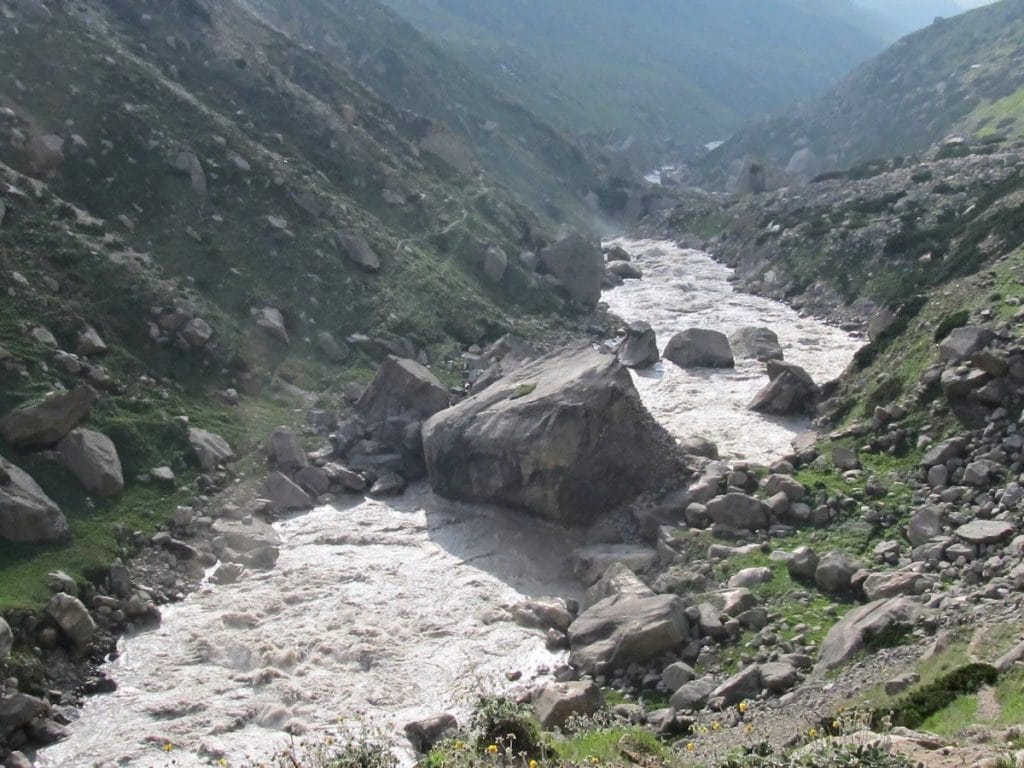
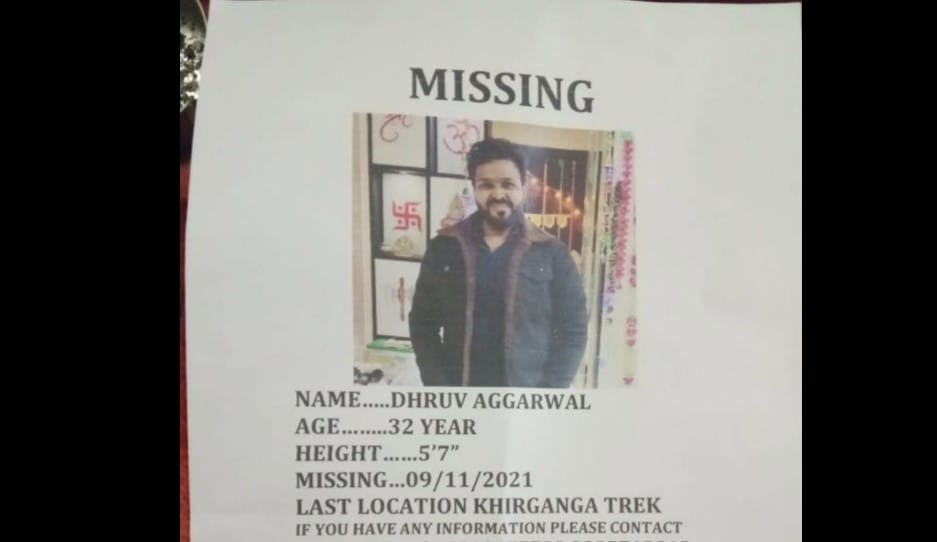
Over the years, Suman said his volunteer search-and-rescue team has responded to dozens of missing-person cases across Parvati Valley. Among those he recalled were searches for Dhruv Agarwal and Vishal Vijay Jadeja, who vanished during the Kheerganga trek in 2021 and 2022 respectively; Abhinav Mingwal who went missing from Kasol on 31 December 2022; and 10-year-old Moksh Sharma who fell into the Parvati River in December 2020. He’s also been part of several river rescue operations during flash floods and cloudbursts in 2024 and 2025.
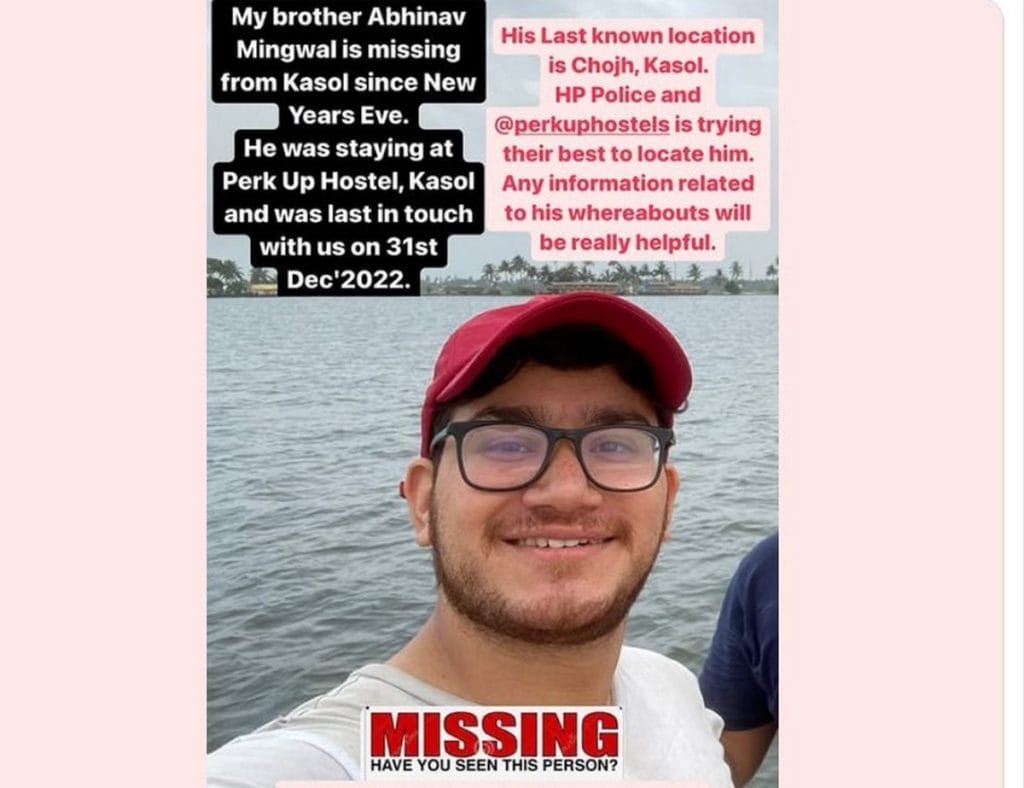
Often, the team has to work with very little information. Only after piecing together a missing trekker’s last movements can rescuers decide where to begin searching.
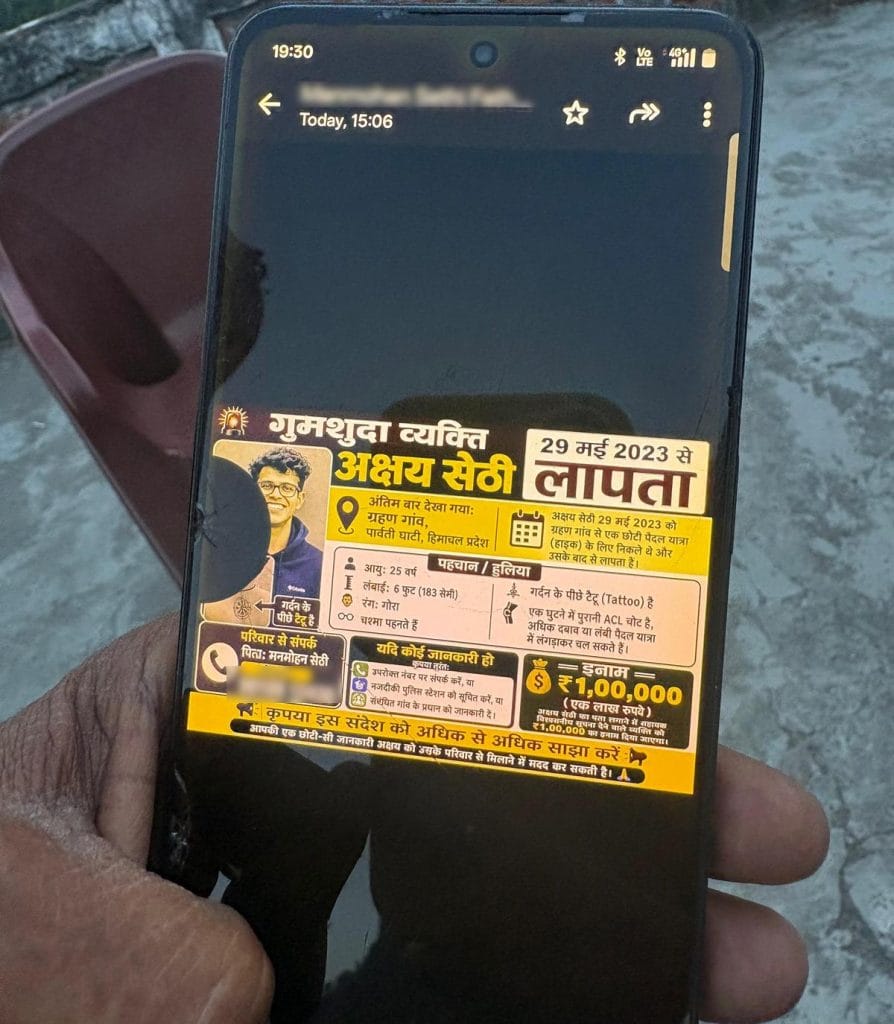
“We have to search everywhere. We have to show people’s photographs at cafes, campsites and villages to ask if anyone had seen them,” Suman said. “For the first few days, we often don’t even know which trail they have taken. That is the biggest problem in almost every rescue. We only know that someone stayed in Kasol… after that, we have to spend days finding out where they went.”
The search for Mingwal remains the longest operation he has been part of. It lasted 35 days and covered a vast stretch of difficult terrain, from Bunbuni and Kheerganga to Tundabhuj and Kalga, as well as nearly 12 kilometres of the Parvati riverfront.
As the operation stretched on, the team sought help from a specialised scuba-diving unit based in Sundarnagar, which assists in underwater rescue and recovery operations across Himachal Pradesh.
Finally, the body of the Ghaziabad software engineer was found between two rocks on the Parvati River, about 800 metres from the spot he’d gone missing.
A Ganesh tattoo
More often than not, the outcomes of these searches leave rescuers with scars of their own.
Even after years in the mountains, Chappe Ram Negi is still shaken by the searches that end badly.
“Some of the hardest parts of the job are the body recoveries. Many searches end not with a rescue, but with retrieving people who have died after falls, drowning or days lost in the mountains,” said the 48-year-old who runs Negi’s Himalayan Adventure Search & Rescue Team in Bhuntar in Kullu district, along with a homestay.
Nothing smells worse than a human body that has been lying there for one or two months. By the time we recover it, it is decomposed and full of insects. Most people cannot imagine what that is like
-Chappe Ram Negi
Just this May, he was part of the search for 24-year-old Mohit Chaudhary from Delhi, whose body was found near the Waichin rivulet four days after he went missing from Malana; he had apparently slipped and fallen from a height.
The work requires the physical endurance to climb unstable cliffs, cross flooded rivers, and spend weeks at high altitude, often with little food, but it also takes immense mental resilience– the fortitude to push through exhaustion and uncertainty, only to confront death and grief at the mission’s end.
“Nothing smells worse than a human body that has been lying there for one or two months. By the time we recover it, it is decomposed and full of insects. Most people cannot imagine what that is like,” Negi said.
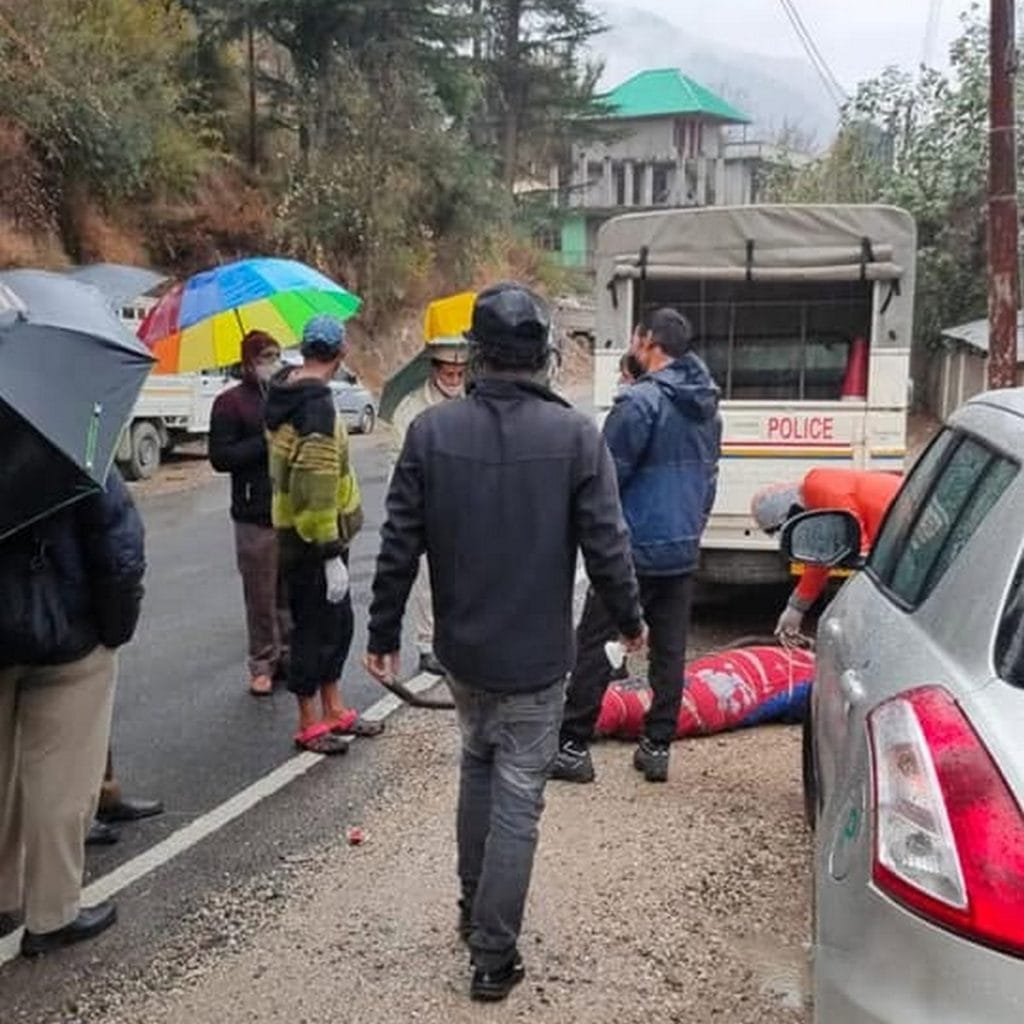
In his community, he added, clothes worn while handling a dead body cannot be used again. Rescuers have had to burn many of their clothes after recoveries.
Suman is no stranger to the psychological toll either.
He recalled one tourist from Uttarakhand whose body remained submerged in the Parvati River for nearly three months before resurfacing.
“When we pulled him out, his body had swollen badly,” he said. “His stomach had torn open. Trout fish were coming out of his mouth and stomach. After ten or fifteen minutes, there was such a smell that we had to burn all our clothes. Even after washing them, the smell would not go away.”
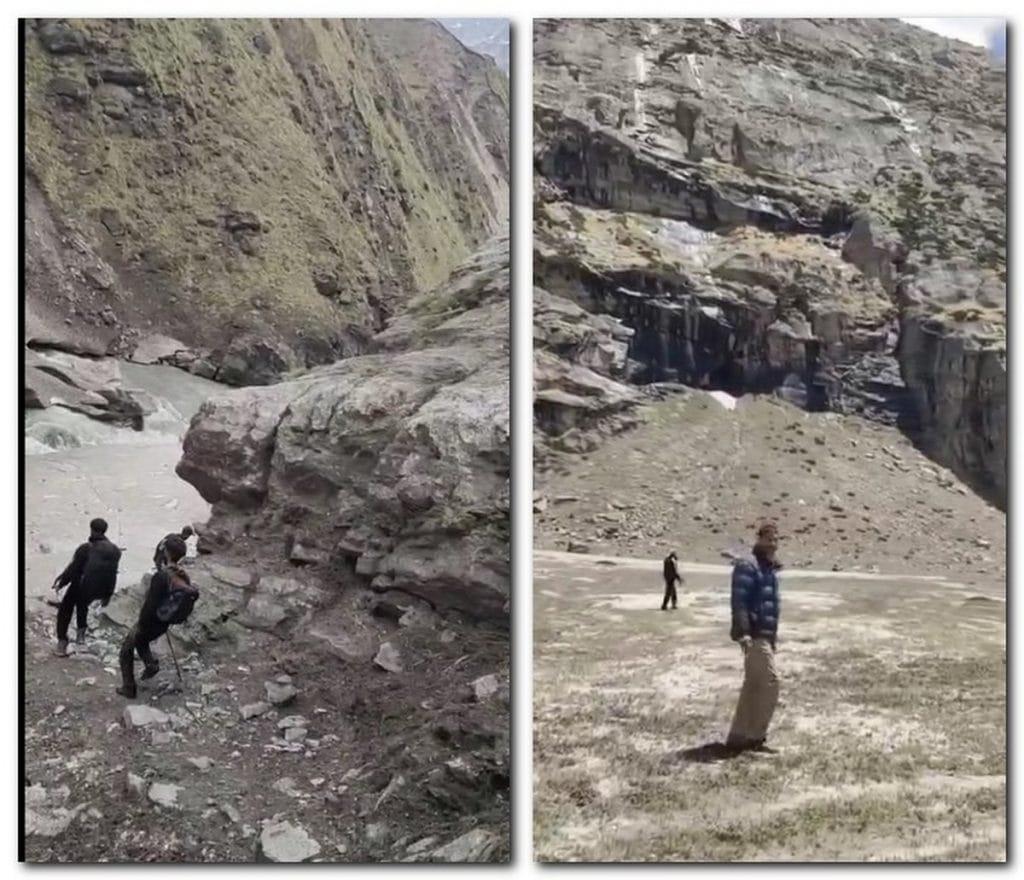
The body was eventually taken to the hospital, where there was no freezer available. It had to be transported elsewhere before relatives could identify it. His sister recognised him by a single tattoo of Ganesh.
Another case still haunts him—that of Dhruv Agarwal, who disappeared on the Kheerganga trail.
“When we finally found him, he had no head,” Suman said. “One hand was missing. One leg was missing. You can imagine what it is like to return someone’s child in that condition.”
The family, he remembers, was broken.
“They just folded their hands and told us, ‘Please don’t let another child go alone into these mountains,’” he said.
He has witnessed that grief dozens of times.
‘I owe my life to you’
Even today, Negi’s phone continues to ring with calls and messages from families searching for loved ones who disappeared in Parvati Valley. Some are still hoping for a miracle. Others simply want answers. But sometimes, there are moments of satisfaction when he has saved a life.
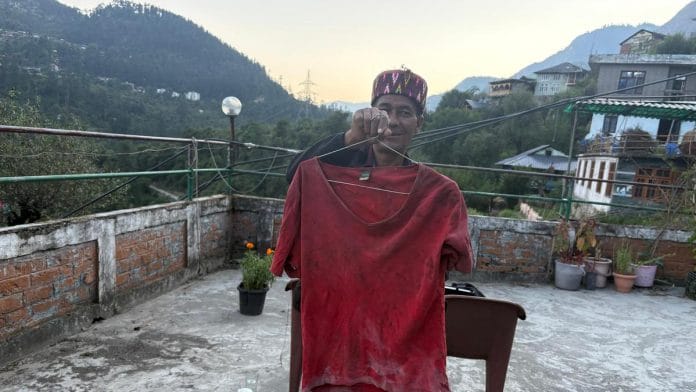
Last month, sitting outside his 200-year-old ancestral home, Negi scrolled through his contacts and placed a video call to an old friend in Israel. She beamed as soon as she saw him.
“I owe my life to you. You saved my life,” she told him. “In Judaism, they say if a person saves one soul, it is as if he has saved the whole world. If not for you, Negi, I wouldn’t be able to talk to you now.”
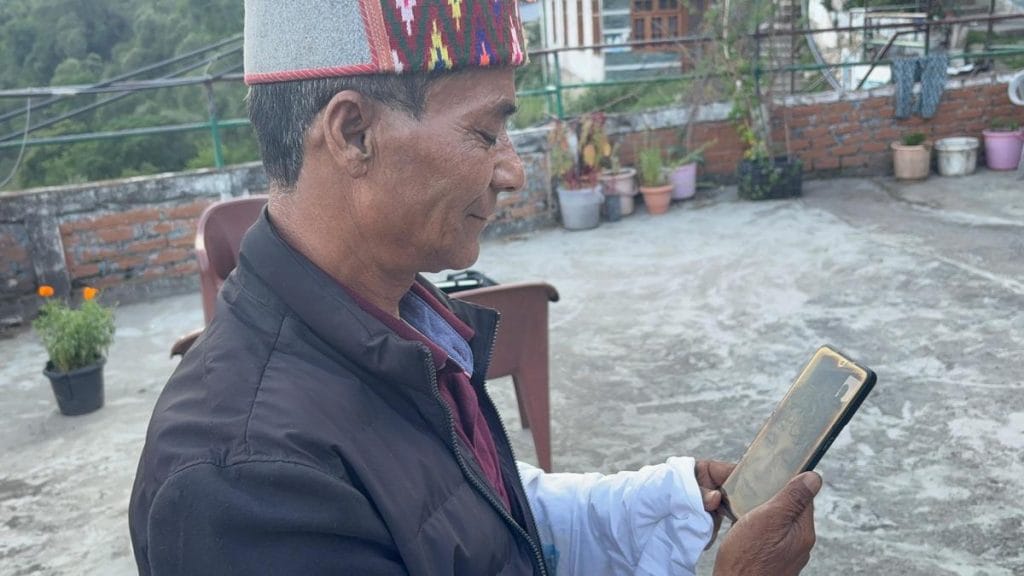
The woman had first visited Kasol in 2008. During a trek near Malana village, she slipped off a cliff at a spot where, Negi says, several others have also lost their lives. Within three hours, he and his team reached her, rescued her from the mountains and rushed her to a hospital in Delhi.
A year later, she returned to Parvati Valley to thank the man who had saved her.
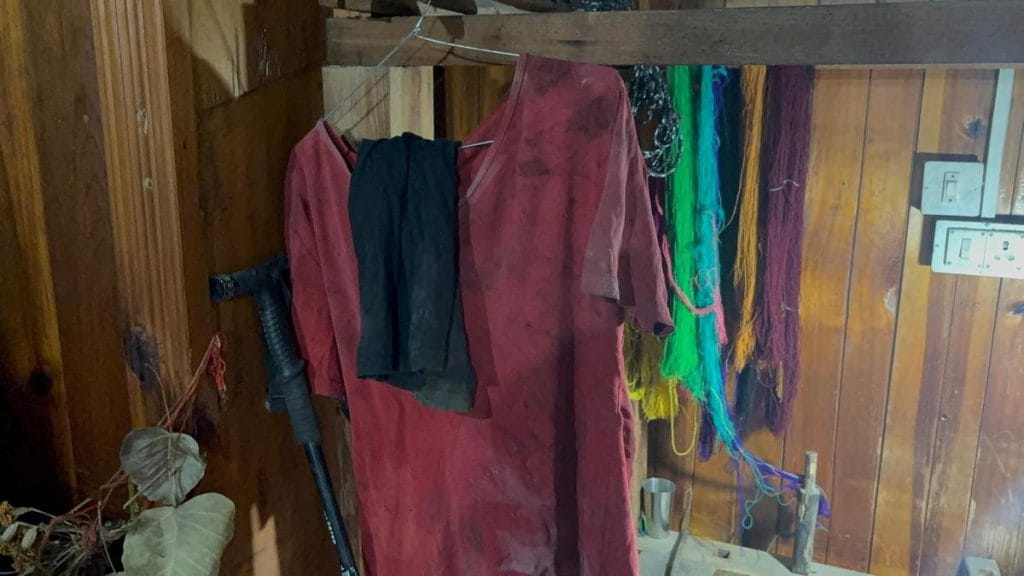
Even today, Negi has kept the walking stick and the T-shirt she was carrying on the day of the rescue. They remain among the few physical reminders of a mission he has never forgotten.
During the video call, Negi listened as she spoke, nodding gently without interrupting.
“Every day I wake up, I remember you,” she said. “We speak about you to all our grandchildren and all our friends.”
For rescuers used to recovering bodies from rivers and ravines, such moments are rare. And that is why they keep saying the same thing: the valley needs systems that prevent people from disappearing or getting injured in the first place.
Brewing danger
Years of searching the mountains have made Suman finely attuned to dangers that are easy to miss until it is too late. For the past decade, he said, he has been warning authorities about one such threat: a growing glacial lake he believes could one day endanger the entire valley.
The first time Suman saw this lake was during a trek above Kheerganga nearly a decade ago. Villagers later told him it was Vasuki Lake, named after the local deity Vasuki Naag.
“The first time we saw the lake, it was very small,” Suman recalled. “When we kept going back, we realised it was growing every year.”
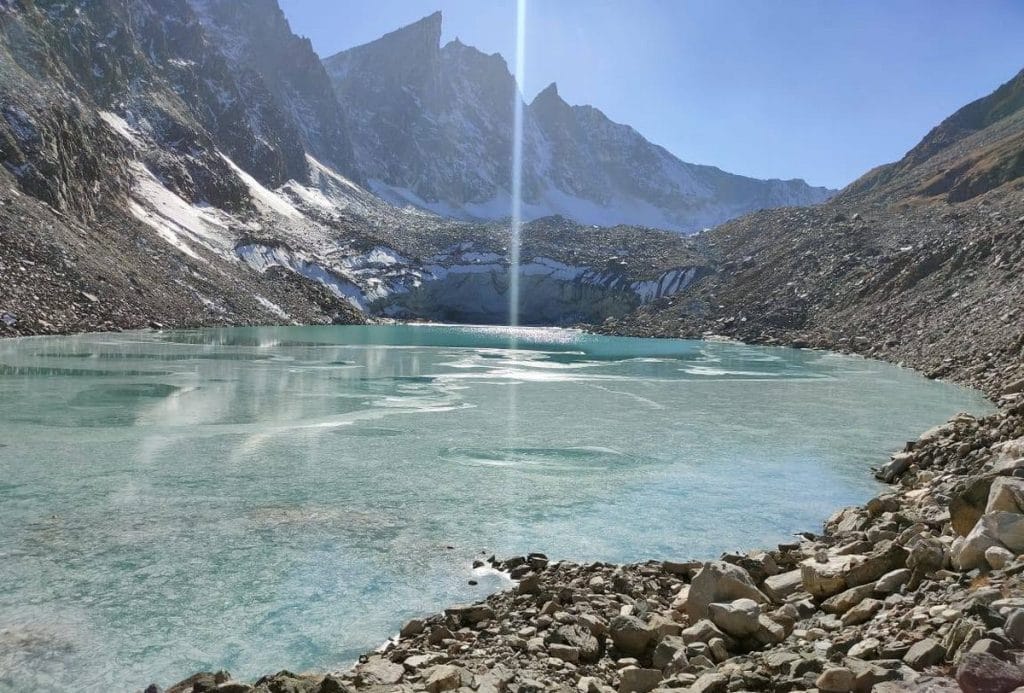
Scientists have linked the expansion of glacial lakes in Kullu to climate change. A survey by the government’s Centre for Development of Advanced Computing (C-DAC) found that Vasuki Lake grew from 10.36 hectares in 2017 to 13.38 hectares in 2024. Suman says it covers about 14 hectares now.
Watching it grow convinced him that a breach could send a sudden surge down the Parvati River, threatening villages and hydropower infrastructure downstream. He began documenting it through photographs and videos and wrote repeatedly to the Kullu Deputy Commissioner, the Forest Department and disaster management authorities. He also questioned whether the glaciers and glacial lakes feeding the Parvati River had been studied before the construction of NHPC’s 800 MW Parbati-II hydropower project downstream.
“In May 2025, a team from Kullu’s Disaster Management Authority visited and asked me to accompany them to the lake. The survey lasted nearly a week, during which officials used inflatable boats to measure the lake’s depth, water level and surface area,” said Suman.
Officials initially recognised the risk, he added, but later focused on installing a satellite-linked early warning system rather than reducing the danger itself.
“This year they said they will install an alarm system,” he said. “As soon as the lake breaks, Parvati Valley will get an alarm and the valley will be emptied.”
But he dismissed the proposal as unrealistic. A midnight burst would leave little time to evacuate residents and tourists in Manikaran, Kasol, Jari and surrounding villages.
ThePrint reached out to Kullu SP Madan Lal via calls for comment but did not receive a response. Mandi Police declined to comment, saying the matter was outside its jurisdiction. Kullu ADC Ashwani Kumar, however, said the proposed alarm system had not been installed yet.
“Everything is still in the initial stages, but work will begin soon,” he told ThePrint.
Suman’s own proposed solution is that the Parbati-II dam should be kept empty through June and July, with its gates open around the clock, so that a sudden surge — from a lake burst or heavy rain — has somewhere to go.
“The government has the authority to keep the gates open, but instead they continue storing water. Why? Because it generates revenue. NHPC looks after its own interests, but who is looking after our district and the 18 panchayats that could be affected?” Suman said.
Already, there’s been trouble. In May 2025, two tourists from Uttar Pradesh were swept away in the Parvati River near Kasol after a sudden surge from a Parbati-II reservoir release.
Also Read: Now, 10-minute delivery of fresh air, escape. Delhi’s affair with hidden lakes, secret trails
Department of the dead
Like many young men in Parvati Valley, Negi and Suman began as trekking guides, earning a living by leading visitors through mountain trails they had known since childhood. But as tourism grew, so did the number of accidents, disappearances and emergency calls.
What made them leap in, they said, was a belief that no family should have to leave Parvati Valley without knowing what happened to their loved one.
As rescue operations increased, they also began training others. Negi said he has spent years passing on those skills to young people in the valley, training more than 1,000 volunteers along the way.
For Suman, the idea went beyond rescue itself.
“I wanted to develop my village,” he said. “I wanted to teach unemployed young people disaster management, trekking and tourist guiding. If my experience can save someone else’s life, then that experience should not remain with me alone.”
Yet even as he trained others, Suman found himself fighting a battle he had never anticipated. Years of unpaid rescue work gradually began to break the volunteer network he had built.
He recalled working with another private rescue organisation from 2021 until 2025, on the assumption that he and his team would be paid, but said he ended up getting shortchanged.
“We spent 118 days on fourteen rescue operations,” he said, asking that the organisation not be named. “We were told we would receive Rs 1,200 to Rs 1,500 a day. We were told food and accommodation would be provided. But we got nothing.”
He claimed he later discovered that payments had been released by the families of the missing people, but the company’s owner had pocketed it all. Many of those he trained are now hesitating to join operations because payments for previous rescue work remain pending.
“No one can serve for 118 days,” he said. “People have families. They have children. They have to earn a living.”
I’ve always been afraid whenever he goes on a rescue. But he never listens, no matter how much we tell him not to go, even if it means putting his life at risk
-Dhale Suman’s wife
He said that the responsibility for rescue should no longer rest almost entirely on volunteers. There is no dedicated government rescue team in the valley, and even the police hire local trek guides when a search is needed.
He has been advocating that visitors should be encouraged to hire trained local guides, trekking routes should have mandatory registration, information boards and emergency checkpoints, and local communities should play a greater role in managing the place where they live.
It’s about the rescuers’ lives too. Every call means entering unpredictable terrain where landslides, swollen rivers and bad weather can turn on them.
“I’ve always been afraid whenever he goes on a rescue,” Suman’s wife said. “But he never listens, no matter how much we tell him not to go, even if it means putting his life at risk.”
Yet, even when the men are home safe, they bring back images they cannot shake.
“There are children whose faces will never leave our minds,” Negi said. “Maybe until we die.”
In Kasol, Suman has to live with an unsettling reputation. Local residents now refer to the Parvati Valley Adventure Tour Operators Association as the “Murda Department” — the department of the dead — because its members have recovered far more bodies than survivors.
(Edited by Asavari Singh)