



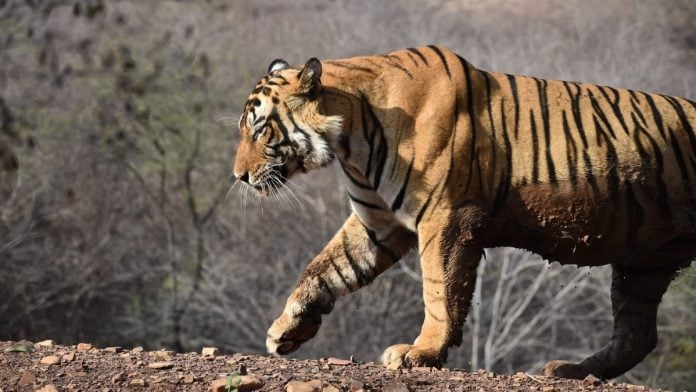
Sawai Madhopur: He walks slowly, almost bored. Then a shutter clicks and he spins around. A still-raw scar cuts across his nose. It is the new recognition mark of Jai, the most dominant male tiger at Ranthambore National Park in Rajasthan. It is also a sign of the brutal fight for supremacy inside a reserve running out of room.
Jai earned his scar this April in a fight to the death. The 10-year-old ambushed and killed a rival male tiger less than half his age, leaving the challenger badly mauled. Now beginning to edge past his prime, he is still violently defending his vast range of 60 square kilometres—more than any other tiger here. But he can only do it for so long.
The pressure is mounting with each passing day. Ranthambore’s tiger population has increased from 66 in 2025 to around 75 in 2026, and now younger males are muscling in to carve out their own territory. Forest officials say the space crunch is already causing territorial fights and driving tigers toward the reserve’s edges. In nine years, nine tigers reportedly died in clashes over territory. If Jai falls, it could set off a bloody chain reaction. It would see younger males fighting over 60 square kilometres of territory. Resident cubs could be killed. And more tigers could move toward areas inhabited by people.
“Jai has frequently sustained injuries and inflicted injuries on rival males while defending his domain,” said Mohammad Mairaj, a field biologist at Ranthambore National Park. “When an intruding male enters his range, Jai tracks and chases the intruder until they are forced out of his territorial boundaries. These encounters almost always result in physical fights.”
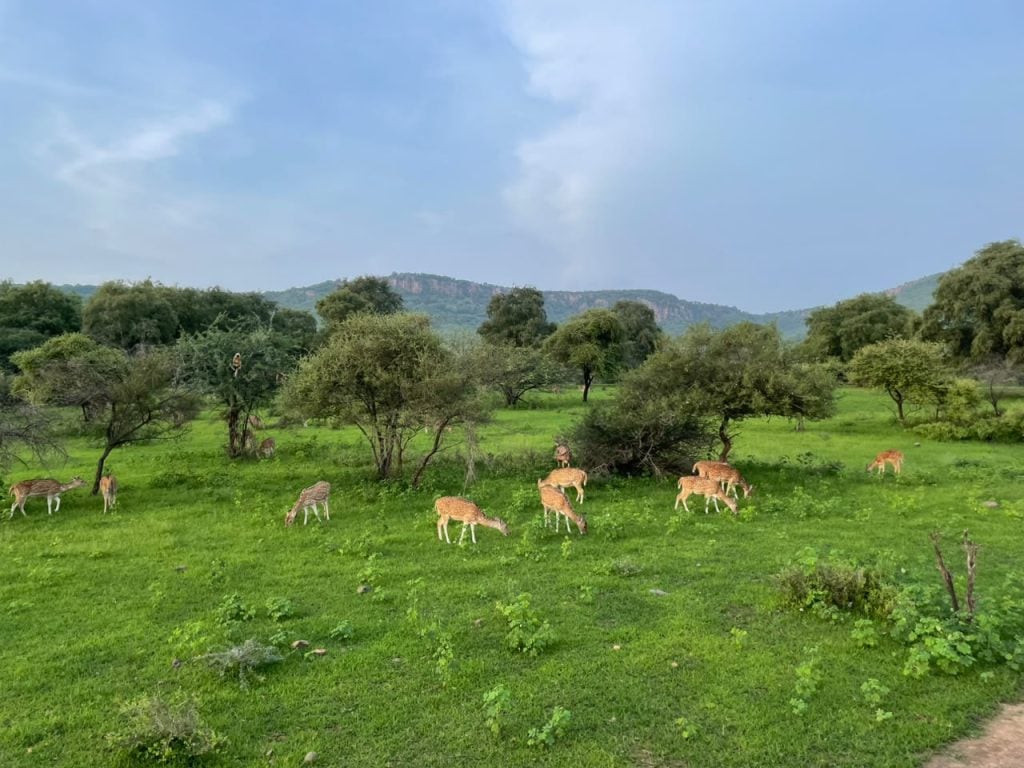
The monsoon hasn’t been nice to Jai, whose designated name at the reserve is T-108. The rain has made hunting difficult. But he is showing no signs of ceding ground.
He sprays urine on trees, scrapes the ground and leaves claw marks behind before moving uphill—all markers to warn other tigers off.
Jai has frequently sustained injuries and inflicted injuries on rival males while defending his domain. When an intruding male enters his range, Jai tracks and chases the intruder until they are forced out of his territorial boundaries. These encounters almost always result in physical fights
– Mohammad Mairaj, field biologist
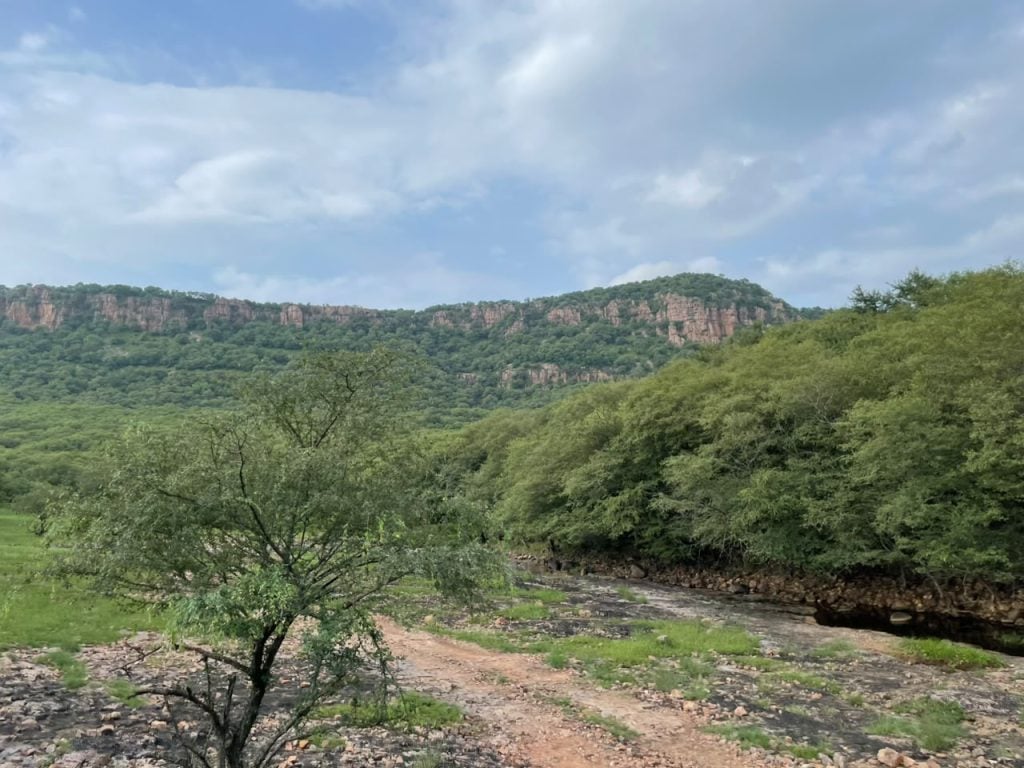
Ranthambore spans 1,334 square kilometres and has 10 core safari zones. Of its total tiger population, around 55 to 60 are regularly sighted in these zones.
Jai’s territory stretches from the Phalaudi Range into Zone 6 and across Zones 7, 8, 9 and 10, with parts of it in the Range of Project Tiger (ROPT) forest.
It’s an unusually wide sweep for a tiger his age.
“He is the most dominant tiger of the RTR, managing around a 60 square kilometre area,” said Manas Singh, Deputy Conservator of Forests, Ranthambore Tiger Reserve.
Also Read: A revenge drama at Cauvery Wildlife Sanctuary. Killings, bombings, Karnataka vs Tamil Nadu
One battle ends, another begins
Earlier this year, a four-and-a-half-year-old male tiger, T-2402, went missing for nearly one-and-a-half months. Forest officials grew anxious when he stopped appearing on camera traps.
“Four teams were deployed to scan the rugged edges of the Phalodi Forest Range. The search spanned multiple surrounding corridors, including the Indargarh range and borders towards Madhya Pradesh, looking for any signs of dispersal,” said a forest safari guide.
Then searchers made a discovery at Peeli ka Khad, a ravine on the 500-foot-high Hindwad Hill in the Phalodi Forest Range. It was the severely mauled carcass of T-2402.
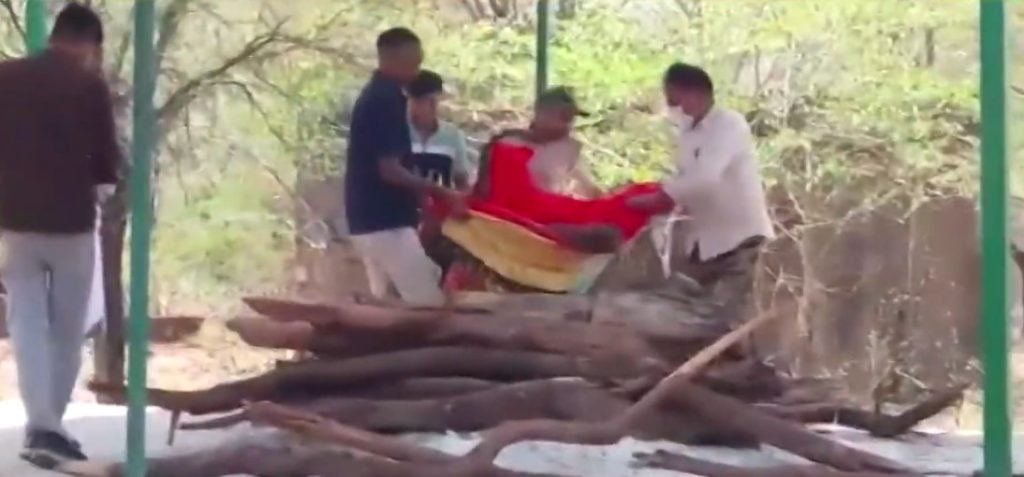
A preliminary examination revealed deep canine bite marks on the rear of the tiger’s body, indicating a rear ambush or a chase during a territorial fight. The forest guide said T-2402 likely retreated up the hill to hide and escape, where he eventually succumbed to his injuries.
The fight in April took place in an overlap zone where Jai and younger males frequently move to establish dominance.
In 2019, Veeru was killed by T-42, popularly known as Fateh, in a fierce territorial fight in Zone 10. This incident changed Jai’s behaviour forever
– Ramveer Gurjar, safari guide
Jai, however, was not unscathed, with the scar on his face the most visible sign of the confrontation. And the battles have not ended.
He is much older than the younger males straying into his territory, and his range now has several points of overlap with neighbouring males — with each incursion bringing the possibility of another face-off.
“If another male enters his territory, it typically leads to territorial disputes. For instance, he recently engaged in a physical skirmish with T-129 in the Zone 10 area,” Singh said.
Bloodshed in the family
Long before he became the dominant male, Jai was part of another deadly conflict for survival. The fallout was the killing of his brother and the death of a child in a nearby village.
Jai was born in 2016 to T-08F, lovingly called Ladli, and T-34M, or Kumbha, in the Kundal area of the forest reserve. As a cub, he had a constant companion— his brother. The two cubs were named Jai and Veeru by local guides and tourists.
They moved together until they were around two-and-a-half years old. Then, Veeru died.
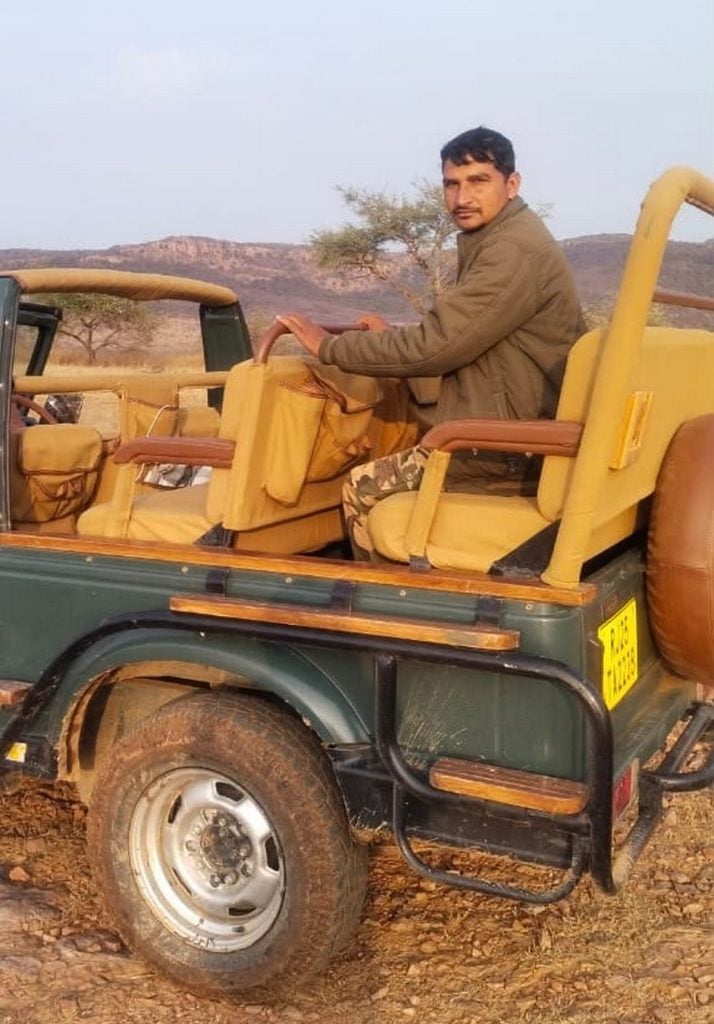
“In 2019, Veeru was killed by T-42, popularly known as Fateh, in a fierce territorial fight in Zone 10. This incident changed Jai’s behaviour forever,” Ramveer Gurjar, a 48-year-old safari guide, told ThePrint.
Veeru suffered about 35 severe wounds across his legs, back and neck from the fight. The forest department tranquilised and caged him for emergency medical treatment, but his condition worsened and he succumbed to his wounds.
“Jai began to expand his territory since then. Within a year, he became aggressive and ventured into Zone 9. Fateh disappeared in early 2020. We aren’t sure whether Jai avenged his brother, but it’s widely speculated since he was lingering near Fateh’s territory during that time. That’s how he captured Zone 10,” Gurjar said.
The forest department’s camera-trap records have followed Jai from his early years, with his distinctive stripe pattern serving as an individual identification. His initial territory included Jivraj ki Bavdi, Chidi Kho, Kailashpuri and Jhojheshwar Antri in the Phalaudi Range.
That changed soon.
Singh said the decisive expansion happened in 2024, when Jai moved down from the Zone 10 area, took over the territory of the late T-58M, known as Rocky, and pushed into the range of another male, RBT101M, in the ROPT Range.
“Jai ruled over the territory of Rocky, and following the death of T-2402, he also took over his territory. This shift also forced T-2310M to retreat toward the Balas area and T-101M toward Gupta Anicut and Kundi Road,” he added.
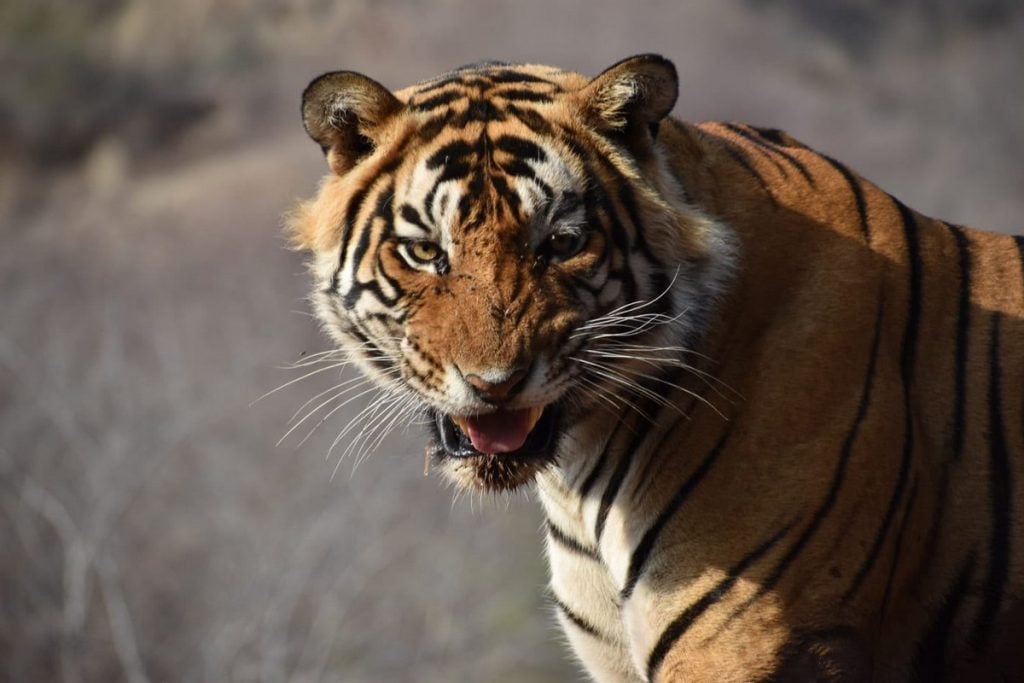
As Jai grew into a massive male—more than 240 kg and six feet tall—some nicknamed him “The Hulk”. He frequently clashed with neighbouring males such as T-62 and T-120 as their boundaries intersected.
Jai’s territorial movements, however, extend toward the forest’s edges, bringing him at times close to villages where fields and grazing areas border the tiger habitat. For people living in these areas, sightings of the alpha male are common.
“He has a history of straying outside the boundaries of the reserve and entering nearby village areas. I have seen Jai several times near the village areas,” said Rajesh Aijint, who lives in a nearby village.
Jai’s expanding territory also brought him into conflict with people.
In 2019, when he was an active three-year-old sub-adult, Jai strayed deep into the periphery near Dangarwara village. A 10-year-old local boy who had gone to the fields was attacked and killed by Jai. When forest department officials rushed to the scene to investigate, they set up camera traps and tracking teams. Jai was found a short distance away, actively feeding on a fresh cattle kill near the site of the attack.
The forest department placed Jai under intense surveillance to determine if he was a repeat threat, though the attack was eventually deemed an accidental confrontation because the village boundary overlaps with the forest range.
Aijint, however, said villagers believe Jai to be responsible for another child’s death.
“In 2024, Jai also attacked another six-to-seven-year-old child in Todra village. Later, the child succumbed to his injuries,” he claimed.
What happens when Jai falls?
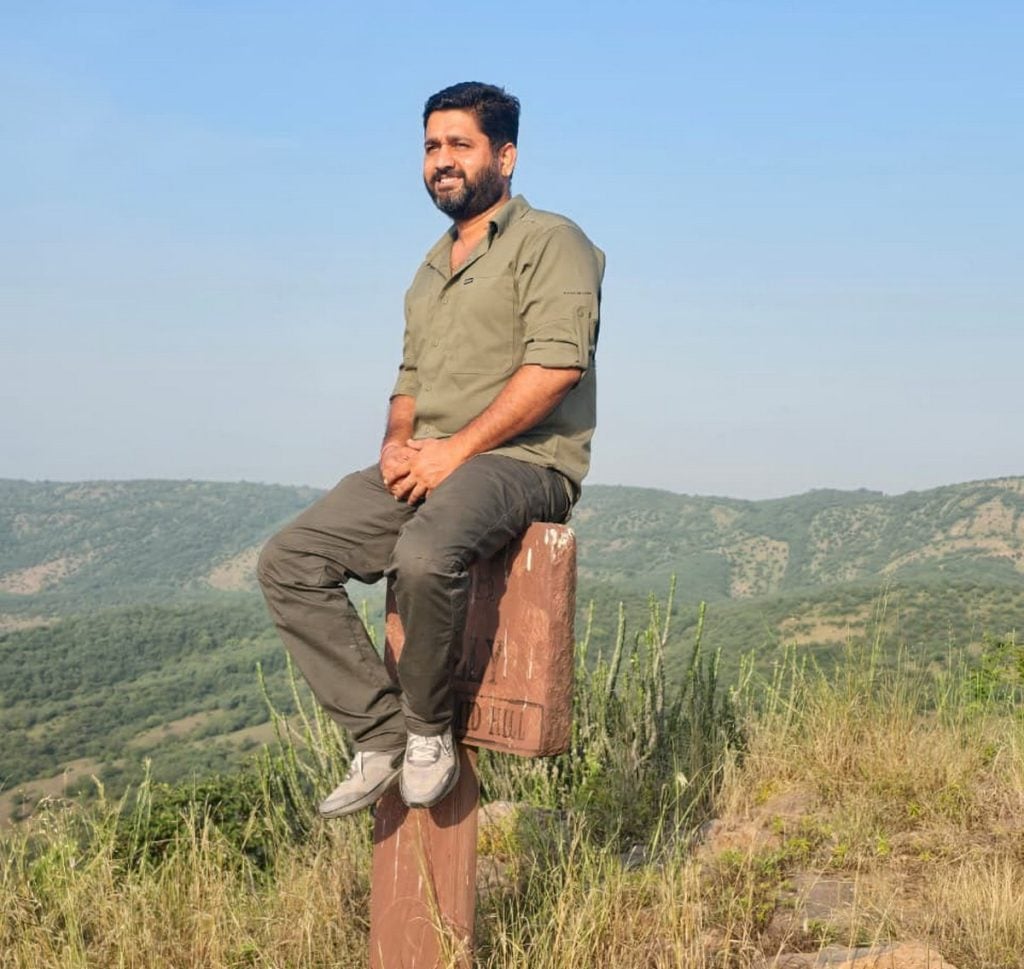
Mairaj, who extensively follows Jai’s movements, says the ageing tiger has remained “remarkably” consistent in his territorial behaviour despite younger males prowling in the vicinity.
Jai’s range is surrounded by three to four competing males along different stretches of Zones 6 to 10, leading to frequent skirmishes. He must also contend with younger males dispersing from their natal territories in search of space of their own. But, Mairaj says, “no one is a match for him.”
Apart from holding sway over his range, Jai is a breeding male whose disappearance could alter the demographic structure of the tiger population in the region. His range overlaps with those of two to three resident females, and two are currently raising cubs fathered by him.
“Jai exhibits strong paternal tolerance, and is frequently seen in the company of the females and their cubs while watching over them,” Mairaj said. “In Zone 10, he is often observed spending time with his cubs, resting alongside them and sharing his kills.”
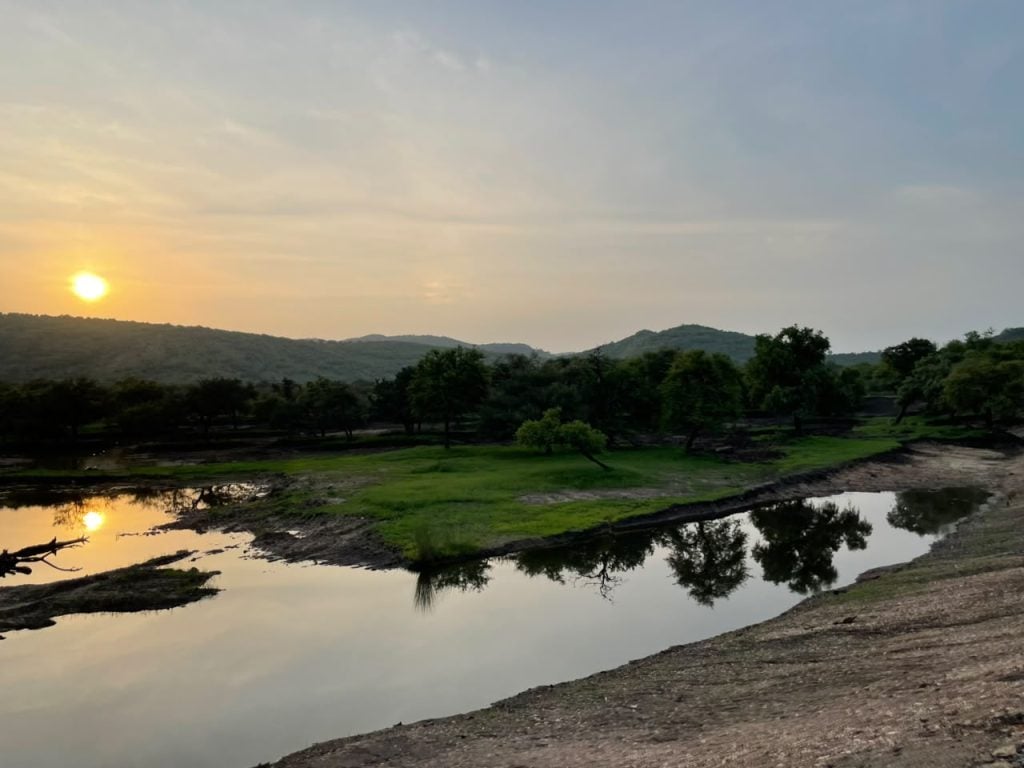
Jai continues to hunt regularly. Sambar deer is his preferred prey, though he also hunts chital, wild boar and nilgai.
“Sambar deer is his preferred prey due to its large body mass, which provides him with sufficient food for three to four days,” Mairaj said.
Removing Jai would create a massive territorial vacuum across Zone 6, Zone 10, and the Phalaudi/ROPT ranges. Neighbouring males would likely scramble to reoccupy or expand back into his territory, triggering a wave of intense territorial clashes and shifting current mating and cub-rearing dynamics with the existing females in the area
– Manas Singh, Deputy Conservator of Forests, Ranthambore Tiger Reserve
Before Jai, the territory had belonged to two males. Fateh was one of Ranthambore’s dominant males and held sway over the Kuwalji and Zone 10 areas. He was known for his aggressive behaviour and was frequently seen in the southern ranges of the reserve. By early 2020, however, Fateh had disappeared from the landscape, leaving his territory open to a new male.
Then came T-58, or Rocky. He dominated Zones 6, 7, 8 and 10, with his range stretching from Jamoda towards Maha-Khoh and, at times, into Kundal. Rocky remained in the landscape until 2024, when he was found dead near Hindwad village at about 13.5 years of age. By then, Jai had already become a younger challenger in the same area.
As older males disappeared or weakened, Jai moved into the space they had controlled. The same cycle will likely catch up with him, but Mairaj says there are no signs of it yet.
“At approximately 10 years old, Jai is in the prime adult category of his life cycle. Recent camera trap monitoring shows no physical or behavioural signs of ageing or physical decline,” he said.
As of now, Jai has not yet retreated but the landscape around him is already tightly occupied. Any change in his hold over this territory could unsettle several territories at once.
“Removing Jai would create a massive territorial vacuum across Zone 6, Zone 10, and the Phalaudi/ROPT ranges. Neighbouring males would likely scramble to reoccupy or expand back into his territory, triggering a wave of intense territorial clashes and shifting current mating and cub-rearing dynamics with the existing females in the area,” Singh said.
Also Read: Orangutans are listening to Indian classical music in Odisha zoo. It’s a de-stresser, says official
A dominant male in exile
Around 180 kilometres from Ranthambore, Sariska is home to 56 tigers. None of them currently covers as much ground as Jai. Sariska has recovered from the 2004 extinction crisis, but rising tiger numbers are now heating up territorial competition.
“In Sariska, tiger territories are shrinking rather than expanding due to intra-species competition as the number of individuals is increasing,” said Abhimanyu Saharan, DFO of Sariska Tiger Reserve. “Tigers being present across several zones is also not unusual in Sariska. An established territory usually remains stable unless another male challenges its occupant.”
Adding to the pressure are villages inside Sariska’s core area, as well as roads and traffic to the Pandupol Temple at the centre of the reserve. Ranthambore is less fragmented. Though the Trinetra Ganesh Temple pulls large crowds, visitors are largely channelled along a single route to the fort, while many villages have been relocated from the core valleys.
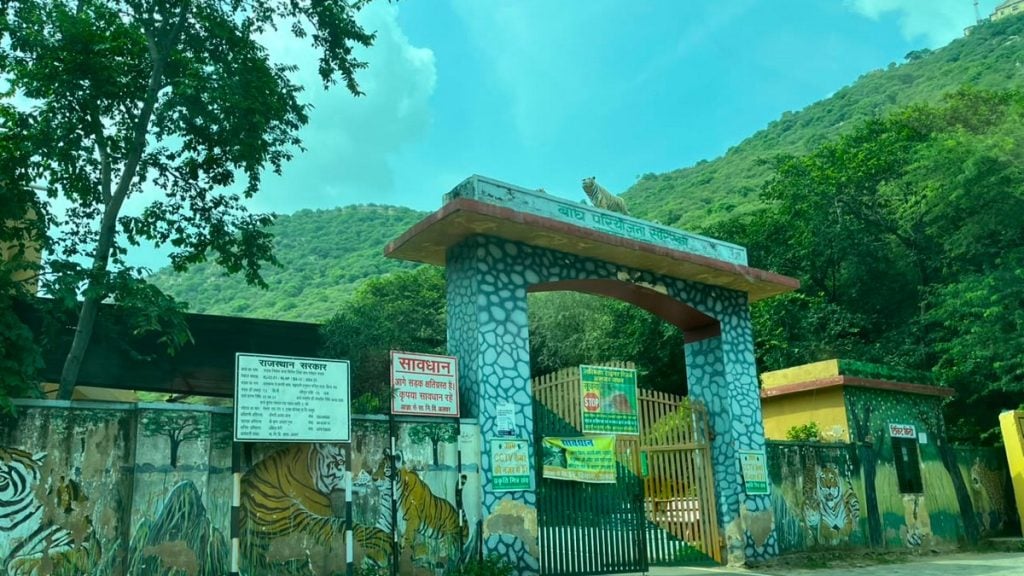
“Sariska still has 24 villages inside its core area,” said N Gokulak Kannan, a former field biologist at Sariska Tiger Reserve and now a scientific consultant with the National Tiger Conservation Authority in Bengaluru, adding that a relocation programme began in 2008, but only five villages have been fully relocated so far. “Once we relocate more villages, we will get a good habitat for accommodating more tigers.”
Forest guides say tigers in Sariska have lower movements than Ranthambore because massive, rugged terrain and low tiger density eliminate the need for intense territorial patrolling, allowing them to remain hidden in scattered, deep valleys.
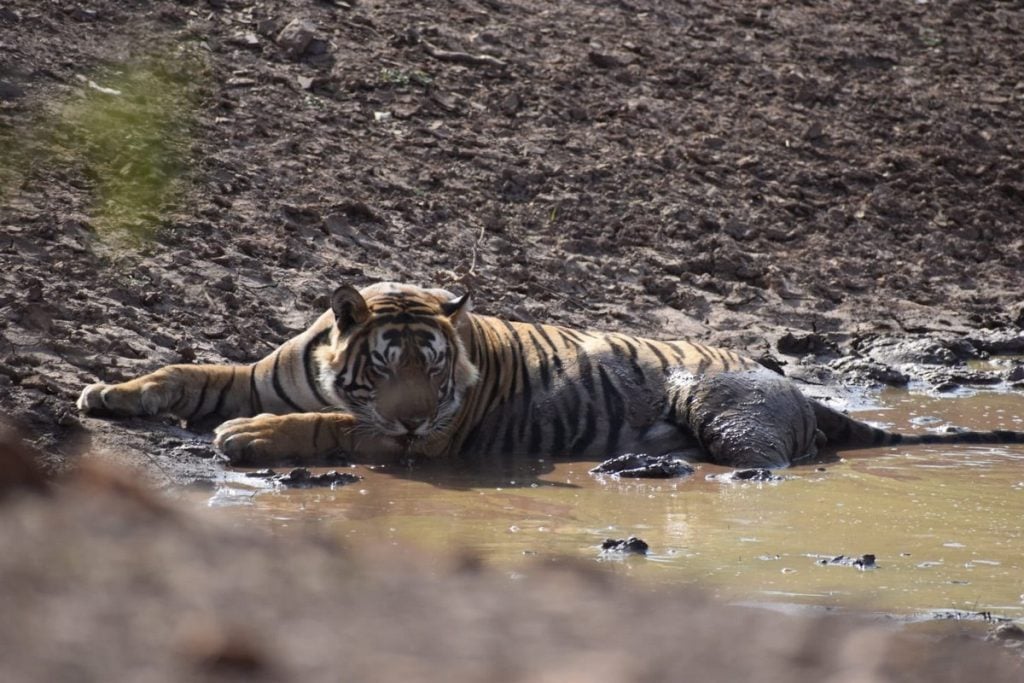
While Sariska has no single dominant male now, a few years ago it did: ST-15, who ruled over around 130 to 140 square kilometres. Born the same year as Jai, he is still alive but is now a shadow of his former self. In ST-15’s case, the response to younger adversaries was retreat rather than attack.
“In his prime, from four to eight years of age, he was feared by other tigers. His range spanned from Tehla to Sariska in 2022. However, in early 2023, his area started to diminish. Now, it has reduced to just 20 square kilometres due to the presence of other younger males surrounding his area,” said Kannan. Currently, there are four young male tigers near ST-15’s area.
In 2023, he lost a territorial battle and could not recover from the defeat. A sort of exile followed.
“After that fight, he came to his current location and never left the area. The other tiger started suppressing him more and more, reducing his area drastically,” added Kannan. “The tiger suppressing him now is around five to six years old, in its prime adult stage. It is not necessary that they will indulge in fighting. Scent marking is a good way of communication. If the tiger is bold enough to challenge, then they will fight. Else, they will back off.”
Back in his glory days, he had displaced ST-6, an older male that had occupied a territory of around 200 square kilometres.
“Now, it’s time for him to depart,” Kannan said.
(Edited by Asavari Singh)