



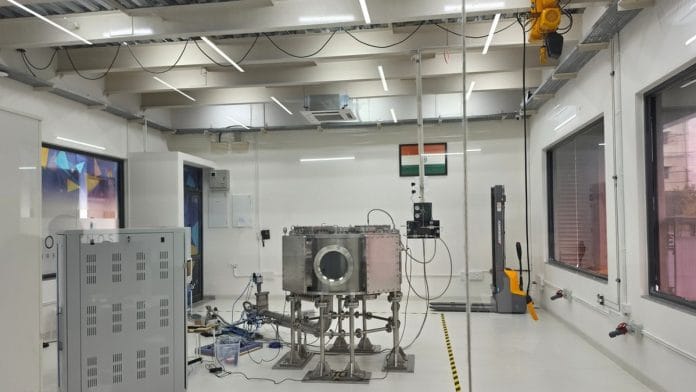
Bengaluru: In a bright white lab on the outskirts of Bengaluru, PRAGYA whirs gently behind a glass partition. It is India’s first privately built nuclear fusion tokamak reactor and is almost ready for its reveal to the world. The machine is an early step toward a technology that could one day transform how electricity is generated. For Bengaluru startup Pranos, it is the culmination of years of research and struggle.
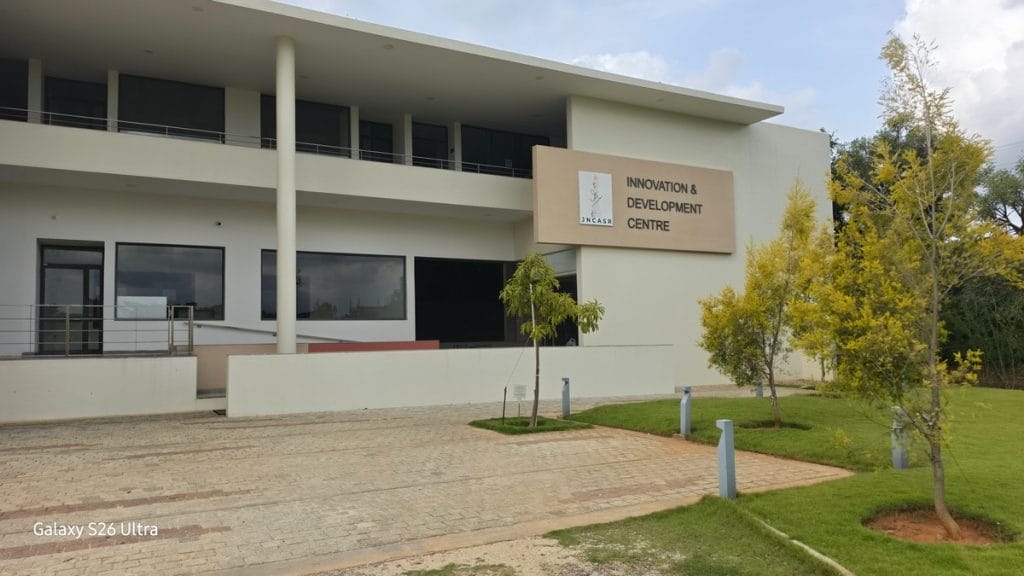
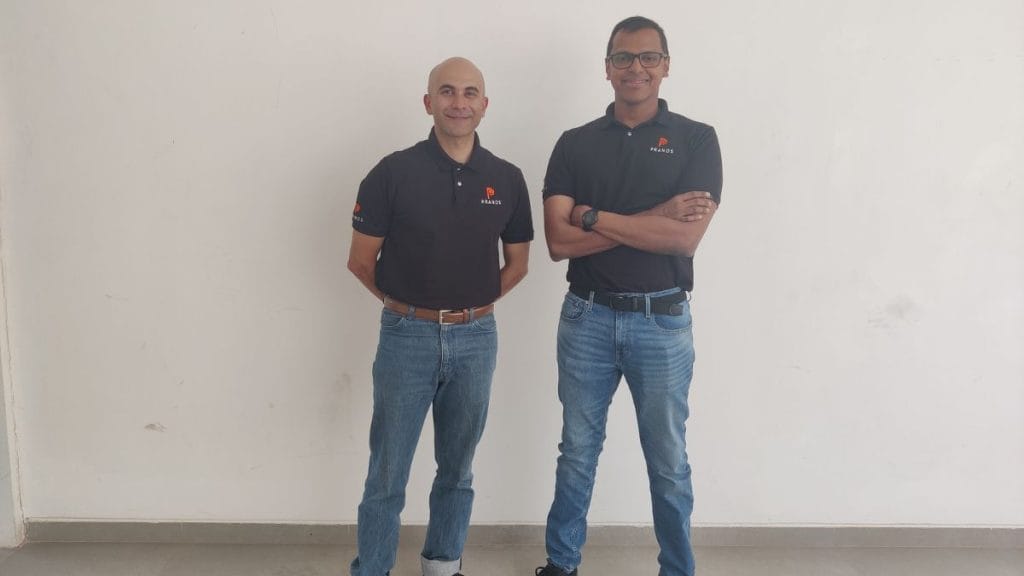
Founders Shaurya Kaushal and Roshan George and their 12-member team of computational scientists, engineers and physicists are working frantically at the Innovation and Development Centre of the Jawaharlal Nehru Centre for Advanced Scientific Research (JNCASR). The immediate deadline is 3 September, when PRAGYA will be shown to a closed circle of investors and friends. A wider public unveiling is planned for later in the month.
One of India’s first nuclear fusion startups, Pranos has come a long way since ThePrint last profiled it in 2025. Back then, Kaushal and George, just 31 and 30 years old respectively, were still trying to navigate their way through a new, clean energy source. There was no set formula and no path paved to follow. After all, this had never been done before in India. All they had were big ambitions and a hunger to build India’s nuclear fusion capabilities. The office was bare and the venture was bootstrapped with a government seed grant, plus the founders’ own savings and money from family and friends.
Now there’s a team of 12, they’ve built PRAGYA, and are gearing up to launch a full-scale reactor by 2030—they’ve already named it ‘Praniq’. In March, the company raised $6.8 million in a round co-led by pi Ventures and Ankur Capital, taking its total funding to a little over $7 million.
“There are about five nuclear fusion reactors around the world that are preparing to be launched around 2030 and we want to be one of those,” Kaushal said.
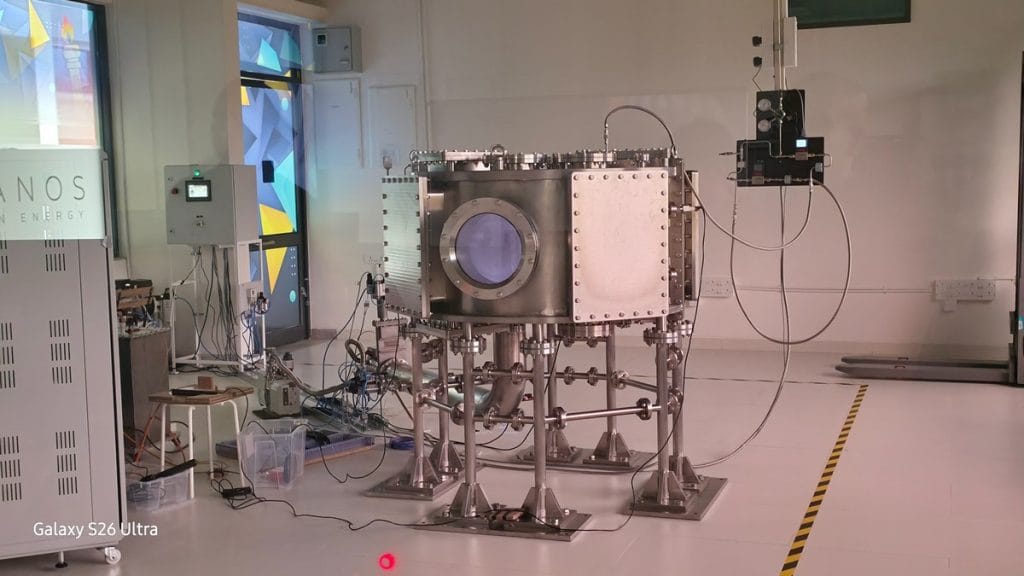
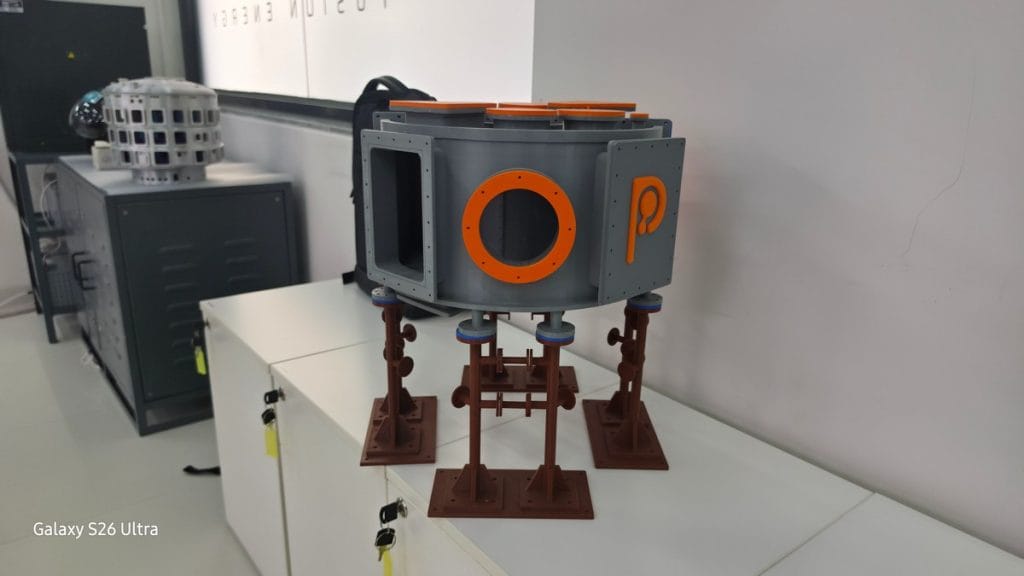
Behind him in an enclosure is the machine everything centres on: PRAGYA, a squat, four-foot-tall steel tokamak.
PRAGYA cannot conduct nuclear fusion. That would be the next stage of operations for us. But it has laid a critical foundation for our future experimentations, eventually leading to a full-fledged nuclear reactor
– Shaurya Kaushal, Pranos co-founder
These machines are at the heart of the global quest to harness nuclear fusion and are used in most fusion experiments. A tokamak holds searing hot plasma in place with powerful magnetic fields so that fusion can eventually be triggered and controlled. PRAGYA cannot produce fusion yet, but it’s the starting point for Pranos on how to get there.
“This is Pragya. It means first knowledge. We thought this would be an apt name for this reactor as it will become the test bed for the future reactor. This is where it all started. We have designed and built this from scratch, and it has been tested and trained for what’s to come,” Kaushal said.
Fusion works by bringing two light atomic nuclei close together so they fuse into a heavier nucleus and release energy. It’s a difficult tech to crack and more crucial than ever as the race speeds up to turn experimental fusion into a commercially viable source of energy. If mastered, fusion could become one of the cleanest and most reliable sources of power.
The biggest global project, of which India is a part, is the International Thermonuclear Experimental Reactor (ITER) project in France. But countries such as China, Japan, and South Korea are also developing individual machines to tackle the challenges of sustaining hot plasma, managing extreme heat and developing materials that can withstand intense neutron bombardment—all the conditions needed for sustaining a nuclear fusion reaction. In the US too, home to more than half of the world’s private fusion companies, there’s a focus on smaller tokamaks, stellarators and laser-based fusion. Fusion companies the world over raised $2.64 billion in the 12 months leading up to July 2025, up by 178 per cent from the previous year.
India has so far done most of its fusion research through government establishments such as the Institute for Plasma Research in Gandhinagar. The early entry of private players such as Pranos could accelerate the journey from laboratory experiments to commercially viable fusion.
Also Read: 6 scientists, 120 research papers, 1 big bet—this IISc startup aims to put India on GaN map
India’s first private tokamak
The two-room lab could pass for any Bengaluru tech startup, with young scientists and engineers in Pranos T-shirts busy at their workstations. Almost.
With an Indian flag on the wall behind it, the tokamak vessel offers a sneak peek, through a clear viewport, of plasma—the ultra-hot, ionised fourth state of matter—cooking inside. The structure is attached to a fuel pipe and a web of cables.
Here, Kaushal, a computational fluid dynamics specialist, and George, a computer science engineer, are conducting final tests before PRAGYA makes its debut. On the other side of Pragya’s abode is the 12-member team working day and night to bring it alive.
The journey so far for Pranos has not been easy. Nuclear fusion is a difficult technology, with researchers tasked with building a machine that can create and control plasma hotter than the Sun’s core. And because the field is still globally nascent, India has a limited pool of specialists with the skills needed to build fusion infrastructure from scratch.
But over the past year at Pranos, the founders have assembled a team spanning the competencies needed.
There’s Saptak Sarkar, a computational scientist with a PhD in physics from Washington State University who works on quantum fluids, turbulence and density functional theory; Ravi Gupta, a mechanical engineer with a PhD in aerospace engineering from IISc whose expertise lies in combustion diagnostics and fluid instabilities; and Rohit Jain, a materials scientist with a PhD from the University of Houston and a B-Tech degree in metallurgical engineering from IIT Bombay.
The core team also includes Rohit Babu, a computational scientist with a PhD from the University of Florida; Santosh Ansumali, a professor at JNCASR; and Animesh Kuley, a faculty member at IISc.
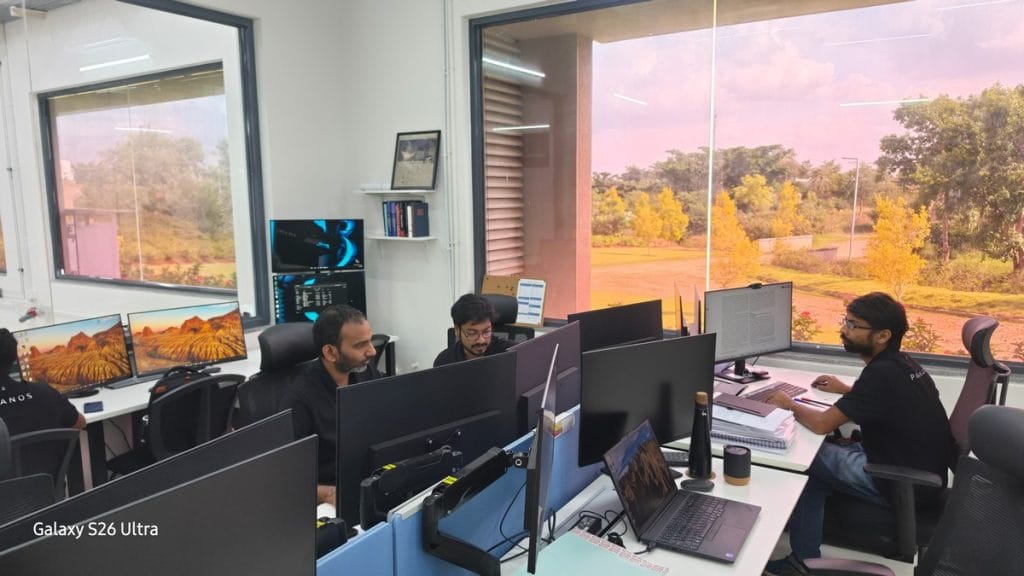
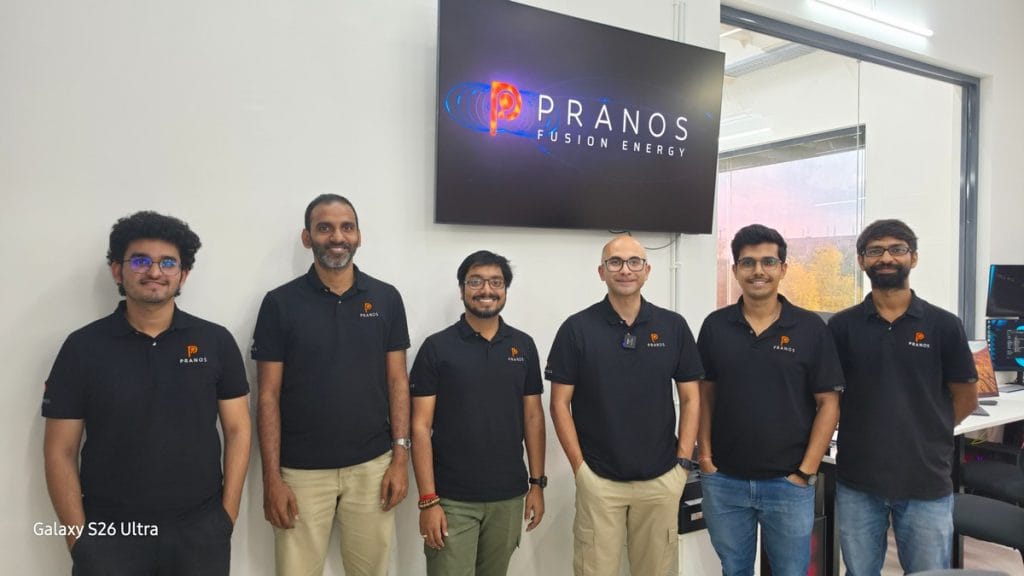
Each has a task to monitor: plasma temperature, density and pressure, fuel injection, safety interlocks. The process is nothing short of a well-oiled military control room. To get things rolling, a command is conveyed via a walkie talkie from the control room to the tokamak lab. Once the systems are green-flagged, PRAGYA begins its run.
The tokamak first creates an extremely high vacuum inside the vessel. Hydrogen isotopes—hydrogen or deuterium—are then injected into the chamber and heated until the atoms lose their electrons, turning the gas into an electrically charged plasma.
PRAGYA, however, cannot do what a full-scale fusion reactor must. That would mean heating the plasma to around 100-150 million degrees Celsius so the hydrogen nuclei can overcome their mutual electrical repulsion and fuse. Because the plasma cannot be allowed to touch the walls at these temperatures, tokamaks use powerful magnetic fields to confine and shape it inside the chamber.
“Pragya cannot conduct nuclear fusion. That would be the next stage of operations for us. But it has laid a critical foundation for our future experimentations, eventually leading to a full-fledged nuclear reactor,” Kaushal said.
Competing with the world
Pranos might be breaking new ground for private fusion in India, but globally the technology is moving at lightning pace. With its immediate funding and technology hurdles sorted for now, the team is determined not to miss the bus.
They are making sure to stay up-to-date with the latest technology and research, constantly ensuring that their hardware and expertise do not miss the mark. They have built the “brain” of the Praniq reactor, currently being tested on PRAGYA, while also manufacturing magnets in-house and building industry expertise by skilling people.
In early August, China raised the stakes when it successfully tested a giant 582-tonne superconducting magnet for its next-generation fusion project. Built by the Institute of Plasma Physics in Hefei, it is the largest fusion reactor magnet ever constructed.
This magnet will be used in China’s Burning Plasma Experimental Superconducting Tokamak (BEST), often called an “artificial sun”. China is reportedly aiming to complete BEST by the end of 2027 and demonstrate fusion-based electricity generation by 2030.
Then there is ITER in France, the ambitious international attempt to prove fusion can work at scale. ITER is expected to begin deuterium-tritium fusion reactions by 2039, which has the potential to produce around 500 MW of fusion energy.
Government regulations need to come in when the technology has matured. Look at the case of the space sector in India. ISRO set the ground for years before the doors were opened for private players to step in. Nuclear fusion is a promising but futuristic technology and this is the stage of R&D
– Senior officer, Department of Atomic Energy
India’s fusion leap
Within India too, research on nuclear fusion is gathering pace.
The Institute for Plasma Research in Gandhinagar has two operational tokamaks: Aditya-U—an upgraded version of India’s 1989 tokamak—and the Steady-State Superconducting Tokamak-1, India’s more technologically sophisticated machine. The IPR is also working on a small spherical tokamak, which differs from the traditional doughnut-shaped machines and could eventually make fusion devices more compact.
But PRAGYA is the first tokamak in the country to come from a private player. It is a pioneer in opening up a second route for fusion in India, driven by private capital and commercial pressure.
A fillip has come from the much-needed easing of India’s nuclear rules. The SHANTI Act, passed in 2025, has opened the doors of India’s nuclear power sector to private players, allowing them to invest and research more freely.
Experts say the Act is centred on nuclear fission and is still silent on fusion, but it signals greater government willingness to bring private players into clean nuclear energy.
“Government regulations need to come in when the technology has matured. Look at the case of the space sector in India. ISRO set the ground for years before the doors were opened for private players to step in. Nuclear fusion is a promising but futuristic technology and this is the stage of R&D,” a senior officer of the government’s Department of Atomic Energy explained.
Also Read: How IITM Pune is trying to crack India’s weather
The next step: Praniq
Pranos will not stop with PRAGYA. The next step is a full-fledged nuclear fusion reactor called Praniq.
In essence, PRAGYA is a scaled-down version of Praniq, where the basic simulations and tests are being done. A trailer before the final movie.
Praniq, estimated as a $100–200 million project, is intended to be a net-gain reactor. The goal is not just to conduct nuclear fusion, but to produce more energy than the reactor consumes.
“Demonstration of Praniq will prove that there is a viable ecosystem and the expertise for nuclear fusion in India. We want to align ourselves with the national ambition eventually, where we can in some way become a partner with the government in developing this technology at a larger scale,” Kaushal said.
Dressed in his black Pranos T-shirt, Kaushal quoted Shah Rukh Khan in Om Shanti Om: “Picture abhi baaki hai mere dost”— the movie isn’t over yet.
“Praniq is the natural stepping stone towards us going toward the future of fusion, which is our plan, where fusion energy can actually power bulbs, human life,” he said.
(Edited by Asavari Singh)