





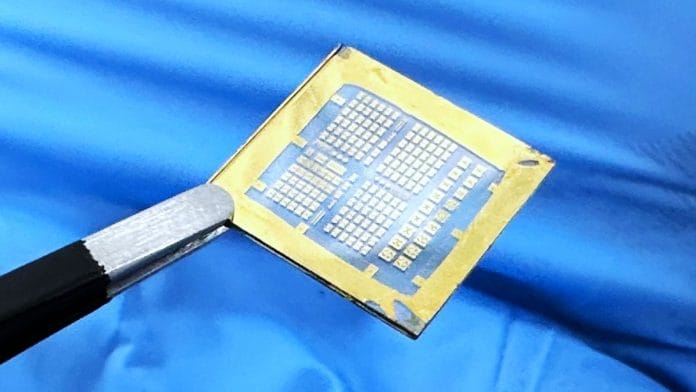

Bengaluru: In the Innovation Centre of Bengaluru’s Indian Institute of Science (IISc), seven researchers are determined to rebrand India’s semiconductor industry. Ditching traditional silicon, the startup Agnit Semiconductors has become the country’s first Gallium Nitride-based semiconductor company. They are set to make the semiconductors faster, more efficient and reliable.
The humble lab at IISc is packed with the most advanced semiconductor devices in the country. The thermal chamber, semiconductor characterisation equipment and electrical test instruments are proof of the years of research that this lab has hosted. This is where Agnit was born–a venture to place India in the global market of gallium nitride semiconductors, even if not 100 per cent Aatmanirbhar.
Hareesh Chandrasekar, one of the co-founders and CEO of Agnit, said that while they are the first GaN-powered semiconductor startup in the country, his team of scientists and researchers has a collective experience of over 15 years in the field of Gallium Nitride.
The journey of taking GaN from the laboratory to a technology capable of competing in the real world has been long and challenging. Chandrasekar said that years of research, experimentation and refinement have finally begun to translate into tangible results. The team is ready to lead India into the global game of GaN semiconductors.
“The good thing is that unlike many other technologies, India is not too behind with the Gallium Nitride technology. We can catch up with the right incentives and policies from the government, and actually strive to fully design, develop and manufacture these here,” Chandrasekhar said, his tone sharp with excitement for the future.
Agnit might be leading the GaN revolution in the Indian semiconductor industry, but the technology is not new. Countries including China, the US, Germany and Taiwan have already established themselves as top players in the international market.
With the government now doubling down on its push for the semiconductor industry, with its National Semiconductor Mission 2.0 getting a budgetary outlay of Rs 1,27,500 crore, they now can catch up and have a shot at global competition.
For Chandrasekar, the goal is clear–in the next five years, build a globally relevant product, which specialises in the design and manufacturing of GaN-powered semiconductors.
“There needs to be a concerted policy push. The government needs to be an active and willing partner. There needs to be more favourable policies, where the government also needs to act as customers,” he said.
The pioneers in the industry
The ‘magnificent seven’ of Agnit are no less than the Avengers of the GaN universe. Five professors and two PhD scholars have each come together with a unique speciality. They have collectively over 120 research papers to their names.
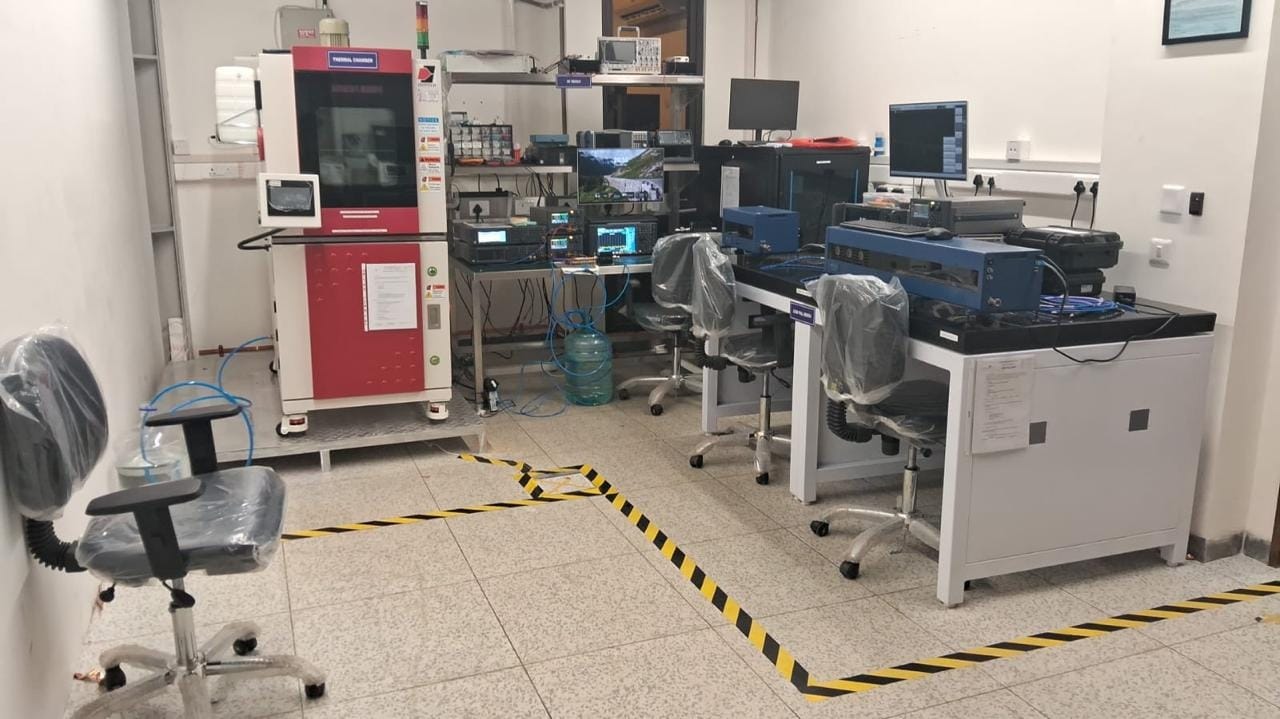
At first glance, the Agnit lab looks like a room full of computers and industrial equipment. Along one wall sits a large red thermal chamber, its glass door hiding a space where semiconductor devices can be subjected to carefully controlled temperatures. On the opposite side, blue and black electronic instruments are connected by a web of cables, with monitors displaying the measurements being collected from the devices.
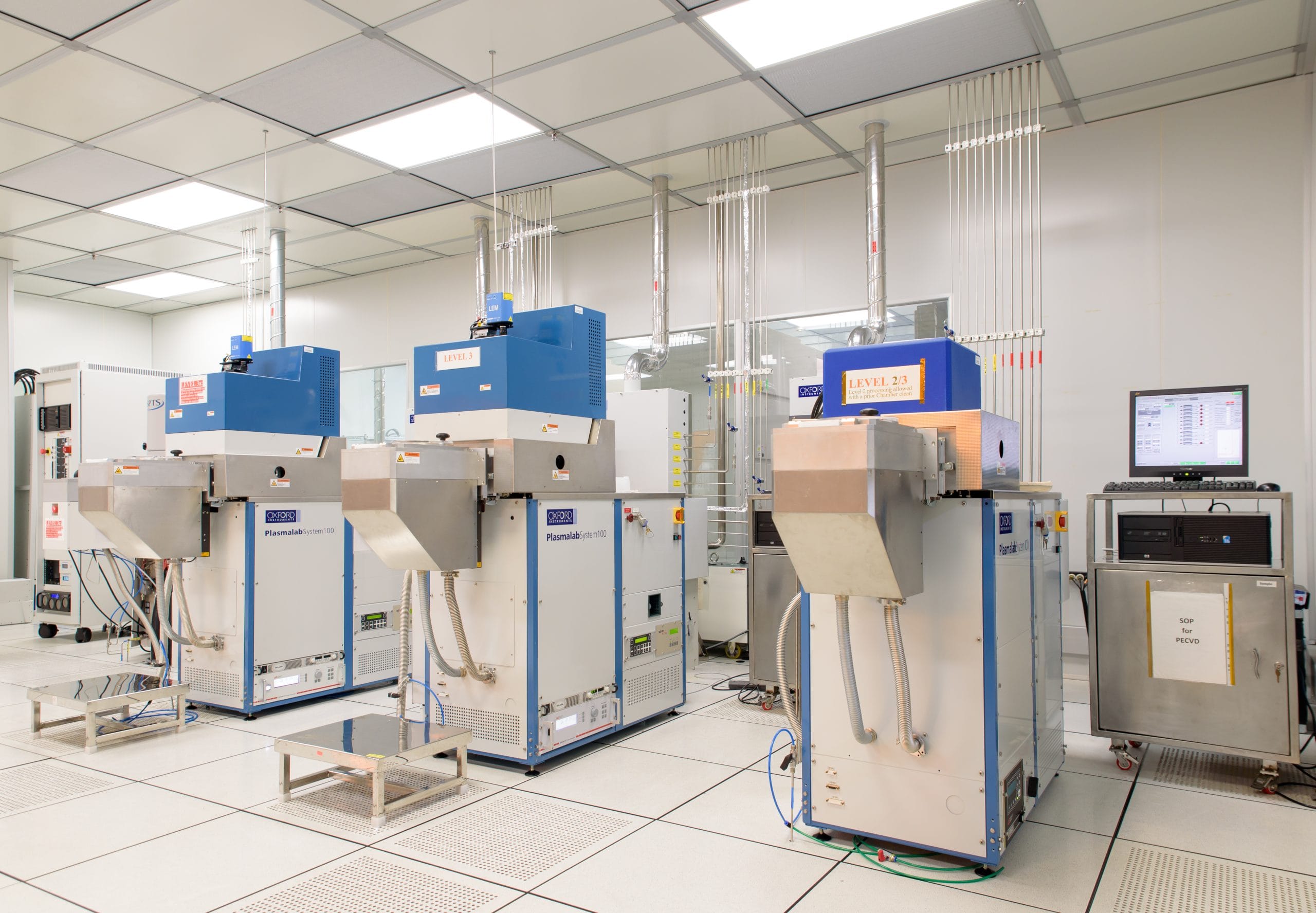
All of these devices work together with the utmost precision before GaN can finally find its way into fast chargers, electric vehicles, radars, and most importantly into semiconductors.
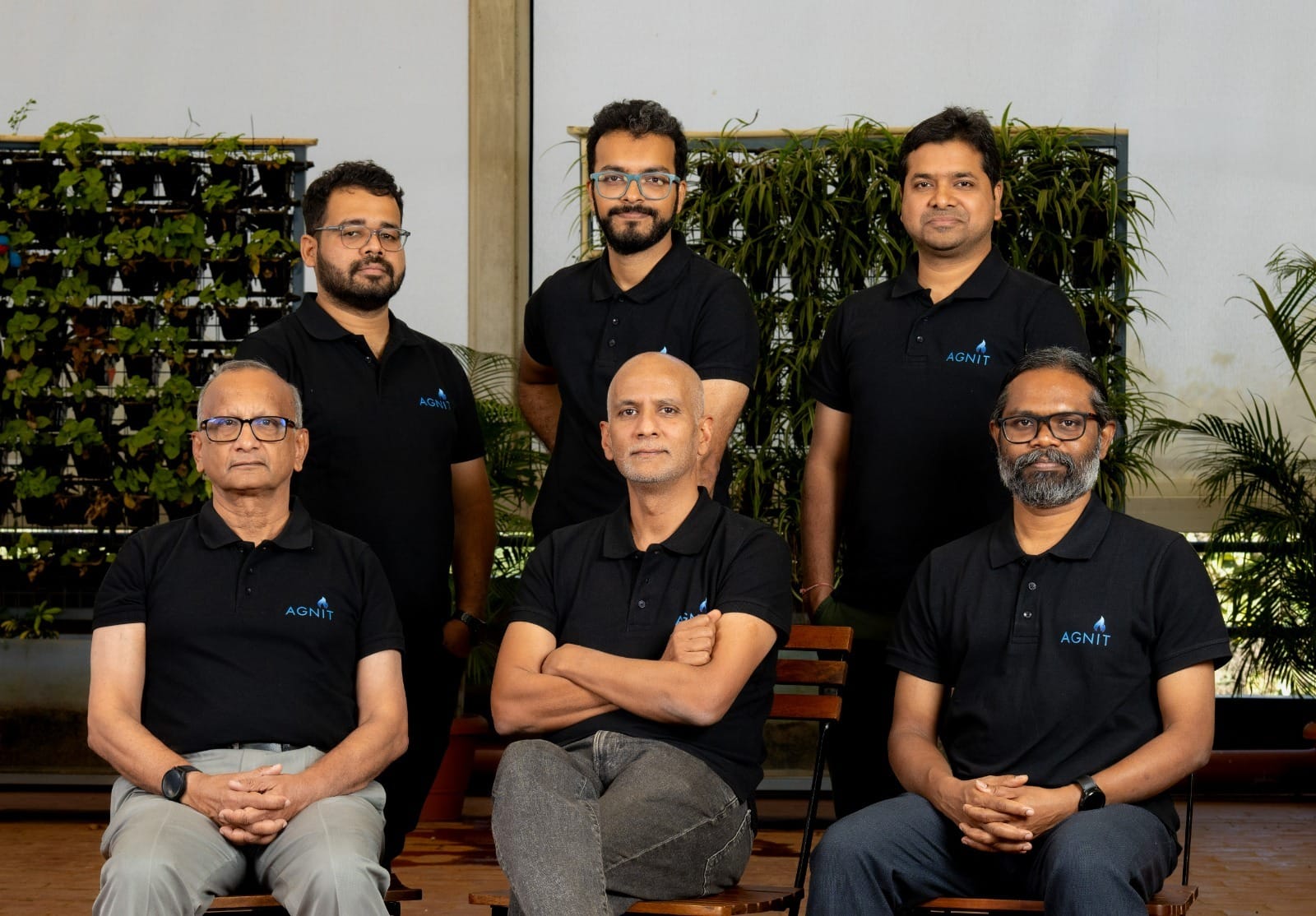
Outside this lab, the founders of Agnit are each other’s colleagues, teachers and students, but the moment the threshold is entered, they are partners. They joke around, argue, and always tend to seek each other out.
Chandrasekar is the “device guy”. He has worked for nearly a decade in the US as a silicon chip designer, before coming back to India to understand the GaN industry. His partner, co-founder Digbijoy Neelim Nath, is an electrical engineer with research expertise in wide band gap materials and devices, including gallium nitride-based transistors for power switching and radiofrequency applications.
Madhusudan Atre is a theoretical physicist with over 35 years of experience in the semiconductor and solar industry. Mayank Shrivastava, a professor and a PhD from IIT-Bombay, specialises in semiconductor device physics; Shankar Kumar Selvaraja, a photonics engineer from Ghent University, is an expert in photonic integrated circuits; and Srinivasan Raghavan brings decades’ worth of research and expertise in semiconductor fabrication processes.
Muralidharan Rangarajan, who was a pioneer in materials sciences and joined Agnit in their initial journey as one of the co-founders, passed away in 2024.
Unlike the common perception, too many cooks do not spoil the broth in this case. Here, they are an asset. Their meetings in the labs of IISc are often loud and animated, but always fruitful.
According to Agnit’s neighbours and the security staff at the Innovation Centre, on a daily basis, it is rare to see all six members in the lab together. They usually drop by in pairs or a group of threes and fours.
But now and then, usually around an important milestone, all of them come together. Diligent scribbling, long dramatic-looking conversations, and a final agreement. It is like Beethoven’s symphony. Tension builds, reaches a dramatic climax and then resolves into harmony.
“Interdisciplinary expertise helps us, especially when we are dealing with a completely new technology,” Chandrasekar said.
The founders say that while the journey for Agnit officially began in 2021, the team first got together in 2015 to make a proposal the Ministry of Electronics and Information Technology (MeitY) for a greenfield GaN foundry, a specialised manufacturing facility to produce GaN semiconductor chips.
In 2017, the government granted approvals to set up a Rs 3,000-crore foundry to produce GaN. This foundry was proposed to add to the existing facility at IISc’s Centre for Nano Sciences and Engineering (CeNSE) for producing GaN transistors on silicon wafers.
The story of Agnit’s naming is also as unique as its founders’ backgrounds. On paper, Agnit stands for Advanced Gallium Nitride Semiconductor Technology. Simple, direct, and catchy. But the name also means ‘infinite’, hinting at the infinite potential that the technology holds.
The technology
Gallium Nitride, or GaN, is a semiconductor material made from combining gallium and nitrogen. Just like silicon, it can be used to control the flow of electricity and form electronic components. But GaN has a crucial advantage–it is a wide-bandgap semiconductor, which means it can operate at higher voltages, temperatures and frequencies.
These advantages are already finding their way into everyday technologies such as fast chargers, electric vehicles and 5G and radar systems. GaN can also withstand higher electric fields before breaking down. This means that these devices can block high voltages using thinner semiconductor layers, which helps reduce their resistance when switched on, cutting energy losses and heat generation.
Despite its wide applications, the defence sector reaps the most benefits from this technology. GaN-based power amplifiers have the capability of generating strong radio signals with greater efficiency, helping radars detect and track targets at longer distances.
This is exactly the industry that Agnit is also tapping into. While it is ambitious in expanding its services in areas such as weather monitoring and telecommunications, strategic applications have remained its focus. In fact, at this stage, the company has already run five pilot projects for various government and private strategic customers. Chandrasekar told ThePrint that two of these products are not just designed indigenously but were also manufactured in India. These technologies will be used in radars, jammers, radios, etc.
“We hope we will get into production, commercial production, and volume production. We are doing the pilots for about five different use cases at the moment. We hope that at least two of them will scale up into volumes in the coming year. That is our target,” he said.
Dependence on the world
Companies like Agnit are not only driving innovation in India, but are also critical for reducing the country’s dependence on imported semiconductors and their parts.
NITI Aayog’s Trade Watch report for July-September acknowledged that India remains “heavily import-dependent for components such as semiconductors, integrated circuits, batteries, and displays, which dominate global electronics demand.”
“Overall, the analysis points to a dual reality that while India has made strong gains in trade and electronics assembly, sustaining long-term competitiveness will hinge on much deeper integration into global value chains,” the report said. “This transition requires moving beyond labour-intensive assembly toward higher value-added activities such as PCB (printed circuit board) design, semiconductor assembly and testing, power electronics, alongside improvements in logistics efficiency and regulatory simplification.”
Multiple government reports have also highlighted that about 90-95 per cent of India’s semiconductor and electronic-component requirements are imported. This means that India is heavily reliant on countries such as China, South Korea, Taiwan and Singapore for chips and related components.
But while understanding the responsibility that Agnit is to carry as India’s first vertically integrated GaN startup, Chandrasekar said that India needn’t strive to be completely self-dependent on every aspect of semiconductor design, production and manufacture.
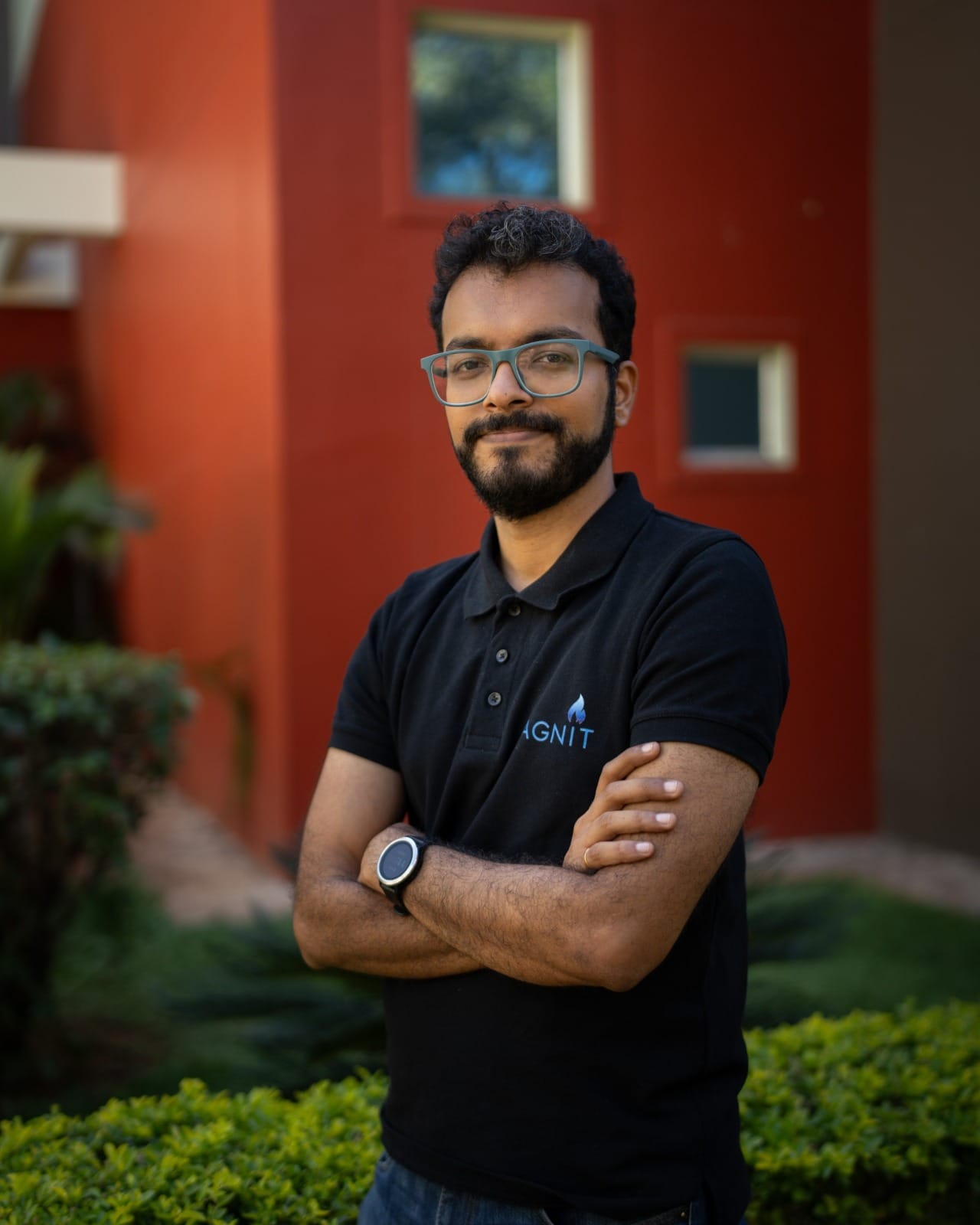
“I don’t believe that we need to be fully ‘Aatmanirbhar’. Our focus should be to recognise our strategic focus areas and work on that. We can strive to be world-class in certain technologies, modules or certain sub-modules, and then make it our strength,” he said.
Also read: Indian scientists crack key hurdle in gene-editing peas. Paves way for better crops
Academics-turned-startup owners
Chandrasekar said that he prefers being a startup owner to an academic.
“Oh, the latter. That’s easy, there is no doubt about it,” Chandrasekar laughs before his eyes light up talking about his venture.
He said that while lab research becomes the foundation of all good technology, its true test happens when it is put in the hands of the customers.
“Once a technology exits the lab, it has to answer several questions–can you actually make products when the rubber hits the road, is your product going to work for me, are you going to be able to deliver it within certain timelines, to the volume that I want and the quality that I want? There are so many aspects to consider,” Chandrasekar said.
He believes that Agnit answers these questions.
(Edited by Ratan Priya)