





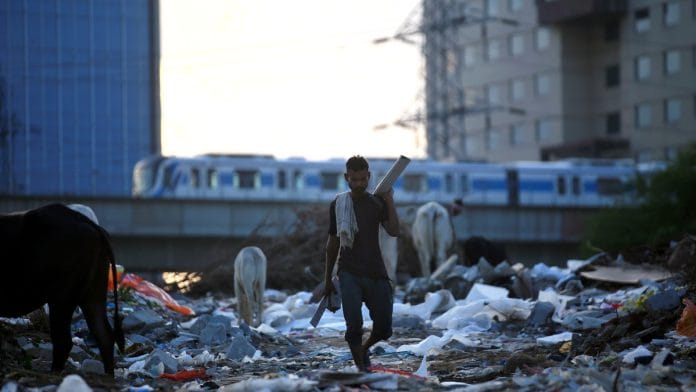

Gurugram: A high-profile meeting took place last September in Haryana capital Chandigarh, and the agenda was one of the state’s most embarrassing and persistent problems — the Gurugram garbage crisis. For the fifth time in 18 months, the city’s effort to hire a company to collect its trash had failed. The idea was to bring RWAs, vendors, NGOs and residents to the table to reimagine waste management in the Millennium City.
Since that meeting, convened by the Urban Local Bodies Department, nothing has changed, say residents.
“We went to these meetings with the understanding that the fixing would follow. But we never heard back from them, and the process is back to square one,” said a resident of the upscale Gurugram locality South City, who travelled out for the meeting with several others.
The city of high-rises and gleaming towers is once again stuck in a debilitating civic misgovernance loop that has come to define its identity: garbage. It has been over two years since the unceremonious exit of Ecogreen Energy, a private company hired by the Municipal Corporation of Gurugram (MCG) and held responsible for much of the mess, as ThePrint reported in 2024. But the fix remains elusive.
In May this year, Union Minister for Urban Affairs Manohar Lal Khattar urged that there be “no laxity” in waste management, but the authorities are still struggling to find a replacement and a long-term solution. And the trash crisis and residents’ anger only worsen. The toxic garbage economy functions much as before, with private vendors and musclemen jostling for the most lucrative routes.
Over the past couple of years, the city has had a stopgap arrangement of temporary contracts awarded by the MCG to private waste collectors.
“The current contracts are short-term, covering six months, with eight tenders for eight zones. These tenders are for door-to-door collection of waste and transportation of waste to the processing site. We have been awarding short-term tenders for the last two to three years,” MCG joint commissioner Preetpal Singh told ThePrint.
This system, however, is riddled with issues. Vendors have been reluctant to invest in vehicles and manpower because of the temporary nature of the contracts, while constant complaints of irregular waste collection continue. There is garbage deja vu year after year, from mounds of trash outside societies with Rs 50-crore apartments to clogged drains that create nightmarish waterlogging every time it rains hard.
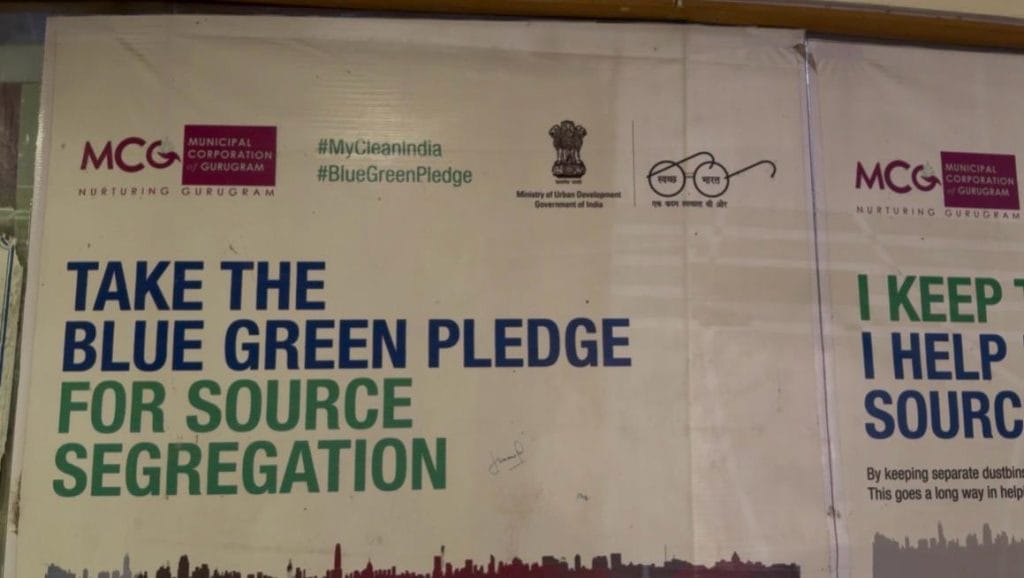
Meanwhile, much as Gurugram’s swanky gated societies have taken power and water into their own hands through generators and borewells, many have been running composting plants and choosing their own green vendors. But there’s a new dimension to it now. While some have been doing this by choice for years, since April, under the new Solid Waste Management Rules 2026, the MCG has directed larger societies to register as bulk waste generators. This includes processing their own wet waste and using MCG-empanelled agencies for disposal.
We call Gurugram koodagram. I am embarrassed to invite my friends to Gurugram. We have such a lousy system. The government and municipality are not stepping up. They have not set up any good systems after Ecogreen.”
– Naveen Rao, resident of Close South, Nirvana Country
Many have argued that they are voluntary bodies without the land or resources to do the MCG’s job for it, while others allege that private vendors can barely function due to threats and extortion by local musclemen.
Vaishali Rana, a Gurugram environmental activist and long-time petitioner before the National Green Tribunal on solid waste, points out that the Solid Waste Management (SWM) Rules—which were tightened this year to mandate four-stream segregation at source—are barely implemented on the ground. Few societies comply, and even those that do find their carefully separated waste mixed up again the moment it is picked up.
“The key is the segregation of waste and treatment of wet waste in-situ. The day the Nagar Nigam (MCG) starts following this, the problem will start getting solved,” she added.
Also Read: Gurugram sanitation officer sacked for using AI images to ‘resolve’ issues
Garbage atmanirbharta meets ‘goons’
Gurugram’s eco-conscious high-rise residents want tighter control over how their garbage is handled. They want timely collection and the assurance that their carefully segregated waste isn’t simply hauled off to the Bandhwari landfill.
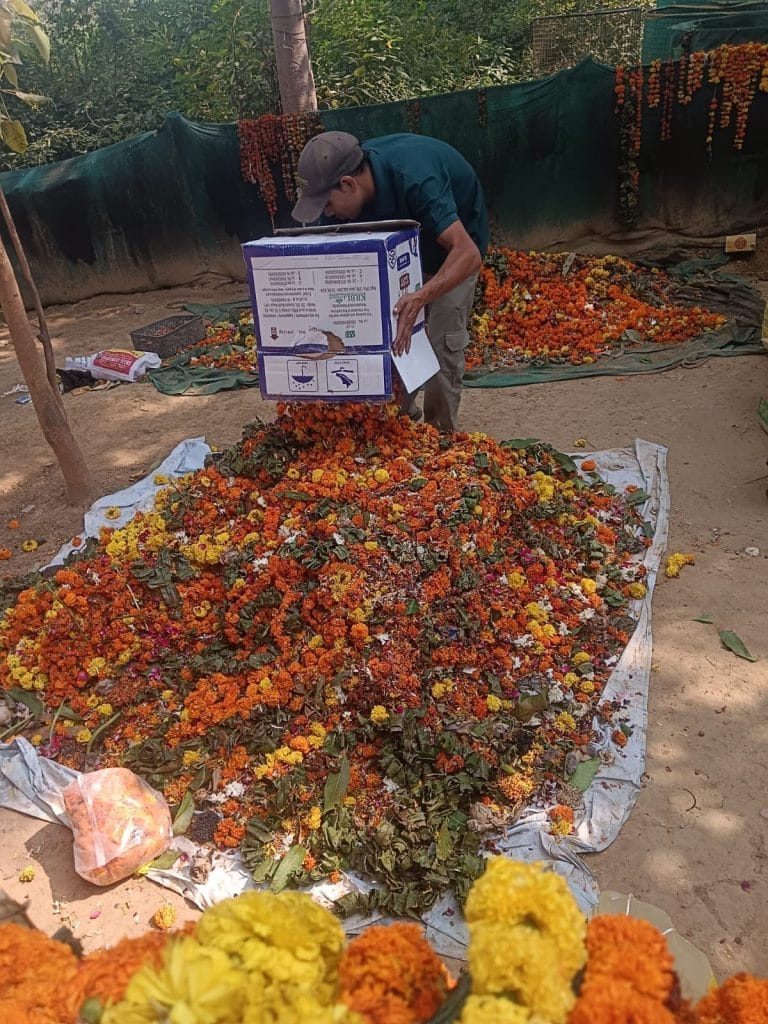
Even before the MCG’s diktats, several gated societies built their own mini waste ecosystems to bypass the broken municipal chain, complete with composting plants and waste committees. They’ve made deals directly with MCG-empanelled vendors, carefully vetted for their green practices, rather than relying on official contractors.
“The idea is that we don’t want all our waste to be dumped in a landfill. We hire these private vendors who recycle the dry waste and dump as little as 5-10 per cent of the waste in Bandhwari,” said Naveen Rao, a resident of Close South in Nirvana Country, Sector 50.
But even this bespoke system is not safe. Residents of Close South are now searching for a new waste vendor.
Last month, twice in quick succession, trucks belonging to their previous vendor were stopped and the workers roughed up while on their way to collect dry waste from the society.
“The men threatened the waste collector and told him to stop collecting dry waste from the area,” said Rao, angrily. “That’s when we approached the police to file a complaint.”
Nothing has changed in Gurugram. There is money in waste. Everything is doing vasooli. People like me keep quiet because we want to keep our business running.”
– Private waste-management vendor
But by then, the private vendor, fearing the goons, had stopped collecting waste from their society.
“The vendor told us that the waste collectors working for him had started quitting out of fear, and that he no longer wanted to put the lives of others at risk,” said Rao.
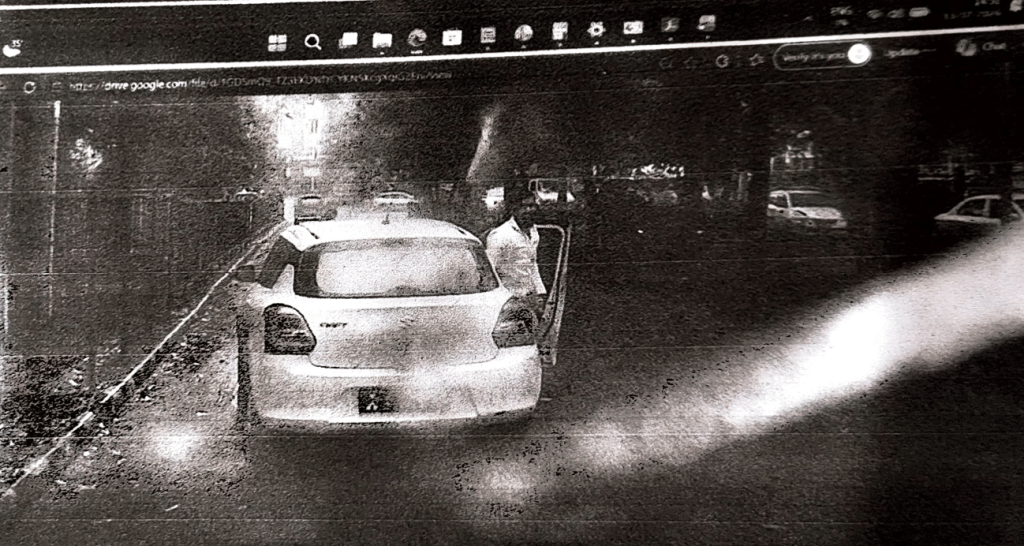
The vendor, asking to remain anonymous, has written to the MCG about the incidents, which took place on 5 and 12 July, and has also shared dashcam footage.
“Such incidents not only endanger the lives and dignity of sanitation workers but also disrupt essential public services,” the letter says, noting that workers were intercepted by two unidentified men in a white Swift without a registration plate. “We request the Municipal Corporation Gurugram to kindly extend necessary support and protection to MCG-empanelled waste collection teams operating in the area so that essential waste management services can continue without fear or obstruction.”
ThePrint has emailed the MCG commissioner for comment. This report will be updated when a response is received.
The Wild West of waste collection
If there is big money in garbage collection in Gurugram, there is also fear. Vendors either fold up and flee or they give in to the underground mafia. Keeping Gurugram clean is nobody’s priority.
A private waste-management vendor in Gurugram has been working for a decade, handling bulk waste from 50-odd clients, including condominiums, malls, complexes and housing societies. But every few months, he receives a threat or his truck is stopped.
“Nothing has changed in Gurugram. There is money in waste. Everything is doing vasooli. People like me keep quiet because we want to keep our business running,” he said on condition of anonymity.
There are unwritten rules of how garbage management companies can run their business. The government isn’t there to protect them and the mafia will not let them play by the book either.
The vendor, who is in his early 40s, gave an example of how money is made from the waste business.
“If you have collected waste to dump at Bandhwari, you won’t take the direct route and dump it there. Instead, you will have to make multiple stops and pay extortion amounts before reaching Bandhwari. Otherwise, your truck will be vandalised,” he said.
Another private waste vendor said he was threatened by a goon in the old Gurugram zone as his trucks were returning after collecting waste.
“This has become a routine. The administration and police are aware of this but they don’t want to do anything about it. Because these goons are backed by local politicians,” he alleged.
Gurugram’s post-Ecogreen troubles
When the MCG terminated its contract with the now-defunct Ecogreen in 2024, there was an initial rush of hope.
There had been years of complaints about irregular waste collection and its spectacular failure to build the waste-to-energy system it had promised. It also subcontracted work to other private vendors, giving rise to gangland-style turf wars over ‘rich routes’. In a July 2024 letter, Gurugram MP Rao Inderjit Singh pointed out that Ecogreen had been paid around Rs 350 crore despite failing to fulfil the terms of its contract. Back then, Sirsa Congress MP Kumari Selja had described Gurugram and Faridabad as “overgrown urban slums.”
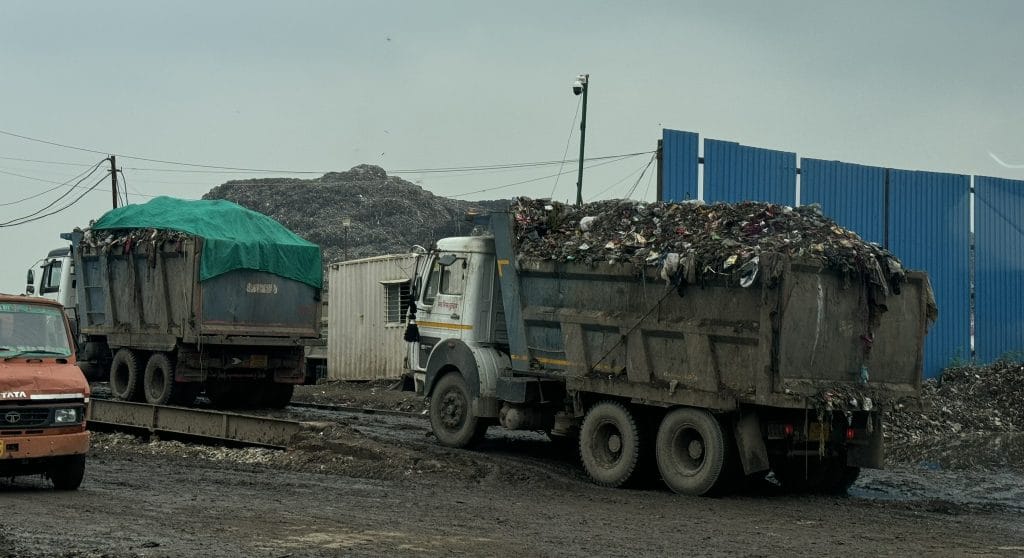
But the quest to fill the vendor vacuum left by Ecogreen has run into one hurdle or another. The MCG’s tenders for a permanent replacement have been scrapped at least six times because of revisions ordered by the Haryana Urban Local Bodies (ULB) Department or disputes over rates. The requests for proposals (RFPs) have also been revised numerous times.
Ahead of the ‘Vendors Meet on Solid Waste Management’ last September, Haryana ULB minister Vipul Goel promised a custom-made plan for the city, with a new model for RFPs and “handholding” for vendors. The MCG also asked RWAs for their inputs on waste management and told them to share these with the ULB Department.
The main requirement is that the waste has to be handled by private agencies, and the agencies’ commitment is what matters. Ecogreen has been terminated in two or three places because of a lack of commitment. Hopefully, we will now get a good company that can deliver.”
– Preetpal Singh, MCG joint commissioner
This April, the MCG floated a massive tender worth over Rs 600 crore for a long-term door-to-door waste collection system. But this too stalled in June after a committee headed by Chief Minister Nayab Singh Saini rejected the bids. The tender has since been revised to Rs 647 crore, and the MCG has restarted the process of appointing long-term collection agencies.
MCG joint commissioner Singh said the civic body is now awaiting clearance from Chandigarh.
“The main requirement is that the waste has to be handled by private agencies, and the agencies’ commitment is what matters. Ecogreen has been terminated in two or three places because of a lack of commitment. Hopefully, we will now get a good company that can deliver,” Singh said.
Also Read: No other city is like Gurugram—‘so mismanaged, yet so highly spoken of’
‘Government wants to run away’
Beyond their troubles finding a vendor for their society, Rao and other residents are also frustrated by what awaits them outside the complex: cows and dogs rummaging through waste as flies swarm around the mounting pile. Rao said they’ve written letters to the MCG, visited government offices, and even held a dharna six months ago to demand the removal of waste piling up outside their society.
After the dharna, the waste was removed every day for two weeks but as soon as the residents went silent, it crept back. Rao said “hundreds” of complaints logged with the MCG were acknowledged as received but the action ended there.
In a letter to Ward 15 councillor Bharti Manish Harsana last year, dated 8 June 2025, the Close South Apartment Owners Association complained of “large-scale dumping of garbage” on the green belt opposite the society along Golf Course Extension Road.
“When the Garbage/ Mulba / Debris and all forms of mixed wastes are openly dumped here, dust and pollutants are thrown up in the air, which severely impacts air pollution,” it read. The letter added, with several photos attached, that the waste was sometimes set on fire to make space for fresh dumping.
“We call Gurugram koodagram. I am embarrassed to invite my friends to Gurugram. We have such a lousy system,” Rao said. “The government and municipality are not stepping up. They have not set up any good systems after Ecogreen.”

At Ambience Lagoon in Sector 24, residents dutifully segregate and partially convert wet waste into compost before handing it over to the waste collector. In many societies, including Close South, waste-management committees have high standards for vendors, including checking whether they recycle dry waste.
But Vaishali Rana cautions that such RWA initiatives are still the exception rather than the rule.
“A survey of the waste generated in the city has found that nearly 60 percent is wet waste. There are around 2,000 RWAs, and only 300-odd RWAs are doing proper waste management. And I am not even talking about commercial institutes,” she said.
Residents’ civic sense, in the end, is no match for the mafias and municipal dysfunction.
Sanjay Lal, president of the Federation of Apartment Owners Association (FAOA) and a resident of Ambience Lagoon, says little will change without more accountability from the MCG itself. Instead of passing the buck to private vendors, he argues, the civic body needs to assign a dedicated officer to each zone to inspect work and serve as a single point of contact for residents.
“Even when residents are willing to segregate and pay private vendors, the larger ecosystem is not functioning smoothly,” he said. “I have been telling time and again that we need to have one person responsible for each zone. But what we are seeing is that the government wants to run away from the responsibility.”
(Edited by Asavari Singh)