



Kathmandu: Arjun Paudel’s editor offered him compassionate leave when his village of Sole was destroyed in the 26 August floods in Nepal, taking away eight members of his family. Instead, Paudel joined the team of five reporters from The Kathmandu Post heading directly to flooded districts of Nuwakot and Rasuwa, and spent eight days reporting on the disaster, its impact, and human cost.
“I don’t think I could have taken a leave and sat in my house. Even though it was personal, I needed to see what had happened to my home,” said Paudel, a health reporter at The Kathmandu Post and Kantipur Daily, Nepal’s largest newspapers by circulation.
Paudel was one of many journalists from Nepal who had to deal with both personal and professional challenges after the Rasuwa floods, which led to around 1,400 deaths, with over 5,000 people still missing.
Nepal is no stranger to natural disasters, but the floods put its domestic media on two fronts: as chroniclers of the catastrophe and, at times, its direct victims. Yet, as the tragedy unfolded, Nepali coverage didn’t sink to sensationalism or manufactured emotional spectacles. Newsrooms instead delivered calm, hard-nosed reporting that put facts before the impulse to be the first to break a story.
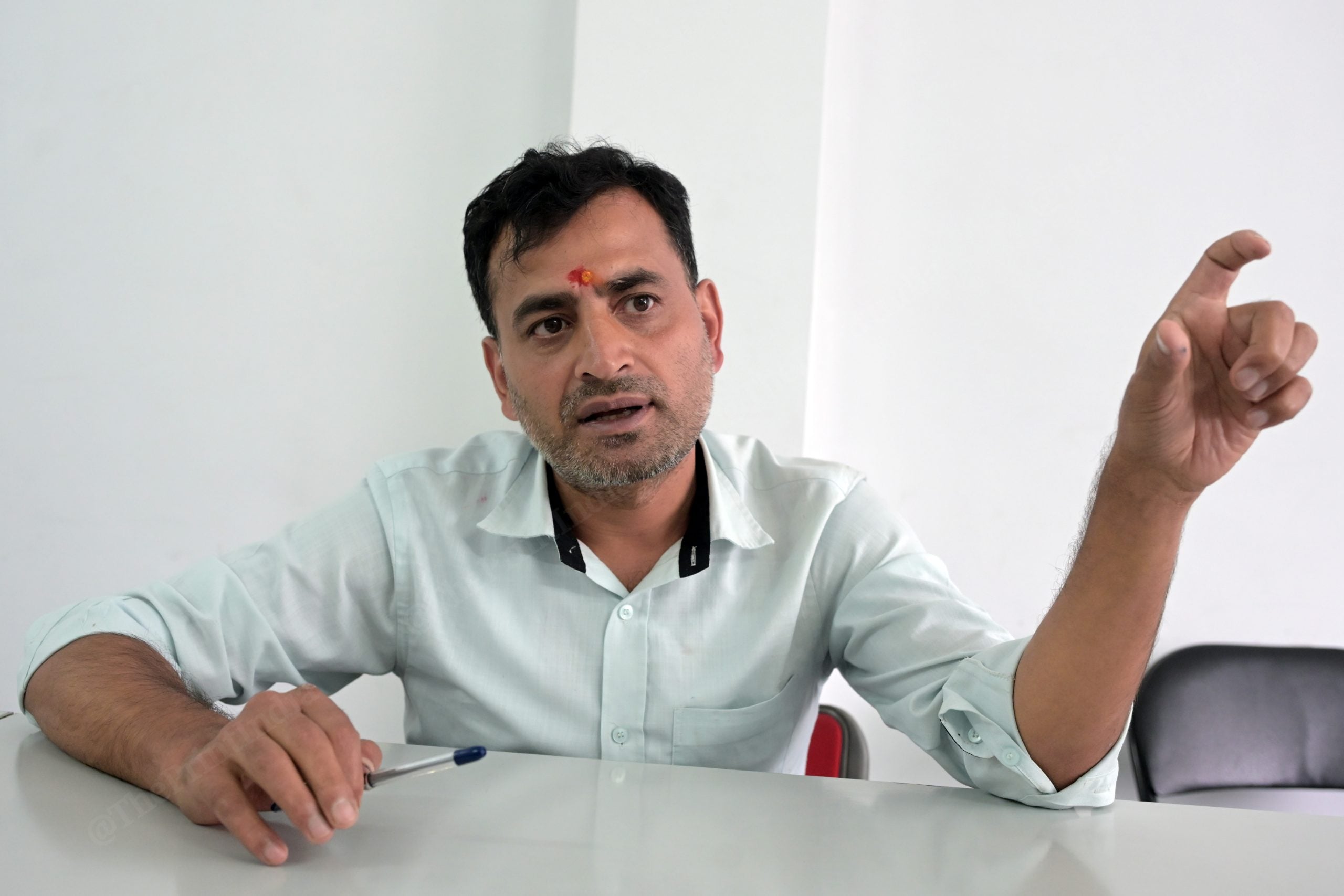
While foreign crews arrived looking for dramatic visuals, Nepali reporters were navigating flooded roads, damaged communications, and dangerous terrain—sometimes on foot, sometimes by helicopter—to report what was happening beyond the most visible devastation. The top five newsrooms, including the Kantipur Media Group, Himalaya TV, Ratopati, Nepali Times, and Himal Khabar, sent over 100 reporters to the field and published more than 1,000 reports in the weeks since the floods.
It was also a revealing moment for a media industry that, in its modern independent form, is only about three decades old.
“We had an editorial policy in the newsroom that we would rather be a few minutes late, or not publish a story at all, than publish a false or misleading story,” said Gokarna Awasthi, Editor-in-Chief, Kathmandu Post and Kantipur Daily. “We’re trying to build trust in our journalism, not just rush to publish.”
The first few hours
By 9:30 am on the morning of 26 August, news of a massive flood in the Bhote Koshi River, which travelled down the Trishuli basin to Rasuwa and Nuwakot districts in northern Nepal, had reached Kathmandu’s newsrooms. For some, the source was videos on the internet. For others, it was frantic calls from parents and relatives who were near the flood site.
“I was on my way to the office when I got a call from my father, who lives in Betrawati in Rasuwa. He told me there’s a huge flood, and he seemed so scared,” said Ramesh Kumar, a journalist with Himal Khabar.
By the time Kumar reached the Himal Khabar office in Patan Dhoka and told his editors, videos of the floods were already circulating on Facebook and X. His newsroom, like others in the city, went into action mode.
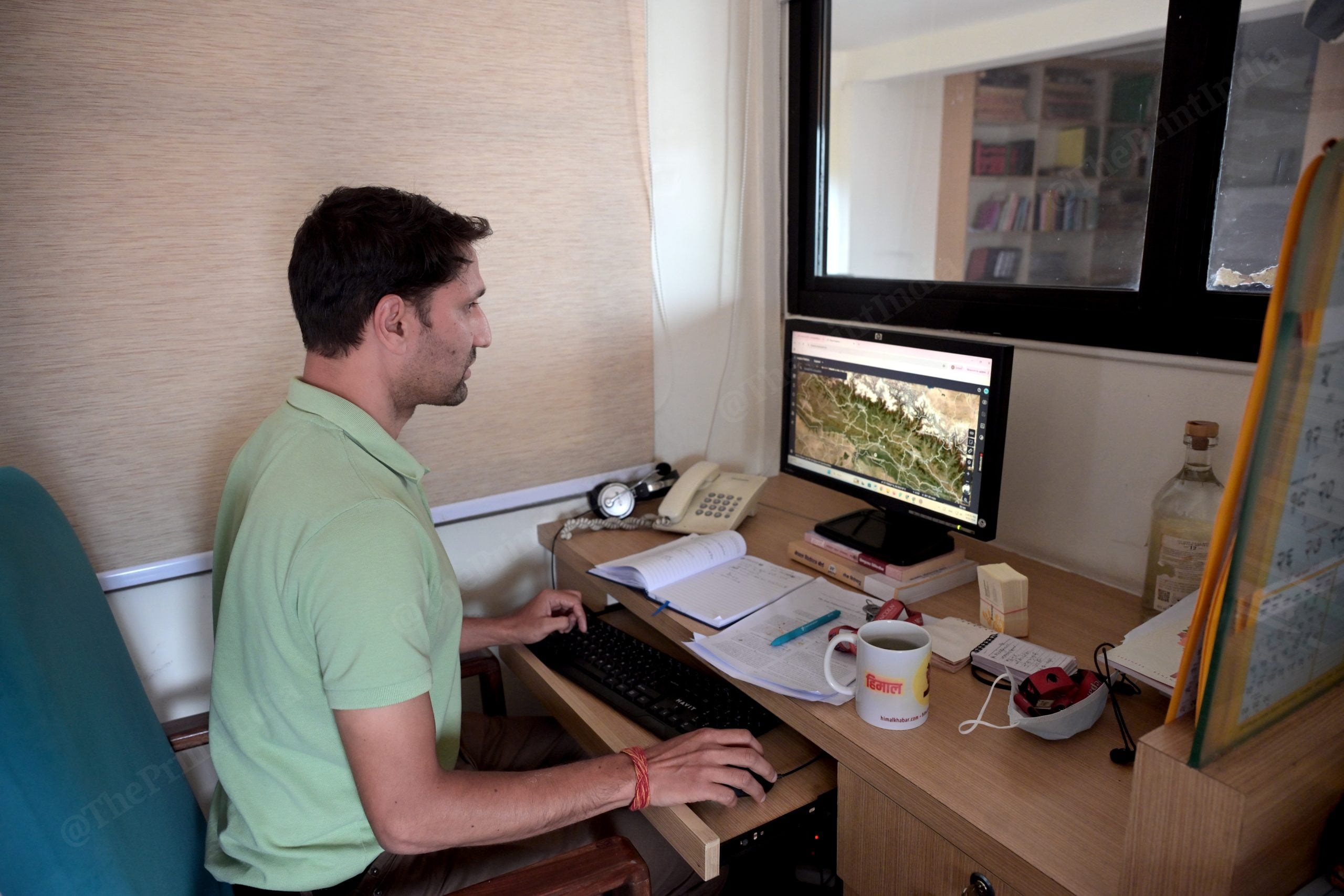
“The roads were destroyed, there was no cell network in those districts, so the biggest issue was getting there and actually verifying the information,” said Umesh Chauhan, Group Editor, Himalaya TV and Online Khabar.
While Chauhan’s Himalaya TV—one of the largest TV news channel in Nepal after Kantipur—decided to hire a chopper and send reporters to the border regions of Timure and Rasuwagadhi, The Kathmandu Post and Himal Khabar sent their journalists by car to the nearest accessible flood site in Bidur.
“We were the first journalists to reach the Nepal-Tibet border site by helicopter, but we didn’t publicise it,” said Chauhan. “Because reaching there was not the story. What our journalists did once they reached, that was the story.”
While newsrooms equipped their teams with a basic first aid kit and essentials, neither the editors nor the reporters truly knew what they were walking into.
A few hours after the floods, when Chauhan’s reporters reached Timure town at the Nepal-Tibet border by helicopter, the scene was unrecognisable. The river had ripped through the settlement, carrying away homes, vehicles, roads, and bridges, leaving thick brown debris spread across what had been the valley. While they could not land the helicopter for safety reasons, the visuals they brought back were the first aerial shots of the floods by a newsroom.
“The reason we wanted those visuals was to tell not just Nepal, but the rest of the world, what the extent of devastation was,” said Chauhan. “It also helped journalists from all over the world to see the scale of the floods, and send international crews to cover it.”
Reporters such as Kumar and Paudel were encountering similar sights on the ground, as they arrived in the Nuwakot capital Bidur, the closest accessible region by road from Kathmandu. A few hundred metres from Bidur, Trishuli Bazaar lay inundated with debris and silt, and with no electricity or internet. The site was one of panic and chaos.
“I don’t know how to describe what I saw—people were panic-stricken, running around,” recalled Kumar, who went on to Betrawati, his village, the next day. “In Betrawati, I saw bodies in the river… I had nightmares for days.”
Also read: A revenge drama at Cauvery Wildlife Sanctuary. Killings, bombings, Karnataka vs Tamil Nadu
Personal losses while reporting
The first story Paudel filed on the floods was a personal one, titled ‘I watched my village disappear in an instant’. Written a day after the floods, when he was already in the field in Bidur, the story opened on Paudel’s disbelief as he recounted his wife telling him there was a flood in Sole Bazaar. Throughout the day, even as he arrived at the office and kept learning about the extent of the floods—the glacial rock collapse in the Lhende Khola River—he was simultaneously hearing about his family members who were missing.
While his parents were safe in Kathmandu, his maternal family, including his aunts, uncles, and cousins, was missing. His friend Niranjan, another Kathmandu-based journalist with family in Sole, had lost his parents and siblings.
Paudel’s story was one of the highest-read pieces in The Kathmandu Post on the floods, and he went on to write over 20 articles from Nuwakot and Rasuwa. Yet, as a reporter, this was the first instance that Paudel said he had been rendered speechless.
“I felt I was myself a victim of the floods. And when I went to the field, saw the flooded houses and roads, and met the displaced people, I was numb,” said Paudel. “I didn’t know what to think; my mind went blank. It was only when I sat down to write that the words poured out.”
The personal relationships and familiarity that reporters such as Paudel and Kumar had with the regions also aided in their reporting, in many ways. When the main roads to access upstream regions of Trishuli River were cut off, they helped their colleagues navigate inner village roads toward Betrawati, Sole, Simle, and other impacted areas.
“I didn’t need Google Maps; I knew the area well. We just asked around, going from village to village, using roads where available and travelling through the jungle sometimes too,” said Kumar. “We were the first journalists to reach Betrawati by road.”
As global newsrooms descended upon Nepal, focusing on stories of devastation, survival, and the government’s tunnel rescue operations, it was reporters from The Kathmandu Post, Himal Khabar, and Nepali Times that brought out unique stories. Their coverage focused on relief material provision, the government’s call for international assistance, and the increasing risk of glacial collapse due to global warming.
Kumar reported on the people displaced by the 2015 Nepal earthquake who had lost their homes again in the 26 August floods, bringing one of the first stories of the double whammy of natural disasters on Nepali citizens.
The Kathmandu Post was the first to report on the Nepal government declining the offer of foreign assistance for rescue missions. The daily also broke several stories on the relief operations in Rasuwa’s least accessible regions.
Over the course of two weeks, Paudel’s stories sensitively covered the human cost of the floods, families searching for missing members, and even the challenges of disease and water contamination in relief centres, where around 4,000 people currently reside.
“We have one of the most experienced newsrooms in the country, being the oldest news group. We meticulously planned each story, and while we might have missed some, we’re proud that we never had a single mistake except for a few technical errors,” said Awasthi. “I think our reporters performed marvellously.”
Editors in Nepali newsrooms chose to go beyond personal, human stories of death and destruction, and look for the bigger picture in the tragedy—the fact that this was the third consecutive year of floods in Nepal.
“It’s true that the audience will want to read more human stories; those are the ones they connect with. But sometimes you have to disappoint your audience,” said Chauhan emphatically. “Only telling personal stories means that you’ll miss the bigger context, and that too is a story to be told.”

Gripe with Indian media
Nepal’s independent news media began to take shape only after the Jana Andolan of 1990, which fought to end absolute monarchy. The Kantipur Media Group (KMG)—which owns the Nepali paper Kantipur Daily, the English paper Kathmandu Post, and the Nepali TV channel Kantipur—was founded in 1993 and continues to dominate the country’s news landscape.
Senior editors of most Nepali newsrooms pride themselves on how the industry evolved, especially through its hard-hitting reportage on events such as the 2015 earthquake, the 2025 Gen Z revolution, and the recent floods.
“The very fact that Nepal is a smaller polity, but a sovereign polity, makes the job of a journalist both easier and harder,” said Kanak Mani Dixit, founder of Himal Southasian magazine. “Easier because you can connect with the masses more immediately, but harder because you’re scrutinised and challenged more.”
An important comparison for Nepali newsrooms is certain sections of the media in their neighbouring country.
“Reporting on a disaster is always a tough job, but we (Nepali media) have learned a lot because we used to watched Indian television, and we have learned from them—what not to do,” said Chauhan, who was the Editor-in-Chief of Kantipur Daily before joining Himalaya TV.
Talking about the last major disaster in Nepal—where over 8,000 people died across the country as a 7.9 magnitude earthquake struck the Gorkha region—Chauhan recalled how certain Indian TV reporters had drawn the ire of Nepali citizens and civil society members.
“There was even a social media trending hashtag #GoHomeIndianMedia in 2015, in response to their coverage of the disaster,” said Chauhan.
From loud, sensational footage of the disasters to insensitive lines of questioning toward victims to spreading unverified information, the charges against certain English and Hindi TV news channels from India are countless. Awasthi recalled how The Kathmandu Post decided to wait until the team could confirm the actual origin of the Bhote Koshi floods, while some Indian outlets reported immediately that the origin was in China, before official information could arrive.
Beyond the complaints, certain Nepali critics also sought to examine why sensationalism has become so pronounced in Indian TV news—and why Nepal’s own media landscape has, to some extent, avoided similar pressures.
Dixit, who co-founded Himal Media, chalks it up to the size of the societies.
“When you are a larger society like India, you’re more likely to use sensationalism for TRP and ratings and not be held accountable for your coverage. If you’re a smaller society, like Nepal, accountability is more possible,” said Dixit. “Even something simple—the journalist will have a group of friends who will ask him, ‘What have you done?”
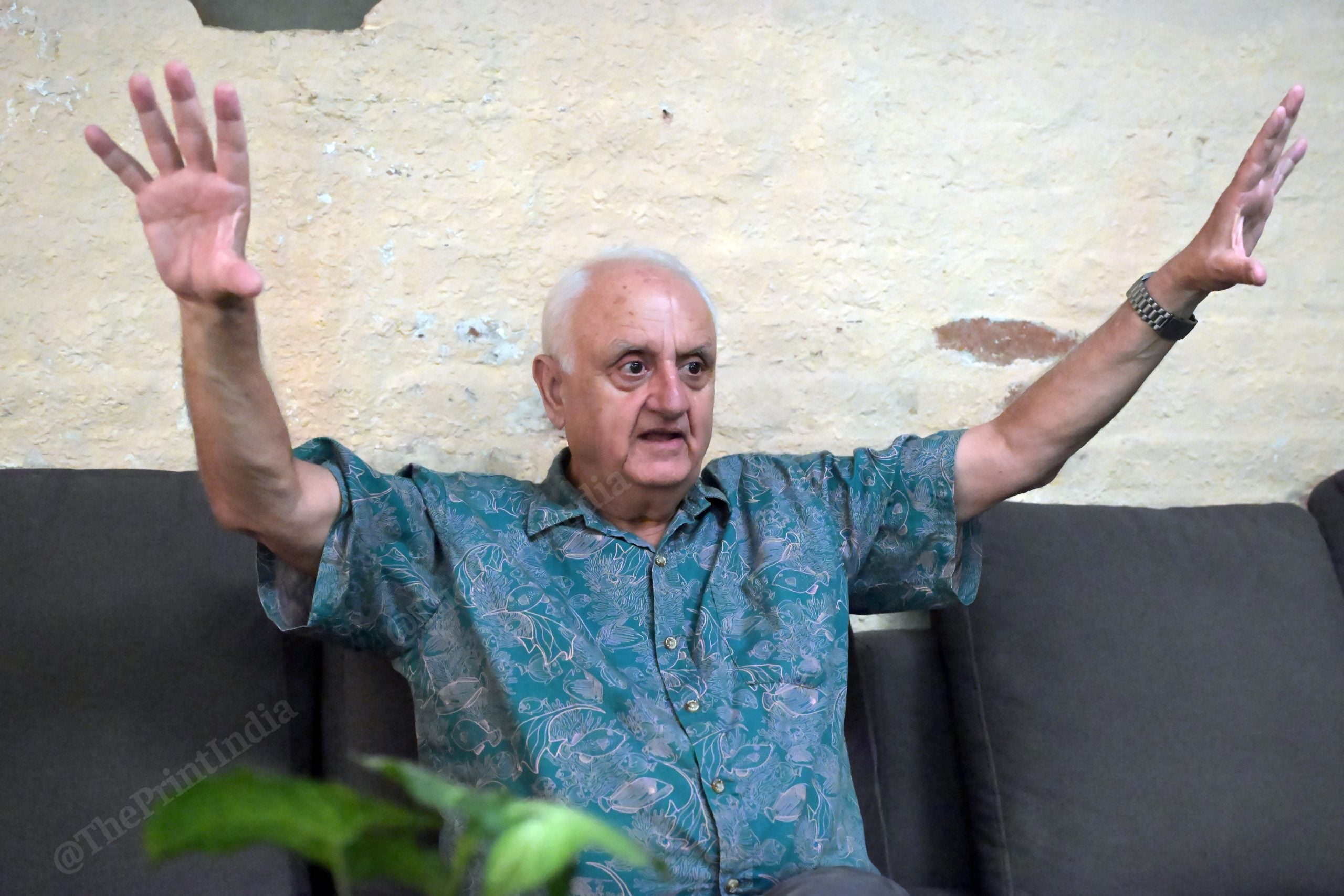
Dixit commended the efforts of Nepali reporters who travelled to the ground during the floods, reporting under difficult circumstances, personal and professional alike. He also pointed out that while the media landscape in the Himalayan country has gradually adapted to TV, digital, and print media needs, there were still fundamental differences between Nepali and Indian media.
“A dynamic that makes Nepali journalism different and more real is that we don’t have the English-to-vernacular schism,” said Dixit. “Like the difference between Hindi and English papers, with a particular social category reading English… In Nepal, thus far, that schism does not exist. The intelligentsia also reads the same Nepali paper as the person in a remote village.”
Also read: Leopards vs all—Mangar Bani is facing animal-animal conflict, villagers are stuck in between
The days after the floods
As the immediate floodwaters receded and international crews packed their satellite gear, Nepali editors have shifted their focus to the long-term, unglamorous aftermath: rehabilitation, reconstruction, and uncomfortable questions about climate change.
Two weeks after the floods, The Kathmandu Post had published more than 200 stories, while rotating reporters in the field so that those covering the worst-hit areas could return, rest, and go back out. Despite not chasing breaking stories, The Kathmandu Post still became the first outlet to publish the tunnel rescue updates, the condition of flood survivors in holding centres, and investigations into the federal government’s collaboration with the provincial governments for relief and rescue operations.
Other outlets found different ways of reporting the disaster. Himal Khabar, for instance, used satellite imagery to reconstruct the destruction and examine parts of the flood that reporters could not easily reach on the ground.
The Kathmandu Post was among the outlets trying to establish what had triggered the flood, reporting early scientific assessments that an ice avalanche and subsequent debris blockage may have created a temporary lake before a sudden surge swept downstream.
Nepal’s coverage of the 26 August floods also revealed a strand of climate and science reporting that is already well-established in the country. Veteran Nepali journalist Kunda Dixit said there was “very little climate denial in Nepal”, and the media was increasingly careful about climate change and the immediate geological reasons for a disaster.
One of the less visible stories emerging from the floods was about what happened to people after the cameras moved on. Nepali reporters repeatedly spoke about encountering the psychological consequences of the disaster in the victims, a fact that often gets buried in death tolls and infrastructure damage.

Chauhan, Paudel, and Kumar mentioned meeting people with vacant stares who seemed unable to process the scale of the disaster, the fact of having lost their loved ones, or the condition of their lives now.
“In this kind of situation, we don’t talk about, we don’t report about the mental health of the people. But that is the most important, the most vital thing,” said Chauhan. “When people don’t even realise what they have been through, this is the time when they’re most vulnerable.”
Late in the afternoon, Paudel was at his desk at the KMG office, two weeks after the floods first tore through northern Nepal. The newsroom around him had been running at a relentless pace since 26 August—reporters sent into the field, calls coming in from remote districts, photographs and eyewitness accounts arriving faster than they could be processed.
What concerned him now was what would happen when the urgency faded. He worried about the familiar cycle that follows disasters: headlines, relief material, political attention, and silence. But this wasn’t just another disaster for him, nor was it just another headline. He still had to reckon with losing his village, his family members, and the familiar neighbourhoods that populate his childhood memories.
“The news—it would be news for a while; the media will give coverage, some relief material would be sent for a few months; then the story will close,” he said. “But then this will happen again: in Nepal, in the Himalayas, or anywhere else.”
(Edited by Prasanna Bachchhav)