



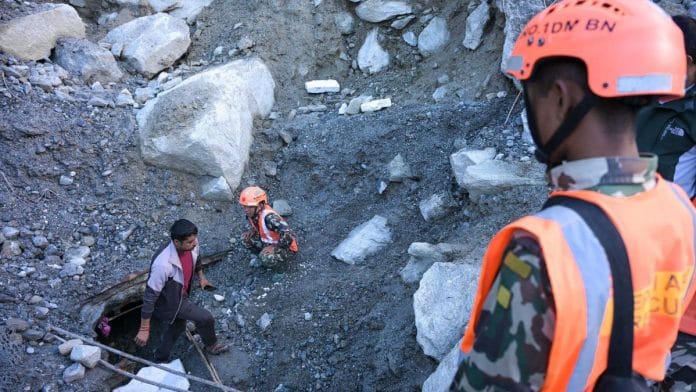

Rasuwa: The first time 40-year-old Bharat Raj Bisht saw his brother’s workplace, it was completely ravaged. Nine days after flash floods tore through Nepal’s Rasuwa district, two men had walked out alive from the Upper Trishuli 3-A Hydropower Tunnel, giving families of the missing a reason to hope.
But Bisht is still waiting for an answer: where is his elder brother?
On a rainy afternoon, Bisht looks down at the mound of debris—sand and mud—that used to be the hydropower tunnel, where his elder brother, Kirth Singh Bisht, worked as a supervisor.
Hailing from the Doti district in western Nepal, Bisht travelled for a day to reach Rasuwa, a district on the Nepal-Tibet border and the epicentre of the 26 August flash floods that killed more than 1,300 people.
“After the floods, we initially thought that people were being rescued at the 3-A tunnel,” said Bisht, who reached the region by helicopter from Bidur. “I thought my brother would survive; he would come home. But after I realised that only two men were saved, and they weren’t my brother, I came here myself.”
Like Bisht, many who had been waiting for updates from the Nepal Army decided to make the journey themselves. For them, waiting for news from afar had become harder than confronting the truth.
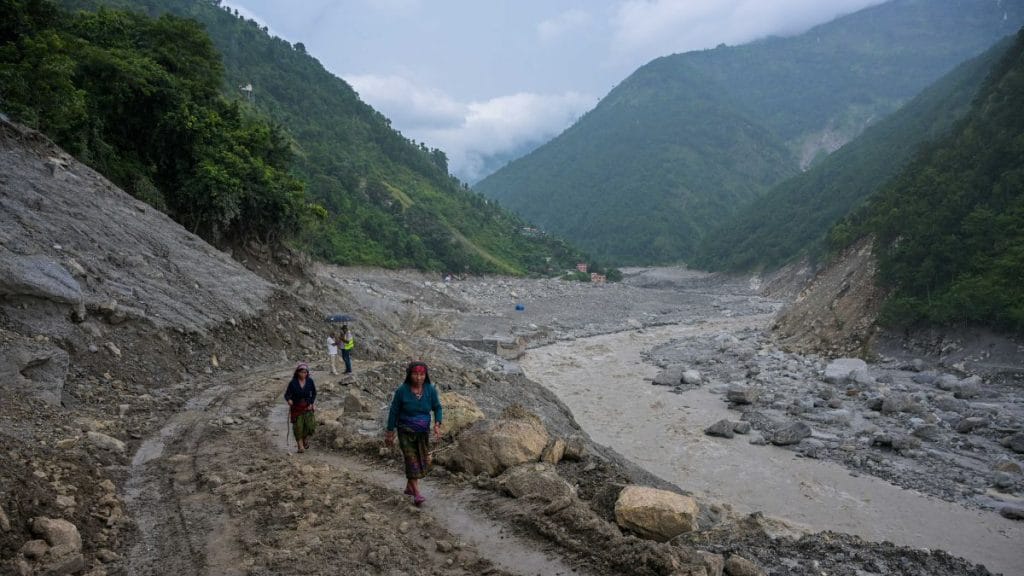
Bisht landed at Shanti Bazaar with the army’s help. Shanti Bazaar is the village closest to the 60 MW tunnel run by the Nepal Electricity Authority, which was devastated by floods two weeks ago. Now, a silt-ridden Trishuli River runs past the indistinguishable tunnel and powerhouse, the landscape a monochrome of grey.
This inaccessible region straddling Nuwakot and Rasuwa districts sparked hope on 4 September when two men were rescued alive from the 3-A tunnel. But since then, the army has only recovered a dead body, and families of the other 40 workers like Bisht are now restless.
Here at the 3-A tunnel, anguished families converge with exhausted rescuers and displaced villagers whose houses and fields were swept away. With the road to Rasuwa washed away, aid remains scarce, with a lone NGO, Bignaharta, leading health and food relief operations.
“The worst part is, these people in Simle, Rasuwa, and Langtang were also hard hit during the 2015 earthquake, and they rebuilt themselves,” said Tashi Lhazom, a climate activist and member of Bignaharta. “Now, again in 2026, the very same people have become the direct victims of this flood.”
‘Heard nothing from them’
What used to be a 40-minute car ride along the Trishuli River from Bidur, the capital of Nuwakot, till Dhunche, the capital of Rasuwa, is now a six and a half hour ride through rickety mountain paths and broken roads. For family members of missing tunnel workers, however, it is often the only path to take, unless they find a chopper from Bidur.
The Trishuli 3-A, Trishuli 3-B, and Upper Trishuli-1 Hydropower Tunnels are all located in this river corridor, and together had more than 300 people working inside, who went missing when a glacial rock avalanche led to massive floods in the river. With the tunnels, the flood also wiped out the main access road that led from Nuwakot to Rasuwa, leading the Army to airdrop everything, including troops, excavator machines, relief materials, and tents.
Meanwhile, the only accessible road can barely accommodate a motorbike.
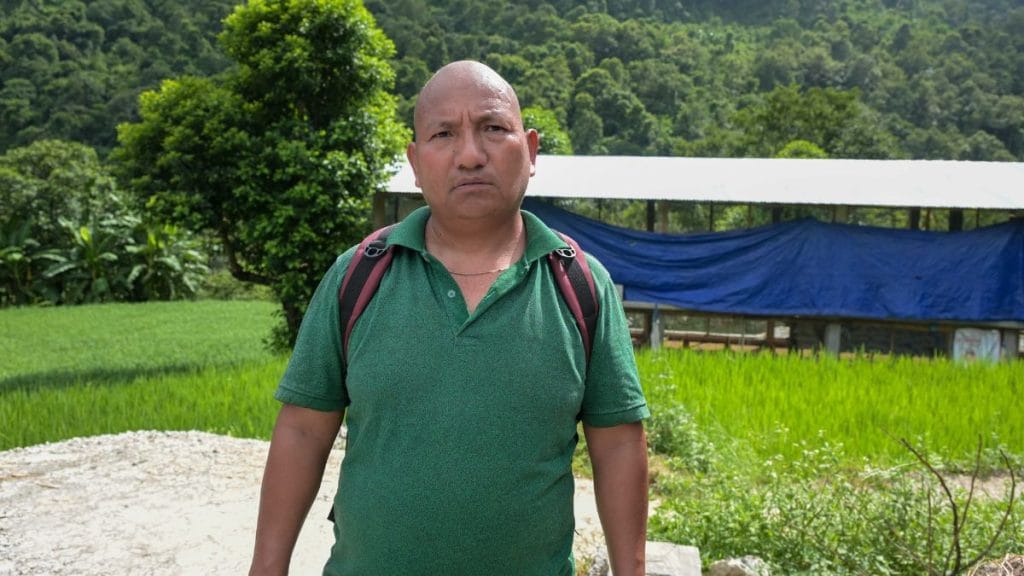
Fifty-six-year-old Suna Tamang works as a driver in Qatar and was in Saudi Arabia on assignment when he heard about the floods. His son worked as a driver in the Trishuli 3-B tunnel, a few kms away from the 3-A tunnel.
He was also living nearby with his wife and nine-month-old son. Tamang, who had never visited his son at work yet nor met his grandchild, frantically tried reaching them by phone for days.
“I heard nothing from them, and my relatives told me it was too difficult to make the journey in the first few days to the tunnel,” said Tamang. “By the time I reached Nepal, they had found my son’s body.”
With his head freshly shaved after completing his son’s funerary rituals, Tamang set off on the back of a motorbike with his friend from Maigaon, a municipality in Nuwakot, to the Trishuli 3-B tunnel, around 50 kilometres away. It took him seven hours to reach the tunnel, only to find that the rescue forces had no update on his family.
“I know my son is dead, but maybe my daughter-in-law and grandson escaped? If they didn’t, I at least wanted to see where they were, if their bodies are found,” said Tamang, returning from the tunnel. “Their house doesn’t exist anymore; nothing does.”
Also read: ‘Hunncha’ to ‘Hare Krishna’—how two words kept hope alive in Nepal’s flooded tunnels
‘Road is completely cut off’
Half of the Trishuli 3-A tunnel was in Nuwakot district, while the other half was in Rasuwa — making the debris the perfect converging point for flood victims of the villages right next to the tunnel.
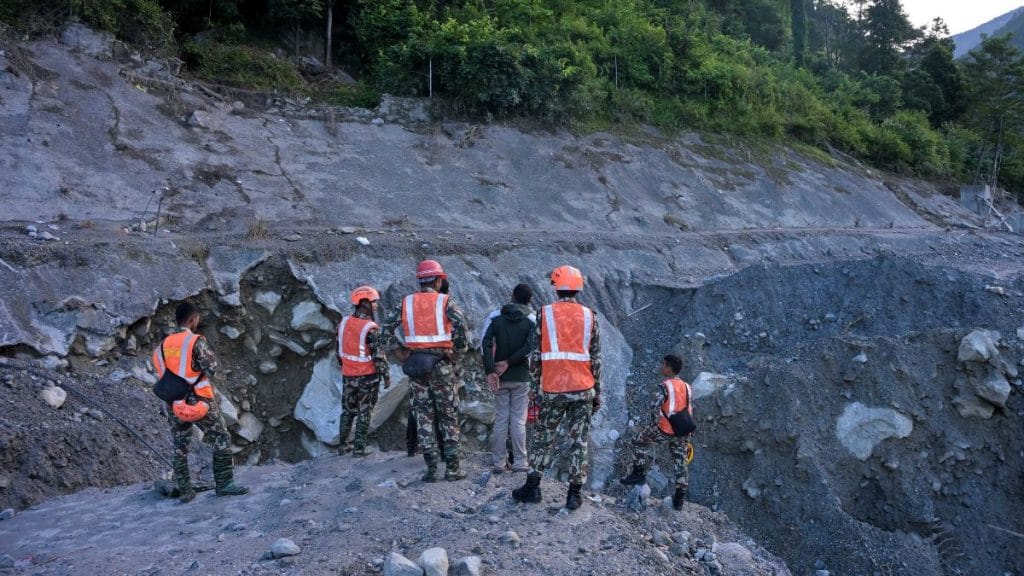
With a line of blue Nepal Army tents and an emergency clearing prepared for helicopter landings, the debris-covered tunnel now serves as a drop-off point for relief materials for Nuwakot’s Shanti Bazaar and Rasuwa’s Simle villagers, where more than 100 families have been displaced.
The Nepal Army’s helicopters make almost two trips a day with food, medicines, and other emergency supplies, and the Red Cross, too, chartered a flight to provide relief materials to the villagers here — in one of the least accessible regions since the 26 August floods.
Here at the border, the Trishuli River runs in a deep gorge, hemmed in by steep mountains that leave no room for flat terrain. From the tunnels to the now-demolished houses, every piece of construction occupied narrow shelves wherever the mountain allowed them.
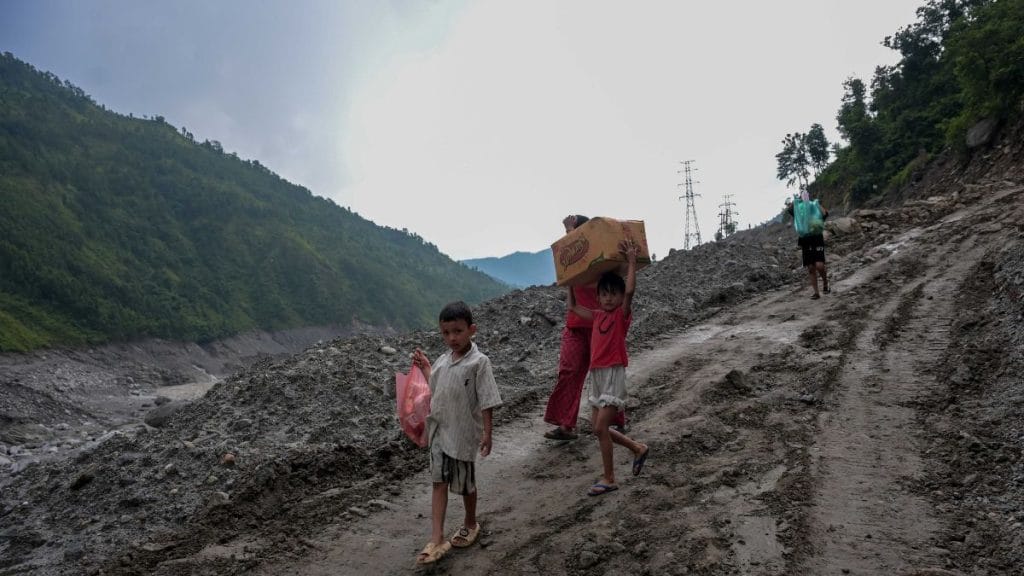
Now, with the river claiming entire mountainsides and cutting off access roads from the South and the North, the residents of Simle and Shanti Bazaar are in a fix.
“The road from Bidur is completely cut off; only the mountain paths remain. Also, the road to Dhunche is cut off, so this is effectively in a vacuum,” said Gomesh Singh Upreti, the founder of Bignahartha, an NGO that has set up a relief camp at Shanti Bazaar. “We had to come here because we knew most other NGOs wouldn’t be able to access it either.”
When around 10 people from Bighnahartha reached the 3-A tunnel, four days after the floods had struck, they began to understand the unique needs of the people in this region.
While the immediate needs of food and shelter are being met by the army and government resources, the lack of roads meant the residents could no longer access schools, hospitals, and district offices. For the last week, Bignahartha set up a temporary health camp for the local people, especially the flood victims.
“We treated over 300 people in two days — that’s how dire the need was for primary healthcare services in these two villages since the floods,” said Lhazom, a part of Bignahartha’s aid team in Shanti Bazaar. “Many of them were injured during the floods, but others in the community require medical attention too, like pregnant women.”
Scrambling to arrange diapers for a heavily pregnant woman at Simle, Lhazom realised that the needs of flood-affected communities are not just short-term.
Upreti, meanwhile, saw that the villagers from Simle and Shanti Bazaar had to walk on foot to the designated site to receive aid packages, and that many of them were unable to. He soon understood why, and began devising ways to deliver the packages to them by truck, asking the army to clear a road using excavators.
“It is an understated problem that many of the villagers had lost family members in the flood, and were observing the funeral rituals for them,” said Upreti. “They hadn’t eaten salt or anything else for eight days, which meant they were too weak to carry the sacks of food too.”
And unlike the other flood-affected regions of Devighat, Trishuli Bazaar, or Betrawati, the upstream terrain here remains treacherous and unforgiving, with the nearest town — Bidur — at least a six-hour drive away.
Also read: How one school teacher’s split second call saved 50 kids from Nepal floods
‘Couldn’t find anything’
As night falls, the search and rescue mission at the 3-A tunnel winds down for the day, and the security personnel make their way back to their tents before the rain starts lashing. Four days since the two survivors were found, the rescue work has lost its fervour, as each day of digging is met with further obstructions due to the terrain and weather.
“For days, we would dig during the morning and by evening the rain would fill up the same places with silt, and we were back to square one,” an Army official said on the condition of anonymity.
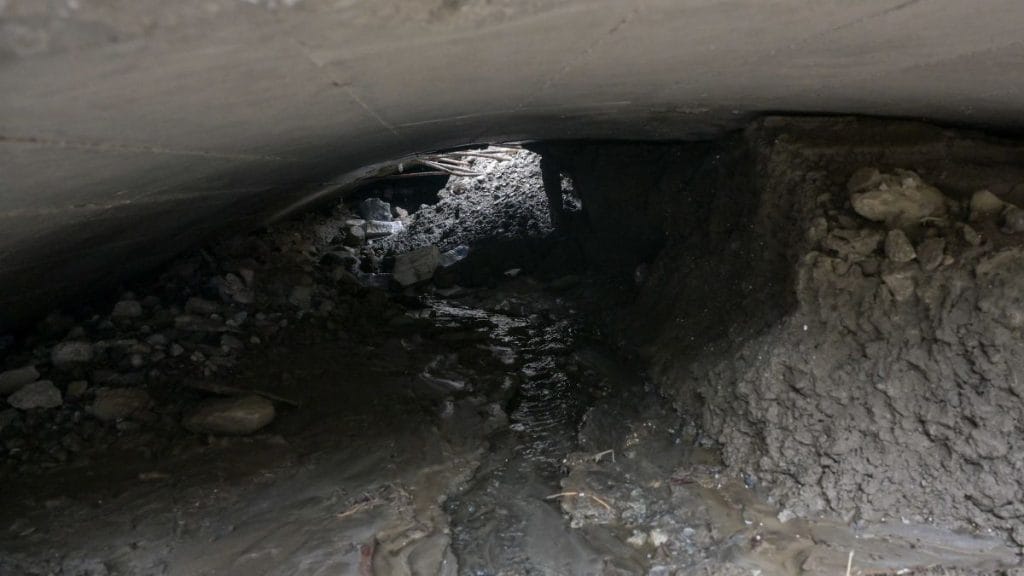
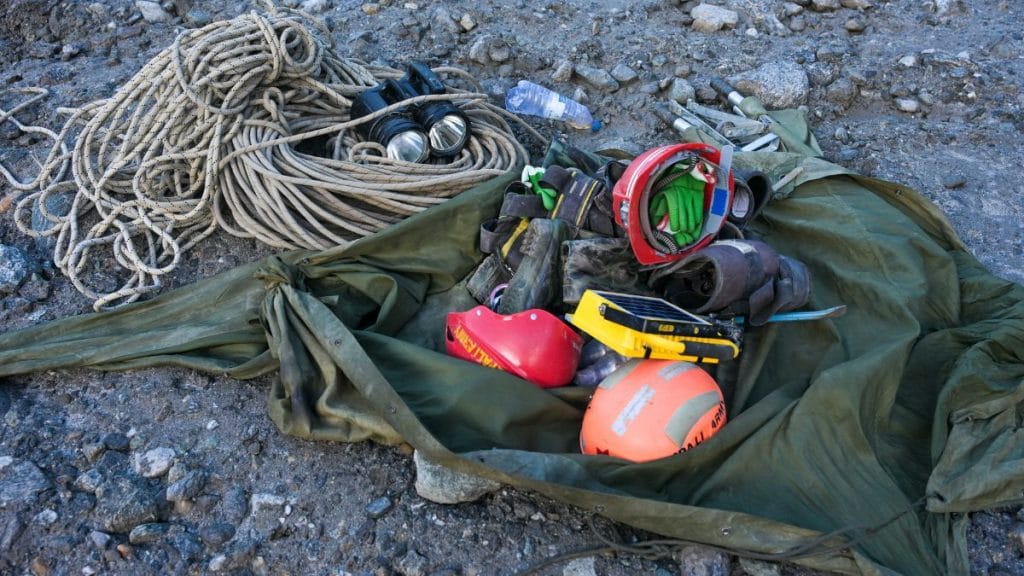
The two workers — Kabir Mahajan and Sanjay Sah — were rescued from the cable duct tunnel region inside the powerhouse, but the Army could not find any more survivors in the same region. Now, while they’re still trying to get in further, they aren’t confident to find any workers alive inside.
For family members like Bisht, though, the Army is cooperative and gentle. When he landed in the helicopter, they offered him a place to stay for the night, and in the morning, a few troops went with him towards the tunnel to look for his brother.
“I tried looking in the jungles, maybe if he had escaped. The Army helped, but we couldn’t find anything,” said Bisht, half-heartedly. “I found his bike, though. He must have parked it before heading to work. It’s the only thing I can take back with me.”
(Edited by Saptak Datta)