





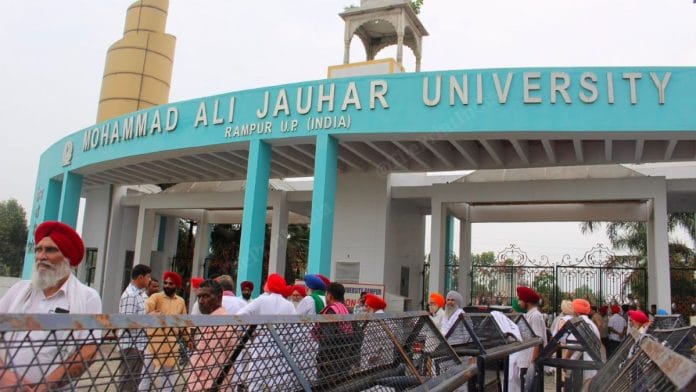


Rampur, Uttar Pradesh: The semester break had emptied Mohammad Ali Jauhar University. Then the demolition notice was slapped. Within days, students began returning to the campus to stop bulldozers from reaching what many describe as the only university their families could afford.
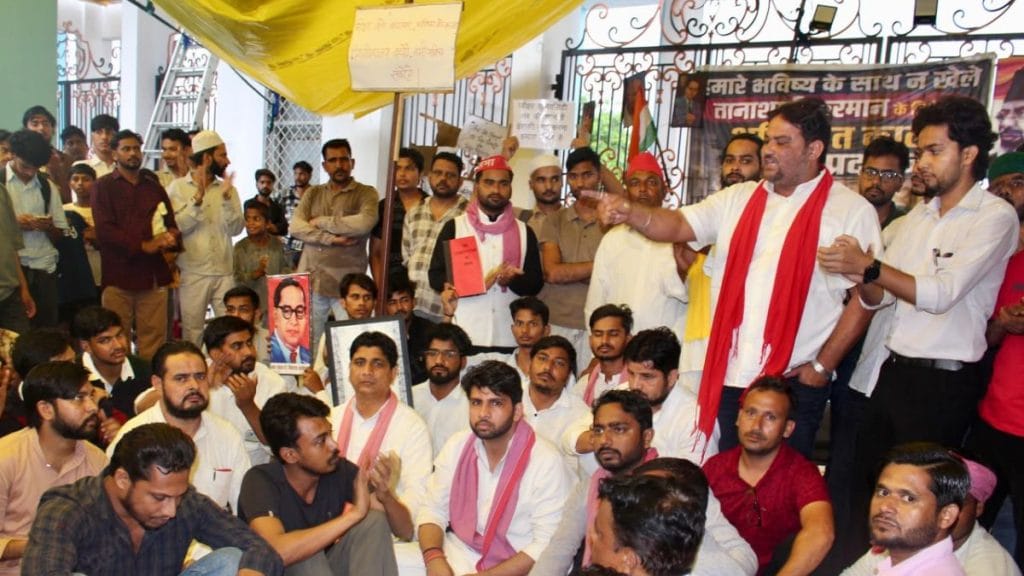
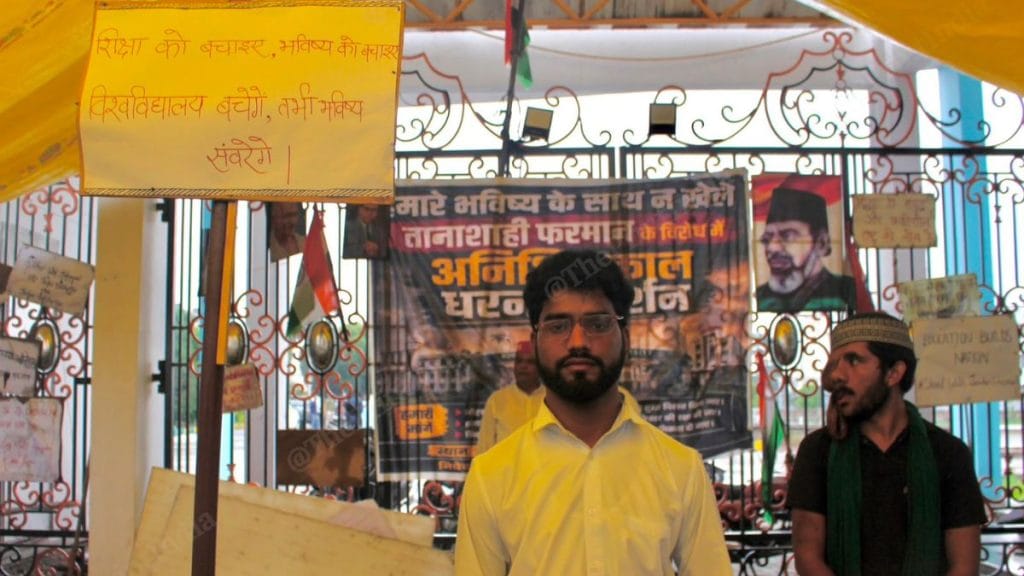
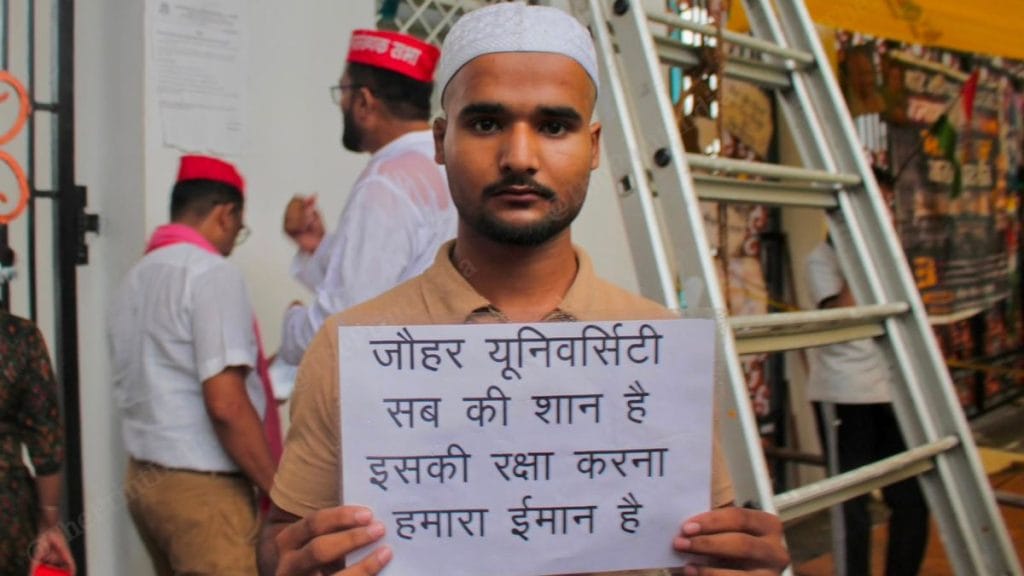
Outside the main gate in Uttar Pradesh’s Rampur, they pitched tents, tied handwritten banners to police barricades and raised slogans from morning till night: “Save Jauhar University,” “Stand with Jauhar University,” and “Shiksha Hamara Adhikar Hai (Education is our right).” For nearly two weeks now, the entrance to the sprawling campus has turned into a protest site.
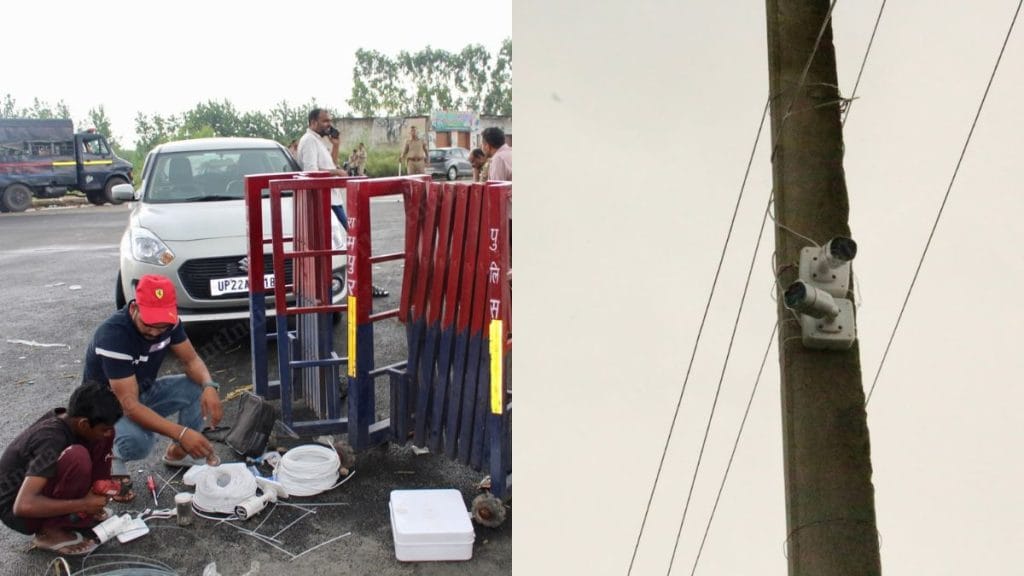
On 15 July, the Rampur Development Authority (RDA) ordered the demolition of 38 of the university’s 40 buildings, alleging they had been constructed without approved building plans. The university, founded by jailed Samajwadi Party leader Azam Khan in 2006, challenged the order before the Moradabad Divisional Commissioner, which on Monday granted an interim stay on the demolition. Hours later, UP Police dismantled the protest site, dispersed the students and imposed Section 144 orders in the area. By Tuesday morning, the tents had disappeared. Police vans had taken their place.
“The moment we heard that 38 of the university’s 40 buildings would be demolished, it felt as if they were taking the roof over our heads away,” said 22-year-old Iqra, a final-year law student at the university.
But by then, the fight had already grown beyond a dispute over building plans.
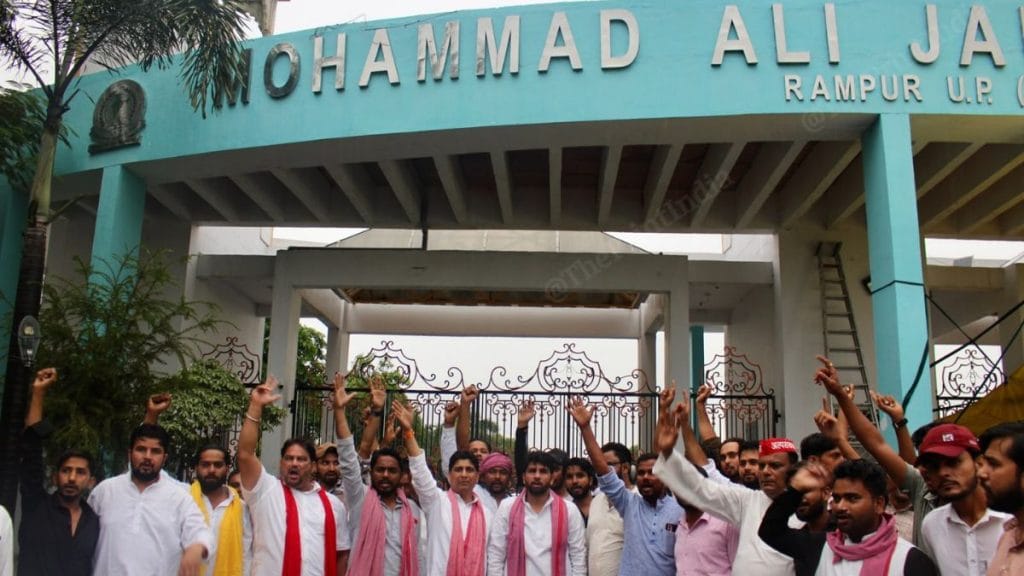
Students, teachers, alumni, residents and politicians across religions have since rallied around the university, transforming what began as an administrative action into a larger debate over education, politics and identity. The university is one of western UP’s few affordable private institutions, drawing thousands of first-generation learners and students from modest backgrounds with low fees, cheap hostels and full scholarships. To the authorities, the issue is straightforward: except for two buildings, the campus was allegedly built without valid approvals and must comply with planning laws.
“The matter is sub judice. Any action will be taken in accordance with the judicial proceedings,” said Ajay Kumar Dwivedi, the District Magistrate (DM) of Rampur, who also serves as the Vice-Chairman of the Rampur Development Authority (RDA) speaking about the action.
As the case moves through the courts, students and residents across communities insist they are trying to preserve an institution — not just buildings — that changed the trajectory of their lives.
“When we start questioning the legality of buildings, every building is illegal. So why doesn’t the authority begin with others first? said 54-year-old Pradeep Pradhan, a resident who came to support the students. “This is purely a political issue. They are targeting the university because of its Muslim identity and the community it represents. In the end, it is the students’ future that will be destroyed.”
‘Demolishing our future’
The police barricades now stand where students had gathered every evening, chanting slogans and planning the next day’s protest. Inside the campus, life appears suspended rather than abandoned.
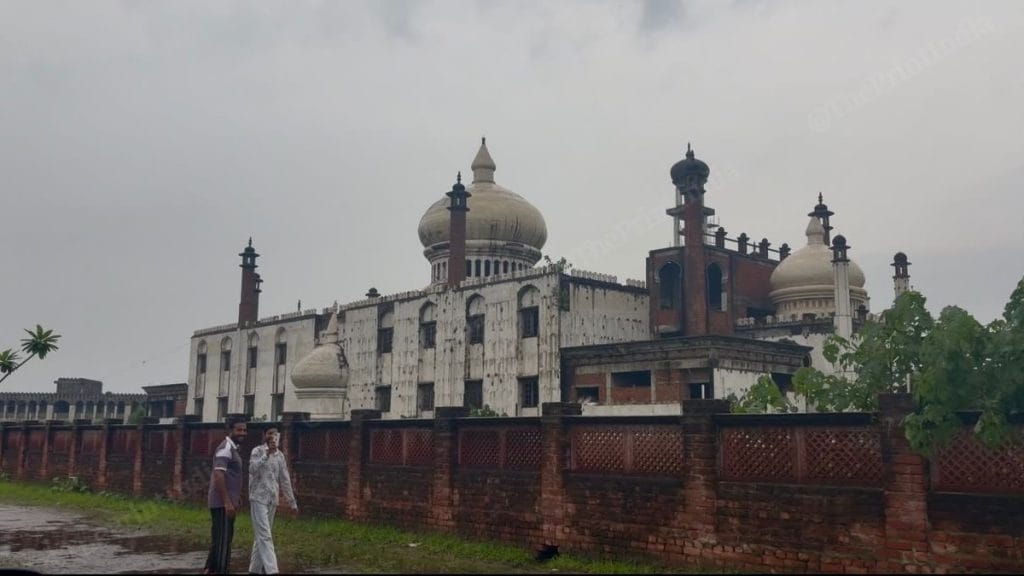
Lecture halls are shut for the semester break, the tree-lined avenues are largely empty, and the white domes and arches of the university rise over nearly 250 acres of land.
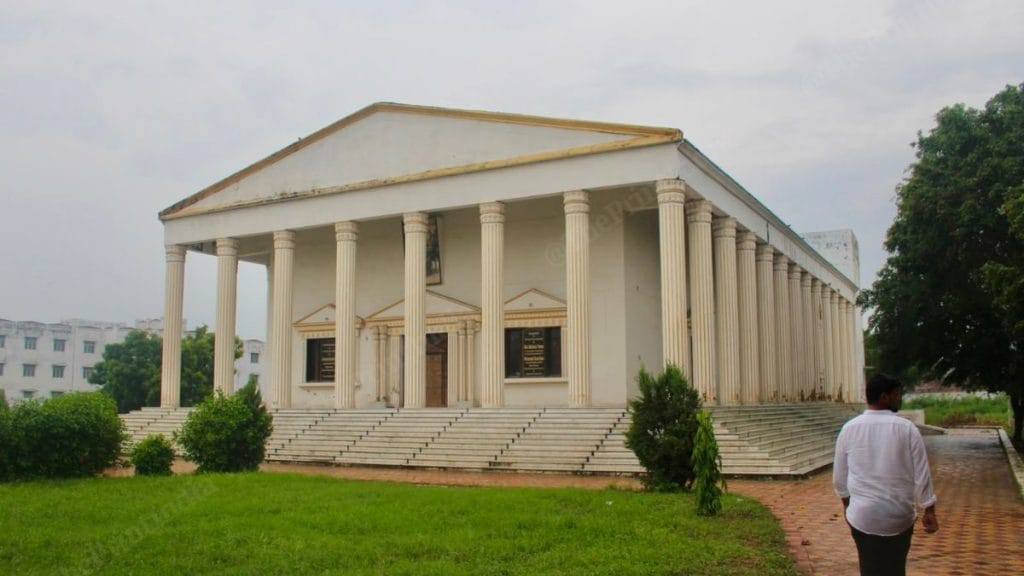
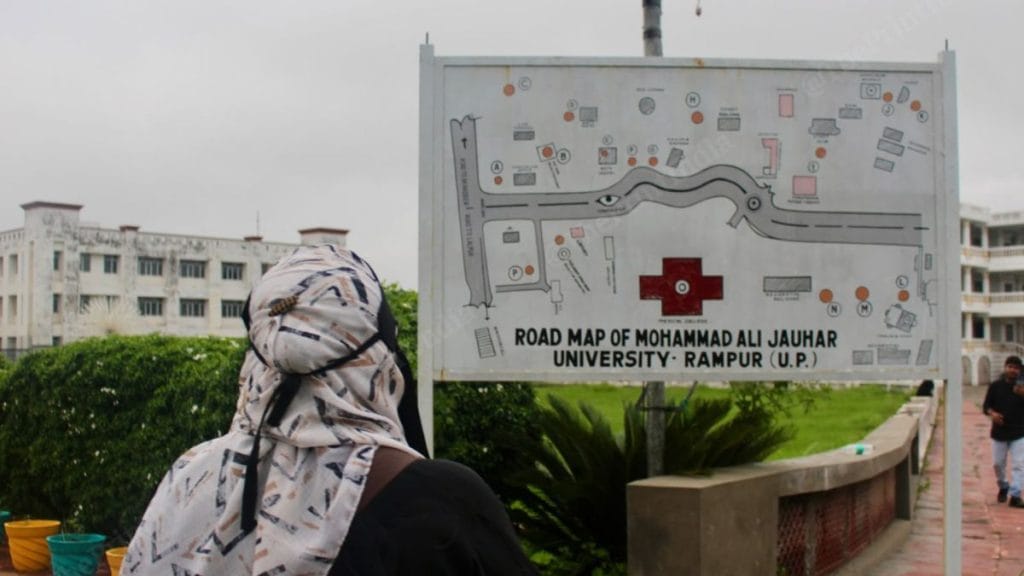
At the heart of the campus stands the Mumtaz Central Library, its dome inspired by the United States Capitol in Washington D.C. Around it are the faculties of law, engineering, pharmacy, humanities, agriculture and management, alongside hostels, auditoriums, sports facilities and landscaped gardens. Many of the buildings now facing demolition are the same ones students once walked between every day.
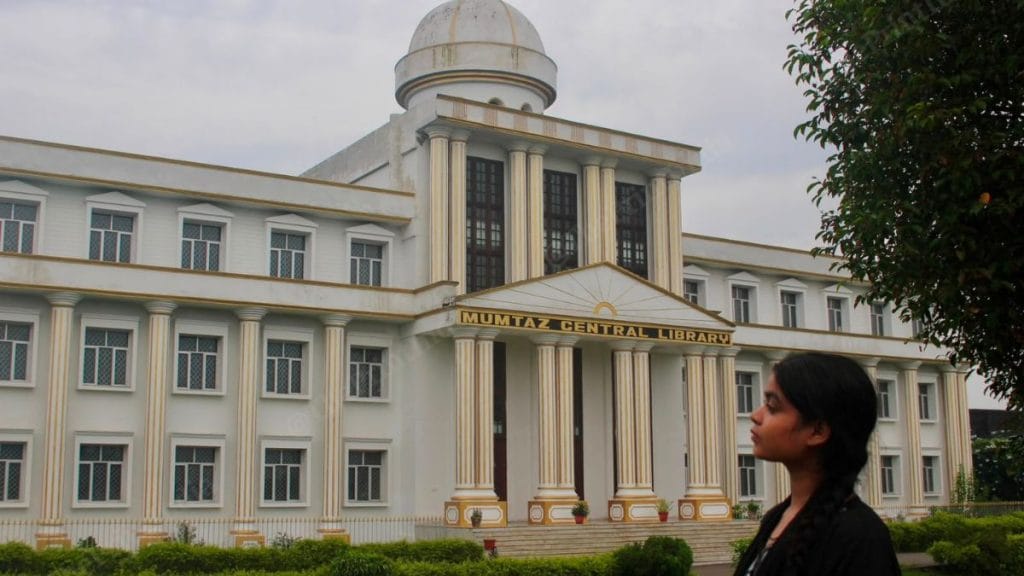
Sitting on the library steps and looking towards the university gate now lined with police vehicles, Iqra remembers the day she convinced her family in Uttarakhand to let her study in Rampur.
“This is the only university my family could afford,” she said. “The facilities provided at such a low cost convinced my family to allow me to pursue law and higher education as the first woman in my family to do so.”
Like many students on campus, Iqra lives in the university hostel. She says her family agreed only after visiting the campus, seeing the hostel facilities and satisfying themselves that it would be safe for their daughter to live away from home.
Her story is not too different from the 3000 students currently enrolled at the university.
The university offers fee concessions for students from outside Uttar Pradesh, full tuition waivers for orphaned students and additional concessions for students from Scheduled Castes, Scheduled Tribes, persons with disabilities and families with multiple children enrolled. Additional concessions are available for students staying in hostels. Students say those policies have helped attract many first-generation learners who would otherwise have struggled to pursue professional courses.
Mukrim Rawal, a fifth-year law student from Panipat, Haryana, was interning at the Supreme Court during his semester break when he heard about the demolition notice.
He cut short his internship and returned to Rampur to join the protest.
Rawal received a 20 per cent concession on his tuition fees because he is from a different state. The financial relief, he said, along with a university scholarship, made his education affordable.
“Before planning to demolish the university, the authorities and the (Yogi Adityanath) government should first ask themselves whether they have any replacement for an institution like this,” Rawal said. “Its architecture, infrastructure, greenery, and regular academic environment cannot be compared with any other university in Uttar Pradesh right now.”
The state’s case
For the Rampur Development Authority, the dispute is not about education but construction.
According to the RDA, only two buildings on the campus — the medical college and one academic block — have valid building plan approvals. The remaining 38 structures, including faculties, hostels, the central library, auditorium and mosque, were allegedly built without sanctioned plans and therefore violate development regulations.
“Even the main gate of the university is illegal because it has been built on Public Works Department land,” said Ajay Kumar Dwivedi, the Rampur District Magistrate.
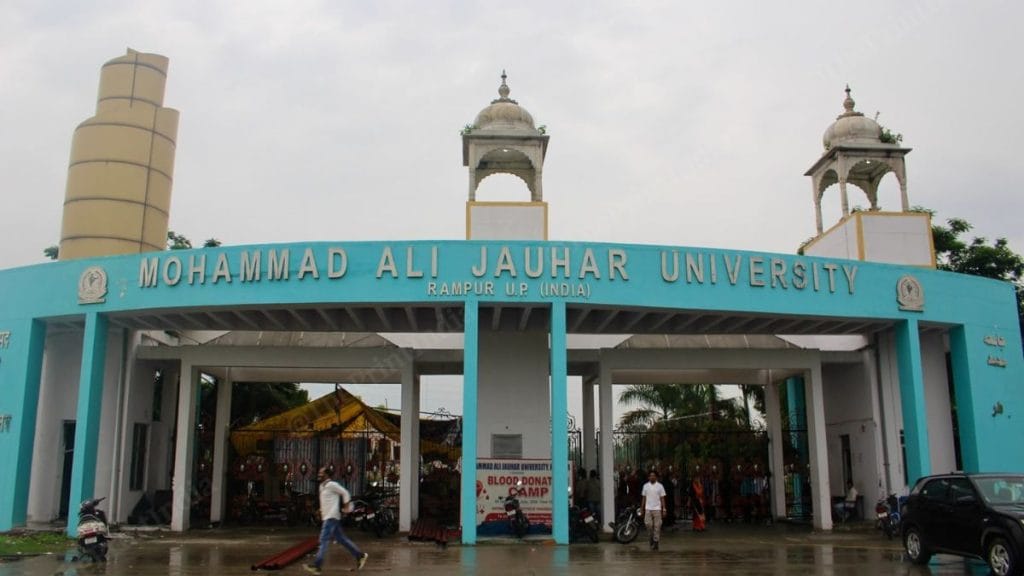
The university disputes that claim.
Vice-Chancellor Professor Zaheeruddin argues that when most of the campus was constructed, the land fell under the jurisdiction of the Rampur Zila Panchayat rather than the development authority, and the necessary permissions were obtained from the overseeing authority at the time. The university, located in Seengan Khera village, came under the RDA only in 2024.
“We are ready to present every document before the court,” he said. “The university is recognised by the UGC.”
The disagreement over building approvals is only the latest in a series of legal battles that have engulfed the university over the past several years.
In 2024, the National Medical Commission’s Medical Assessment and Rating Board withdrew the college’s Letter of Permission (LoP) after inspections reportedly found problems with infrastructure, faculty, and compliance with regulatory standards. The medical college has remained shut since.
Long before that, in 2019, seven years after the university was granted formal status, police registered 27 FIRs against the university’s founder and chancellor, Azam Khan, and others after farmers alleged that land had been illegally acquired for the expansion of the campus. The university has denied wrongdoing, saying landowners were compensated in accordance with the law.
“Every time the admission season comes closer, this is what the government starts doing to stop the process and progress of the university,” Zaheeruddin alleged.
The village that no longer wants to fight
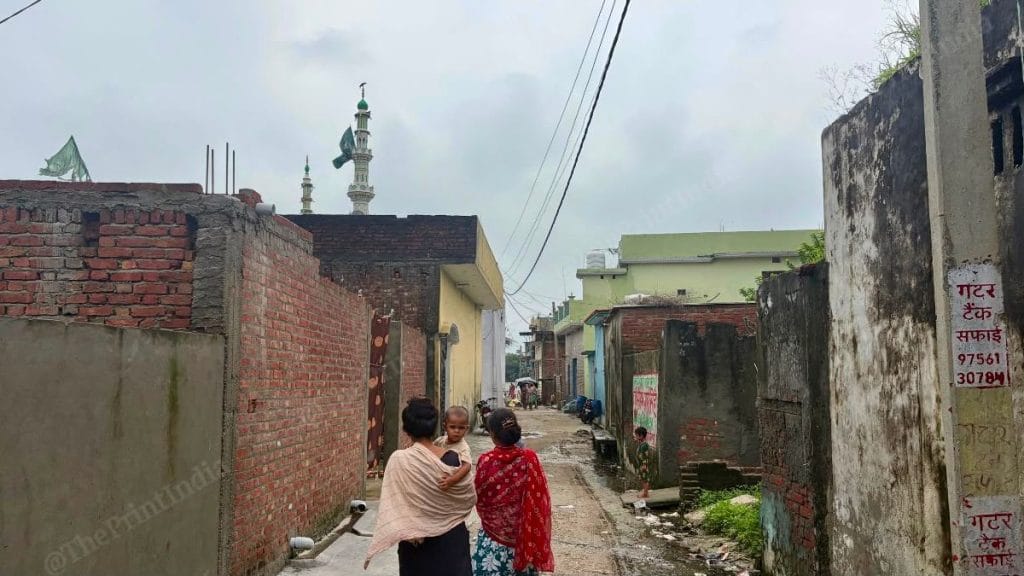
Behind the university’s imposing walls, the road narrows abruptly. The broad avenues lined with academic blocks give way to muddy lanes, stagnant rainwater and closely packed brick houses. This is Aliya Ganj, the village from where the complaints that later became 27 FIRs against Azam Khan and others first emerged.
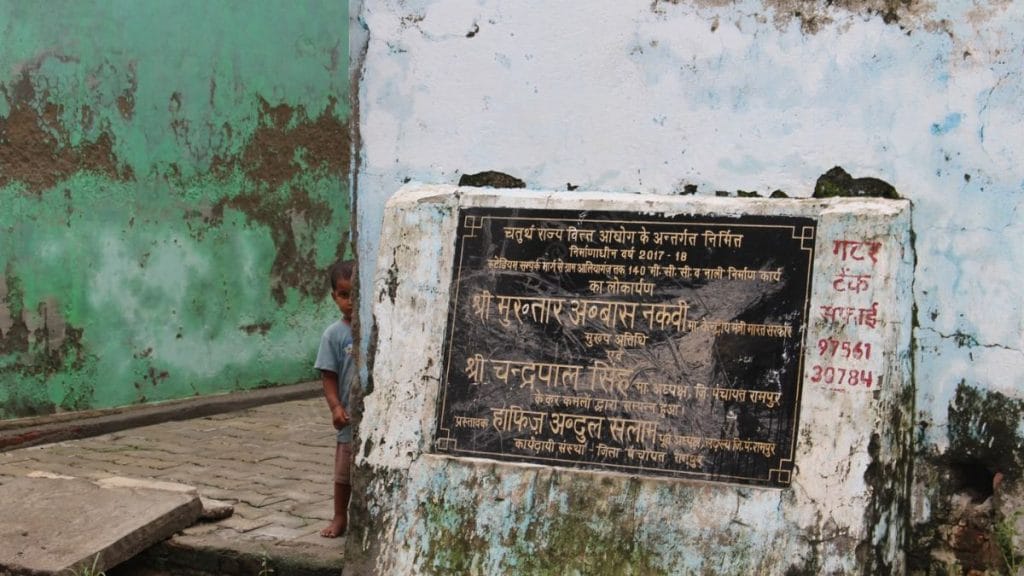
As television crews and reporters walked through the village, women quietly stepped inside their homes and shut their gates. Men declined interviews with a polite but weary refrain: “It is not about us anymore. It is about the university. Leave us alone.”
Many residents want nothing more to do with the dispute.
“If the government is so concerned about us, why don’t they compensate us more now? Or just simply at least build a road for us now. We do not even know whether our land is inside the university or outside, we don’t even want to fight for it now,” said 32-year-old Danish, one of the landowners.
Others claimed they had accepted compensation years ago and later found themselves drawn into a political battle they no longer wished to be part of.
“We were forced and manipulated to file the FIR. Everyone knows how things work when the government changes and why they are targeting this university,” said another resident of the village and landowner alleged.
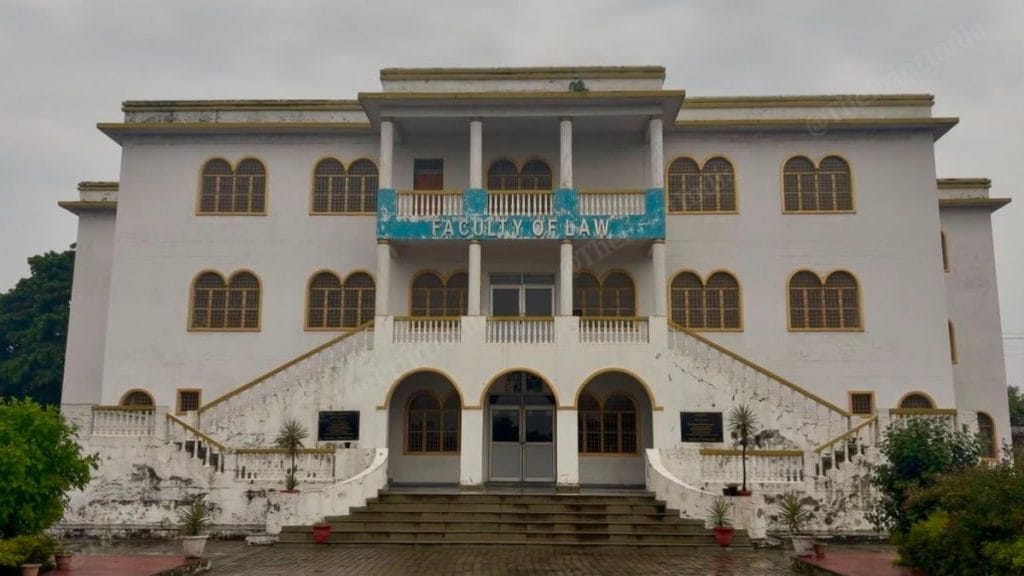
The buildings facing demolition include the Mumtaz Central Library, gymnasium, faculties of Islamic Studies, Law, Science, Engineering, and Humanities, the Department of Pharmacy, Rabindranath Tagore Auditorium, hostels, and the mosque located inside the campus.
More than Azam Khan’s university
By the second week of the protests, the battle over Mohammad Ali Jauhar University had spilled far beyond its gates.
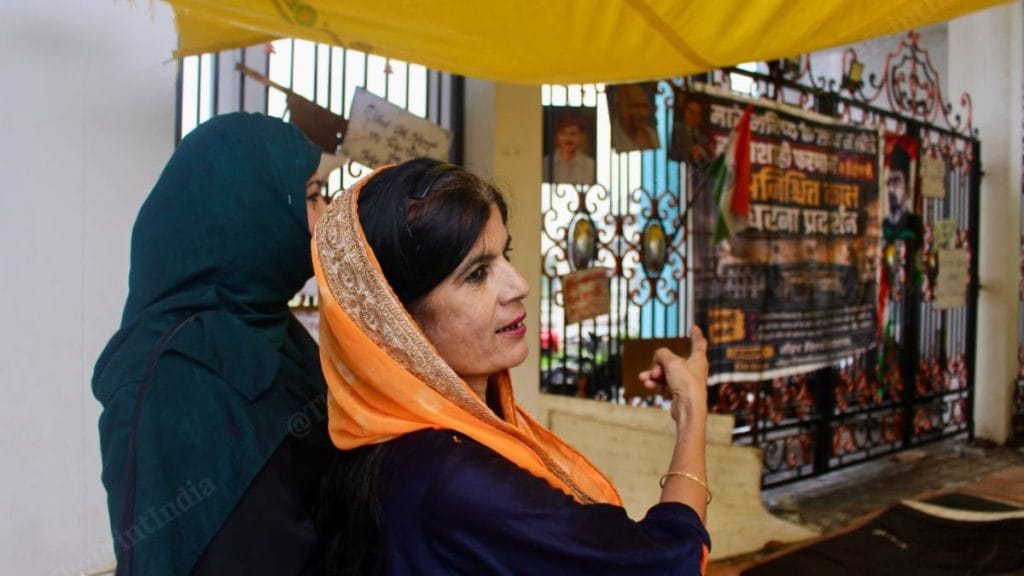
Student organisations, panchayat representatives, Sikh community groups and opposition leaders began arriving at the campus, while residents from across Rampur stopped by to express solidarity. Outside the main entrance, speeches alternated with slogans. Every few hours, another delegation would arrive, address the students and leave.
“We are legally sound and will do everything possible to save the university,” Zaheeruddin said, adding that the administration had been in constant touch with lawyers and authorities as it prepared to challenge the demolition order.
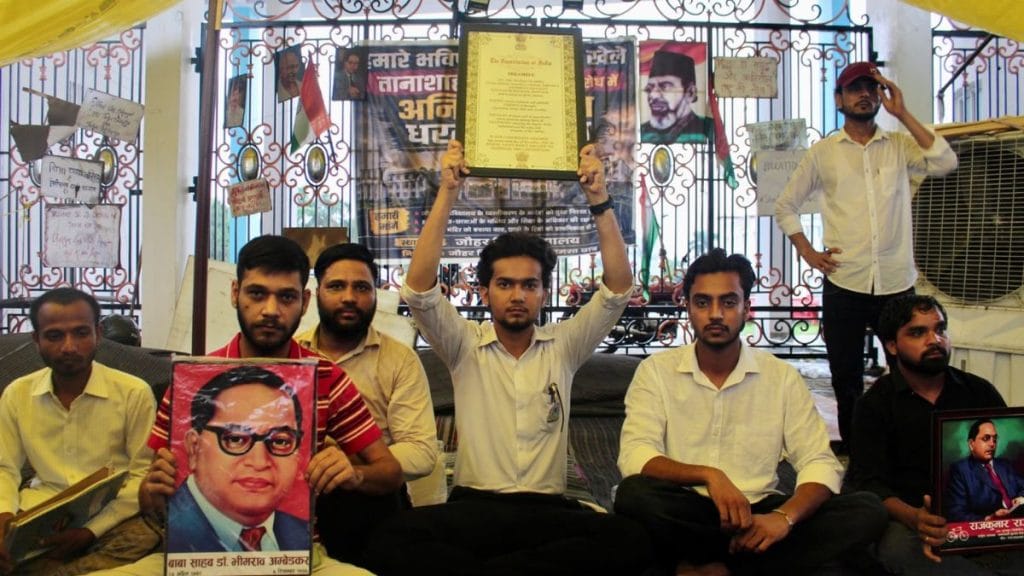
Inside the campus, students said the interim stay had only strengthened their resolve.
“This time, the protest will be much bigger if any action is taken against the university,” one student declared as dozens gathered around him. “We will not allow them to destroy even a single brick of our university,” another shouted, drawing loud applause.
Many students claim that the police visited their homes and questioned their families, urging them to call them back from the protest site.
“The police are threatening us. They are going to our homes and intimidating our families, saying they will detain us. But now we are not going to back down,” said a student on the condition of anonymity.
The DM and the police denied the allegations.
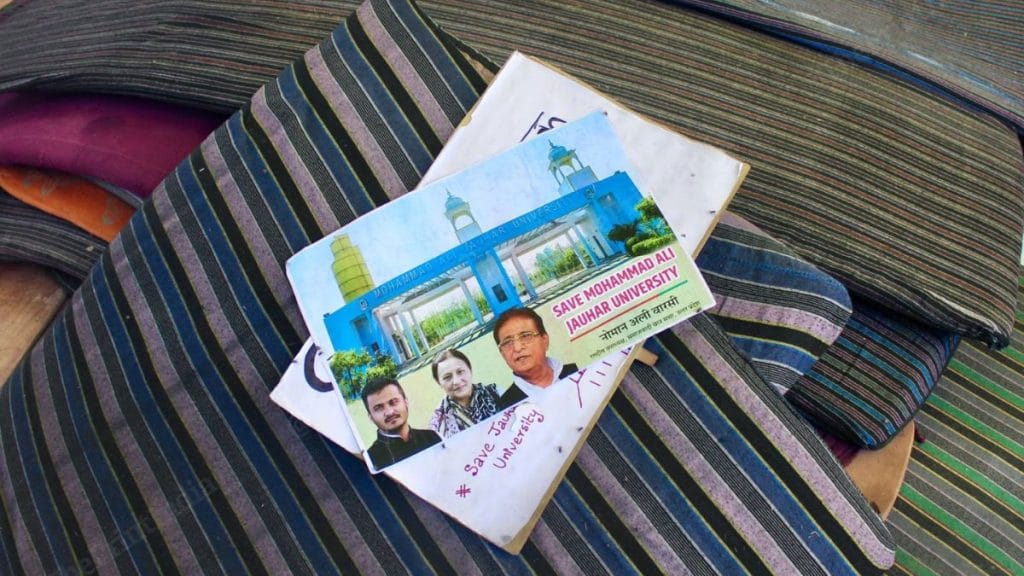
Students also allege that every issue related to the university is portrayed negatively, creating what they described as a persistent false narrative around the institution.
“The government has created such a negative narrative around the university that whenever we tell people we study at Jauhar University, they immediately question us,” said Imran, 23, a law student. “Even prospective students think twice before taking admission here.”
For many, the argument had long ceased to be about building approvals.
“Development authorities are meant to develop things, not destroy educational institutions and demolish the futures of students,” he said.
The sentiment resonated well beyond the campus.
A few hundred metres from the university gate, Rehbar Ali Tea Stall had turned into an unofficial newsroom. Plastic chairs were occupied through the day by journalists, lawyers, police personnel and local residents following every court hearing and administrative development over cups of tea. Conversations that once revolved around crops, business or local politics now invariably returned to one question: what would happen to the university?
“If the government has so many problems with the university, then change its name. Call it something in Sanskrit if you want,” said Navneet Singh, a resident. “Why destroy an educational institution? It’s not just Muslims, students from every religion study here. Where else will they find a university like this?”
Hashim Khan, a farmer from Rampur, looks at the issue differently.
“This government (BJP) does not demolish things only after providing poor people with an alternative. They only want to impress one community by destroying another,” he said. “When the medical college was functioning, at least we had access to medicines nearby. Now even that is gone. Has the government ever come to see this situation?”
Politicians weigh in
As the protests grew, so did the political attention.
Samajwadi Party President Akhilesh Yadav accused the BJP government of viewing education through a communal lens in a tweet, while party MP Iqra Hasan visited the campus and appealed to the administration not to destroy what she described as one of Rampur’s educational landmarks.
“Hamari sarkar to anpadh hai lekin adhikari to padhe likhe hain, to woh kisi ke kehne par action na lein. Universities mein har dharm, varg aur jaati ka bachcha padhta hai. Rampur mein jo yeh dharohar hai, ise na toda jaye (Our government is illiterate but authorities are not so they shouldn’t take action under pressure. All religions, caste, classes study in a university. Don’t demolish the institution in Rampur),” she said.
The BJP, however, has maintained that the action concerns violations of planning laws and not the institution’s identity.
The renewed attention also revived memories of the man who built the university.
An old video of Azam Khan’s 2019 speech in Parliament resurfaced on social media, in which he described the university as “one of Asia’s most beautiful universities” and claimed its medical college rivalled Rashtrapati Bhavan in grandeur.
Seven years later, that vision stands at the centre of another political battle. But for many students gathered outside the gates, the university is no longer simply Azam Khan’s legacy. It is where they became the first in their families to attend college, where they found affordable education, and where they now believe they are fighting for something larger than the man who founded it.
Also Read: Why a Rs 300-crore housing project is empty in Delhi’s Vasant Kunj
‘Save our future’
For nearly two decades, Mohammad Ali Jauhar University has existed in the shadow of its founder.
Students acknowledge that the university carries Khan’s political legacy. Many, however, insist that reducing it to its founder ignores what it has become over the years.
Imaan Ali, 32, travelled over 15 km with his wife and 13-year-old son, Ayaan, to join the demonstrations.
“I could not study here, but I want my son to. That is why we are here to save this university,” Ali said. “After watching the protests in Delhi, we are here to ask everyone to come forward and support this cause.”
Standing beside him, Ayaan watched university students lead slogans demanding that the campus be saved. He wants to be a lawyer, like many in the protests.
“Modiji kehte hain, ‘Padhega India to badhega India’,” he said, quoting Prime Minister Narendra Modi government’s education slogan. “Jab university hi nahi rahega, to kahan padhega India (If there will be no university, where will India study)?”
(Edited by Stela Dey)