


Bulandshahr: When Sunil Kumar Sharma saw an X post by Congress leader Jairam Ramesh on what a “tragedy” it was that the Modi government was shutting down BIBCOL, he stopped scrolling and began typing furiously. The 58-year-old former employee of the Bulandshahr factory, which once produced crores of polio vaccine doses, had a ready response. He has had sharp, practised arguments at his fingertips for years now.
“The PSU that made the country polio-free has been swallowed by corrupt officials,” he wrote in response to Ramesh, alleging that four out-of-work employees had died in financial hardship and others were “on the brink of starvation”.
What was once the dream public health factory for millions stands now like a broken promise of sorts. It signals the government’s unwillingness to rescue old PSU relics, but for the workers it is the story of a long laundry list of unpaid salaries and severance, jobs terminated abruptly and an aspirational life disrupted.
Four of our friends have died struggling financially. We voted for this government and they have left us alone in this difficult situation. They are not giving what is ours
– Dinesh Chandra Pant, former BIBCOL employee.
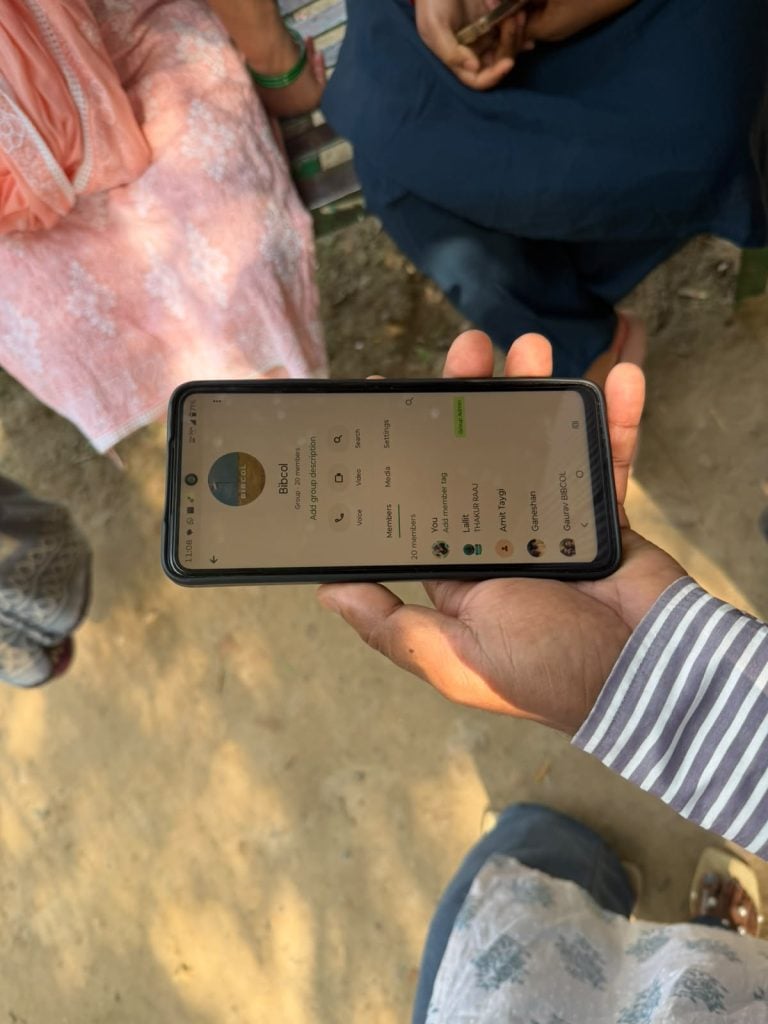
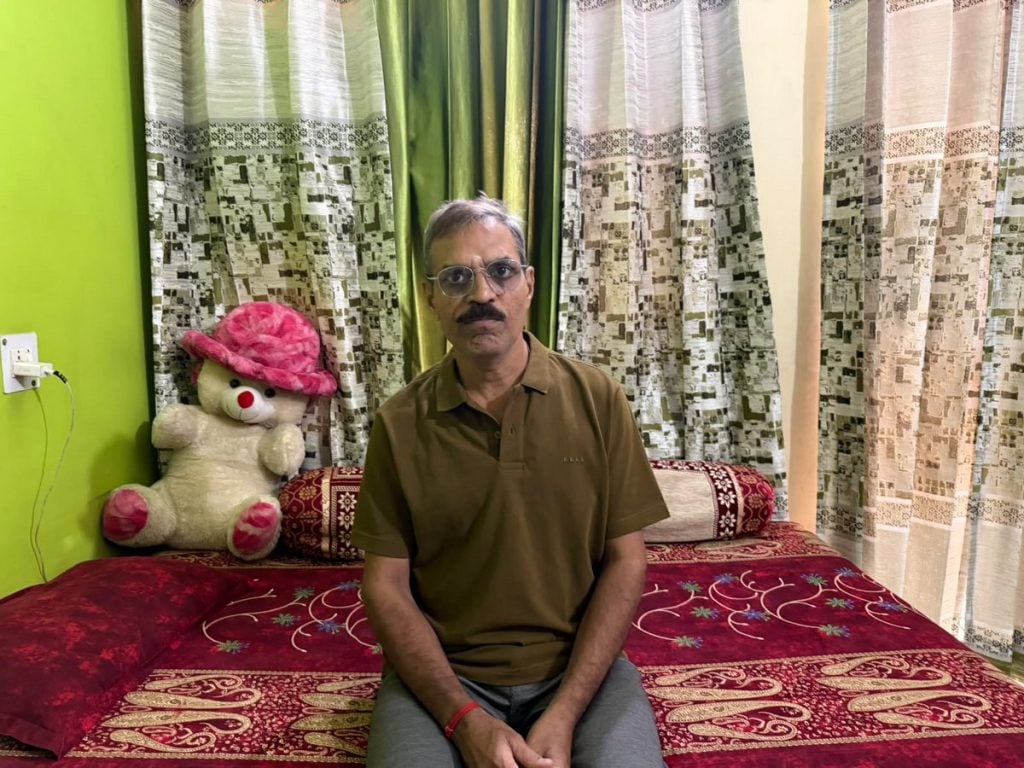
Sharma knows their plight firsthand. A former senior plant superintendent at Bharat Immunologicals and Biologicals Corporation Limited (BIBCOL), he is among roughly 100 employees who went without regular salaries after the factory stopped producing vaccines in December 2022. They petitioned courts, sought intervention from the CBI and Lokpal, wrote to government authorities and staged protests demanding their dues. And they held on to the hope that the plant would be revived.
That hope has now been dashed.
On 17 September 2026, the Union government approved BIBCOL’s closure, ending any prospect of revival. But the workers still have no clarity on their pending salaries, other benefits or whether they will be accommodated in other public-sector companies. The decades they devoted to the PSU, set up in 1989 to make India self-reliant in vaccines, now seem to count for nothing.
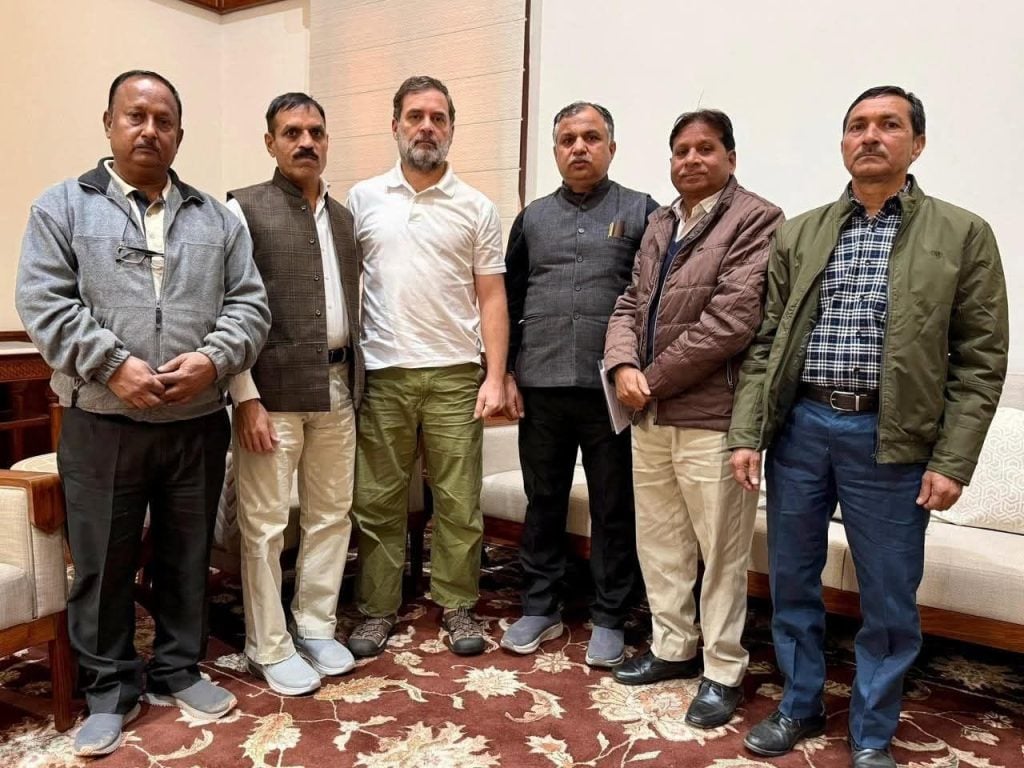
Every attempt to stave off BIBCOL’s demise has bitten the dust. In March 2025, a parliamentary standing committee recommended a revival package for BIBCOL. That December, Leader of Opposition Rahul Gandhi met a delegation of its employees over their unpaid salaries. But neither intervention could save the unit from closure.
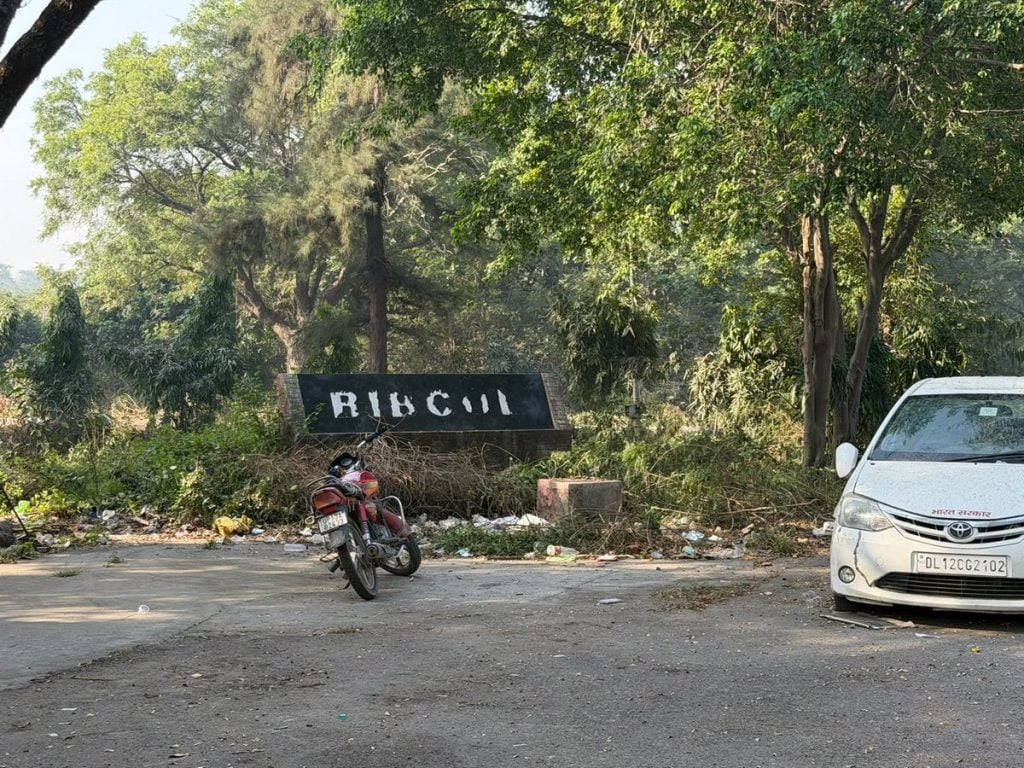
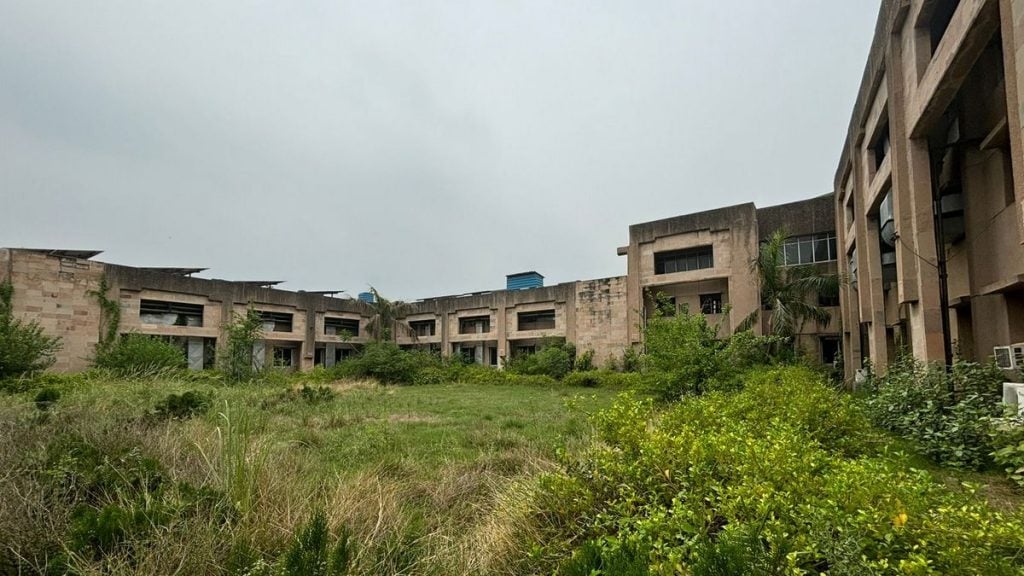
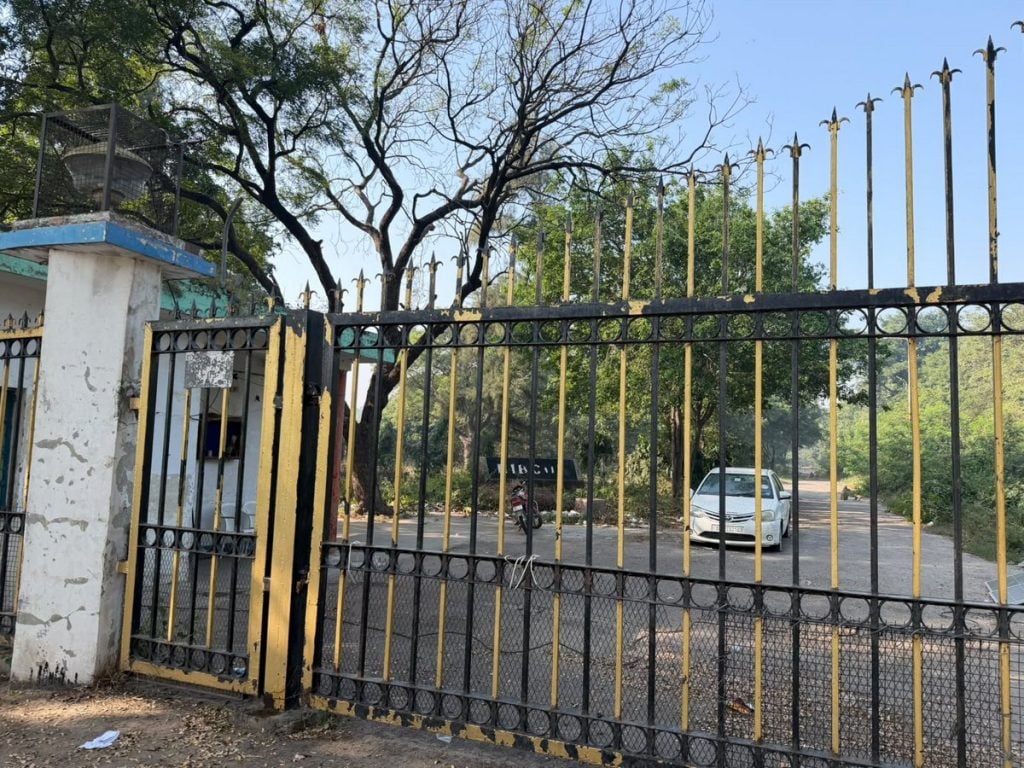
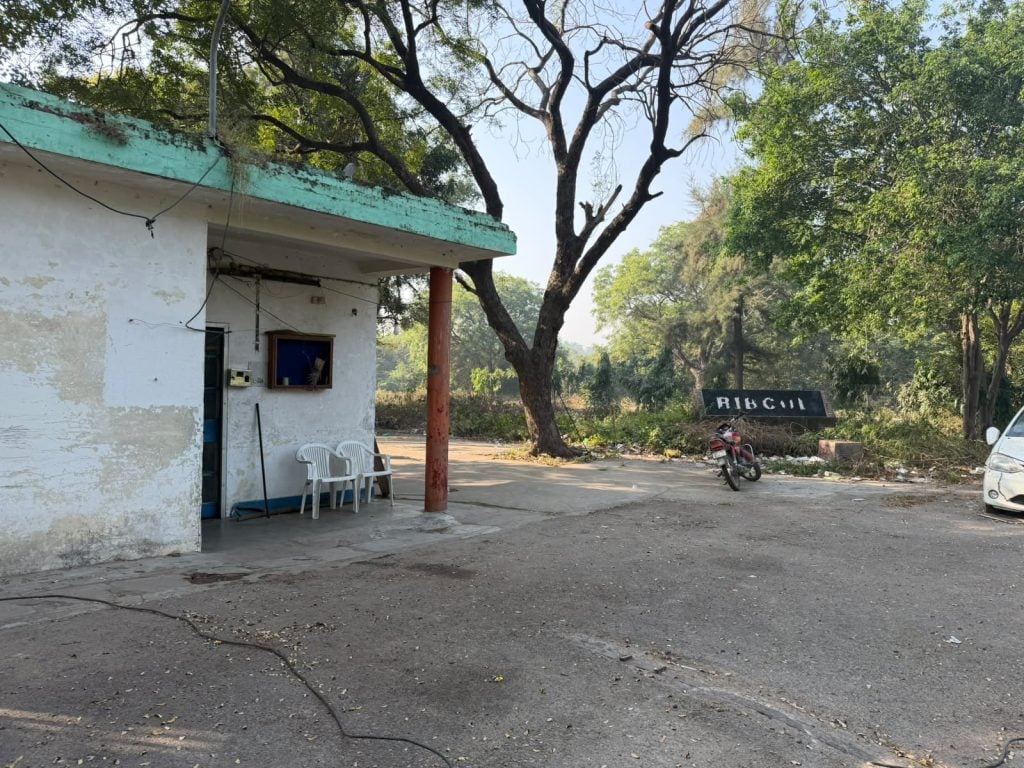
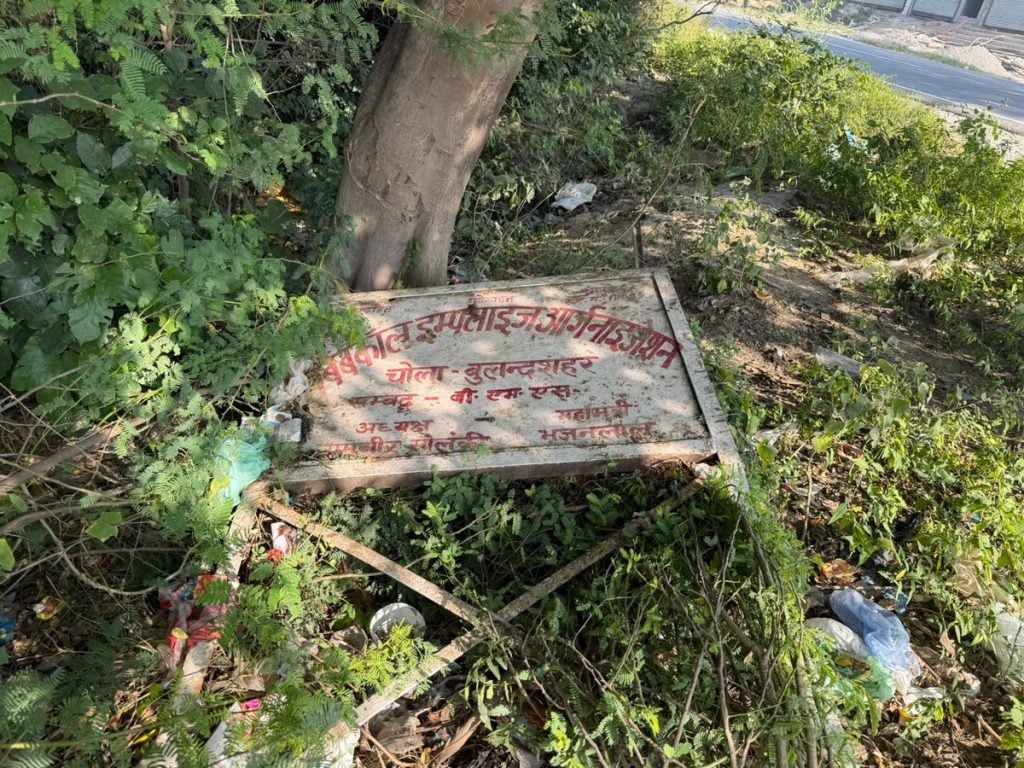
The factory has now become a playground for monkeys and nilgai. A lone guard is posted at the entrance, though he is rarely at his post. Inside the gate, a government vehicle sits covered in dust, while the factory’s broken nameboard lies abandoned in the bushes. The name etched on the marble plaque at the entrance has faded.
Now, the workers are simply hoping to recover what they are owed. None has received formal communication from the company about its closure, termination of their services or payment of their dues. For the workers, it has just added one more layer of silence to the years of apathy from the government. The officers in the ministry in New Delhi have not sent any communication to the protesting and anguished BIBCOL employees.
“We are doing the process,” said Ekta Vishnoi, joint secretary in the Department of Biotechnology (DBT), when asked what would happen to the workers after the factory’s closure.
Also Read: Why are many of Jharkhand’s Eklavya schools empty? Tribal children wait for their first class
The govt job dream in tatters
Not too long ago, a BIBCOL job was a much sought-after step up in the social ladder for many Indians.
In 2005, Vijay Prakash Nag came across a job advertisement in a newspaper. He travelled to Delhi for the interview and was one of four candidates selected from 30 applicants for a junior lab technician’s post at BIBCOL. His salary got bumped from Rs 5,000 at his previous private-sector job to Rs 15,000. Better still, he had the security of a government job. It was on the strength of this job that he got married in 2013.
For nearly 17 years, the job remained a source of financial security and pride. Nag bought jewellery for his wife, enrolled his daughter in a private English-medium school, and helped out family and friends with money. At the time BIBCOL stopped production, Nag was drawing Rs 55,000 a month.
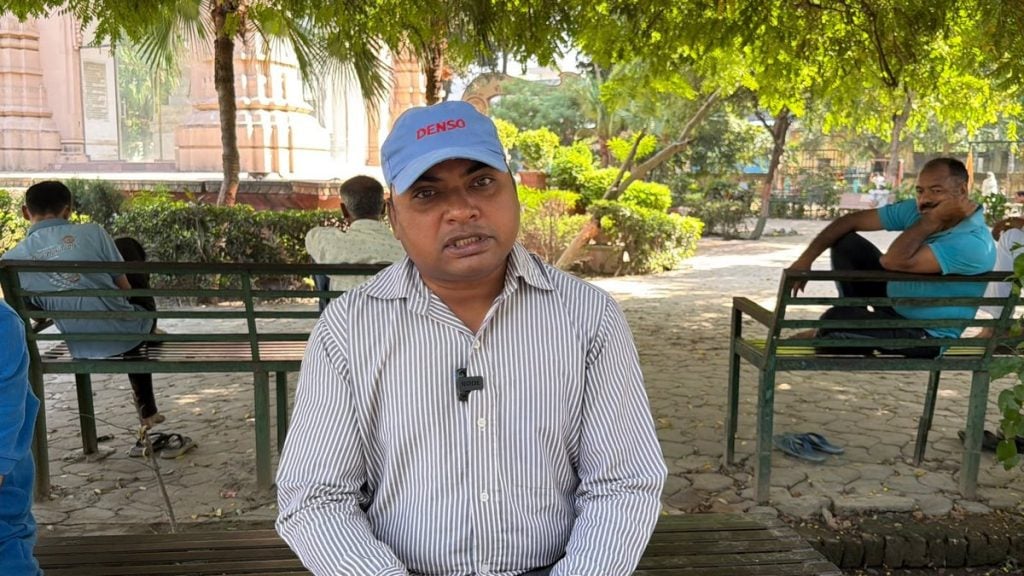
With his salary gone, life as he knew it is unravelling. He struggles to keep his 12-year-old daughter in school. Her tuition fees, school van and other expenses come to around Rs 18,000 every three months. She cannot understand why the family can no longer afford things that were once taken for granted.
“The most important thing about a government job is its security, but that was snatched away from me. My 12-year-old daughter fights with me because I can no longer maintain the lifestyle we had four years ago,” said Nag, who is 47 now.
Younger people aren’t getting jobs, so how will I get one? And there aren’t many opportunities in a place like Bulandshahr. I live in a rented house. Even a slight delay in paying the rent leads to humiliation from the landlord
– Vijay Prakash Nag, former BIBCOL technician.
He had another 17 years of service left when the factory stopped production. Now, prospective employers turn him away because of his age.
“Younger people aren’t getting jobs, so how will I get one? And there aren’t many opportunities in a place like Bulandshahr. I live in a rented house. Even a slight delay in paying the rent leads to humiliation from the landlord. My only demand is that if the government is shutting this company down, it should accommodate us in another company,” Nag said.
Other former employees have even been forced to sell their belongings and put off medical treatment.
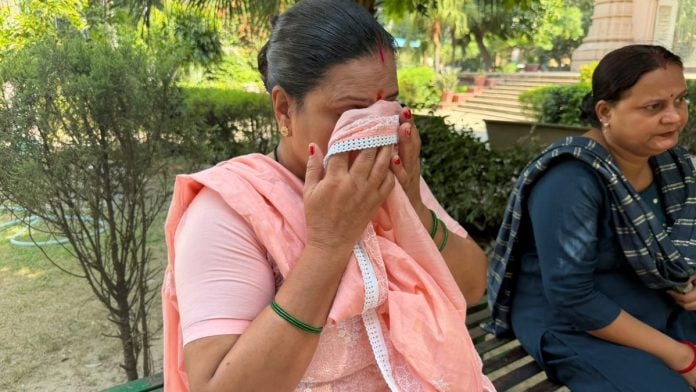
Fifty-two-year-old Rekha Pant has sold almost every piece of jewellery she owned — her earrings, nose ring, chain and even her mangalsutra — to keep her household running and to meet medical expenses. She now wears an artificial mangalsutra.
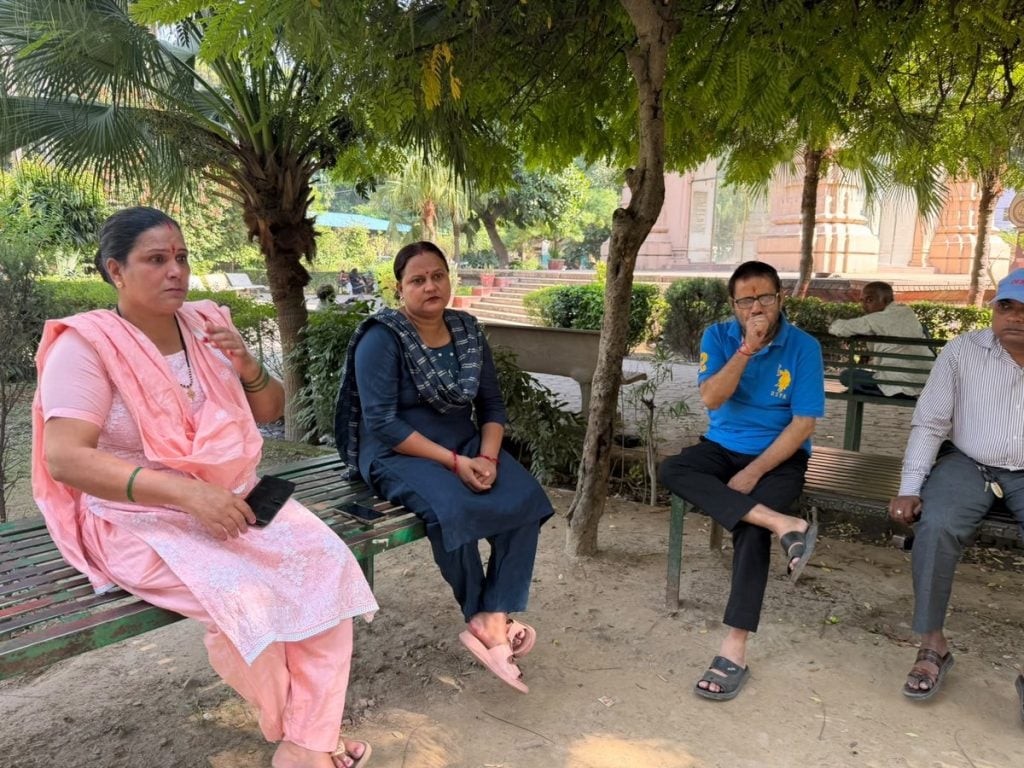
Her husband Dinesh Chandra Pant joined BIBCOL in 1993 and, after nearly 30 years of service, was earning Rs 80,000 a month maintaining the plant’s air conditioning units and laboratories. He sent his children to study in Delhi and lived comfortably. Even when rumours of trouble started swirling in 2020, signs of expansion kept anxieties at bay. He even took a home loan in 2022, just months before operations stopped.
“People were going out of India for training for new projects, new rooms were set up. I thought everything will be okay and I took a Rs 10 lakh loan to build my house. Now interest is piling up I am not able to return the money,” said Pant.
When I last visited the doctor, it cost me Rs 7,000. He asked me to come back after a month, but I cannot afford it. I have sold all my wedding jewellery; there is nothing left
– Rekha Pant, wife of former BIBCOL employee Dinesh Chandra Pant
He says years of standing on the job are now taking a toll and he walks with a limp, but neither he nor his wife can afford to go to the doctor regularly.
“When I last visited the doctor, it cost me Rs 7,000,” said Rekha Pant. “He asked me to come back after a month, but I cannot afford it. I have sold all my wedding jewellery; there is nothing left.”
Nag and Pant repeatedly sought help from government authorities, including the offices of PM Narendra Modi and Home Minister Amit Shah.
What hurts them particularly badly is that they expected the Modi government to re-open the factory or give them compensation but have instead been left to fend for themselves.
“Four of our friends have died struggling financially. We voted for this government and they have left us alone in this difficult situation. They are not giving what is ours,” said Dinesh Pant.
Rajiv, Rahul & the revival that never came
The employees’ three-year sit-in, letter-writing and petitioning campaign eventually reached Rahul Gandhi, the Leader of the Opposition in the Lok Sabha. On 11 December 2025, Gandhi shared a video of his meeting with a delegation of BIBCOL employees at his Parliament office.
“The situation they described will not only surprise you, but leave you utterly shocked,” he wrote in a post on his WhatsApp channel, adding that workers were forced to survive on loans and borrowed money.
The BIBCOL dream had begun with Rahul’s father, former prime minister Rajiv Gandhi, after all. In the late 1980s, India accounted for two-thirds of the world’s polio cases and imported almost all its vaccines. He wanted to change both. “If we could eradicate smallpox why can’t we do the same in the case of polio?” he had asked, according to an op-ed by Jairam Ramesh, in which he wrote of how Rajiv Gandhi “spearheaded” the creation of BIBCOL in 1989 with Soviet assistance. The factory began commercial production in 1996 and went on to supply 60 per cent of India’s polio vaccines. In January 2012, India completed a full year without a new polio case.
“It took us three years to meet Rahul Gandhi to tell him about our problems. He was really helpful. He called people in PMO in front of our eyes and asked to pay our dues,” said Sunil Sharma.
After all this, the BIBCOL employees received just three months’ backdated salaries in February 2026, covering September to November 2023. Their wages from December 2023 onwards remain unpaid.
“We have been unemployed for so long and the government isn’t communicating anything,” said Sunil Sharma.
But until a few weeks ago, there had been a sense of ‘never say never’ in the air even as the company went downhill. In 2021, it was roped in to manufacture Covaxin in collaboration with Bharat Biotech, with the Centre announcing a Rs 30 crore grant to upgrade its facilities though production never began. Even in July 2024, its then managing director Dhananjay Tiwari told ThePrint: “There is a pursuit for revival and diversification.”
In a similar vein that December, Union Minister of State for Science and Technology Jitendra Singh told the Rajya Sabha that BIBCOL was making losses but the government was exploring financial assistance to revive it.
When the government approved its closure less than two years later, the announcement to the Bombay Stock Exchange offered no explanation for the change of course.
Even as the government remains tight-lipped, Opposition leaders have floated different theories about BIBCOL’s decline and closure.
Rahul Gandhi has accused the government of systematically weakening public-sector undertakings and alleged that BIBCOL had been “deliberately and systematically driven into losses” to benefit private vaccine manufacturers.
“This is the same BIBCOL that helped eradicate polio by supplying affordable vaccines. It was profitable until 2017,” Gandhi wrote in his WhatsApp post. Meanwhile, Jairam Ramesh claimed last month that the government “will no doubt sell off its 60 or so acres close to the new Jewar International Airport”.
Also Read: From red to green: 5-yr report card of DPSUs after India split up its old defence factories
The long road to ruin
For Sunil Kumar Sharma, BIBCOL’s slide from profit to ruin was the handiwork of its own management.
“It’s the bosses who ruined the company. The senior officers used to take commission. They filled their pockets and ruined the company,” he alleged.
While there is no documented evidence to substantiate the corruption allegations, the Comptroller and Auditor General (CAG) has more than once flagged weaknesses in BIBCOL’s financial controls and accounting practices.
In a 2025 report on public-sector enterprises for the period ending March 2023, CAG observed that BIBCOL could not be audited “as the management has not furnished the requisite information despite continuous pursuance”. Even in its 2010-11 report, the CAG noted that BIBCOL “did not maintain proper cost records”.
“The balances under loans and advances, sundry debtors and sundry creditors were pending for confirmation. The consequential impact of which was not ascertainable,” it said.
BIBCOL’s own financial records tell a story of dramatically fluctuating fortunes. In 2013-14, it recorded its highest-ever turnover of Rs 202.75 crore and a pre-tax profit of Rs 11.01 crore. The following year, turnover fell to Rs 146.22 crore and profit shrank to Rs 2.09 crore. In 2015-16, the company slipped into the red, recording a pre-tax loss of Rs 8.96 crore, according to its 2015-16 directors’ report.
The company bounced back into profit in 2016-17, recording a turnover of Rs 124.18 crore and a pre-tax profit of Rs 9.22 crore, according to its directors’ report. But the recovery was short-lived. BIBCOL recorded losses for the next six years, with a net loss of Rs 17.06 crore in 2022-23.
There were structural problems, too. BIBCOL depended heavily on government orders for oral polio vaccines. In a March 2015 report, credit-rating agency ICRA noted that 98 per cent of the company’s sales came from this one product. It also flagged BIBCOL’s failure to develop other products with revenue potential and the burden of running its plant and corporate operations when vaccine orders were not forthcoming.
“The operating margins of the company have been volatile with losses being reported in the years the company is not able to get OPV tender awards owing to overheads at the plant and corporate level,” the report said.
Ironically, later attempts at diversification brought new setbacks. In another 2025 report, the CAG examined a project involving BIBCOL and the Translational Health Science and Technology Institute to develop an oral cholera vaccine. Despite Rs 11.40 crore in grants, “no technical milestone was achieved in the project”, it found. The CAG also flagged the release of Rs 1.37 crore before a required milestone had been met. BIRAC, the government-backed biotechnology funding agency, acknowledged the lapse. The project was eventually foreclosed.
Sharma says the company could have been saved if those in charge had acted in time. And it wasn’t as if the government hadn’t rescued BIBCOL before. In 2003, the Centre eased the company’s financial burden by waiving interest on a Rs 4.72 crore loan and converting the loan into shares. The company turned a modest profit in 2004-2005 after several loss-making years.
Two decades later, the factory stands abandoned. The helipad that once symbolised its role in delivering vaccines to those in need remains a relic of a different time. Inside, the water treatment plant, power substations and animal house succumb slowly to disuse.
For Vijay Prakash Nag, who spent years helping manufacture vaccines that protected millions of Indians from polio, the irony is devastating.
“Our work helped make this factory what it was and played a part in making India polio-free. Today, the government has left me feeling as though I have polio in both my legs,” Nag said, wiping away tears.
(Edited by Asavari Singh)