


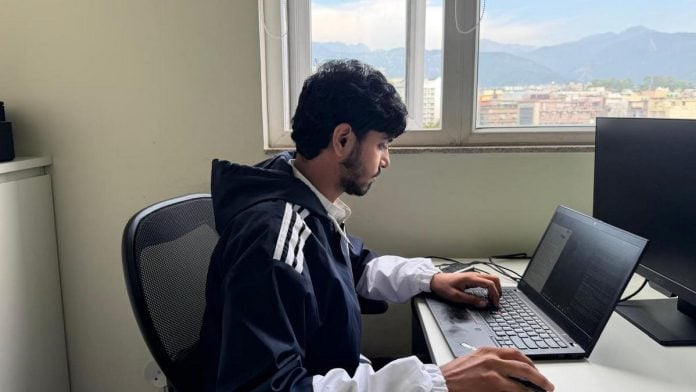
Dehradun: At 18, Arjun Dhiman was helping his father lay tiles at village construction sites in Uttar Pradesh’s Saharanpur. Less than two years on, he is writing code with the help of AI, debugging software and building interfaces — a future his father could never have imagined.
It all began when Dhiman’s schoolteacher shared a WhatsApp group link, offering students an opportunity to learn coding for free.
“There is an organisation that will teach coding to selected students. Join this WhatsApp group if you are interested,” the teacher told the class.
The link took Dhiman to CodeYogi Foundation, a Dehradun-based non-profit that teaches coding and AI to students from government schools, polytechnics and industrial training institutes (ITIs). A low-cost Android phone is enough to take the course. No laptop is needed. It is helping bring up a new crop of small-town and rural students who are now able to break into the AI economy without spending lakhs on a degree or expensive machines.
The six-month course has changed Dhiman’s life. He now works at CodeYogi’s Dehradun office and earns a salary of Rs 15,000 and is due for a raise in three months. His father makes about the same in a good month, but barely Rs 10,000 in leaner periods. Dhiman is also pursuing a long-distance Bachelor of Computer Applications (BCA) degree at a government college in Saharanpur.
“From class 10 I used to think about doing coding but I had no resources or guidance. This course came as a miracle for me,” Dhiman said.
Of the 20 students selected from his school, only five made it at least halfway through the course. Dhiman was the only one from his class to finish it and land an internship at CodeYogi, working on the backend of its courses. On a November weekday, he sat in the newly furnished Dehradun office in a black jacket, typing lines of code.
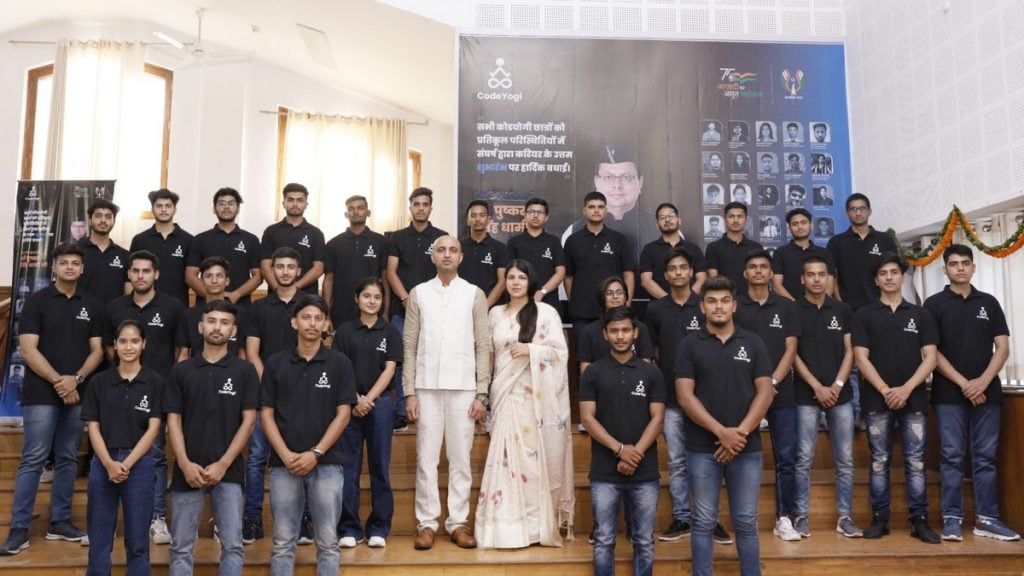
Founded in 2020 by IIT Delhi alumnus Prashant Chaudhary — along with his wife Priyanka Sethi and batchmate Rakesh Sehgal — CodeYogi has grown from a modest experiment into an initiative that has reached more than 4 lakh students across 120 districts in nine states, including Rajasthan, Madhya Pradesh and Uttar Pradesh.
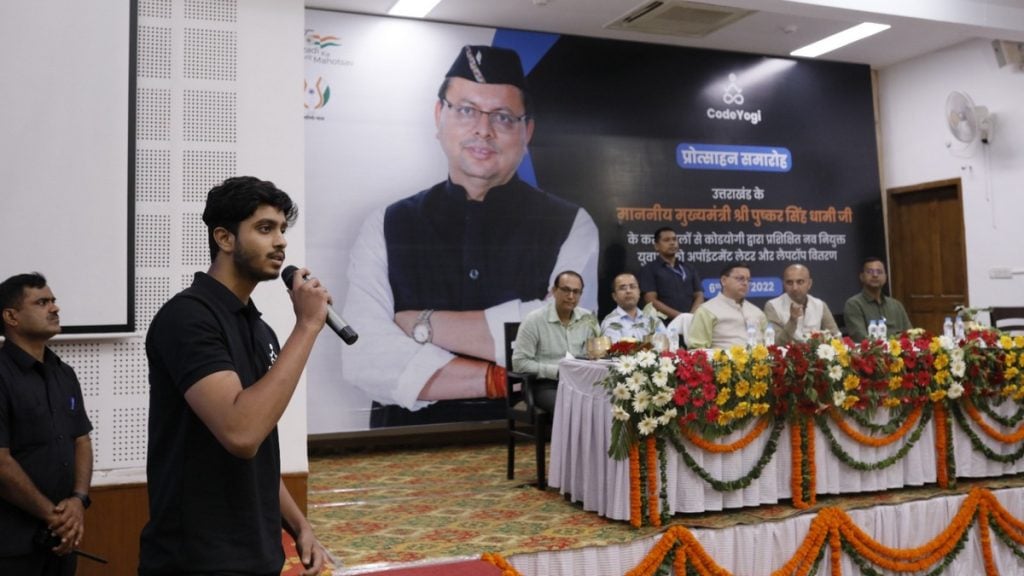
Chaudhary says he bootstrapped the venture with around Rs 4 crore of his own money, but the Uttarakhand government has since lent its support too. In 2021, the Chief Minister’s Office invited CodeYogi to work with ITIs and polytechnics in the state, and in 2022 Chief Minister Pushkar Singh Dhami distributed appointment letters and laptops to students trained by the organisation.
“We are not like engineering colleges or universities that take forever to change. We are always ahead of the curve,”
– Prashant Chaudhary, CodeYogi co-founder
“Such selfless initiatives should continue regularly,” Chief Minister Pushkar Singh Dhami said at the time. Earlier this month, Chaudhary was awarded the fifth Rohini Nayyar Prize for Outstanding Contribution to Rural Development.
Seeing the artificial intelligence wave coming, CodeYogi overhauled its curriculum early in the day and pivoted from basic coding lessons to a crash course in AI.
“The main reason behind our success is that we have always been one step ahead of our time. We started working with AI early, and our students were building AI bots in 2018-19,” said 39-year-old Chaudhary, who was the first person from his Meerut village to get into an IIT and had been training students well before launching CodeYogi. “Now, when software engineering jobs are facing uncertainty, we are teaching students AI because it will make work more efficient. There will be a demand for people who know how to use it across sectors. Even in our office, we are now coding with the help of AI.”
Around 50 people work at CodeYogi’s office, many of them former trainees. After a three-month work-from-home stint earning Rs 3,000 a month, Dhiman joined full-time in April.
“I never thought I would be able to do something like this. It is not just a skill or a job; I have been given a direction, and I want to follow it,” he said with a smile.
Also Read: IIT Alumni Centre Bengaluru is a giant brain bank. It turns products into companies
A lifestyle upgrade
Arjun Dhiman still travels by bus to visit his home in Saharanpur, though his father is now saving to buy him a motorcycle. New phones and a smart TV are also on the family’s wish list. Their aspirations are no longer limited by the uncertainties of daily-wage labour.
When he was studying at Public Inter College, Sadholi Kadeem, Dhiman only dreamt of getting a white-collar job that would help him start earning early. Coding has opened up a whole new world of possibilities.
“There are government schemes, but they don’t bring such a quick change in one’s life. My earnings are helping me become a better coder and do more,” he said.
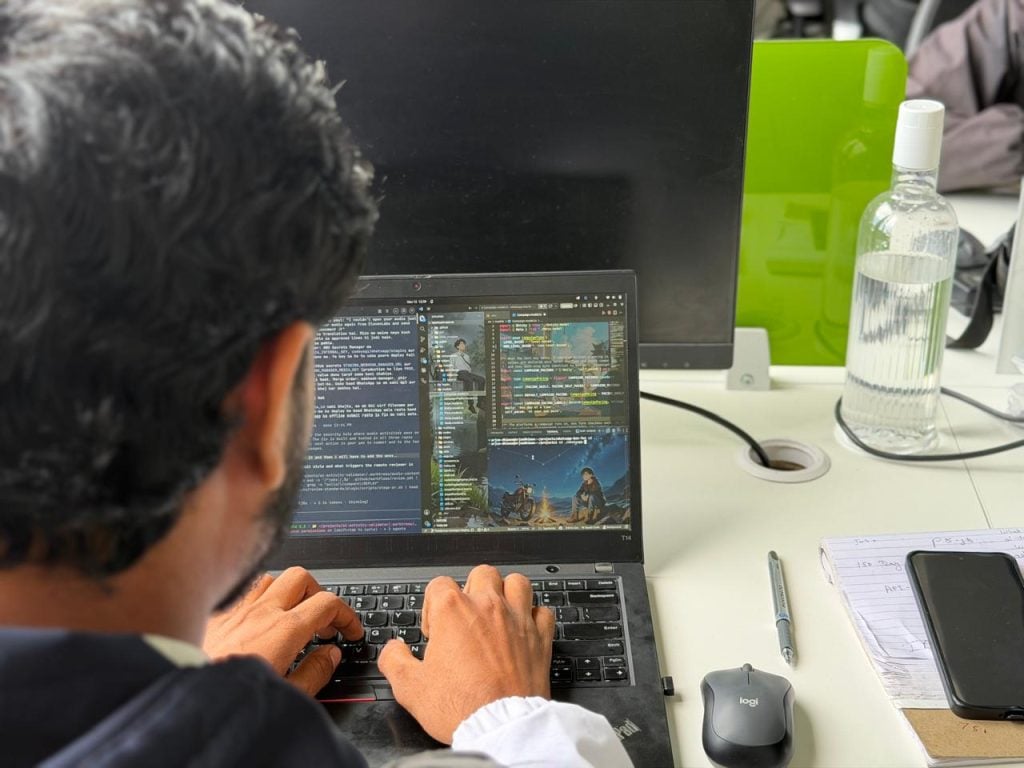
Dhiman spends Rs 7,000 on rent and food and sends most of the remaining money to his parents in Saharanpur. Sometimes, there’s enough left over for ‘luxuries’.
“I bought a gaming keyboard with my savings. My brother is studying in a private school now,” he said.
This Diwali, his family decorated their home, bought new clothes and stocked up on sweets — things they could not always afford earlier. With the money he sends home, the family has also been able to buy him a phone. His new job has also become a source of pride among neighbours.
Earlier, we used to think that my sons should somehow get a job — any small job would do. But my elder son has started earning at a very young age, almost as much as I do. I cannot tell you how proud I am. Now, our aspirations have changed for my younger son too
– Deepak Dhiman, Arjun’s father
For his father, 43-year-old Deepak Dhiman, the biggest change is in what he now hopes for his children. Coding and computers have replaced vague ambitions of any odd job.
“Earlier, we used to think that my sons should somehow get a job — any small job would do. But my elder son has started earning at a very young age, almost as much as I do. I cannot tell you how proud I am. Now, our aspirations have changed for my younger son too,” he said.
Dhiman works with seniors who started out just like him. They are his role models. One of them is his team leader, Ved Singh Rawat.
The son of a small shopkeeper in Dehradun, Rawat studied at a government-run polytechnic college when he started learning to code with Chaudhary in 2019, a year before CodeYogi was founded. He was 19 when he finished the course and joined as an intern at Rs 15,000 a month; he now earns Rs 84,000.
“I help develop the apps and lead the coding team. Whatever new feature we create, I lead that work. Recently, we introduced the programme in Indian languages. I played an important role in doing that,” said Rawat.
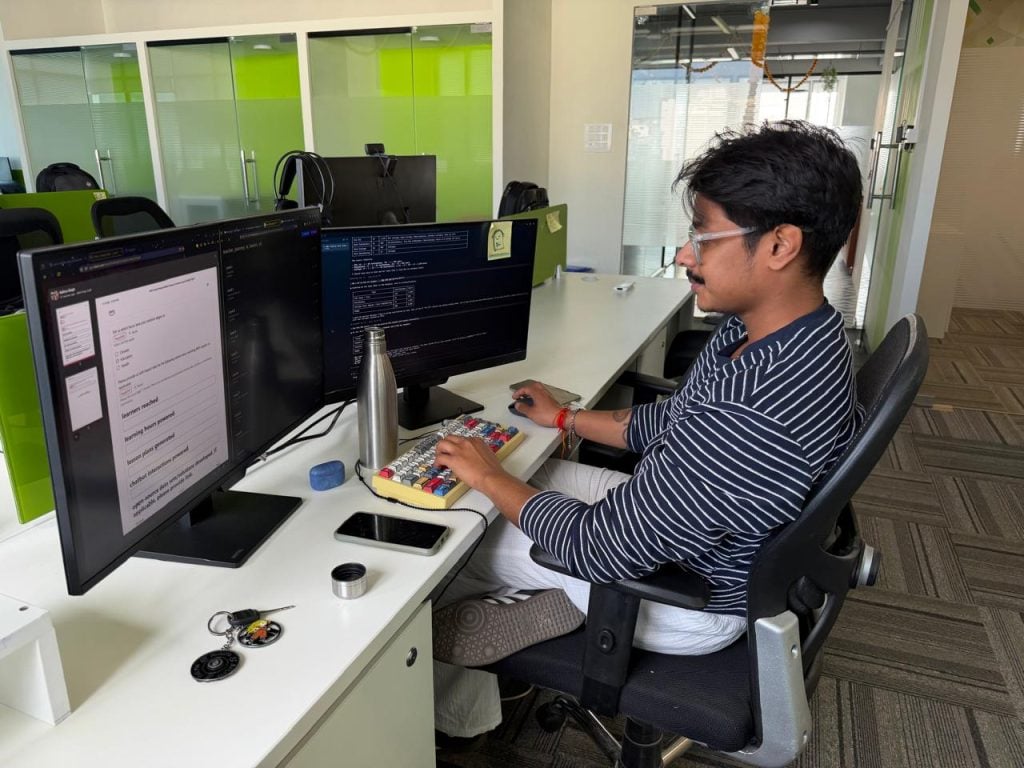
He is now working on coding through AI and teaching his team to do the same. He has his sights set on working abroad someday.
“I had 40 classmates in the polytechnic college. Only two or three are working in tech. I don’t want to brag, but I am earning decent money,” said Rawat. “This was possible only because of Prashant sir, and I would like to give back by helping children just as he did.”
He recounted early classes over Zoom, where Chaudhary kept students hooked with stories about his days at IIT. The founder would also hold up the example of Pankaj Anupam, a former security guard who taught himself to code and broke into the tech industry.
Chaudhary says he also gives professional pointers that go beyond technical abilities, including how to approach potential employers and impress colleagues. He also uses his IIT Delhi alumni network to spread the word and connect students with opportunities.
“I used to tell them that there should be at least five people in their office who would vouch for their work. It will help them in the future. Even after they get a job, I keep asking them for that list,” Chaudhary added.
Meerut to IIT Delhi
Like his proteges, Chaudhary too started out with the odds stacked against him. Growing up in Meerut’s Bhagwanpur village, farming, feuds and firearms were part of everyday life. His grandfather was murdered, and his father had suffered a gunshot wound. Chaudhary wanted out, and education was the only exit he knew.
With not much in the way of books or guidance at home, he would read newspapers at a neighbour’s house. Every Wednesday, the paper carried a Q&A column where students could ask questions and experts would respond.
“I collected those newspapers and made a bundle of them. Most of the questions were about IITs. That is how I got to know that an institution like IIT existed. Students would ask how many hours they needed to study to crack the entrance exam, where they should take coaching and what they should study. By then, I had a basic plan. All I needed was money,” Chaudhary said.
In 2005, his father borrowed around Rs 12,000 from villagers and relatives to fund his coaching.
“I got admission to a small coaching institute in Meerut. I cleared JEE Prelims but could not clear the Mains in my first attempt. However, I got a full scholarship to study in Kota, where I prepared for the exam,” said Chaudhary, who went on to secure an All India Rank of 150 in JEE 2006.
I realised that perhaps a degree was not the most important requirement for getting a job
– Prashant Chaudhary, CodeYogi co-founder
From 2006 to 2010, he studied electrical engineering at IIT Delhi. It was a bit of a culture shock after western Uttar Pradesh.
“The most shocking thing I found at IIT was that nobody there went around saying, ‘You don’t know who I am,’ in the rowdy manner I had heard all my life in Meerut,” Chaudhary said.
After graduating and taking a well-paying startup job, Chaudhary became the toast of his village. Neighbours and relatives would accost him for career advice.
“Parents would come to me and ask if I could help their children. I wanted to do that, too. I started thinking about how I could make it happen,” he said.
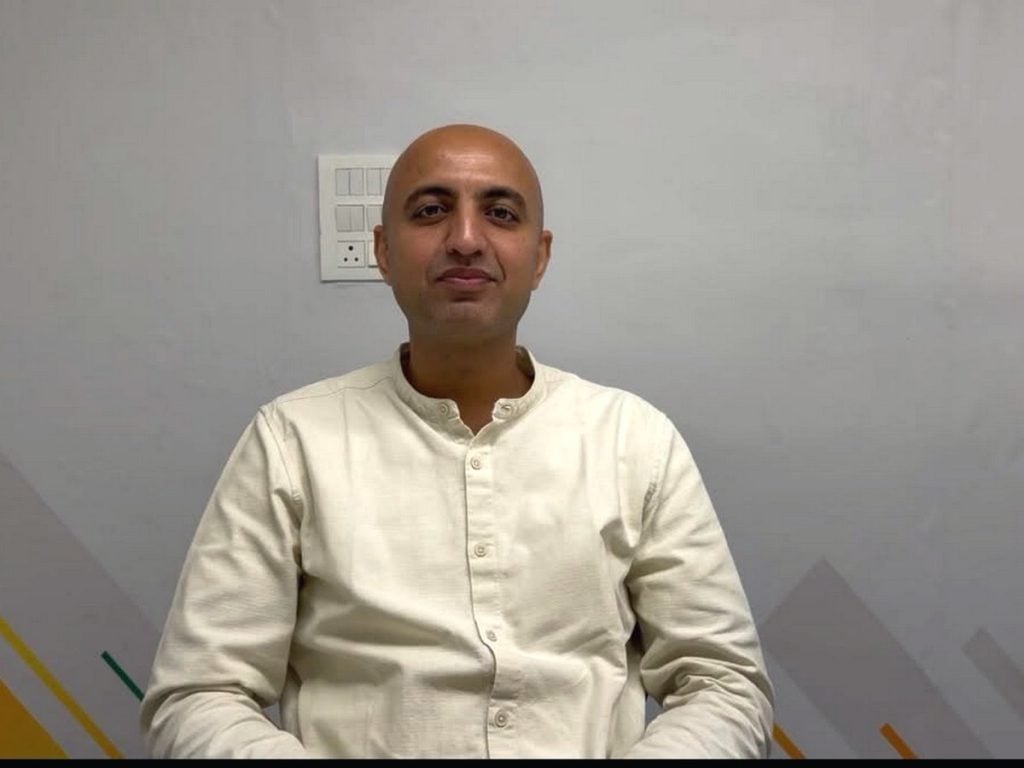
More than his own trajectory, Chaudhary was inspired by Pankaj Anupam, a colleague in the Noida software startup where he worked for some three months.
Anupam, who had not completed his graduation, started out by working as a security guard at a software services company. Deciding to better his lot, he learnt computers through a government scheme, picked up coding from friends and eventually got his first job with a salary of Rs 5,000.
“When I met him in Noida, he was earning almost as much as I was. That was when I realised that perhaps a degree was not the most important requirement for getting a job. I adopted Anupam’s approach and started teaching students,” Chaudhary said.
Among his early students were his uncle’s son, who now earns Rs 50 lakh a year, and the son of one of his father’s friends, who earns Rs 35 lakh annually.
“I started teaching five students in 2012. I taught them for six months. In 2014, I started taking physical classes in Ghaziabad, where around 50 students began attending. But I focused my investment on meritorious students. I used to conduct mathematics and aptitude tests to identify them. At the time, I charged Rs 10,000 for the entire course,” Chaudhary said.
In 2016, Chaudhary started a software firm, DevsLane, and hired some of the students he’d taught. The firm was reportedly bringing in $2 million a year when he exited it in 2020 to devote himself more fully to education.
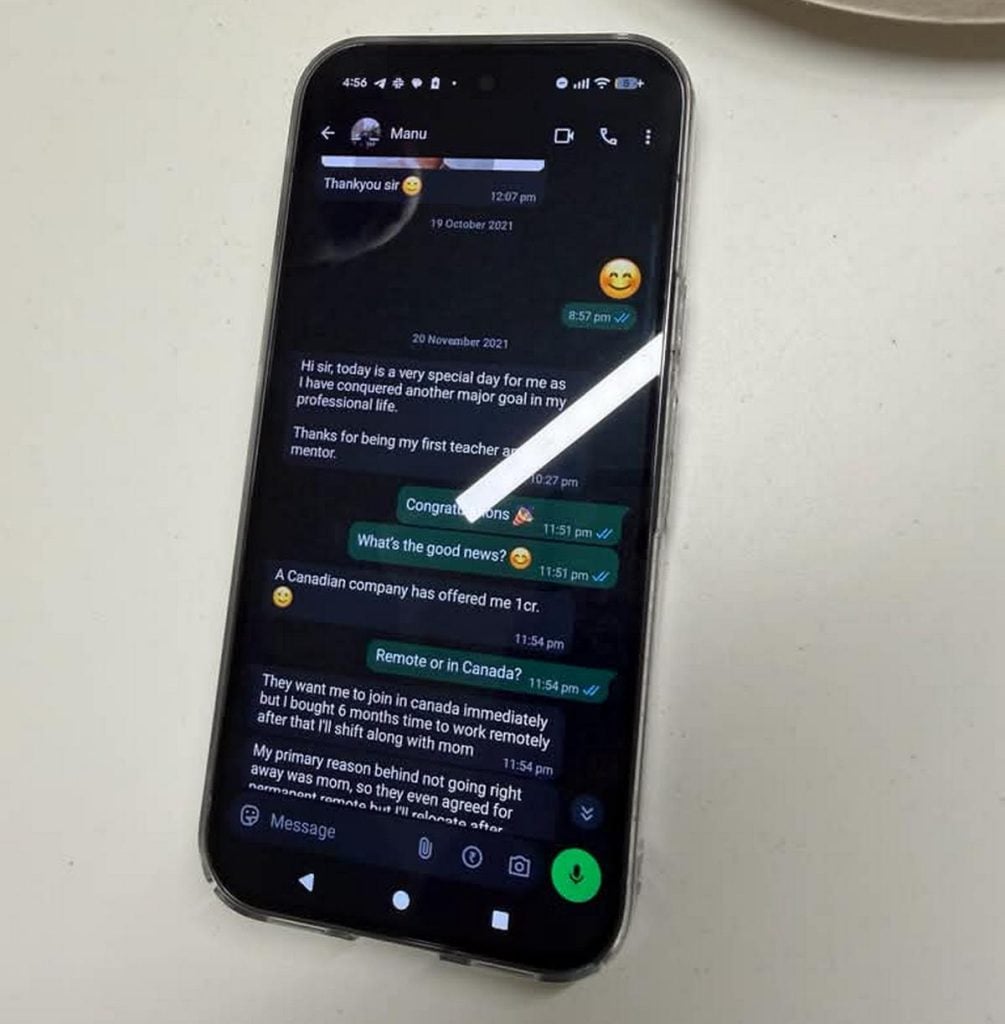
“I had earned enough money to sustain myself. I thought I had to make it big. That was when I started CodeYogi in Meerut in 2020. Later, I moved to Dehradun. Here, I worked with Chief Minister Pushkar Singh Dhami, who helped us connect with students,” he said.
Also Read: Why are many of Jharkhand’s Eklavya schools empty? Tribal children wait for their first class
WhatsApp classrooms and chatbots
By 2023, CodeYogi had selected around 2,000 students every year for intensive training in software engineering. Nearly 80 per cent of them got jobs, though some struggled with the rigour.
“Some students used to drop out because the course was very in-depth. It was difficult. But we were working with a selected 2,000 students,” he said.
Noticing that some students were struggling to get access to computer labs, CodeYogi redesigned its coding course in 2023 so they could take it on their phones, with video lessons in Hindi and quizzes. That October, it also began developing an AI chatbot to guide students through coding assignments and assess their work.
It will be very difficult for SMEs to attract good AI talent. Our students are connecting with businesses at their district headquarters or in their own areas. It is a win-win for both. Students get opportunities locally and companies get local talent
– Prashant Chaudhary, CodeYogi co-founder
CodeYogi later moved away from its intensive six-month coding bootcamp. In April 2026, it launched a 30-day AI fluency programme on WhatsApp that teaches students to use AI for learning, problem-solving and building applications.
“Now, the students study through an AI chatbot. It gives them videos, then quizzes, coding assignments and now AI assignments. It evaluates those assignments and provides feedback. This whole engine is very scalable,” said Chaudhary.
The AI curriculum is divided into three stages: AI literacy, AI competency, and AI fluency. The first covers the basics—prompts, tokens, large language models, and hallucinations. The second teaches practical everyday use, while the third trains students to build tech careers. According to Chaudhary, half of the students who join finish the literacy stage, 20 per cent reach competency, and 10 per cent go on to pursue AI as a career.
The changing nature of tech has also meant that the organisation has had to rethink what it teaches. Students now learn problem-solving, product design, and how to build with AI tools.
“We are not like engineering colleges or universities that take forever to change. We are always ahead of the curve,” he said.
To keep the syllabus current, Chaudhary’s team regularly checks in with people working in AI labs and tech firms.
“Our batch managers are everywhere — in OpenAI, Anthropic and Google. Whatever patterns we understand, we keep communicating with our children so that they remain updated,” he said.
AI has now become a part of students’ toolkit even beyond their own marketability, according to him.
“Some students are using AI to figure out scholarships, where they can take admission, what career paths they can choose and what skills they should learn. They are using it for learning, mock tests and research. So it is not just about jobs. The AI education we are giving is also about socio-economic upliftment,” said Chaudhary.
This means thinking local even while keeping up with global trends. The organisation is trying to place trainees with small and medium enterprises (SMEs) right in their own districts. It’s a fix for local businesses that cannot attract big-city tech talent and students who don’t want to migrate to metros.
“We are preparing them to become forward-deployed engineers for SMEs. It will be very difficult for SMEs to attract good AI talent. Our students are connecting with businesses at their district headquarters or in their own areas. It is a win-win for both. Students get opportunities locally, and companies get local talent,” Chaudhary said.
(Edited by Asavari Singh)