



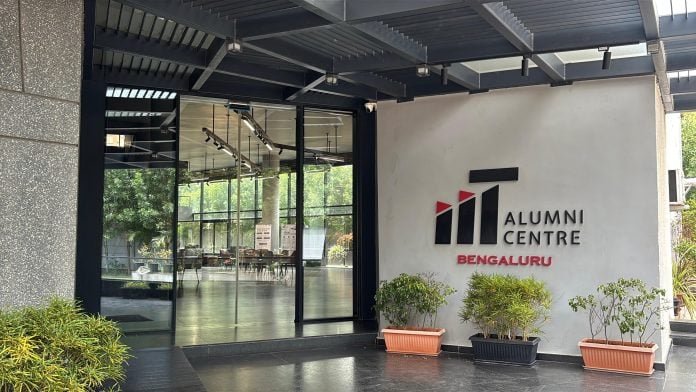
Bengaluru: Bengaluru does not have an IIT of its own. But it is home to more than 50,000 IIT alumni—and now, a centre that is trying to bring all 23 IITs together under one roof.
The notion of IIT engineers being brainiacs is old. That they are eager to contribute to nation-building has gained ground in the last few decades. They are increasingly becoming a voice in public debate. Now, the IIT brains want to act as one giant brain bank too.
The IIT Alumni Centre Bengaluru, or IITACB, was set up 15 years ago as a common platform connecting the IIT ecosystem with industry, government, startups and alumni. The idea is to take the expertise spread across 23 campuses and make it easier for companies and governments to tap into it, including for problems that may require expertise from more than one IIT.
The centre has already started facilitating industry projects, running startup mentoring programmes and supporting ACSEL Technology Forum, an initiative under the aegis of IITACB and supported by the Government of Karnataka. Take Tathyakosh for example. It’s a public-data discovery platform launched in August by ACSEL Technology Forum in collaboration with IITACB.
It brings more than 1.5 million public datasets from 458 sources onto one searchable platform, helping researchers, startups, developers and policymakers find data that is otherwise scattered across different repositories. The platform also lets users access datasets by factors such as geography, time period, format, accessibility and machine-readability. “It’s like an Amazon of datasets. You just come here, but for information,” said said Suman Dash, COO, ACSEL Technology Forum.
But IITACB’s larger ambition is to turn Bengaluru’s unusually dense concentration of IIT alumni, industry and technology into a network that can work across institutional boundaries.
For Ashok Misra, president of IITACB and former director of IIT Bombay, that ambition grew out of a question about what the IIT alumni network could do beyond fundraising.
“We emerged from the thought that we can give back to the nation by linking our experience with connections, and linking industry with the IIT system,” Misra told ThePrint.
The Ministry of Education endorsed the proposal and the directors of all 23 IITs came on board as partners.
Bringing the best of 23 IITs
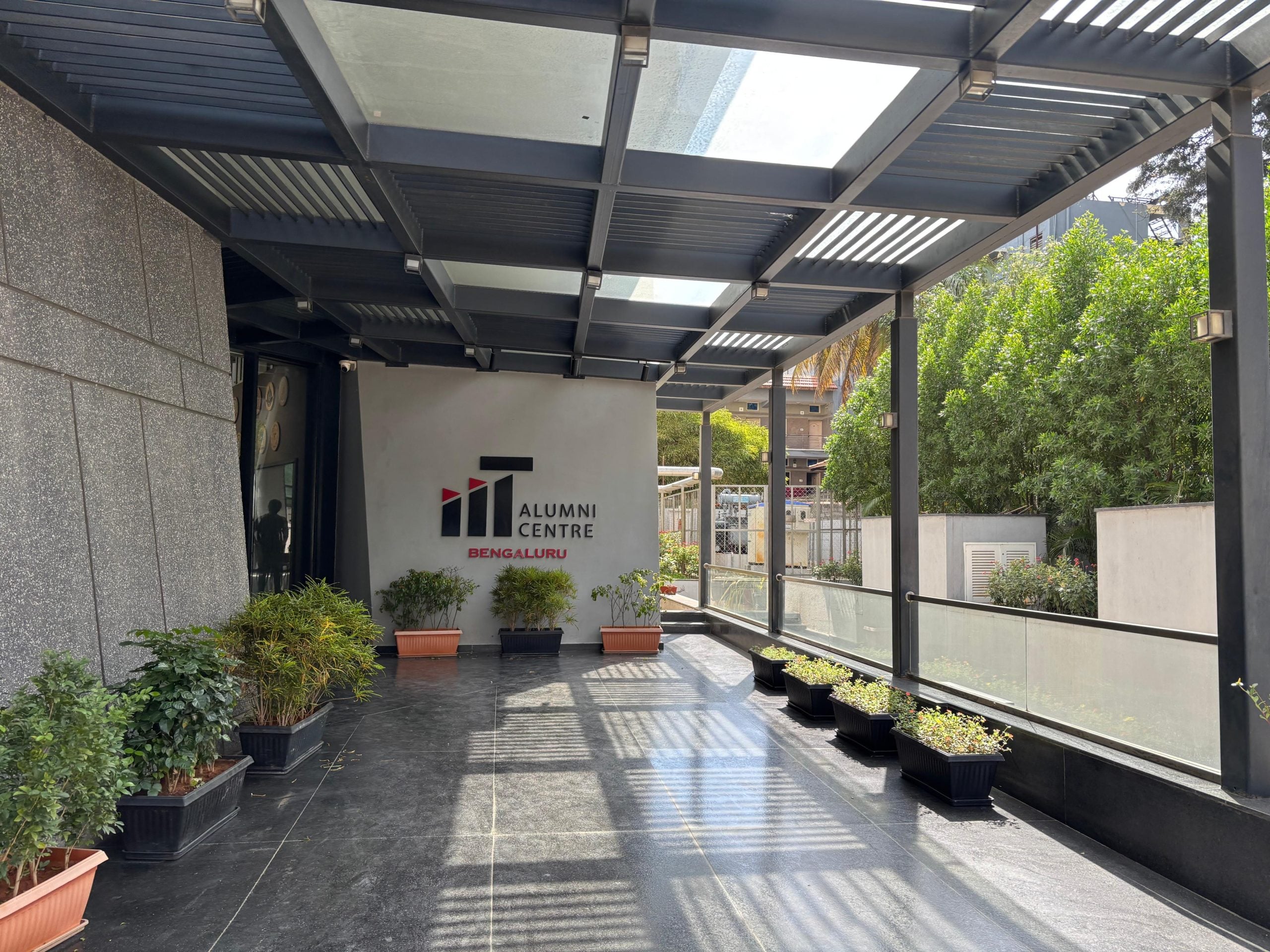
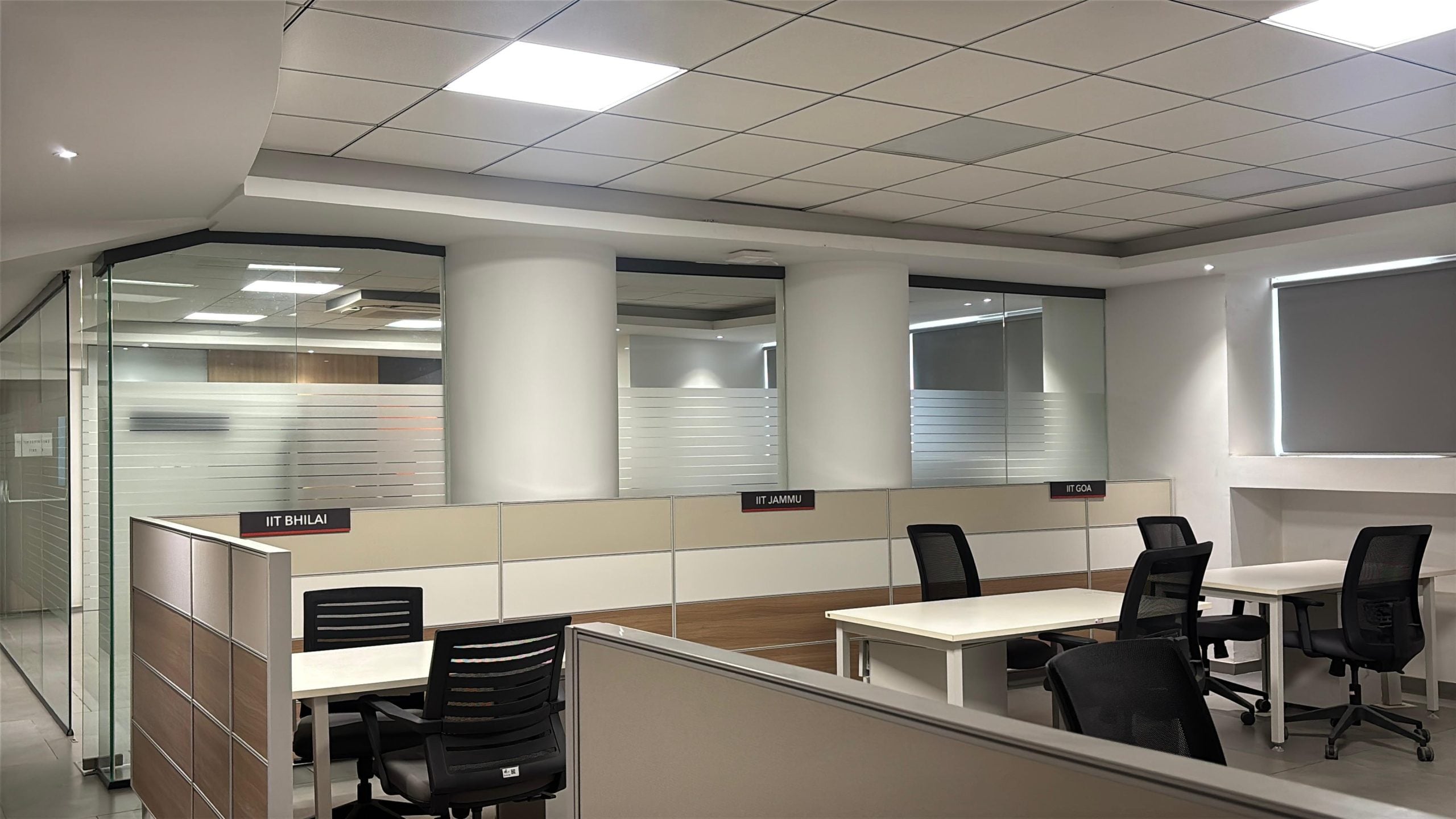
IITACB is now housed in a four-storey, 93,000 sq ft building in Bommasandra, on Bengaluru’s southern edge. Each IIT made a one-time contribution — the first-generation IITs contributed Rs 1 crore each while the second-generation IITs Rs 50 lakh each, and the newest IITs Rs 25 lakh each. This accounts for about Rs 34 crore, raised to build the centre. It is a private, not-for-profit institution, with the IITs as partners.
“The IITs have contributed and have an extension office in our building. We are the only centre of its kind,” Misra said.
Even before the building opened in 2023, the centre was being used to bring the IIT network together. During the pandemic years, it organised around 90 webinars on subjects ranging from nuclear technology and AI to manufacturing, finance and polymers. Now, the building is meant to function less like a conventional alumni club and more like a shared platform.
In the lobby, young students move alongside IIT alumni with decades of experience in academia and industry. The space is used for alumni meetings, industry interactions, startup discussions as well as events. “So it’s for the benefit of the nation, at the end of the day. The intellectual power of the IITs is being used,” Misra said. The idea, he added, is to make it easier to draw on expertise that is otherwise spread across 23 campuses.
The IIT matchmaker
IITACB functions as a liaison between companies and IITs. Companies bring their “current pain points” to the centre, which then circulates those among 23 IITs for solutions. Its institutional members include Godrej, Infosys, Titan, Forbes Marshall, GMR, Jubilant and ISRO, alongside academic institutions such as SRM University and the University of Massachusetts.
The proposition to companies is straightforward: tell IITACB what you need, and it can look across 23 IITs for someone who can work on it.
“IITs did very well in terms of their alumni going abroad for entrepreneurship, but we didn’t do enough in the research culture. So we were nowhere near the MITs and Stanfords of the world. Even now we are far away, but at that time we were very far away. In foreign countries, the government usually spends 2 to 3 percent of its revenue on Research and Development. In India, it’s like 0.6. Industry is not spending either,” Misra said.
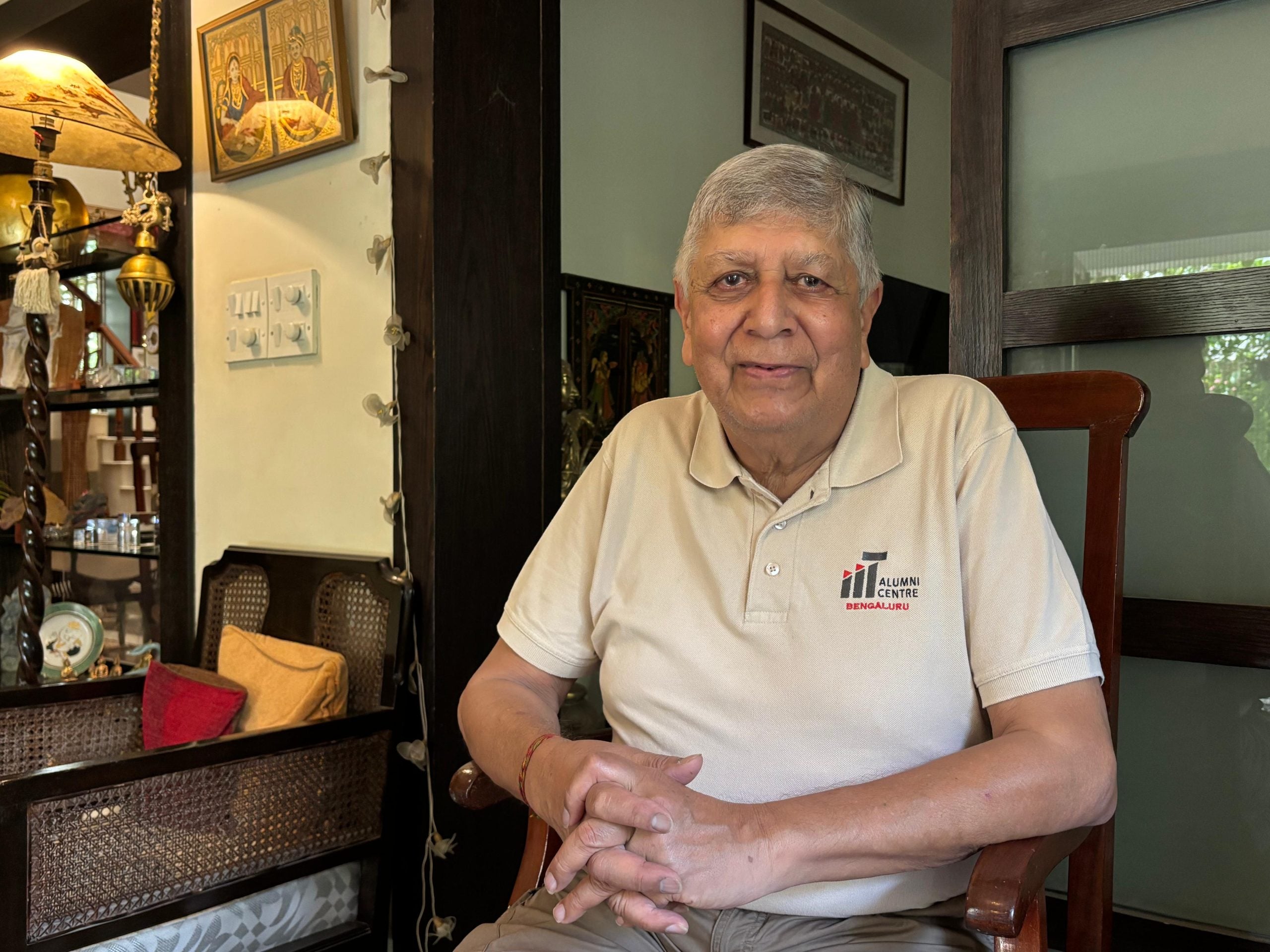
Misra said the gap is also rooted in the different timelines of industry and academia. “The industry wants solutions tomorrow, even as professors are still teaching and doing their fundamental research. But once they’re engaged, then things start to happen.”
For instance, the GMR Group, which operates the Delhi airport, approached IITACB for a flooding-related problem. The centre connected the company with a team at IIT Guwahati, which worked on a solution. The industry pays the IIT for the work, while IITACB makes the connection without charging for the matchmaking.
“Companies can probably go to two or three IITs. But they can’t go to 23. Through us, they have an introduction to all 23,” Misra said. Some companies may not even know that institutions such as IIT Palakkad, IIT Bhubaneswar, IIT Jodhpur or IIT Tirupati exist.
IITACB is meant to change that. “We are the facilitator, the matchmaker,” Misra said.
He said that the alumni centre has facilitated roughly 10 to 12 projects so far, ranging from an automobile company trying to understand the characteristics of a particular type of rubber to another looking for a better face-recognition algorithm that could eventually be used as an authentication system in vehicles. IITACB took the problems to the IITs. IIT Kharagpur is now working on the former, with other IITs also involved.
Another company approached IITACB over friction-material development. The details of the project remain confidential as the work relates to products that are still under development. Forbes Marshall, for instance, has brought six projects to IITACB involving energy, boilers and heat transfer.
IITACB does not get involved in the technical details or commercial agreement between the company and the IIT. Its role is to widen the pool of expertise available to both sides.
“We are asking IITs to tell us their strong points — whether it’s AI, heat transfer, machining or manufacturing — and we will send it to our members in the industry,” Misra said.
Turning a product into a company
The model has also extended to the government. In 2024, Karnataka made AI a priority and gave IITACB Rs 28 crore to set up a Centre of Excellence in Artificial Intelligence under the state’s Department of Electronics, Information Technology and Biotechnology, headed by minister Priyank Kharge.
At the time, IITACB was presented as a platform to incubate AI startups, provide training and help emerging companies access markets. The initiatives were aimed at boosting the state’s tech ecosystem, Kharge’s office had said.
IITACB invited applications from Karnataka-based AI startups. The first cohort had received 175 applications, of which ten were selected for the programme. The startups received an initial grant to develop their products and were paired with mentors, most of them IIT alumni.
Every two or three weeks, they attended sessions on issues that young companies often struggle with: raising funds, private equity, marketing, pricing and intellectual property. “You may have a very good product, but you must know how to price it,” Misra said.
After four months, the startups presented their products on a “demo day.” IITACB then selected two for Rs 1 crore each in funding in exchange for 7 per cent equity. Misra said the point was not simply to put money into startups but also to surround them with people who can help them turn a product into a company.
These startups had founders aged anywhere between 23 and 50. “It’s very dynamic. We just look at the product and the startup,” Mishra said.
For IITs, IITACB is building an incubation floor, with 175 to 180 seats, meeting rooms and shared spaces. These will be particularly beneficial for newer IITs. A founder at IIT Mandi, for instance, may have access to professors and a campus but not the same proximity to venture capital, mentors and companies.
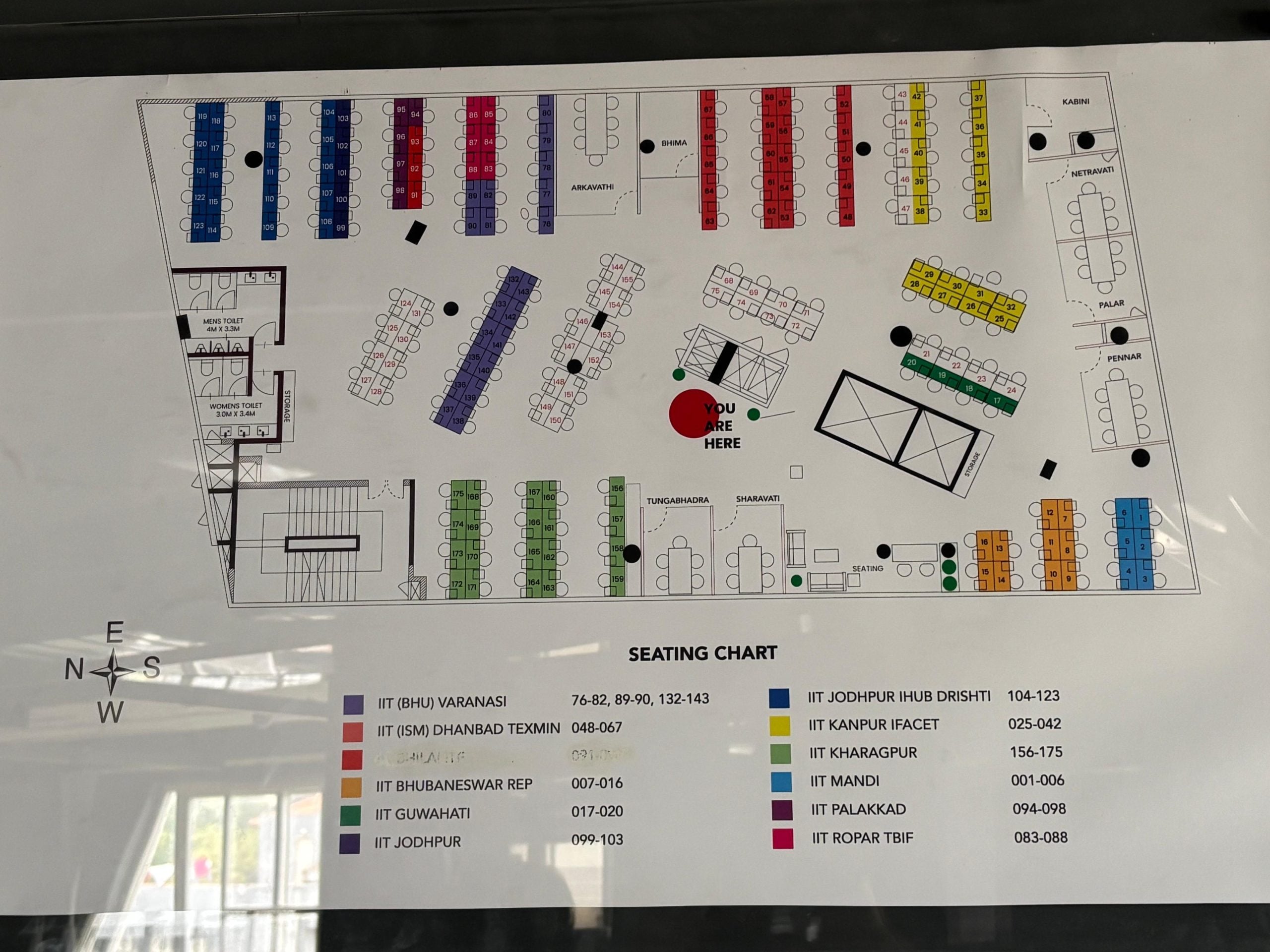
“They would eventually move to Bengaluru, which is the tech hub of India,” Misra said.
And IITACB, through its alumni network, will try to plug the gap by connecting an IIT that can offer expertise with a city that can offer companies and capital.
For Misra, the eventual measure of whether the model works is not the size of the building or the number of meetings held inside it. When IITACB began, he said, the value of projects being worked on through these networks was around Rs 500 crore. The ambition is to take that to Rs 5,000 crore. “If there are Rs 5,000 crore worth of projects, the number and quality will also go up,” he said.
Breaking the walls between 23 IITs
For G.N. Shrinivas, the treasurer of IITACB, the centre flattens the network by putting alumni from all 23 IITs in the same place. Shrinivas, former EY global chief architect, who has over two decades of cross-disciplinary experience across product engineering, enterprise architecture and management consulting.
Shrinivas said that connections can be as simple as two alumni crossing paths in the corridor. “I’ll just walk past the person, the person will walk past me, and then comes the question: ‘Hey, can you help? There is this company which is looking for somebody who can help. They’ve hit a problem. Can you help solve it?’”
That is where the centre’s alumni network becomes useful, Shrinivas said. Someone looking for help can quickly reach another alumnus who knows a company, investor or researcher working in that area. “And bingo, the connection happens.”
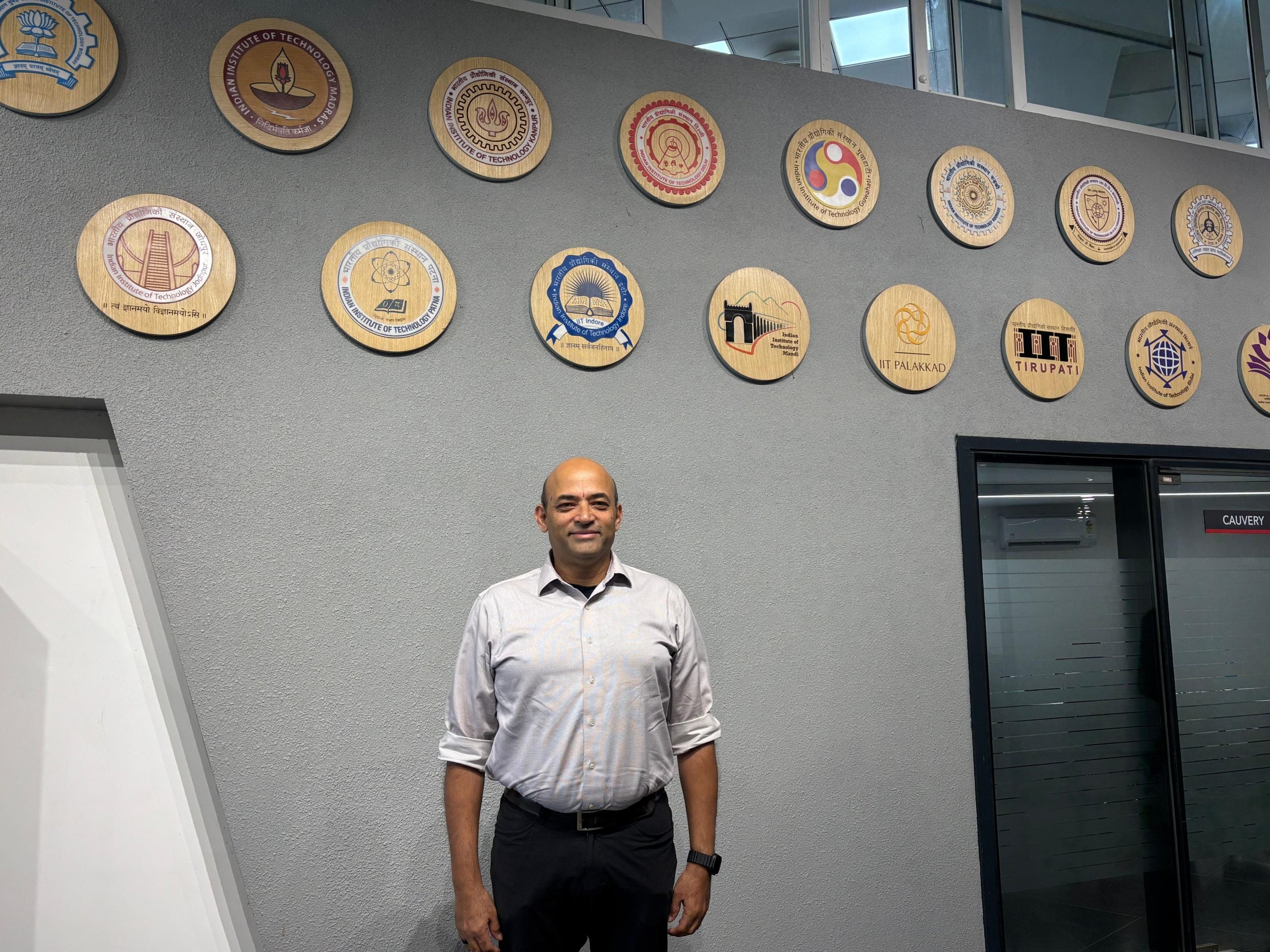
“The biggest thing this place has done is break the walls between the 23 IITs,” he added.
And this advantage particularly helps the newer IITs, which do not yet have the alumni base or industry connections of older campuses.
“Take an IIT Palakkad for instance. It doesn’t have alumni because it’s a brand-new IIT. It’s in a place which is not well-known for industry,” Shrinivas said. “How do you bridge it with companies?”
Ashok Kamath, IITACB secretary and former MD of Analog Devices India, illustrated this with an example of a speech-to-speech translation project for tribal languages. IIT Dharwad, IIT Bhubaneswar and IIT Hyderabad were brought together to work on four tribal languages, two from Karnataka and two from Odisha. The idea was to allow someone speaking a tribal language to interact with systems that operate in a more widely-used language.
“Let’s say, you belong to a tribal community and speak Soliga, a tribal language. You will end up being excluded from the financial system because you are unable to transact with it in English, or possibly in 20 other languages,” Kamath said. The technology developed through the project could allow a person to speak in Soliga, have it converted into Kannada, complete a transaction through a banking system and receive the response back in their own language.
“This opens a door,” Kamath said. “And this is just one application. You can think of many similar applications that can be put together for public good.” Kamath said he is now pushing the IITs to explore if the technology can be extended to more tribal languages.
For Shrinivas, the larger network is also about connecting different generations of IIT alumni. He referred to upcoming ventures such as space startups and said, “You’ve got a whole industry base that’s working towards it. That’s the new generation working towards the older generations’ dreams and aspirations.”
“The entire process of dreaming is happening at full scale,” Shrinivas said. “Someone comes up with an idea, and it is broken down into projects. Faculty who have joined these new IITs are taking up IIT projects, which in turn lead to MTech and BTech projects and research topics. That entire flywheel is now beginning to turn.”
The AI floor
On another floor of the IITACB, the focus shifts from connecting the 23 IITs to building what comes next: AI startups.
This is where ACSEL Technology Forum comes into the picture. It works with startups, researchers, industry, government and IIT alumni, on programmes spanning acceleration, mentoring, skilling and access to data. The forum calls itself “sector agnostic”, which means startups from agriculture, education, healthcare, or aerospace, can approach it as long as their core engine is artificial intelligence.
ACSEL, which stands for AI Center for Startups and Excellence, was set up after Karnataka government officials visited IITACB in 2025 and proposed an AI-focused centre, said Suman Dash, COO, ACSEL Technology Forum. Its main startup programme, Avinya, takes up to 10 AI startups in each cohort. The four-month accelerator is aimed at companies at the MVP stage or beyond and gives each startup two mentors — one focused on technology and another on the business side. And the programme follows as usual with the selected startups pitching on demo day and the top two receiving Rs 1 crore each in funding.
“We don’t take more than that because we want to focus on the startups and really help them build,” Dash said. He added the money is only part of what ACSEL has to offer.
A startup working in aerospace, for instance, may need more than a mentor. It may need an industry contact who could eventually become a customer.
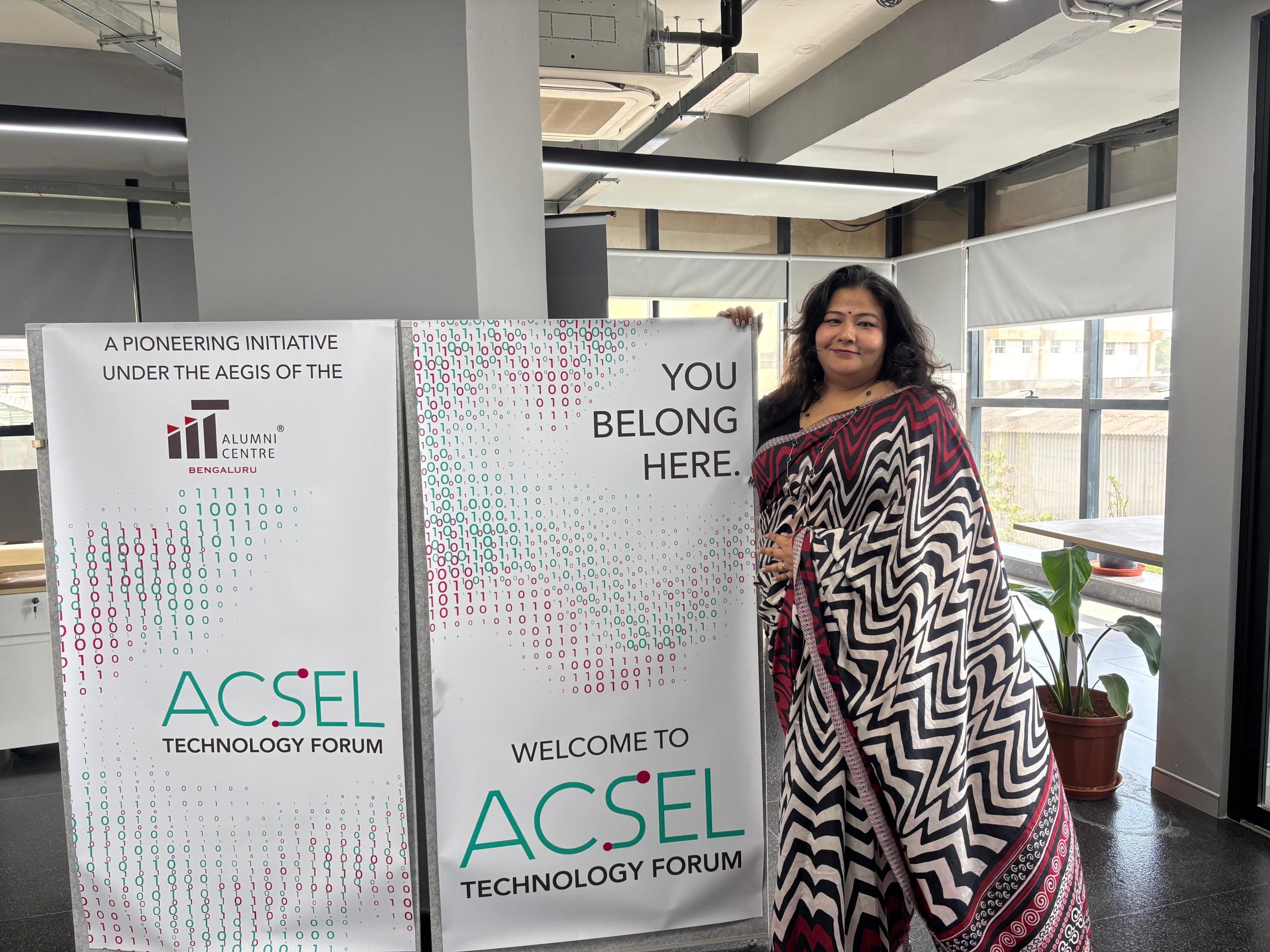
“It’s not just about raising funding from ACSEL but also being exposed to the investor environment and understanding where it stands in the funding cycle,” Dash said.
IITACB also holds ACSEL Talks twice a month, bringing together people from the AI and technology ecosystem. The idea is to create a pipeline from an early-stage idea to a product that can find customers, funding and markets.
For IITACB, the AI centre adds another layer to the original idea. The alumni network can provide mentors and industry connections; the Karnataka government provides institutional backing; and the centre can then use those networks to help young companies move beyond the prototype stage. “If you are at an idea level, if you are at the seed stage, at the MVP stage, you need funds, you need connections, come and talk to us,” Dash said.
A startup that benefited
Kazunov 1AI entered the first cohort of ACSEL Technology Forum’s Avinya accelerator in late 2025. The Bengaluru-based startup set out to build an AI system to automate health-risk assessments for insurance companies. Its co-founder and CEO, Dr Chaitali Diwan, is a PhD in AI, while COO Chittaranjan Savadi, an engineer from NIT Surathkal and MBA from IIM lucknow, came up with the idea after spending nearly two decades in the health and life insurance industry.
“When we were selected into the programme, we were primarily pre-product, though we had a rough timeline for the product journey,” Savadi said.
IITACB’s four-month programme gave the startup two mentors, with regular and time-bound sessions, and ACSEL following up on its progress. Unlike programmes that rely largely on virtual sessions, Savadi said, Avinya called the founders for routine in-person interactions.
“I think the beauty of this programme is that, unlike some startup cohorts that have one or two boot-camp-type sessions, here they have weekly or fortnightly in-person sessions,” Savadi said.
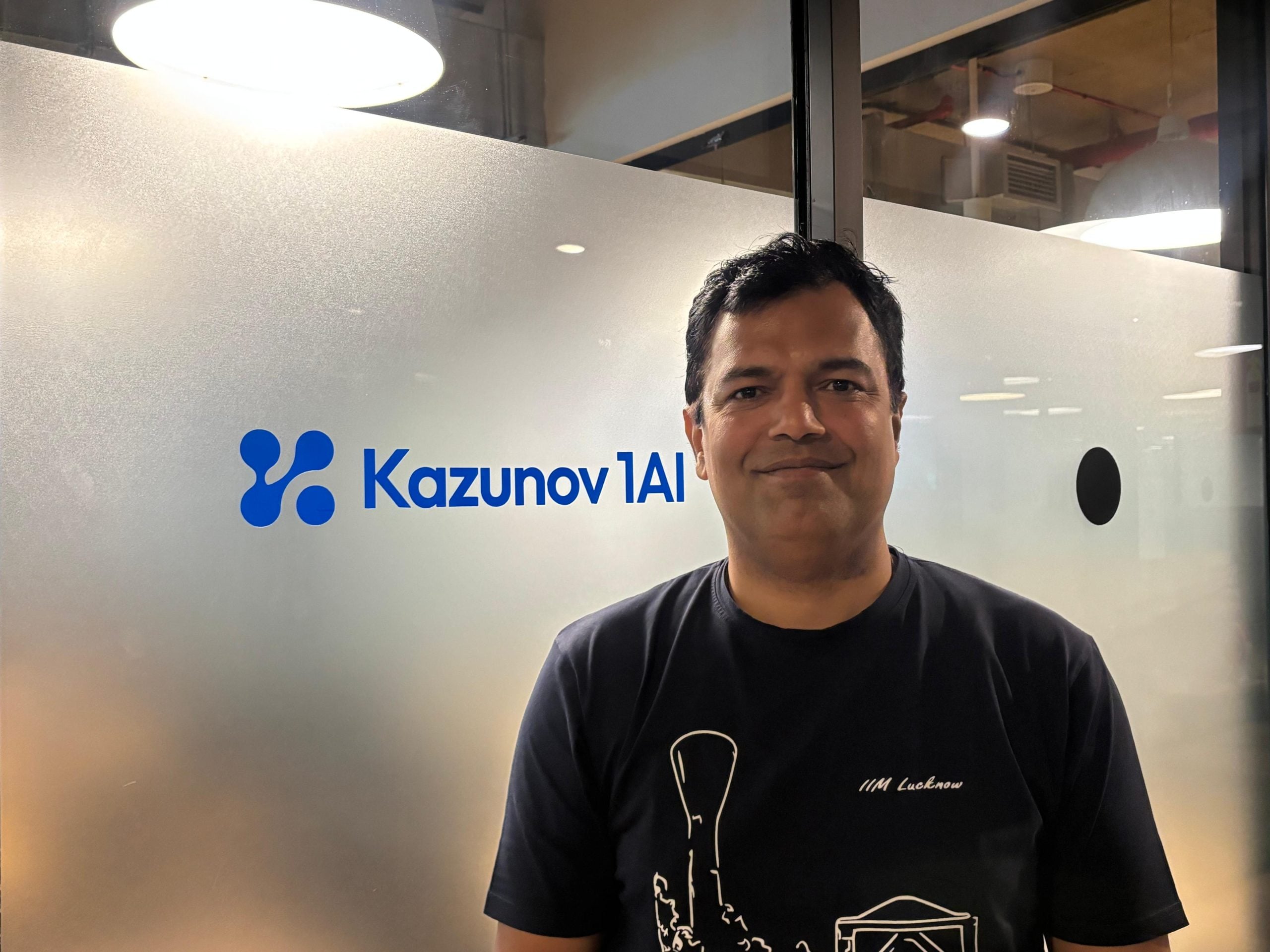
At the end of the programme, Kazunov emerged as one of two startups selected for the Rs 1 crore funding. The investment expedited the startup’s journey from early development to a product that could be deployed at scale by insurers.
“It gave us great comfort that our startup received institutional validation, and that too from IITACB,” Savadi said.
Six months after the programme, Kazunov has moved from a handful of interns to ten employees, with another five or six interns and industry experts on its panel. The product is ready and the company has begun the long process of commercialising it.
“As we move ahead, we looking forward to leveraging the large network of alumni operated by the IITACB,” Savadi said.
(Edited by Aakriti Handa)