





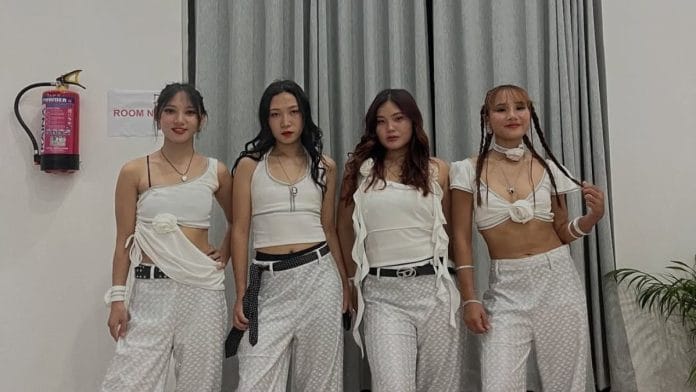

Itanagar: Four young women from Arunachal Pradesh pour nearly every rupee they earn from live shows back into sequined costumes, video shoots and studio sessions. At home, parents regularly ask where the money goes. The answer, the four members of pop band Gilithigreams say, lies somewhere between rehearsal rooms, YouTube analytics, and a wager they are making on themselves.
“If we spend what we earn on fancy clothes,” as 22-year-old member, Tarh Moyon, puts it, “how will we fund our next music video?”
That calculation—precarious, improvised and stubbornly hopeful—sits at the heart of Gilithigreams, a four-member girl group from Itanagar that calls itself India’s first all-girl A-pop band, short for Arunachal pop. Their group’s name means “girls with big dreams”, but it also reads as something more than branding; like a proposition about ambition itself, especially in a place where stardom can seem improbable without money, labels, mentors or metropolitan access.
The members— Moyon, and Nabam Sasum, Tap Pabe and Weyo Lumi, all 20 —are BA students at the same college, performers, songwriters and, increasingly, entrepreneurs of their own survival. They have released only three original songs so far, two in Nyishi, the language of the namesake tribe and one in Hindi. But their breakout track Morom Tho (2024) has crossed 2.6 million views on YouTube. They have performed in remote villages and city events, danced non-stop for hour-long sets, been celebrated, mocked, compared to South Korean K-Pop idols and, in the particular idiom of Indian internet cruelty, dismissed by trolls as “Blackpink from Meesho”.

Arunachal Pradesh enters India’s imagination more often through the language of frontiers than through culture—as border terrain, geopolitical flashpoint, and cartographic edge. Much of mainland attention toward the state has long been filtered through strategic anxieties or romanticised remoteness. The region’s artistic lives have often remained faintly heard outside the Northeast. Even when musicians from the region have broken through nationally, they have often done so as exceptional individuals rather than through sustained ecosystems capable of producing recognisable movements.
Gilithigreams emerge against this backdrop.
Their journey is not simply about a viral girl group from the hills. It is about whether pop can become a route to recognition from a place too often imagined from afar. It is about whether a young act singing in Nyishi can challenge the assumption that Indian pop must move through dominant languages to travel. And it is about what such visibility might mean for younger artists in a state where ambition often outruns infrastructure.
That aspiration is embedded in the band’s name itself. “Girls with big dreams” carries the weight of what the group wants their visibility to mean—a widening of what feels imaginable for other young artists in Arunachal.
“We want the Northeast to find national recognition,” Moyon said. “Why are only Hindi and Punjabi music widely popular? Why not Northeastern languages?”
Also read: Three Northeast rappers India is listening to — Reble, Moko Koza and K4Kekho
K-pop admiration, Nyishi ambition
The answer, improbably but recognisably, began with fandom.
Like many in their generation, the members grew up admiring K-pop—the choreography, discipline, styling and spectacle of idol culture. But what struck Moyon was the fact that artists singing in Korean could move far beyond their own country without abandoning language.
“From childhood we admired Korean artists singing in their mother tongue and representing their country on a global scale,” she said.
That insight stayed with her.
In 2022, the four came together as a dance crew, entering competitions they often lost. Sasum, who had been an underground break dancer—“I am a B-girl,” she said, laughing—remembers those years as exhilarating and bruising at once. They practised without mentors, discussed routines among themselves, tried to understand why audiences responded to some things and not others, and repeatedly discovered that effort alone did not guarantee recognition.
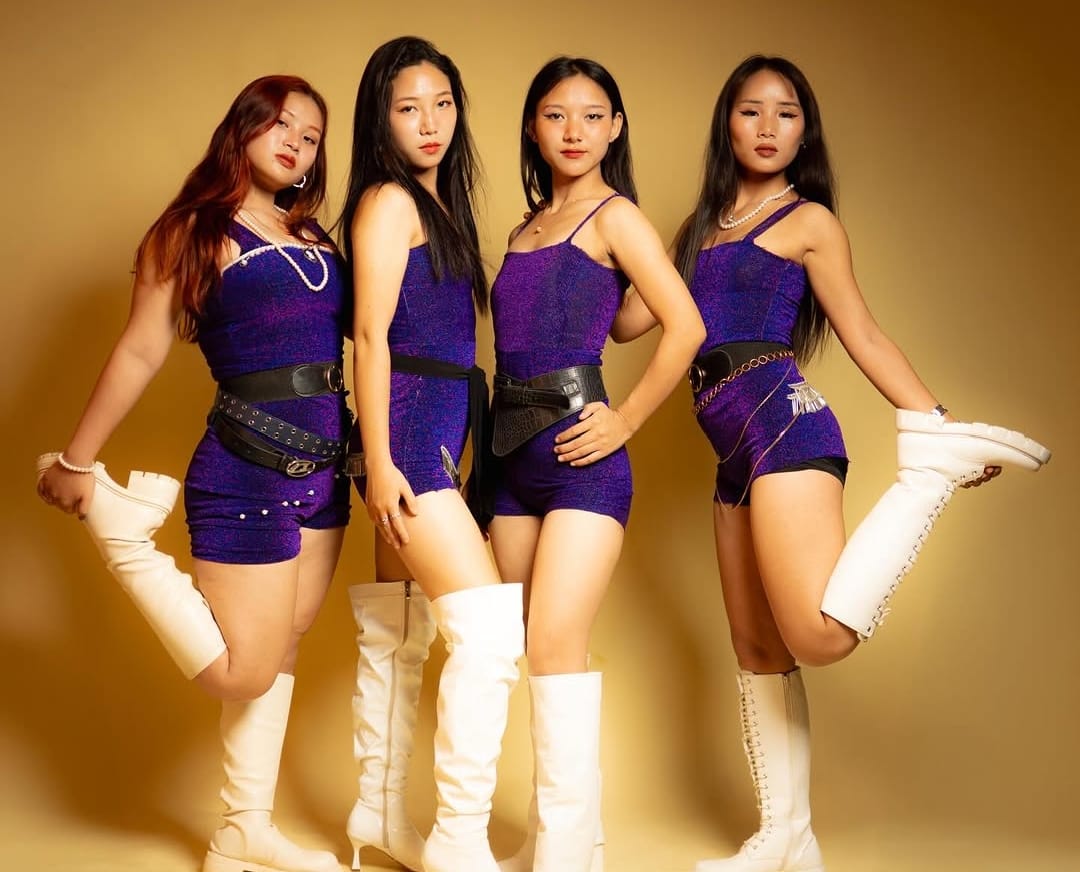
“We gave our best but it was never enough,” she said.
Yet those defeats now read almost as apprenticeship. They were learning performance, crowds, and understanding how an act is built on stage and social media.
The shift came in 2024, when they decided dance was not enough. Gilithigreams would become a music act.
On 25 November that year, they debuted and released Morom Tho on YouTube, an original Nyishi pop song written and composed by Moyon. It was her first experiment with songwriting. The video, they say, could not be shot as well as they wanted because finances were tight. They went ahead anyway.
Then the song began travelling.
The views climbed into the millions within days. Audiences outside their immediate circles were listening. What they had imagined was now being affirmed back to them.
“Since the song became a big hit, everything has felt like a dream,” Sasum said.
But what makes their story more interesting than virality is the argument they attach to it.
For Moyon, singing in Nyishi is a long-shot bet that a language rarely heard in Indian mainstream music can carry pop hooks, move through Reels and find audiences far beyond Arunachal. She says she composes consciously with both language and circulation in mind—using simple, catchy words, melodic loops and phrases that might travel easily in the digital age.
“It’s the Reels generation,” she said. “You think of what kind of hook everyone can connect with.”
That means their music sits at an unusual intersection: Indigenous language, pop production and algorithmic instinct.
Also read: Nagaland’s musicians are finally hitting the big time. ‘Used to get paid in fried rice’
‘Sasta K-pop’
Virality brought with it a harsher education too, exposing the quartet to the peculiar cruelties of online culture, where admiration and mockery often arrive entwined.
“Sasta K-Pop,” some users mocked them on social media.
The phrase stung because it reduced their struggle to caricature. Others accused them of trying to be Korean. Some mocked their language and accent.
Sasum does not speak about this with celebrity detachment. She speaks instead about hurt.
“They have no idea about our life’s struggles. Everything is not as rosy as the videos. People should know we are humans too and have feelings,” she said.
Her response opens a deeper fault line—the casual prejudice many from the Northeast describe facing in metro cities, including assumptions about belonging, language and legitimacy.
But they have tried to turn even criticism into argument.
“We are in India and in Arunachal we do speak Hindi. Our accent could be different but we try our best. So please don’t judge us,” Sasum appealed. “We are just trying to push the state up and take its name forward.”
One live show at a time
For now, the band’s economics remain fragile.
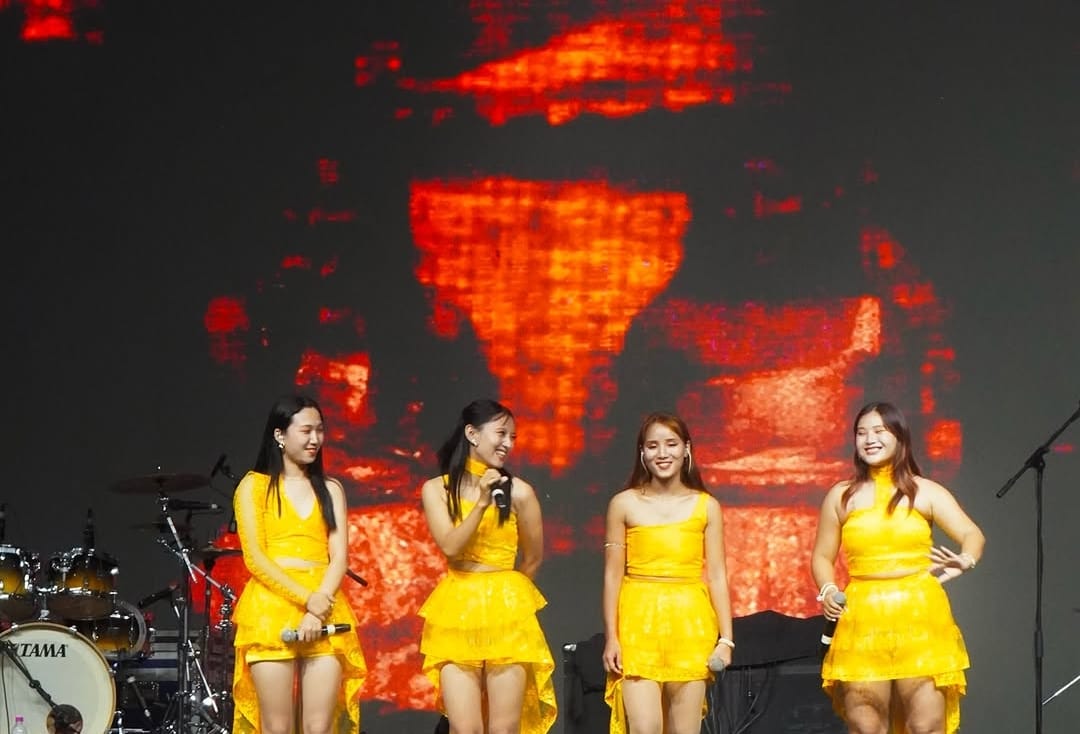
The group says nearly everything depends on live performances. Payment from shows goes partly to management and the rest back into production—costumes, shoots, studio sessions and locations for videos. They say they take little for themselves.
“Our families ask, you do so many live shows, where is the money going?” Moyon said. “But we tell them, this is the start. We are investing in ourselves.”
There is something almost old-fashioned in that model, except it is unfolding through digital-era ambition.
The tension between glamour and precarity runs through nearly everything they describe. They speak of organisers’ demands they must comply with because they are new. They hope they can make their own rules someday and want to release many songs—in Nyishi, Hindi or beyond—as they wish. They dream expansively while planning one year at a time.
Yet there is scale in how they imagine performance.
Even in remote villages, they say, they have done non-stop sets. They sing their own songs but often also perform local songs so audiences in each place hear something of themselves reflected back.
“Tribes in Arunachal have many different languages. We sing in every language so people can connect with us,” Pabe said.
Sasum’s wager
If Moyon is the musical engine of Gilithigreams, Sasum is the emotional centre.
She comes from a family of six siblings. Her parents are small farmers with very low incomes, she said, working long days in fields for meagre sums.
“For one or two thousand they would work in the blazing sun or pouring rain,” she said.
At 16, she decided she wanted to help her family out. She taught fitness and Zumba, took up parkour, made videos, and worked while continuing her school, and now BA.
People taunted her for trying too much too young. She ignored them.
“I had to do something and earn money to help with family expenses,” she said.
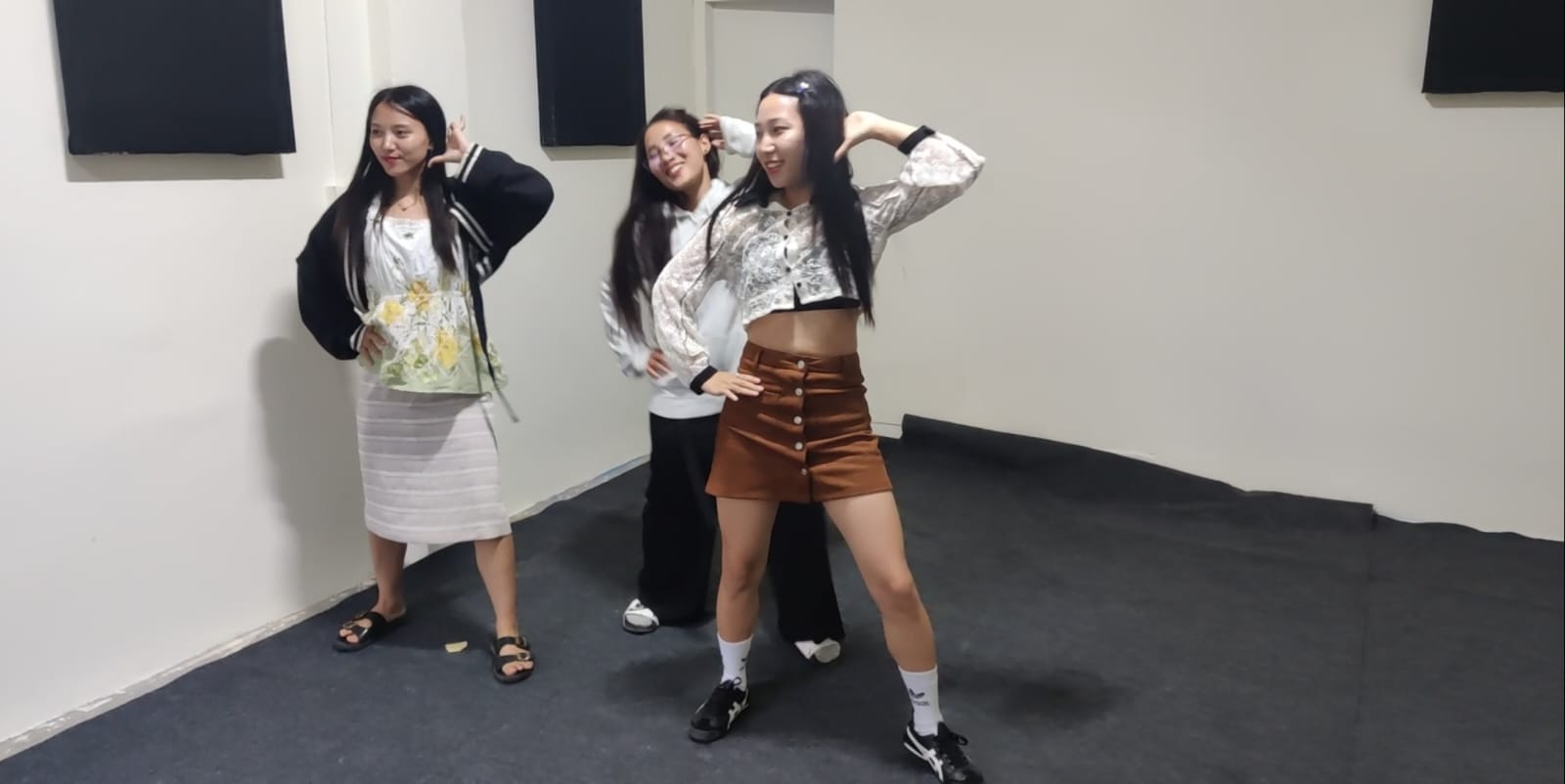
She still speaks of siblings’ fees as part of the calculation shaping her choices. Sometimes she wonders whether to focus on the group or on family responsibilities.
“There is just too much to handle,” Sasum said.
Their big dreams are forged under pressure.
Also read: Music, markets, Manipur – a Northeast festival brought all eight states to Delhi
Can Arunachal build an industry?
That question interests Chapo Pabing, founder and CEO of Hok Entertainment, which signed the group recently. If the four girls of Gilithigreams embody aspiration in motion, Pabing is trying, in however provisional a way, to build some scaffolding beneath it.
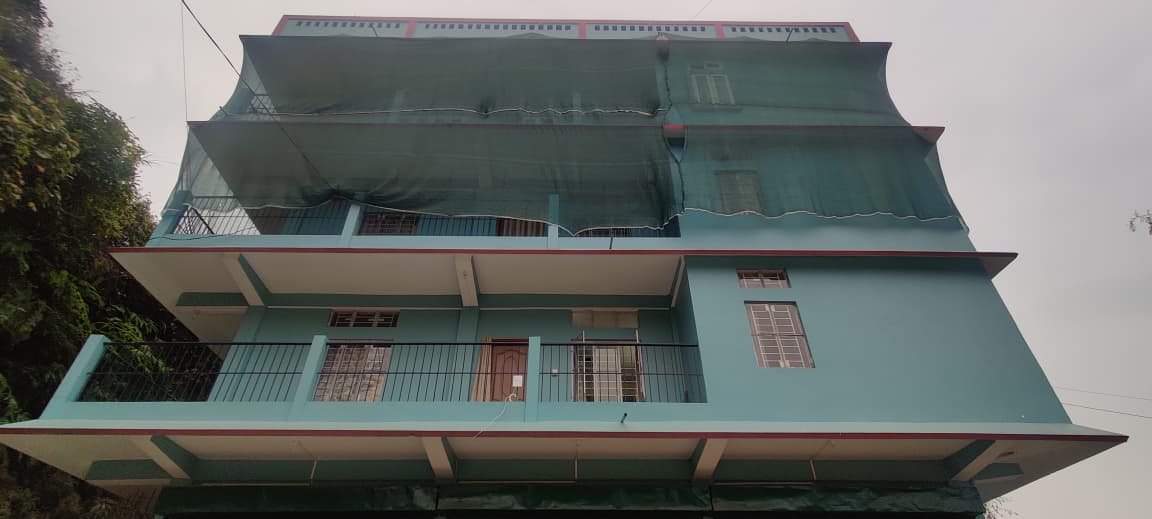
He speaks in the unfinished office from where he now manages the group. The modest space where the girls rehearse, stands a few metres from Chief Minister Pema Khandu’s official residence. The juxtaposition feels almost too neat to ignore: An emerging pop experiment taking shape literally in the shadow of state power, though with little of its institutional support.
For Pabing, the challenge is larger than launching one successful act. It is whether something resembling a music ecosystem can be built in a state where, he argues, talent has long outpaced infrastructure.
“There is limited industry exposure, a very small market, and no structured system for artist development here,” he said. “But that is also why we have to build one.”
He is wary of the language of hype around Gilithigreams and returns instead to foundations—vocal grooming, musical training, mentors, and discipline. The ambition is to refine the girls slowly as “complete artists” so they can sustain their recent and rapid visibility.
That language of artist development borrows, consciously or not, from global pop industries the group admires. But Pabing insists the point is not replication.
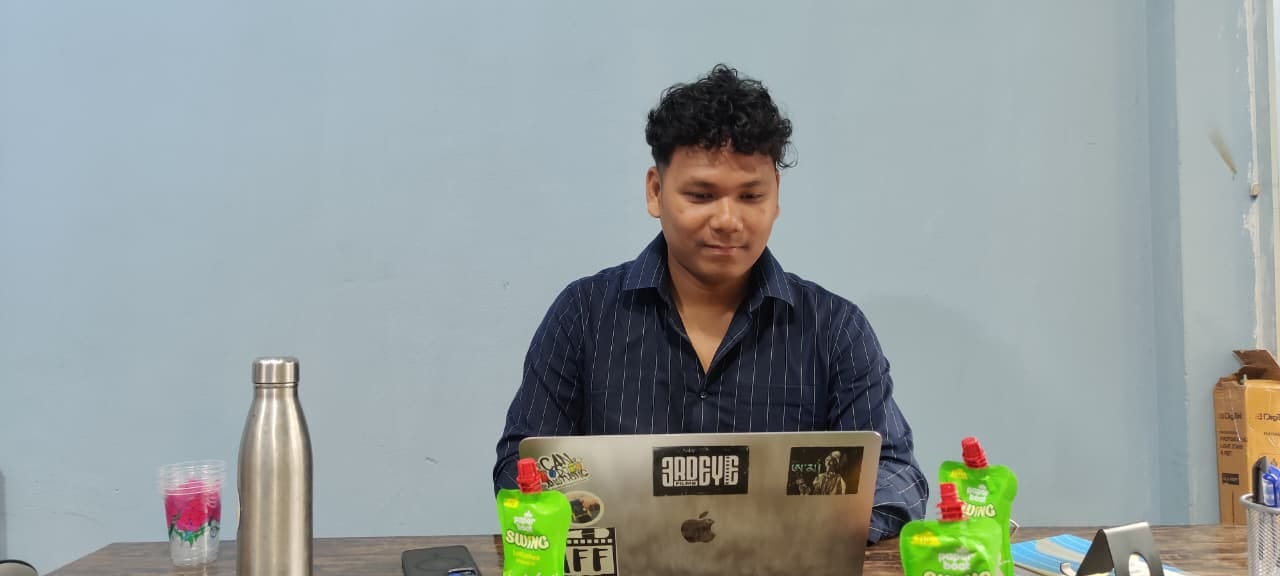
“Our vision is local to global—glocal—but with authenticity,” he said. “They may gradually move into Hindi and English too, but Nyishi is their root. That cannot be abandoned.”
He also frames digital platforms less as promotional tools than as a route around traditional gatekeepers. In a state far from the circuits where labels, producers and industry capital concentrate, building audiences online first, he argued, is a necessary strategy.
At moments, his language edges toward startup optimism—“movement”, “ecosystem”, “originality”. Yet beneath the managerial vocabulary lies a more serious stake: That regional pop from the Northeast need not wait for validation from Mumbai before imagining scale.
“We are not just managing artists… We are trying to build a movement from the Northeast,” he said.
A Yo Yo Honey Singh dream
In a career moving faster than they can absorb, the members of Gilithigreams have not yet found time for something ordinary. The four girls have, remarkably, not yet been to one another’s homes—or ‘basti’, as they call them.
Sasum laughed when asked about when they might finally visit each other’s homes.
“When we get some free time,” she said, before correcting herself. “When we become a little settled.”
Settled, though, is not a word that fits them yet.
There are still songs to release, more vocal training to complete, and ambitions that span easily between Itanagar and elsewhere—between singing in Nyishi and one day collaborating with rapper Yo Yo Honey Singh, their favourite artist since childhood.
“The way he sings and raps with melody—it fits our vibe. He is our dream collaborator,” the girls giggle in unison.
But the ambition they return to most is closer to home.
“We want to be an inspiration for the next generation of artists; tell them that you don’t need a godfather,” they said. “We came from no money but we made it. If we can do this, others can too.”
(Edited by Theres Sudeep)