



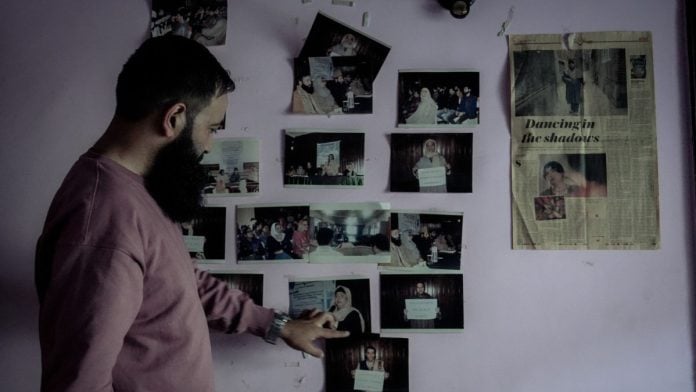
Srinagar: Three kilometers from the bustling lanes of Lal Chowk, an unremarkable rundown building in Srinagar’s Barbar Shah holds a secret. It opens into a small room where people shed their masks and reveal their true selves. Its location is circulated in WhatsApp messages and private chats, spoken in whispers and never out loud. For Kashmir’s LGBTQ+ community, it is their little safe space.
The building carries no signage. Its wooden structure is broken in places, the staircase creaks under the weight of footsteps, and a dark, narrow corridor leads to the rooms. Most of them are rented out to migrants from Uttar Pradesh and Bihar. Except for one small, square room, from where Sonzal Welfare Trust operates. The word ‘sonzal’ means rainbow in Kashmiri.
Aijaz Ahmad Bund, the founder of the Trust, identifies as queer. And to him, speaking about the community has come at a cost — hostility and death threats. But Kashmir’s LGBTQ+ community is ready to come out, even though its conservative Muslim society is yet to catch up. Like most difficult conversations, it is now taking place online at first. What existed for long in hushed whispers and the shadows of public spaces has now found a new burst of life on Instagram this year. Out, loud and proud in Kashmir.
“It took me some time and courage to decide before going public because the more visible we are on social media, the more hate we get. And dealing with that kind of hate is not easy,” said Bund.
Sonzal Welfare Trust was registered as an NGO in 2017, but Bund has been advocating for the community’s rights since 2011. One of his photographs on the internet shows him holding a placard that reads, “Love is not haram”. A rainbow flag hangs in the background. Back then, working with the community meant meeting transgender groups, knocking on doors, convincing people to come together, and slowly building a network. That was before social media gave him a platform. But for the longest time, Bund used it cautiously, keeping the community’s Instagram account private. Until recently, when he decided to take a dive.
With that came threats and hostile messages. But also messages from people in the community asking to meet him, talk to him, and find out more about the space he had built. More than a decade of work on the ground had now taken a more public turn.
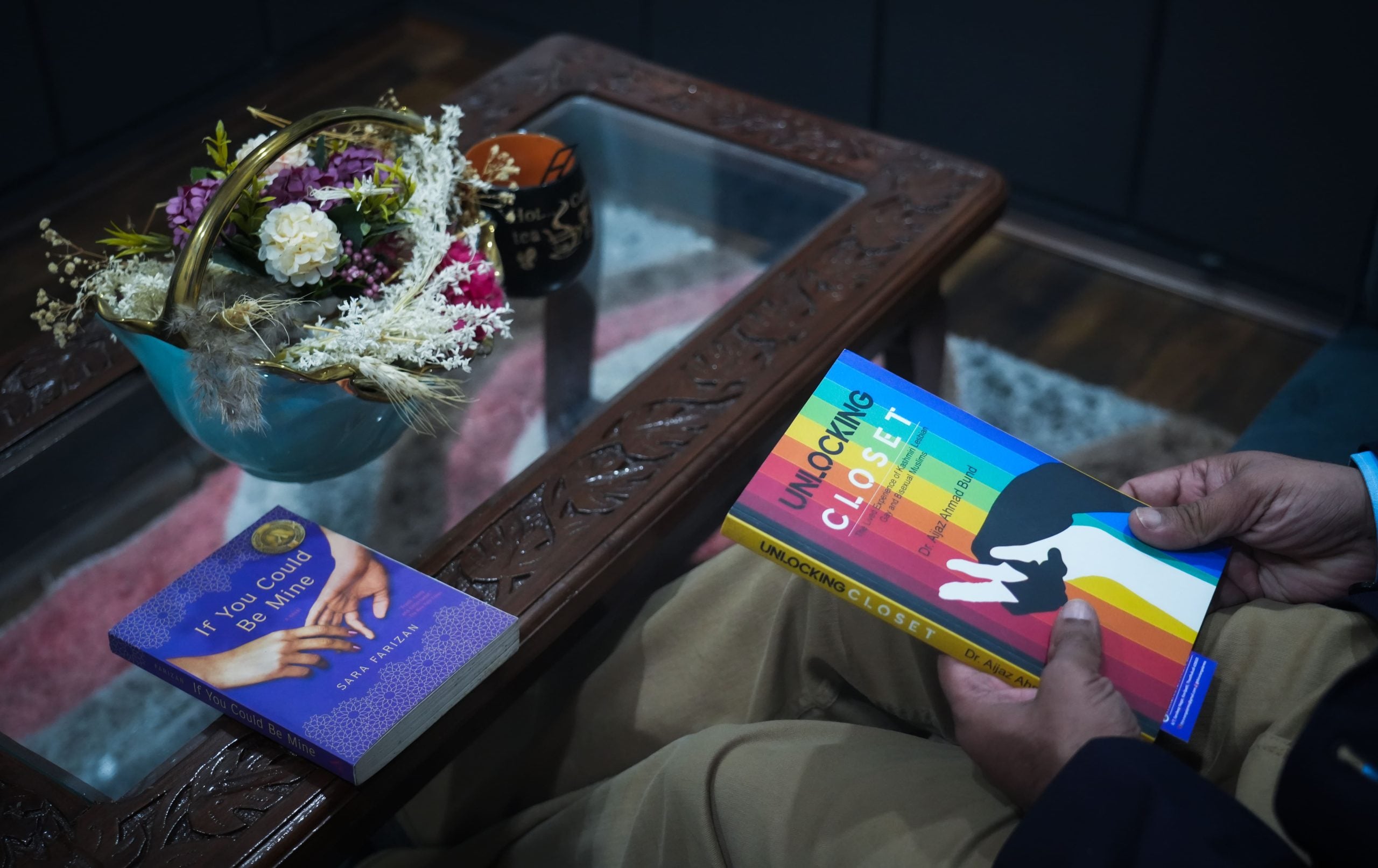
“I received messages where people were surprised to know that a space like this exists in Kashmir. They were elated and wanted to meet me,” he said.
Two months ago, a comment on Instagram prompted Bund to make a video about the existence of Kashmir’s LGBTQ+ community. It was the first time he had made such a video public from his personal account. The response was widespread. His inbox was soon flooded with messages from members of the community who wanted to meet and talk. That’s when he opened Sonzal Welfare Trust’s Instagram account to the public. Its following grew rapidly.
The Instagram page that had barely a thousand followers has now crossed 6,000.
“The comment said that LGBTQ plus people don’t exist. It infuriated me. I felt compelled to make a video on their existence in Kashmir and make it public so that everyone knows,” Bund said, recalling fondly the day he made the decision. “Looking at the video’s virality and the messages I received, I thought, maybe, by keeping the account private, I might not be reaching every Kashmiri.”
Now, the Instagram page is filled with testimonies from community members and glimpses of their lives. Their faces, however, remain hidden. Some appear behind a book, and some with their backs to the camera. One such testimony reads, “I am a Gay Kashmiri Muslim and unapologetic about any of it…” Another one reads, “Being gay is not a choice, a phase, or something to be cured. It is simply who I am…”
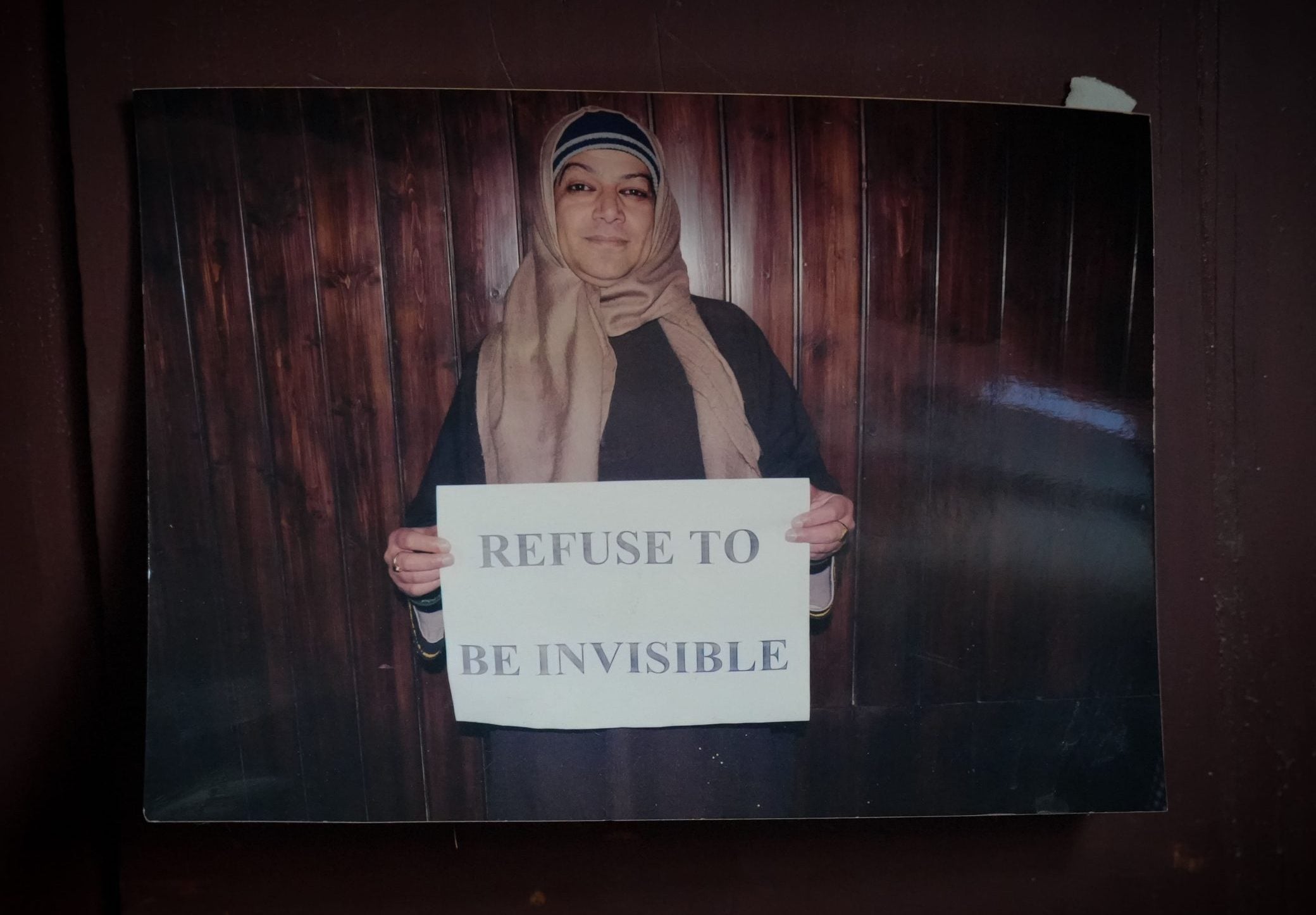
The walls of Bund’s covert office are plastered with photographs of the community members, a rainbow wallpaper, and a poster that reads, “No judgement zone”.
When A first came to Bund’s office five years ago, he was struggling with a question that put two important parts of his identity in conflict: Islam and Homosexuality.
“When he came to me. The first question he asked was that can faith and sexuality co-exist?” said Bund, sitting in the Sonzal Welfare office, as A nodded his head in agreement.
He wanted Bund to help him out, so that he could stop spending sleepless nights wondering if being homosexual meant he was betraying God.
Islam and homosexuality
The question was not unusual. Several queer Muslims across the globe have wrestled with the apparent conflict between their faith and sexuality. For some, it has meant distancing themselves from organised religion. Others have continued to pray and hold on to their faith while reinterpreting religious teachings. Some have also found spaces of worship that are more accepting of their identities. One such is Toronto’s Unity Mosque.
When Bund first met him, A was wearing a thawb and a taqiyah. He was a 15-year-old in a relationship with another man.
When Bund told me that I can be gay, Muslim, and Kashmiri at the same time. I felt somehow liberated. I am still the same. I still pray five times. It’s just that my dress has changed
– a gay person from Kashmir
But Bund said that he offers no miracle. In Kashmir, being queer often comes with a difficult negotiation between faith and identity. Bhund said young people frequently come to him carrying the same question, hoping that he could settle that internal conflict for them.
But many leave disappointed, he said, when all he gives them is a thought to sit with and a push to find their own answer. “I always say if your faith is in any way liberating you, keep it. If it is troubling you, leave it,” he said, pointing at his long beard flowing to his chest. “I have been told that I am too Muslim to be a queer.”
That answer changed something for A. Five years on, he wears loose jeans, a T-shirt, an earring, and several bracelets. His nails are long and sleek. His curly hair falls loosely over his forehead. He still offers namaz five times a day.
“When Bund told me that I can be gay, Muslim, and Kashmiri at the same time. I felt somehow liberated. I am still the same. I still pray five times. It’s just that my dress has changed,” A said, adjusting his rings.
But this assertion by wearing clothes of his choice has been hard-earned. His family had to leave their neighbourhood and move to another part of Srinagar. His father no longer speaks to him. His cousins stopped interacting with him. His friends distanced themselves. And he stopped attending family gatherings.
His photographs became a point of discussion in WhatsApp groups among young boys in the neighbourhood. They mocked his dressing sense, ridiculed his mannerism, and made derogatory remarks about the way he walked.
Now, he can’t visit the neighbourhood mosque on Fridays, and instead travels 3-4 km to pray where no one knows him. And on most days, he prays at home.
“When I walk in the street, people bully me and pass remarks, saying ‘laanch ha aav’,” he said, referring to a derogatory term used for transgender people. “But I am not a transgender. People have no understanding of LGB.”
Three years ago, when A’s mother caught him speaking to a man late into the night, he had to explain that he was gay, not transgender. “I told my mother that I love men, not women. And I can’t help it.”
The revelation initially shattered her. She cried for hours. But she eventually came around. She now buys him bracelets and makeup, though always out of his father’s sight.
A cry for help
As Sonzal Welfare Trust’s account went public on Instagram, a message from a 16-year-old left Bund disturbed. It was a cry for help. “I am gay. My family is torturing me. They are saying ‘mujhe theek hona hi padega.’ I think I might attempt suicide,” the message read.
Bund was perplexed, but he did not let it show in his response. He simply asked to speak to the boy’s parents. What followed were a couple of meetings with the boy’s father, who argued with Bund about his son’s sexuality. The father kept returning to the same questions: How would his son get married? How would he have a daughter-in-law? Who would take care of him in his old age?
When someone asks me why I risk my life and safety, I say God has chosen me for this. I am doing God’s work
– Aijaz Ahmad Bund, founder of Sonzal Welfare Trust
“I told him I will burn my degrees if you can change your child’s sexuality. It can’t be changed. But he didn’t listen to me and left,” Bund recalled. The father then took his son to a peer, who chanted prayers over him for hours.
“The peer guaranteed that the boy was possessed and will be cured in a fortnight. But nothing happened,” the boy revealed to Bund during one of the conversations.
When nothing changed, the father first took him to physicians and then psychiatrists. Now, Bund said, the young boy’s father is saving money for what he said will be a final attempt to “correct” his son through conversion therapy.
A growing community
Bund, an assistant professor in Jammu and Kashmir’s Higher Education Department, alone sifts through the Instagram messages and picks up panic calls from community members. He doesn’t have a team, but a couple of volunteers, who do not want to be publicly known, help him manage when two or three cases arise simultaneously.
That was when a woman called him last year, saying she had been thrown out of her house for being a lesbian. He didn’t know what to do. So, he gave her shelter at his house for a week, until her family came around and took her home.
“I didn’t let her go just like that. I counselled her family till she was living at my house,” Bund said.
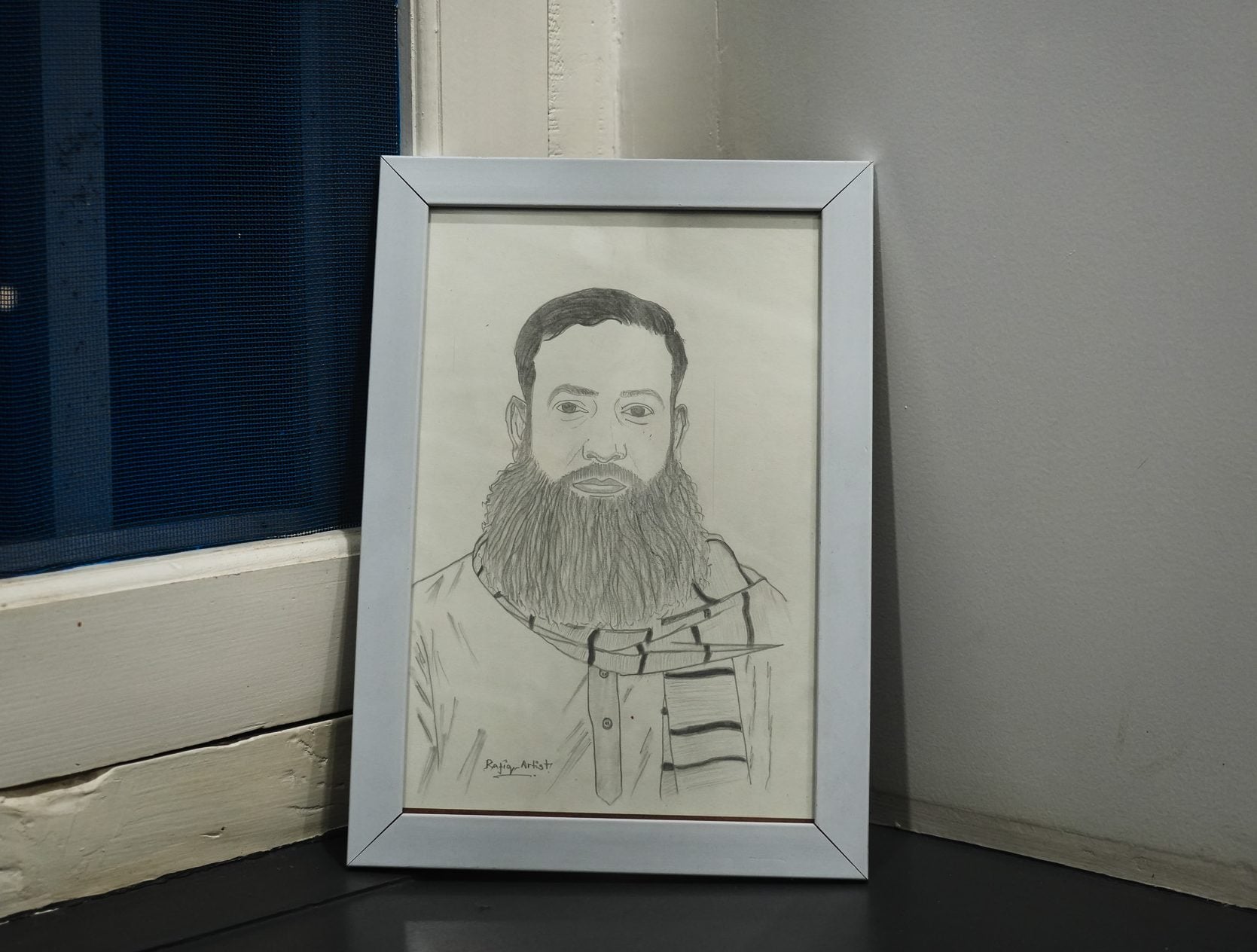
He recalled how the woman’s family members accused each other of giving her a bob haircut during childhood. They said having short hair didn’t mean that she identified as a boy or was attracted to women.
“I had to really make them understand for hours on end. And once they gave me assurance that they won’t be violent and throw her out again, I let them take their daughter,” Bund said.
The woman has since remained in touch with Bund and the LGBTQ+ community. She meets the community members twice a week at cafes in Srinagar. They talk, discuss, and click photos. Recently, the community celebrated a decade since Sonzal formed and posted the photos on Instagram. The photos showed no faces, only a vanilla cake topped with a rainbow and a table with plates emptied after the meal.
Bund remembers how a young tribal man travelled through curfews, passing police checkpoints and hitchhiking, to reach his office in Srinagar.
“The person came from as far as Bandipora to Srinagar. And he was so mentally agonized that as soon as he reached this office he started crying. And didn’t stop for hours.”
But building such a space has not been easy.
Also read: From Chambal to UPSC: How a dacoit’s grandson fought the stigma of his past
‘Tareekh pe tareekh’
It was 2009 when a transgender woman came to Bund’s house to help with the arrangements for his sister’s marriage. His mother would not let her inside and asked her to leave. Bund argued and brought her in.
Greetings were exchanged. The groom’s options were discussed. Tea was served.
But as soon as the woman left, Bund’s mother washed the cup thrice she had used and put it away.
The incident stayed with him. He had already begun thinking about doing something for transgender people living in Kashmir. But that day, he said he realised that the work had to begin closer to home, with the prejudices inside his own house.
It was also what prompted him to change his career so that he could work for the community.
“Back then, I was doing my Bachelor of Science at SP College. Then I shifted to the social work department at Kashmir University. The idea was to gain as much knowledge as possible and put it on the ground for transgender people and the LGB community,” Bund said. “When I said LGBTQ in my social work class, everyone burst out laughing.”
That’s when he moved out of the classroom and began meeting transgender people on the ground. They were wary of meeting him at first.
“I went to meet them at their house. They asked me to come again some other time. But they didn’t meet me, and I kept waiting for hours. However, my consistency and persistence paid off,” he said.
In 2017, Bund filed a public-interest litigation (PIL) in the Jammu and Kashmir High Court on behalf of the transgender community. The petition asked the government to implement the Supreme Court’s NALSA v Union of India order and recognise transgender people, ensuring their social, economic and political inclusion.
“There were some interim directions, but mostly we got ‘tareekh pe tareekh.’ It’s been nine years, we are still only getting tareekhs,” Bund said.
Bund’s activism has made him a target of abuse. But the hate grew rapidly in 2020, when a heritage walk organised by Bund was labelled as “Pride Walk”. The event that was presented as a cultural and historical tour was soon portrayed as an attempt to impose an LGBTQ agenda on Kashmir.
What followed was online abuse and backlash, along with death threats. Soon, the abuse took a physical form. In December that year, Bund, who was on an evening walk, was surrounded by young boys at Lal Chowk who hurled homophobic abuse at him. Before the situation could turn violent, Bund managed to flee.
“I didn’t sleep for weeks. I always kept the lights on thinking someone would come and attack me,” Bund said, his voice trembling. “I got hundreds and hundreds of death threats asking that I should be set on fire. I was frightened.”
He was scared, frightened, and didn’t attend work for days. But it never dampened his spirits.
“When someone asks me why I risk my life and safety, I say God has chosen me for this. I am doing God’s work,” he said.
And just like that, Bund answered the biggest and the most obstinate Kashmiri LGBTQ+ question about faith and sexual identity.
(Edited by Aamaan Alam Khan)