







Srinagar and Jammu: Every summer, parts of Jammu and Kashmir turn purple. For 28-year-old Madeeha Talat, those fields looked less like a tourist attraction than an unfinished business opportunity.
Lavender is a symbol of the new Kashmir narrative. The ‘Purple Revolution’—a push to make lavender as closely associated with J&K as apples and saffron—has been gathering pace for a decade. But when Talat returned to Srinagar in 2019, she found that the ‘Purple Revolution’ was in a holding pattern. Farmers were growing lavender. Distillation units were extracting essential oil. Then the value chain ended.
“Everyone was selling raw material,” said Talat. “I felt there was a much bigger scope. If we did the value addition here instead of just selling the essential oil, we could get much higher returns.”
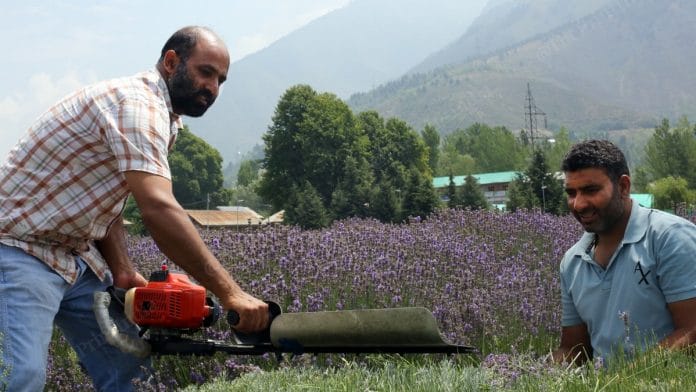
Rather than selling oil herself, Talat decided to build a brand, Ruposh. Lavender grown on her farms in Budgam district’s Doodhpathri and Srinagar’s Harwan is turned into face washes, serums, herbal teas, fragrant sachets and other wellness products. She also sources lavender from local growers.
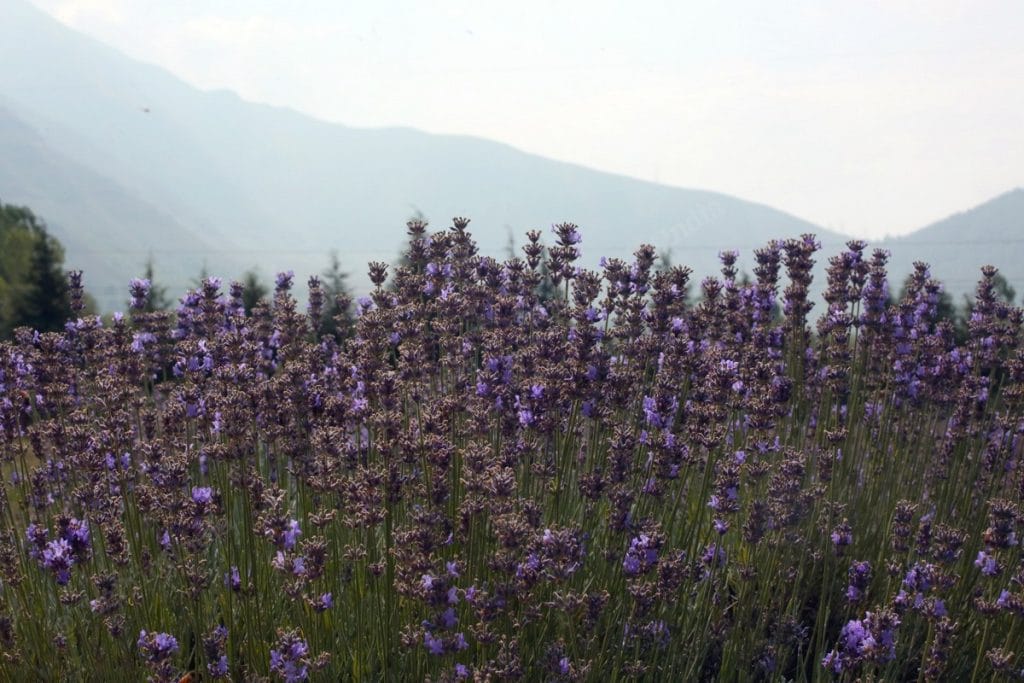
The ‘revolution’ itself began in 2016, when the Centre launched the CSIR Aroma Mission to get farmers growing high-value aromatic crops. In Jammu and Kashmir, lavender became its showpiece. The UT government later lent support through the Holistic Agriculture Development Programme (HADP). Lavender cultivation has since spread from research plots to farms across Jammu and Kashmir, with nearly nine lakh saplings distributed free to farmers over the past four years.
When you say Kashmir, people immediately think of apples and saffron. We wanted lavender to become another identity”
– Abdul Hamid Shah, floriculturist, J&K Department of Floriculture
Lavender cultivation has grown from about 165 hectares and 600 farmers in the mission’s first phase to an estimated 1,600 hectares in 2026, with Bhaderwah in Doda emerging as the main hub in Jammu and Pulwama, Anantnag and Ganderbal as major centres in Kashmir.
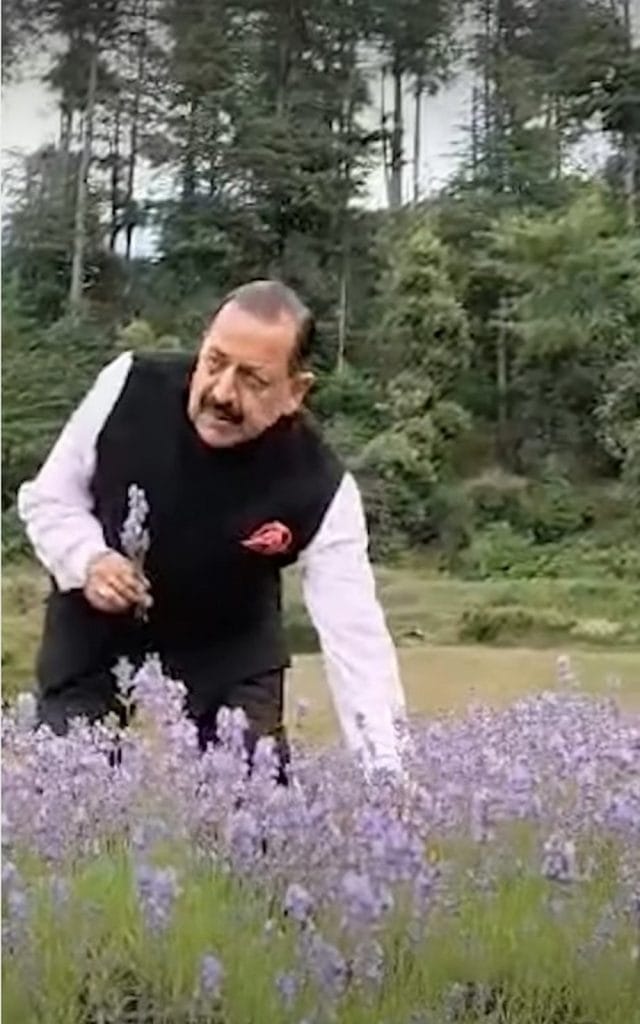
Today, lavender has become one of the Centre’s flagship rural development initiatives in the region. In a 2023 Mann Ki Baat episode, Prime Minister Narendra Modi said many maize farmers in Bhaderwah had shifted to growing lavender and that “the fragrance of their success is spreading far and wide”. Another evangelist is Union Minister of State for Science and Technology Jitendra Singh, whose Lok Sabha constituency, Udhampur, includes Doda. In June this year, he said lavender had given Bhaderwah “a national identity and a national role in India’s economic growth”.
Yet the lavender narrative does not always pass the smell test on the ground. Talat encountered the same problems as many farmers: growing lavender was one thing, finding buyers was another. Processing infrastructure is still patchy, and many farmers end up selling their lavender oil to buyers outside the UT instead of making value-added products themselves.
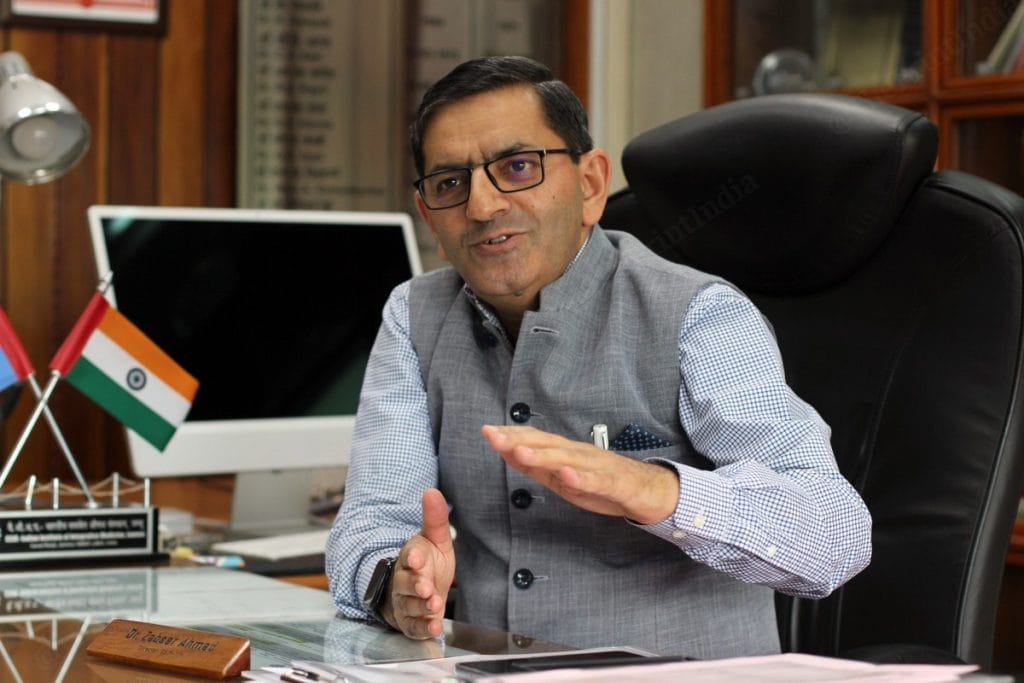
“The cultivation has happened,” said Dr Zabeer Ahmed, Director of CSIR-Indian Institute of Integrative Medicine (IIIM), Jammu. “Now we have to ensure that the business happens too.”
Also Read: Ladakh’s sea buckthorn gold rush. Entrepreneurs are minting crores from ‘Sanjeevani booti’
The scientist who sold farmers on lavender
The first thing visitors notice outside Dr Suphla Gupta’s office at CSIR-IIIM in Jammu is the smell.
Even before stepping inside, the fragrance of dried lavender hangs in the corridor. Small bottles of essential oil, dried bouquets, and lavender products line her office shelves—a reminder of how far the crop has travelled from the research plots where it was once confined.
As the nodal officer of Aroma Mission, Gupta has spent much of the last decade doing something scientists are rarely expected to do: persuading farmers to trust a flower they had never grown before.
“We were afraid,” she recalled. “If it didn’t sell, the poor farmer would lose money.”
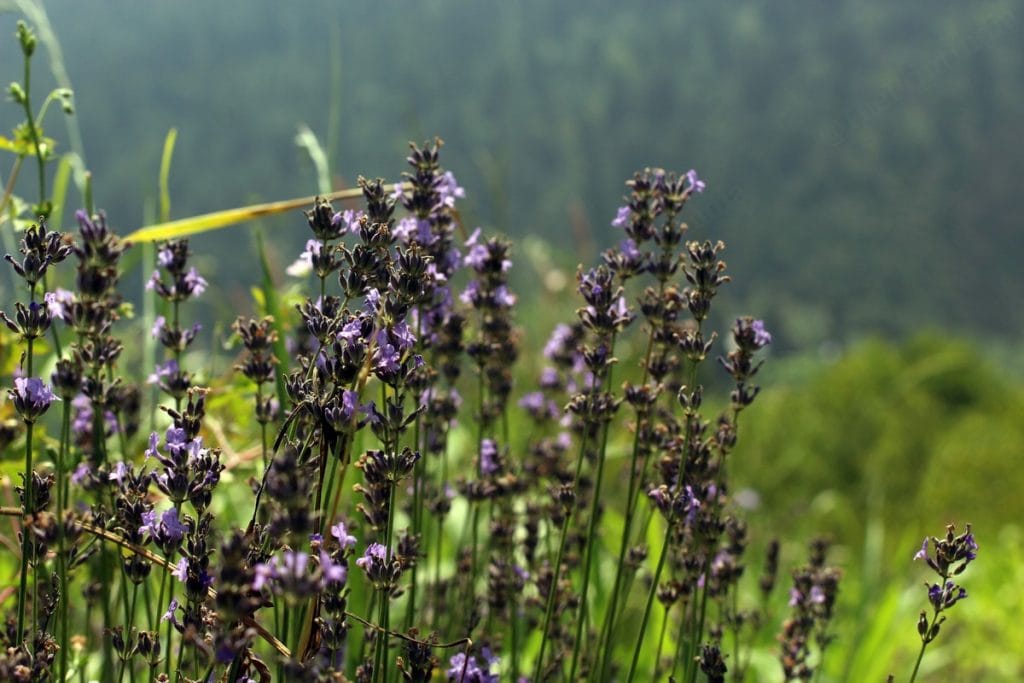
By then, scientists had already spent decades proving that lavender could survive Kashmir’s harsh winters and produce high-quality oil. The test now was getting farmers to plant it.
Rather than asking growers to replace entire orchards, scientists started with small demonstration plots of 20 to 40 hectares. They visited villages throughout the season, monitoring flowering, distillation, and oil quality alongside farmers.
“In many ways, that was research for us too,” said Gupta with a laugh.
One of the first farmers to take a leap of faith was Bharat Bhushan, a security guard from Bhaderwah who offered some of his land for the experiment.
“He told us, ‘I don’t have much land. Take this small patch and try it.'”
Our first target is not exports. Our first target is the Indian market
– Dr Zabeer Ahmed, Director, CSIR-IIIM, Jammu
Initially, lavender tested everyone’s patience. The first year went into establishing the bushes. Flowers arrived only in the second year, while commercially viable harvests took nearly three years.
“For three years he trusted us,” Gupta said.
When the first drum of essential oil was finally produced, finding a buyer became the next hurdle.
“I still remember one of my seniors helped him sell that first drum of oil to [a company in] South Korea,” Gupta recounted.
For Gupta, that single sale did more to convince farmers than years of presentations or scientific papers.
“That was awareness,” she said. “Word of mouth. People saw someone from their own village earn money.”
Soon, neighbouring farmers began asking for planting material. Scientists trained families to propagate lavender themselves instead of relying entirely on government nurseries. As cultivation spread, distillation units followed, bringing oil extraction closer to farms.
A new challenger to apples and walnuts
Where crops such as apples, saffron and walnuts had deep roots in the region, lavender was an upstart. Farmers didn’t know what to expect from it.
“You can’t simply ask a farmer to leave behind what generations have cultivated,” said Abdul Hamid Shah, floriculturist with Jammu and Kashmir’s Department of Floriculture. “Agriculture is their livelihood. Every decision is a risk.”
In Kashmir, farmers knew who would buy an apple harvest, how saffron behaved, how walnuts yielded. Lavender had no such legacy, nor an established market.
“When you say Kashmir, people immediately think of apples and saffron,” Shah said. “We wanted lavender to become another identity.”
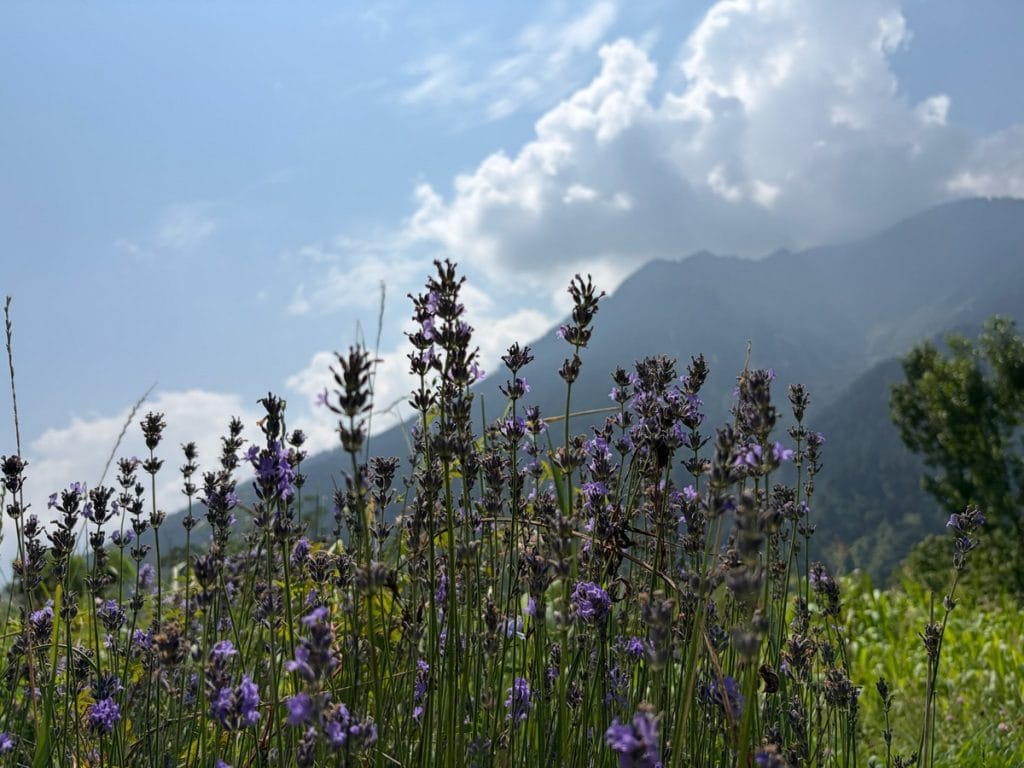
That ambition was eventually channelled through the Union Territory’s Holistic Agriculture Development Programme, under which one of 29 dedicated projects focuses specifically on medicinal and aromatic plants.
Rather than asking farmers to replace orchards, officials encouraged them to begin small—planting lavender on rain-fed slopes or underutilised land or between rows of apple trees. The perennial crop requires relatively little irrigation, thrives on less fertile soils and helps attract pollinators, allowing farmers to treat it as an additional source of income rather than a replacement for traditional crops.
It is one crop that is proving resilient under conditions that other crops are not able to endure”
– Dr Shahid Rasool, head of CSIR’s field station in Bonera
Beyond encouraging farmers to plant, a supply line was created. Government nurseries raised lavender from cuttings and handed out saplings to growers free of cost. Training camps, demonstration plots and exposure visits were organised to help farmers build familiarity with the crop.
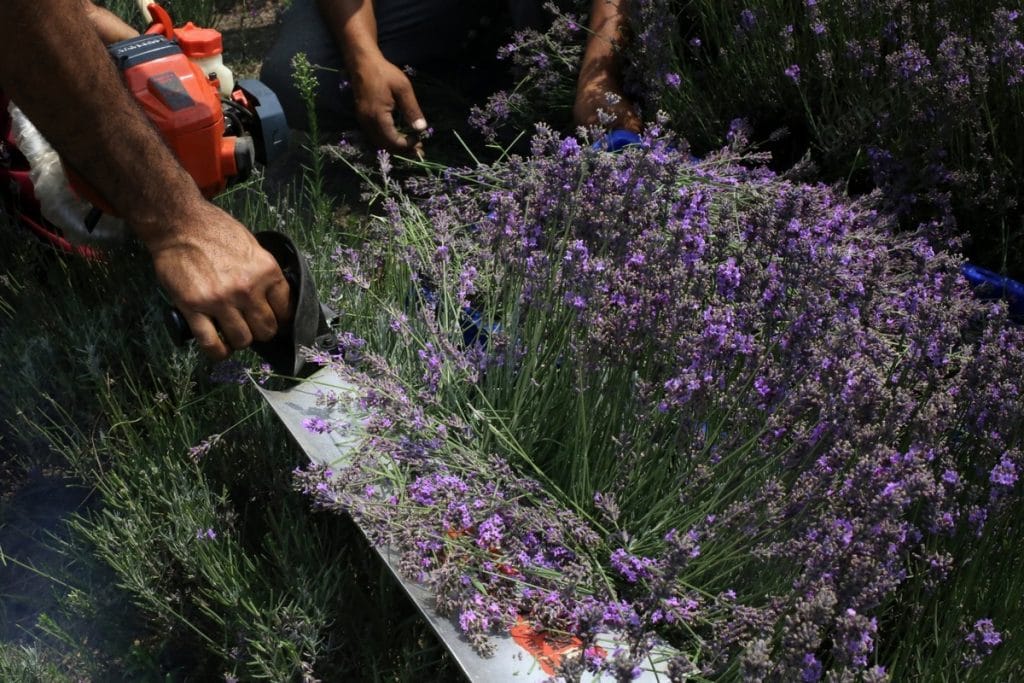
A lot of the buy-in also came from women. When the mission entered villages, scientists trained families to propagate saplings in kitchen gardens. Women raised thousands of young plants that were later transplanted into fields across Jammu and Kashmir. Gupta estimates that women now also carry out nearly 90 per cent of the harvesting. They move between rows of waist-high bushes, carefully cutting flower spikes before tying them into bundles for nearby distillation units.
“The women became the backbone of this work,” she added.
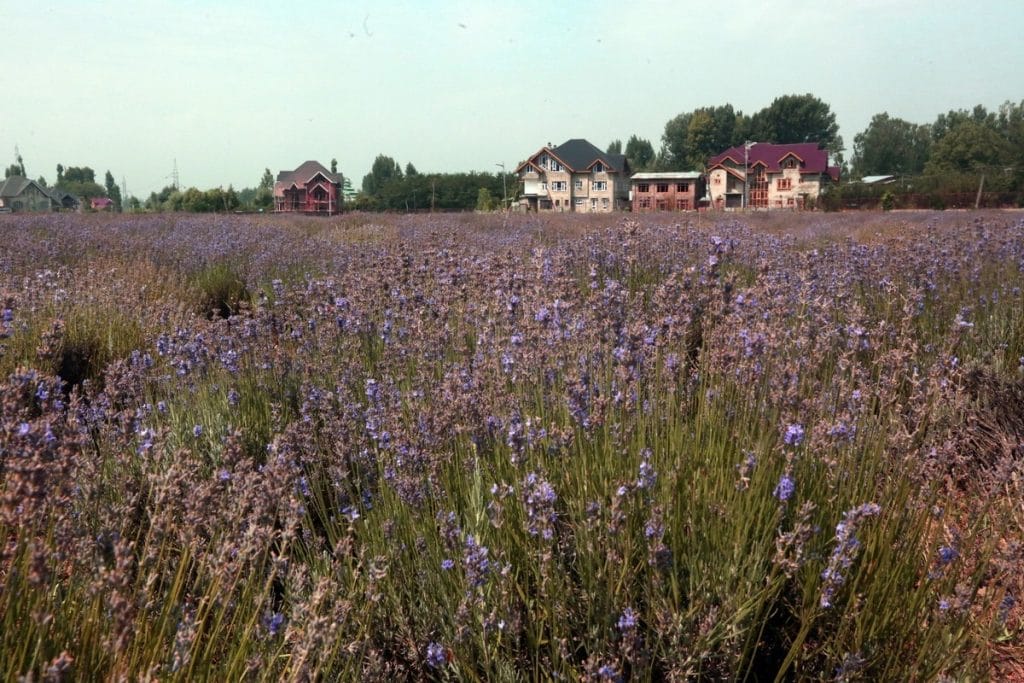
Today, lavender is cultivated across all ten districts of Kashmir, from Pulwama and Shopian to Ganderbal, Kupwara and Baramulla, and has reached border regions such as Uri and Gurez.
The flower has also become a tourist attraction. Every summer, visitors arrive to photograph the purple fields, while Bhaderwah in Doda district hosts the annual Lavender Festival. The fourth edition, held this year under the theme “Lavender Goes Global”, brought together farmers, entrepreneurs, fragrance companies, researchers and policymakers to showcase lavender-based products, buyer-seller partnerships and new business opportunities.
Inaugurating the festival, Union Minister Jitendra Singh said that what began as a “modest initiative” in J&K was now a model for Himachal Pradesh, Uttarakhand, Arunachal Pradesh and other Northeastern states.
But underlying the blitz is a persistent anxiety. The UT has successfully engineered a harvest, but the business side is beset by dry patches.
Fields left to wither
The lavender fields in Ganderbal are at their brightest around July, with tourists flocking to inhale their fragrance and watch them sway in the summer breeze. But this year, farmer Reyaz Ahmad decided to let his harvest wither.
A high school lecturer from Haknar village, Ahmad was among the first farmers in Ganderbal to plant lavender around 2016, when scientists and government officials began persuading growers to experiment with the crop. He remembers the excitement surrounding it. Here was a plant that could survive Kashmir’s harsh winters, thrive on rain-fed land, keep wild animals away and require little irrigation or pesticide. Compared to traditional crops, it seemed almost too good to be true.
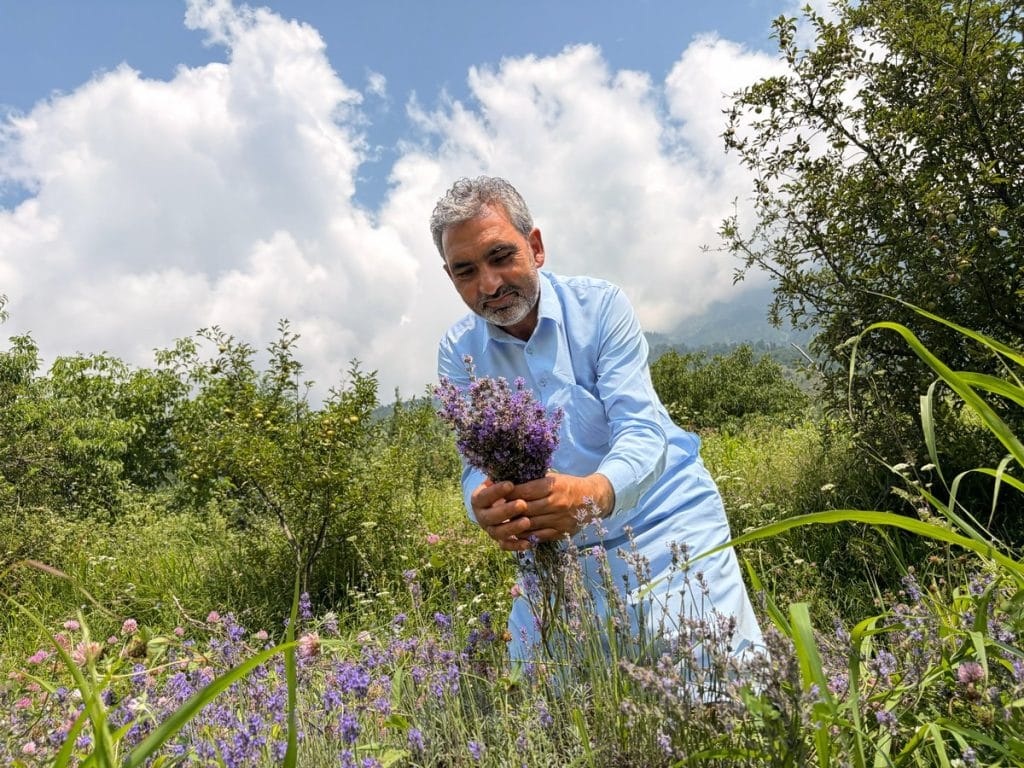
Nearly a decade later, the bushes still bloom every summer. But this time, Ahmad didn’t harvest them. The flowers dried where they stood. Now, he is preparing to replace much of his lavender with high-density apple plantations.
“In terms of cultivation, it has delivered,” he said. “There are no monkeys destroying it, there are no major pests and it grows well.”
The problem begins only after the flowers are harvested. Every summer, the bushes are cut, bundled and taken to distillation units where steam slowly extracts the essential oil. That is where many farmers are left asking the same question: who do we sell it to?
People encouraged us to cultivate it. But nobody really told us where we would sell it”
– Reyaz Ahmad, farmer in Ganderbal
Over the years, Ahmad estimates he invested nearly Rs 3.5 lakh in lavender cultivation. In return, he has recovered only around Rs 2.5 lakh. Even getting the flowers processed became expensive. Twice, he transported harvested lavender to Srinagar because there was no nearby distillation unit, adding transport costs to an already uncertain business.
Unlike apples, saffron or walnuts, lavender has no established network of traders waiting for the harvest. Buyers are few, prices fluctuate and individual farmers often produce quantities too small to negotiate with large companies. The crop also demands regular weeding, and with farm wages now touching Rs 700-800 a day, labour costs quickly add up.
“People encouraged us to cultivate it,” Ahmad said. “But nobody really told us where we would sell it.”
Yet he hasn’t completely lost faith in the flower.
“If the government creates the market, I’ll revive it,” he said. “I’ll also tell other young people to grow it.”
Nobody else in his block grows lavender.
“I am still the only grower here,” he said. “If there had been marketing, the profits would have been good.”
Finding the market
It’s been a rough few seasons for J&K lavender on the sales front.
The Russia-Ukraine war disrupted trade routes, while cheaper lavender oil from major producers such as Bulgaria put further pressure on the Indian market. Farmers in Kashmir who once sold oil for around Rs 12,000 a kilogram suddenly found buyers offering half that amount.
“Farmers had become used to Rs 12,000,” said Suphla Gupta. “When prices came down to around Rs 6,000, many of them felt their profits had disappeared.”
To offset these issues, the focus has shifted from convincing farmers to building the value chain around lavender.
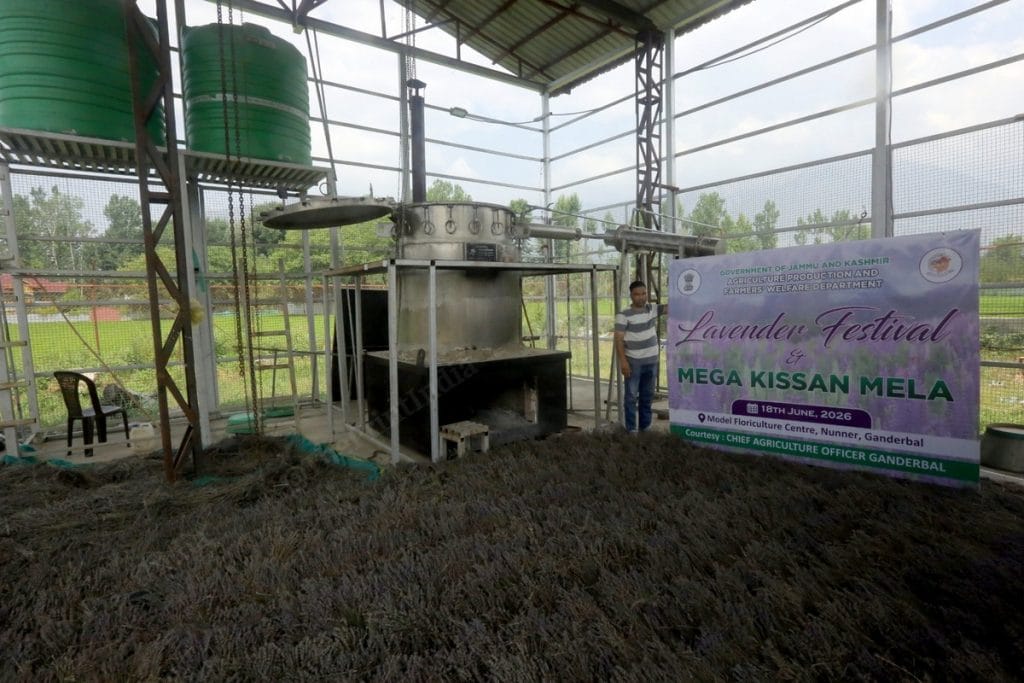
Across cultivation clusters, CSIR-IIIM has installed 55 fixed and mobile distillation units to reduce transport costs and organised more than 120 training and awareness programmes on oil extraction, processing and value addition. Buyer-seller meets now bring together farmers, entrepreneurs and fragrance companies in an effort to create stronger market linkages.
The institute is also trying to position Kashmiri lavender in premium markets. Zabeer Ahmed, director of CSIR-IIIM, said laboratory tests have shown that oil produced in Jammu and Kashmir met higher quality standards than many imported varieties.
There is a very limited market for lavender essential oil. People don’t always know what it is or how to use it. Products that contain lavender have a much bigger market
– Madeeha Talat, founder of Ruposh
“When industry analysed the quality, they themselves decided to pay around Rs 6,000 per litre,” he said. “The imported oil was cheaper, but our quality was better.”
Quality, however, has not solved the market problem. Production remains fragmented across small holdings, making it difficult for individual farmers to supply the consistent volumes that large buyers demand.
“Our first target is not exports,” Ahmed said. “Our first target is the Indian market.”
The lavender entrepreneurs
Madeeha Talat invested around Rs 10 lakh into Ruposh when she started the company. Seven years on, it has an annual turnover of around Rs 20-25 lakh. But the product that sells best is not the one at the heart of the Purple Revolution.
“Our bestseller isn’t lavender oil,” she said. “It’s lavender face wash.”
Her farms near Doodhpathri and Harwan produce about a tonne of lavender annually, with additional requirements met by local growers. She sells her beauty products through retail stores, exhibitions, e-commerce and private-label partnerships.
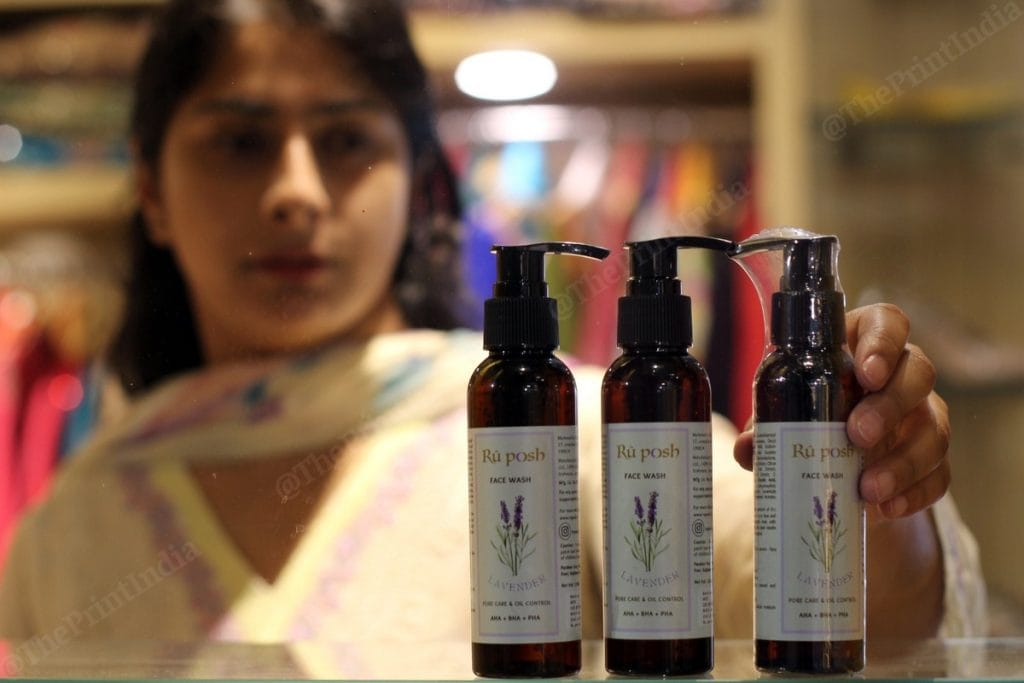
“There is a very limited market for lavender essential oil. People don’t always know what it is or how to use it. Products that contain lavender have a much bigger market,” she added. But catering to that market proved difficult in Kashmir.
Talat had to shift manufacturing to Jammu because the required facilities were not available in the Valley. Product formulation, laboratory testing, branding and packaging have also required expertise from elsewhere.
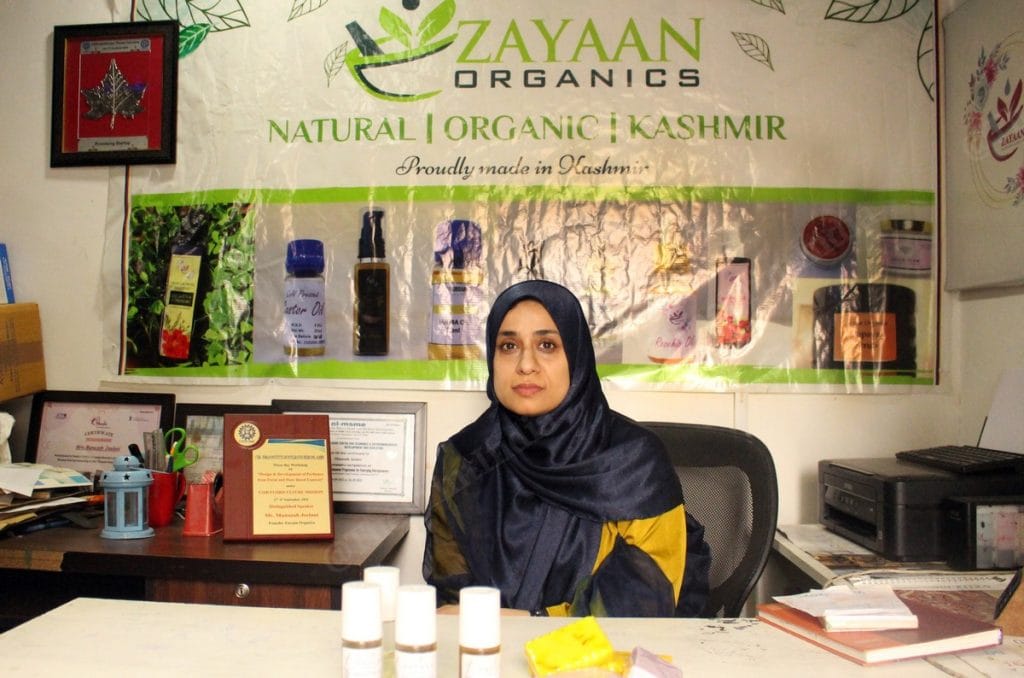
Munazah Jeelani, founder of Srinagar-based Zayaan Organics, ran into the same problem. What started as a home-based skincare venture during the Covid-19 pandemic now makes more than 50 products—15 of them lavender-based—but there are headaches aplenty.
There is no ecosystem here. If I need cosmetic testing, I have to send products outside Kashmir. For packaging I depend on Delhi. Sometimes even marketing support comes from outside
– Munazah Jeelani, founder of Zayaan Organics
This year, she said she spent around Rs 4-5 lakh sourcing lavender ingredients from local growers, but that is the easy part.
“There is no ecosystem here,” she said. “If I need cosmetic testing, I have to send products outside Kashmir. For packaging I depend on Delhi. Sometimes even marketing support comes from outside.”
These processing and logistical gaps will determine whether the Purple Revolution matures or stalls, according to Dr Jyoti Kachroo, director of the Agri Business Incubator at Sher-e-Kashmir University of Agricultural Sciences and Technology (SKUAST)-Jammu.
“There is a lot of potential, but potential alone is not enough,” Kachroo said. “Value addition is very important. Processing is very important. Agribusiness is very important.”
Through the incubator, Kachroo works with farmer producer organisations and startups on branding, certification, packaging, and market access—the missing links that help small enterprises go from fields to shop shelves.
“Without branding, nothing can be sold in the market,” she said.
Lavender’s biggest strength, Kachroo noted, is that almost every part of the plant can be monetised, yielding everything from cosmetics and face mists to herbal teas. But apart from retail, Kashmir hits a wall when it comes to scale. Large fragrance companies, she said, ask growers one simple question: How many tonnes can you supply?
“Growers are producing good-quality lavender,” Kachroo added. “But companies require volume.”

Also Read: Almonds and walnuts were Kashmir’s pride. Now Indians get their fix from California, Chile
Why scientists bet on lavender
Lavender-scented powders and perfumes had long been popular in India, but almost all the lavender oil they used was imported. The turning point came in 1970, when agricultural scientist Dr Akhtar Hussain brought lavender from Bulgaria to Kashmir.
The imported lavender was first planted at research stations in the Valley, including Bonera in Pulwama. Over the next several decades, scientists studied how the Mediterranean herb responded to Kashmir’s climate—its flowering cycle, oil yield, resistance to disease and ability to withstand harsh winters.
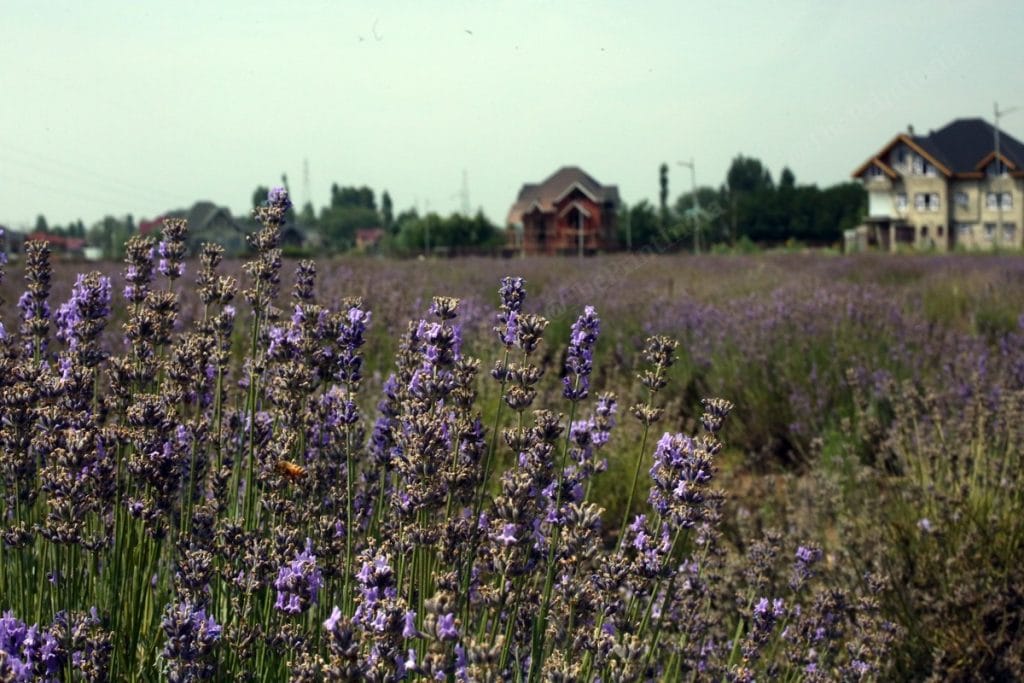
“It adapted very well to Kashmir’s agro-climatic conditions,” said Dr Shahid Rasool, who heads CSIR’s field station in Bonera, Pulwama.
For years, the work remained confined to research farms. But as climate change began altering weather patterns across Jammu and Kashmir, lavender’s strengths took on a different significance.
“It is one crop that is proving resilient under conditions that other crops are not able to endure,” Rasool said.
Unlike seasonal crops, lavender is perennial. Once established in the first year, plantations yield flowers from the second year onward and remain productive for over a decade with minimal maintenance.
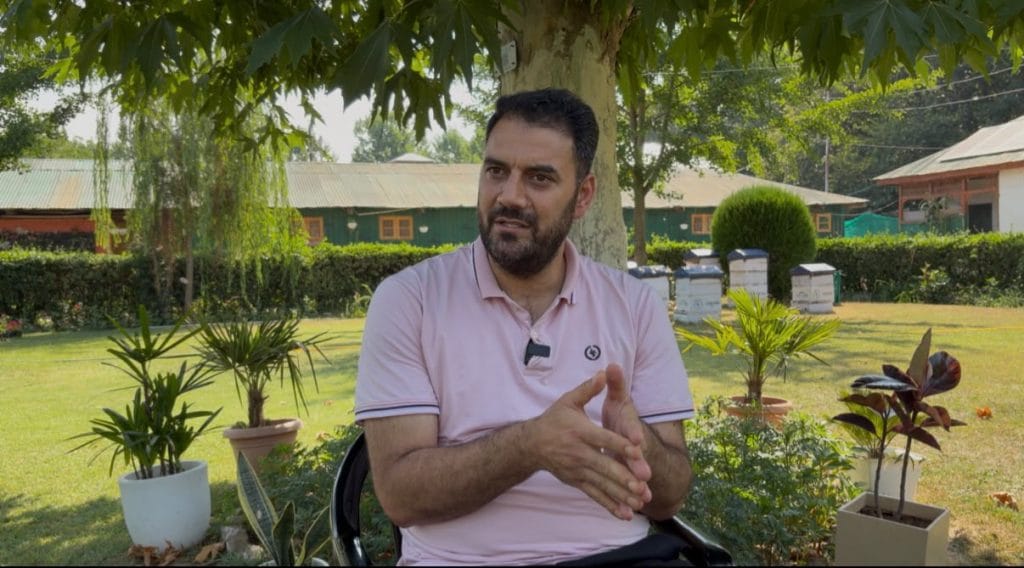
The flower is a benefactor to other crops as well. When planted beside apple orchards, lavender acts as a magnet for pollinators while its scent wards off several common pests.
“The food chain has been disturbed because of excessive use of pesticides and fertilisers,” Rasool said. “When pollinators disappear, the entire ecosystem is affected. Lavender attracts beneficial insects back to the fields.”
That early experiment eventually became the catalyst for the Union government’s Aroma Mission. According to CSIR-IIIM, the first phase covered about 165 hectares and involved less than 600 farmers, with revenues of around Rs 8.6 lakh. By the end of the second phase in 2022, lavender had spread to more than 910 hectares and 2,500 farmers, while essential oil production crossed 3,000 kg and revenues rose to nearly Rs 8.09 crore.
According to IIIM assessments, farmers who shifted from conventional crops such as maize saw annual returns increase from around Rs 40,000-60,000 per hectare to Rs 3.5-5 lakh per hectare after adopting lavender.
What remains uncertain is whether the ecosystem around the flower can keep pace. Talat sees lavender increasingly becoming a Kashmir souvenir, much like traditional handicrafts. But she is also clear-eyed about the limits of the current industry.
“If we speak about the ecosystem, it is not there. The whole process is full of challenges,” she said. “At every stage, the government can be a helping hand.”
(Edited by Asavari Singh)