



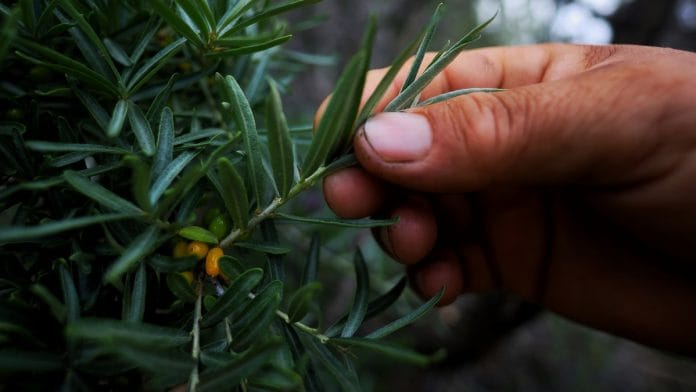
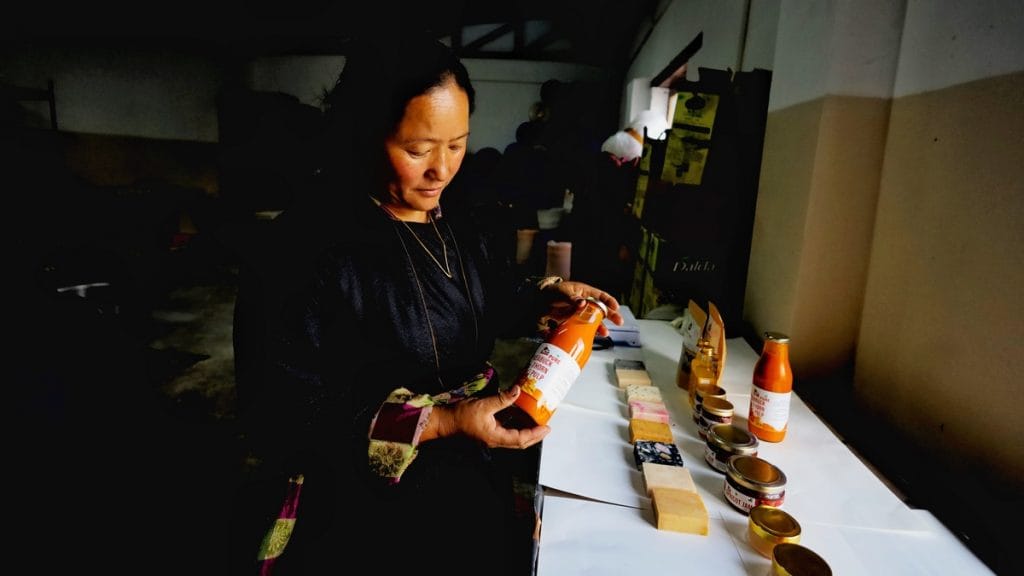
Leh: Onions are peeled, spices measured, and spoonfuls of bright orange sea buckthorn pulp folded into the mix. Soon, a fresh batch of chutney is ready to be transferred from Dechan Angmo’s small factory in Leh to shops across Ladakh and the rest of the country. She is the “sea buckthorn queen” of the town. The small, tart Himalayan berry she picked wild as a child has transformed Angmo’s life in under five years. She is part of Leh’s growing tribe of crorepati sea buckthorn entrepreneurs.
“Sea buckthorn is more than a crop. It has become a source of employment and income for Ladakhis. Government jobs are hard to get these days. If we process sea buckthorn here and sell finished products outside Ladakh, it can create livelihoods for many unemployed young people,” said Angmo, who earned less than Rs 10,000 monthly before starting her multi-crore business K-Top Food Processing in 2020. She now has buyers from Delhi to Hong Kong.
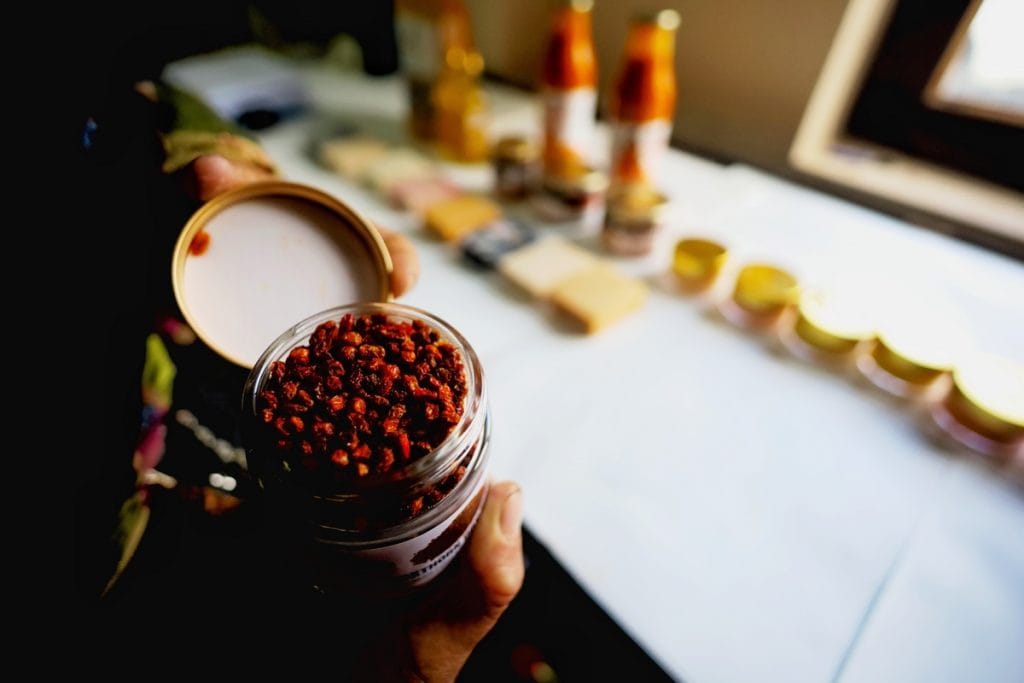
For generations, the bright orange sea buckthorn berries growing wild along the banks of the Indus River were only casually picked for home remedies or chutneys. Today, it has become Ladakh’s latest gold rush as a “wonder berry” and real-life Himalayan “Sanjeevani booti.” The post-Covid hunger for the vitamin-C-rich superfood, backed by a government push, is now finally letting Ladakhis capitalise on the thorny bushes. Local entrepreneurs are pulping, bottling, and powdering sea buckthorn, using it in juices, chutneys, soaps, oils, and cosmetics. After years of struggle, brands such as Ladakh Basket, Siachen Naturals, and Nima Goos Goos are riding the sea buckthorn wave and trying to keep up with growing demand from the health and wellness industries.
Last December, then LG Kavinder Gupta inaugurated the Centre of Excellence for Sea Buckthorn, stating that Ladakh aims to become India’s “sea buckthorn capital”. An Invest India report estimates that sea buckthorn from Ladakh could generate Rs 500 crore annually by 2030. Harvest yields rose from 315 metric tonnes in 2023 to 666 tonnes in 2024. While China, Russia, Canada, Mongolia, and Northern Europe account for roughly 90 percent of global production, global demand has outstripped supply, sending buyers in search of new sources.
Three or four years ago there were hardly any Ladakhi entrepreneurs processing sea buckthorn. Today there are at least four or five local brands. People have realised that this fruit has a future. Earlier everyone sold the raw berries. Now Ladakhis have started making finished products themselves
-Jigmet Gyalson, owner of Gyalson Fruit Processing Industry
Ladakh still has a lot of untapped potential. It currently harvests barely 5 percent of its wild sea buckthorn, largely because the high-altitude, thorny bushes are difficult to pick and the delicate berries spoil fast. Even arriving at the current levels of production took years of effort. Commercial processing only became possible in the early 2000s, when scientists at the DRDO Field Research Laboratory in Leh engineered a method to extract and preserve the raw juice. Over the last five or six years, there has also been a push from the government to build awareness about the berry. Prime Minister Narendra Modi himself has more than once extolled its health benefits and called it a “Sanjeevani”, as well as an opportunity for entrepreneurship and prosperity in Ladakh.
“Since 2020, people have become much more aware of sea buckthorn. Earlier, many knew the plant, but very few understood its economic value,” said Kunzang Wangmo, the Chief Horticulture Officer in Leh. “People often ask me whether sea buckthorn is really that big for Ladakh. I always say yes—but only if we process it. Selling raw berries alone will not create enough value for Ladakhis. We have buyers from outside, but we need more entrepreneurs in Ladakh who can process the berries here instead of sending them elsewhere.”
Also Read: Ladakh designers are turning Himalayan heritage into high fashion. Bollywood is now noticing
The new sea buckthorn entrepreneurs
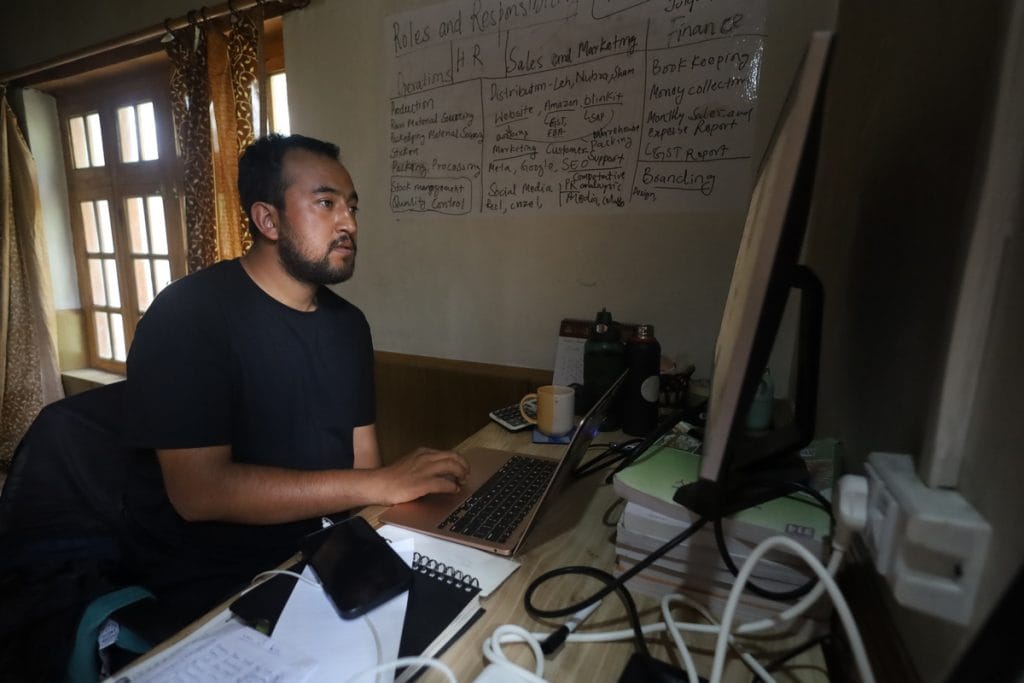
Around 40 kilometres from Angmo’s unit, 28-year-old Tsetan Dorjey is building his own brand, Siachen Naturals, out of a small setup in Shey. Sea buckthorn accounts for 80 per cent of his sales, but getting to this point took years of trial and error.
In his late teens, Dorjey dropped out of school and joined SECMOL, the alternative education institute founded by Sonam Wangchuk. Convinced he wanted to work with local communities rather than take an office job, he returned to his village Aranoo in Nubra Valley to help his parents farm barley, potatoes, onions, cabbage, and herbs. But this subsistence farming did not satisfy him.
“I realised it was very difficult to sustain myself only through farming. The biggest realisation I had was that I had to do something to make farming sustainable, where people could actually earn from it. That became my motivation,” he said.
To save up for a business, he worked as a high-altitude porter for the Indian Army in the harsh winter months, hauling heavy supplies up the Siachen Glacier. In two years, he had enough money to launch a pickle business, using materials sourced from local farmers.
“I did not know how to sell it. It failed within the same year,” he said.
But Dorjey still wanted to work with farmers and local produce. In 2022, he started Siachen Naturals, selling products such as barley soups and porridges. Once again, it was a slow start.
“The first two years were difficult because the margins were low and demand was not there,” he said.
Then sea buckthorn came into the picture. Spotting the growing appetite for the berry, Dorjey sourced pulp from a Leh-based producer, made jam at his unit in Shey and quickly sold 200-300 bottles. He now also sells sea buckthorn powder, pulp and face serum, both locally and online. In two years, Siachen Naturals has grown into a Rs 20-lakh business. The jam that started it all is still going strong.
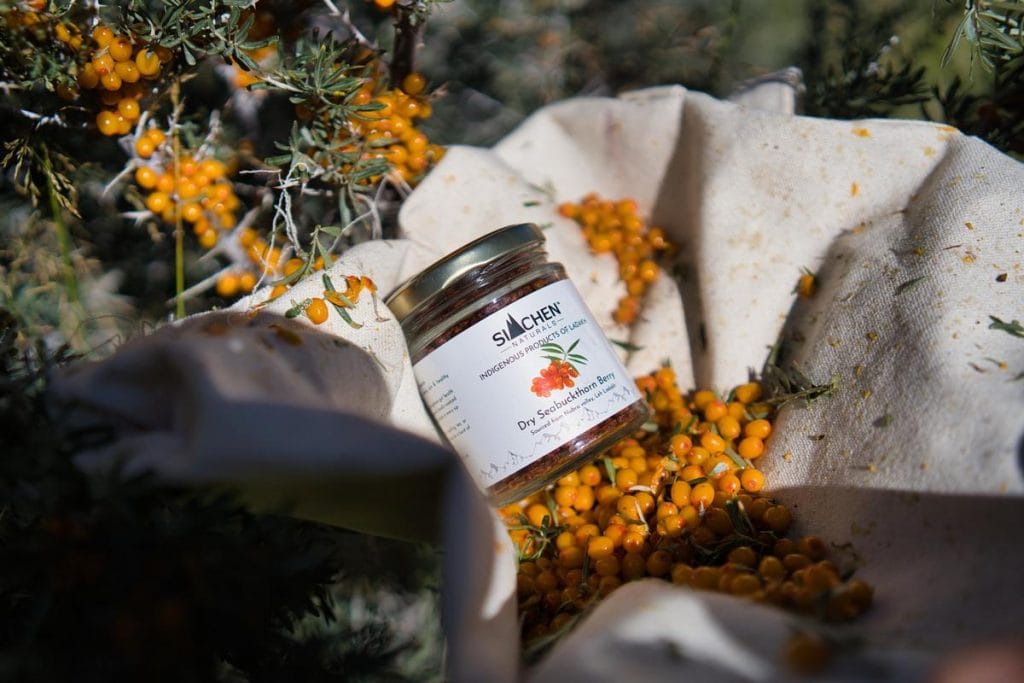
“Now we produce around 1,500 bottles in a batch every month, and those are sold within 15 days,” he said.
He now operates out of a rented two-storey house in Shey shared with other young Ladakhi founders. It’s a self-created informal incubator surrounded by willow, poplar, and apple trees.
I believe nutraceuticals will become a major industry in the coming years. Consumers are willing to pay more for premium, healthy products, especially when they come from Ladakh. That creates a real opportunity for local entrepreneurs”
-Stanzin Jorden, co-founder of Ladakh Basket
In this space, entrepreneurship takes a distinctly Ladakhi form: thoughtful, community-driven, unrushed. Whether it is award-winning yak cheese being produced in the Changthang Valley, or sustainable couture being created in Leh, or sea buckthorn entrepreneurs like Angmo and Dorjey, a new generation of entrepreneurs is creating value from local resources and helping each other grow.
“Three or four years ago there were hardly any Ladakhi entrepreneurs processing sea buckthorn. Today there are at least four or five local brands. People have realised that this fruit has a future. Earlier everyone sold the raw berries. Now Ladakhis have started making finished products themselves,” said Jigmet Gyalson, who worked in a sea buckthorn factory for 20 years before opening his own processing unit in the Nubra Valley.
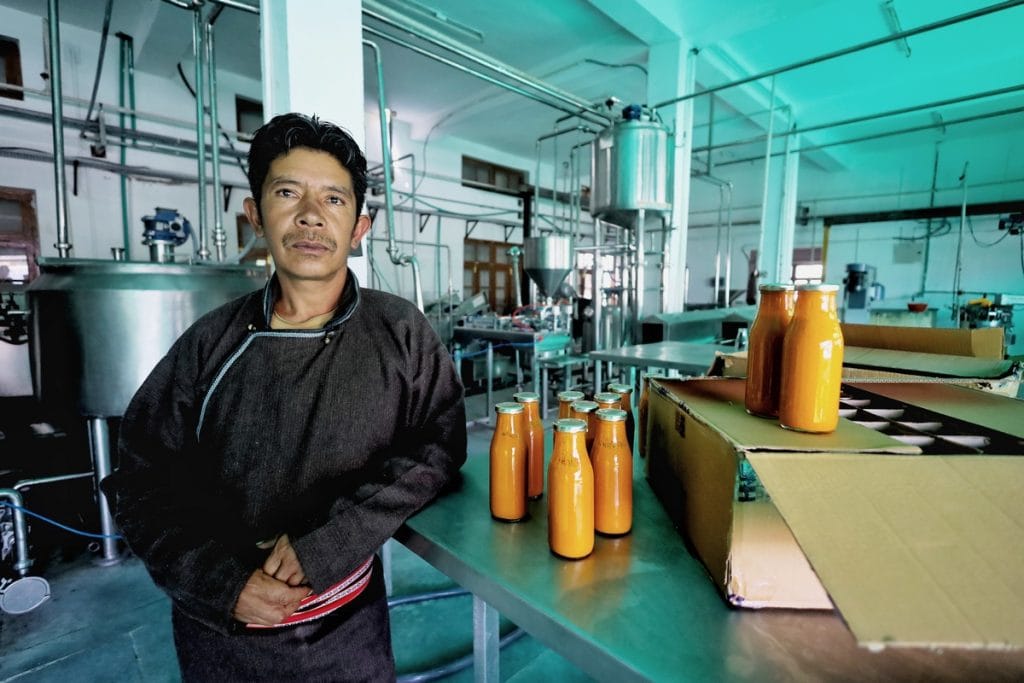
What started as small home experiments with the berry are turning into profitable businesses because of growing demand in India.
In Leh, Stanzin Jorden, co-founder of the organic produce brand Ladakh Basket, operates out of his home, selling sea buckthorn tea and whole berries sourced directly from farmers. When they introduced sea buckthorn in 2022, they started with 50 kg a year. In 2025, they harvested around 300 kg and this year the brand aims to reach 500 kilograms.
“I believe nutraceuticals will become a major industry in the coming years. Consumers are willing to pay more for premium, healthy products, especially when they come from Ladakh. That creates a real opportunity for local entrepreneurs,” said Jorden, who has also opened a café on the Manali-Leh highway with his co-founders.
Many other local producers are also expanding to catch the sea buckthorn wave. Tashi Namgyal, 32, worked exclusively with local apricots before branching into sea buckthorn. Today his brand Ladakh Herbs offers berry powder, tea, lip balms, soap, cosmetics and chutneys.
He says his business has grown three to four times. Starting with an investment of Rs 5 lakh, it now has an annual turnover of around Rs 50 lakh. Cosmetics, he says, are seeing “crazy” demand.
Berry boom
It is not just Ladakhi brands chasing the berry. Noida-based e-commerce company Wellwith, which sources from suppliers including Angmo and Gyalson, says demand is growing faster than supply.
Co-founder Bhupendra Kumar told ThePrint the company receives export enquiries from Australia, the US and Europe but is currently focused on the domestic market, where Maharashtra, Karnataka and Telangana are leading demand.
“The company made a revenue of Rs 44 crore and around Rs 4 crore profit in 2025-26. The company has grown five times since 2024. This year we are expecting 5x growth,” said Kumar, adding that Wellwith often runs out of stock within 15 days.

Wellwith featured on Shark Tank India Season 5 earlier this year. Afterwards, co-founder Udit Chawla posted on LinkedIn that the company’s mission was to make sea buckthorn a mainstream product.
“Why does a plant used by Russian cosmonauts, endorsed by DRDO scientists, and grown across Leh, Ladakh, and Nubra Valley, still sit unknown on most Indian shelves?” he wrote. “People already know what orange juice is, they know ashwagandha, they know shilajit. But sea buckthorn needed context, awareness and trust.”
Companies ask for 200 or even 300 tonnes, but we can produce only about 100 to 110 tonnes in a season. There simply are not enough plants
-Dechan Angmo, founder of K-Top Food Processing
Namgyal says this process is already underway. He now caters to bulk orders from Himachal Pradesh to Andhra Pradesh.
“If I send around 500 kg of stock to the market, it gets sold. Sometimes we send as much as 1,500 kg outside Ladakh. During winter exhibitions, we also carry around 20 to 30 kg of products with us, and the sales are quite good,” he said.
Wild harvests to business plans
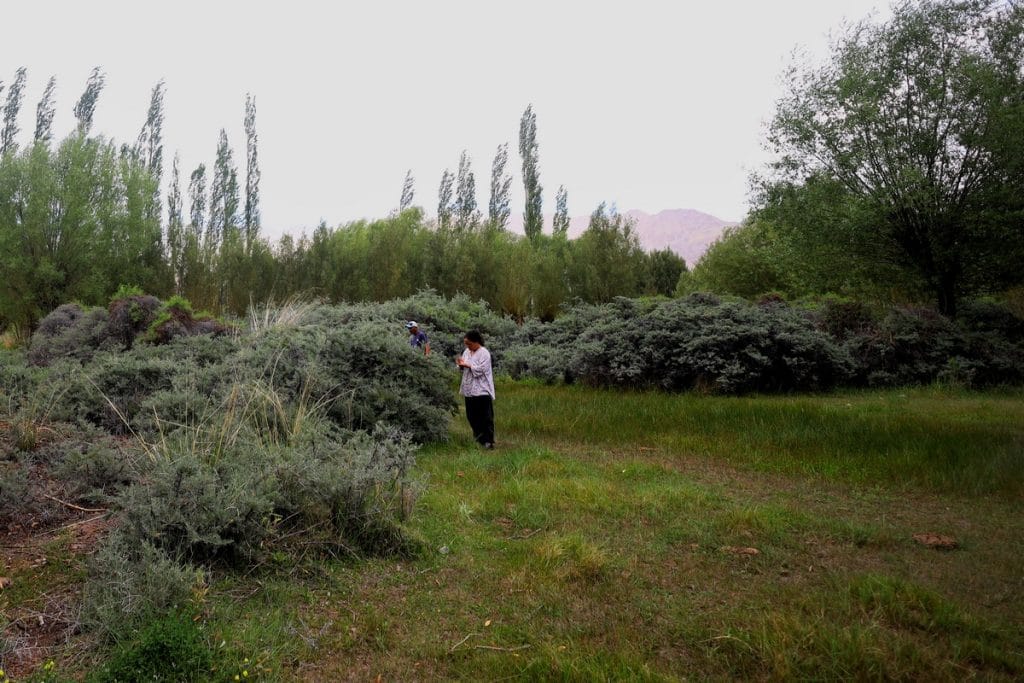
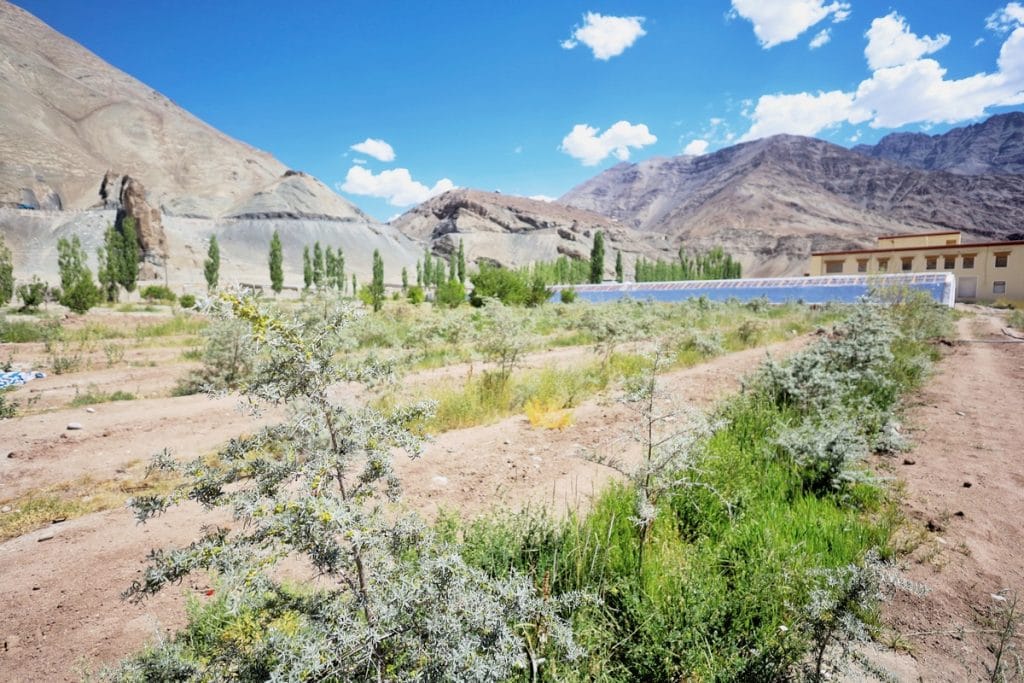
Dechan Angmo’s two-storey Ladakhi brick house in Chuchot village looks straight out of a Studio Ghibli film, with its neat rows of purple cabbages, rice and seasonal vegetables. Behind the house, surrounded by a small sea of buckthorn shrubs, is the 48-year-old’s processing unit.
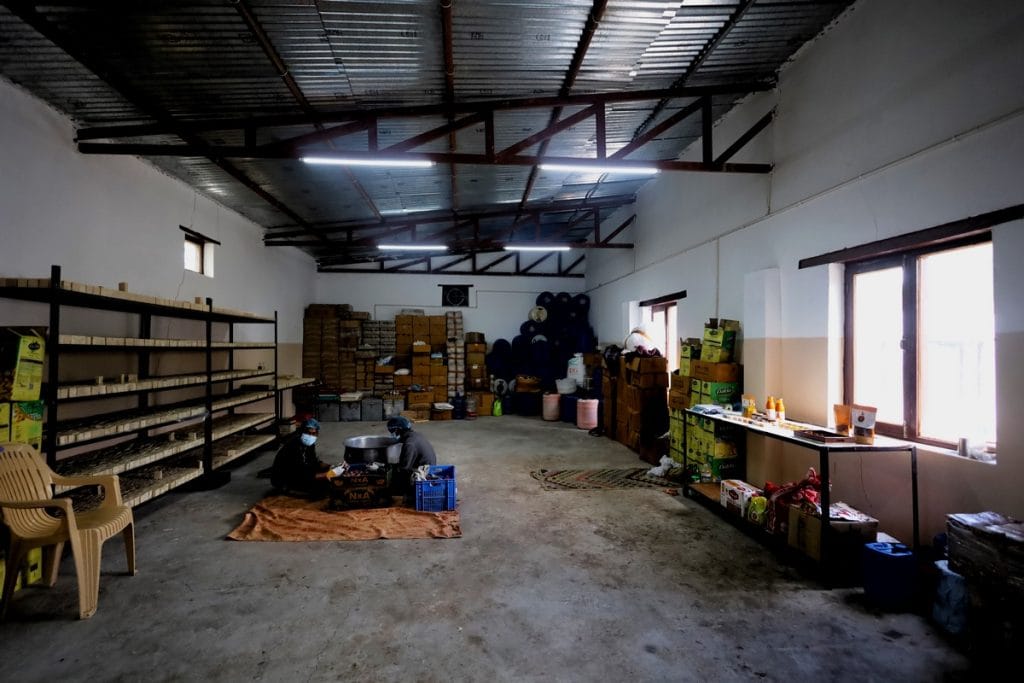
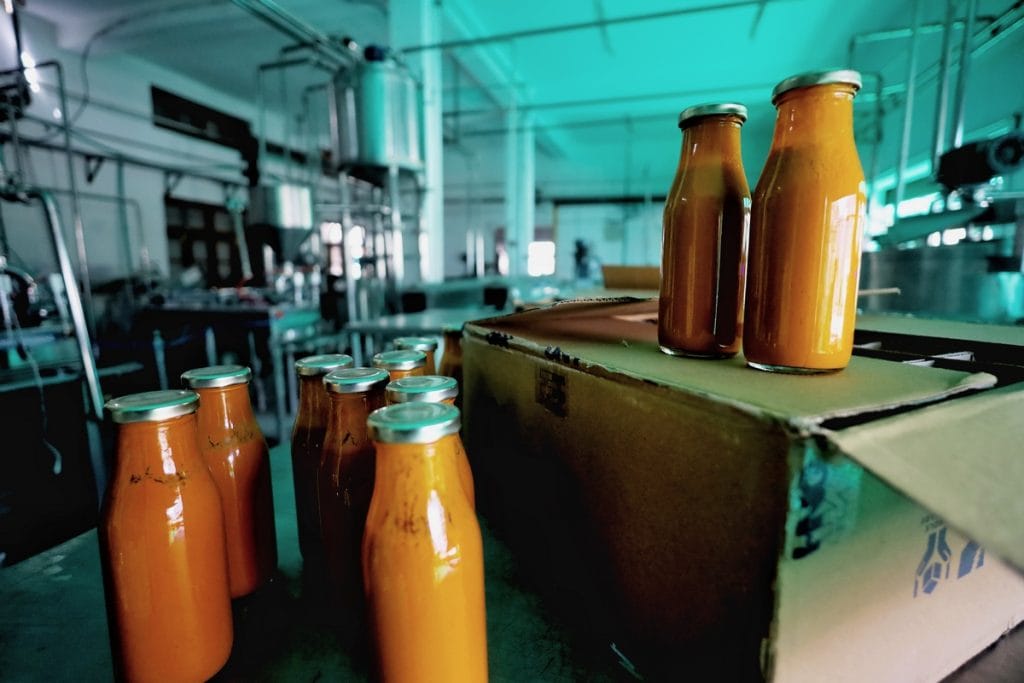
From the outside, this room, an extension of her ancestral home, looks like a modest storage shed set against the mountain foothills. But inside, stainless steel pulping machines, steaming pots, rows of drums for pulp, and stacks of jars waiting to be packed power a business worth crores. The tangy aroma of sea buckthorn permeates the air.
While Angmo supervises the workers, her husband, a government employee, helps take care of daily chores. Things are going to get hectic soon as sea buckthorn harvesting begins in the last week of August.
“Today, my business has crossed an annual turnover of around Rs 2 crore,” said Angmo, who now owns two cars – an SUV and an Alto.
Her life was very different a few years ago.
For 17 years, she worked at the Ladakh Apricot Store in Leh, learning how to process delicate high-altitude fruit and earning about Rs 7,000 a month. Covid was a turning point. As demand for Vitamin C-rich superfoods surged across India during the pandemic, she decided it was time to build her own enterprise.
“After Covid, I thought I should start my own processing unit. I did not want to keep depending on other people. I wanted to become independent,” said Angmo, sitting on the porch of her home.
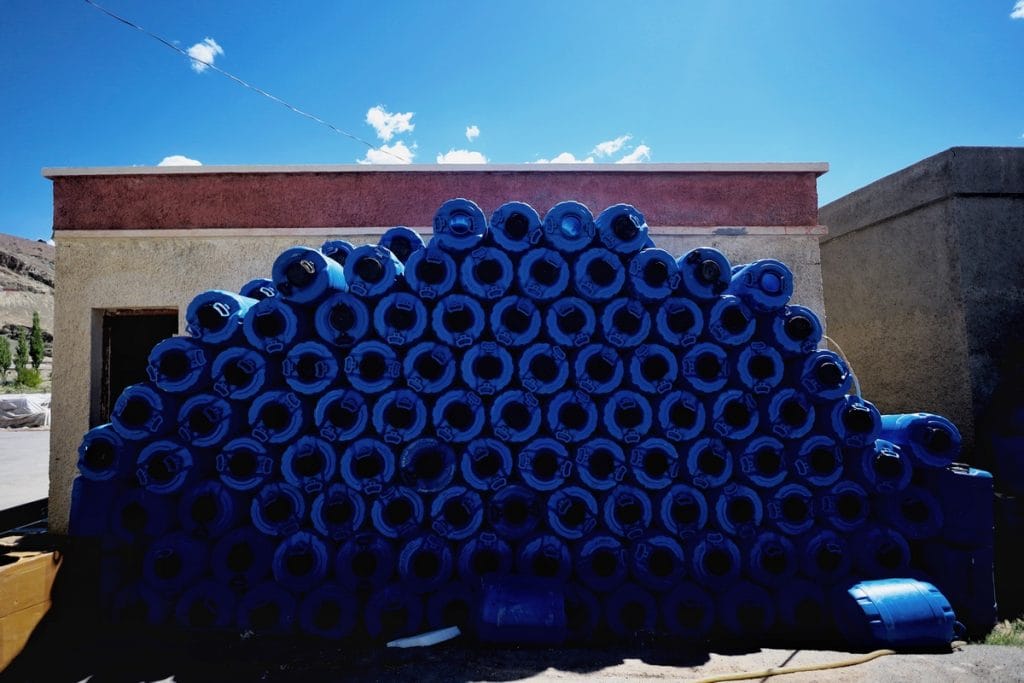
She started just as the government’s effort to commercialise sea buckthorn was gathering pace. To raise the Rs 28 lakh needed to build her unit, Angmo secured a Rs 13-lakh credit subsidy under the central government’s Pradhan Mantri Formalisation of Micro Food Processing Enterprises (PM-FME) scheme. Other government measures include the National Mission on Sea Buckthorn, which aims to bring more of the wild shrub under cultivation, and the Centre of Excellence at Nimoo for research, farmer training and processing.
At first, though, Angmo faced hiccups. She started with just six tonnes of sea buckthorn pulp because no buyers knew about the business she was running out of her backyard.
“Companies did not trust that a woman could supply in large quantities,” she said with a bright smile. “I did it.”
Angmo now supplies more than 100 tonnes of sea buckthorn pulp to companies such as Wellwith. She also makes various products and says sea buckthorn soap made in her backyard is being sold in premium stores in Hong Kong, where there is rising demand for organic products. One soap bar, she’s heard, sells for Rs 1,200 to Rs 1,400.
Forget oranges, have sea buckthorn?
Ladakh has no shortage of buyers for its sea buckthorn. The real challenge is growing enough berries.
“Companies ask for 200 or even 300 tonnes, but we can produce only about 100 to 110 tonnes in a season. There simply are not enough plants,” Angmo said.
Part of the problem is that sea buckthorn is not an easy crop to scale up.
The Leh berry grows in cold, high-altitude regions where temperatures can plummet to below -30 °C. The plant needs a hard winter freeze to bear fruit. Harvesting begins from late August and continues through September. Each plant can yield up to 4 kg of berries, but the thorny shrubs are difficult to pick, the fruit bruises easily and the work is labour-intensive. The plant also takes about three years to bear fruit.
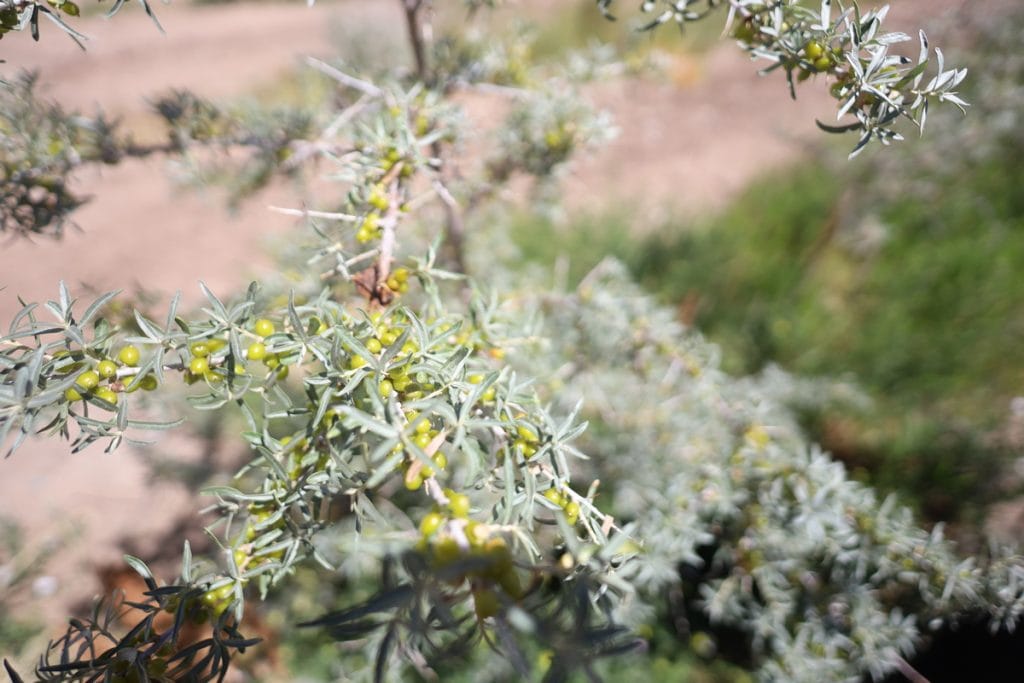
India has around 13,000 hectares under sea buckthorn, about 70 per cent of it in Ladakh, followed by Uttarakhand, Himachal Pradesh, Sikkim and Arunachal Pradesh. Out of the 2.3 million hectares under cultivation globally, China is the dominant producer.
Gyalson, who supplies pulp to Delhi and Chandigarh, said the Indian market has changed dramatically over the past five years. Earlier, Ladakhis struggled to convince companies to buy sea buckthorn. Today, it is the other way around.
“Domestic demand has grown enormously. Exports have dropped by almost 60 percent because of tariffs, but the Indian market has expanded so much that companies are now struggling to source enough sea buckthorn,” said Gyalson. “Soon the biggest challenge will not be finding customers—it will be finding enough berries.”
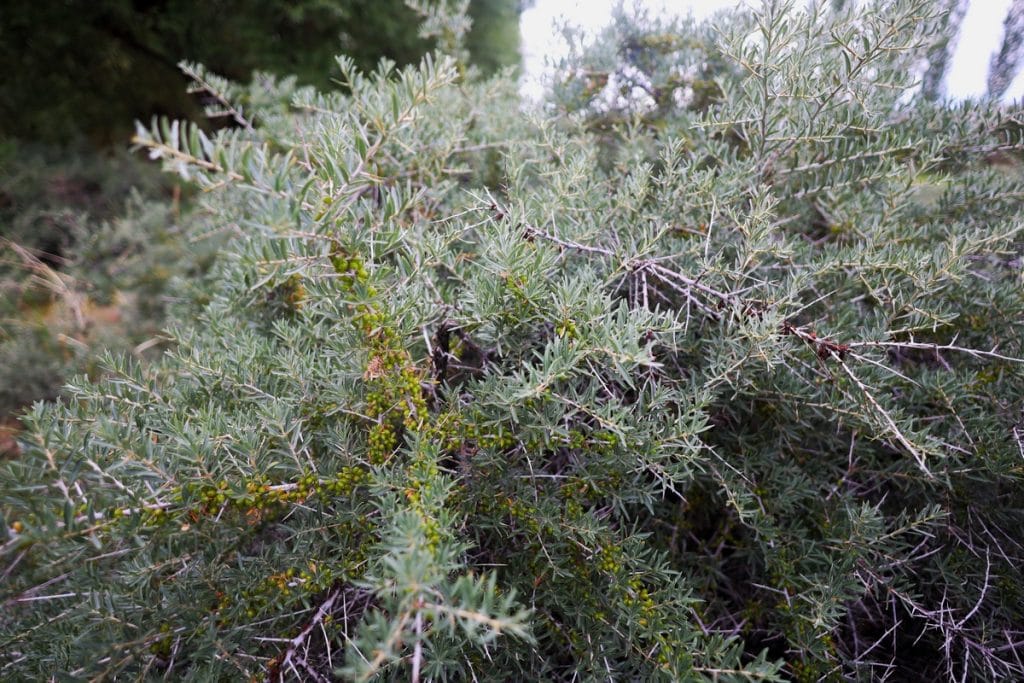
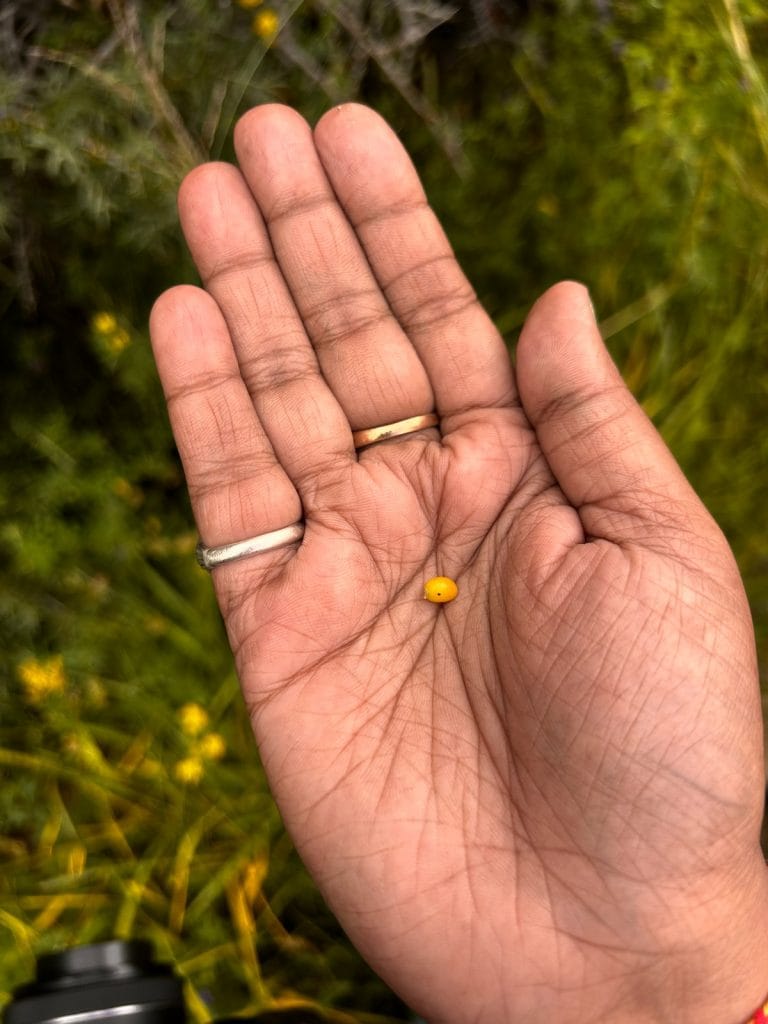
The Modi government’s promotion of the fruit, amplified by health influencers, has propelled it towards mainstream consumers in India. Ladakhis often claim that one peanut-sized berry packs as much Vitamin C as three oranges. Studies have also found it to be rich not just in Vitamin C, but also in carotenoids, polyphenols and fatty acids, including the relatively rare omega-7.
It is sought after for its supposed benefits in managing blood pressure, cardiovascular health, fatty liver, and digestive issues, as well as aiding burn recovery and easing post-menopausal symptoms.
“Sea buckthorn is a good addition to the diet because it is rich in vitamin C and beneficial fatty acids. It helps reduce oxidative stress and improves immunity. However, it is best to look at sea buckthorn as a part of a healthy diet rather than a standalone health solution,” said nutritionist and clinical dietitian Tanvi Jain.
Also Read: Ladakh’s yak churpi cheese has reached the world. A gold medal in Brazil is just the start
Beyond the harvest
The sea buckthorn business in Ladakh has become far more sophisticated since its early days. From basic plastic packaging to sleek glass bottles, local entrepreneurs are working hard to make their products stand out. But doing all of this in a high-altitude desert comes with logistical hurdles.
Shipping is a painfully slow “headache”, according to Dorjey.
“Even something as simple as changing a sticker takes four or five days because we have to get everything printed in Delhi and then transported here. If we want to change packaging, it takes 15 to 20 days. A company in Delhi can solve the same problem in one day,” he added.
Ladakhi business owners also want to create a stronger identity as manufacturers of finished products rather than suppliers of raw materials.
“The real opportunity is not just growing sea buckthorn, but processing it. If you process it locally, that is where entrepreneurs can create value,” said Gyalson.
Over the years, the price paid to farmers for raw berries has risen from Rs 50 to Rs 80 per kg. But there are bigger profits in processing: unit owners sell pulp for around Rs 100 a litre.
For local entrepreneurs, this Himalayan treasure will only bring lasting change if indigenous Ladakhis benefit first.
“Outside companies have the marketing teams and the money, so naturally they grow faster. But slowly, local entrepreneurs are learning too. In the next five years, you’ll see many more Ladakhi brands,” said Dorjey.
(Edited by Asavari Singh)