



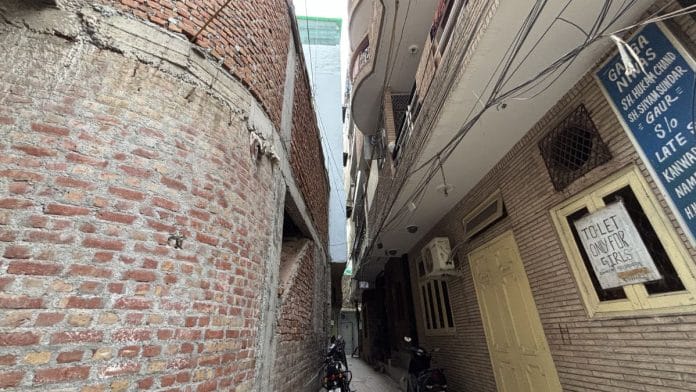
New Delhi: When Krishan Pal Panwar’s father fell critically ill last year, the ambulance could not enter the twisting alleys of south Delhi’s Shahpur Jat. Panwar carried him on his shoulders through the village’s constricted lanes until they reached his car. Months later, his father died.
Across South Delhi’s Lal Dora villages, residents have long adapted to a landscape of cramped alleys, tangled overhead wires and matchbox buildings rising wall-to-wall, stacked floor upon floor. But a string of recent fires and a fatal building collapse have exposed what many residents call the hidden cost of a planning vacuum more than a century in the making.
“Yes, it used to be difficult, but we have always known this kind of life. It doesn’t feel strange to us,” Panwar, 50, who runs an NGO, said.
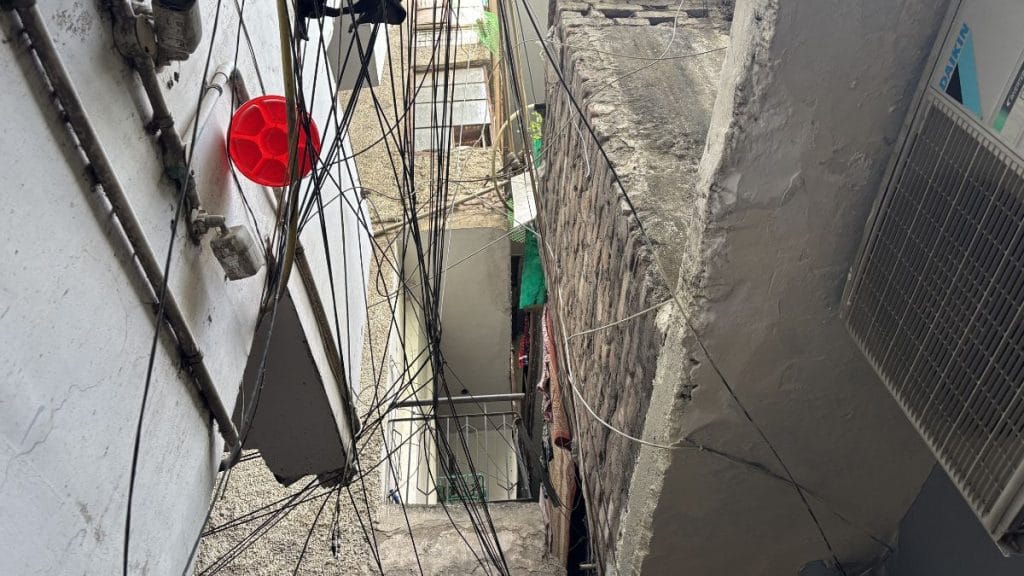
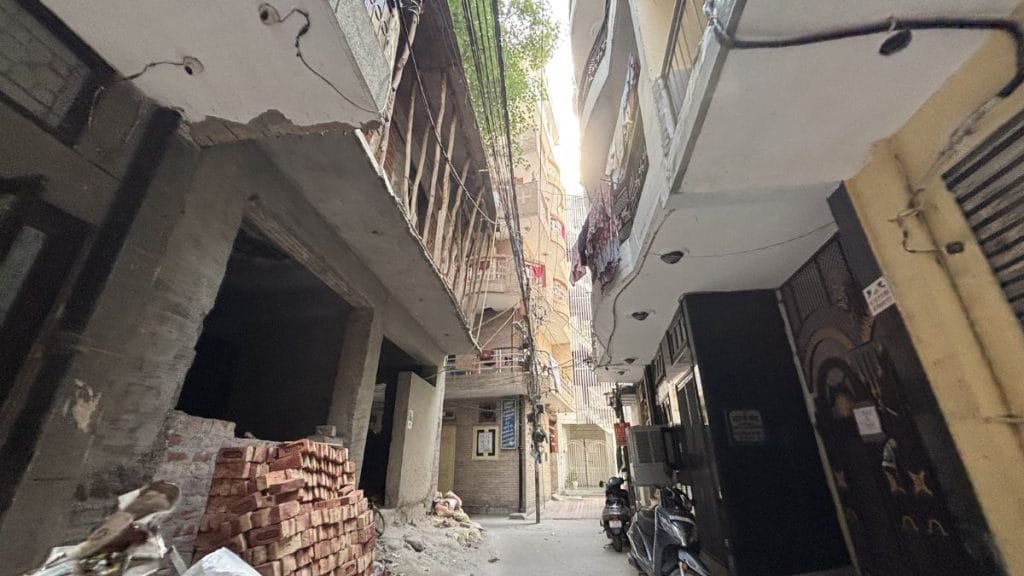
Cramped between the wide boulevards and manicured gardens of the gleaming Select Citywalk mall in Saket and the carefully curated luxury of DLF Promenade in Vasant Kunj, a parallel city unfolds in the bylanes of south Delhi’s Lal Dora villages. In this limbo land, municipal building laws barely apply. The lanes often narrow to four or five feet and in many stretches, two people can barely walk side by side. Fire tenders cannot enter most of them. Ambulances stop at the nearest chowk, forcing residents to carry patients through a maze of alleys on stretchers, wheelchairs or in their arms.
South Delhi’s most expensive neighbourhoods exist beside some of its most neglected settlements — indispensable to the city’s housing economy.
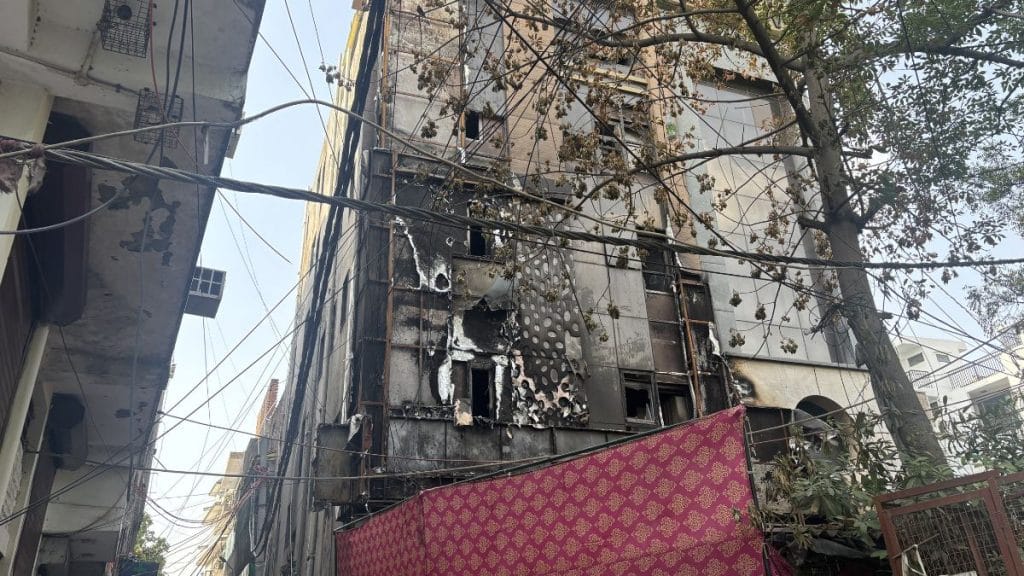
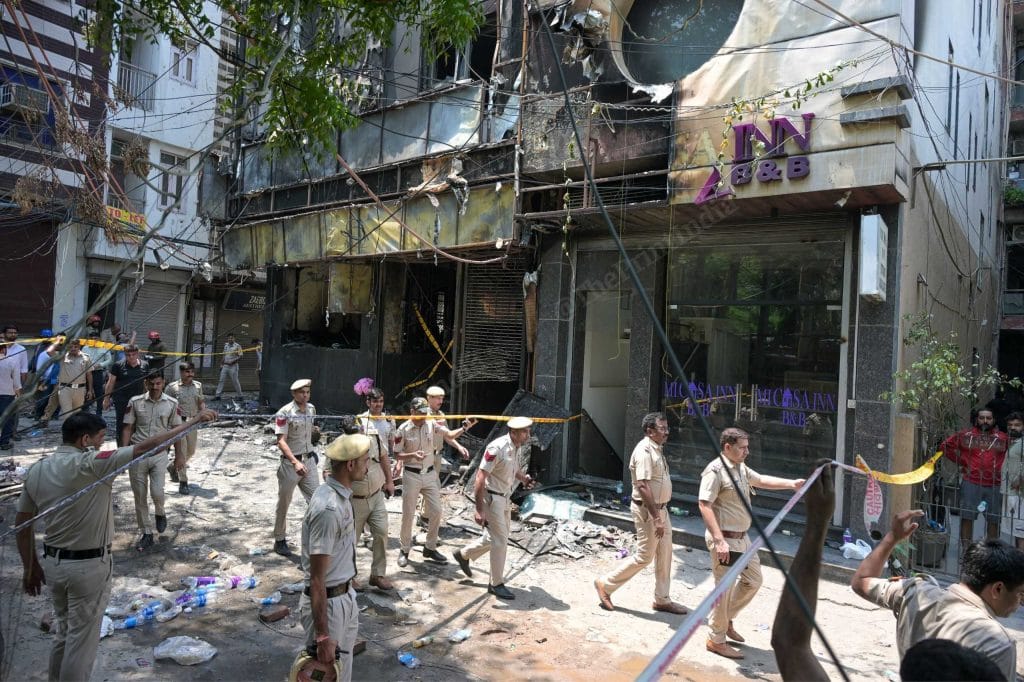
Over time, these zones have become fire traps that lie startled by the frenzied lawless urbanity that has engulfed them. A fire at a hotel in Hauz Rani killed 22 people. A building collapsed in Saket’s Saidulajab. Another blaze broke out in a hotel basement in Humayunpur, adding to the sharp surge in fire fatalities over the last five years.
Municipal corporation officials blamed the 3 June blaze at the Flourish B&B in Hauz Rani on unsanctioned building plans. The property was being used commercially in a residential locality, officials said.
The property catered to budget foreign nationals, mostly those who visited India seeking affordable accommodation near Max hospital.
By March this year, Delhi Fire Services had already received over 36,000 calls. An MCD official said that most of these fire calls were from Lal Dora villages and unauthorised colonies.
Originally demarcated during the colonial era to distinguish village habitation from agricultural land, Lal Dora areas were largely exempt from municipal regulations. The markings were made on a map with a red pen, separating abadi (residential areas) from agricultural land. Over the decades, villages like Katwaria Sarai, Jia Sarai, Kishangarh, Shahpur Jat and Chhattarpur absorbed students, migrant workers, domestic workers, hospital attendants and young professionals looking for affordable accommodation in South Delhi. Buildings rose vertically, homes turned into paying guest accommodations and rental units, and commercial activity flourished. Infrastructure, residents say, never kept pace.
Cafes, boutiques and designer stores arrived in many of these pockets but the basic problems of roads, sanitation, and water supply still need attention. Lal Dora villages are Delhi’s open, dirty secret that no one dares fix.
Today, activists, former bureaucrats and residents argue that the same legal and administrative ambiguity that once protected village autonomy has left these settlements trapped between rural status and urban reality.
“The Lal Dora designation was meant to protect village habitation – it kept these areas outside municipal regulations, allowing residents autonomy over their land. But it came at a cost. No municipal laws applied. Construction law did not apply. They gave them this right and denied civic amenities,” historian Suhail Hashmi said.
Living in South Delhi’s shadow
Every morning, Sumitra leaves her one-room home in Kishangarh and walks to the nearby colonies of Vasant Kunj, where she cooks and cleans in houses she could never afford to live in.
For Rs 4,000 a month, she rents a room with a small kitchen and access to a common bathroom shared by four families. The arrangement is basic, but it allows her and her husband to stay close to work. He is employed as a gardener in Vasant Kunj.
“It is near Vasant Kunj, so I can easily go to work without spending much on commuting,” she said.
The couple never signed a rent agreement or had an Aadhaar verification.
For thousands of workers like Sumitra, Lal Dora villages are not a choice as much as a necessity.
Just a few kilometres away, rents in colonies such as Hauz Khas, Panchsheel Enclave and Vasant Kunj can run into lakhs annually. In Lal Dora villages, residents say, accommodation remains within reach of people who keep South Delhi functioning but cannot afford to live in it.
Rana, a 34-year-old from Manipur, shares a two-room apartment in Shahpur Jat with a friend. He works at a BPO in Gurugram and hopes to launch a clothing business of his own. He says he chose the neighbourhood deliberately.
“Shahpur Jat is known for bespoke tailoring, so it helps me plan my startup,” he said. “The rent is also relatively affordable – Rs 20,000 – so it works for me and my friend.
He lives in a narrow gully where, he says, only a rickshaw can barely pass.
The affordability helps explain why Lal Dora villages continue to attract people despite the crumbling infrastructure and safety concerns. They have become some of the last pockets of relatively affordable housing in South Delhi.
Suhail Hashmi says that most of the Delhi working class lives in Lal Doras.
“All these people who live in Vasant Kunj – where do you think their domestic worker is coming from? They are coming from Lal Doras,” he said. “Across the road, the asking price for a duplex is Rs 6 crore. Who can buy it? Where does the middle class go? Where does the working class go?”
The answer lies in the transformation of Delhi’s villages over the past three decades — from low-rise agrarian settlements into dense rental economies that now house much of the city’s workforce.
From cattle enclosures to renting economy
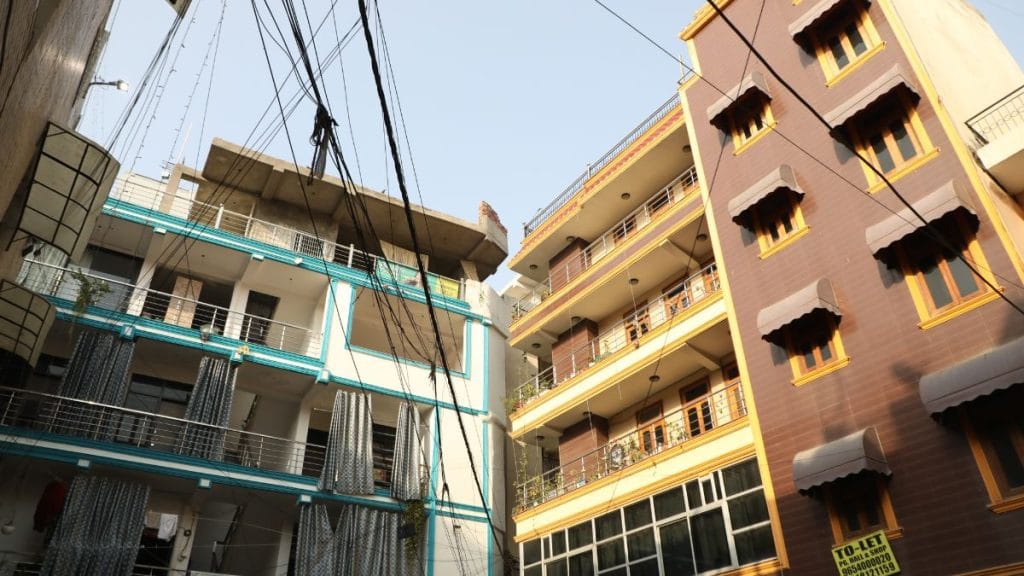
Long before the “To-Let” signs, paying guest accommodations and coaching centres arrived, many Lal Dora homes had ghers — open enclosures where cattle were tied and fodder was stored. Today, those spaces have largely disappeared beneath rows of four- and five-storey buildings built to accommodate Delhi’s growing demand for affordable housing.
It all began in the 1990s, when the real estate boom reached the national capital and slipped into its villages.
Retired IAF officer Ranbir Singh Khokhar, who lives in Jia Sarai, another Lal dora village near IIT Delhi, recalls brokers arriving with promises of easy income.
“Real estate brokers became a constant presence,” he said. “They sold the dream of rental income to people who had known little beyond agriculture.”
It became easy for the brokers to meddle without any real regulations or scrutiny, he said.
“Brokers would tell villagers: what will you do with these ghers? Let me build 20 rooms. You will earn rent. Your future will be secure,” he said.
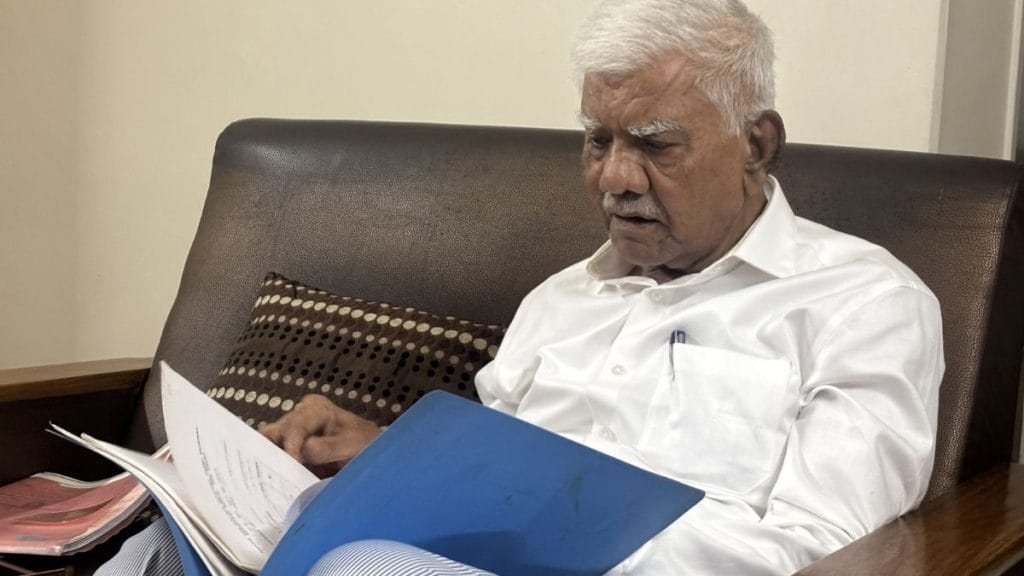
The proposal was hard to resist. Once the sparse village homes thickened into tight clusters of rental housing. And since, it has been growing denser with each passing year.
Most homes in Lal Dora villages have now converted to PGs and residents have migrated to better locations. Doors and walls double up as advertisement spots, plastered with PG signs and phone numbers. The average for a two-room set is around Rs 18,000 to 20,000.
“People don’t buy in Lal Dora villages to live anymore,” a real estate agent said. “They are mostly looking at commercial use – building small hotels, coaching or PG accommodations.”
A century-old exception
Crumbling infrastructure is only one layer of the Lal Dora problem. Beneath it lies a century-old legal ambiguity that residents, planners and successive governments have struggled to untangle.
In the 1960s, when Delhi set out on its path of planned expansion with the Delhi Development Authority at the helm, Lal Dora villages remained on the margins. Development continued around them on their agricultural lands — posh colonies with wider roads and modern infrastructure — skirting their edges but never entering them.
Residents who never migrated have a host of complaints.
“We are natives of Delhi yet we are treated like second-class citizens,” Sandeep Pawar said, sitting in his office in Shahpur Jat, anger brimming in his voice. “The authorities built the city on our agricultural land, but we still lack basic infrastructure and amenities.”
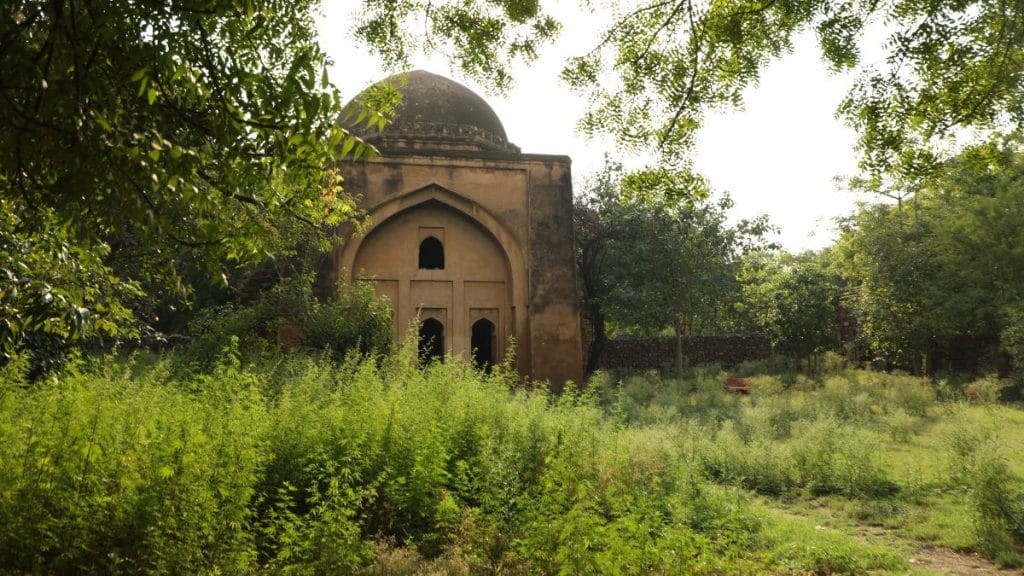
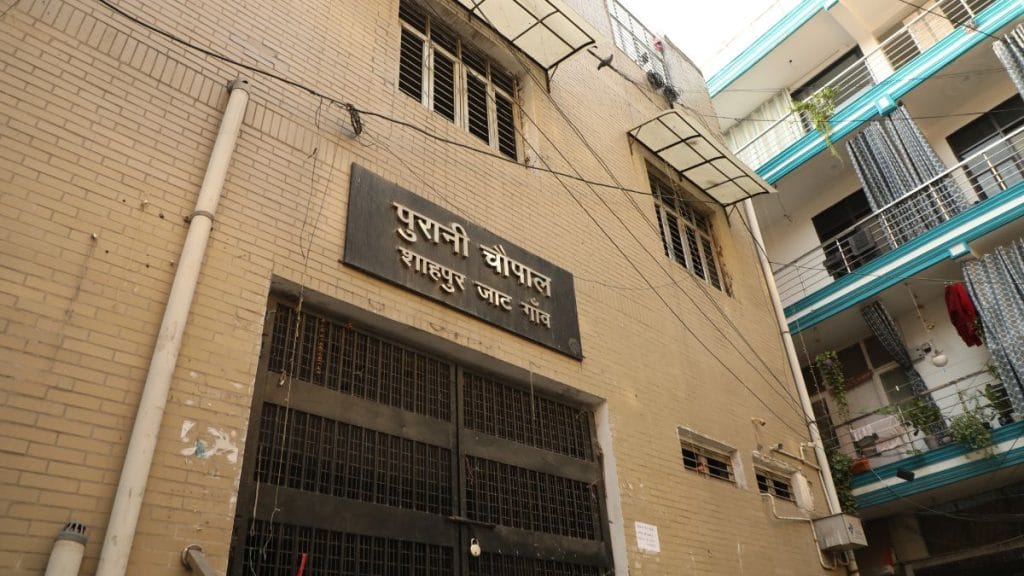
On paper, Shahpur Jat is an urban village. On the ground, beyond its curated cafes and designer showrooms, another reality takes over. A weathered tomb stands at the entrance of this urban village. The sheen of colourful storefronts gives way to crumbling walls.
The sewage is patchy, the water supply erratic, and basic infrastructure struggles to keep pace with the village’s population. It is a collision between history, neglect and unplanned growth.
“Lal Dora is essentially a colonial web that Delhi’s natives remain trapped in even after Independence,” said advocate and Deputy Head of Delhi Panchayat Sangh of all 360 Delhi villages, Yaman Yadav. “It creates serious problems – from unclear property titles to a lack of basic infrastructure. Residents cannot legally redevelop their homes because no building plans are approved.”
In 2018, the Aam Aadmi Party government directed the MCD to begin the process of extending Lal Dora boundaries in Delhi’s villages after a population boom rendered infrastructure untenable.
However, the move never materialised on the ground.
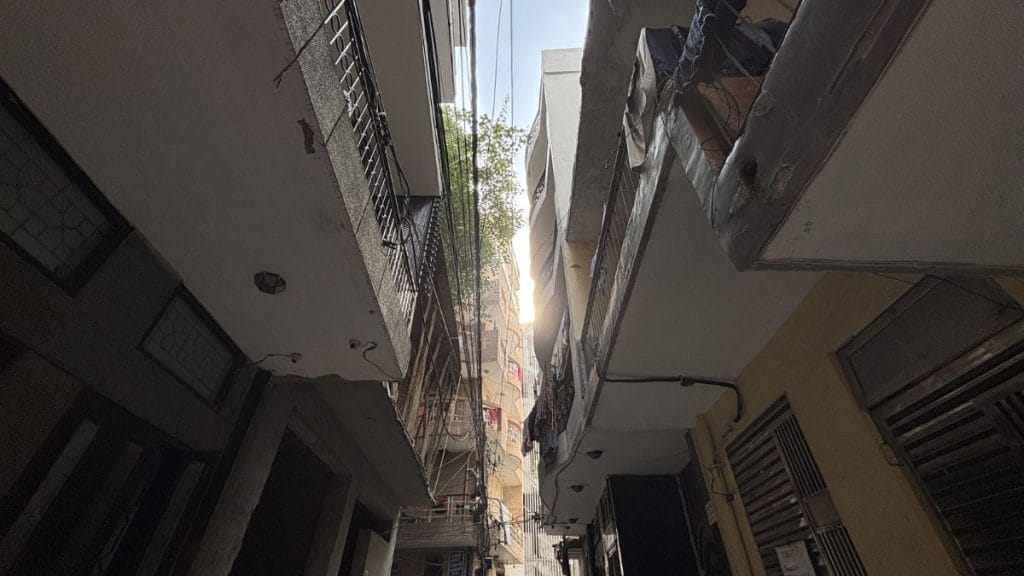
“How will the government extend Lal Dora boundaries?” Panwar asked. “We are tightly packed between Hauz Khas on one side, Panchsheel Park on the other. Where is the space to expand?”
Since the 1990s, governments of different political parties have proposed reforms, extensions of Lal Dora boundaries and ownership initiatives. Yet residents say little has changed on the ground.
In 2004, an MCD order was issued saying that all Lal Dora villages must comply with the Master plan by laws. So, after 2004, anybody who wanted to build anything in these Lal Dora villages had to comply with municipality laws, retired DDA commissioner (Planning) AK Jain said.
“But there was a lot of hue and cry and mounting political pressure. And the order was withdrawn within two months,” Jain told ThePrint. “And the villages kept growing.”
It was between 1992-1997, that then DDA commissioner KJ Alphons led the drive to build Dwarka by demolishing 14,310 illegal buildings, earning the label of “demolition man.” Alphons says he took over Lal Dora villages in Dwarka and provided alternative land to residents.
“I acquired 3,750 acres of land. I even went against government policy. I took over Lal Dora – there was resistance, but it was necessary for proper planning,” Alphons told ThePrint. “The problem is, when you leave out villages and the Lal Dora around them, you cannot provide urban facilities to villagers because you simply don’t have the physical infrastructure to do that.”
Alphons says that Lal Dora villages must be subsumed into a larger urban framework, with villagers resettled on alternative land.
“When you have densely packed areas with no land available, how do you create infrastructure like sewage systems – the basics that come with urban planning?” he questioned. “None of that is possible. The idea of leaving Lal Dora untouched is fundamentally flawed policy.”
Why no one wants to touch Lal Dora
If the problems facing Lal Dora villages are widely acknowledged, the question residents repeatedly ask is why they have remained unresolved for decades.
Part of the answer, officials and former policymakers say, lies in the very ambiguity that has defined these settlements since the colonial era.
Rakesh Kumar, Deputy Commissioner, MCD, says the vagueness surrounding Lal Dora areas continues to complicate enforcement even today.
“Lal Dora was basically an abadi area. Since there was no revenue collected from that area, it remained largely undefined. It was not classified in the British period and the vagueness continues even today.”
That historical looseness, he says, shaped public attitudes over generations.
“In people’s mind, Lal Dora meant no restrictions, no rule of law — that you could build as you wished. But with the introduction of building bylaws, there is resistance to accepting that these rules now apply,” Kumar said.
The challenge becomes particularly visible when authorities attempt to crack down on unauthorised construction.
In 2006, the Union government introduced a special law providing protection to thousands of unauthorised constructions across Delhi. Since then, enforcement has become increasingly complicated, Kumar said.
“Structures built before 2014 enjoy a certain degree of protection. But anything constructed after that doesn’t qualify. Building plans must be sanctioned. But enforcement becomes difficult because violations are often disguised,” he said. “If someone constructs a commercial structure and action is initiated, they claim they are building a house for personal use. In the garb of a residence, a commercial building comes up.”
According to Kumar, enforcement efforts often run into community resistance as well.
“They also have the protection of their community. The argument is ‘This is our village, we are building our home. Why are you interfering?’ But the reality is, there is no concept of a ‘village’ in Delhi anymore. Yet, immunity is still claimed in its name.”
The Hauz Rani fire exposed many of these contradictions. Kumar says the building where the blaze occurred was reportedly first constructed in 2007 and later extended.
“So, it is a big challenge for MCD as well. It’s a layered and complex problem.”
Former Malviya Nagar MLA Somnath Bharti argues that the larger issue is not a lack of awareness but a lack of accountability.
“Lal Dora villages fall under the plurality of authorities—DDA, MCD, Revenue Department, Delhi Government, and in many cases the Centre,” he said. “Every authority exercises some control, but no authority takes full responsibility.”
That fragmentation, he says, has allowed successive governments to avoid difficult decisions on ownership, redevelopment and enforcement.
“The solution is not another temporary relaxation; it is a comprehensive and final settlement,” Bharti said.
For residents, this institutional deadlock has translated into decades of uncertainty. For activists such as Paras Tyagi, it became a personal battle.
The lone Lal Dora crusader
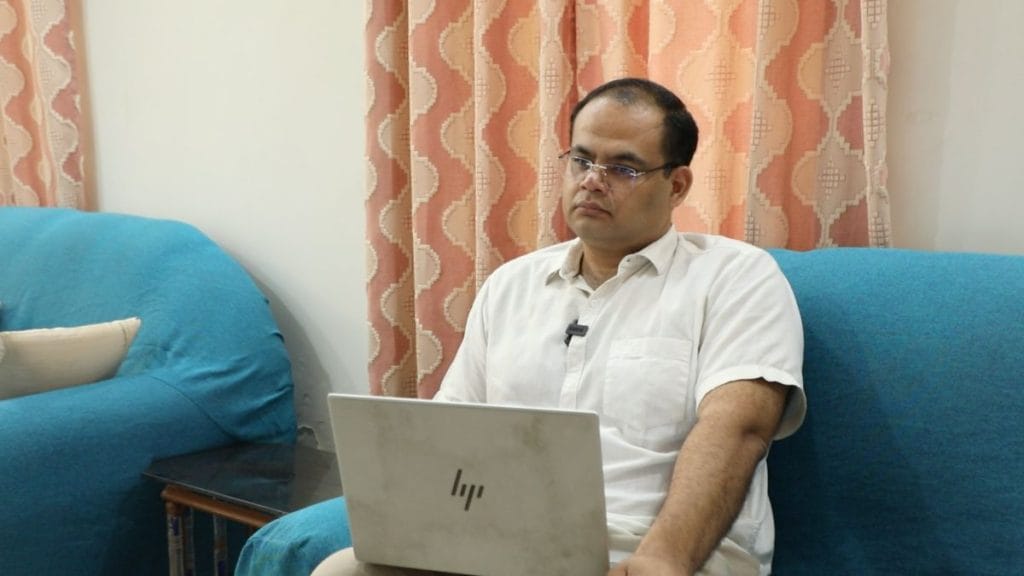
Paras Tyagi is on a mission to secure the future of Lal Dora villages and their residents. His childhood in Budhela village in West Delhi’s Vikaspuri, was marked by repeated visits from government officials who claimed that his family home stood on government land.
In 1999, the Delhi High Court even ordered demolition of their house. What followed was a prolonged legal battle that lasted nearly two decades, before the family finally won in 2021.
“These were 20 years where one family had to go through unnecessary litigation and the pain that comes with proving that the land was theirs,” Tyagi, 38, said.
At the heart of the dispute were the lack of ownership rights that continue to plague Lal Dora villages. The experience shaped Tyagi’s future. He went on to study public policy at National Law School in Bengaluru, where he focused on Lal Dora villages in Delhi. Then he returned to Delhi and founded the Centre for Youth, Culture, Law and Environment (CYCLE) in 2016.
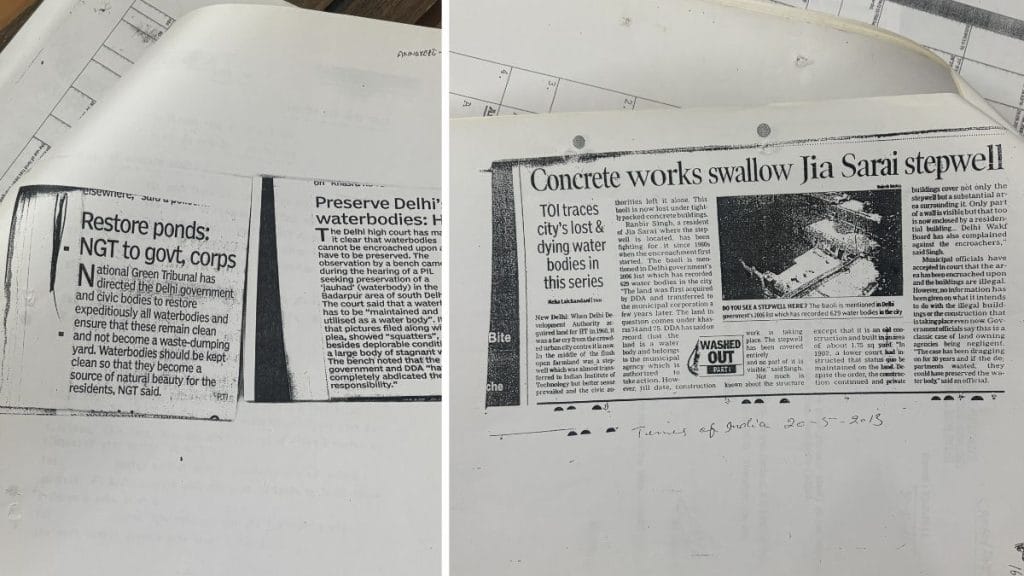
So far, Tyagi has filed over a dozen petitions to courts and civic bodies – spanning from attempts to take over a village pond for the construction of a cultural centre, to pushing for implementation of village layout plans and the SVAMITVA scheme in Lal Dora areas.
SVAMITVA (Survey of Villages Abadi and Mapping with Improvised Technology in Village Areas) is a central government initiative launched in 2021 by the Ministry of Panchayati Raj that was supposed to use drone technology to map these rural residential (abadi) land and provide formal Property Cards to village residents, giving them ownership and access to bank credit. But the scheme has not been executed well in Delhi.
“I want implementation of village layout plans for Delhi villages so that MCD, GNCTD and DDA don’t give excuses about Lal Dora being complex,” Tyagi said. “Why don’t you map these villages? What is stopping the authorities from doing that?”
In April, South Delhi BJP MP Ramvir Singh Bidhuri said that residents of 31 Lal Dora villages would be granted ownership rights, with the issuance of property cards enabling them to access bank loans. Bidhuri also wrote to Union Housing and Urban Affairs Minister Manohar Lal Khattar. But since Delhi lacks gram panchayats, it requires special permission to be implemented in the capital.
“The Delhi government has no direct control over land, police and virtually no real authority,” Hashmi said. “The Delhi police reports to MHA, and so does the MCD. Even to pass an order, the state government has to seek permission from the centre.”
He says the divide between Delhi’s polished colonies and its neglected villages is infrastructural.
“Why can’t Lal Dora streets be cleaner? Why can’t you take the overhead wires underground? In all the fancy colonies, the wires have gone underground. But nothing in the villages,” he said.
Shailaja Chandra, who served as the first woman Chief Secretary of Delhi from 2001 to 2004, says there needs to be an act that brings all Lal Dora villages under one roof.
“The issue is that large populations now live and work in densely built-up settlements where no agency accepts full responsibility for fire safety, sanitation, waste management, drainage and enforcement of building norms,” she said. “After incidents such as the Hauz Rani fire, the government needs to designate a single authority responsible for these functions, whether through legislation, rules or executive orders.”
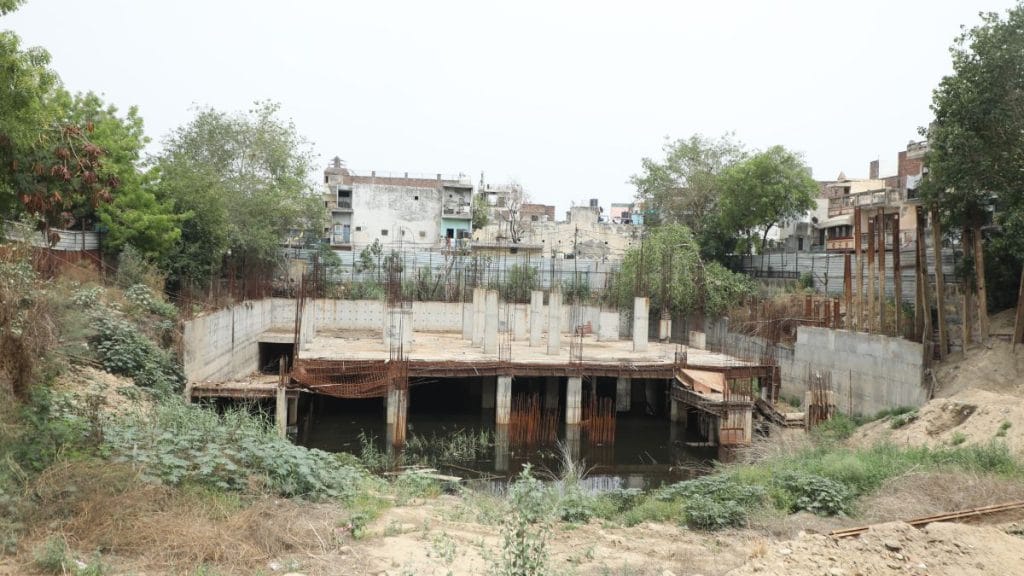
Who owns the land?
For thousands of residents, the problem begins with a deceptively simple question: who legally owns the land beneath their homes?
The roots of the ownership crisis lie in the 1908 land consolidation, when the entire abadi area of Lal Dora villages was recorded as a single khasra, without any subdivision into individual holdings. As land passed down generations and was informally divided within families, these changes were never formally registered in revenue records.
“And the Delhi authorities never cared – from the 1940s till as late as 2020 – to update the individual land positions in Lal Doras areas. That is the main reason behind the confusion over ownership rights,” Paras Tyagi said.
As Delhi expanded around its villages, Lal Dora settlements began changing character. Agricultural lifestyles gave way to urban ones. Residents built pucca houses, extended existing structures and gradually transformed village homes into rental properties. To facilitate construction, the revenue department issued certificates, but ownership records themselves remained unresolved, Tyagi said.
The consequences of that ambiguity continue to shape life in Lal Dora villages.
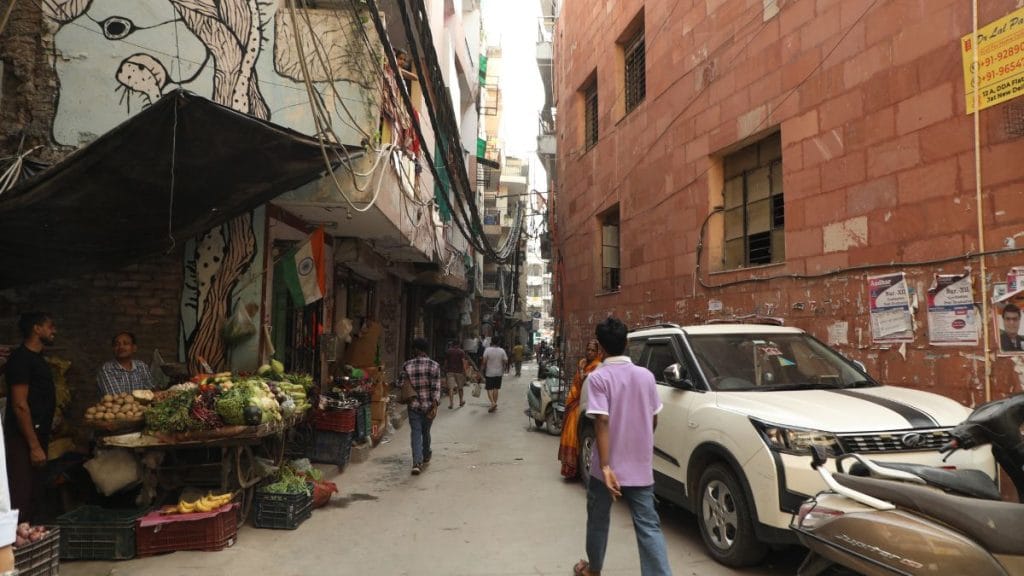
Tyagi, who has been researching Lal Dora villages and tracing their historical evolution, said that in 2010, the Delhi High Court directed the MCD to prepare layout plans for these villages within six months. However the layout plans were never made.
“Now, who is responsible for this?” Tyagi asked.
Shailaja Chandra says it is for the government to decide the route they want to take.
“I am not prescribing a particular legal route. Whether it requires amendments to existing laws, special regulations or an ordinance is for the government to decide,” she said. “What cannot continue is a situation where these areas fall between multiple jurisdictions and residents are left without basic civic protection.”
Also Read: Indian cities are a mess of overhead wires. Delhi will pay Rs 8 cr to clear just 5 km
A long wait
Many who own buildings in Lal Dora lands now eagerly await government promises of regularisation lists. Until then, they cannot even sell at market value.
In his office in Shahpur Jat, Sandeep Panwar says the only document he can rely on to establish ownership is the house tax he pays.
“But the problem is I can’t apply for a loan because the bank doesn’t consider house tax documents as ownership,” he said.
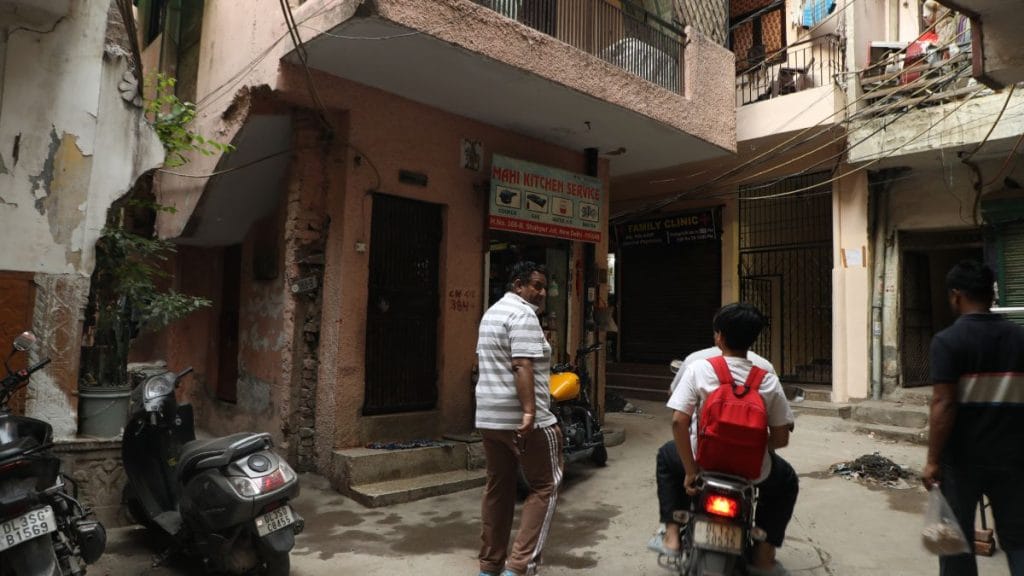
More than a century after a red line was drawn across colonial revenue maps, residents say they are still living with its consequences — caught between village and city, legality and ambiguity, neglect and dependence.
Panwar says the city built around these villages has long moved on without them.
“Now, these new people who have come from different cities, living in the posh colonies call themselves Delhiites,” he said. “We, on the other hand, living on the margins are treated as outsiders in our city.”
(Edited by Stela Dey)