


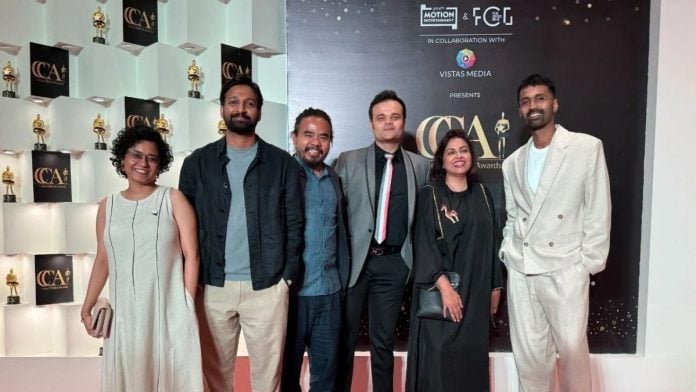
Jabalpur: The next names in Indian independent cinema may not come from Mumbai’s film studios, but instead from a real estate office and a chartered accountancy firm in Jabalpur, Madhya Pradesh.
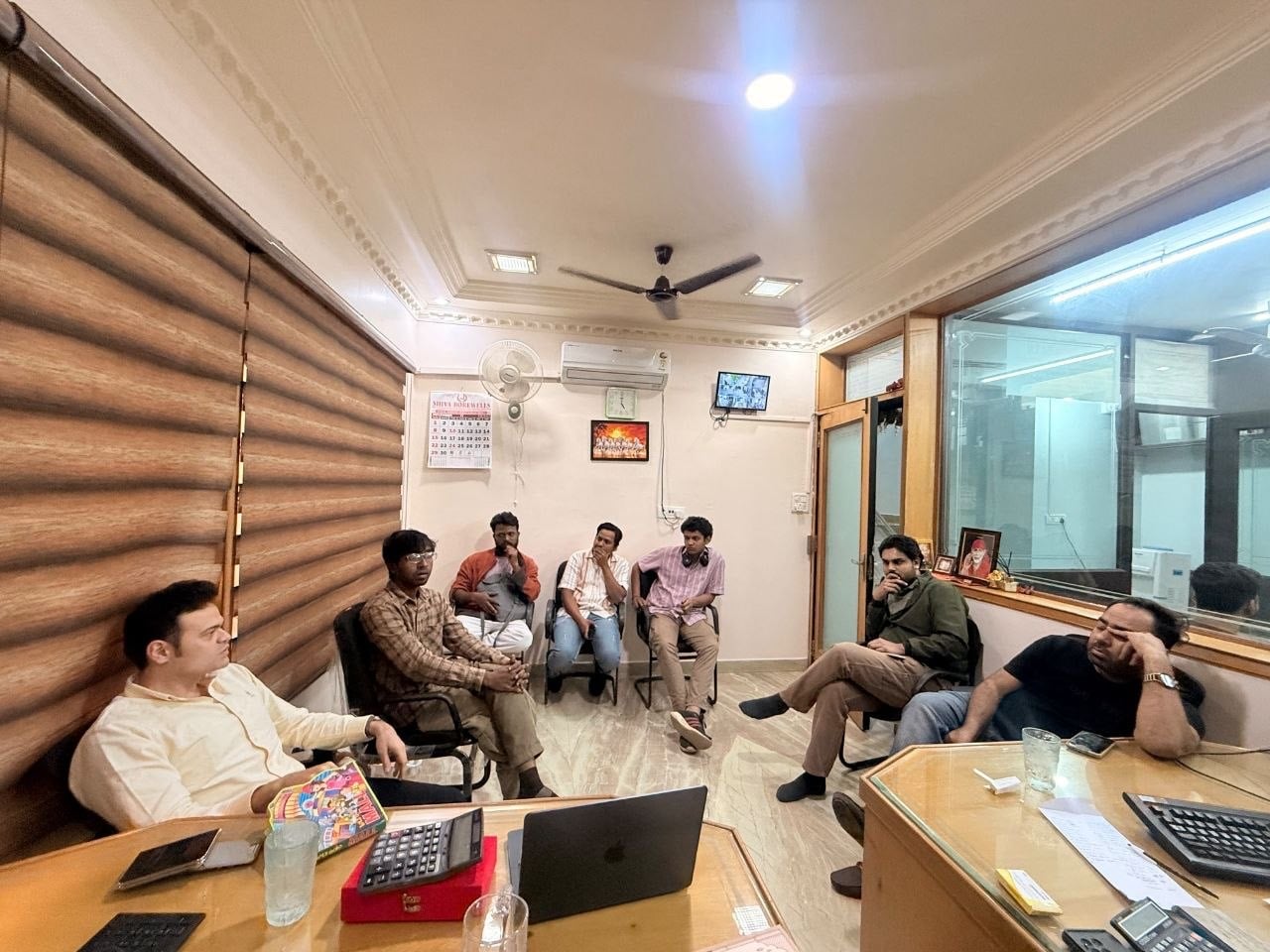
The founders of Uncombed Buddha Films, 41-year-old Harsh Agarwal, and 39-year-old Aditya Grover, have traded property deals and balance sheets for film scripts that focus on stories from India’s lesser-explored regions. The two friends have even taken their productions to international festivals, including the Cannes Film Festival and Sundance Film Festival.
“We realized early on that you don’t need a Mumbai pin code to tell a global story. Bollywood is a closed club, so instead of knocking on their doors and asking for permission, we decided to build our own bridge straight from the heartland to Cannes,” Agarwal told ThePrint.
Founded in 2018, Uncombed Buddha Films focuses on regional-language cinema and unconventional narratives. In eight years, the production house has backed 12 films, including Vijay Jayapal’s Nirvana Inn (2019) and Dominic Megam Sangma’s Garo language film Rapture, which won the Best Feature Film in Garo at the 71st National Film Awards in 2025. Its films have also travelled to international festivals such as Locarno, Busan and the BFI London Film Festival.
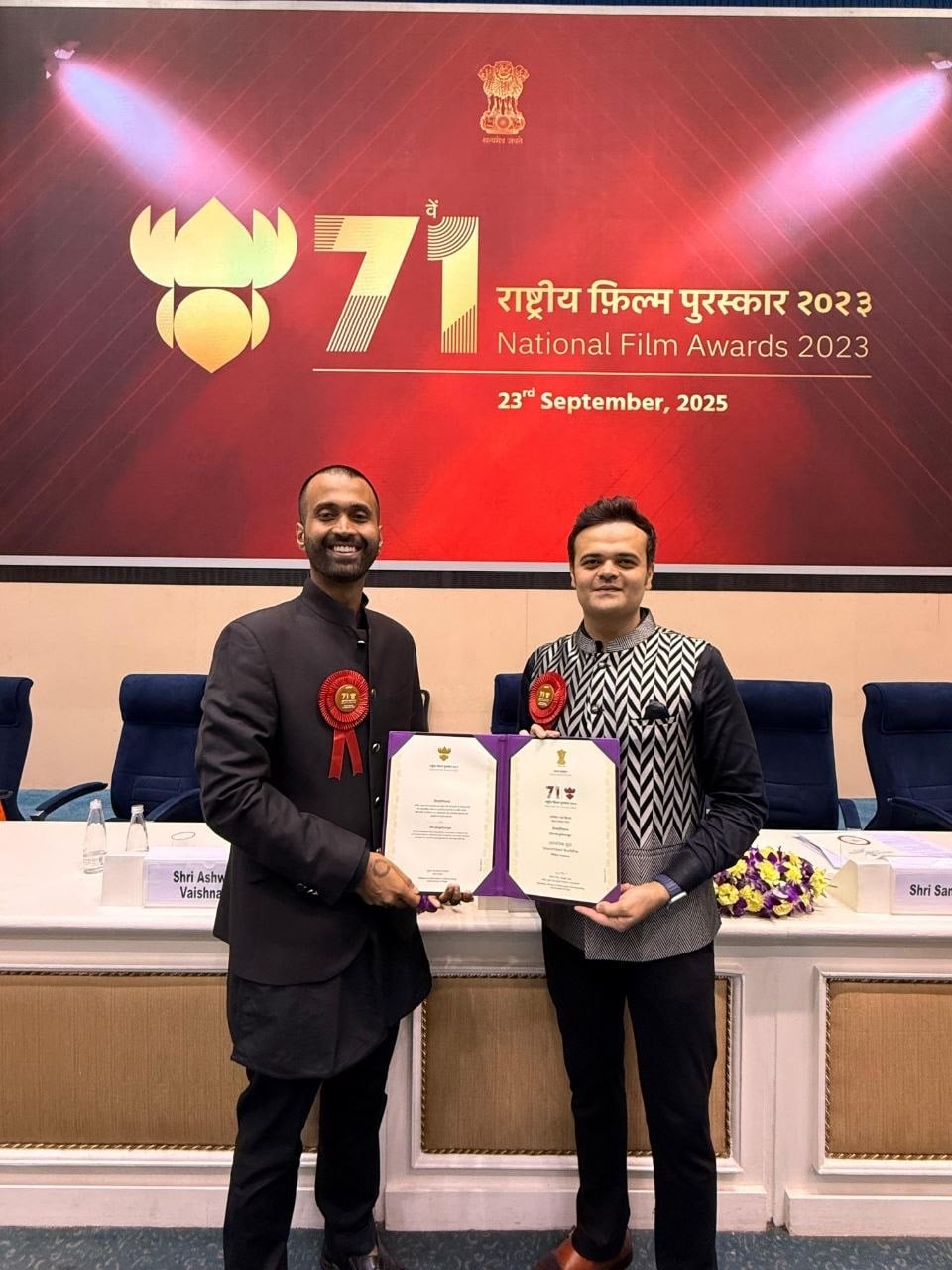
Rapture was an international co-production involving Anna Films and Chinese producers Xu Jianshang and Sun Li. Inspired by Sangma’s childhood memories of his village, the film had already travelled through several international film labs and markets, including Cannes L’Atelier, Rotterdam and Busan, securing funding from China, Switzerland and the Netherlands. Uncombed Buddha joined the project at a later stage, on the recommendation of Anu Rangachar, a consultant programmer for the Berlin International Film Festival.
Sangma said the production house provided the financial support needed to complete the film without interfering in his creative decisions.
“They gave us the budget and financial support, but the best part was that they did not interfere in the creative process. They let the film grow the way I envisioned it as a director,” he said.
He added that the partnership benefited both sides, allowing independent filmmakers to complete their projects while helping Uncombed Buddha build its international profile.
“They support a project like Rapture, and then it travels to film festivals and wins a National Award. It enhances their own production house. Everybody needs to grow together,” he said.
For Grover, such collaborations also challenge the perception that entering international film festivals requires a film school degree or an industry godfather. He believes financial discipline and the willingness to back unconventional stories matter just as much.
“What you really need is the discipline of a balance sheet, the foresight of a real estate investment, and the conviction to back stories that mainstream studios are too scared to touch,” he said.
The origin
The story of Uncombed Buddha Films began with a personal loss. After Agarwal’s father passed away in 2016 following a 15 day coma, he experienced what he describes as a profound “shift in consciousness”. Confronted with the uncertainty of life, he realised he wanted to make a film before his own time ran out.
“I thought I could die tomorrow too, and I wanted to make a film before that happened. I imagined that if I were on my deathbed, I wouldn’t want to leave this world regretting that I never made a film. I didn’t want my soul to leave with that regret,” Agarwal said.
His love for cinema had deepened during his college years in 2006, when he moved to Glasgow to pursue an MBA at the University of Strathclyde, partly to fulfil what he calls his “Marwari family corporate conditioning”. Lonely in a new city, he began visiting Cineworld, Europe’s largest multiplex chain, using a student pass that allowed unlimited movie screenings. It became his window to cinema from around the world.
“Having watched so many films, I realised just how much power a filmmaker has to influence people and how a director could move an entire audience, making people laugh and cry together,” he said.
Meanwhile, Grover’s passion for films goes back to his childhood. Even during the challenging years when he was preparing for his chartered accountancy exams, he kept the movie bug in him alive, watching films on his iPod during study breaks. In 2011, he began writing film reviews on a Facebook page called It’s My Opinion, which has since grown to nearly six lakh followers.
“The first and foremost point is that whatever you love, whatever your passion is, no matter how little time you have, you manage to make time for it. If you have 24 hours, you make 25 hours for it,” he said.
Grover eventually moved to Chennai to pursue acting and theatre. He was selected for Saakhi, a Mani Ratnam production to be directed by Shaad Ali, but the film never took off. The setback made him realise that his real passion lay in directing and storytelling rather than acting. Eventually, he returned to Jabalpur and launched a real estate business in 2011.
Agarwal and Grover finally met through a common friend who knew they were both cinephiles. Although they would occasionally cross paths in Ghitorni, their friendship took shape during a screening of the independent film Yeh Khule Aasman (2012), starring Raghubir Yadav. Harsh recalled buying a ticket after spotting the film festival laurels on its poster, assuming it was a world cinema screening. Aditya, meanwhile, was there because he regularly reviewed films for his Facebook page. The duo soon realised that they shared a love for arts and music, and were among the few people in town seeking out parallel cinema.
“When we became friends, we realised we shared a deep interest in the arts, music and, most importantly, independent and world cinema,” Agarwal said.
Over the years, the two friends continued exploring world cinema while running their respective businesses, Agarwal in real estate and Aditya in chartered accountancy. In 2016, Agarwal finally approached Grover to turn their passion into a production house.
“I was absolutely keen to join him and didn’t want to miss the opportunity of working with a close friend,” Agarwal said.
Also read: Modi govt’s go-to sculptor made gods monumental. Now he’s going ‘experimental’
Sustainability
Over the years, Uncombed Buddha Films has also ventured into international co-productions. Its credits include Arun Karthik’s critically acclaimed Nasir (2020), which was screened at the International Film Festival Rotterdam (IFFR) during the Covid-19 pandemic, Anamika Haksar’s Ghode Ko Jalebi Khilane Le Ja Riya Hoon, which travelled to the Sundance Film Festival in 2019 and the most recent co-production, Chevitorama (The Soul Whisperers), starring Dileesh Pothan, which screened at the Busan International Film Festival in 2026.
But sustaining an independent film production house is not easy. Many of their films do not get theatrical releases, and recovering their investment can take years. Nirvana Inn, starring Adil Hussain, reached audiences only this year, seven years after its making, through BrewTV.
The duo sustains the production house, their passion project, by letting their professional lives continue alongside it — Grover still runs his real estate business and Agarwal remains a practicing CA.
“We understand money and knew that returns from films wouldn’t come immediately. Our businesses give us the financial stability to keep investing in cinema. Had we depended entirely on producing art-house films, survival would have been difficult,” Grover said.
Also read: Lalit Kala Akademi has been headless since April. And the rot runs deeper than that
Selecting a film
Before backing a film, the duo examine the story, the director’s journey and, most importantly, the director’s motivation for choosing that particular subject. They also take into account the people and partners already attached to the project.
“All our films have been international co-productions involving three or four countries. We prefer having multiple partners rather than shouldering the entire responsibility ourselves,” Agarwal said.
For Uncombed Buddha Films, a story may be rooted in a specific place, but its emotional core must resonate beyond geographical boundaries. Agarwal cited Rapture, set in the remote Garo Hills, as an example. Despite its setting and the small population of the area, he believes the film explores struggles that audiences across the world can relate to. The film explores the psychological roots of fear, examining how suspicion and the othering of outsiders can turn into collective paranoia, destroying individuals and entire communities.
“Even if a story is set in Meghalaya’s Garo Hills, its themes are universal. People across the world live through similar conditions and face similar challenges,” he said.
Their financial approach is equally measured. They limit their contribution to 30 to 40 per cent of its total budget. With their projects typically costing between Rs 50 lakh and Rs 2 crore, this means investing a portion of their earnings from their businesses into filmmaking.
Also read: Can a restaurant save Bengal’s disappearing rice diversity? Amar Khamar is trying
Record label
While their work provides a financial safety net, Agarwal and Grover soon realised that Uncombed Buddha Films needed an independent revenue stream to sustain its film production. This led them to launch Uncombed Buddha Records, an independent music label that they believe offers a more accessible route to distribution than cinema.
“Music has no such gatekeeping. I don’t have to approach Netflix or Amazon and plead with them to buy my film. My songs can be available everywhere. The entire supply chain is democratised,” he said and added that music can be distributed directly across platforms such as Spotify, Apple Music and Instagram.
The economics of music production also makes it a relatively lower-risk investment. Producing a song costs roughly one fiftieth the cost of making a film, allowing the label to take multiple bets and gauge their performance much faster. Grover also sees music as a long term intellectual property asset, with songs continuing to generate licensing revenue decades after their release. They have songs such as Thoda Fame Chahiye by MC Nawab, Ac Aniket and Shanu, Goat Killa and Ramta Jogi Behta Behta Pani by Deva Aghori
“Even a 50-60-year-old song can go viral today. Whoever owns its rights, whether Saregama, T-Series or Tips, earns licensing fees from it,” Grover said.
The duo hopes the music label will develop into a steady source of revenue over the next few years, helping them invest the profits in films and gradually make their filmmaking venture self-sustainable.
To build this aspirational value around art, Agarwal and Grover are bringing what the former calls the “experience economy” to their hometown. As digital lives become increasingly isolated, he believes people will seek out physical communities and shared cultural experiences.
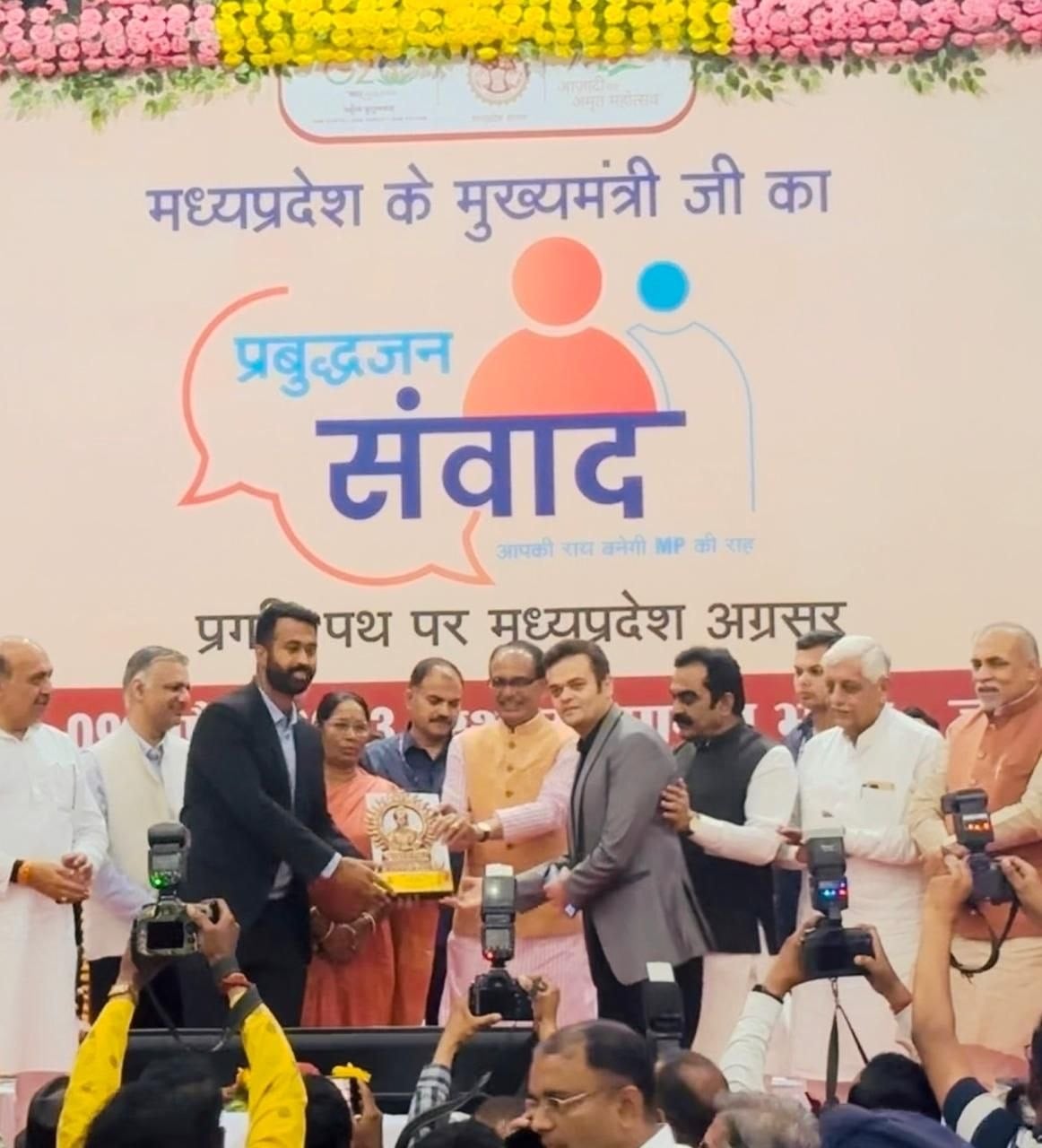
Uncombed Buddha is developing an art commune in Jabalpur to bring artists and cinephiles together. They are also partnering with the Dharamshala International Film Festival to bring its ‘DIFF on the Road’ programme to their city.
“We are bringing a whole new art culture here and turning Jabalpur into a major hotbed for art,” he said.
(Edited by Janaki Pande)