


New Delhi: For Sujoy Chatterjee, co-founder of Kolkata-based restaurant Amar Khamar, “Amar Khamar is an effort to refresh our memory”.
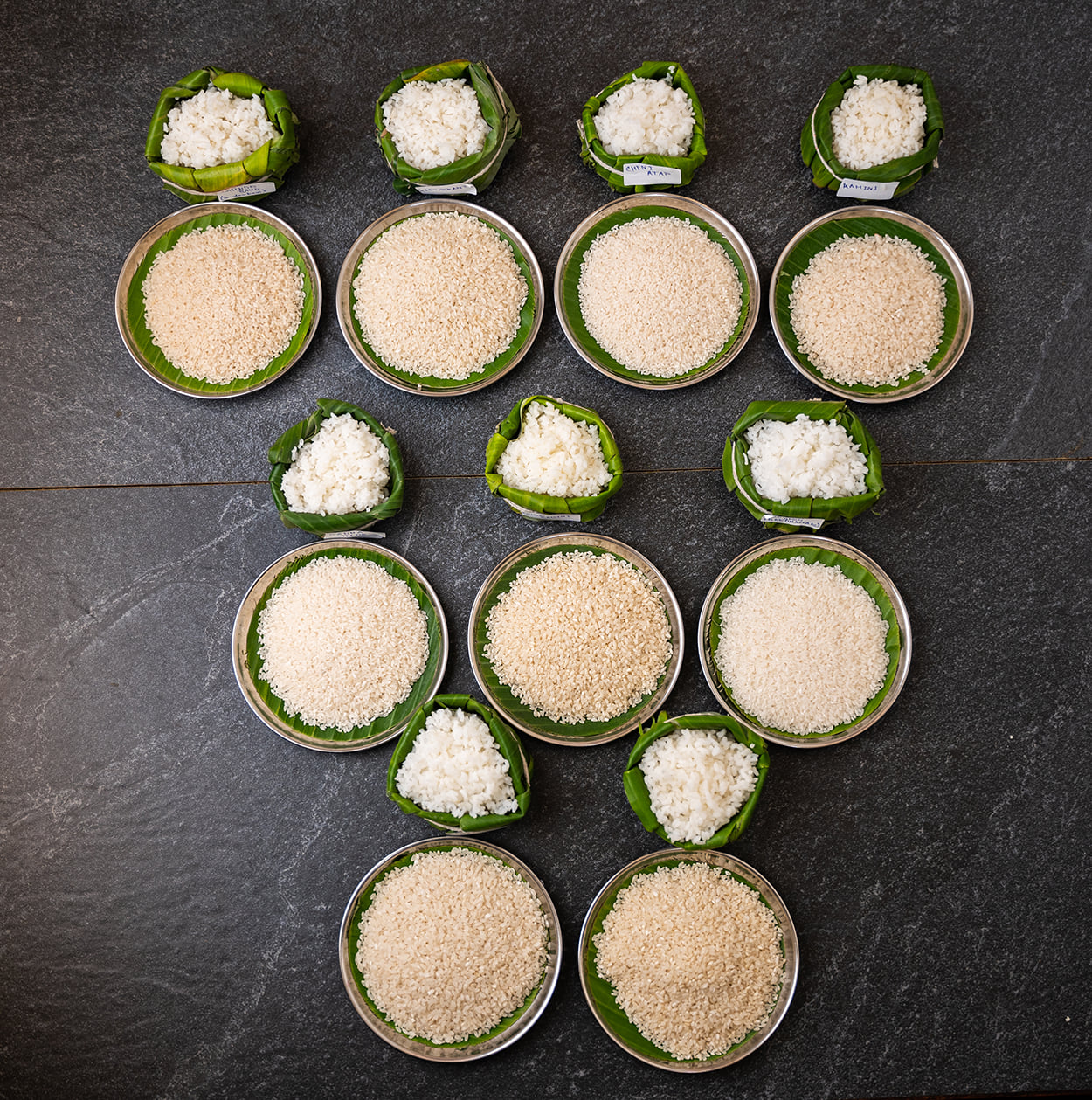
Diverse varieties of rice have long been part of Bengali life. However over the last two to three generations, these varieties have disappeared from consumer markets. ‘Amar Khamar,’ which translates to ‘my granary’, seeks to bring this edible biodiversity back into culinary life. It serves 14 varieties of rice, in addition to lesser known varieties of dals, millets, fish, and a spread of homestyle Bengali dishes.
A year after opening as a formal lunch room, the restaurant has secured itself a spot on Conde Nast’s list of 50 best restaurants in India. Amar Khamar ranks 14th on the list which features only three other restaurants from the city.
‘Losing our cultural heritage’
For Chatterjee, “Bengal and rice are synonymous.” This is not just limited to the Bengali plate, but also reflects in Bengali culture. Old verses, for instance, preserve memories of specific rice varieties that people have not otherwise tasted.
He recalls Jognidranath Sarkar’s popular children’s rhyme Kaajer Chhele, which describes a young servant boy memorising the name of daadkhani rice along with a list of other grocery items that he has been instructed to buy. Many Bengalis recognised daadkhani rice on the Amar Khamar menu from this childhood rhyme, even though they had never tasted it before.
“Losing this rice would be like losing a small part of cultural heritage,” Chatterjee explained.
Added to this are Chatterjee’s own childhood memories. Growing up in Bengal, he recalls relatives from nearby villages sending his family “bhalo chaal” or “good” rice from a personal crop of agriculture. This was nothing out of the ordinary for many Bengali families, he says. Family members often had favourite varieties of rice. Chatterjee’s father, for instance, loved the long-grained baskathi.
Over time however, Bengal’s plates came to be dominated by two kinds of rice: gobindobhog and basmati. Bengal’s rich ecological diversity, when it comes to rice and paddy, had thus been relegated largely to memory.
It is precisely this memory that Chatterjee and his co-founder Sarah Gekeler seek to evoke through Amar Khamar.
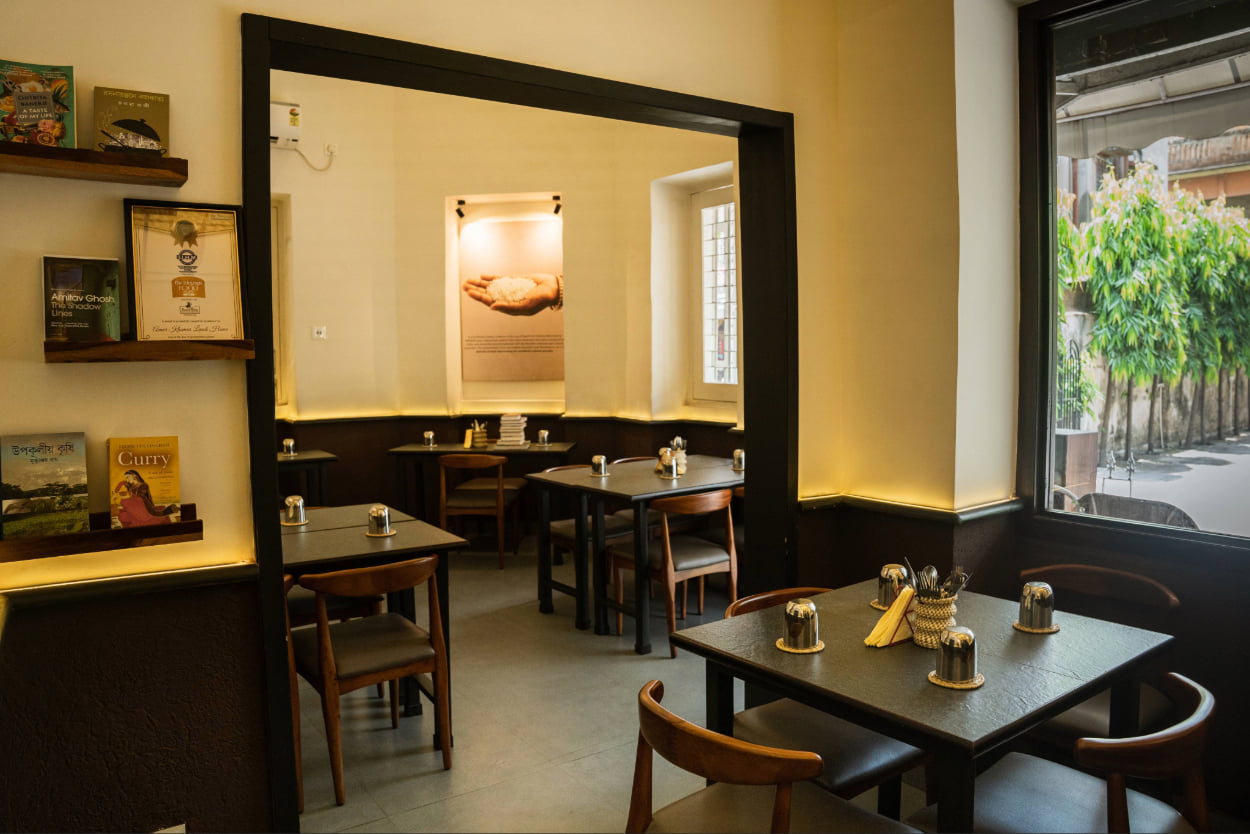
What started in 2019 as a produce store for local Bengali ingredients, has now grown into a 40-seater lunch room in the city’s posh Ballygunge neighbourhood.
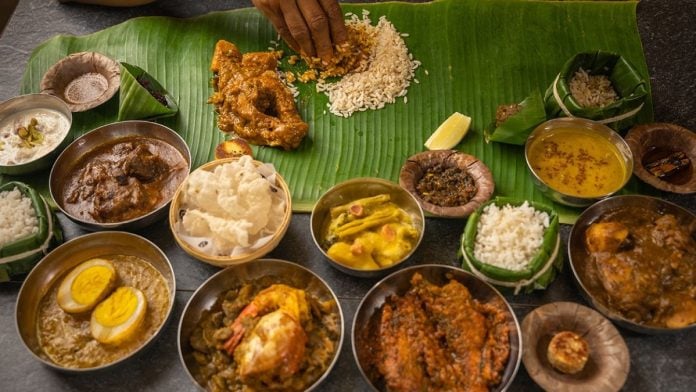
The most popular among their offerings is the chhuti’r bhaat, which translates to holiday’s rice. The 11 course meal takes customers through the many flavours of Bengali food, from the bitter to the sweet. The courses in between contain everything from carp innards and sweet pumpkin, to seasonal greens, chui jhaal infused mutton, and Campbell duck eggs. The meal comes with 4 kinds of ‘heirloom’ rice, and guarantees a post-meal free serve of onek ghum, or lots of sleep!
Where did all that rice go?
Chatterjee’s eyes light up with excitement, every time he describes a specific kind of rice.
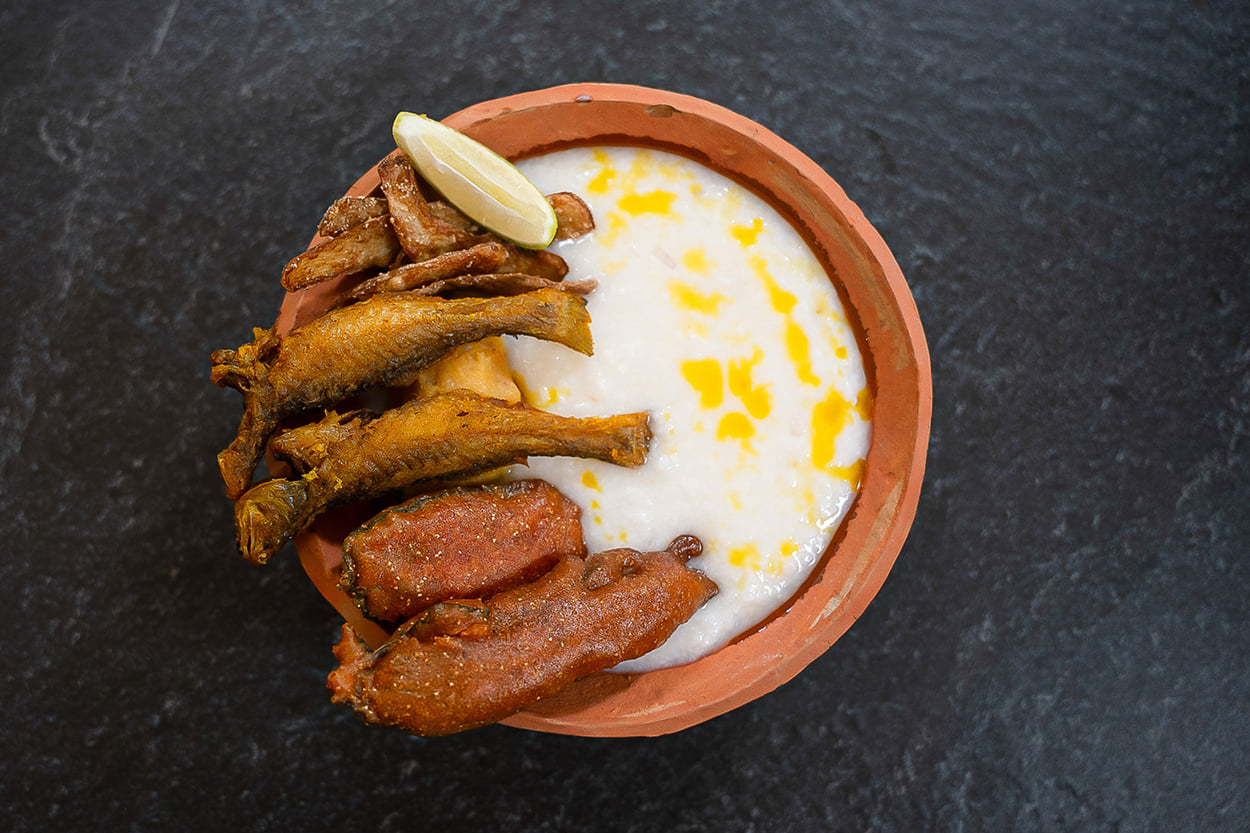
“Radha tilak, for example, has tremendously good consistency when we use it in pulaos. It will remain soft, it will release something, but it will still remain separable,” he said. “The aromatic karpurkanti is great for congees,” he added.
Many of these rice varieties slowly disappeared from the everyday palate about two generations ago, partially because of the 1943 Bengal famine, and the pressures of increased production in a newly independent nation.
“As a young nation there was a necessity to feed a lot more mouths and a lot more stomachs,” he said. Farmers switched to hybrid varieties, which produce a bigger crop.
Additionally, gobindobhog, cultivated in areas close to Kolkata, such as Burdawan, likely became the city’s go-to option due to logistical reasons, such as lower cost of transportation. These combined factors led to the decline of indigenous rice varieties.
However, today, as the country has matured, Chatterjee thinks it no longer needs to focus only on production and transportation. He can now afford to indulge in producing smaller batches of niche products. His brief stint in Europe about a decade ago, fortified this belief.
Chatterjee recalled the experience of being exposed to different kinds of European food.
“First you start missing your own food,” he said. “And then you also start looking at the food that others eat. Think of the pasta varieties across Italy. Then you start thinking of how well they preserve their heritage,” he added.
When Chatterjee was an economic consultant to rural economies in Africa, he realised that people were moving away from generic labels such as “natural” and “eco”. They were trying to popularise their food by the original names — such as the Oku white honey from Cameroon.
“Naming a product was an attempt to extract value out of it. It showed me that everything is a speciality. It has a niche. Everything is not a generalised, homogenised product,” he said.
These experiences got Chatterjee thinking about his childhood connection with rural Bengal, and how that connection had severed over the years. He and his co-founder Gekeler then approached rural communities, and found that many farmers continue to grow small batches of indigenous rice for personal consumption, and because of their lasting cultural connotations.
“For instance if you go to Jalpaiguri, you will still see farmers producing small quantities of rice that they use in a puja,” Chatterjee said. “On one of my visits to a farming family, I also tried chauddo shaak, a dish made with 14 varieties of leafy greens cooked during Kali pujo,” he added.
Farmers had preserved rice production, however, the challenge was to build an urban consumer demand for it in the market. That’s where Amar Khamar stepped in with a simple proposition. “If you present great food, you create a natural demand and supply,” Chatterjee said. That’s what the team has been doing for the last 7 years.
Also read: Not Kaleen Bhaiya, Pankaj Tripathi’s common-man appeal is winning brands over
But, what really is an heirloom?
Despite how Chatterjee makes it sound, securing “heirloom” rice is far from easy. The term itself is fraught with contentions. According to biodiversity conservationist, Debal Deb, most farmers have lost the ancestral knowledge required to maintain the genetic purity of rice landraces.
“Since none of them bother to prevent cross pollination of their heirloom varieties with other varieties in neighbouring plots, most of the rice harvested and marketed are devoid of their original characteristics, such as grain colour, shape, aroma, cooking properties,” he told ThePrint. “In addition, careless seed handling after harvest results in a physical mixture of grains of different varieties,” he added.
Chatterjee acknowledges that the process is difficult and painstaking, but says that it is not impossible.
“We have worked with farmers and farming organisations to develop ways of measuring the crop morphologically and identifying its characteristics. We also discard the seeds that we think have been affected by cross pollination,” he said. “It (heirloom) is the knowledge that is passed down to farmers generationally through their families. And it is ultimately this knowledge that we work with.”
Rural flavours, urban techniques
Running the Amar Khamar kitchen today is an act of collaboration between people with commercial kitchen experience and those with agrarian backgrounds.
“We need people who need to know how to contain the flavour, and repeat it very very perfectly every single time, for big groups of people. Of course that comes with a lot of training as a chef,” said Chatterjee of the value that his professional kitchen staff brings.
At the same time, the restaurant relies on farmers and their families to bring the “core flavour”.
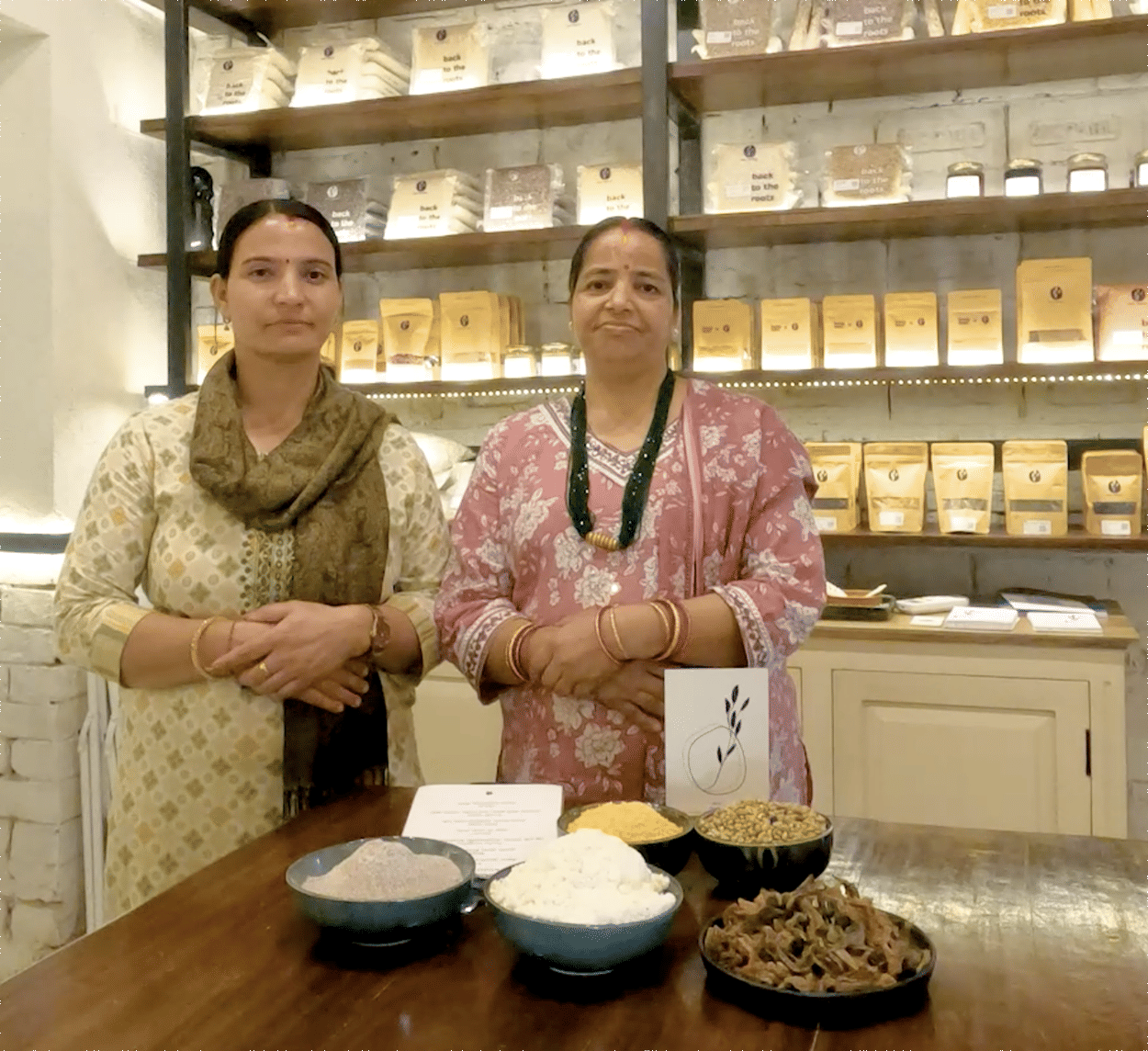
For instance, Amar Khamar periodically organises “family tables” which are centered around lesser-known seasonal local ingredients, such as the chithi kakra, or tiny freshwater or estuarine crabs. Here, they invite farmers who produce these ingredients to cook for guests, using their personal recipes.
Of the 20 people that make up the restaurant’s kitchen staff, nearly 30 to 35 per cent come from rural backgrounds, and do not have prior experience in a commercial kitchen. Many of them belong to families that grow the produce acquired by the restaurant. Their family recipes lend Amar Khamar’s food its signature homestyle quality. It is these recipes that the commercial chefs build upon, and standardise for the purposes of the restaurant.
“Ultimately it becomes an amalgamation, and both [commercial and homestyle cooks] learn from each other,” he added.
For many members of the staff, seeing their local varieties of rice on the menu feels exhilarating.
Rekha Das, who is a chef at the restaurant, is the daughter of a farmer who has been working with Amar Khamar’s product team for a decade. She grew up in the Sunderbans around rice varieties such as rupshal, karpurkanti, and kamini.
The kanachur khoi, or popped rice she grew up eating, is now served at the restaurant as kanakchur khoi-er bora, or steamed dumplings made of kanakchur rice.
“To see this as the signature dish at Amar Khamar has been a full circle moment for me,” she said.
(Edited by Janaki Pande)