





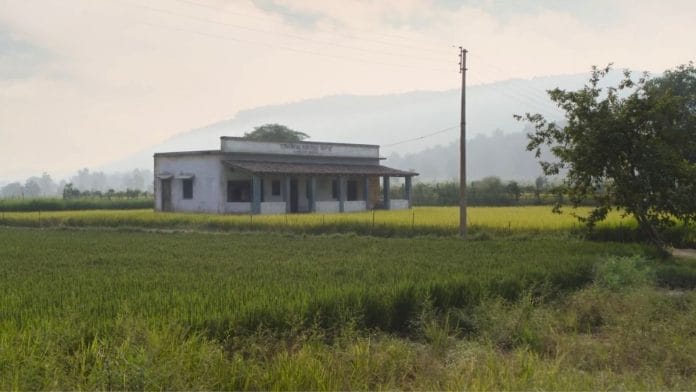

New Delhi: Ramgarh from Sholay, Basantpur from Naya Daur, Belari from Godaan, Lakshmipur from Mother India, and countless other villages have slowly disappeared from Bollywood films. In recent decades, Hindi cinema has revolved around metro cities and the lives of urban, upper-middle-class Indians, if not NRIs, pushing the village to the margins.
The shift coincided with the decade of an expanding economy and an urban middle class defined by conspicuous consumption. The ‘struggling villager’ stories of old Bollywood didn’t belong in the New India story.
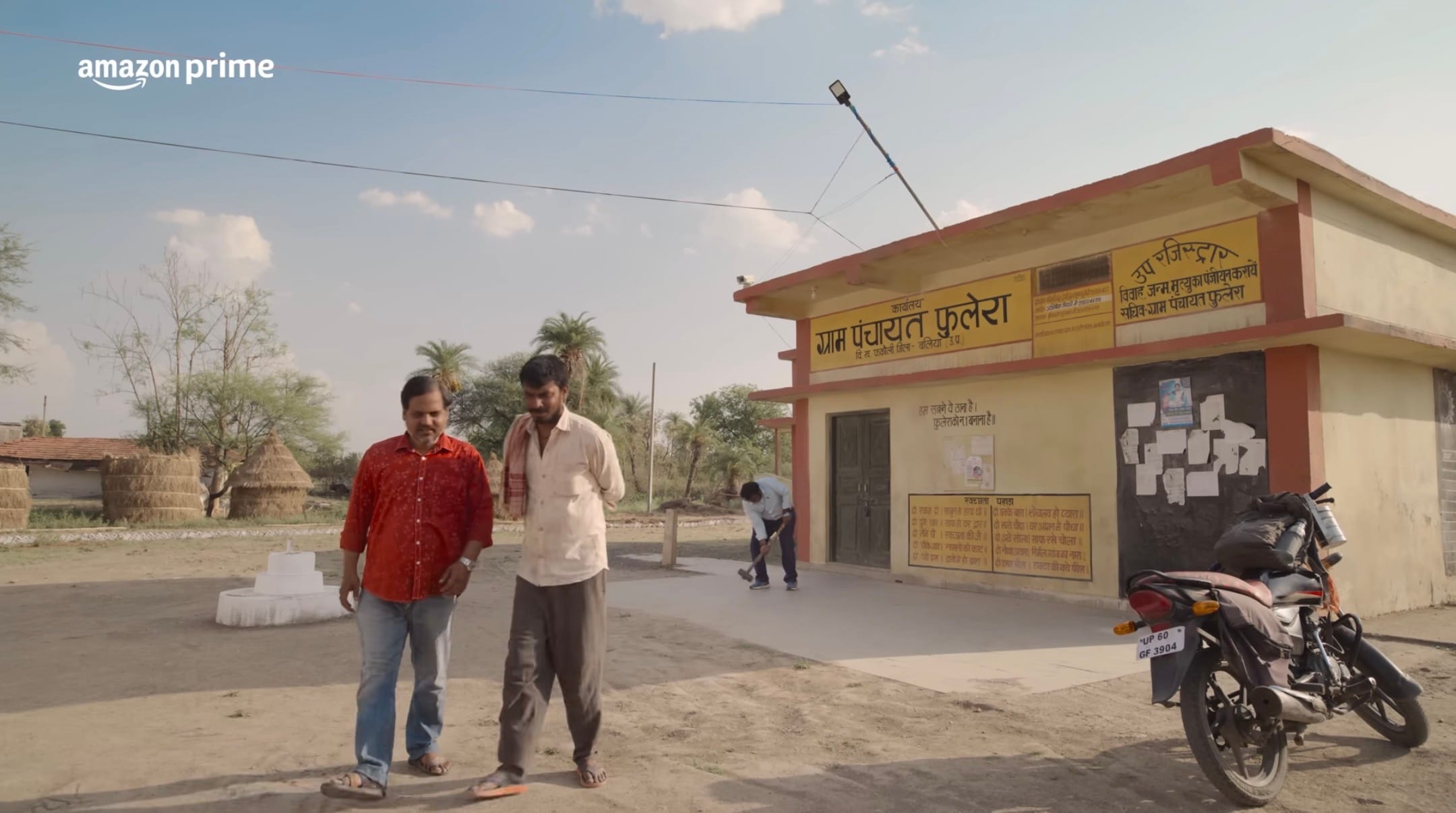
Villages are, however, crawling back and being rebooted on OTT, sometimes even with fictitious names. They are brought to life in places like Phulera in Panchayat, Bhatkandi in Gram Chikitsalay, Sujanpur in Guns & Gulaabs, and Jamtara in Jamtara: Sabka Number Aayega.
While there are a few films which are based in villages — such as Devaraa in Homebound, Chanderi in Stree, or Nirmal in Laapataa Ladies — the village itself is not central to the storyline. The last film, where the village was a main character and had its own set of problems—Peepli Live, which was released in 2010.
The village’s journey, from being central to the film to becoming a setting in it, is documented by author and sociologist Ashis Nandy in his writing on Indian cinema. While speaking to ThePrint, Nandy said that cinema is constantly changing.
In his book, An Ambiguous Journey to the City, Nandy discussed Pramathesh Barua’s Devdas, which was released in 1935. He saw the village and the city in the film not merely as physical locations but as opposing forces in the making of the modern Indian self.
“Devdas must have been many things to many people, but he was above all the first successful hero in Indian cinema who seemed to seriously negotiate the anguish of the first generation of a rural elite entering the pre-war colonial city,” he wrote.
Village vs city
The old good village vs evil city trope of the Gandhian imagination continues to dog OTT show plotlines as well.
Recent OTT releases Panchayat and Gram Chikitsalay present a different kind of village — where the conflict is less about rescuing the village and more about navigating its politics, aspirations and daily frustrations.
Yet, film scholar Mihir Pandya said that filmmakers have not entirely moved away from portraying villagers as naive and the city folk as their shrewd and more worldly cousins.
“You see this exact trend in today’s web series too. In Panchayat, the villagers are highly innocent, while the city dwellers understand how the world works,” said Pandya, a visiting professor at the Hankuk University of Foreign Studies, Seoul.
OTT, however, does provide space for subtle differences and detail more deftly.
In Panchayat, for example, MLA Chandrakishore, played by Pankaj Jha, is presented as a typical politician, trying to manipulate village politics and install a pradhan who is aligned with him. Yet he has a soft side to him, one where he has deep affection for his pet horse. There is a fun side to him too, when he is seen dancing to regional folk music. These details render nuance to his character, separating it from the hero-villain binary.
“Even their cunningness has an innocence to it, and that is why we enjoy watching them,” Pandya said.
He, however, argued that these shows present a “highly fabricated, nostalgic, and one-dimensional” version of rural life, in that they often avoid the harsher realities of rural life or cover them up with a cloak of comedy.
For instance, Gram Chikitsalay revolves around a city doctor who takes up a job in a primary healthcare centre in a village but struggles to treat its dwellers, even as larger issues of caste, class and gender skirt the narrative.
Compare this to a film like Mother India, which depicts a village facing acute poverty, natural disasters and exploitation by a greedy zamindar (moneylender).
“Real Indian villages have far more violence, especially caste-based violence. But no web series explores that deeply. In fact, few have characters belonging to marginalised communities,” Pandya said. “The cinematic village is still just an imagination.”
Portraying villages through this heavily whitewashed lens, Pandya said, extended beyond the script to the shoot locations and timings. He said that many of these shows are shot during winter to exaggerate the colours and make the villages more palatable, in an attempt to cater to urban middle-class audiences — many of whom, ironically, migrated to cities from villages in the 1990s.
Liberalisation and the lost village
The missing village in Hindi films can also be linked to the migration of filmmakers. Actor Adil Hussain argued that while many filmmakers come from small towns and villages, they lose their connection with that life when they eventually move to cities to make films.
“Very few remain in touch with or keep that orientation intense or alive,” Hussain told ThePrint.
The decline of rural and working-class characters in mainstream Hindi films coincides with the economic liberalisation of the 1990s. As aspirations shifted toward cities, cinema followed — moving from working-class protagonists, such as those played by Amitabh Bachchan in Coolie (1995) and Deewaar (1975), and the roles of Anil Kapoor in Laadla (1994) and Virasat (1997), to more urban and upper-middle-class roles.
Film critic Anuj Malhotra said that popular cinema featured rural settings and class conflicts until the late 1990s. He cited the 1998 film Dulhe Raja, where Govinda plays the role of a dhaba owner who has freshly migrated to Mumbai. Through his constant clashes with Kader Khan’s character, a city-based hotel owner, the film highlights the class warfare among rural and urban characters.
“There would always be class conflict embedded in these films, or at least an awareness of class. But from 1997 onwards, we can observe a pivotal shift,” Malhotra said.
It was in 1997 that multiplexes first arrived in India and began shifting Bollywood’s audiences toward cities. Filmmakers pandered to this trend in their movies — with urban middle-class protagonists getting more popular as the village became a vanishing act.
“Now we largely have protagonists who belong to the city, who go to office in the city, and represent the struggle of an average individual living in the city,” Malhotra said.
Blurring lines
The village and city, however, are no longer as sharply separated as they once were.
Adil Hussain said that while the values associated with cities have travelled into rural spaces, migration has carried village life into cities. “The boundary between the behaviour of metro citizens and that of rural folks has almost blurred,” he said.
Hussain is continuously trying to revive the stories of villages and small towns on big screens. He recently worked in films such as 52 Blue (2025), which shows the unfolding of a father’s trauma when his 23-year-old runs away from the village to meet his idol, Lionel Messi, in the 2022 Qatar World Cup. In his 2019 film Raahgir: The Wayfarers, Hussain played Lakha, a loner perpetually living on the fringes of survival. His other films, where the village has a significant role, include Pareeksha (2019), Parched (2015) and Sringkhal (2013).
“I try to participate in these films for a minimal amount of money, or no money at all, and fulfill my desire to celebrate the simplicity and innocence of the people that I have known so far,” Hussain said.
His adulation for villages goes back to the 1990s, around the same time when villages had begun vanishing from the big screen.
“I have travelled across the country on a motorcycle for two years. I’ve been to villages very few people in India have been,” Hussain said.
The village doesn’t need rescuing
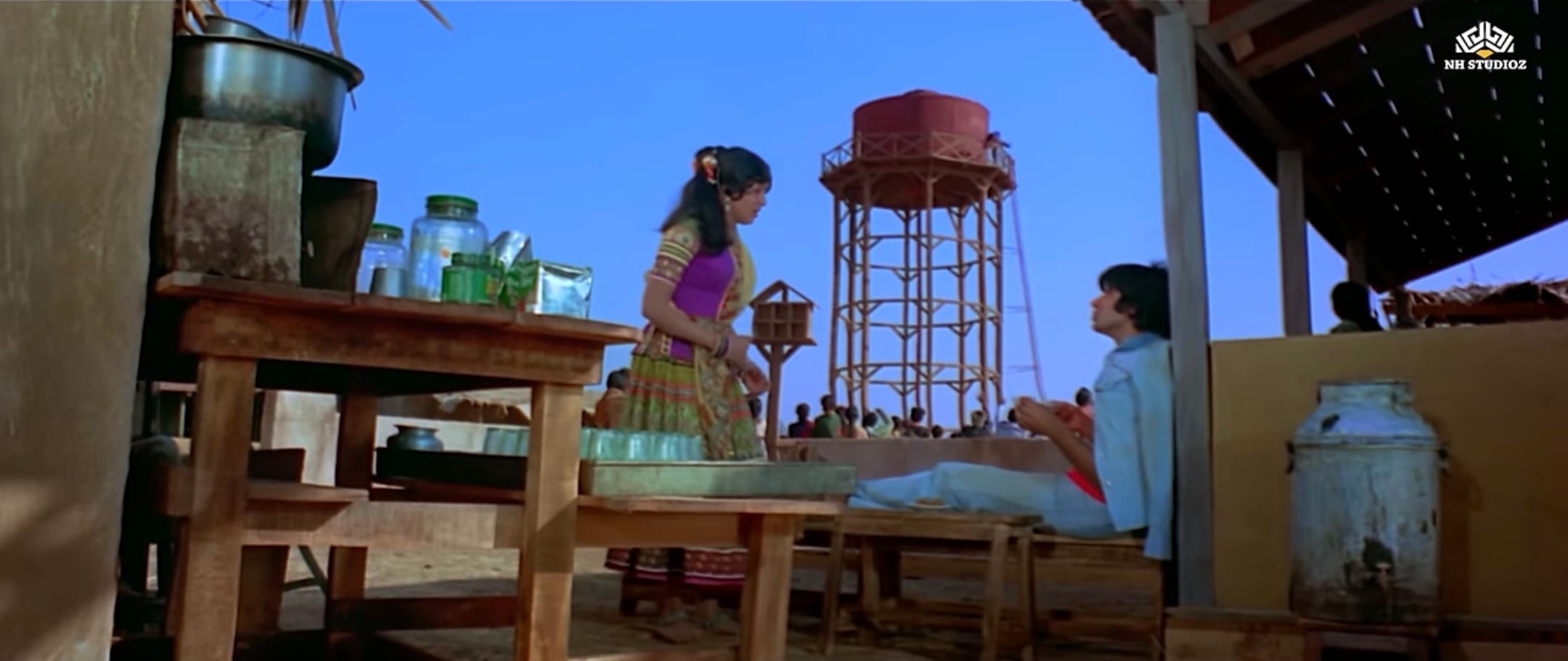
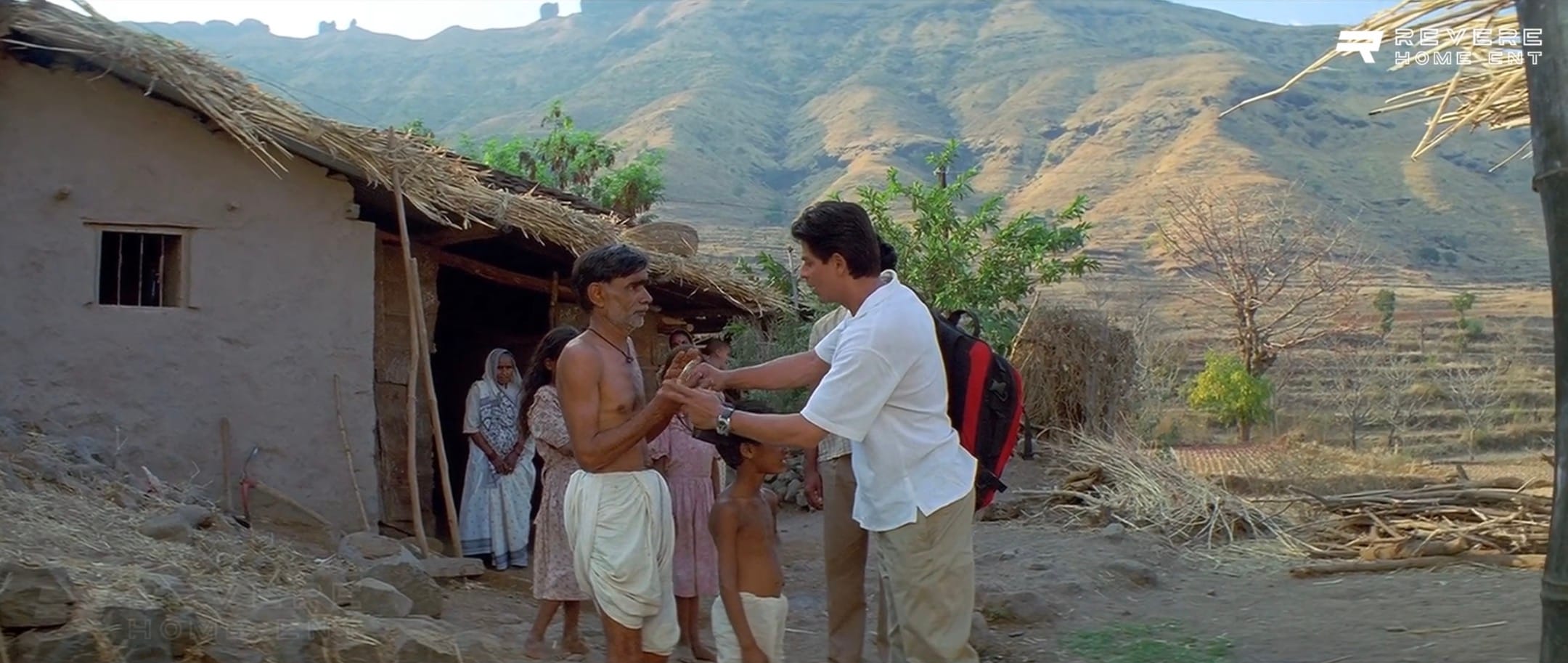
In Sholay (1975), Ramgarh was a remote village ravaged by dacoits, and outsiders were brought to fight the local threats. In Swades (2004), Mohan Bhargav, played by Shah Rukh Khan, visited a small village called Charanpur in Uttar Pradesh to reconnect with his family. But once there, he was drawn to the problems of the village, and eventually chose to stay back and work within the community.
Dialogue writer Pranjal Saxena argued that the character of the urban outsider has long been central to the way Hindi cinema tells stories about rural spaces. But OTT has changed that.
“With the internet accessible to almost all sections of society across the country, storytellers are picking protagonists from a small town or village more confidently. And they can solve their own problems without the requirement of an urban outsider,” Saxena said.
The village is no longer waiting to be rescued by an outsider. The difference between then and now is not that the outsider has disappeared, but that their role has transformed.
Saxena attributed this change to the amount of time OTT gives to its storytellers to explore and develop character arcs. As opposed to commercial films, where production is more fast-paced, and hence, there is less room for details to linger.
“Something that would be labelled indulgent for a film story becomes a necessity for an OTT show,” he said.
Also read: China called his film ‘separatist’. Shenpenn Khymsar says that’s why Indians should watch it
A shoutout to regional films
It is important that when a character is written with a certain regional flair in mind, it doesn’t become incomprehensible to audiences elsewhere. Emotions are universal, but expression is distinct from one region to another.
In Super 30 (2019), for example, Hrithik Roshan’s performance was widely appreciated, but the dialect and intonation did not always match Bihar’s texture.
Language renders authenticity, and hence, credibility to writing rural and small-town characters.
“A show or film based on Haryana is not meant for Haryanvis alone. It must reach a wider audience. While dialogues can be optimally diluted so that language doesn’t become a barrier, a character from Haryana will behave very differently from one who belongs to UP, Bihar or Maharashtra,” Saxena said.
The village diminishing from the silver screen doesn’t come without a silver lining.
Naren Sahay, an assistant professor teaching Indian cinema at Delhi University, argued that the decline of rural stories in Bollywood opened up space for regional films, particularly Bhojpuri cinema. As single-screen theatres lost their reach among rural audiences, regional-language films became increasingly popular.
Achal Mishra’s Gamak Ghar (2019), a Maithili-language film set in a village near Darbhanga, documented a family’s relationship with its ancestral home. His film Dhuin (2022), also in Maithili, followed a struggling theatre artist from a small town who dreams of making it big in Mumbai. Parth Saurabh’s Pokhar Ke Dunu Paar (2022) followed an eloped couple who return to their hometown in Darbhanga during the Covid-led lockdown.
“Hindi films with a village backdrop were watched extensively. But as the village disappeared from commercial cinema, the popularity of Bhojpuri films increased significantly,” Sahay said.
(Edited by Ratan Priya)