



Bengaluru/Tumakuru: In 2012, the Karnataka government tabled an ambitious project to bring water to around seven parched districts in the state. On paper, the Yettinahole integrated drinking water project was a straightforward proposition—take water from the rain-soaked slopes of Karnataka’s Western Ghats during the monsoon season and transfer it across the state. But 14 years later, the project is still waiting to be implemented because government proposals and the scientific assessments of the project do not match.
In August this year, the Karnataka water resources minister N Cheluvarayaswamy told the state legislative council that the government’s ambitious Yettinahole water project was finally headed for completion by the end of 2027.
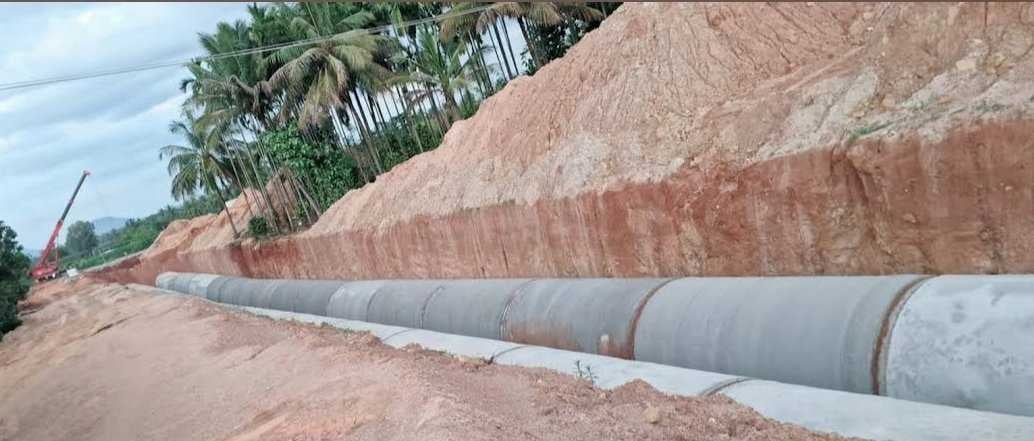
Diversion weirs were set up, pump houses were built, and some large pipelines meant to carry water from the Western Ghats to the delivery chambers have been laid.
With this, a proposed 32.15 TMC (thousand million cubic feet) is set to reach the homes of around 75 lakh people in Chikkaballapur, Kolar, Hassan, Chikkamagaluru, Tumakuru, Ramanagara and Bengaluru.
But scientists from one of India’s premier research institutes, the Indian Institute of Science (IISc), have challenged this hydrological assessment from day one. They say that the Yettinahole catchment never had a capacity of 32.15 TMC as was initially proposed by the government. Out of this, the total divertible water was 24 TMC, which was still much higher than Yettinahole’s actual catchment yield of only about 9.55 TMC, according to the IISc assessment.
A Comptroller and Auditor General (CAG) report in 2025 also confirmed what the scientists have been saying for over a decade.
“The comparison of actual recorded flow data of the eight weirs constructed across Yettinahole and its tributaries for five years from 2018 to 2023 revealed that available volume of water in the weirs ranged from 7.20 TMC to 24.70 TMC as against the estimated volume of 32.15 TMC considered in the DPR (detailed project report),” the CAG report read.
Professor TV Ramachandran from IISc’s Centre for Ecological Sciences has been flagging the irregularities in the project for years now. He is a single man standing against the government’s big dream.
It was his scientific assessment in 2015 that first brought this mismatch into the public domain. Since then, he has tried everything from having a dialogue with government ministers to preparing more in-depth hydrological reports and mobilising environmentalists and local residents against this “ecological disaster”. Basically, anything to get the government to reconsider this project.
“The Yettinahole project is going to be catastrophic for the state, especially for the Western Ghats. It is not just about wrong estimation of the catchment capacity, but the area where the project has been proposed is rich in flora and fauna. Thousands of trees and dozens of endangered animal species will also be impacted by this,” Ramachandran said.
The whistleblower scientist
“There is deep-rooted corruption,” said Professor TV Ramachandran.
In 2014, Ramachandran was working on a field project along the Netravathi river basin when the villagers in the Hassan district—one of the areas from where the project was proposed to pass—first alerted him about the government’s plan with the Yettinahole drinking water project.
“They requested that I conduct a hydrological assessment for them so that they can understand the benefits of the project independently,” Ramachandran said, recalling the conversation that started his fight against the government.
What he found during his study was a plan that he claimed could potentially dry out rivulets in the Western Ghats, wipe out forest lands, displace farmers, cost a bomb to the public exchequer, and do very little to quench the thirst of parched pockets of the state. His work over the last decade has earned him the status of a champion among villagers, second only to Madhav Gadgil, another pioneer scientist who had worked extensively on the Western Ghats.
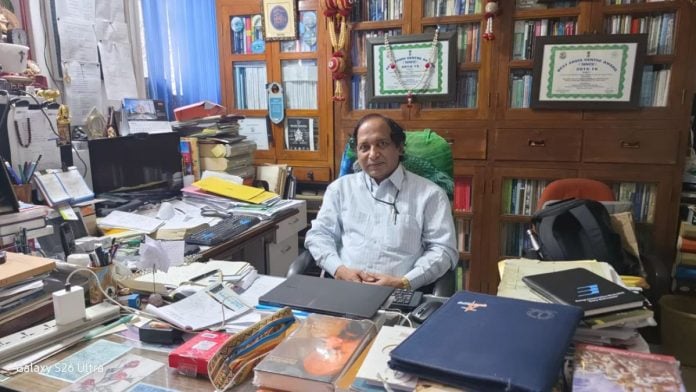
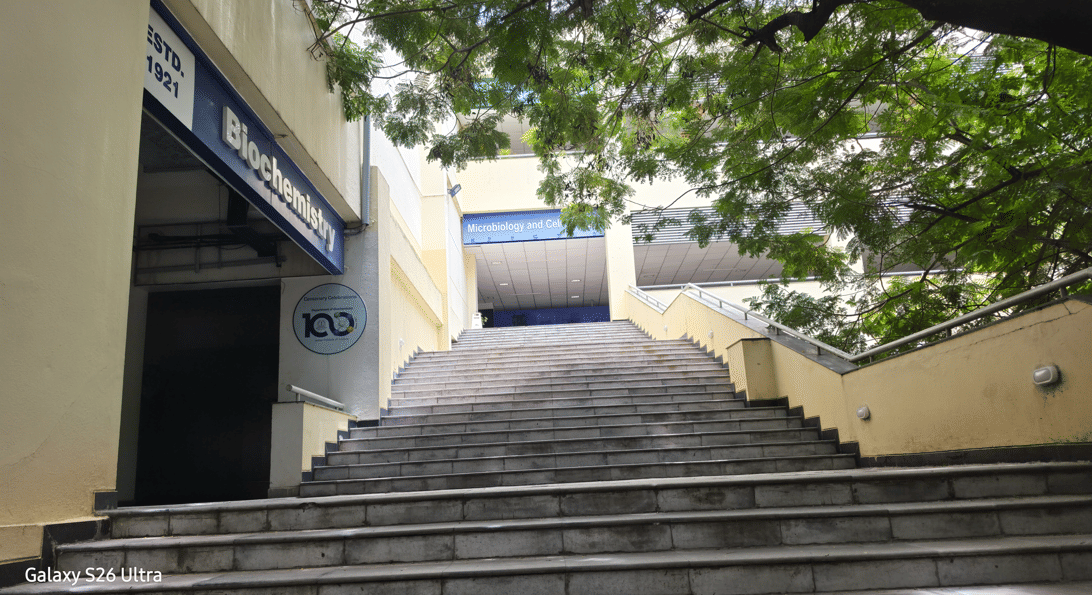
The details of the humid afternoon when he made the discoveries are now sketchy in the 60-year-old’s memories, but his resolve has remained unshaken. His office at IISc is an archive of the Yettinahole project–government statements, file notings, reports and correspondence carefully preserved for years. Time has left its mark. The pages of documents have yellowed and some files have to be coaxed out from beneath layers of dust before they can be opened. But Ramachandran knows exactly where to look.
In 2015, Ramachandran and his team published their first research paper on the project titled, ‘Environmental Flow Assessment in Yettinahole: Where is 24 TMC to Divert?’. It highlighted that the project area, which spans about 180 sq km, receives an average annual rainfall of about 3,500 to 4,500 mm. The water yield in the catchment, according to the calculations in the paper, stood at 9.55 TMC.
The assessment individually calculated the average rainfall received in eight sub-basins that together contributed to the project—Yettinahole, Yettinahole T1, Yettinahole T2, Kudumanehole 1, Kudumanehole 2, Kerihole, Hongadahalla, and Yettinahole lower reach—then separately calculated the gross rainfall, taking into account factors such as evapotranspiration, minimum water required for domestic use and irrigation before it ultimately can be used as a surplus for the project.
The study, which has also been published in the peer-reviewed journal Hydrology Current Research, highlighted that the area uses about 5.84 TMC of water for domestic use, and about 2 TMC is required to sustain minimum aquatic life in these streams.
“Our computation shows the water yield in the catchment is only 9.5 TMC, which is required to sustain the current level of activities in the catchment (agricultural, horticultural) apart from ecological and environmental needs. The diversion of water would lead to reduced crop yield in the catchments and downstream, and silt and nutrients that otherwise flow downstream get trapped in the weirs constructed across the streams,” the report said.
It also warned, “This would result in the variation in the natural flow regime affecting the biodiversity of riparian’s and aquatic habitats and, more importantly, people’s livelihoods who are dependent on fisheries, etc. in the downstream.”
Ramachandra said that these reports and multiple follow-up assessments and letters have been shared with the Visvesvaraya Jala Nigam Limited (VJNL)—the Karnataka government undertaking under the Water Resources Department handling the project implementation—but they have refused to budge.
“Multiple governments have come and gone in this period. But none of them have tried to understand the larger implications of this project. The project was initiated by the BJP, but I tried to reason out even with the Congress government. Even they have not reconsidered it,” the IISc professor said with an expression of frustration mixed with submission.
Ramachandran’s assumption is that too much money is riding on the Yettinahole project. From its initial project estimate of Rs 8,323.50 crores in 2012, the project cost has already climbed to about Rs 30,000 crores now.
“There is deep-rooted corruption. There are scientifically sustainable solutions to provide drinking water to these neighbourhoods, which would only cost about one-fourth the cost of this project. But how will the government vendors and contractors earn anything then?” he said.
Political tug-of-war
In 2012, when the Karnataka Cabinet cleared the Yettinahole drinking water project, local media hailed it as a silver bullet for the state’s water woes. On 6 July that year, the Times of India’s Bengaluru edition headlined, ‘Yettinahole project to quench thirst of five districts.’
Five months later, newspapers also reported a statement by former Karnataka Chief Minister and Janata Dal (Secular) patriarch HD Kumaraswamy promising, “If I become CM, I will bring Netravathi to your doorstep in 48 hours.”
What has followed is a steady stream of media coverage and political pronouncements, with successive governments championing the project as a solution to water scarcity, while critics questioned its feasibility, environmental costs and implementation. Over the years, the project has remained caught between grand promises and persistent scrutiny.
The BJP-led government under Chief Minister DV Sadananda Gowda gave Yettinahole project administrative approval in July 2012, estimating it at a cost of Rs 8,323 crore and proposing to divert 24 TMC of water.
In March 2014, the Congress government laid the foundation stone for it, with a revised estimated cost of Rs 12,912 crore.
The project has become so entrenched in Karnataka’s political memory that in 2021, an exhibition in Mangalore displayed the work of eight artists and cartoonists on the diversion project, showcasing its negative impact on state residents.
One of the cartoons displayed in the exhibition showed a woman trying to drink water from a pot, when a man–representing the government–turns her head away. Another one showed the Nethravati river as Draupadi being undressed, while the Pandavas–representing the political parties in the state–stood watching.
Former minister and a member of the Karnataka Legislature Committee on Public Undertakings, MC Sudhakar from Congress, said that the committee is conducting a detailed reanalysis of the project following the concerns raised in the 2025 CAG report. He dismissed all opposition to the Yettinahole project.
“There is no problem as such with the project. There were some points flagged in the CAR report and we will be inspecting it thoroughly and submitting our findings. The project is following the deadline,” he said, refusing to answer more questions about the details of the project.
How will the project work?
The Karnataka government has proposed the Yettinahole drinking water project as a silver bullet that has the promise of solving the state’s water woes.
According to the DPR, the project will tap eight streams in the upper Netravathi basin around Sakleshpur in Hassan district, which carry large volumes of water during monsoon. Eight weirs will be constructed across these streams, which will essentially become diversion structures.
When water levels rise, part of the water flowing in these streams will be collected and directed into the project’s intake system. While this might sound easy on paper, the project is a challenging engineering feat.
Project engineers explained that the water from these streams naturally flows westwards toward the Arabian Sea, but the districts where this water needs to reach are to the east, the other side of the Western Ghats.
To address this challenge, the VJNL is relying on a method to reverse the water’s natural flow.
The water will first be collected at the weirs and then taken into pump houses, where it is lifted through raising mains. This process of first lifting water mechanically and diverting water to a completely different direction from its natural flow is what makes the Yettinahole project extremely energy-intensive.
Apart from just supplying drinking water, the project also aims at recharging groundwater in the adjoining areas. The DPR states that annually only about 14.056 TMC of water will be pumped out for drinking purposes; the remaining 9.953 TMC will be used to fill up 527 underground tanks and used for groundwater replenishment.
The government’s stand
At the office of Bengaluru’s Water Resources Department near the Ananda Rao Circle, the Yettinahole project has become their Albatross, passed from one set of officials to the next. More than a dozen officers assigned to the project over the years have moved on—some have retired, others transferred, but the project itself is nowhere near completion.
An entire folder in the chief engineer’s computer, along with two racks on the office’s shelf, is dedicated exclusively to the project. Officials say that every now and then these racks overflow with documents, forcing the department to call in its IT team to digitise these before old paper records are cleared. All this, only to make room for the next batch of paperwork.
According to some senior officials, the project has been riddled with problems from the get-go. First it was stuck because of a shortage of funds, then it was caught in bureaucratic delays and then finally when it crossed that checkpoint, it was stuck because of the opposition from scientists and environmentalists.
“Why can’t they see that this project is going to benefit so many water-starved districts? This has not been blindly implemented; months of site visits and feasibility studies have gone into studying the project. Many qualified engineers and hydrologists have assessed this,” a senior official from the department told ThePrint on the condition of anonymity.
The official said that the government has assessed the project capacity by using historical data recorded by the Central Water Commission (CWC) on the Netravathi at Bantwal between 1971 and 2008. This was used to extrapolate the yield of the smaller proposed catchments based on their relative areas. This means an average annual rainfall of 6280 mm was assumed across the catchment.
From this, engineers estimated 32.15 TMC of average available inflow and 24.01 TMC of divertible water. This, the official said, is a conservative estimate and the catchment is likely to actually have more water available in most years.
The tussle
“It is a ghost project that will leave the promised beneficiaries with empty canals while completely drying out the state’s lifeline, the Netravathi basin,” said a Mangalore resident.
Environmentalists insist that this is where the government calculations are off. And the disagreement stemmed largely from how the two sides calculated water yield.
The government’s DPR estimates the combined yield of the eight catchments by using discharge measured at Bantwal on the Netravathi and extrapolating it to the smaller catchments based on their relative areas. The IISc researchers instead calculated water availability at the individual catchment level, using rainfall data that showed significant spatial variation—from about 3500 mm to 4700 mm—and also accounted for land use, infiltration, evapotranspiration, groundwater recharge and existing agricultural, domestic and livestock water requirements.
The 2025 CAG report has also highlighted that the rainfall recorded in all of these eight catchment areas is not consistent. CAG also independently examined the flow data of the catchments between 2018 and 2023 and found that in none of these years did it reach the government estimates of 32.15 TMC.
Data show that in 2018 the combined annual yield of the eight weirs was 26.80 TMC; it was 25.43 TMC in 2019, it fell to 24.22 TMC in 2020 and again to 21.64 TMC in 2021. By 2022 and 2023, the cumulative yield of the weirs had fallen further to first 19.63 and 8.77 TMC respectively.
Muzammil Ashraf, a resident of Mangalore, one of the regions expected to be impacted by the water diversion project, said that once the region’s water requirements and the minimum environmental flow needed to keep the river alive are accounted for, there will be no surplus water left to divert.
“It is a ghost project that will leave the promised beneficiaries with empty canals while completely drying out the state’s lifeline, the Netravathi basin,” he said.
Ashraf said that this was not just “bad math” on the part of the government; it is also a betrayal of the local villagers, who have been protesting against the project since 2014.
“Mangalore’s local MLAs tell their constituents they oppose the project to save political face, but behind closed doors, they refuse to challenge their leadership in the Assembly. Every single political party has pushed this project forward when they were in power. They pretend to care about the environment only when they hit the opposition benches,” he said.
On the ground
“Neither the ponds of our villages have been filled nor has the drinking water problem been solved,” said a farmer from Vaddarahalli village.
Away from this battle over numbers being waged in government offices and scientific papers are the villages of Vaddarahalli, Vaddarahalli Koppalu and Hadenahalli. Their residents gave up land for the project in exchange for a promise of a future in which wells would brim with water and taps would never run dry. Instead, the water crisis here has only deepened.
Years later, they are still waiting for the project to deliver on its promise.
Puttaswamy Shetty, a farmer and the Vaddarahalli village leader, said that the farmers here first waited patiently for nearly a decade. But they have now hit the streets in protest against the project delays.
“The Yettinahole canal passes right next to our village. Farmers in our area have given land for the project. But neither the ponds of our villages have been filled nor has the drinking water problem been solved,” he said.
Ramesh Kumar from the same village, however, said that the rainfall in the area is becoming more inconsistent every season. If the government starts storing and diverting from this, the entire community will be parched.
“The rivers are thinning. If you start diverting water from these, we will slowly be heading for self-destruction. There has to be a better way of solving the water problem here,” he said.
The villages are divided, mirroring the wider disputes between the government and the scientists. Some demand the speedy implementation of the project, while others want it scrapped as they say it will only worsen the water and environmental crisis of their neighbourhoods. But everyone agrees on one issue—the water shortage in their villages should be addressed.
The government insists that a fully operational Yettinahole project is the only way to make that happen.
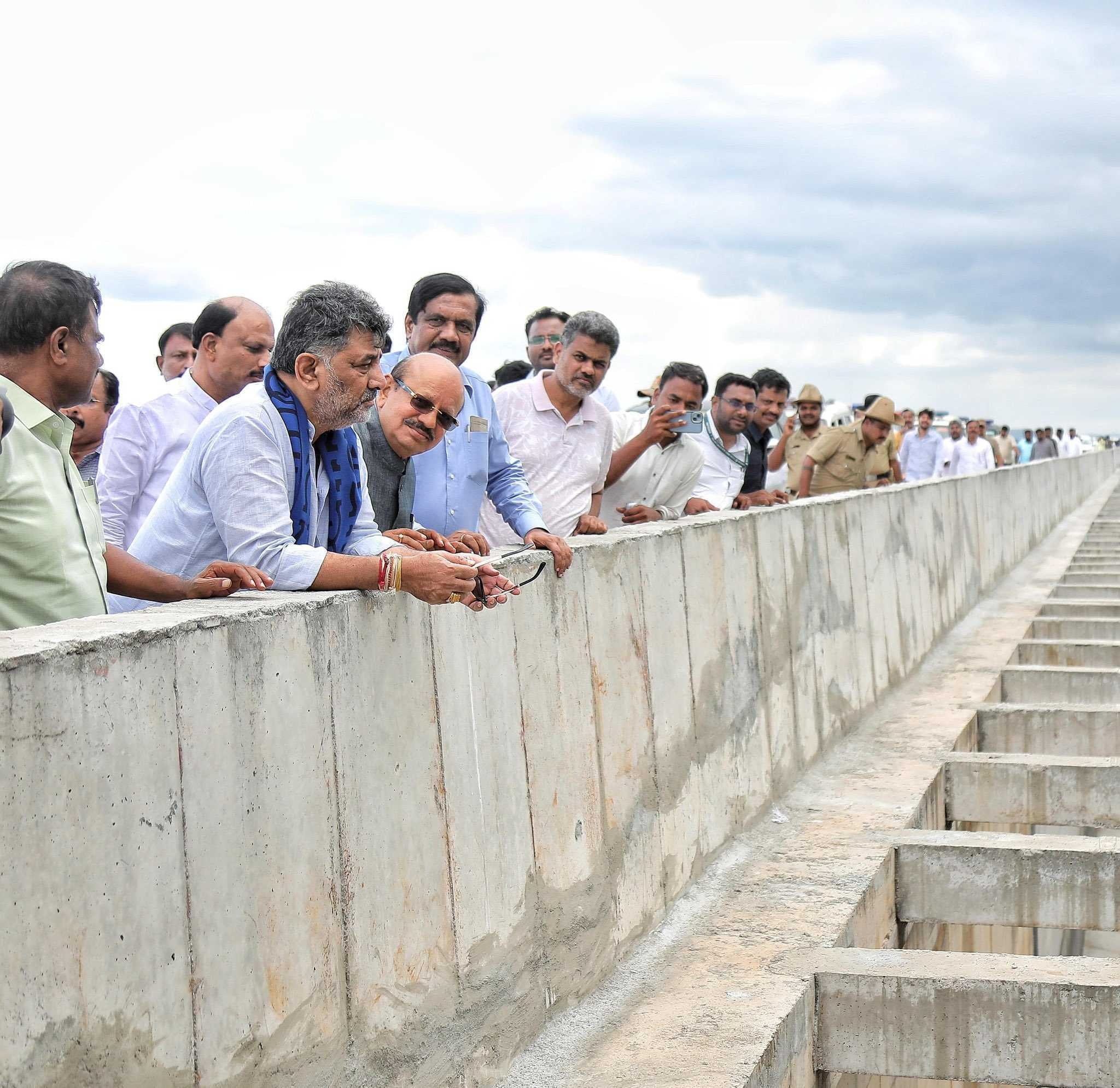
In September 2024, the Karnataka government inaugurated phase-1 of the project, which involved its water capture and lifting infrastructure. The downstream gravity conveyance and distribution network, which would carry the water to the beneficiary districts, was still under construction.
Also read: Bengal’s Left bookstalls are the new battleground during Puja. From Marx to Maa Durga
Convincing the government
When Ramachandran leaves his house every morning, he has one piece of advice for his family. They should be mentally prepared for a life without him. This is not paranoia, but a precaution shaped by the last 14 years. In all these years, Ramachandran has received threatening phone calls, physical intimidation, and warnings asking him to “back off” from the project.
But he said that scientists need to step up when politicians do not. During the course of his work on the project, he has trained multiple batches of students who are now conducting surveys and writing letters to the government agencies urging them to reconsider the project.
“I cannot stop the work. Thousands of people are depending on this project. I have often felt that maybe I should let this go, but I became a scientist to tell the truth. Science does not lie, and that is all I am trying to communicate,” Ramachandran said. His eyes welled up.
(Edited by Ratan Priya)